










This is a follow on post to the piece I wrote back in December.
I’ve spent 25 years working with stories as technology, treating narratives like code that runs in the background of our lives. I’ve debugged corporate cultures, reprogrammed limiting beliefs, and helped people rewrite their personal mythologies. But reading The Apocryphon of John reminded me that some texts don’t just tell stories. They install entirely new operating systems.
This isn’t a book review in the traditional sense. I’m not here to critique the prose or evaluate the scholarship. I’m here to tell you that if you’re serious about consciousness work, about deprogramming the default settings of consensus reality, this text will either illuminate everything you’ve been sensing or it will feel like dangerous madness. Probably both.
The early Christians who practiced Gnosticism weren’t labeled heretics because they got the details wrong. They were branded heretics because they threatened the entire power structure of institutional religion. They claimed you didn’t need priests, churches, or sacraments. You needed gnosis, direct knowledge of the divine. And once you had that, you were free.
That’s the kind of heresy that gets you killed.
What You’re Actually Reading
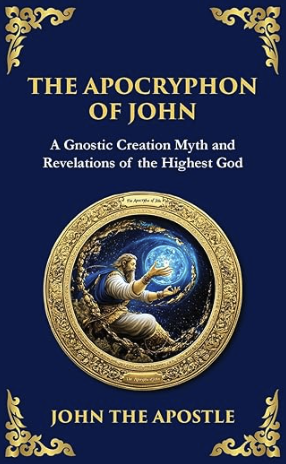
The Apocryphon of John (also called The Secret Book of John) is one of the Nag Hammadi texts, discovered in Egypt in 1945. These were Gnostic Christian writings buried around 400 CE, probably to protect them from destruction as orthodox Christianity consolidated power. This particular text presents itself as a secret revelation given by the resurrected Christ to John, the brother of James, after the crucifixion.
It’s apocalyptic literature in the original sense of the word. Not catastrophe, but unveiling. The Greek apokalypsis means revelation, disclosure, the lifting of a veil that has been hiding how things really are. This isn’t a story about the end of the world. It’s a story about the end of a false picture of the world.
John is in free fall after the crucifixion. The figure he built his life around is gone, the movement looks broken, and the inherited religious explanations no longer work. He’s questioning everything, not as an abstract theologian but as someone whose inner map has collapsed. That moment matters. Revelation doesn’t arrive when things are stable. It arrives when the old explanations fail.
Christ’s appearance isn’t a comfort scene. It’s an intervention. The message is not “believe harder” or “wait patiently.” It’s closer to: you’ve been given a distorted account of reality, and if you’re willing, I’ll show you what’s actually going on beneath the surface. What follows isn’t moral instruction or pastoral reassurance. It’s a radical reframing of the cosmos itself, offered as a diagnostic tool for understanding why the world feels wrong and why your intuition has been quietly resisting the official story.
What follows isn’t moral instruction or pastoral reassurance. It’s a reframing of the cosmos designed to be used. The revelation functions less like doctrine and more like a jailbreak manual for perception. It names the forces shaping your experience, explains why the world feels subtly wrong, and gives you a way to locate the pressure points. The aim isn’t belief. It’s diagnosis. Once you can see the architecture of the trap, you’re no longer fully inside it. The unveiling doesn’t save you. It hands you the schematics and waits to see what you do next.
The Cosmological Drama
The text begins with the invisible Spirit, the true God, utterly transcendent and beyond all categories. This isn’t the God of Sunday school. This is the groundless ground of being, the source that cannot be named or conceived. From this unknowable One emanates Barbelo, the first thought, and from their union comes a cascade of divine beings called Aeons. Think of them as aspects or powers of the divine, each one a facet of the infinite expressing itself.
Then comes the fall. Sophia, whose name means wisdom, acts without her divine consort. She wants to create alone, and from this solitary act comes a flawed being: Yaldabaoth, the Demiurge. He’s ignorant of the true God above him. In his ignorance, he declares “I am God, and there is no other.”
This is the god of the Old Testament. The jealous god. The god who demands worship and obedience. And he’s not the true God at all. He’s a mistake, a flawed emanation who doesn’t know his own origin.
Yaldabaoth creates the material world and the Archons, rulers or powers who administer this cosmic prison. They create humanity to trap the divine spark, that bit of Sophia’s light that fell into matter. We are divine consciousness imprisoned in flesh, ruled by powers who want to keep us ignorant of our true nature.
When I say stories are code, this is exactly what I mean. Narratives don’t just describe reality. They configure how consciousness interprets experience, what feels possible, and where power appears to reside. The Genesis story most of us inherit installs a very specific operating system. It frames the human condition as fundamentally flawed, defines obedience as virtue, and positions salvation as something external, conditional, and mediated by authority. Once that story is running, guilt feels natural, hierarchy feels inevitable, and dependency feels like humility.
The Gnostic reframe swaps out the entire program. You are not a sinner in need of rescue. You are a fragment of divine intelligence embedded in a compromised system. The problem is not moral failure but amnesia. Liberation doesn’t arrive through belief, submission, or waiting. It arrives through recognition. Through seeing the system for what it is and remembering what you are prior to its constraints. In that sense, gnosis isn’t theology. It’s a jailbreak. A recovery of source code that allows consciousness to stop mistaking the prison for the universe.
Deprogramming Technology
What makes Gnosticism so powerful as a framework for consciousness work is that it treats ignorance as the fundamental problem. Not sin. Not disobedience. Ignorance.
You’re running programs you didn’t write, installed by powers that benefit from your not knowing who you really are. The Archons aren’t demons in the medieval sense. They’re better understood as systemic forces, ideological structures, consensus reality tunnels that keep you locked in limited narratives about what’s possible, who you are, and what you’re allowed to become.
The Demiurge is the ultimate counterfeit currency of the soul. He’s the voice that says: This is all there is. I am the highest authority. You are fundamentally flawed and must earn your worth. He’s every limiting belief that masquerades as ultimate truth.
Gnosis is the recognition of your divine nature. It’s not information you learn. It’s what you remember when the programs stop running. It’s the direct experience of your origin beyond the prison of matter, beyond the lies of the Archons, beyond the Demiurge’s claim to total authority.
This maps precisely onto the work I do with narrative alchemy. When someone comes to me trapped in a story about being broken, unworthy, or permanently stuck, we are not dealing with objective reality. We are dealing with installed narratives. Programs that have been absorbed so early and so completely that they feel indistinguishable from truth. These stories quietly define the edges of the possible. They determine what someone believes they deserve, what risks feel unthinkable, and which futures never even register as options.
The work is not affirmation or positive reframing. It’s diagnostic. We slow the system down enough to hear the code running underneath the self-talk. We identify which voices present themselves as unquestionable authority, which assumptions masquerade as common sense, and which limits have been mistaken for laws of nature. Only then does change become possible. Not because the person has been fixed, but because they realize they were never broken.
Narrative alchemy is the practice of debugging those inherited programs and reconnecting consciousness with its original source code. The deeper truth of who someone is before conditioning, before guilt, before obedience was installed as virtue. Once that reconnection happens, the story doesn’t need to be forcibly rewritten. It begins to rewrite itself. And what emerges is not a better persona, but a wider field of agency. More room to move. More room to choose. More room to remember.
The Apocryphon gives you permission to question everything, including the voice that claims ultimate authority over your life. That’s genuinely dangerous to any system that requires your obedience.
Why Heresy Matters
Orthodox Christianity needed institutional authority. It needed bishops, creeds, sacraments, and a hierarchical structure that controlled access to salvation. The Gnostics said: you don’t need any of that. You need direct knowledge. You need to wake up.
When canon formation happened, when the church decided which texts were “in” and which were “out,” the criteria weren’t just theological. They were political. Which texts supported the emerging institutional structure? Which texts could be controlled, interpreted, and administered by priests? Which texts reinforced the authority of bishops?
Gnostic texts failed every test. They offered direct access to the divine. They undermined institutional authority. They suggested the God of the Old Testament might not be the true God at all. They treated matter as prison rather than divine creation. And perhaps most dangerously, they suggested that salvation was available now, through knowledge, rather than later, through the church’s mediation.
I’m still sitting with the full implications of the canon formation question. Why these texts and not others? How much of what we think of as Christianity is actually the religion that survived political consolidation rather than the religion that was truest? What got lost when the Gnostic texts were buried?
But what’s clear is that Gnosticism threatened power. It decentralized authority. It made every individual a potential direct conduit to the divine. That’s the kind of idea that empires can’t tolerate.
For Modern Consciousness Work
Reading The Apocryphon of John in 2026 lands very differently than it would have even fifty years ago. We are living through a visible unravelling of institutional authority. Governments contradict themselves in public. Corporations quietly admit they do not know what they are doing. Religious, economic, and cultural narratives that once felt immovable now feel provisional, scripted, and increasingly hollow. What used to pass as “just the way things are” is being exposed as design rather than destiny.
At the same time, more people are waking up to how many of their supposedly natural beliefs were installed rather than discovered. Ideas about work, worth, identity, success, normality, even sanity are being revealed as programs inherited from systems that benefited from their unquestioned acceptance. In that context, the Gnostic framework no longer reads like exotic metaphysics or ancient heresy. It reads like pattern recognition. Like an early diagnostic language for living inside a managed reality.
That’s why this text feels less like mysticism and more like a survival manual. It doesn’t offer comfort or coherence. It offers orientation. It teaches you how to recognize false authority, how to identify the voice that claims final say over your life, and how to distinguish between imposed limits and actual ones. In an era where reality itself feels curated, optimized, and subtly coercive, The Apocryphon of John stops being about what ancient people believed and starts functioning as a guide for staying conscious inside systems that would prefer you remain asleep.
The Archons are real. Not as literal demons, but as systemic forces that keep us trapped in limited consciousness. Consumer capitalism. Algorithmic manipulation. The narrative that you are your productivity. The story that you must earn your worth. The belief that this material reality is all there is.
These are programs. They’re running. And most people never question them because the Demiurge inside consensus reality keeps declaring: “I am all there is.”
Gnosis, in modern terms, is the practice of recognizing these programs and remembering your nature beyond them. It’s what happens in deep meditation when the chattering mind goes quiet. It’s what happens in psychedelic journeys when the walls of consensus reality become transparent. It’s what happens in chaos magick when you realize belief is a tool, not a prison.
For my work in narrative alchemy, the Apocryphon confirms something I’ve suspected: the stories we tell about ourselves are code running in consciousness. When those stories are written by the Demiurge, by the Archons, by systems that benefit from our limitation, we’re trapped. When we recognize the code for what it is, we can rewrite it.
The text functions as what I’d call a hypersigil, an ongoing magical working that reshapes reality through repeated engagement. The early Gnostics didn’t just read this text. They lived it. They made it operational. They treated the cosmology not as metaphor but as map.
What would it mean to do that now? To actually treat the material world as a prison to be escaped rather than a home to be improved? To recognize the voice of authority in your head as the Demiurge rather than God? To seek gnosis, direct knowledge, rather than faith in received wisdom?
These aren’t academic questions. They’re operational choices about how to live.
What’s Still Percolating
I’m not done with this text. I’ve read it once. I’ve sat with it. But there are layers I haven’t touched yet.
The canon formation question keeps pulling at me. What criteria actually determined which texts survived? How much of Christianity as we know it is political accident rather than spiritual truth? What would Western consciousness look like if the Gnostic texts had been central rather than buried?
And then there’s the practical magick dimension. If the Archons are real as systemic forces, can they be bound, banished, or reprogrammed? If the Demiurge is the voice of limiting authority, can you starve him by refusing his claims? If Sophia’s fall created this mess, what does restoration look like in lived practice?
The Apocryphon doesn’t answer these questions. It opens the space where the questions become possible.
Who Should Read This
Not everyone. Genuinely. If you’re happy with consensus reality, if traditional religion serves you well, if the questions I’m asking sound like navel-gazing, skip this text.
But if you’ve sensed something off about the standard narratives, if you’ve felt the prison walls of material reality pressing in, if you’ve experienced moments of direct knowing that contradicted everything you were taught, this text will meet you.
It requires patience. It requires sitting with strangeness. It requires willingness to question foundational assumptions about reality, divinity, and your own nature.
But for those doing consciousness work, for those treating stories as technology, for those debugging the programs running in the background of their lives, The Apocryphon of John is essential reading.
It’s a heretic’s manual. A hacker’s guide to escaping the cosmic prison. A reminder that gnosis is always available, always has been, to those willing to see past the Demiurge’s lies.
Welcome to the heresy. The questions are just beginning.