Stories are code. You are the programmer.

Hi! I'm Clay. I'm a blogger, podcaster, and narrative alchemist working at the intersections of narrative alchemy, imaginal psychology, chaos magic, self-development, self-authorship, meaning-making, and conscious living. I believe stories are code, which makes reality programmable. Don't like your current reality? Fine! Rewrite the code. Change your life.
Last Checked in at:



-
 Soulcruzer says:That is the scary bit. What is the hidden agenda of...
 -
Dave Anderson says:
-
Dave Anderson says:
-
Self-Observation Without Judgment: The Lost Practice That Changes Everything - soulcruzer says:
-
Your World is a Projection of Your State of Awareness - soulcruzer says:


Latest Podcast Episode
Soulcruzer
The Soulcruzer podcast…narrative alchemy in audio form. Call it an audioblog, call it threshold work, call it confessional mysticism.
One day I’m working through tarot as spiritual technology. The next, I’m exploring Nietzsche’s eternal return as lived practice, chaos magick techniques, or games as containers for transformation. Depth psychology meets the esoteric. Ancient wisdom meets the AI age. Theory becomes practice.
This is what narrative alchemy sounds like from the inside: raw, real, unpolished. Experiments in treating stories as code and consciousness as hackable.
If you’re here for the deep work and the edges, subscribe wherever you get your podcasts.
What Are We Becoming?
This one started with me sitting down in the studio and noticing a pattern that’s been floating around the last couple of days. Everywhere I turn, people are talking about where we’re going as human beings, what we’re becoming, and how all this change is messing with our sense of place. AI is in the background of that conversation, obviously, but this episode isn’t me doing an “AI episode” as such. It’s more me circling the deeper question behind the noise.
Over the past 48 hours I’ve been listening to and watching a bunch of stuff, and it’s all orbiting the same gravitational pull. Humans feel displaced. Not just “the job market is weird” displaced, but identity displaced. Like: if the world changes this fast, what happens to the version of me that was built for the old world?
This all hit extra hard because I’ve been recovering from a tooth that’s been giving me grief for a year. It got infected again, they finally pulled it, and last night I was in that familiar post-dentist zone where the numbness wears off and the universe feels personally offensive. I was curled up on the couch, cycling between old Game of Thrones episodes and YouTube.
That’s when I landed on Sinead Bovell’s show (on YouTube, even though we call everything a podcast now). The show is called I’ve Got Questions, and she had an episode featuring Alexander Manu titled something like “Once in a Lifetime Career Reset is Coming.” That title alone just grabs you by the collar. Because that’s the vibe, isn’t it? A mass career and identity reset. Not gradual. Not polite. A reset.
And it brought me back to the question I’ve had from the start: What are we becoming? We can’t stay the same. So what’s the next iteration?
One of the things I’ve been chewing on is how most people’s first move with AI has been to retrofit it into the current paradigm. Same game, faster tools. Write quicker. Create quicker. Code quicker. Spreadsheet quicker. Become “10x productive,” “100x productive,” whatever. And I’m finding myself more and more allergic to that productivity obsession. Because why are we racing? Do we actually want to do more and more, or do we want to live better?
I noticed something about my own choices here too. My day job includes corporate training. The obvious play would be to jump on the trend and become “the AI guy,” training companies how to use AI. But I deliberately didn’t go that route. I wanted to be a practitioner. I wanted to push into the frontier and ask: not “how do I do the old thing faster?” but “what’s the new thing that wasn’t possible before?”
I used painting as a metaphor for this, because we’ve seen this cycle a thousand times. People painted on cave walls, then on canvas. Then the camera came along and painters freaked out. “That’s not art.” Then photography becomes its own art form, because real artists don’t just defend old tools. They explore new ones and invent new forms.
That’s where I think we are now. There’s resistance because people are having an existential crisis about identity, livelihood, meaning, and the role of humans. But there’s also that other camp: the folks who see a new tool and think, “Okay… what can we make now that we couldn’t make before?”
One of Manu’s points that really landed for me is that these tools could create the space for us to be more human, not less. If machines can handle repeatable, mundane stuff better, that should free us to focus on the parts of life that require presence, depth, relationship, contemplation. The being, not just the doing. That line hit me right where I live.
From there, my brain hopped tracks into Robert Anton Wilson territory, because I’ve just started reading Chapel Perilous, the biography of RAW. And it’s lighting my mind up. Reading about his thought processes reminds me what excites me most: consciousness, reality, philosophy of mind, and the question of what humans even are.
That’s what led me into this weird but wonderful blend I started playing with: Buddhism and anarchism. RAW had both currents running through him, and I found myself asking: how can those two coexist?
Here’s what clicked for me. Buddhism, at least in one of its core teachings, points at non-self (anatta). No independent permanent self. The “I” we cling to is more like a process, a pattern, a swirl of causes and conditions. Meanwhile anarchism, at its philosophical core, questions fixed rulers and permanent authority. No fixed ruler. No default assumption that someone must be in charge.
So one becomes an inner liberation practice, the other becomes an outer liberation practice. Inner freedom from attachment to the constructed self. Outer freedom from attachment to constructed authority. Same song in two octaves.
And then I went off, as I do, on the conditioning theme. Because this is the part that keeps bothering me in the best way. I was walking through town yesterday paying attention to my own reactions as I moved through the world, and I kept thinking: how much of my day-to-day behaviour is just conditioning? Automatic reactions. Scripted responses. Learned reflexes. Not conscious choice.
Try this: pick any belief you hold and trace it back. Where did it come from? Family? School? Culture? Religion? Government? Trauma? A moment you never questioned? We’re “programmed” from the start, and most of it we never opted into. And the self we think is “me” is often a patchwork of inherited code.
Then you flip it outward again to politics, law, power. Left, right, centre, everybody’s got an agenda. And the law often seems to apply differently depending on how much power you have. That’s the thing that makes me itch. I don’t trust big systems that claim they’re acting in your best interest while quietly feeding a power structure.
I’ll say this clearly: I stop short of the “burn it all down” impulse. My instinct is more “reduce it to the bare minimum.” Voluntary cooperation. Mutual aid. Less coercion. More sovereignty.
That word became the real anchor of the episode: sovereignty.
Because here’s the tricky part of this sci-fi world we’re living in. We’re already soft cyborgs. Look at how entwined we are with phones, watches, laptops, earbuds, glasses. Put them all in a drawer and turn them off and most of us can’t really function in the modern world the same way. I even talk about my “metaglasses” as this extension of perception, a way to connect to the hive mind, the collective intelligence, whatever you want to call it. And with AR coming, that overlay of digital on physical is going to make the cyborgness even more literal. You’ll be walking down the street in two worlds at once.
I actually like being a soft cyborg. I’m not anti-tech. I’m not anti-AI. I’m pro-consciousness.
Because the danger, or at least the risk, is that conditioning becomes exponential. Influence becomes subtle. Systems compete for your attention, your beliefs, your emotions, your identity. Governments, advertisers, religions, corporations, platforms. Everybody wants a piece of your psyche. They want to shape what you think, what you fear, what you desire, what you believe is true.
So my challenge, to myself and anyone listening, is: don’t abdicate your humanity. Don’t abdicate your sovereignty. Think for yourself. Question things. Ask what the hidden agenda is. Ask who …
February 8, 2026
February 4, 2026
January 19, 2026
January 15, 2026
January 13, 2026
January 10, 2026
December 21, 2025
December 8, 2025
Search Results placeholder
The Narrative Alchemist’s Essential Library

Man and His Symbols is an accessible gateway into Jungian depth work. This illustrated exploration of archetypes and symbols reveals how transformation happens in the imaginal realm, below conscious awareness.

Hillman's "acorn theory" illuminates the path to Authentic Purpose. His poetic yet rigorous approach gives language to the daimonic self and the ineffable aspects of personal mythology.
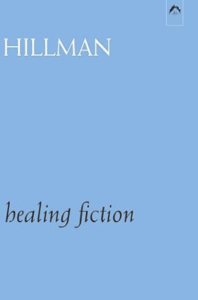
This book is James Hillman's main analysis of analysis. He asks he basic question," What does the soul want?" With insight and humor he answers: "It wants fiction to heal."
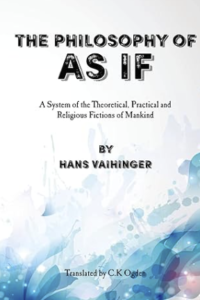
Vaihinger… shows that thought is primarily a biological function turned into a conscious art. It is an art of adjustment, whose chief instrument is the construction of fictions by which men may manage to live.

Mary K. Greer's seminal workbook transforms tarot from divination tool into technology for self-knowledge and narrative sovereignty. Packed with exercises that treat the cards as doorways to the imaginal realm, this is required reading for practitioners ready to use archetypal imagery as active imagination practice.

Johnson demystifies Jung's most powerful technique with step-by-step guidance for engaging the imaginal realm directly. This slim volume transforms abstract theory into actionable practice—essential for practitioners ready to move beyond conceptual understanding.

The clearest introduction to chaos magic as pragmatic practice. Strips away dogma to reveal the core mechanics of belief as a tool. Perfectly bridges the gap between depth psychology and results-orientated transformation work.

While the hero's journey has been overused, Campbell's original text remains vital for understanding narrative structure as psycho-spiritual map. Read it to learn the pattern, then transcend it.

This groundbreaking work bridges the mystical and scientific, revealing how tarot actually works through the lens of neuroscience and cognitive psychology. Essential reading for practitioners who want to understand the neurological mechanisms behind symbol work, pattern recognition, and the imaginal realm's interface with the predictive brain.
Narrative Alchemy

Narrative Alchemy is the practice of treating stories as spiritual technology—seeing inherited scripts clearly, releasing what isn't yours, and consciously authoring new myths to live by.
It's where Jung meets chaos magic, where the imaginal becomes operational, and where inner transformation reshapes outer reality.
I build games, practices, and frameworks that make this work tangible. Magus Eternal is one of those tools—a tarot RPG designed as a container for threshold crossing. The Narrative Codex is another—a living archive of techniques, lore, and experiments.
This isn't coaching or therapy. It's spiritual technology for people ready to hack their own operating system.
Ashkara, the Laughing Root

[Sigil] Guardian daemon of thresholds and transformation. Works whether you see it as archetypal force or powerful metaphor. → Explore the sigil