









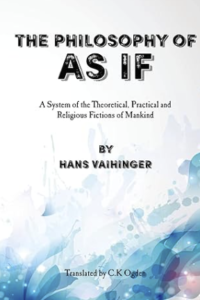


There’s something potent about learning magic through story. Not the sanitized, academic kind of learning where concepts get pinned to pages like dead butterflies, but the living, breathing transmission that happens when you follow a character into the dark woods and watch them stumble, fail, and finally get it.
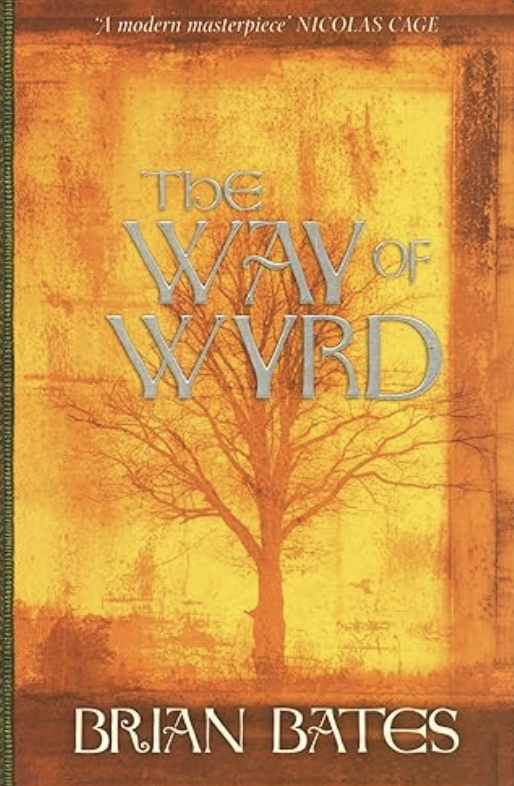
Brian Bates understands this. The Way of Wyrd: Tales of an Anglo-Saxon Sorcerer doesn’t lecture you about Anglo-Saxon spiritual practices. It drops you into the mud and mist of 7th century Britain, walking beside Wat Brand, a young Christian missionary who becomes apprentice to Wulf, a sorcerer of the old ways.
The book works because Bates refuses to translate everything into modern psychological terminology. Yes, there’s scholarship here (Bates was a psychology professor at the University of Sussex), but it’s worn lightly, embedded in a narrative that lets you experience the worldview rather than just read about it. This is stories as code in action, a way of programming consciousness through immersion rather than instruction.
What makes this particularly valuable as an introduction to the way of wyrd is how Bates handles the concept itself. Wyrd isn’t fate in the deterministic sense. It’s more like the web of connections, the pattern of cause and effect that weaves through all things. Past actions create present circumstances, present choices weave the future. Wulf teaches Wat to see these patterns, to work with them rather than against them.
The teaching method is worth noting. Wulf doesn’t hand Wat answers. He creates experiences, asks questions, lets the young Christian wrestle with contradictions between his imported faith and the older wisdom of the land. There are vision quests, encounters with spirits, lessons about the nature of reality that unfold gradually. The mysteries reveal themselves through practice, not theory.
For practitioners working with chaos magick, depth psychology, or any path that treats consciousness as malleable, there’s familiar territory here. The idea that reality is participatory, that what we believe shapes what we experience, that the boundaries between inner and outer are more permeable than we’re taught to think. These aren’t new age inventions. They’re ancient understandings, and Bates shows them in their native context.
The book also serves as a bridge. If you’ve been working with runes, exploring Northern European magical traditions, or feeling drawn to pre-Christian British practices, this gives you a feel for the worldview those practices emerged from. It’s not a how-to manual. It’s something more valuable: a demonstration of how a sorcerer thinks, how they perceive, what they attend to.
Some readers find the narrative occasionally simplistic or the dialogue a bit wooden. Fair criticisms. But the book isn’t trying to be literary fiction. It’s a teaching text wrapped in story form, and by that measure, it succeeds. The format makes complex ideas accessible without dumbing them down. You come away with an embodied sense of what it might mean to walk the wyrd path, to practice sorcery as a way of being rather than a set of techniques.
What struck me most was how the book handles transformation. Wat doesn’t just learn new skills. His entire framework for understanding reality has to crack open and rebuild itself. That’s real initiation, not the weekend workshop kind. And Bates shows that process with enough honesty that you feel the difficulty, the resistance, the moments of breakthrough.
If you’re looking for a systematic grimoire of Anglo-Saxon practices, look elsewhere. But if you want to understand the consciousness that gave rise to those practices, if you’re drawn to learning magic the old way (through story, through experience, through gradual revelation), then “The Way of Wyrd” is excellent medicine. It’s the kind of book that plants seeds. You might not realize what you’ve learned until weeks later when something Wulf said suddenly makes sense in a completely different context.
That’s how the mysteries work. They’re patient like that.