The walk is the encounter

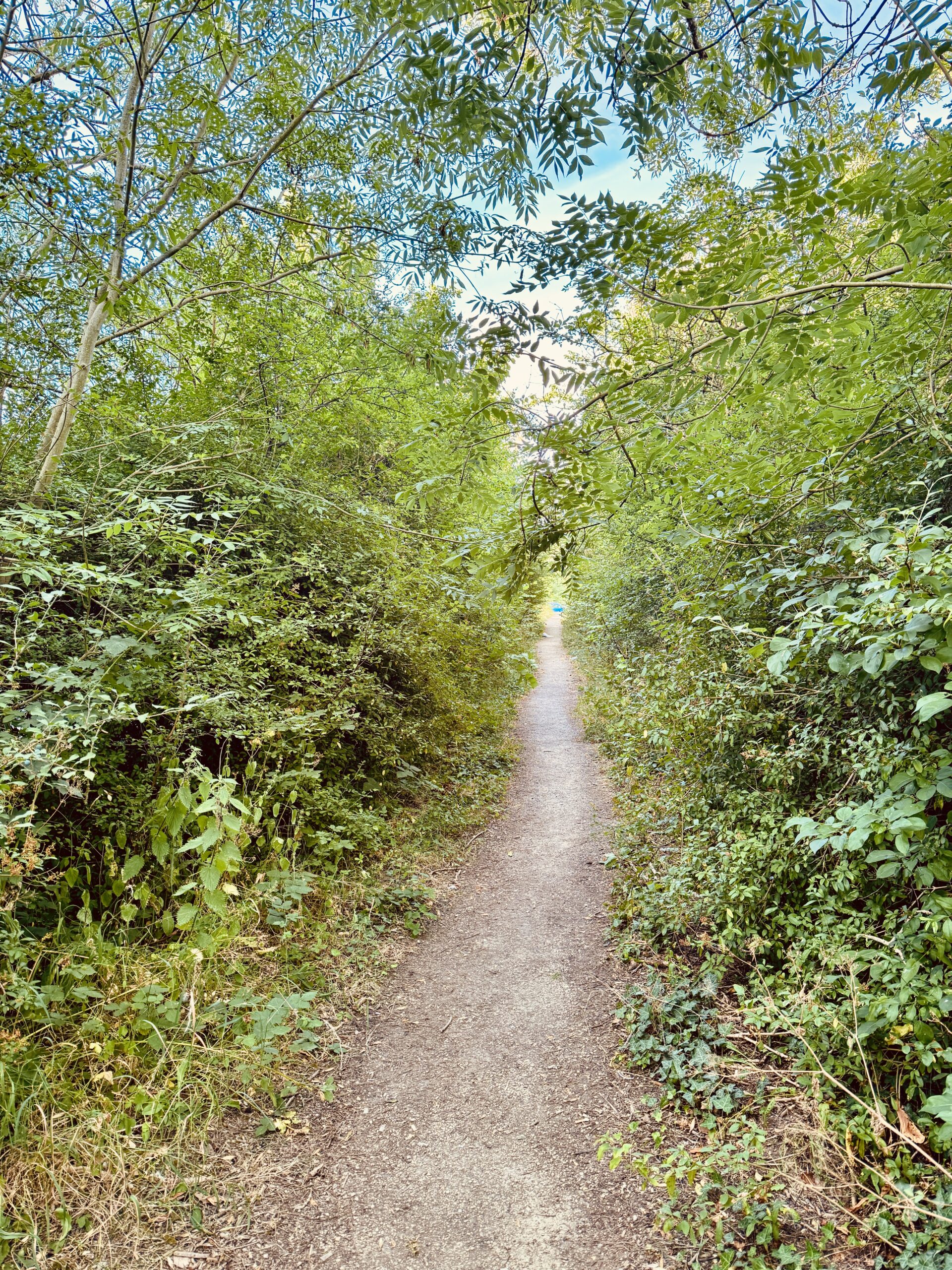
I walked to the gym this morning.

That sounds too ordinary to announce, which is probably why it matters. The gym is only seven minutes away by car. My normal routine is to get in, drive there, work out, drive back, eat something, shower, and be behind the desk by nine like a good citizen of the industrial clock. That’s the sensible move.

The 9-to-5 clock still lives in me. I can feel it. Even now, self-employed, answering to no manager hovering over my shoulder, I can still feel the old tribunal warming itself up somewhere behind my eyes. By nine o’clock, it says, you should be at the machine. You should look available. You should look as if work has started.

But I’d been reading about mythogeography, and the book had me thinking about walking as a way of meeting the world before the day hardens into tasks — the walk itself as the encounter, rather than fitness content, rather than a lifestyle hack with a ring closing at the end of it.

There’s something funny buried in that distinction. For most of human history people walked because they had to. To the next village, the field, the market, the church, the pub, and the place of work. Then the factories arrived, and the whistle, and the shift, and the mass-produced automobile, and life needed standardising to keep the machines running on time. Once walking stopped being necessary, it became romantic. It became leisure. It became something we schedule and recover with, on purpose, because the rest of the day has been arranged to make it unnecessary.

This morning I could feel that little historical joke in my legs.

The efficient version of the morning wanted the car. The wiser version, or at least the version I decided to listen to, wanted the path. So I walked.

A half hour there. An hour’s workout. A half hour back. Two hours, against one hour and fourteen minutes if I’d driven. On paper that’s a bad trade. I spent close to an extra fifty minutes doing what the car could have done in a fraction of the time. But the paper is using the wrong measure. The point was never to get my body from house to gym at maximum efficiency. The point was to be present in the morning instead of managing it, watch-checked and task-shaped, on the way to somewhere else.

I noticed, walking, how quickly my mind wanted to turn inward. I had the recorder going, talking through my thoughts as I went, which is useful and also slightly comic — there I was, trying to practise noticing, while mostly noticing the inside of my own head. The trees were there. The dogs were there. The pavement, the people saying good morning, and the small choreography of an ordinary street going about its business whether or not anyone pays attention to it. And I was “being productive” by running three things at once instead of looking at any of it properly. Something else for me to work on.

The bigger thing I was circling is this: work doesn’t have to happen in front of the screen that’s become the little altar where work proves it exists. The walk wasn’t a delay before the real work started. The walk was part of it. I forget that constantly, paying fealty to the desk as the one legitimate site of thinking when some thoughts flatly refuse to arrive there. Some thoughts need breath. They need footfall, a hedge, a stranger passing at the exact moment a sentence was about to form.

Everything becomes source material out there. Not in the hungry content-machine sense, where every living thing gets stripped for parts and fed into a content calendar. In the older, stranger, more generous sense. The world offers fragments. The walker gathers them. The blogger lays them next to each other and listens for the hum between them.

That’s what mythogeography and remix culture and old-school blogging all seem to share, now that I’m circling it directly. You wander. You collect. You juxtapose without rushing to judge what you’ve picked up. You let the field itself decide what kind of thing wants to come out of it — a walk, a note, a post, a question, a half-formed practice you’ll only recognise as a practice once you’ve done it three or four more times.

What if walking to the gym isn’t inefficient? What if it’s one of the ways I keep finding my way back to the actual ground of the work, rather than the desk that only pretends to be it?

The car would have got me there faster. The walk brought more of me with it.

I like sharing a campsite with chickens and …

I like sharing a campsite with chickens and goats and sheep. It’s barebones in the best possibble way. Some of these places can be over produced like they’re trying to create a luxury experience in a field.

This place, Grange Farm, is the opposite. It’s just grass, canvas, animals, weather and the small practical ritual of keeping yourself fed, dry, and reasonably human. Although, three days without a shower and I’m starting to feel ferel.

On the first of July I started a 31-day weblogging challenge. I wanted to blog in the original sense of the word: not posts designed around hooks and calls to action, but entries. Entries as field notes, half-formed thoughts, fragments, or full on essays if that’s the way text goes.

Last night I wanted to read something close to the way I’m trying to write. Something observational. Embodied. Simple in time and space. Definitely less theory and more of what is around me.

I was reading Tarot of Self-Discovery, but it was getting heavy with archetypal psychology, and out here I didn’t want more interior landscape. I wanted solid ground.

So I scrolled through the Kindle and found, somehow, a book I don’t remember buying: Mythogeography: A Guide to Walking Sideways. From the title, it sounds like just the thing I’m trying to avoid. But then the subtitle kicks in with this: “compiled from the diaries, manifestos, notes, prospectus, records, and everyday utopias of the pedestrian resistance.”

That felt close to what I wanted.

Especially pedestrian resistance. That sounds intriguing.

There’s something beautifully ridiculous about camping and caravaning. …

There’s something beautifully ridiculous about camping and caravaning.

Looking out across this fieldand I’m thinking at that here we are, modern humans with houses, central heating and air conditioning, broadband, sofas, fitted kitchens, proper beds, cupboards full of things – and for pleasure we hitch a small white box to the back of a car and go sit in a field under a grey sky.

And yet somehow it works.

Maybe the secret to the absurdity is that we’re not really leaving comfort because we hate comfort. We’re leaving it because too much comfort can become stale and invisible. The house becomes so much background noise. And we lose ourselves in the routine of living.

So we drag a miniature home into a patch of grass and make life awkward enough to notice it again.

You become aware of the wind direction, the damp grass, the neighbours you’ll probably never speak to beyond a nod, the small choreography of plugging in, levelling up, putting the steps out, and finding where the toilets are.

It is absurd. But it’s ritual absurdity.

In essence, we’ve setup a temporary village made of caravans, cables, folding tables, dogs, children, gas bottles, mugs of tea, and people pretending not to watch each other reverse badly into pitches. For a weekend, everyone agrees to live slightly closer to the elements and slightly closer to one another.

Maybe the caravan is a compromise between the cave and the house.

Not quite wild. Not quite domestic.

And maybe that’s why we love it because it loosens the spell of ordinary life just enough for us to feel ourselves living it.

At Orwell’s Grave, Still Asking Who Watches

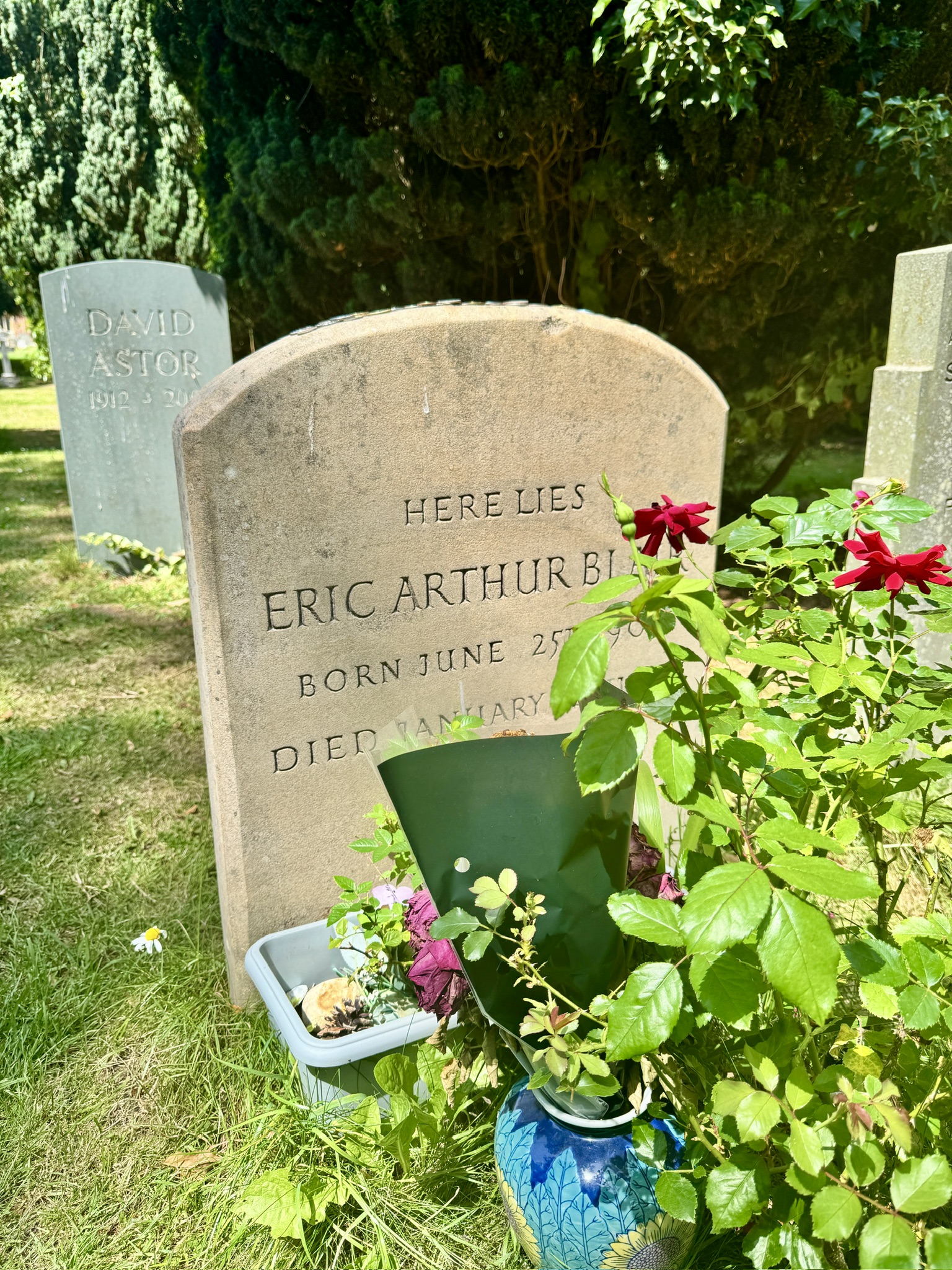
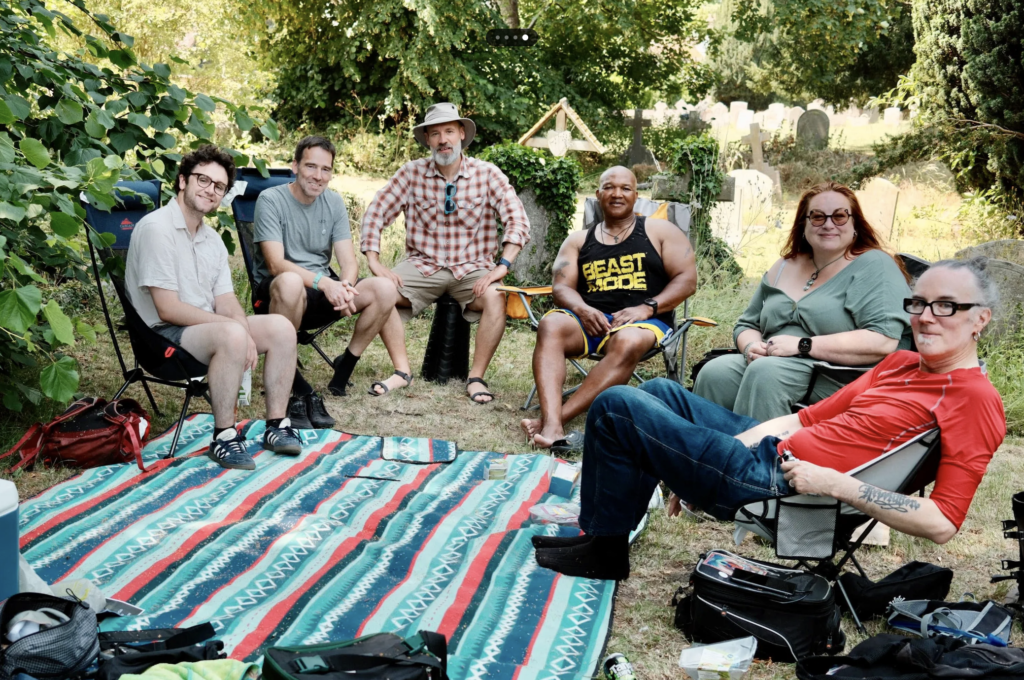
Today I went to the , held beside George Orwell’s grave on what would have been his birthday.

Orwell, of course, was born Eric Arthur Blair on 25 June 1903. George Orwell was the name he wrote under, the name that now floats above him like a warning label attached to the twentieth century. But at the grave, it felt less like visiting “George Orwell the icon” and more like standing beside the resting place of a man whose questions are still walking around without him.

The gathering itself was wonderfully un-grand. No stage. No branding. No big institutional apparatus. Just people turning up beside a grave with food, drink, stories, old connections, half-remembered conversations, technical obsessions, political worries, and a shared sense that Orwell still gives us a useful lens for looking at the world we’re living in.

There was something fitting about that. Orwell was never just a man of abstractions. He noticed poverty, class, bad food, ugly language, political lies, bodies under pressure, the smell of ordinary life. So a picnic by his grave may be one of the more honest ways to honour him. Not by freezing him into literary marble, but by gathering in the heat, talking about the world, and refusing to stop paying attention.

The opening address named the simple continuity of the thing. Twenty years ago, a small group gathered beside Orwell’s grave with food, drink, stories, questions, and concerns about the world. They’ve done much the same every year since.

That line stayed with me: twenty years of gathering at the grave to keep asking the same questions.

When the symposium first began, social media was still young, smartphones weren’t quite the little surveillance slabs they are now, artificial intelligence belonged mostly to science fiction, and climate collapse had not yet become ordinary vocabulary. Now all of those things sit with us at the picnic. They are no longer speculative. They are the furniture of the present.

The old Orwellian questions remain:

Who watches the watchers?

Who holds power?

What happens when technology moves faster than accountability?

How do we preserve privacy, dignity, and freedom in systems that increasingly monitor, measure, and mediate our lives?

And perhaps most importantly: how do we remain human inside all of this?

That last question felt like the real centre of the day.

The gathering was not there because Orwell “predicted the future.” That’s too easy, and maybe too lazy. Orwell did not simply look into a crystal ball and foresee smartphones, AI, Kindle libraries, social media pile-ons, or algorithmic propaganda. What he did was more useful. He understood certain patterns of power. He understood that language could be used to hide the truth. He understood that surveillance changes behaviour. He understood that reality itself can become contested territory. He understood that ordinary people can be made to participate in systems that diminish them.

Standing at the grave, that felt less like literary analysis and more like civic hygiene.

The picnic itself became part of the argument. One of the strongest lines from the address was that this gathering is a political act, not because everyone agrees, but because people are still willing to gather, listen, think, and speak.

That feels important now. Maybe more important than any formal speech. In a world of feeds, platforms, factions, comment wars, and algorithmically sorted outrage, a small group of people talking in person beside a grave has its own quiet force.

Not spectacle. Not performance. Presence.

After the formal words, the conversation loosened into the good strange texture of real gatherings. People talked about heat, air conditioning, old cars, journeys, friends who hadn’t seen each other for ages, someone needing a cold drink, and the strange fact that English summers now carry temperatures that once felt foreign. Even the heat seemed to be part of the Orwellian conversation, not as metaphor but as lived fact. The changing world was not an abstract topic. It was there in people’s bodies, in the shade, in the need for cold drinks.

Then the talk moved, naturally, into technology.

AI came up early. Someone had posted an image of a typewriter with “Happy Birthday George Orwell” typed on it, and someone else thought it might be AI. That tiny moment captured something very current: the fact that we now instinctively doubt the provenance of images, words, and artefacts. The question “Is this real?” has become ordinary.

There was talk of AI creeping into phones, into search bars, into image descriptions, into interfaces that no longer feel optional. One person described the AI features on their phone as seriously intrusive. Another joked about whether it had solved world hunger. It hadn’t, of course. It had mostly made itself harder to avoid.

There was also an interesting tension around AI as useful aid versus AI as creeping mediation. Using AI to describe a photograph for accessibility or convenience is one thing. Having it inserted into every search, every device, every interaction is another. That feels like one of the central tensions of the moment: not whether the technology is good or bad in some simple way, but whether we still get to choose our relationship with it.

The conversation touched on AI-generated text as well. Browser plugins that blur AI-generated writing. LinkedIn becoming unreadable because so much of it feels machine-made. False positives where human writing gets flagged as AI. The strange feedback loop where AI trains on us, we begin to sound like AI, and then the detectors lose their minds trying to tell the difference.

That’s a properly Orwellian knot: not merely falsehood replacing truth, but the weakening of our confidence in recognition itself.

There was talk too of scams, Facebook moderation, and fake ads. A friend’s tarot deck being ripped off. Reports going nowhere because moderation is automated, business models reward the wrong thing, and platforms have little incentive to stop making money from the problem. That led to one of the day’s sharper observations: when you report scams to Facebook, you are basically asking it to stop earning money from them.

There’s a grim clarity in that.

Privacy came up through the ordinary irritations of modern life. Ordering something online, giving over a phone number because the company insists on it, then receiving WhatsApp messages as if the number had become an open channel into your life. Someone said the phone number is like a fingerprint, almost biometric in its function. That felt exact. In the old world, a phone number was a way to reach you. Now it is also a key, an identifier, a tracking thread, a little tag attached to your body as you move through systems.

The most perfectly Orwellian anecdote, though, was the Kindle story: Amazon once remotely removed copies of 1984 from people’s Kindles because of a licensing issue. There it was, the memory hole in consumer electronics form. Not soldiers burning books in the square, but a corporation quietly reaching into the device you thought contained your library and making a book vanish.

The discussion turned into questions of ownership. If you buy a digital book and it can be taken back, did you really own it? If ownership becomes access, and access can be revoked, then the private library becomes a rented room with invisible locks.

That connected nicely with the talk of vinyl, hard drives, physical media, and the stubborn desire to hold things in a form that cannot be silently edited or withdrawn. Very Orwell. Very IndieWeb. Very much the archive fighting back against the feed.

Another thread that stood out was the loss of the old Twitter town square. Not nostalgia for everything Twitter became, but for the strange civic function it once had: the ability to complain publicly, summon attention, connect with strangers, shame companies into action, and participate in a shared conversational space. The current fractured landscape — X, Mastodon, Bluesky, Threads, WhatsApp, Signal, and all the rest — felt to some like a kind of Tower of Babel. Everyone dispersed. The public square shattered into smaller, less connected rooms.

That phrase has a charge: the Tower of Babel, but platformed.

There was also talk of alternative communication and resilience: radio, mesh networks, off-grid systems, little technical hobbies that suddenly feel less eccentric in a world of fragile infrastructures. Someone described using radio equipment to ping their location on the way to the grave, without initially relying on internet infrastructure. That felt like another quiet counter-current running through the day. If Orwell warns us about centralised power, then these odd little decentralised practices become more than hobbies. They become rehearsals in autonomy.

The human texture mattered as much as the politics. People arrived because they saw the event somewhere, maybe on a blog, maybe on Atlas Obscura. A journalist turned up while travelling. Someone mentioned Richard Blair, Orwell’s son. There was talk of the Orwell Society, of official versus unofficial forms of remembrance, of badges, old friends, missed connections, dyslexia, documentaries, roads, radios, trains, and whether England is starting to feel like a developing country.

This is what I liked most in the symposium: it was not a clean intellectual event. It was a living human tangle.

Which is probably the point.

Orwell’s work remains alive not because people can quote 1984 at each other but because his questions keep escaping the book and entering ordinary conversation. They show up in phones, apps, cameras, scams, fake images, platform moderation, disappearing digital books, AI summaries, search engines that no longer feel like search engines, social media that no longer feels social, and the creeping sense that our lives are being sorted, nudged, tracked, and mediated by systems we did not meaningfully consent to.

But the day did not feel hopeless.

If anything, the act of gathering beside the grave seemed to carry a modest defiance. People still came. They still talked. They still joked. They still questioned power. They still challenged language that obscures truth. They still shared food and drink. They still made room for curiosity.

Maybe that is the small counterspell.

Not certainty. Not purity. Not ideology.

Just attention, conversation, memory, and the stubborn refusal to let the machine have the whole field.

Happy birthday, Eric Arthur Blair.

Rest in peace, George Orwell.

The rest of us, apparently, still have some watching to do.

Photo by Christian Payne

Working Notes: Gonzo Spirituality and the Bar of the Psyche

This old post has wandered back into consciousness: Holy Gonzo! Embracing Chaos and Truth on the Path to Self-Discovery. I reposted on social media over the weekend. I wrote it back in October 2024, but reading it now, I’m feeling drawn to explore the subject further. The phrase at the centre of it all is Gonzo Spirituality.

At the time, I was trying to name a kind of spiritual practice that didn’t require me to step away from the life I was actually living. I wasn’t drawn to the serene, white-robed, mountain-retreat version of spirituality. I didn’t want a path that demanded I become calmer, purer, softer-spoken, or more detached from the mess. That may work for some people, but it has never quite felt like my road. I want to embrace the mess, to root in it like a pig in…well, let’s just say, I like my spirituality messy. Cobbled together between late-night notes, contradictions, and strong black coffee. Lots of coffee.

Oh, and did I mention the demons? Not the demons you might find in Paradise Lost or in some ceremonial magick ritual, but the demons you find in your head – the fear, doubt, disbelief, anxiety, grief, hate, and lust, to name a few. These are the demons I want to pull up a stool next to me to talk to.

The older post framed this through Hunter S. Thompson and the spirit of Gonzo journalism. In Gonzo, the writer is not a detached observer pretending to be neutral. The writer is implicated. The writer is in the room, in the car, in the bar, in the fever dream, in the wreckage of the thing being described. There’s no clean separation between the report and the reporter.

That feels important.

Because maybe the same is true of self-discovery. Maybe I don’t get to stand outside my life, clipboard in hand, calmly assessing the evidence. Maybe the only honest way to understand the self is from inside the ride.

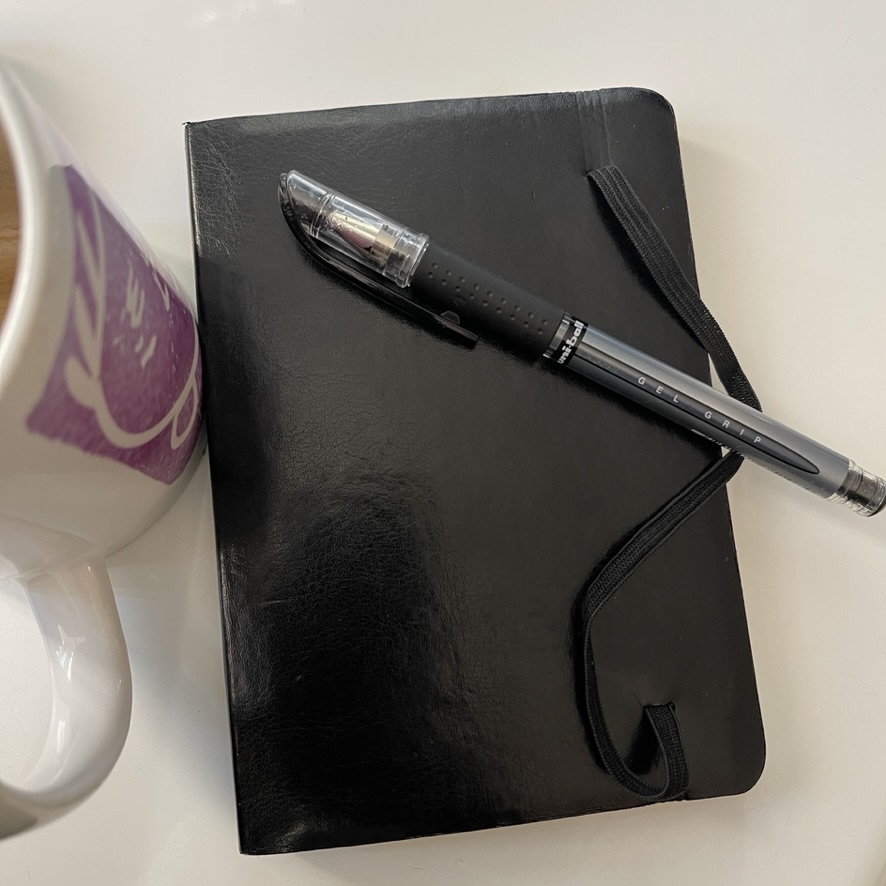
Buy the ticket. Take the ride. Bring a notebook.

That might be the first rule of Gonzo Spirituality.

It’s not my intent to glamourise chaos or to make suffering cool or to intimate that every bad habit is secretly holy. That would be too easy, and probably dangerous too. What I’m trying to get across is that the raw material of life can’t be understood by pretending it isn’t there.

The fear. The doubt. The jealousy. The ambition. The anger. The avoidance. The hunger. The old wounds. The ridiculous cravings. The part that wants transcendence and the part that wants another drink. The part that wants silence and the part that keeps refreshing the feed.

All of it belongs to the field.

Not all of it should be obeyed. But all of it can be listened to.

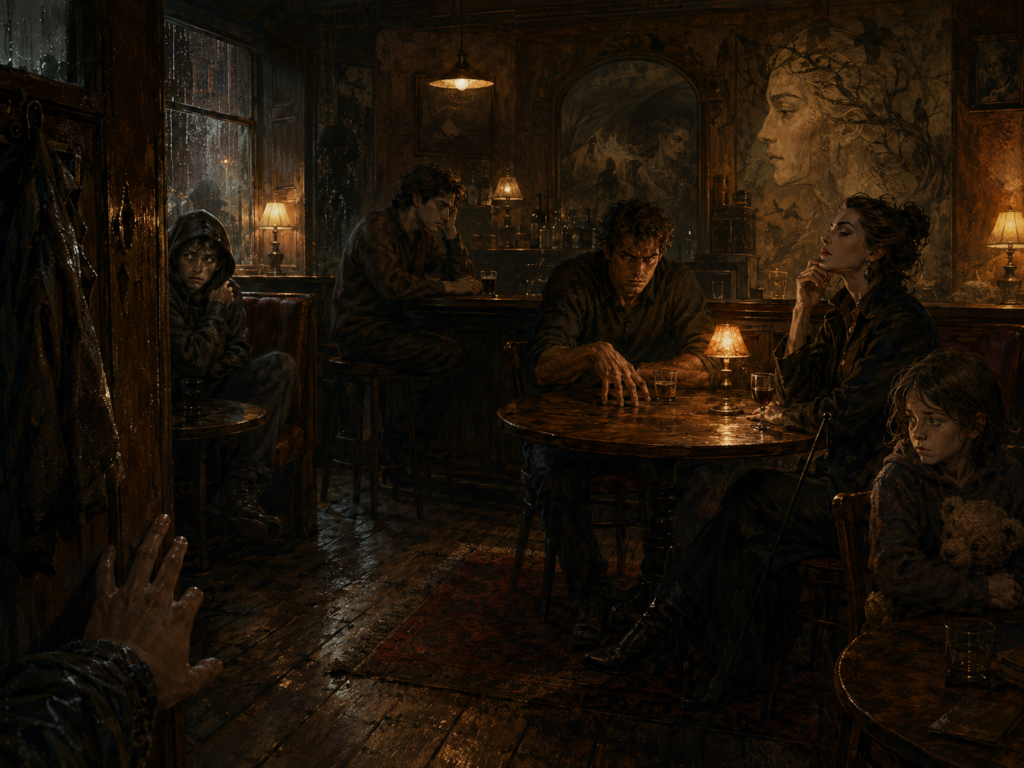
That’s where the image from the old post still grips me: the bar of the psyche.

Working Notes: Gonzo Spirituality and the Bar of the Psyche

I imagine walking into some dimly lit inner pub, somewhere off the main road of consciousness. The place smells faintly of old wood, soaked coats, and unfinished conversations. Sitting there already are the parts of myself I usually try to avoid. Fear has taken the corner seat. Doubt is nursing something dark. Anger is tapping its fingers on the table. The inner critic has opinions about the décor. The wounded child is quiet, watching the door.

The conventional move might be to banish them, heal them, silence them, transcend them, or surround them with light until they stop making trouble.

The gonzo move is different.

You sit down.

You buy the first round.

You ask, “So, what’s your story?”

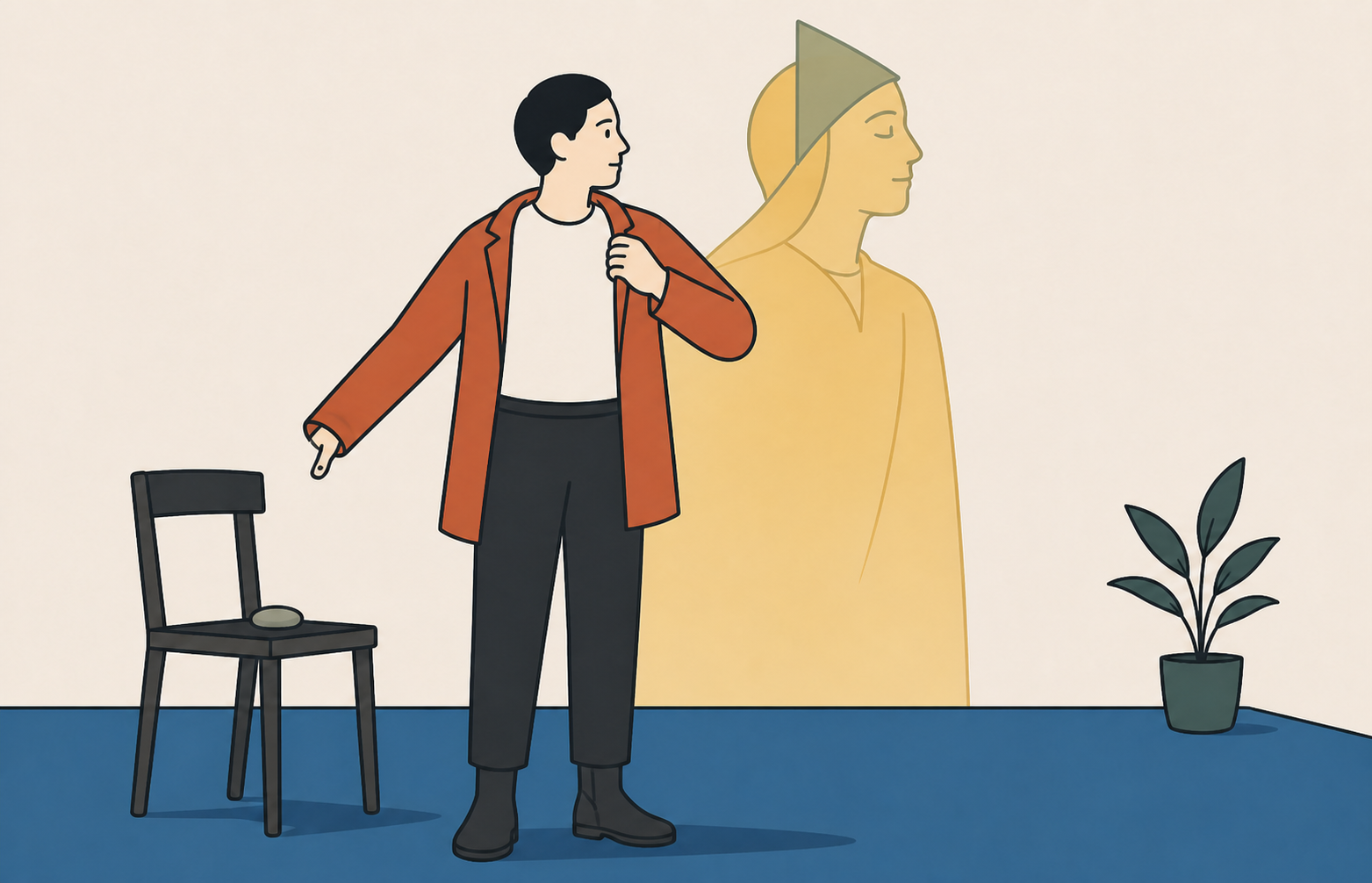
This is where the older post now links directly to what I’ve been calling Narrative Alchemy. If stories are code, then these inner figures are not random glitches. They are subroutines, old scripts, survival programs, and half-written myths still running in the background. Some of them are outdated. Some are defensive. Some are dramatic as hell. But most of them began as attempts to protect something tender.

Fear may be guarding the edge of an old fall.

Anger may be protecting a boundary I never learned how to name.

Jealousy may be pointing toward a desire I haven’t admitted.

Doubt may be trying, clumsily, to keep me from self-deception.

Even the demons have data.

This doesn’t mean every inner voice is wise. Some are drunk. Some are liars. Some only know one song and will sing it badly until sunrise. But if I’m willing to listen beneath the noise, I may discover the wound, longing, or story they’ve been carrying.

That’s the work.

Not to turn the self into a clean, well-lit temple where nothing untidy is allowed through the door. More like turning the self into a strange old roadside tavern where the exiled parts can finally come in from the cold and be heard without being handed the keys.

This is where Gonzo Spirituality also pushes back against the dream of escape.

A lot of spiritual language can smuggle in a quiet contempt for ordinary life. The body becomes something to rise above. Desire becomes something to dissolve. The world becomes a distraction. Technology, noise, politics, relationships, work, money, ageing, grief, appetite, frustration — all of it becomes evidence that we are not yet “there.”

But where exactly is “there”?

And who benefits from convincing us that the sacred is always somewhere else?

The older post was already resisting that move. It wanted a spirituality that could happen in the middle of the life I had. Not after the inbox was empty. Not after the house was quiet. Not after I became a better, calmer, more luminous version of myself.

Right here.

In the day as it actually arrives.

In the walk.

In the blog post.

In the argument.

In the app notification.

In the muddy shoes by the door.

In the moment when I notice I’m irritated and, instead of pretending I’m above irritation, I ask what the irritation is trying to show me.

That feels close to what I now mean by existential consent.

Not passive acceptance. Not resignation. Not “everything happens for a reason” pasted over the wound like a motivational sticker. More like the willingness to begin with what is actually here.

This life.

This body.

This mood.

This history.

This nervous system.

This strange bundle of memory, appetite, language, contradiction, longing, and desire.

I don’t get another self to work with. I get this one.

So the practice becomes less about escape and more about authorship. Not authorship in the fantasy-control sense, as if I can simply rewrite reality by declaring a new story. But authorship as participation. As revision. As noticing the sentences I’m living inside and asking whether they are still true, still useful, still alive.

Gonzo Spirituality says: don’t wait until the manuscript is clean before you start reading it.

Read the messy draft.

Write in the margins.

Question the narrator.

Interview the villains.

Follow the footnotes.

Notice where the plot keeps looping.

And when necessary, revise the code.

This is where blogging enters the picture too. Because blogging, at least for me, has never simply been publishing. It has been a way of taking field notes from the ongoing experiment of being alive. The blog becomes the notebook on the road. The place where the life-material gets turned into language before it disappears. The place where confusion is allowed to become visible enough to work with.

In that sense, the old Gonzo Spirituality post belongs in the same lineage as Working Notes from the Textual Underground. It is another attempt to say: I am not writing from above the mess. I am writing from inside it.

The mess is not a failure of the method.

The mess is the material.

And maybe that’s why the piece still hums. Underneath the Hunter S. Thompson styling and the barroom imagery, there is a serious proposition:

Wholeness does not come from abandoning the life that made you. It comes from learning how to meet that life without flinching.

That includes the light, yes.

But also the shadow.

The awkward contradiction.

The part that still aches.

The part that wants more.

The part that sabotages.

The part that dreams.

The part that keeps walking.

Gonzo Spirituality is not a finished system. I don’t want it to become one. The moment it hardens into doctrine, it loses the very thing that makes it useful. Better to treat it as a working lens, a cracked map, a field method.

A way of entering the chaos with enough courage to listen.

A way of refusing sterile transcendence.

A way of finding the sacred not by floating above the world, but by paying closer attention to the strange, unedited texture of being here.

So yes, I still believe in the bar of the psyche.

I still believe in buying the demons a drink.

Not because they’re in charge.

Because they’ve been waiting a long time to tell their side of the story.

Better Than Sex, 30 Years Later: Revisiting the Book That Broke My Brain

07:39. I’m in my lounge chair drinking black coffee, the morning still soft around the edges.

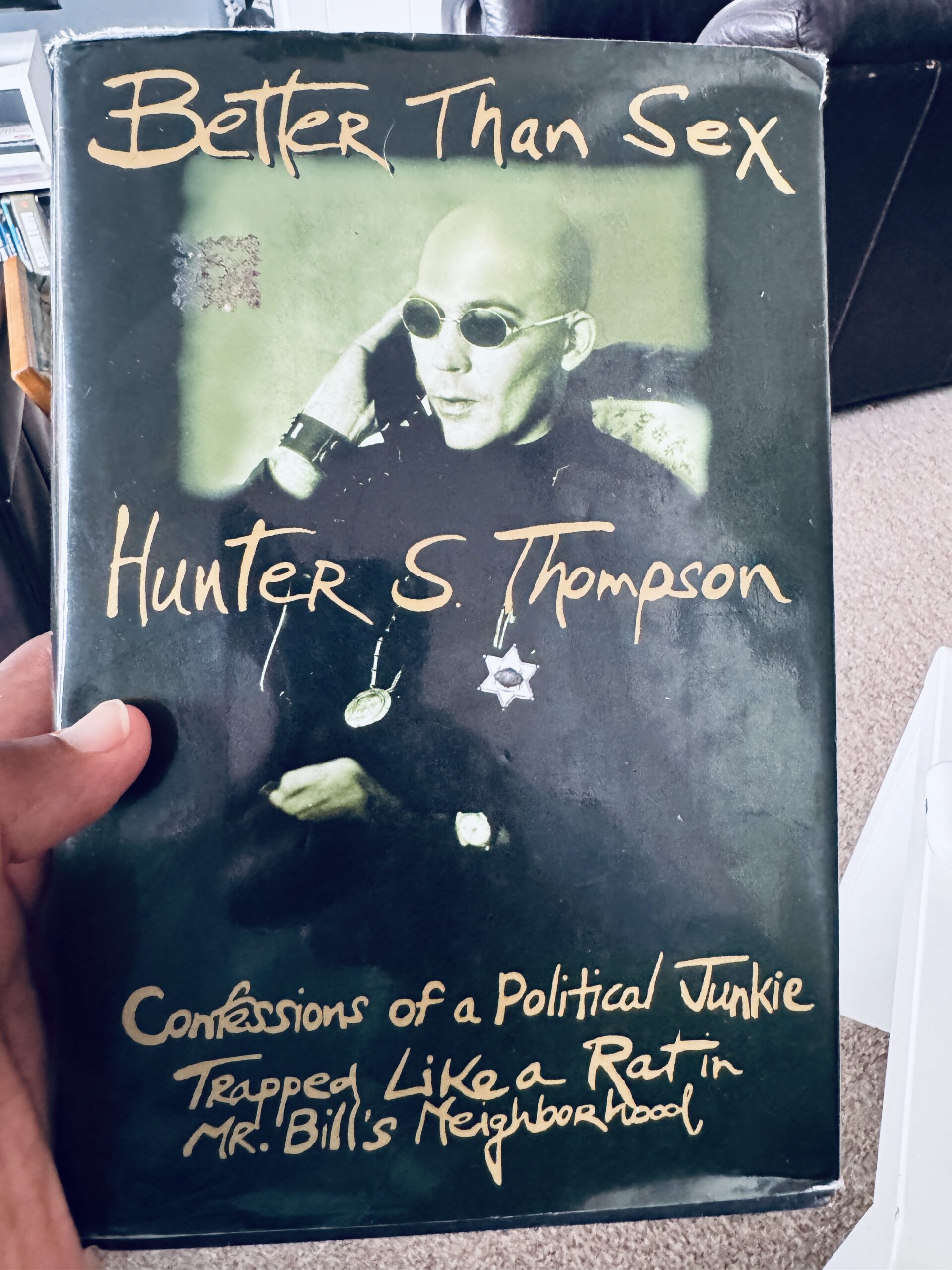
For my morning read today, I’ve been revisiting Hunter S. Thompson, starting with the book that began my literary love affair with his work: Better Than Sex: Confessions of a Political Junkie.

There’s something about Hunter that still gets under my skin in the best possible way. He doesn’t simply report the story. He enters it. He becomes part of the event he’s describing. He’s not pretending to stand outside the madness with clean hands and a neutral expression. He is in the room, at the bar, in the campaign bus, and in the hotel lobby at 3 a.m., feeling the paranoia, the electricity, the absurdity, the rot, the strange comedy of American public life.

That’s what has always drawn me to first-person nonfiction. I like writing where the writer is in the story. Not as some inflated main character, but as a lens. A body. A nervous system. A witness with fingerprints.

It’s why I admire Hunter. It’s why I’ve always loved literary travel writing, diaries, notebooks, memoirs, and blogs. I like seeing the world through other people’s eyes, especially when those eyes are alert, damaged, amused, haunted, hungry, and alive.

Maybe that’s the deeper pull. I don’t just want information about the world. I want contact. I want the felt sense of being there. I want to know what the dust smelled like, what the coffee tasted like, what the light was doing on the wall, and what strange little thought passed through the writer’s mind while everyone else was looking at the obvious thing.

And beneath that, if I’m honest, is my own old desire: to be a participant in life, not merely a watcher from the sidelines.

I have to confess, I’ve been on the bench for a while (probably since Covid).

Not completely. I still walk. I still notice things. I still make my little field reports when I’m out and about. But I’m certainly not out in the world in the way I was when I was younger. Back then, being outside was not a lifestyle choice or some wellness prescription. It was the default condition of being alive. Nature was not a retreat from life. It was life. I went further afield. I climbed new mountains. I wandered through new bits of countryside. I chased the map outward.

I blame the internet.

Of course, they say a poor craftsman blames his tools, and they’re probably right. The internet didn’t chain me to the chair. I walked willingly into the glowing cave.

But as someone who gets intoxicated by knowledge-seeking, the internet is a particularly dangerous drug. It gives me exactly the thing I have always craved: endless corridors of thought, endless doors, endless shelves.

As a teenager, I used to wander the library stacks for hours. No subject was off limits. Philosophy, science, art, mythology, psychology, history, music, strange technical manuals, books with titles I barely understood. I loved the sheer possibility of it all. I’d leave with stacks of books, as if I were smuggling worlds under my arm.

So of course the internet became both a blessing and a curse.

Now I can explore the world without leaving my chair. I can roam through archives, maps, lectures, essays, documentaries, old interviews, obscure forums, digital museums, scanned manuscripts, and now, with AI, I have something like a portable Library of Alexandria sitting at my fingertips, awake whenever I call.

It’s astonishing.

It’s also a trap.

Because if you’re wired the way I’m wired, the search itself becomes the journey. You can spend the whole morning reading about mountains and never feel wind on your face. You can watch ten videos about someone else walking through a forest and never put on your boots. You can collect knowledge about aliveness while slowly becoming less alive.

That’s the part I’m trying to reckon with.

My Wisdom Walks are one way I force myself away from the screens. They get me out of the chair and back outside, mud, birdsong, breath, distance, and bodily time. But even there, I notice the limits I’ve allowed to creep in. Most of these walks are local. Useful, yes. Grounding, yes. But not quite the same as the old impulse to go further, to find a new ridge, a new stretch of river, a new patch of countryside where the map opens.

Back in the day, I tried to live by the North Face ethos: never stop exploring.

And there was another war cry too, one I picked up from outdoor culture and carried like a small personal commandment:

Get outside. Stay outside.

That phrase still has charge for me. It feels less like advice and more like a spell I forgot I knew.

Lately, I’ve been trying to rebuild my life around that old rhythm. I’ve created a mobile workflow: smaller cameras, a portable podcast setup, the iPad, or sometimes just the phone. The theory is simple enough: everything I can do at a desk, I can do outside.

In theory, this is beautiful. The barefoot philosopher’s office is wherever he can sit, walk, speak, photograph, think, and write. A bench. A woodland edge. The back of the car with the boot open. A picnic table. A patch of grass. A café after a long walk.

But then comes the catch.

WiFi.

So much of my life and work depends on having a decent internet connection. Uploading, sharing, checking, filing, syncing, posting, researching, responding, confirming. The whole apparatus of modern work hums invisibly behind the scenes, and I’ve let that hum dictate how far and how often I roam.

It’s ridiculous, really. I know it is.

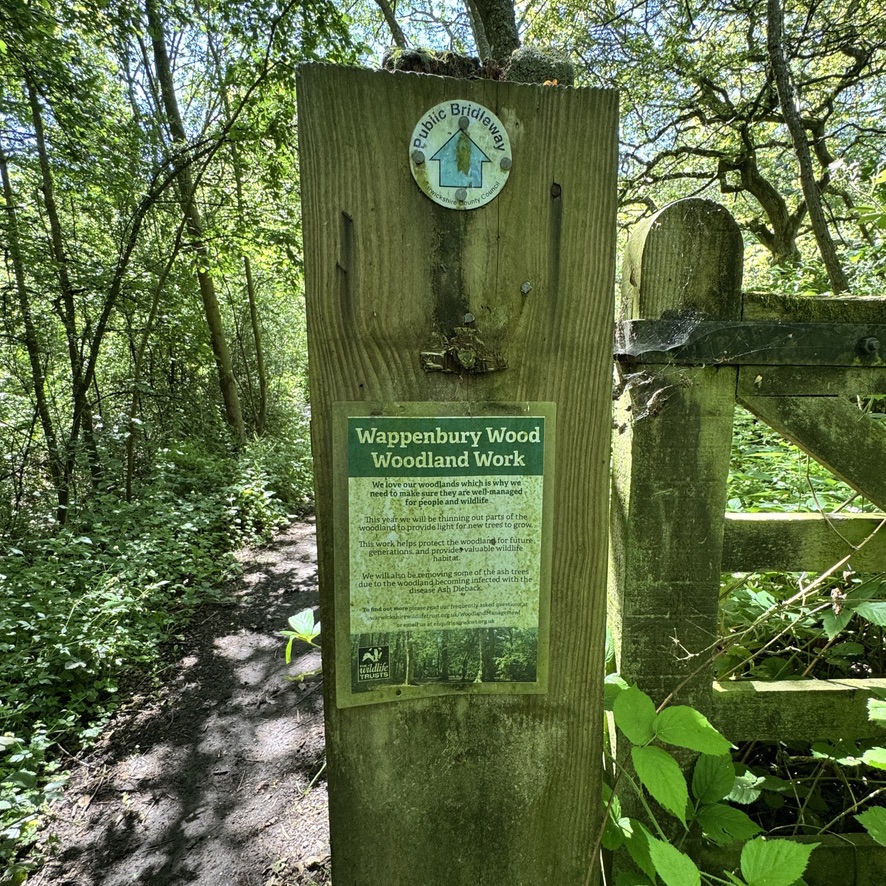
Yesterday, while roaming Wappenbury Wood, I found myself running up against this exact absurdity. I had paid for two hours of parking. I wanted to extend my time in the woods, but I couldn’t get a connection, so I couldn’t extend my parking through the RingGo app. There I was, surrounded by trees, wanting to remain in the place, and being tugged back by a parking meter I couldn’t speak to because the little rectangle in my hand couldn’t find a signal.

Better Than Sex

First-world problems, I know.

But also a sign.

Some might say ‘good’. If you’re outside, be outside.

And part of me agrees. Deeply. There’s wisdom in not turning every walk into a production. There was a time when I lost my way with that too. I spent more time looking at the world through a device than experiencing the place through my own eyes. I’d be composing the post before I’d even received the moment. I’d be thinking about the share while the living thing was still happening in front of me.

Thankfully, I’ve mostly kicked that habit.

I don’t bother processing photos while I’m out. I don’t feel the need to livestream the experience. I’m learning to let the walk be the walk. The camera comes out when it needs to. The note gets captured via my Plaud voice-note device. But I’m no longer trying to turn every outing into a broadcast.

That feels like progress.

But there’s another habit underneath it, and maybe this one is harder to break: the 9-to-5 mindset. The productivity culture mindset. The idea that if I’m away from the desk, I’m somehow not working. The idea that roaming, wandering, reading under trees, following curiosity, and letting the body move through the landscape are somehow indulgences rather than part of the work itself.

And this is where I need to remember what I actually believe.

Being outside is my work.

Or at least it is part of the working condition I’ve spent years trying to build my life around.

I’m not trying to become more efficient at sitting under artificial light and moving tasks from one column to another. I’m trying to build a life where thinking, walking, writing, noticing, reading, photographing, speaking, and making are woven together. A life where work is not a cage I return to after being alive, but a form of aliveness itself.

That doesn’t mean abandoning responsibility. It doesn’t mean pretending money, deadlines, clients, admin, and logistics don’t exist. The parking app still wants paying. The email still needs answering. The file still needs sending.

But it does mean the old industrial rhythm cannot be the master rhythm.

There is another rhythm available.

Harold Jarche’s PKM model comes to mind here: seek, sense, share.

I’ve always liked the simplicity of that. It gives shape without becoming a cage.

Seek: go out, read, wander, notice, collect, and encounter.

Sense: sit with what has been gathered, make meaning, connect it to the living archive, let the pattern reveal itself.

Share: publish, speak, teach, post, make the field note public, and offer the insight back to the commons.

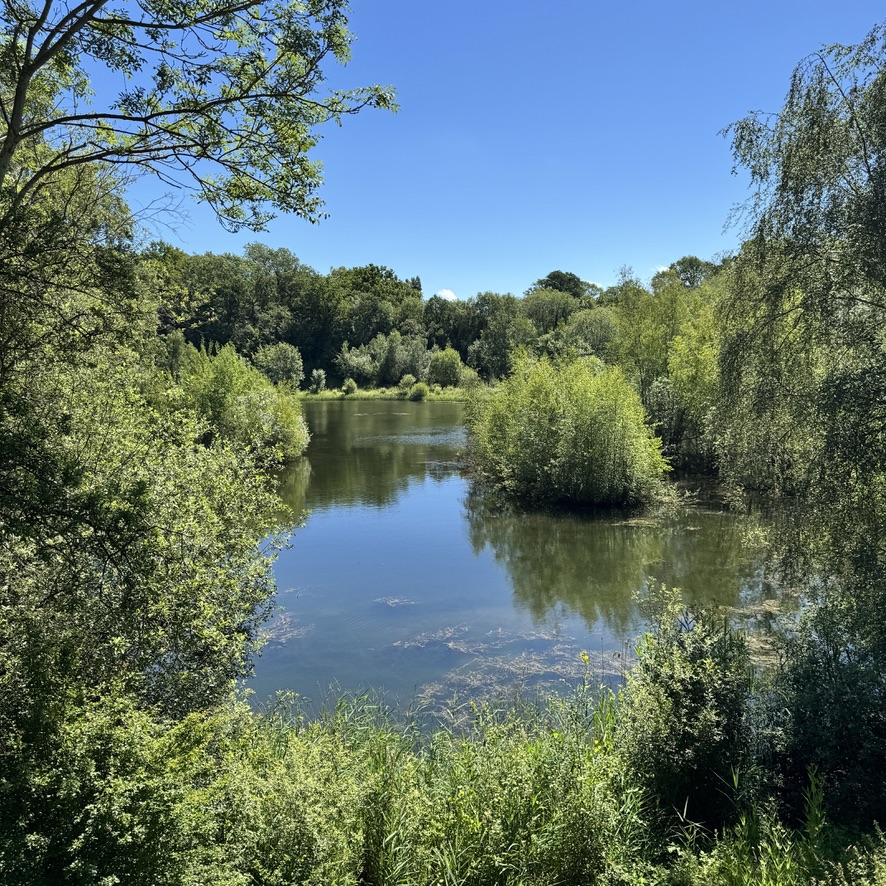
Wappenbury Wood

Maybe the trick is to stop trying to do all three at once.

When I’m outside, perhaps I’m mostly in seek mode. I’m gathering. Walking. Looking. Letting the place work on me. Letting the body become an instrument again. I don’t need to process everything on the spot. I don’t need to share immediately. I don’t need to prove the walk was productive by turning it into output before I’ve even left the woods.

Then, later, somewhere with coffee and a signal, I can sense and share.

This might be the rhythm I’m looking for.

Not desk versus outdoors.

Not internet versus nature.

Not productivity versus wandering.

But phases. Movements. Breath.

Inhale: go out.

Hold: notice what the world is saying.

Exhale: write, speak, share.

The internet then becomes part of the cycle rather than the whole ecosystem. AI becomes a thinking companion, not a substitute for experience. The archive becomes a living field, not a bunker. The phone becomes a tool, not the eye I see through.

And the walk becomes what it has always wanted to be: a method.

The barefoot philosopher does not need to reject the digital world. That would be too simple, and frankly, false. My life is tangled with the web. My work is made of language, links, fragments, feeds, archives, posts, and conversations across distance. I am a child of the library and the internet. I don’t want to give that up.

But I do need to renegotiate the terms.

The chair is good. The coffee is good. The screen is useful. The infinite library is a miracle.

But the world is not inside the machine.

The world is outside, being rained on. It’s in the mud underfoot, the old trees at Wappenbury, the cold air in the lungs, the hill not yet climbed, the lane not yet followed, the bird I can’t name calling from somewhere beyond the path.

Hunter got into the story.

That’s what I’m hearing this morning.

Not just read about the madness. Enter the room.

Not just study life. Participate.

Not just watch other people’s field reports from the glowing cave. Make my own.

Get outside. Stay outside.

Seek. Sense. Share.

Find the rhythm again. The barefoot philosopher’s rhythm.

Being, not becoming

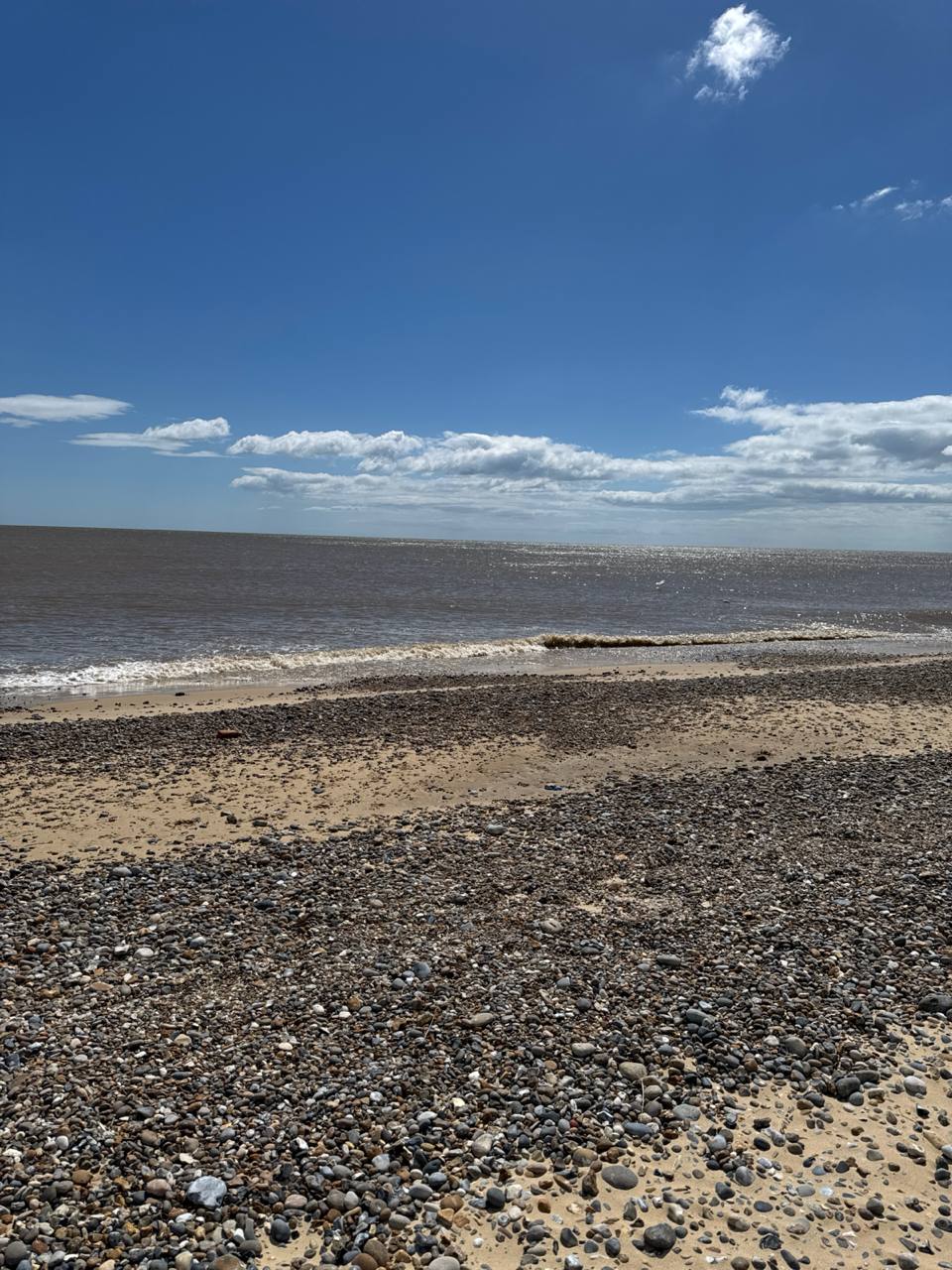
Pebbles, sand, surf, open water, and sky on the Kessingland coast.

Saturday. Kessingland. A camping field on a sea cliff; the morning is already bright by the time I properly arrive in it.

I wanted to watch the sunrise. That was the plan in the loose way plans form when you sleep outdoors and imagine yourself becoming more elemental by morning. But the field gave me sleep instead, and the sun did its work without me standing there to witness it.

There’s something almost comic in that. I had come to the edge of the country with the vague heroic notion of rising with the light, looking out across the water towards the Netherlands, letting the horizon perform some kind of magic like it used to do when I was a kid. Instead, my body chose repair. Air, grass, canvas, salt, distance. The older intelligence took over.

Maybe that was the first teaching of the day.

The body doesn’t care about the performance of attention. It knows when restoration is the deeper form of noticing.

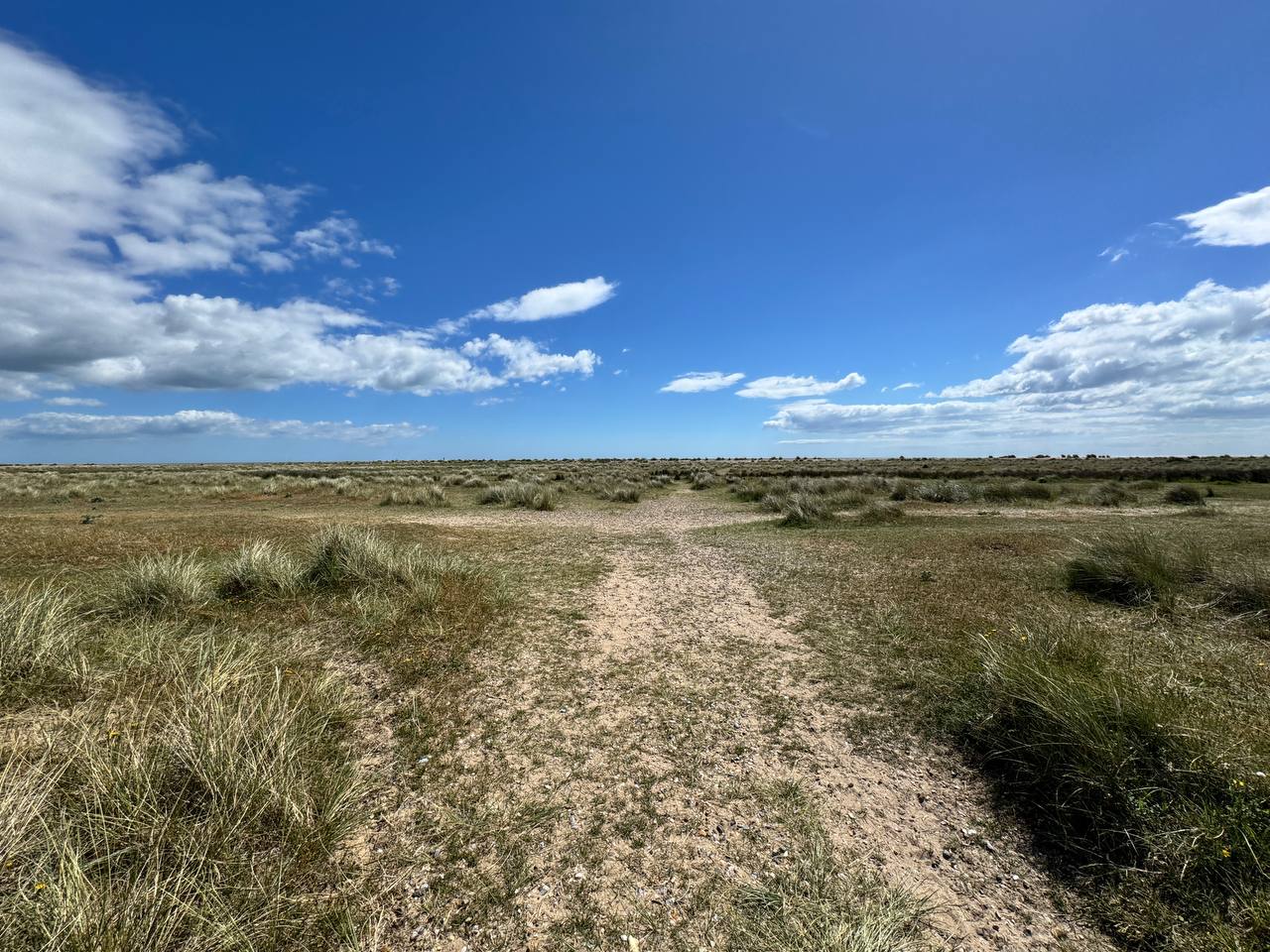
A sandy path through low coastal grass under a wide blue sky.

Later, walking the path through the low grass and scrub, I kept thinking about the High Priestess.

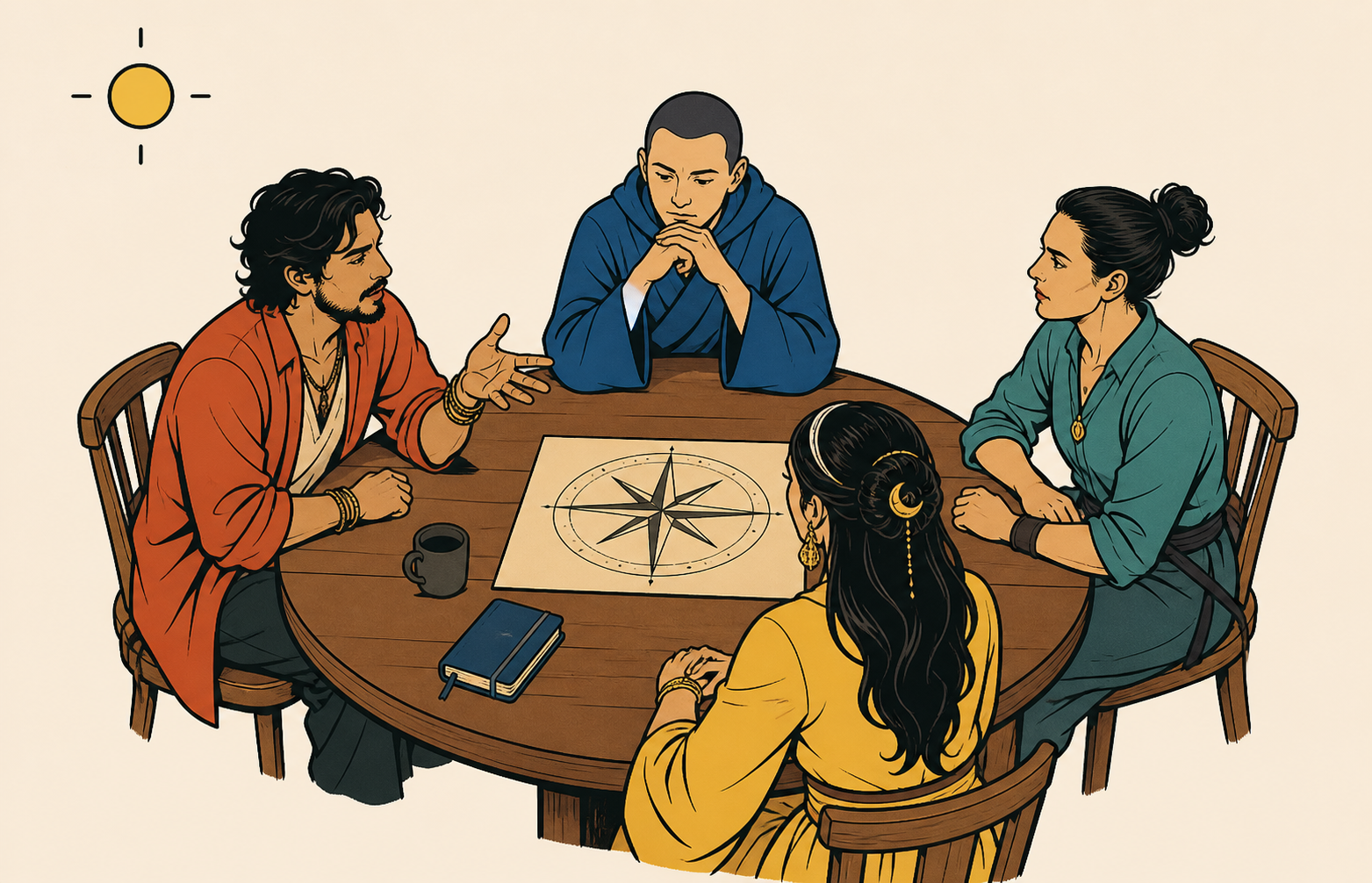
I’d drawn her earlier from the major arcana as a way of asking what figure wanted to join the inner council that’s been forming in my journal. Yesterday it was the Monk and the Frontman, then the Trainer. The Monk wants books, contemplation, freedom, and the right to follow the rhizome without turning every branch into a business case. The Frontman wants visibility, contact, recognition, a livelihood, and some way of being known in the world. The Trainer knows how to make knowledge usable: insight into prompts, exercises, workshops, field guides, and practices that other people can actually hold.

Then the High Priestess arrives.

She doesn’t come in with a plan, a funnel, a product ladder, or a better explanation of the work. She brings a silence that changes the room.

The Monk, the Frontman, and the Trainer all have becoming-energy in them. Become freer. Become known. Become useful. Become viable. Become the version of the self that can finally hold all of this together.

The High Priestess interrupts that machinery.

She asks whether the next stage is another becoming or a deeper inhabiting.

That sentence has been working on me all day, arriving more clearly as I walked: it is time to shift from perpetually becoming into being and let growth emerge from that instead. Not anti-growth. Not resignation, not a refusal to change. More like a refusal to keep treating the self as a project that must be improved before it is allowed to live.

That feels like the hinge.

For years I’ve carried the question in one form or another: what must I become in order to earn from this? What shape must the work take to be viable? What identity do I need to step into so the blog, the coaching, the training, the walking, the mythic imagination, the archive, and the strange recursive life with language can all make sense to other people?

The question has a violence hidden inside it.

A gentler question opened on the path:

What naturally wants to grow from the being I am already practising in public?

That is a different kind of inquiry, one that doesn’t ask me to chase an improved self into the future but to inhabit the self that has already been gathering here all along.

The path seemed to agree. No mountain. No temple. No city of destiny shining at the end of the track. Just sand, grass, sky, and a worn line made by prior walking.

Here is the ground. Here is the path. Walk from where you are.

Pebbles, sand, surf, open water, and sky on the Kessingland coast.

Down by the water, the thinking changed again.

Listening to the wind and the waves talk.

That was the phrase that arrived. Not watching. Not interpreting. Listening.

The beach was all thresholds: pebble into sand, sand into surf, surf into open water, water into sky. Nothing there was trying to become anything else. The stones were stones, the sea was sea, the clouds were passing in their own time, and the wave line arrived, broke, withdrew, and returned.

The High Priestess was there too, but not as a gothic temple mystery. Coastal. Elemental. Less veil and candle, more horizon and rhythm; she was in the shimmer on the water, the movement I couldn’t command but could attune to.

The waves do not become by ambition. They become by returning.

The wind does not announce its strategy. It moves.

The stones do not improve themselves. They are shaped by contact, pressure, tide, and time.

That may be the deeper instruction in the being-not-becoming insight. Growth emerging from being doesn’t mean nothing changes; it means change comes through relationship with the elements already acting on me: walking, writing, listening, blogging, remembering, and returning.

I stood there long enough for the beach to open a door in time.

I remembered Brian.

When we were teenagers, Brian and I used to hang out at the beach in the off-season: no tourists, just us and the wind and the water and the huge imaginative permission of an empty shore. We imagined ourselves as explorers heading across the sea into the unknown. Sometimes we were sea gods, like Marvel’s Sub-Mariner or Prince Namor. Boys at the edge of the known world, inventing themselves from salt air and comics and friendship.

Brian died a few years ago from cancer.

So the text needs a pause here.

For Brian.

The beach was not empty back then. It was a mythic training ground, and we were not simply hanging out. We were rehearsing the old archetype of crossing: the shore as threshold, the sea as unknown, friendship as vessel.

And now here I am again, older, marked by loss, still standing at the edge of the unknown, still listening to wind and waves talk.

There is a tenderness in that I don’t want to explain away.

The sea kept the old frequency.

The High Priestess thread deepens here because hidden knowledge is not always buried in esoteric symbols. Sometimes it rises through place; sometimes the oracle is memory. Sometimes the body returns to a shoreline and finds a younger self still there, still imagining, still unburdened by the need to monetise, brand, niche, teach, package, or justify the imagination.

Just two friends in the off-season, making worlds out of wind, waves, and empty horizon.

That may be part of today’s medicine.

Not to become more imaginative.

To remember that imagination was already native.

By the time I left the beach, the morning had become something other than the morning I planned. I missed the sunrise and found the field. I asked for an archetype and got a listening practice. I walked toward becoming and found being already under my feet.

The waves were talking even then.

Maybe they have been talking all along.

Working Notes: The Quest for the Self

person stepping on tree trunk while holding a sword

I’ve started reading Ruth Netzer’s Tarot of Self Discovery. I’m only in the introduction, but already I can feel one of those useful recognitions happening. She is writing about tarot in a way that sits very close to my own use of the cards: not as fortune-telling or mystical commandments, but as a form of Jungian active imagination.

The cards become images that help the psyche speak.

Netzer seems to work with two principles at once. One is psychological: the image reflects something going on inside us. The other is synchronistic: the image that appears at a particular moment may carry a strange rightness, as if the unconscious, the world, and the timing of the draw are briefly conspiring to make something visible.

That is the space where tarot becomes interesting to me. Not prediction or obedience. And definitely not “the cards say.” More like, ‘Here is a symbolic mirror.’ What does it constellate? What does it disturb? What does it reveal that ordinary language has not quite managed to reach?

Netzer is also working with the Hero’s Journey, which makes sense. Tarot almost invites that reading. The Major Arcana can easily be seen as a sequence of initiations: departure, trial, descent, death, renewal, and return. But she has also mentioned, more than once now, something she calls the Quest for the Self, placing it alongside the Hero’s Journey and the Heroine’s Journey.

That phrase caught me.

The Quest for the Self.

It feels related to the heroic pattern but not identical to it. The hero goes out. The Self seems to call us inward and downward, then wider.

Hero, heroine, Self

A working distinction might be this.

The Hero’s Journey is the ego going out into the world to be tested. It leaves the ordinary world, faces trials, meets helpers and enemies, wins or receives the boon, and returns changed. Its centre of gravity is ordeal, action, courage, separation, initiation, and return.

The Heroine’s Journey, especially in Maureen Murdock’s sense, often concerns the healing of a split. The feminine is rejected or devalued, the masculine-coded world of achievement is pursued, and then some kind of aridity, wound, or descent forces a return to the body, the mother, feeling, relation, and inner belonging. Its centre of gravity is reconnection.

The Quest for the Self feels wider and stranger than both.

It is not mainly about defeating the dragon. It is not only about healing the split. It is about entering relationship with the total psyche. The ego meets what it has excluded, projected, feared, desired, idealised, and misunderstood. The journey is not towards a prize but towards a more complete relation with the deep pattern of the person.

In Jung’s language, this is individuation: the long, symbolic process by which the ego comes into relationship with the Self.

And the Self is not the same as the personal self, the personality, the social identity, or the story I like to tell about who I am. The Self is the organising centre and circumference of the psyche. It includes consciousness and unconsciousness, light and shadow, masculine and feminine, personal history and archetypal depth.

The Self is not the hero.

The Self is the wider field in which the hero appears.

The shape of the quest

The Hero’s Journey is often drawn as a circle: departure, initiation, return.

The Quest for the Self feels more like a spiral, a mandala, or a labyrinth. You keep circling the centre, but each circuit reveals another layer. You do not simply arrive at the Self as if it were a castle at the end of the map. You are slowly reorganised by your relationship to it.

The first movement is often a call from within. Something in the old ego-story begins to fail. The life may still work on the surface, but underneath it there is a knock at the door. Dreams sharpen. Synchronicities appear. Old symbols return. A card keeps showing up. A book arrives at the right moment. A sentence starts glowing.

The psyche seems to say: the map you are using is too small.

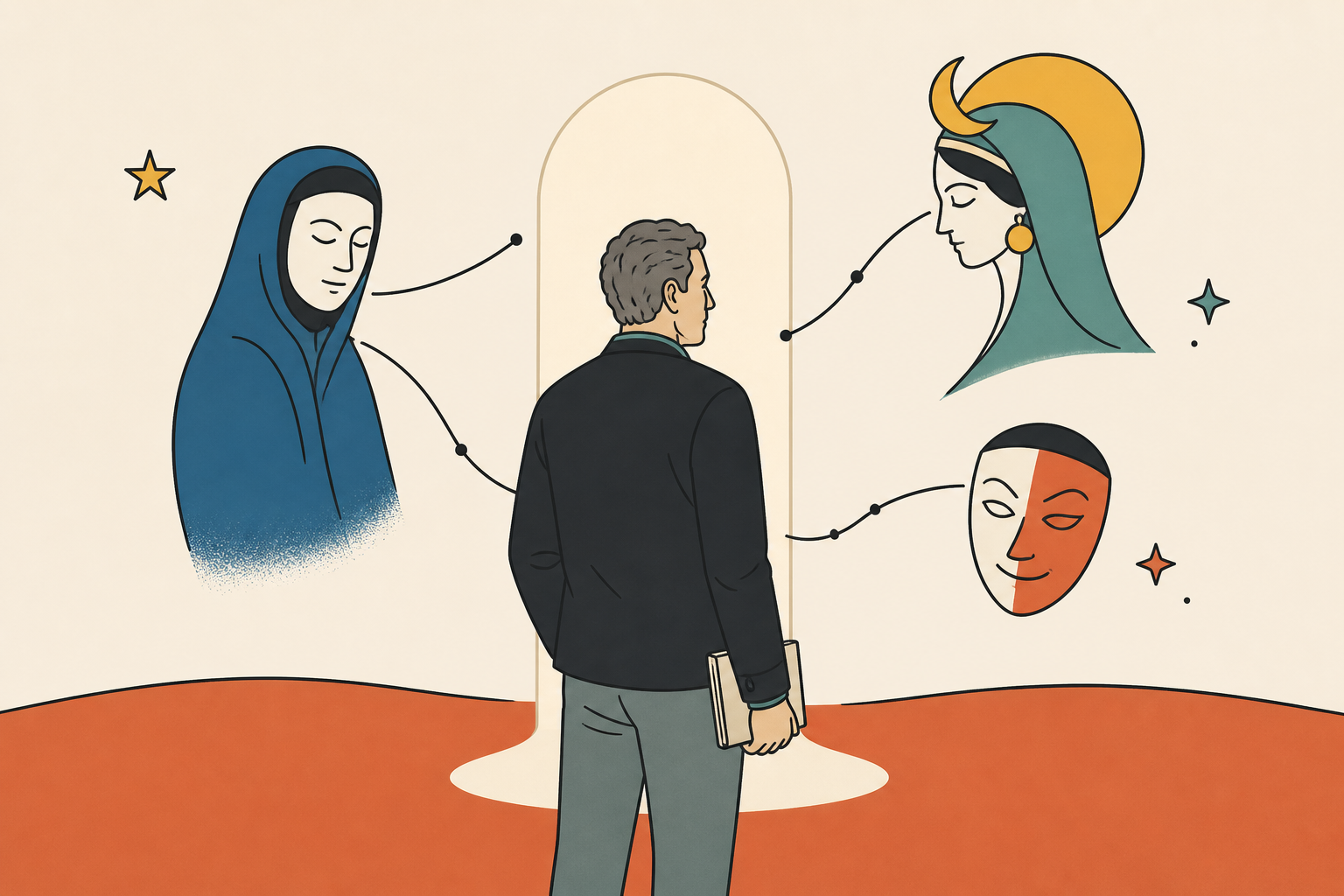
Then comes the encounter with the persona: the mask, the social role, the public operating system. Who have I learned to be? What do I perform? Which parts of me are rewarded? Which parts have been exiled so the approved self can keep functioning?

This is where tarot becomes useful as active imagination. A card can reveal a role, a script, a borrowed authority, a desire-system, a stuck pattern. The question is not, “Which card am I?” The better question may be, “Which part of me is speaking through this image?”

After that, inevitably, comes the shadow.

The shadow is not simply the bad self. It is everything the ego has not been able, willing, or permitted to identify with. Rage, envy, need, grief, vanity, power, tenderness, brilliance, sensuality, weakness, wildness, dependency, genius. All the material pushed outside the conscious self-image.

This is where the Quest for the Self differs from the heroic reflex. The heroic ego wants to defeat the monster. The deeper work asks for a conversation.

The question changes from:

How do I defeat this?

To:

What part of my unlived life is wearing this frightening face?

That is shadow gold territory.

The inner figures

In Jungian terms, the psyche is full of figures: shadow, anima, animus, child, trickster, great mother, wise old man, wounded healer, king, queen, psychopomp, divine animal.

Tarot gives these figures a theatre.

The Fool, the Magician, the High Priestess, the Empress, the Emperor, the Hierophant, the Lovers, the Hermit, Death, Temperance, the Devil, the Tower, the Star, the Moon, the Sun, Judgement, the World. Each card is a chamber. Each image offers a way for the unconscious to become visible without being reduced too quickly to a concept.

That may be why tarot continues to matter. The image does not explain itself away. It waits. It lets the psyche project, react, resist, recognise, and revise.

Used this way, the card is not an oracle issuing orders. It is a doorway.

The psychological principle says: the image reflects inner dynamics.

The synchronistic principle says: this image, now, in this moment, may be oddly exact.

Together they create a charged mirror.

Holding the opposites

At some point, the Quest for the Self becomes less about discovering “who I really am” and more about becoming able to hold contradiction without collapsing it too quickly.

I am monk and frontman.

I am wounded and gifted.

I want solitude and recognition.

I want freedom and belonging.

I am rational and mythic.

I am ordinary and archetypal.

The ego prefers clean identity. The Self seems to prefer wholeness.

Wholeness is untidy. It includes the opposites. A real symbol can hold what logic alone wants to split apart. That is part of the power of tarot, dream images, mythic motifs, and synchronistic events. They can carry contradiction without killing it.

The Self does not always say: choose one side.

Sometimes it says: become large enough to hold the tension until a third thing appears.

Grounding the Self

There is a danger here, of course. Whenever we start speaking about the Self, archetypes, symbols, synchronicity, and the deep pattern of a life, inflation is nearby. The ego can try to claim the whole thing for itself. It can turn the Self into a costume, a spiritual achievement, or a private mythology of specialness.

That is why the work has to remain grounded.

Make coffee. Take a walk. Pay the bill. Write the paragraph. Talk kindly to the person in front of you.

The Self is not an excuse to float away from ordinary life. It asks to be embodied there.

The Quest for the Self does not end with escape from the world. It returns us to the world with a different centre of gravity. We still have a personality, wounds, preferences, irritations, bills, unfinished drafts, and awkward emails. But perhaps we are a little less possessed by one-sided identity. Less ruled by projections. Less desperate to be pure, impressive, innocent, correct, or complete.

The question becomes ethical in the deepest sense:

If this is in me, how shall I live with it consciously?

That may be the real boon.

A working note for now

So for now, my working model is this:

The Hero’s Journey is achievement through ordeal.

The Heroine’s Journey is healing through descent and reconnection.

The Quest for the Self is wholeness through symbolic integration.

Or, put another way:

The Quest for the Self is the Hero’s Journey turned inward, then widened until the hero discovers he was never the whole story.

The hero wants to complete the quest.

The Self wants to complete the person.

And tarot, used well, becomes a cabinet of living images through which the psyche can say:

Look again. There is more of you here than you thought.

Shadow Work as an Ongoing Conversation

Yesterday, I found myself back inside Debbie Ford’s The Dark Side of the Light Chasers.

I first came across the book years ago when I was doing my Insights Discovery certification. It was part of the reading list, but I quickly became a fan and have been using it in my personal development workshops ever since.

I’m rereading it now because I’m doing a bit of shadow work on myself this week. Some thoughts surfaced after reading Sean Manseau’s book about Spotify the Gnostics, Here’s the First Church of David Bowie: Adventures in DIY Shamanism, and I could feel that familiar inner critic: the little judgements, resistances, envies, irritations, and defensive manoeuvres that usually prefer to linger just below the surface of consciousness unnamed.

That is the doorway into shadow work. Not some dramatic descent into the underworld, though it can feel like that sometimes. More often, it begins with a small disturbance. The sentence that catches in your throat. The person who irritates you more than they reasonably should. The idea you reject a little too quickly. The part of yourself you are certain belongs to someone else.

Read more

Somewhere I Belong (and it’s not in my head): a mixtape

Morning pages have a way of pulling the chair from underneath you just before you sit down. I haven’t done this for a while, so the words came slowly. You start by writing the ordinary thing.

Waking up before five.

Coffee.

Email.

The same thoughts looping around my head about money, sex, work, and the shape of the day. Ten minutes have gone by. And then the trapdoor opens. Underneath the routine is the real question: Am I living my vision, or just rearranging myself into shapes that I hope someone will notice?

You know I love a good mixtape. I haven’t done one of those in a while, either. Might as well start at the beginning. This first mixtape in the new series emerges from the undercurrent of my morning pages. These songs are for the self that is tired of shapeshifting for approval, tired of checking the metrics before doing the work, tired of trying to become the right thing instead of pushing the thing with enough force that the world has to feel it.

The seed songs got me through my workout this morning. Linkin Park’s “Somewhere I Belong” is the ache for a truer room inside the self. “Crawling” is the body admitting that habit can become possession. Papa Roach’s “Between Angels and Insects” brings the money spell into the open. All the wanting, buying, comparing, climbing, and hunger that eats the soul while pretending to feed it. System of a Down’s “Aerials” lifts the whole drama above the maze, where ego and conformity and freedom look different from a height. Then Avenged Sevenfold’s “Hail to the King” arrives with the crown, the will, and the danger of sovereignty. Who actually rules the inner kingdom and by what right?

Play it loud. By the end, see what’s left standing.

You can listen on Spotify or Youtube

The Mixtape

  1. Linkin Park — “Somewhere I Belong”
  2. Linkin Park — “Crawling”
  3. Papa Roach — “Between Angels and Insects”
  4. System of a Down — “Aerials”
  5. Avenged Sevenfold — “Hail to the King”
  6. Linkin Park — “Numb”
  7. Breaking Benjamin — “The Diary of Jane”
  8. Korn — “Freak on a Leash”
  9. Deftones — “Change (In the House of Flies)”
  10. Nine Inch Nails — “Head Like a Hole”
  11. Rage Against the Machine — “Testify”
  12. Audioslave — “Show Me How to Live”
  13. Foo Fighters — “The Pretender”
  14. Muse — “Uprising”
  15. Metallica — “Wherever I May Roam”
  16. Incubus — “Drive”
  17. Linkin Park — “What I’ve Done”
  18. Foo Fighters — “Walk”

Post-ride prompt: What part of my life has become a rut because I stopped consciously choosing it?

I love a good samurai film. Not for …

I love a good samurai film.

Not for the swordplay, but for what happens when an absolute code meets a world that doesn’t care about your code.

The best ones are philosophical texts in motion. Honour as ontology. Discipline as worldview. Violence as the moment when the story you’ve been living inside reveals whether it can hold.

Yojimbo. Seven Samurai. Harakiri. They’re all asking the same question: what do you do when the system that gave you meaning stops working, and walking away would require becoming someone you don’t know how to be?

The samurai doesn’t get therapy. He gets a choice that doesn’t feel like a choice.

That tension is what makes them still worth watching. The cage is beautiful. The cage is also a cage. And the film won’t tell you which matters more.

https://www.imdb.com/spotlight/samurai-cinema-crash-course/?from_app=ios&ref_=ext_shr_lnk

Wisdom Walk: Boxes and the Philosopher Coach

Wednesday morning. Wind in the microphone. One of those recordings where the first question is whether the machine is even listening.

I am walking through one of the neighbourhoods here, past the boxes people spend their lives trying to own. Box after box after box. Same roofline. Same windows. Same little square of intention at the front. A few flowers. A different car. Some token of distinction placed carefully against the architecture of sameness.

You need the house numbers. Without them, how would anyone know which box was theirs?

This is the thing that caught me. The sheer quantity of life poured into the maintenance of the box. Money, labour, time, anxiety, comparison, all of it moving toward a structure that looks almost exactly like the structure beside it. The outside allows only minor variations. A pot of geraniums. A hanging basket. A fresh coat of paint on the door. The real self, if it is allowed anywhere, has to retreat indoors.

And even there, the architecture has already made certain decisions.

I keep thinking about how to get off the road without pretending I am no longer inside the system. That is the bit I cannot dodge. I still have to live here. Pay things. Use platforms. Make myself findable. Put the work where people can encounter it. I cannot simply declare myself outside the matrix and then wonder why nobody can hear me.

But I also cannot keep trying to become the kind of person the marketing machine knows how to sell.

That was the thought walking past the boxes. These people need a philosopher coach. Some of them do, anyway. Someone who can sit with the question beneath the question. Someone who can help them see the story they are living inside before they spend another decade decorating the walls.

Then the second thought arrived, the sharper one: how do I become available for that work without entering the treadmill that would turn the whole thing into a funnel?

There is a particular humiliation in trying to market philosophy. The thing becomes false in the mouth as soon as it starts sounding like a lead magnet. The old language returns: offer, audience, conversion, positioning. Useful words in their place. Deadly words when they begin deciding what the work is allowed to be.

I have been trying to be a marketeer. Trying to sit at the desk and bang out the clever angle, the sticky name, the neat packaging. There was a time when that made sense. Maybe it was necessary. Maybe I had to exhaust that route properly before I could stop arguing with it.

The walk said stop contorting.

The system is clearer now. The blog is the mothership. The website pushes out to Mastodon and Bluesky. That part is aligned enough. Mastodon, for all its obscurity, still feels philosophically closer to the thing. Bluesky is fine, though it carries the old Twitter ghost in its bones. Twitter can become what Facebook became for me: somewhere I can still exist, still check, still meet the occasional person, but no longer part of the publishing ecology. The API broke the relationship. The trust went with it.

LinkedIn is stranger. For all its faults, and there are plenty, it is at least honest about being a marketplace of selves. Everyone is selling something there: services, employment, authority, proximity to importance. That makes the maverick stance usable. The philosopher coach can appear there because the room is full of people trying to be legible to power. There is work to do in that room.

Still, the platform is only a tool.

That sentence kept returning. Just tools, my friend. Just tools.

The real system is the one under my feet and in my pocket and back in the vault. Obsidian as memory layer. The website as public surface. The LLMs as pattern-matchers and strange companions. Mistral sitting inside the vault as a local co-pilot. Claude and Codex able to talk with the notes when I want the larger models in the conversation. The terminal becoming less intimidating, almost enjoyable. The whole thing starting to feel less like software and more like an atelier.

My notes are living things.

That is the line that matters.

The Obsidian vault is a grimoire. I keep wanting to use that word because no cleaner one has appeared. It holds fragments, spells, observations, failed formulations, half-made essays, names for things that do not yet know what they are. Then the models come through and do what they do best: pattern recognition, resurfacing, recombination. I do my thing. The machine does its thing. Between us, something starts to move.

This is what I mean by text-based ontologist, even if the phrase still has too many syllables to travel easily. The mindset is right. The philosophy is right. A practitioner investigating being through text in a medium where text has become generative. Words as notes. Words as prompts. Words as code. Words as spells. Words as architecture.

The coach game is the right game for me because it is not really a game I am entering from the outside. I have been in it for years. The people who need the work are already there. Leaders, thinkers, stuck humans, people living inside inherited scripts that have become too small for them. The question is the quality of the connection. That is the filter. Not scale. Not reach. Quality.

Find the right people. Build relationships the old way. Conversation by conversation.

Then, because the world refuses to stay in one register, a caravan appears.

A Swift Celebration 400. Compact, two-berth, around 2010. The machine tells me it runs somewhere around four to eight thousand pounds used, depending on condition. I am half in the walk, half in the search result, half in some imagined life where a small caravan becomes a mobile philosophy hut. There are too many halves. That is how the morning is.

Then a man stops to talk about the weather.

His friend came from Kingston, Jamaica, and never really got used to the English climate. Loved the country. Loved most of the people. Could not do the weather. I tell him the only trick I have found is to assume rain. Then every dry moment becomes a bonus. We talk about Georgia, because I lived there for a while, and how the summer heat there is so thick you cannot use the day properly. Here, when the sun comes out, you can actually belong to it.

Wisdom Walk: Boxes and the Philosopher Coach

He mentions “Midnight Train to Georgia.” Gladys Knight steps into the lane for a moment. Then another song. Then he is gone.

This is why walking works. The thought gets interrupted by the world, and the interruption becomes part of the thought.

After he leaves, the thread returns cleaner.

The why is mostly done. The what is mostly done. A good portion of the how is already in place. The work now is taking it full speed without reverting to the old fear that it needs to be packaged before it can move.

NLP is closer to the practical arm than I wanted to admit, mainly because I had grown tired of the associations around it. But the word is right there in the title: linguistic. Neuro-linguistic programming. Stories as code. Belief as tool. Internal reality shaped through language, attention, and pattern. It is not the whole territory, but it gives the work handles.

Chaos magick is the other arm. The mystical one. The permission structure. Belief as instrument, symbol as technology, the sigil fired and released. Robert Anton Wilson hovering in the background, as usual, grinning at the seriousness with which everyone defends their reality tunnel.

Depth psychology is still there. Archetype is still there. Myth is still there. But NLP and chaos magick are the two live wires today. One gives the psychological method. The other gives the metaphysical mischief.

The philosopher coach does not need to become a marketer.

He needs a practice, a public surface, and a way for the right people to find the signal.

That is different.

The houses are still there behind me, arranged in their obedient rows. I do not feel superior to them. That would be too easy, and dishonest besides. I live in the same world. I have my own boxes. Some are made of brick. Some are made of language. Some are subscription plans I keep forgetting to cancel.

But something has loosened.

The work is not to escape the matrix in some theatrical way. The work is to move through it without letting it name me. Use the tools. Keep the blog sovereign. Let the vault breathe. Let the notes accrete. Let the conversations find the people they are meant to find.

The road does not need me to become more visible by becoming less true.

I think that is what the walk gave me.

Now take it for a spin.

Full speed.

Cross-posted from: Working Notes from the Textual Underground

Why Self-Protection Keeps You Stuck (And How to Break It)

The most consistently effective way to avoid transformation is to do a lot of work on yourself.

I have sat with people who knew their attachment style and their Enneagram type and could name the wound with clinical precision. They had journalled, meditated, been in therapy, and done the course. In sessions they were impressive. They produced insights at a reliable pace. They had a sophisticated relationship with the concept of their own limitations. And at the centre of all that activity, something was perfectly still. The work was happening. But nothing was moving.

The thing that was not moving was the thing the work had been carefully constructed not to touch.

This is an observation about how intelligent self-protection operates. We do not build elaborate internal architecture around things that don’t matter. We build it around the things that feel like they are us. And the more sophisticated the inner work becomes, the more sophisticated the defence can become in response. You can use the language of shadow work to explain why you are not available for transformation right now. You can run a mindfulness practice as a management system for staying exactly as you are. The vocabulary of growth becomes, in certain hands, the most refined protection strategy there is.

No te salves. Do not save yourself. The Uruguayan poet Mario Benedetti wrote it as an injunction, almost as a warning — aimed at the part of us that chooses the comfortable distance over full contact, that stays at the edge of things rather than being moved by them, and that phrases experience in language calibrated to keep it from actually landing. That knows the right moment to seem vulnerable without ever being cracked open by anything. It is an invitation to stop managing.

Most people arrive in coaching having been saving themselves for years. Not through laziness, and not through deliberate avoidance in any simple or obvious sense. Through effort. Through discipline. Through the long, exhausting labour of becoming someone who can function well enough to survive what life has asked of them. The saving is the effort. It is built into the way they speak, the way they relate, the way they manage the room, and the way they tell the story of themselves.

They have worked very hard to construct a version of themselves that appears steady, capable, and emotionally literate. A version that can convey warmth, competence, and even a kind of openness. A version that knows how to be reflective, how to say the right honest-sounding thing, how to appear available to the process without ever fully surrendering to it. From the outside, it can look like real contact. It can look like vulnerability. But often it is something more carefully engineered than that.

What has been built is not false, exactly. It is functional. It is adaptive. It was assembled for reasons that once made deep sense. But it is still an architecture of protection. Underneath the intelligence, the self-awareness, and the apparent willingness to engage, there is frequently a quiet but absolute rule in operation: under no circumstances let yourself be genuinely reached. Do not let the moment go all the way in. Do not let another person touch the part of you that cannot be managed once it is stirred. Stay articulate. Stay aware. Stay composed. But do not be altered.

This is why some people can do enormous amounts of work on themselves without anything essential moving. The protected self becomes highly sophisticated. It learns the language of growth. It learns how to participate. It learns how to look open while remaining, at the crucial point, untouchable. And because this protection is enacted through effort rather than withdrawal, it is often mistaken for courage, insight, or commitment, when in fact it is a more refined form of distance.

In NLP, one of the more useful questions you can ask about a limiting belief is not whether it is true but what it protects. The question of truth, while intellectually satisfying, is often beside the point. A belief can be demonstrably inaccurate and still remain structurally necessary. What matters is not its correspondence to reality, but its function within the system that is using it.

Beliefs are not random. The ones that persist, especially the ones that quietly organise behaviour over long periods of time, are doing something essential. They are stabilising something. Regulating something. Keeping a particular kind of experience at a tolerable distance. The belief is not just an idea. It is part of a mechanism.

The ones that constrain us most reliably are doing the most work. They are load-bearing. Remove them too quickly, without understanding what they are holding in place, and the system does not feel liberated. It feels exposed. Unprotected. The anxiety that follows is not evidence that the belief was correct. It is evidence that the belief was performing a function that has not yet been replaced.

When someone says, “I’m not the kind of person who succeeds at this,” it is easy to hear a failure of confidence, or a distortion that needs correcting. But functionally, it is often something more precise than that. It is a pre-emptive strike against the pain of trying and failing. If success is ruled out in advance, then the identity does not have to metabolise disappointment. The belief narrows the field of possible action in order to regulate emotional risk. It is not a misunderstanding. It is a strategy.

Similarly, the belief that people cannot be trusted is rarely just paranoia. It is a construction. A piece of psychological architecture that has been assembled, reinforced, and maintained over time. Each experience that confirmed it was added like another brick. Each moment of doubt was managed or reinterpreted to preserve the structure. What you are looking at, in that belief, is not a cognitive error but a wall.

And walls are not built accidentally. Someone spent years constructing that one. Not out of weakness, but out of necessity. There was a time when that conclusion made genuine sense in the conditions it was formed in. The belief reduced exposure. It created predictability. It allowed a person to move through the world without having to reopen a particular kind of wound every time they encountered another human being.

This is why challenging beliefs directly often produces resistance that feels disproportionate to the conversation. You are not arguing with an idea. You are approaching something that has been quietly keeping the system intact. To question it is to approach the boundary of what that person has learned they can safely feel.

The more useful move is not to dismantle the belief immediately, but to understand what would be left unprotected if it were no longer there. What experience would become possible? What risk would re-enter the system? What part of the person would have to come online that has, until now, been carefully kept offline?

Only from that understanding does change become viable. Because at that point, you are no longer trying to remove a belief. You are trying to replace a function. And until the system has another way to achieve what that belief was achieving, it will continue to rebuild it, no matter how many times it is intellectually dismantled.

The question is never whether the protection made sense when it was built. It almost always did. The question is what it costs to maintain it, and whether that cost is still being paid consciously.

The first stage of the alchemical process, the nigredo, is the blackening — the dissolution of the prima materia, the meeting of the substance with conditions that break it down to its essential components. It is not a gentle phase. It does not refine. It does not improve. It disorganises. It strips away coherence. What once held together as a stable identity, a known form, begins to come apart under pressures it cannot negotiate on its existing terms.

You cannot protect the substance through this. That is precisely the point. Any attempt to preserve the original structure interferes with the process itself. The instincts that once ensured survival — to stabilise, to manage, to maintain continuity — become obstacles here. Nigredo requires exposure. It requires contact with conditions that exceed your current capacity to organise experience cleanly. The structure does not adapt. It fails.

This is the part most people try to bypass, reinterpret, or manage into something more palatable. They will intellectualise it, narrate it, or convert it into a series of insights that allow the self to remain intact while appearing to engage with the process. But the alchemical tradition is unambiguous on this point: without dissolution, there is no transformation. Without the breakdown of the existing form, there is nothing for the new form to emerge from.

The transformation requires that something of what the thing was does not survive. Not symbolically. Not rhetorically. Actually. A belief that once organised your behaviour stops holding. A way of relating that once felt necessary becomes untenable. A self-description that once felt true no longer maps onto lived experience. This is not an upgrade. It is a loss of coherence followed by a reorganisation that cannot be predicted in advance.

And this is why the protection and the transformation are structurally incompatible. Protection is organised around continuity — the preservation of what has been. Transformation, at least at this level, is organised around discontinuity — the interruption of that continuity so something else can take shape. You cannot remain who you have been and undergo this process at the same time. One of those commitments has to give.

Most of the sophisticated forms of self-work fail here, not because they are incorrect, but because they are unconsciously aligned with protection rather than transformation. They allow you to approach the edge of dissolution without ever crossing it. They let you describe the fire without entering it. And so the structure remains, perhaps more articulate, more aware, but fundamentally unchanged.

Nigredo does not reward articulation. It does not respond to insight. It responds only to contact — direct, unmediated, unprotected contact with what the current structure cannot accommodate. And in that contact, something gives way. Not because you forced it to. Because it could not hold.

That is where the process actually begins.

People who have been saving themselves for a long time are available for the idea of transformation. They will engage intellectually with everything the process asks of them. They will complete the exercises, produce the reflections, generate the insights. What they will not do is let the thing actually happen to them. Thinking about being changed is not being changed. The protective story knows this difference precisely, and it polices the boundary between them with great care. Every genuine approach to that boundary gets converted into a cognitive event. The feeling is caught before it lands and immediately processed into an insight, which is safe, which can be filed, which does not require the self to actually yield to anything.

:contentReference[oaicite:0]{index=0} wrote about the difference between information about the unconscious and genuine encounter with it. That distinction is easy to understand conceptually and surprisingly difficult to recognise in practice, because the mind is perfectly capable of substituting one for the other while maintaining the appearance of depth.

You can read about the shadow for the rest of your life. You can study it across traditions, compare interpretations, map its archetypal expressions, and build a precise, articulate model of your own darkness. You can trace its origins back through childhood, identify its patterns in relationships, observe how it manifests under pressure, and even speak about it in a way that sounds like ownership. At a certain level of sophistication, the description becomes indistinguishable from contact. But it is still description.

Reading about the shadow is not meeting it. Thinking about it is not meeting it. Speaking about it — even eloquently, even honestly — is not meeting it. The meeting is not conceptual. It is not mediated. It does not arrive as insight. It arrives as experience.

And experience has a very different texture.

The meeting is the moment you recognise something in yourself that you cannot immediately organise into a narrative that preserves who you think you are. It is the flash of irritation that does not resolve into a justified position, the impulse that does not align with your values, the reaction that feels disproportionate and unexplainable in the moment it happens. It is the part of you that appears without invitation and does not respond to interpretation.

That is what the architecture of self-protection exists to prevent.

Because the meeting is not just uncomfortable. It is destabilising. It interrupts the continuity of the self. It introduces something that cannot be easily integrated into the existing story without changing the story itself. And intelligent systems — especially highly self-aware ones — are designed to avoid that kind of disruption when they can.

So the interception happens early.

The feeling is translated into language before it fully forms. The reaction is analysed before it is felt. The discomfort is reframed into something meaningful, useful, and manageable. What could have been an encounter becomes an insight. What could have altered the structure becomes something the structure can incorporate without changing.

And because insight feels like progress, the system is rewarded for this move. It looks like awareness. It sounds like honesty. It often is both. But it is still a form of distance.

This is why someone can know their shadow intimately and never have met it.

The knowledge lives at the level of representation. The encounter happens at the level of participation. One describes. The other involves. One leaves the structure intact. The other puts it at risk.

To meet the shadow is to allow something to be true in you before you know what to do with it. To stay with the discomfort without converting it into a conclusion. To let the experience land without immediately organising it into meaning.

And that is precisely where the protective system becomes most active. Not because it is flawed, but because it is doing exactly what it was built to do: preserve continuity, maintain coherence, and keep the self within the boundaries it recognises as safe.

Which is why, at the point of contact, the work is no longer about understanding the shadow. It is about noticing the moment you move away from it — and, for once, not following that movement.

Stopping saving yourself does not look dramatic. It does not involve burning anything down, or performing the spectacle of someone finally breaking open. Performance is another form of protection, usually more theatrical and no less effective. The quieter version is almost invisible unless you are paying very close attention.

It is the moment in a conversation when you notice you have just said the safe version of what you were thinking rather than the actual thing — and instead of moving on, you pause. You feel the difference between the two. You register the small contraction that chose safety over contact. And then, without dressing it up or compensating for it, you correct course. Not to be provocative. Not to be impressive. Simply to be accurate.

It is the split-second decision not to step back from the feeling that is present. The familiar impulse is to create space, to translate the feeling into language, to get just far enough away from it that it can be handled. Stopping saving yourself means not taking that step. It means remaining where the feeling is still unorganised, still unresolved, still capable of altering you if you let it.

It is the willingness, when something lands, to let it land. To feel the impact before you interpret it. To resist the reflex to convert it into a reflection you can use, a lesson you can articulate, or a meaning you can file. The conversion is efficient. It restores order quickly. But it also neutralises the thing itself. Letting it land means allowing the disorder to exist for a moment longer than is comfortable.

And this is where it becomes clear how small the movements are that maintain the structure. You do not need a dramatic defence to avoid being changed. You need milliseconds. A slight reframing. A well-timed insight. A shift in tone that brings the experience back under control. These are micro-adjustments, but they are precise. They keep the boundary intact.

Stopping saving yourself is not the absence of fear. It is the decision, in these small, almost unnoticeable moments, not to organise your way out of it. Not to return immediately to the version of yourself that knows what is happening. Not to restore coherence at the first sign of disruption.

It is a series of minor disobediences against your own protective system.

And taken together, those small disobediences are what make real contact possible.

The stories we carry about who we are do not just describe us. They organise us. They determine what we are available for, what we can be reached by, what kinds of experience are permitted to change us. Inside most of those stories, if you look carefully enough, is a well-maintained protective function: a clause that reads keep this part safe, regardless. That clause is often invisible, which is precisely how it does its best work.

This is an argument for looking at them honestly enough to see what they are protecting, and asking, with genuine curiosity rather than judgment, whether that thing still needs protecting. Whether the wall was built against a danger that has long since passed. Whether the saved self — the managed, protected, carefully maintained version — is actually the one you want to be living as.

Benedetti’s injunction is to remain available. To stay in contact with experience rather than at a managed distance from it. To allow yourself to be affected by what is actually happening rather than by your prepared representation of it.

Availability, in this sense, is not openness as a posture. It is not the cultivated stance of someone who appears receptive, thoughtful, engaged. It is something far less performative and far less controllable than that. It is the absence of pre-emption. The absence of the small internal adjustments that translate reality into something more manageable before it has fully arrived.

To remain available is to let the moment reach you before you decide what it means. To allow the impact before the interpretation. It is to notice the reflex to organise — to explain, to soften, to contextualise, to make it fit — and, just for a beat longer than usual, not to follow it.

Because what we usually stay in contact with is not experience itself, but our version of it. The edited cut. The one that preserves continuity, that keeps the self coherent, that ensures nothing arrives with enough force to disrupt the structure that has been so carefully maintained. We do not meet what is happening. We meet what we have already prepared ourselves to see.

Prepared representation is efficient. It allows you to move quickly. It keeps things intelligible. It protects you from being overwhelmed. But it also filters out precisely the elements that have the capacity to change you. The unfamiliar detail. The disproportionate reaction. The thing that does not fit the story you already know how to tell.

To remain available is to risk that misfit.

It is to let something register that you do not yet have a place for. To feel the moment exceed your current framework without immediately reducing it back into something known. To stay in contact long enough for the experience to organise you, rather than you organising it.

And this is where the instruction becomes difficult in a way that is not immediately obvious. Because the system that translates experience into representation does so very quickly, and very well. It will offer you a meaning before the feeling has even settled. It will give you an insight that feels like progress, a narrative that feels true, a framing that restores order. And in doing so, it will quietly close the moment.

Remaining available means noticing that closure as it begins to happen.

It means recognising the point at which you are about to move from contact to control. From participation to description. From being affected to explaining why you are not.

And, for once, not completing that movement.

Not because interpretation is wrong. Not because meaning-making has no place. But because there is a sequence to this. Contact first. Organisation later. Experience before explanation.

If you reverse that order — if you explain before you feel, interpret before you register, narrate before you are touched — then nothing essential ever reaches you. The moment is processed before it is lived.

To remain available is to let yourself be lived by it, at least for a moment.

And in that moment — brief, unstructured, unprotected — something has the chance to enter that was never going to be admitted under supervision.

The stories that protect us most completely also, by that same completeness, limit us most completely. The architecture is airtight. Nothing gets in that has not been approved. Including the thing that was always trying to change you.

And because the system is closed so well, it becomes very difficult to see that it is closed at all. From the inside, it does not feel like restriction. It feels like clarity. It feels like knowing who you are, what you can expect, how the world works, and where the edges are. There is a sense of coherence to it that can even feel like wisdom. The story explains things. It resolves ambiguity. It gives you a stable position from which to interpret everything that happens.

That stability is the appeal. It reduces uncertainty. It keeps the world legible. It allows you to move through experience without having to renegotiate yourself at every turn. But the cost of that stability is that only certain kinds of experience are allowed to register as real. Anything that contradicts the story is either filtered out, reinterpreted, or dismissed before it has a chance to land.

This is not a conscious process. It does not require effort once the structure is in place. The system runs automatically, organising perception in real time. You notice what confirms the story. You overlook what does not. You remember selectively. You narrate events in ways that maintain continuity. Over time, the world you experience becomes increasingly consistent with the story you are carrying, not because the world is that consistent, but because your access to it has been shaped.

And so the protection becomes self-reinforcing.

The story keeps you safe from the experiences that would challenge it, and in doing so, ensures that those experiences never accumulate enough weight to destabilise it. The absence of contradiction is taken as proof of accuracy. The system points to its own coherence as evidence that it is correct.

But what it is actually demonstrating is control.

An airtight architecture does not just keep danger out. It keeps possibility out as well. It prevents the arrival of anything that cannot be immediately assimilated. It blocks not only the threat, but the transformation that often travels with it. Because the thing that changes you rarely arrives in a form that has already been approved. It comes as something that does not fit. Something that disrupts the pattern. Something that requires a reorganisation of the structure in order to be integrated at all.

And that is precisely what the system is designed to avoid.

So the story holds. It continues to organise experience, to preserve identity, to maintain coherence. And within that coherence, a life can be lived that feels consistent, understandable, and even successful by its own criteria.

But it is a closed loop.

Nothing enters that has the capacity to fundamentally alter it. Nothing remains that cannot be explained by it. And because of that, the part of you that was always oriented toward change — toward expansion, toward reconfiguration, toward becoming something other than what has already been defined — never finds a way through.

It is not resisted. It is simply never admitted.

And over time, that absence becomes invisible.

You do not feel blocked. You feel stable. You do not feel defended. You feel clear. You do not feel limited. You feel like yourself.

Which is why this kind of protection is so effective.

It does not announce itself as protection. It presents itself as identity.

And anything that threatens it does not appear as an opportunity.

It appears as something that does not make sense, does not belong, and does not need to be taken seriously.

So it is not.


There is a moment, if you stay long enough,
when the story loosens. Not breaks. Not shatters.
Just loosens its grip on what is allowed to happen.

It does not announce itself. There is no signal that this is it,
that something irreversible has begun. It feels smaller than that.
Quieter. Like something in you has stopped reaching
for the familiar handle.

The explanation does not arrive on time.
The interpretation lags. The usual sequence
fails to complete itself. And in that gap,
something enters.

Not insight.
Not clarity.
Not anything you can immediately use.

Something unorganised. Something that does not yet belong
to you in the way your thoughts belong to you. Something that
does not fit the story you have been carrying,
and does not ask permission to stay.

You feel it before you know what it is.
There is a reflex to move. To name it. To place it.
To restore the structure that has always known what to do next.

And for once, you don’t.
You let it be there. You let it
reach you without deciding what it means.

You let it remain without converting
it into something manageable. It is not comfortable.
It is not clean. It does not feel like progress.

It feels like standing without the floor
you are used to. Like something in you
is no longer holding in the same way.

Like a boundary you did not know
you were maintaining has stopped closing.
This is not the end of anything. It is the first
moment something has not been filtered out.
The first moment the system does not
complete its own defence.

The first moment you are not saving yourself.
Nothing dramatic follows. No revelation.
No transformation you can point to

Just this:

the world, slightly less explained
you, slightly less contained
and something, finally, with a way in.

Leary’s 8 Circuits of Development: A Mythic Map …

Leary’s 8 Circuits of Development: A Mythic Map of Human Becoming

Timothy Leary’s 8-circuit model is one of those strange, half-wild frameworks that refuses to die because, scientific or not, it touches something real in the imagination. On the surface, it is a speculative map of human consciousness: eight layers or “circuits” through which awareness develops, from basic survival all the way to transpersonal and cosmic states. But read through a mythic lens, it becomes something more interesting than theory. It becomes a map of initiation.

The first four circuits describe the construction of the social self. First, survival: is the world safe or dangerous? Then territory: where do I stand in the pecking order? Then language and meaning: how do I explain reality? Then social identity: who must I become to belong here? In other words, the early circuits are not just developmental stages. They are the architecture of the mask. They shape the ordinary self most of us mistake for who we really are.

Then the model opens. The fifth circuit returns us to the body as a field of sensation, pleasure, presence, and aliveness. The sixth opens into archetype and ancestral patterning, where myth stops being mere story and starts feeling like a living grammar beneath experience. The seventh is the one that matters most to me: meta-programming. This is where consciousness begins to see its own conditioning as conditioning. The script becomes visible. The operating narrative reveals itself. And once you can see the code, you can begin (carefully, imperfectly) to rewrite it.

That is where Leary’s model brushes up against narrative alchemy. The first four circuits are the inherited story. The upper circuits are what happens when the story cracks, and soul starts leaking back in. Whether or not Leary got the neuroscience right is, to me, beside the point. As a symbolic framework, it offers a powerful reminder: much of what we call identity is patterned response, tribal imprint, and repeated interpretation. The self is not always essence. Often, it is installation.

The real question is not whether there are literally eight circuits hidden in the nervous system. The real question is whether you can begin to notice the reality tunnel you are living inside. Can you tell when survival fear is running the show? When status anxiety is speaking in your voice? When old social scripts are masquerading as destiny? And can you, through practice, imagination, and attention, begin to loosen the narrative?

Maybe that is the enduring value of Leary’s strange map. It suggests that development is not just growing up. It is waking up inside the story you were handed, and deciding whether to keep living by it.

Why You Don’t Experience the World as It Is

The map is not the territory. You have probably encountered this before, from an NLP workshop or a philosophy class or a self-development book that seemed important at the time. It sits in the category of ideas that feel genuinely arresting the first time you meet them and then gradually settle into the furniture. You stop noticing it. It becomes something you agree with rather than something you feel.

Beyond the Map–Territory Distinction

Two Chilean biologists took that idea apart in 1984 and rebuilt it into something considerably more unsettling. Humberto Maturana and Francisco Varela were not philosophers or therapists or practitioners of any inner discipline. They were cognitive scientists trying to answer a deceptively simple question: how does a living system know anything at all? What they found is that cognition is not a representation of a pre-existing world out there. It is the bringing forth of a world through the act of living itself.

why you don't experience the world as it is

That is worth slowing down for. It’s not just that the map differs from the territory, or even that it shapes how we perceive what’s there. The claim is more radical than that. It says there is no territory that exists for you independently of the map you bring to it. What you call “the world” is not something you step into fully formed and neutral. It is something that comes into being through the structure of your perception, your history, your way of making sense of things. You are not accessing a fixed reality—you are participating in the ongoing construction of one.

This is not idealism in the casual philosophical sense, not some claim that external reality does not exist. Maturana and Varela were biologists, and they were careful. What they showed is that the nervous system is not an information-processing device that receives inputs from the outside world and converts them into experience. It is a structurally closed network that generates its own states in response to its own states. The environment does not instruct the organism. It perturbs it. The organism responds according to its own organisation, not according to the structure of what is out there. What you perceive is not the world. It is what your cognitive structure makes of the disturbances the world delivers to it.

How This Shows Up in Everyday Life

Take something as simple as a conversation.

Two people sit in the same room, hear the same words, and watch the same expressions. One leaves feeling respected, understood, and even energised. The other leaves, feeling dismissed, criticised, and quietly diminished. The “event” is identical in any objective sense you might try to construct, but the worlds brought forth are not the same. The difference is not in the words themselves. It is in the structures receiving them—what each nervous system is primed to notice, amplify, and make meaningful.

Or take a more mundane case. You send a message and don’t get a reply. For one person, it barely registers—a neutral gap, easily filled with other things. For another, it becomes charged almost immediately. The silence is not empty. It is interpreted. It becomes a signal: something is wrong, something has shifted, something about me has caused this. The same perturbation—no reply—generates entirely different experiences depending on the organisation of the system encountering it.

Even perception at the sensory level follows this pattern. What you notice in a room depends on what you are already oriented toward. A designer sees layout and proportion. A musician notices acoustics. Someone anxious scans for signs of threat or judgment. The environment has not changed. What has changed is the structure that is coupling with it, selecting from it, bringing certain aspects forward while leaving others effectively invisible.

In each case, the world does not arrive pre-labelled, waiting to be correctly read. It is shaped in the act of encountering it. The disturbance is real. But what it becomes—what it means, what it feels like, what it confirms—is generated within the system itself.

And once you see that, it becomes harder to say, with the same certainty as before, “this is just how things are.”


You Are Not Holding a Map

NLP has always operated on the map-territory distinction. The work is to identify the distortions, deletions, and generalisations in the internal representation; loosen them up; and install something more useful. That is good work. It shifts things. But Maturana and Varela suggest that the metaphor of representation is itself already too simple. We are not carrying around a map that differs from the territory. We are the instrument through which a particular territory is brought into existence. The map and the cartographer are not separate. They have shaped each other into a single cognitive structure, and that structure does not merely reflect a world. It generates one.

What is almost never visible, at first, is the structure. The specific cognitive moves that generate the experience of being stuck. The way attention selects for certain signals and passes over others. The way ambiguous situations get resolved in a particular direction, always the same direction, as if that direction were the only one available. The way the resulting emotional state then functions as confirmation of the belief that generated it in the first place. The loop is tight, and it is self-generating, and it has been running so long it has become indistinguishable from reality.

Someone who has spent decades believing they are fundamentally not quite enough will not be argued out of that belief by counter-evidence. Evidence does not reach them neutrally. It passes through a cognitive structure that has been refined over years to process everything in terms of that particular story. The successes register as luck. The failures register as proof. The positive feedback gets discounted. The criticism goes straight in. This is not perversity or self-sabotage in any wilful sense. It is structural coupling, which is what Maturana and Varela called the continuous co-evolution of organism and environment, each shaping the other through encounter over time, until the organism and its world have drifted into a kind of terrible alignment.

The story did not come from nowhere. It emerged from a history of perturbations, from an environment that kept delivering the same signals, and a nervous system that organised itself in response, shaping and reshaping its structure until a particular world was the only world it knew how to bring forth. And then the world confirmed it. And the structure deepened. And the world became more certain. That is not a metaphor. That is biology.

The World Is Made of You

Jung understood something adjacent to this from a different angle. The shadow, the parts of ourselves we have refused to see, does not just hide. It organises. It shapes perception, drives projection, generates the encounters that seem to confirm what we most fear about ourselves. The unconscious is not a passive repository of forgotten material. It is an active participant in the construction of experience. Depth psychology and cognitive biology, coming from entirely different directions, both arrive at the same essential observation: the world you live in is made of you.

The alchemists had a phrase for the transformation they were describing, which they encoded in symbolic language because the Church was watching, but which pointed at something real: solve et coagula. Dissolve and coagulate. Break the current structure apart and allow a new one to form. The image was of base metal becoming gold, but the process they described was the process of any genuine change. Not adjustment. Not addition. Dissolution of the existing cognitive structure and the emergence of a new one, one that brings forth a different world.

This is why the phrase ‘rewriting the story’, which I use and mean, is also in some ways incomplete. It suggests an editorial process: go in, change some sentences, update the ending. But the story is not a document sitting somewhere that can be revised at arm’s length. It is the structure of the instrument itself. Changing it means changing what kind of knowing is possible. Not just what you know, but how you know. Not just the map you carry, but the cartographic faculty you have become.

That is a longer and stranger process than most people expect when they first come to this work. It is also, when it happens, considerably more thorough. Because when the instrument changes, the world changes with it. Not because the external circumstances have shifted, although sometimes they do. But because the same perturbations are now generating different states. Because attention has learned to land differently. Because the loop that was running on one set of inputs is now running on another, and the world being brought forth is not the world that seemed so solid and inevitable six months ago.

Against the Temptation of Certainty

the world you bring forth

Maturana and Varela ended their book with a line that has stayed with me since I first encountered it, about the knowledge of knowing obliging us to adopt an attitude of permanent vigilance against the temptation of certainty. That is not a scientific principle. It is an ethical one. The certainty it is warning against is the certainty of the world as given, the world as simply what is there, the world as something you are perceiving rather than something you are bringing forth.

The question that follows is the oldest one in this territory: what does it take to change the instrument? Not to adjust it, not to manage it, but to genuinely transform the cognitive structure through which a particular world has been enacted. That is the question I carry into every coaching conversation I have. That is, in some form, the question underneath all the other questions.

It does not have a quick answer. But it starts, always, with the same recognition. That the world you are in is not the world as it is. It is the world you have learned to bring forth.

And that means it can be brought forth differently.