In the street, I leave footprints. On the web, I leave links.

I’ve been using the Plaud NotePin for a while now. I wear it around my neck like a lanyard. It’s a pretty stylish-looking device, so it doesn’t tend to draw attention to itself. I wear it on my wisdom walks. It’s an easy way for me to walk and capture my notes hands-free. And because it has a 20-hour battery life, I can just record and forget about it. I probably look like a bit of a madman walking and talking to myself. But that’s OK.

And then when I get home, Plaud converts into an MP3, and I upload that into Google’s new local, offline voice app called Eloquence, which is powered by Gemma. I can record my wisdom walks without having to remember to push the record button, and I lose the self-consciousness that naturally occurs when you know you’re being recorded. The hands-free, always-on mode makes it easy for me to resist the temptation to perform.

Today is the first of July. I have my weighted rucksack on. The sun is shining. The air is still cool and crisp. It feels like a great day to start a new challenge.

A 31-day blogging challenge, to be exact.

But not the kind of blogging you may have been conditioned to think of. You know, the copywriter clickbait titles, the niche topics, the calls to action, the categories, the big ideas, the SEO standards, and the essays that feel compelled to say something clever. The posts that need to justify their existence before I’ve even written a word, and all of the rest of that you may have become brainwashed into believing a blog should be.

Consider these 31 days an open rebellion against all of that.

At the risk of sounding nostalgic, for these 31 days my intention is to lean into a much older word—the weblog.

You know, that mythological beast where people used to log their journey across the web, leaving hyperlink trails that you could follow and experience the wonders of the World Wide Web, not the locked-down, walled gardens of the platforms. You know the ones I’m talking about.

For this 31-day expedition, I want to pick up the trail where the World Wide Web stopped being about self-expression and started being about content and conformity and bowing down to the algorithm gods. Bring back the old gods, Hermes, Athena, the Muses, Saraswati, and Brigid.

Yes, the 31 days will be about the web, but it will also be about my wanderings through books, through walks, and through the inside of my own head.

The flow is simple.

Leave a trail. Drop links. Mark where I’ve been. Note what I saw. Point toward what caught my attention. Let someone else follow the hyperlink trail if they want to, or wander off in their own direction.

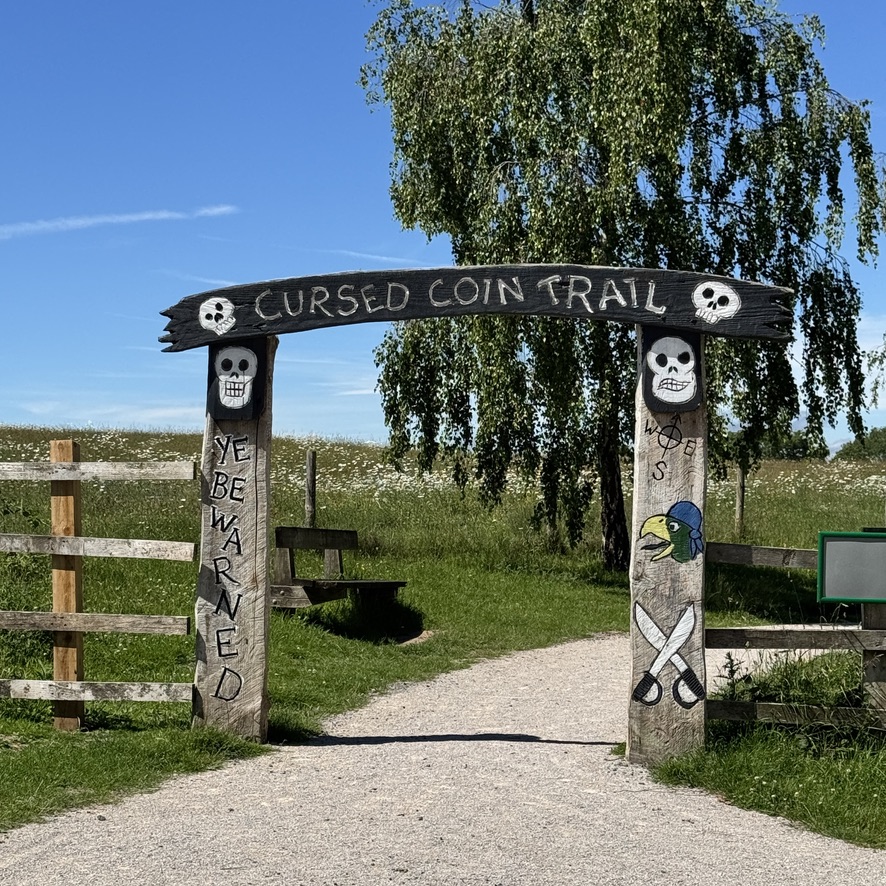
A pirate’s map. That’s what springs to mind. I’m making a pirate’s map of lots of little X marks scattered across the web.

That’s a more natural shape for me than the big essay machine. I like essays, of course. I’ll still write them. But not every thought has to become one. Some thoughts are field notes. Some are fragments. Some are just a sentence that wants to sit there and glow for a bit.

The walking is part of it too. That came through again this morning.

I’ve spent so much time trying to find the right system. The right practice. The right name. The right workflow. The right relationship between the vault, the blog, the notes, the audio, the AI, the field notes, the public garden, and the private underground. I can tie myself in knots trying to get the practice ready.

But the simple thing is still the simple thing.

I wander. I wonder. I document.

That’s it.

Put the shoes on. Put some weight in the pack. Get outside. Let the body move. Let the mind loosen. Say what comes. Notice what’s there. Record the wild thought if it passes through.

Take a picture:
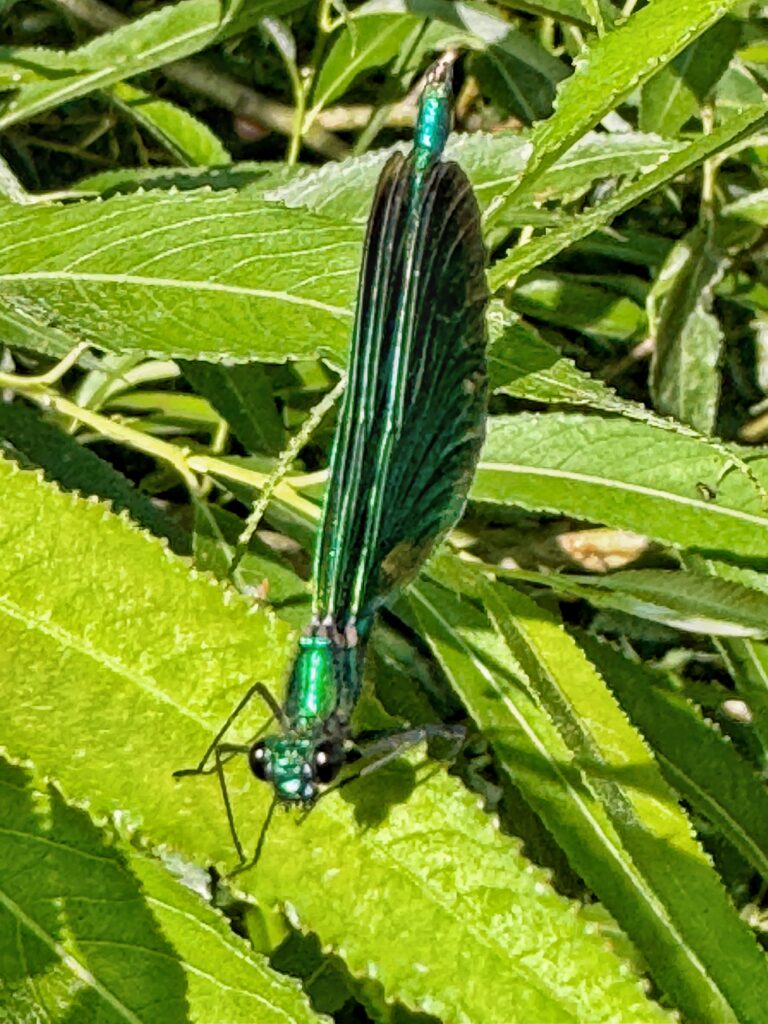
Jewelwing, damselfly
Jewelwing, apparently, according to iNaturalist.

Feel the pack getting heavier on the hill. Feel the cold sweat on my back when I get home.

That is the practice. Not the idea of the practice. Not the perfect version of the practice. The practice itself.

If walking is how I move through physical space, then weblogging is how I move through cyberspace.

A proper weblog is a trace of movement through the network. It says, I came through here. I noticed this. I followed this link. I read this fragment. I disagreed with this. I carried this sentence with me for a while. I left a marker. I made a path where there wasn’t one before.

In physical space, the walker has roads, footpaths, desire lines, bridleways, alleyways, fields, thresholds, gates, benches, pubs, rivers, hedgerows, ruins, weather, strangers, dogs, and the feel of the ground underfoot.

In cyberspace, the weblogger has hyperlinks, archives, feeds, tabs, bookmarks, blogrolls, search trails, old forums, RSS, comments, backlinks, screenshots, quotations, fragments, source notes, rabbit holes, dead links, resurfaced pages, and the strange little shimmer of finding an old human-made page still glowing in the dark.

The hyperlink is the footpath.

The tab is the open gate.

The bookmark is the cairn.

The blogroll is the old map pinned by the door.

The feed is the river, but you have to be careful, because if you stop walking and just let it carry you, you’re no longer traveling. You’re drifting.

I suppose that’s the link I’m starting to see. Walking is how I think through physical space. Weblogging is how I think through cyberspace.

In the street, I leave footprints. On the web, I leave links.

Thirty-one days of footprints and links. Thirty-one days of field notes, fragments, wanderings, readings, recordings, old-web logging, new-web experiments, and whatever else the trail decides to offer.

No grand system.

No perfect launch.

No polished content calendar.

Just a man with a rucksack, a recorder, a blog, and a desire to leave better traces.

Let’s see where the trail goes.
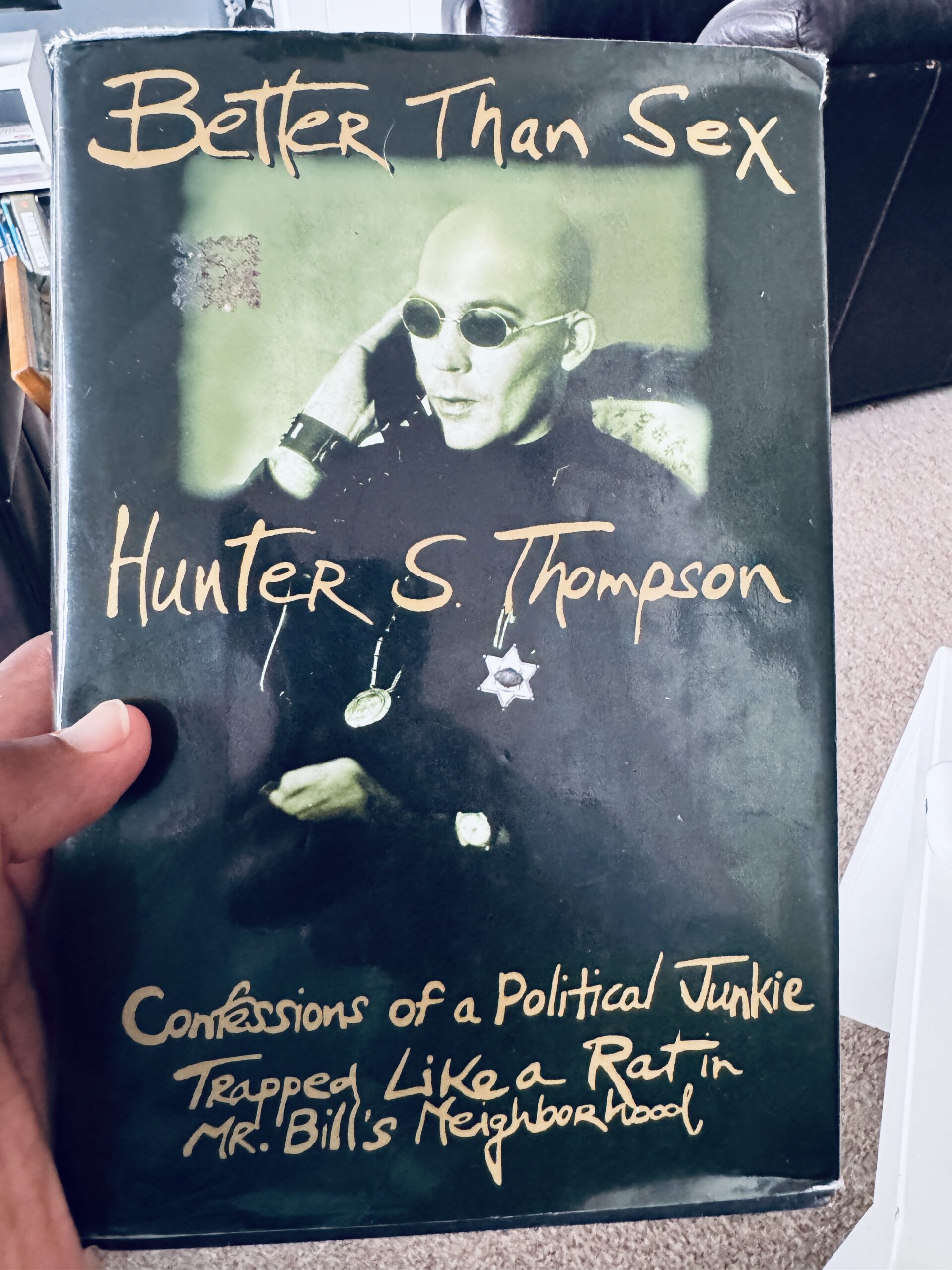
Better Than Sex, 30 Years Later: Revisiting the Book That Broke My Brain

07:39. I’m in my lounge chair drinking black coffee, the morning still soft around the edges.

For my morning read today, I’ve been revisiting Hunter S. Thompson, starting with the book that began my literary love affair with his work: Better Than Sex: Confessions of a Political Junkie.

There’s something about Hunter that still gets under my skin in the best possible way. He doesn’t simply report the story. He enters it. He becomes part of the event he’s describing. He’s not pretending to stand outside the madness with clean hands and a neutral expression. He is in the room, at the bar, in the campaign bus, and in the hotel lobby at 3 a.m., feeling the paranoia, the electricity, the absurdity, the rot, the strange comedy of American public life.

That’s what has always drawn me to first-person nonfiction. I like writing where the writer is in the story. Not as some inflated main character, but as a lens. A body. A nervous system. A witness with fingerprints.

It’s why I admire Hunter. It’s why I’ve always loved literary travel writing, diaries, notebooks, memoirs, and blogs. I like seeing the world through other people’s eyes, especially when those eyes are alert, damaged, amused, haunted, hungry, and alive.

Maybe that’s the deeper pull. I don’t just want information about the world. I want contact. I want the felt sense of being there. I want to know what the dust smelled like, what the coffee tasted like, what the light was doing on the wall, and what strange little thought passed through the writer’s mind while everyone else was looking at the obvious thing.

And beneath that, if I’m honest, is my own old desire: to be a participant in life, not merely a watcher from the sidelines.

I have to confess, I’ve been on the bench for a while (probably since Covid).

Not completely. I still walk. I still notice things. I still make my little field reports when I’m out and about. But I’m certainly not out in the world in the way I was when I was younger. Back then, being outside was not a lifestyle choice or some wellness prescription. It was the default condition of being alive. Nature was not a retreat from life. It was life. I went further afield. I climbed new mountains. I wandered through new bits of countryside. I chased the map outward.

I blame the internet.

Of course, they say a poor craftsman blames his tools, and they’re probably right. The internet didn’t chain me to the chair. I walked willingly into the glowing cave.

But as someone who gets intoxicated by knowledge-seeking, the internet is a particularly dangerous drug. It gives me exactly the thing I have always craved: endless corridors of thought, endless doors, endless shelves.

As a teenager, I used to wander the library stacks for hours. No subject was off limits. Philosophy, science, art, mythology, psychology, history, music, strange technical manuals, books with titles I barely understood. I loved the sheer possibility of it all. I’d leave with stacks of books, as if I were smuggling worlds under my arm.

So of course the internet became both a blessing and a curse.

Now I can explore the world without leaving my chair. I can roam through archives, maps, lectures, essays, documentaries, old interviews, obscure forums, digital museums, scanned manuscripts, and now, with AI, I have something like a portable Library of Alexandria sitting at my fingertips, awake whenever I call.

It’s astonishing.

It’s also a trap.

Because if you’re wired the way I’m wired, the search itself becomes the journey. You can spend the whole morning reading about mountains and never feel wind on your face. You can watch ten videos about someone else walking through a forest and never put on your boots. You can collect knowledge about aliveness while slowly becoming less alive.

That’s the part I’m trying to reckon with.

My Wisdom Walks are one way I force myself away from the screens. They get me out of the chair and back outside, mud, birdsong, breath, distance, and bodily time. But even there, I notice the limits I’ve allowed to creep in. Most of these walks are local. Useful, yes. Grounding, yes. But not quite the same as the old impulse to go further, to find a new ridge, a new stretch of river, a new patch of countryside where the map opens.

Back in the day, I tried to live by the North Face ethos: never stop exploring.

And there was another war cry too, one I picked up from outdoor culture and carried like a small personal commandment:

Get outside. Stay outside.

That phrase still has charge for me. It feels less like advice and more like a spell I forgot I knew.

Lately, I’ve been trying to rebuild my life around that old rhythm. I’ve created a mobile workflow: smaller cameras, a portable podcast setup, the iPad, or sometimes just the phone. The theory is simple enough: everything I can do at a desk, I can do outside.

In theory, this is beautiful. The barefoot philosopher’s office is wherever he can sit, walk, speak, photograph, think, and write. A bench. A woodland edge. The back of the car with the boot open. A picnic table. A patch of grass. A café after a long walk.

But then comes the catch.

WiFi.

So much of my life and work depends on having a decent internet connection. Uploading, sharing, checking, filing, syncing, posting, researching, responding, confirming. The whole apparatus of modern work hums invisibly behind the scenes, and I’ve let that hum dictate how far and how often I roam.

It’s ridiculous, really. I know it is.

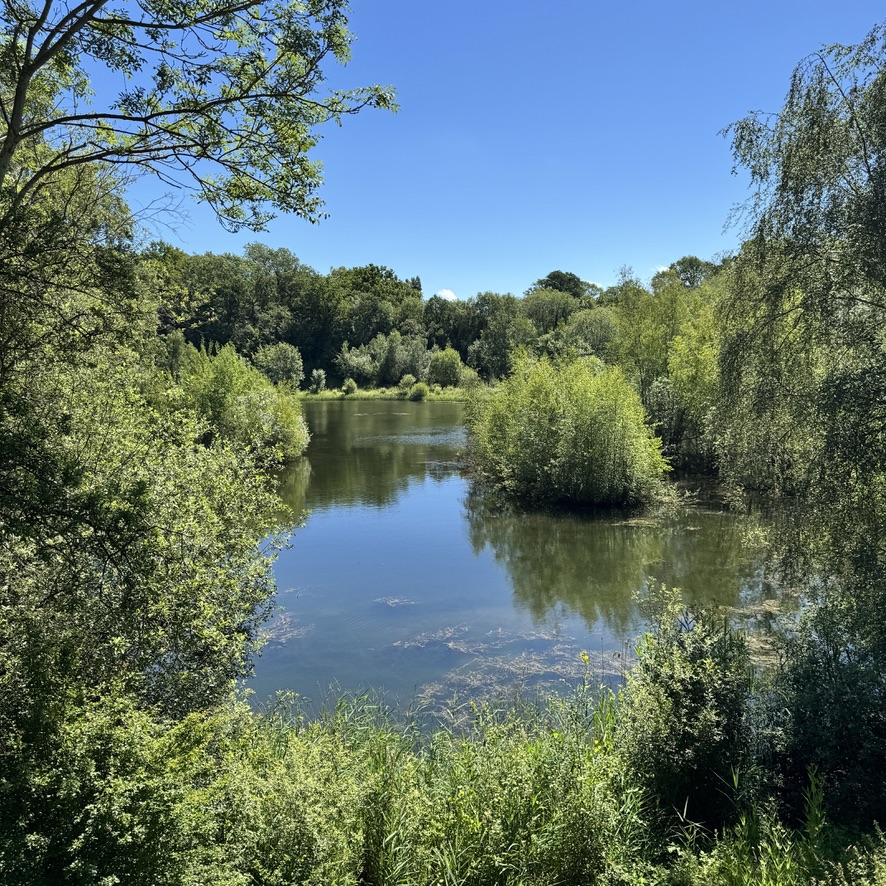
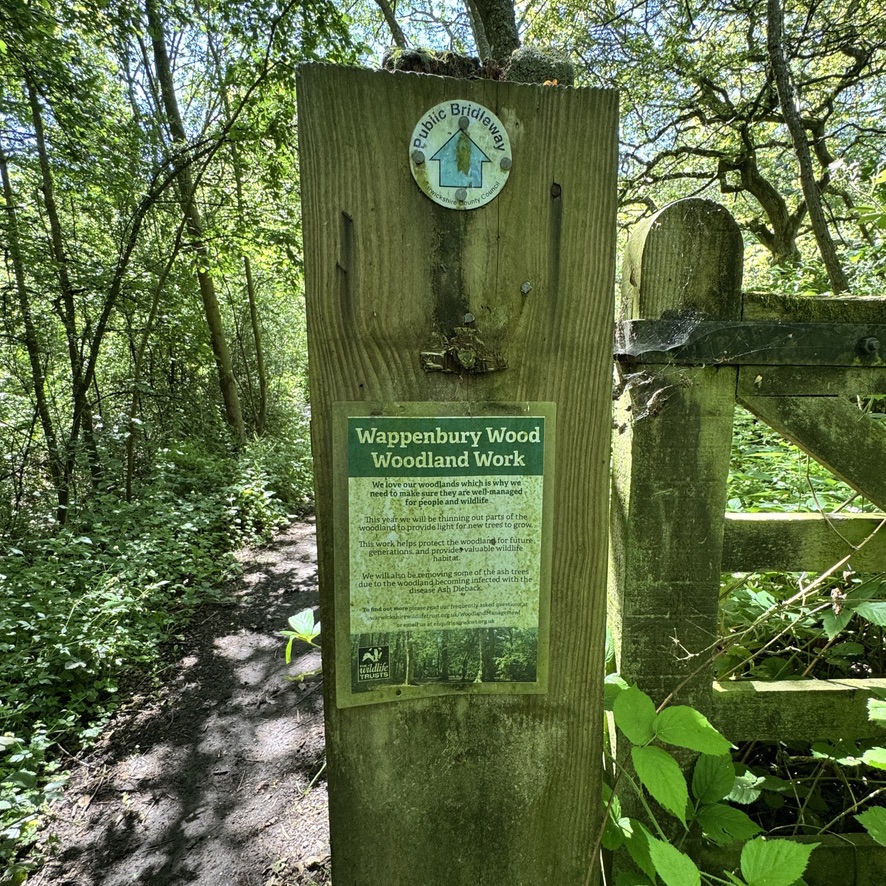
Yesterday, while roaming Wappenbury Wood, I found myself running up against this exact absurdity. I had paid for two hours of parking. I wanted to extend my time in the woods, but I couldn’t get a connection, so I couldn’t extend my parking through the RingGo app. There I was, surrounded by trees, wanting to remain in the place, and being tugged back by a parking meter I couldn’t speak to because the little rectangle in my hand couldn’t find a signal.

Better Than Sex

First-world problems, I know.

But also a sign.

Some might say ‘good’. If you’re outside, be outside.

And part of me agrees. Deeply. There’s wisdom in not turning every walk into a production. There was a time when I lost my way with that too. I spent more time looking at the world through a device than experiencing the place through my own eyes. I’d be composing the post before I’d even received the moment. I’d be thinking about the share while the living thing was still happening in front of me.

Thankfully, I’ve mostly kicked that habit.

I don’t bother processing photos while I’m out. I don’t feel the need to livestream the experience. I’m learning to let the walk be the walk. The camera comes out when it needs to. The note gets captured via my Plaud voice-note device. But I’m no longer trying to turn every outing into a broadcast.

That feels like progress.

But there’s another habit underneath it, and maybe this one is harder to break: the 9-to-5 mindset. The productivity culture mindset. The idea that if I’m away from the desk, I’m somehow not working. The idea that roaming, wandering, reading under trees, following curiosity, and letting the body move through the landscape are somehow indulgences rather than part of the work itself.

And this is where I need to remember what I actually believe.

Being outside is my work.

Or at least it is part of the working condition I’ve spent years trying to build my life around.

I’m not trying to become more efficient at sitting under artificial light and moving tasks from one column to another. I’m trying to build a life where thinking, walking, writing, noticing, reading, photographing, speaking, and making are woven together. A life where work is not a cage I return to after being alive, but a form of aliveness itself.

That doesn’t mean abandoning responsibility. It doesn’t mean pretending money, deadlines, clients, admin, and logistics don’t exist. The parking app still wants paying. The email still needs answering. The file still needs sending.

But it does mean the old industrial rhythm cannot be the master rhythm.

There is another rhythm available.

Harold Jarche’s PKM model comes to mind here: seek, sense, share.

I’ve always liked the simplicity of that. It gives shape without becoming a cage.

Seek: go out, read, wander, notice, collect, and encounter.

Sense: sit with what has been gathered, make meaning, connect it to the living archive, let the pattern reveal itself.

Share: publish, speak, teach, post, make the field note public, and offer the insight back to the commons.

Wappenbury Wood

Maybe the trick is to stop trying to do all three at once.

When I’m outside, perhaps I’m mostly in seek mode. I’m gathering. Walking. Looking. Letting the place work on me. Letting the body become an instrument again. I don’t need to process everything on the spot. I don’t need to share immediately. I don’t need to prove the walk was productive by turning it into output before I’ve even left the woods.

Then, later, somewhere with coffee and a signal, I can sense and share.

This might be the rhythm I’m looking for.

Not desk versus outdoors.

Not internet versus nature.

Not productivity versus wandering.

But phases. Movements. Breath.

Inhale: go out.

Hold: notice what the world is saying.

Exhale: write, speak, share.

The internet then becomes part of the cycle rather than the whole ecosystem. AI becomes a thinking companion, not a substitute for experience. The archive becomes a living field, not a bunker. The phone becomes a tool, not the eye I see through.

And the walk becomes what it has always wanted to be: a method.

The barefoot philosopher does not need to reject the digital world. That would be too simple, and frankly, false. My life is tangled with the web. My work is made of language, links, fragments, feeds, archives, posts, and conversations across distance. I am a child of the library and the internet. I don’t want to give that up.

But I do need to renegotiate the terms.

The chair is good. The coffee is good. The screen is useful. The infinite library is a miracle.

But the world is not inside the machine.

The world is outside, being rained on. It’s in the mud underfoot, the old trees at Wappenbury, the cold air in the lungs, the hill not yet climbed, the lane not yet followed, the bird I can’t name calling from somewhere beyond the path.

Hunter got into the story.

That’s what I’m hearing this morning.

Not just read about the madness. Enter the room.

Not just study life. Participate.

Not just watch other people’s field reports from the glowing cave. Make my own.

Get outside. Stay outside.

Seek. Sense. Share.

Find the rhythm again. The barefoot philosopher’s rhythm.