The morning began with a quiet decision to let the town rearrange itself around me.1 I had spent the weekend building two small dérive apps. Nothing polished, just enough to nudge my attention sideways. And now, standing at the edge of Leamington Spa, I wanted to see what they would do to a place I thought I knew.
Twenty-six years of walking these streets had given me a practical map: the shortcuts, the shops I relied on, the routes that got me from one thing to the next without fuss. But the apps didn’t care about any of that. They didn’t know where I needed to be. They only knew how to ask questions, how to interrupt the usual rhythm of a walk.
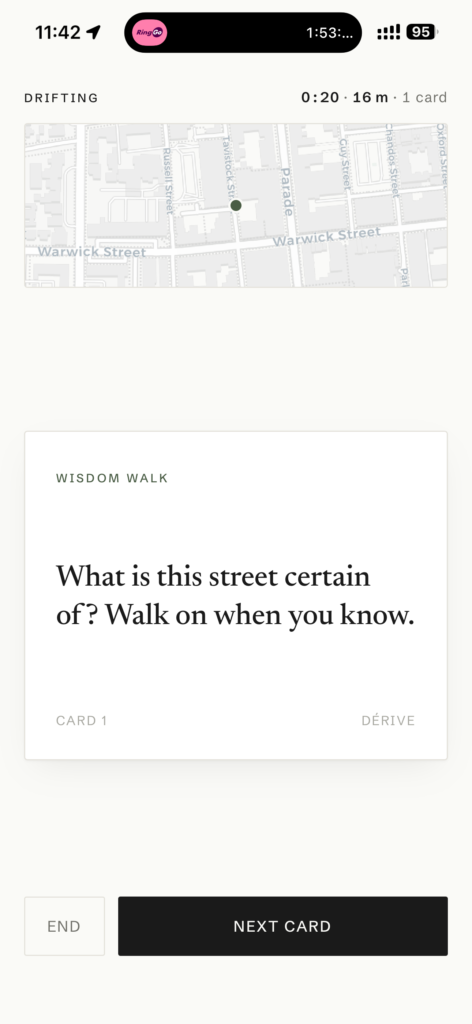
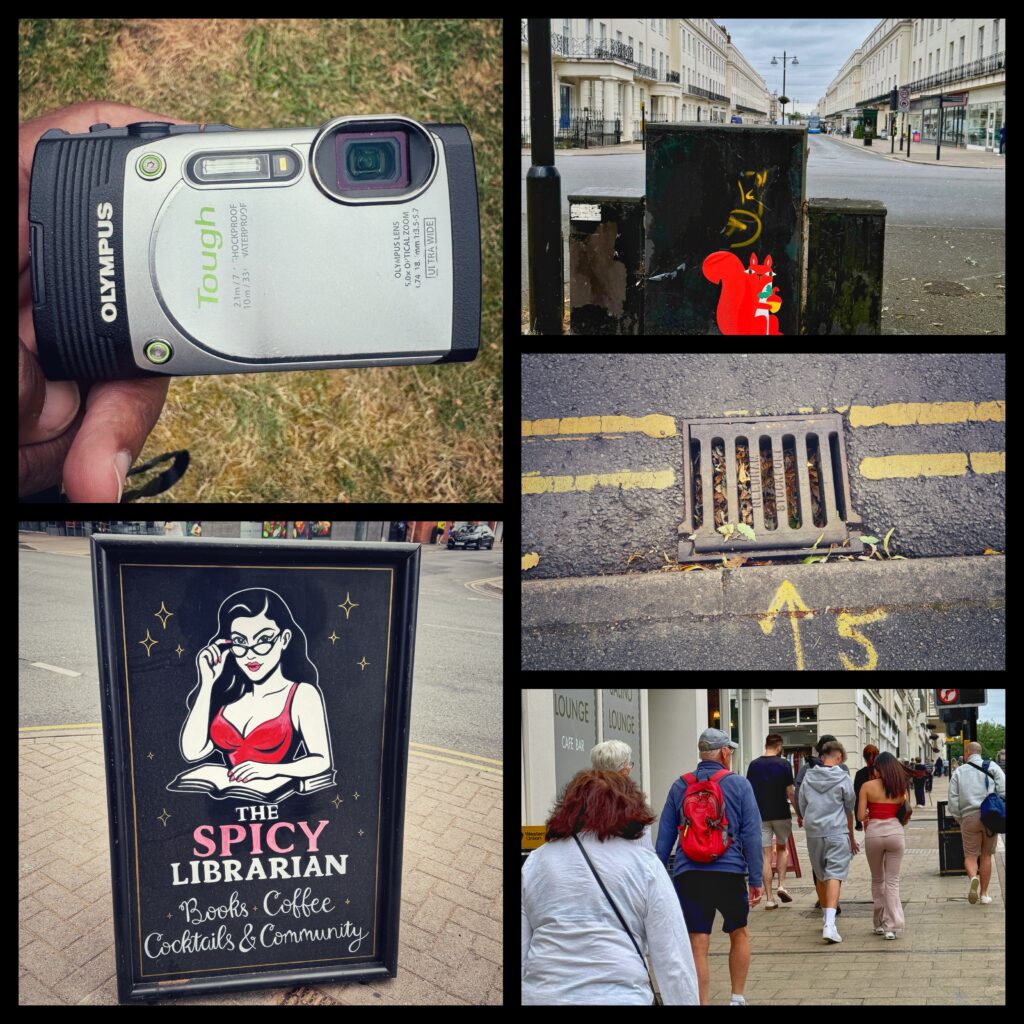
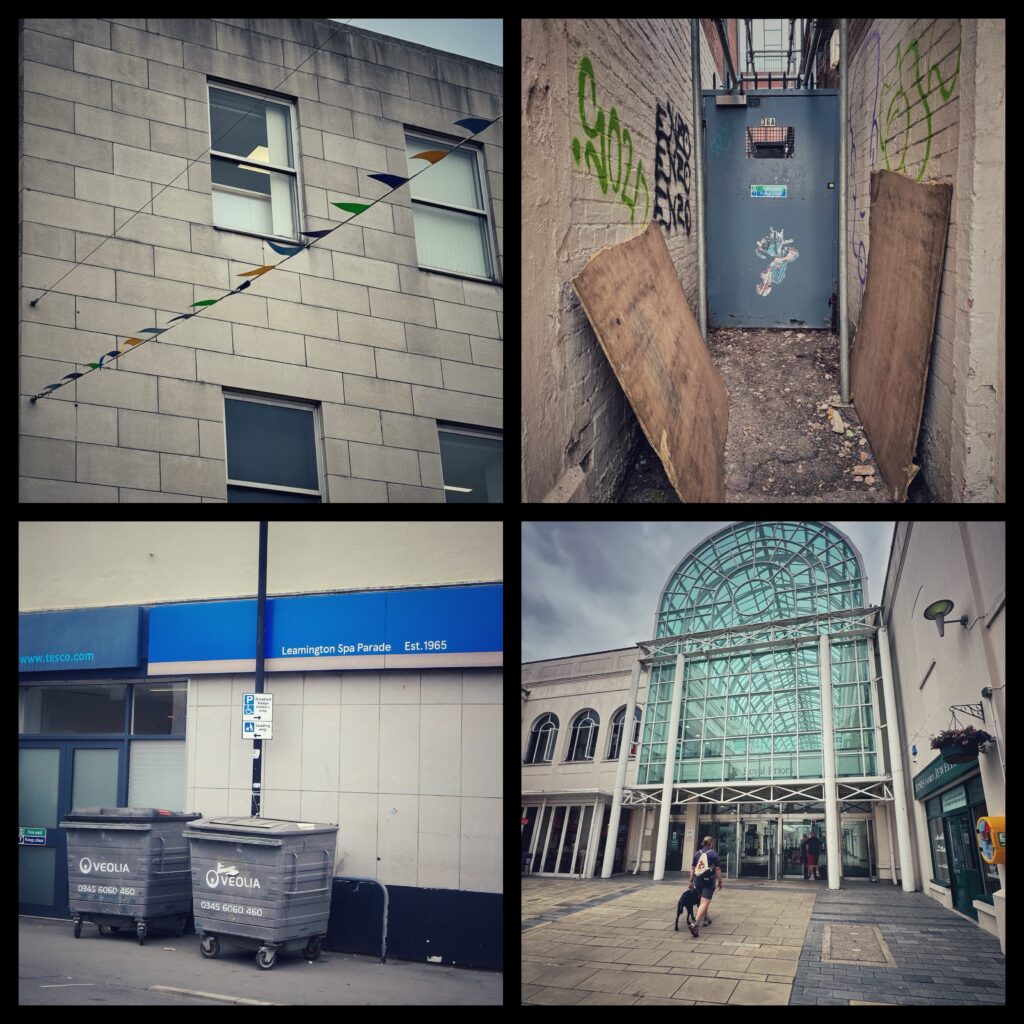
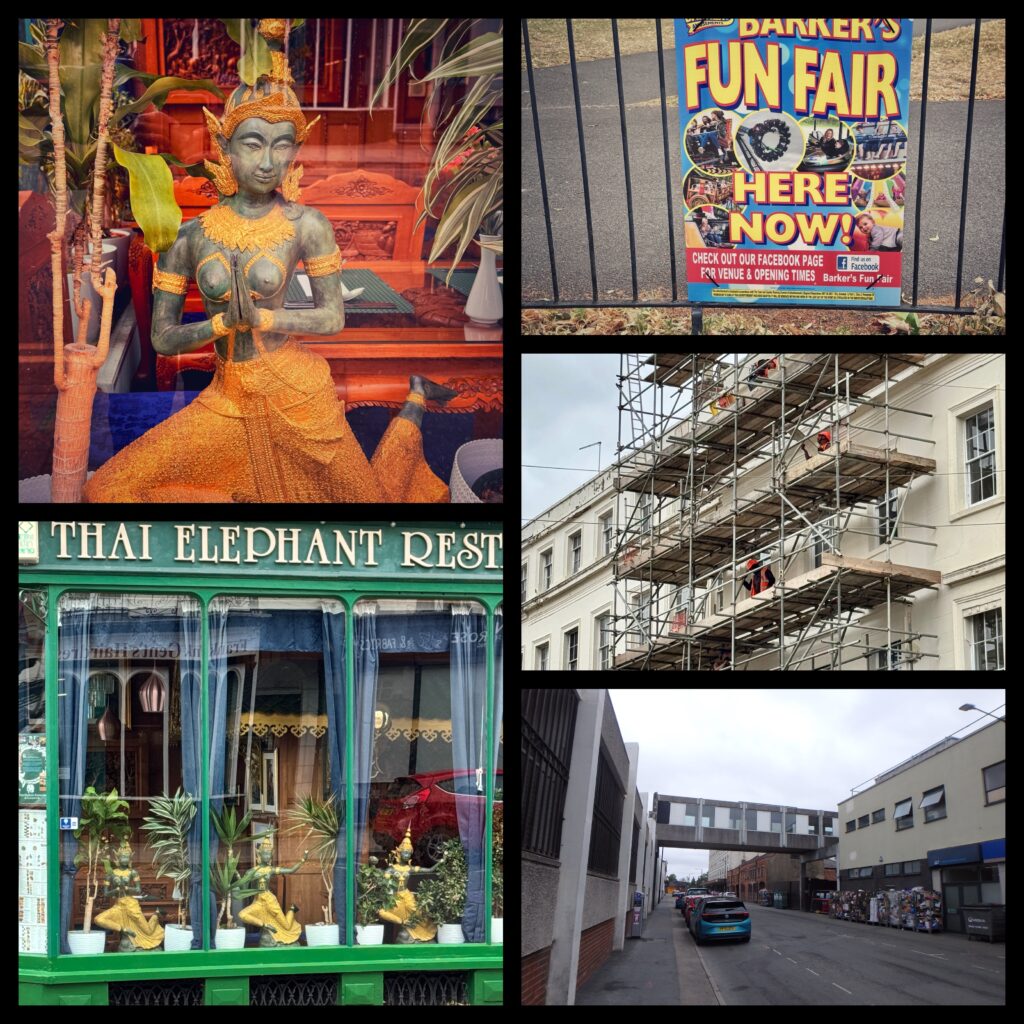
I started near the back of Tesco, where the street was a mix of food deliveries, groceries, haircuts, bars, and businesses that had changed names so often I could no longer remember what they used to be. People moved through their errands, barely glancing up, and I realised how rarely I stopped to consider the street itself as something with its own presence. The first card the app gave me asked, “What is this street certain of?” I stood there, watching the flow of bodies and goods, the way the pavement guided people toward the next thing they needed. The answer came slowly, not as a thought but as a feeling: this street was certain of being a cut-through. It was certain about serving people. That may sound obvious, but I had never paused long enough to let the street become the subject of my attention. It was just the space between other places, a corridor rather than a destination. The app had already done its work by making me notice that.
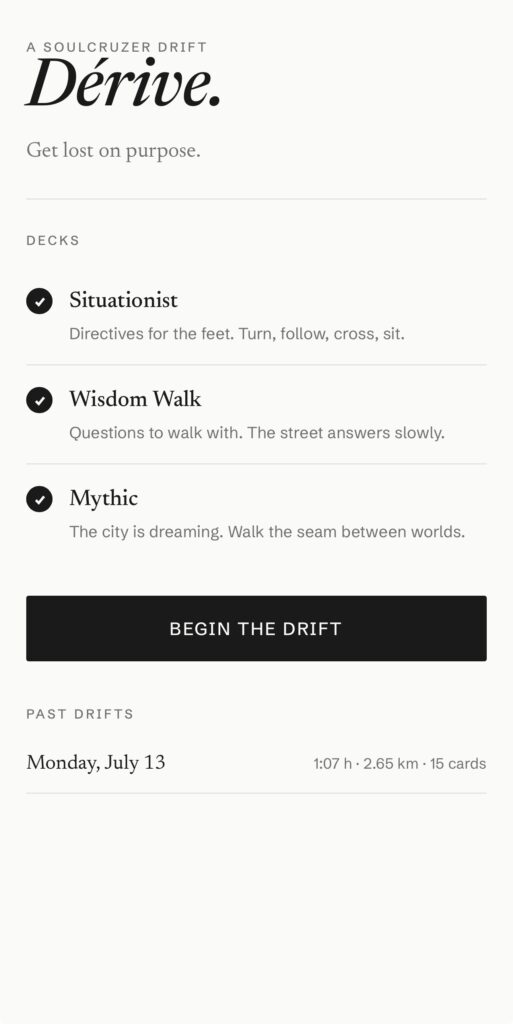
The two apps were built from three kinds of prompts, each pulling me in a different direction. The Wisdom Walk cards asked philosophical questions: What would Socrates stop and ask here? What am I pretending not to know? The Situationist cards messed with the useful route: Take the street you always skip. Choose the scruffier of the next two streets. Go to the end of a dead end anyway. The Mythic cards asked for a different kind of attention: Find the guardian of this place. Name the spirit of the next street. Cross a threshold as though a myth were already under way.
I held the mythic language lightly, not as a claim about the world but as a game of attention. A dog could become a guardian for a moment. An elephant statue outside a shop could ask to be looked at. A lit window could become the beginning of a small imagined morning: someone arriving with coffee before the place opened, putting the day in order while the street was still quiet.
One card told me to walk with my hands open. That caught me off guard. I had a phone, a camera, and a recorder with me, each one a useful field instrument, each one another thing to hold. The recorder helped because I could talk hands-free, letting my thoughts spill out without stopping to type. The camera made me notice how quickly I reached for a device instead of letting a scene sit in my eyes for a moment. The walk was asking about tools and attention at the same time. What did it mean to document a moment versus simply being in it? The question lingered as I turned onto a side street I usually ignored.
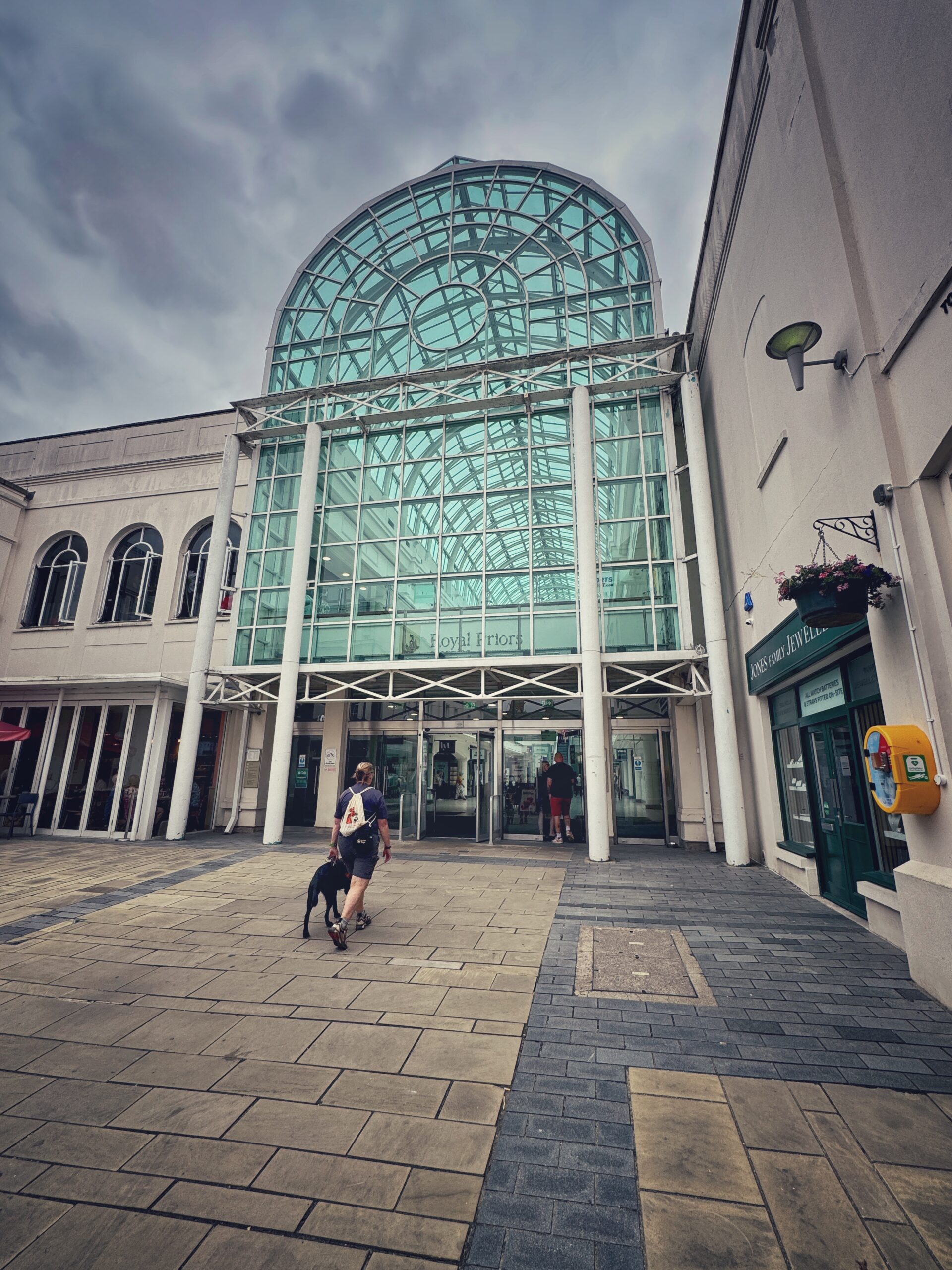
Another card asked what Socrates would stop and ask about on the street. I was standing by the entrance to the Royal Priors, the old shopping centre that had been part of the town’s rhythm for decades. I could suddenly imagine him there, recognising shopkeepers, stopping familiar faces, making philosophical trouble in the traffic of the day. Leamington didn’t become ancient Athens. It became a place where ordinary life could still be questioned. The card didn’t demand a grand insight. It just asked me to pause and wonder what might be worth examining in the flow of the everyday.
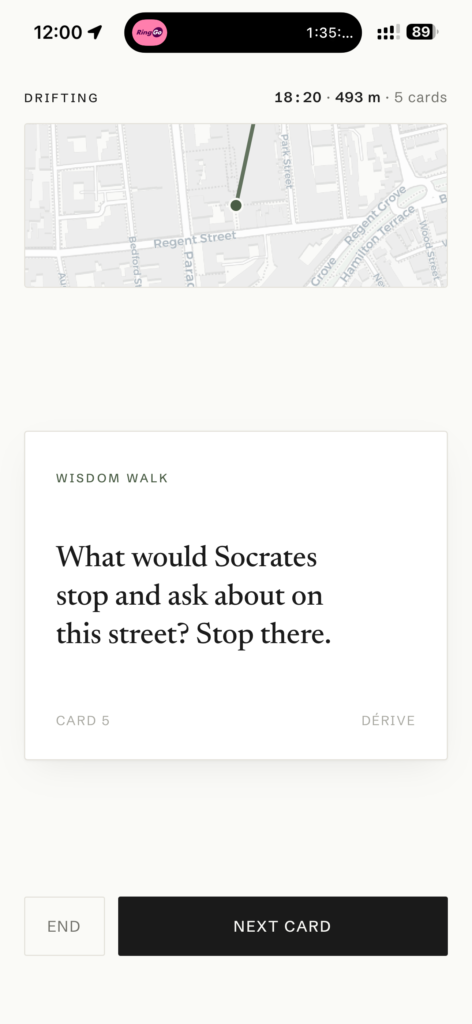
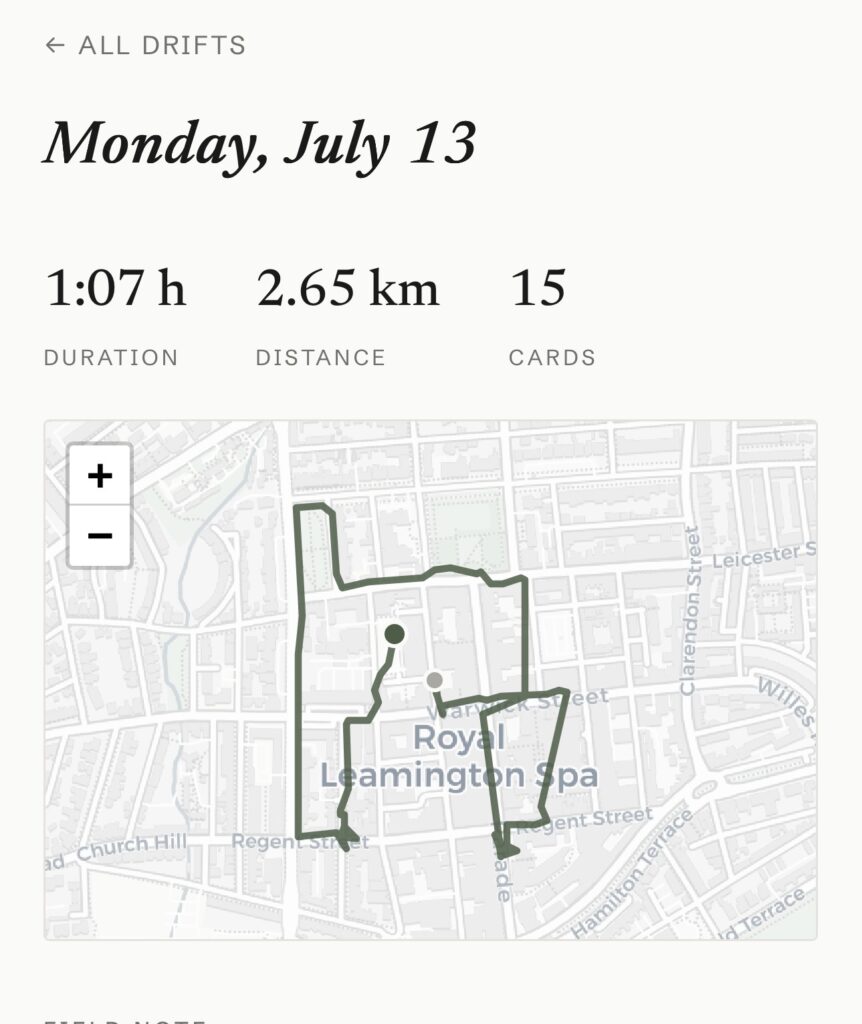
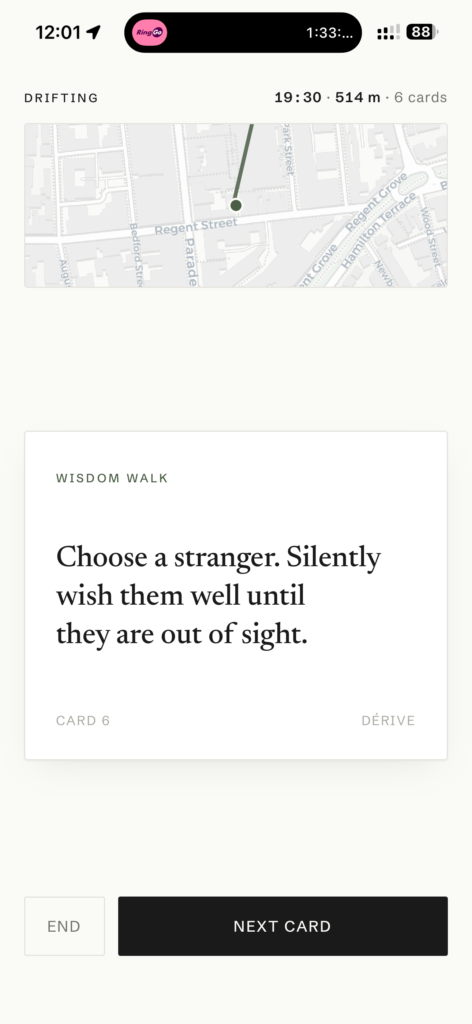
The two apps weren’t equally finished. One gave me a map, live location, time and distance, and a more reliable sequence of cards. The other had a lovely poetic current but repeated itself, offering the same prompts in slightly different wording. Both made a persuasive case for the experiment. The best design change would be simple: let me attach a note, photograph, voice memo, or location to the card that caused the turn. A card is more than an instruction once the walker can answer back. It becomes part of a conversation, a trace of where the mind went when it was nudged.
By the end, I had walked loops and squares, covering ground I thought I knew. I had not gone anywhere in the useful sense. That was the point. A dérive removes the ordinary reason for moving through a town, then waits to see what replaces it. The streets became stranger, not because they had changed but because I was seeing them differently. The app didn’t just guide me; it made me aware of how much I usually filtered out.
The final card asked me to carry one worry to the next corner and leave it there. Mine was the old practical worry about money, time, and whether I could build the life I wanted from creative work of my own. The walk didn’t answer it. It gave me a better next move: make the work that interests me, get out into the world, document what actually happens, and let the trail become visible. The app ended with the line, “The door to destiny is open.” I took that as good poetic game language, the kind of phrase that works because it doesn’t try too hard to mean something. The real door was the walk back to the car, the recorder still running, and a set of notes worth carrying home.
I didn’t solve anything that morning. But I had let the town speak back to me in a way it hadn’t before. The apps were just tools, but they had done their job: they had made me pay attention. And that, more than anything, was what the walk had been for.
If you would like to try the app out for yourself, email me and I’ll send you the link.
- A dérive, or “drift,” is a Situationist walking practice in which you set aside the most useful route and allow the streets, encounters, and atmosphere of a place to shape where you go. The point is not to get somewhere efficiently, but to notice what a familiar landscape has been saying all along. ↩︎