The Horizon

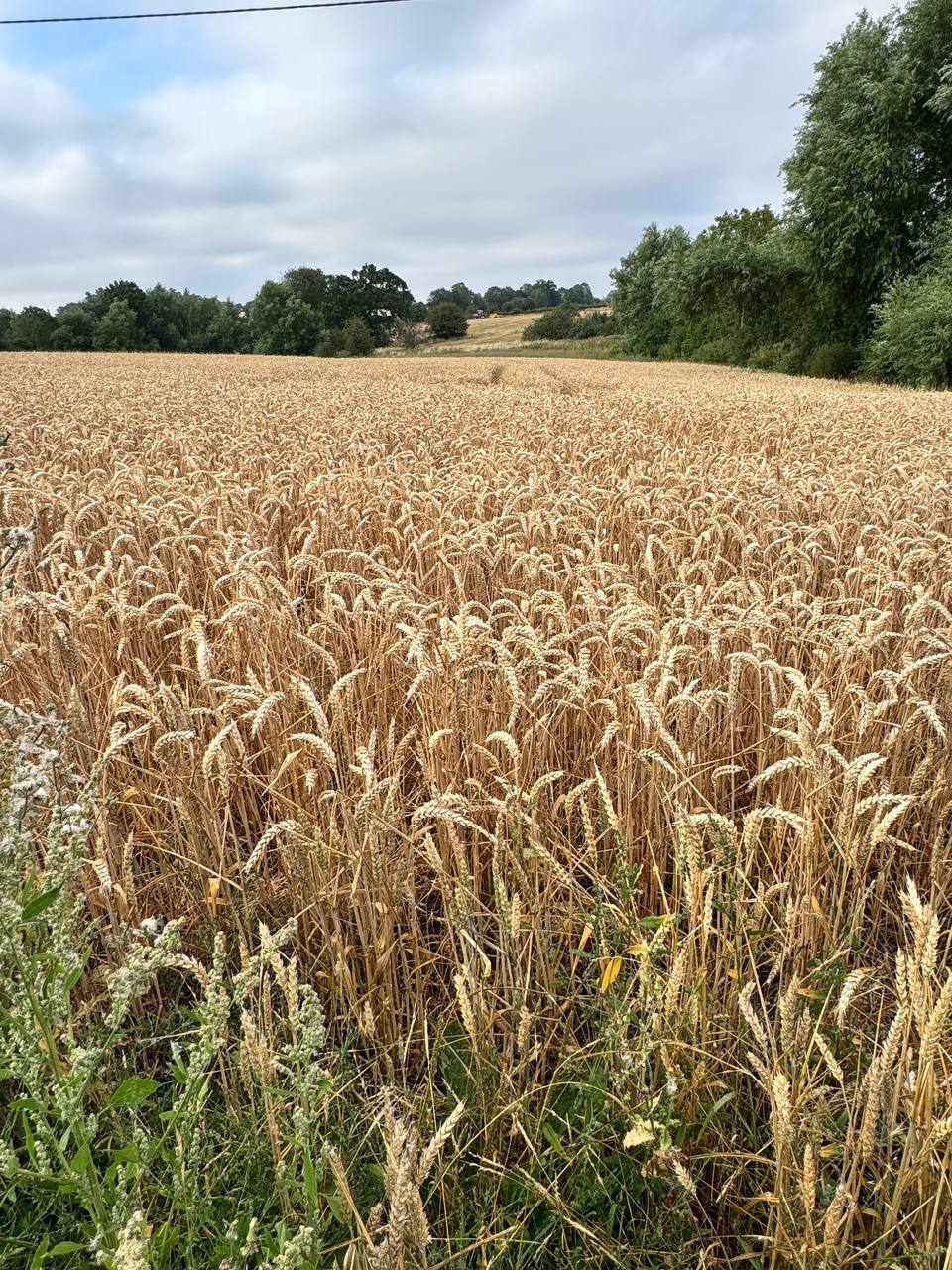
Golden wheat field stretching towards a tree-lined horizon under a pale cloudy sky

I’m standing in a field looking towards the horizon. It occurs to me that I’ve spent a lifetime doing this. Different fields. Different coastlines. Different countries. Different versions of myself, always finding a line where earth gives itself over to sky.

The horizon is a peculiar thing. It promises distance while refusing arrival. However far you walk, it quietly withdraws, asking nothing except that you keep going.

For reasons I can’t quite explain, the Oracle from The Matrix wanders into the field with me. Not the whole scene. Just one line.

I thought you’d have figured that out by now.

Only this time she isn’t speaking to Neo.

She’s speaking to me.

I laugh, because the question isn’t really what I should be doing. It never was. I’ve spent years treating life as though someone, somewhere, was withholding the final permission slip. As though there existed a committee of invisible adults who would eventually nod and say, Yes, Clay. Now you’re ready.

The field has no such committee.

The horizon doesn’t issue certificates.

The wind doesn’t care whether I’m qualified.

And perhaps that’s what horizons have been trying to teach me all these years. You stand before them expecting direction, but they offer something stranger: responsibility. They refuse to tell you which way to walk. They simply reveal that there is always another direction available.

No one is coming to rescue you from your own life. Not because the world is cruel, but because this part has always belonged to you. Choice isn’t a burden handed down by the universe. It’s the texture of being alive.

Then, as often happens on these walks, another voice enters the conversation.

Alice Cooper.

“I came into this life, looked all around…”

Memory is like that. One thought calls another, not by logic but by resonance. Philosophy opens the door and rock ‘n’ roll wanders in carrying the same truth in a different key. Nothing came easy. Nothing came free.

Standing there, looking towards another horizon that I will never quite reach, I wonder if that has been the lesson all along. We keep waiting for certainty to arrive from somewhere beyond ourselves, when perhaps certainty was never the gift.

Perhaps the gift was the horizon itself: forever out of reach, forever inviting the next step, still mine.
What the Street Was Certain Of

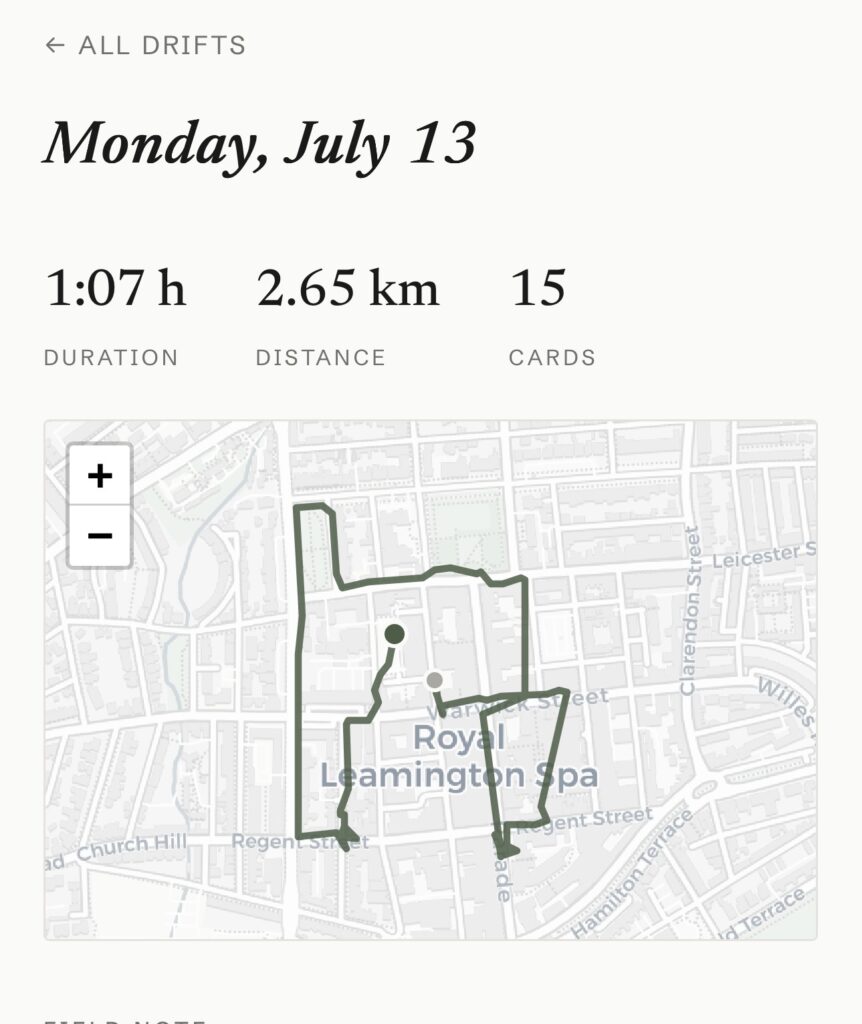
Leamington Spa deríve 2026-07-13

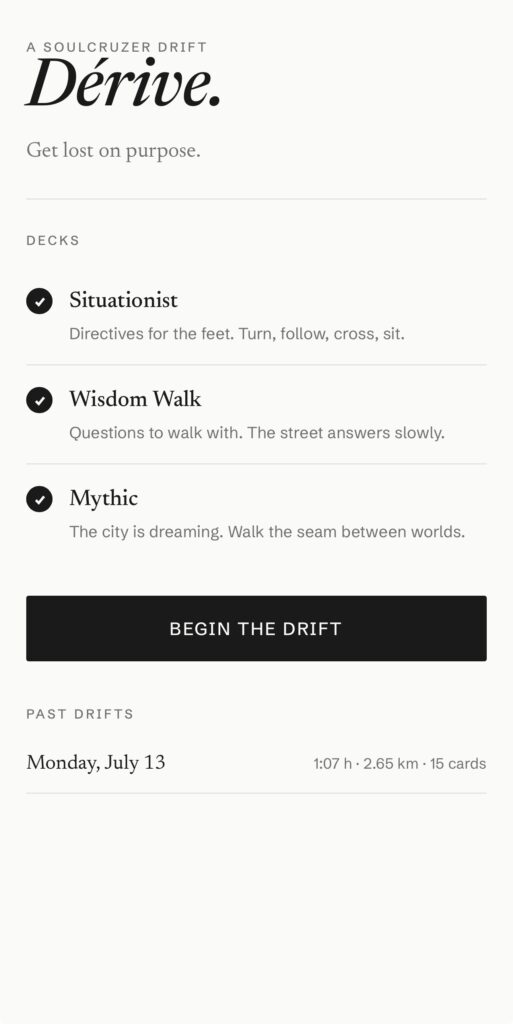
The morning began with a quiet decision to let the town rearrange itself around me.1 I had spent the weekend building two small dérive apps. Nothing polished, just enough to nudge my attention sideways. And now, standing at the edge of Leamington Spa, I wanted to see what they would do to a place I thought I knew.

Vibecoded with Fable 5

Twenty-six years of walking these streets had given me a practical map: the shortcuts, the shops I relied on, the routes that got me from one thing to the next without fuss. But the apps didn’t care about any of that. They didn’t know where I needed to be. They only knew how to ask questions, how to interrupt the usual rhythm of a walk.

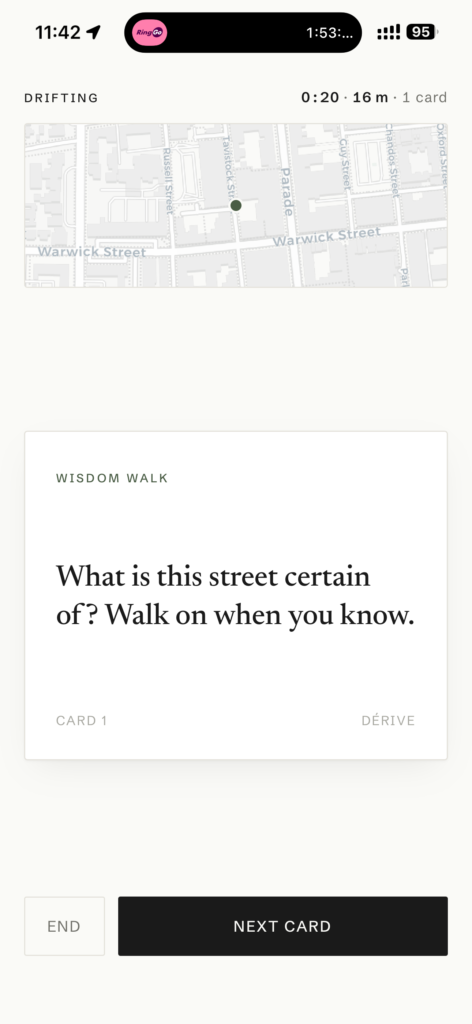
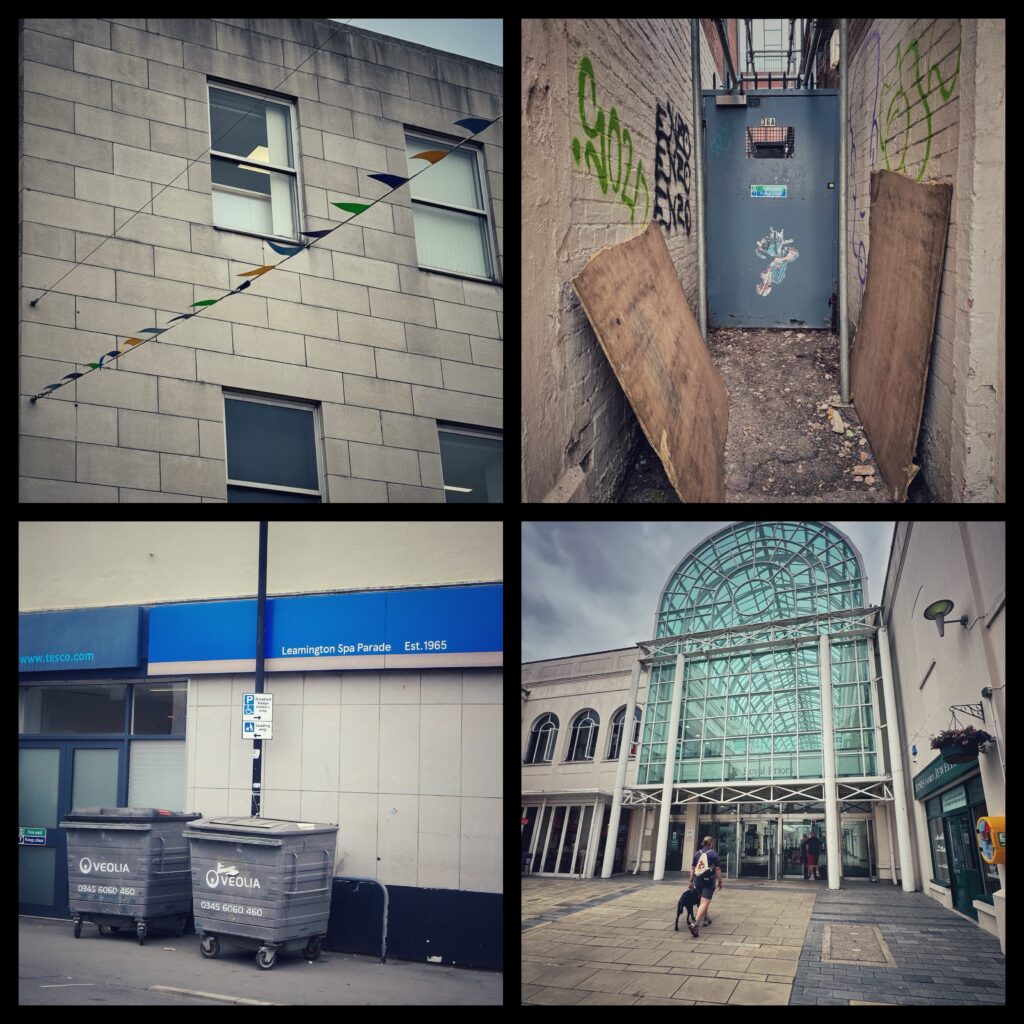
I started near the back of Tesco, where the street was a mix of food deliveries, groceries, haircuts, bars, and businesses that had changed names so often I could no longer remember what they used to be. People moved through their errands, barely glancing up, and I realised how rarely I stopped to consider the street itself as something with its own presence. The first card the app gave me asked, “What is this street certain of?” I stood there, watching the flow of bodies and goods, the way the pavement guided people toward the next thing they needed. The answer came slowly, not as a thought but as a feeling: this street was certain of being a cut-through. It was certain about serving people. That may sound obvious, but I had never paused long enough to let the street become the subject of my attention. It was just the space between other places, a corridor rather than a destination. The app had already done its work by making me notice that.

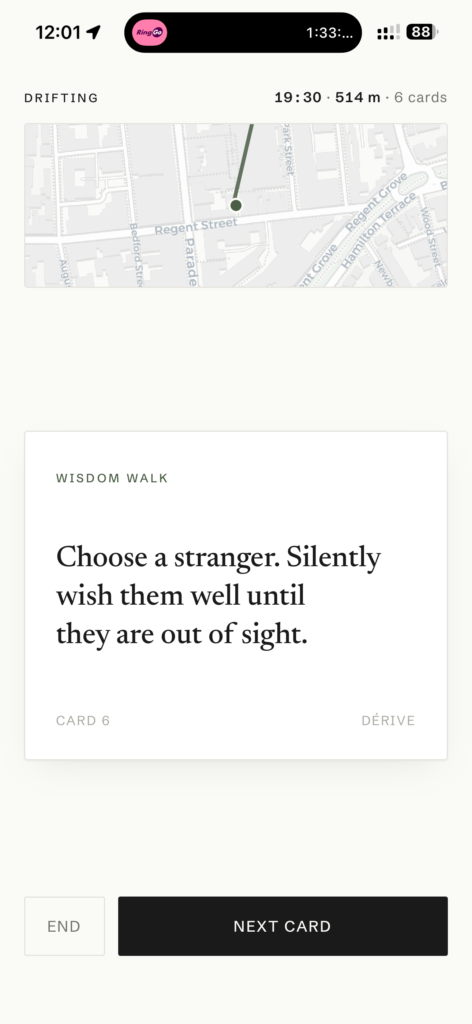
The two apps were built from three kinds of prompts, each pulling me in a different direction. The Wisdom Walk cards asked philosophical questions: What would Socrates stop and ask here? What am I pretending not to know? The Situationist cards messed with the useful route: Take the street you always skip. Choose the scruffier of the next two streets. Go to the end of a dead end anyway. The Mythic cards asked for a different kind of attention: Find the guardian of this place. Name the spirit of the next street. Cross a threshold as though a myth were already under way.

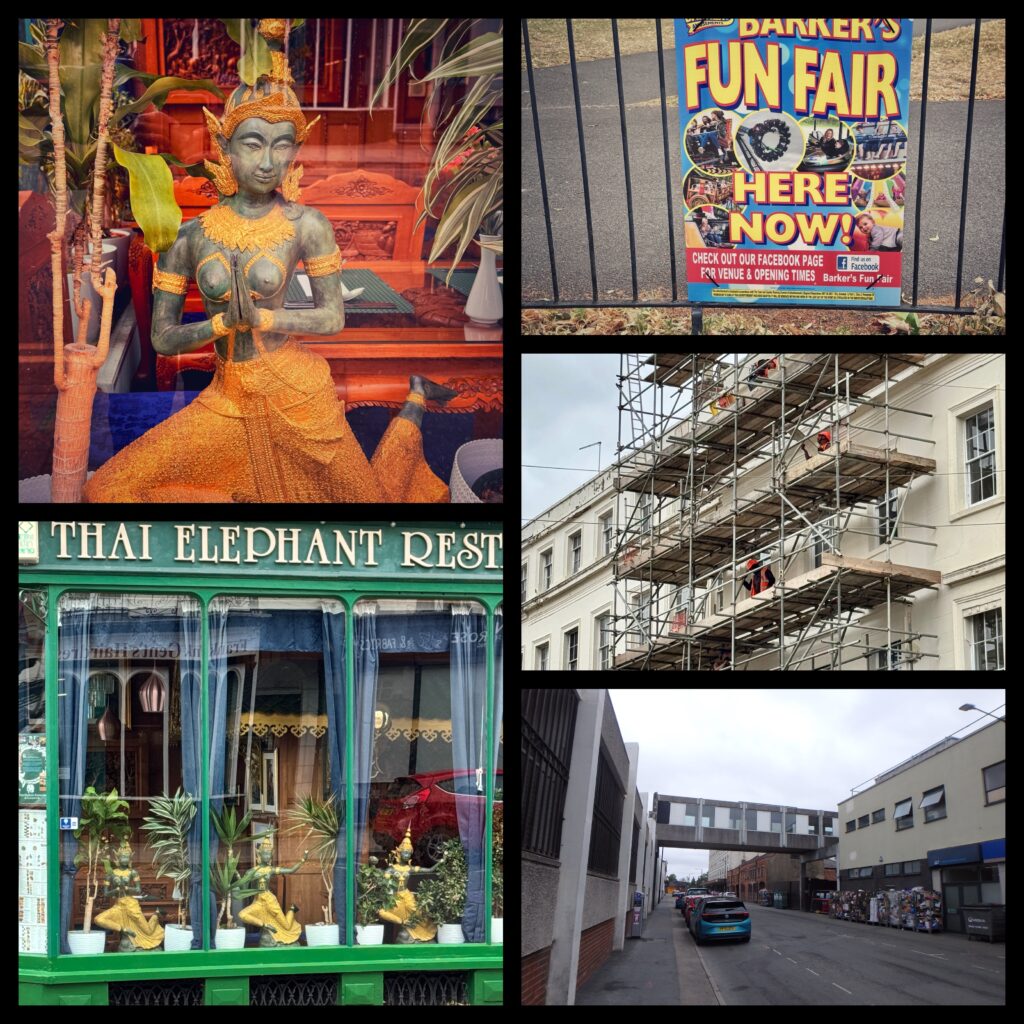
I held the mythic language lightly, not as a claim about the world but as a game of attention. A dog could become a guardian for a moment. An elephant statue outside a shop could ask to be looked at. A lit window could become the beginning of a small imagined morning: someone arriving with coffee before the place opened, putting the day in order while the street was still quiet.

One card told me to walk with my hands open. That caught me off guard. I had a phone, a camera, and a recorder with me, each one a useful field instrument, each one another thing to hold. The recorder helped because I could talk hands-free, letting my thoughts spill out without stopping to type. The camera made me notice how quickly I reached for a device instead of letting a scene sit in my eyes for a moment. The walk was asking about tools and attention at the same time. What did it mean to document a moment versus simply being in it? The question lingered as I turned onto a side street I usually ignored.

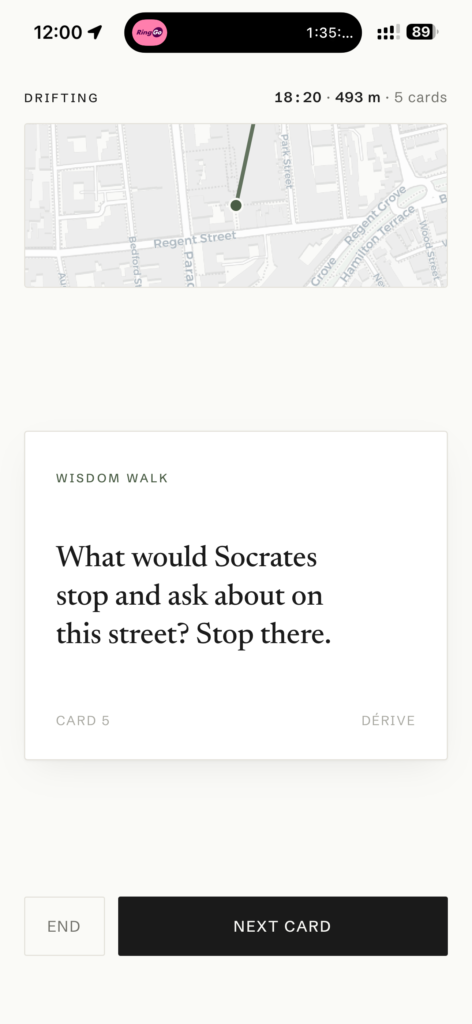
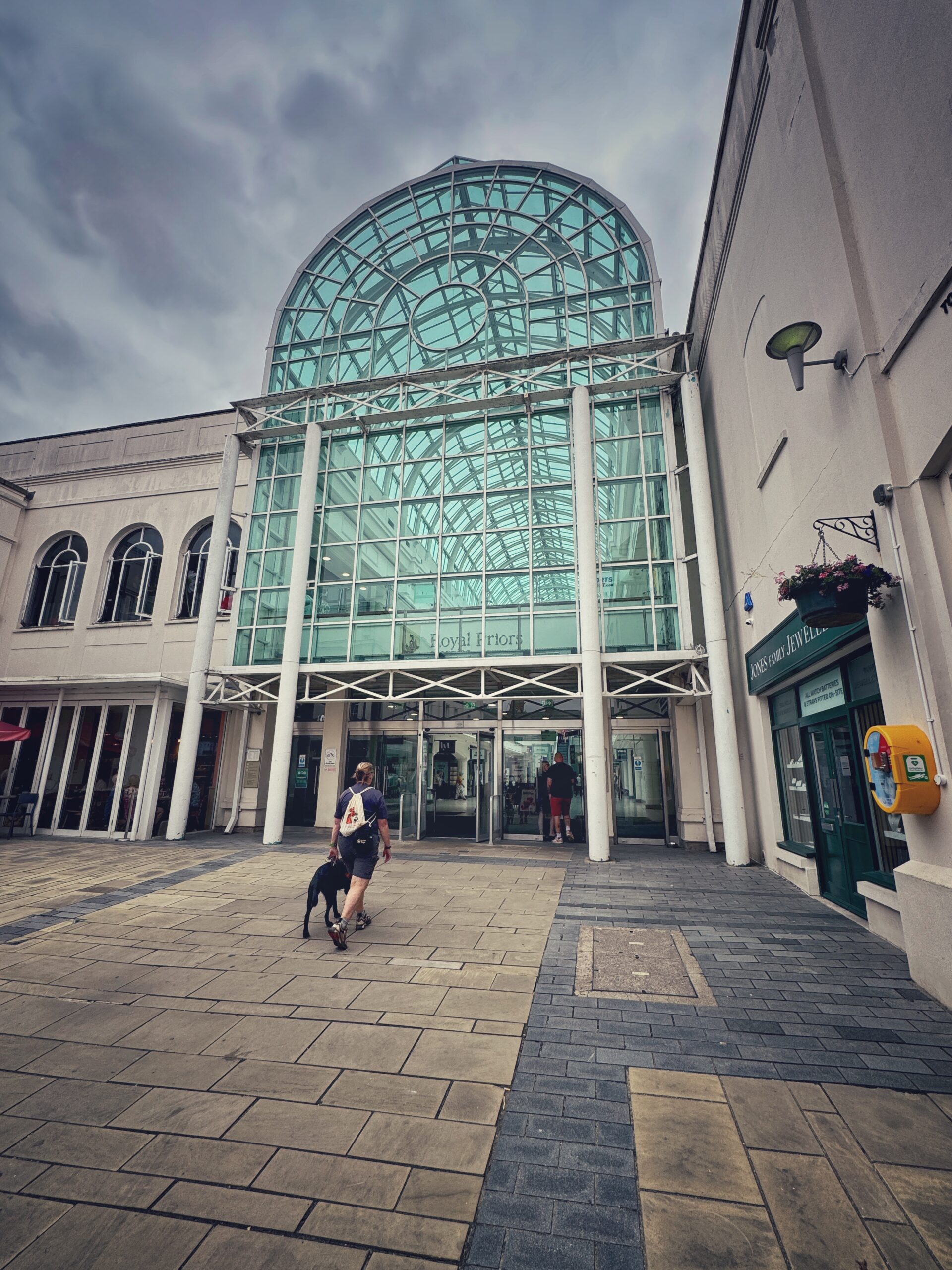
Another card asked what Socrates would stop and ask about on the street. I was standing by the entrance to the Royal Priors, the old shopping centre that had been part of the town’s rhythm for decades. I could suddenly imagine him there, recognising shopkeepers, stopping familiar faces, making philosophical trouble in the traffic of the day. Leamington didn’t become ancient Athens. It became a place where ordinary life could still be questioned. The card didn’t demand a grand insight. It just asked me to pause and wonder what might be worth examining in the flow of the everyday.

The two apps weren’t equally finished. One gave me a map, live location, time and distance, and a more reliable sequence of cards. The other had a lovely poetic current but repeated itself, offering the same prompts in slightly different wording. Both made a persuasive case for the experiment. The best design change would be simple: let me attach a note, photograph, voice memo, or location to the card that caused the turn. A card is more than an instruction once the walker can answer back. It becomes part of a conversation, a trace of where the mind went when it was nudged.

By the end, I had walked loops and squares, covering ground I thought I knew. I had not gone anywhere in the useful sense. That was the point. A dérive removes the ordinary reason for moving through a town, then waits to see what replaces it. The streets became stranger, not because they had changed but because I was seeing them differently. The app didn’t just guide me; it made me aware of how much I usually filtered out.

The final card asked me to carry one worry to the next corner and leave it there. Mine was the old practical worry about money, time, and whether I could build the life I wanted from creative work of my own. The walk didn’t answer it. It gave me a better next move: make the work that interests me, get out into the world, document what actually happens, and let the trail become visible. The app ended with the line, “The door to destiny is open.” I took that as good poetic game language, the kind of phrase that works because it doesn’t try too hard to mean something. The real door was the walk back to the car, the recorder still running, and a set of notes worth carrying home.

I didn’t solve anything that morning. But I had let the town speak back to me in a way it hadn’t before. The apps were just tools, but they had done their job: they had made me pay attention. And that, more than anything, was what the walk had been for.

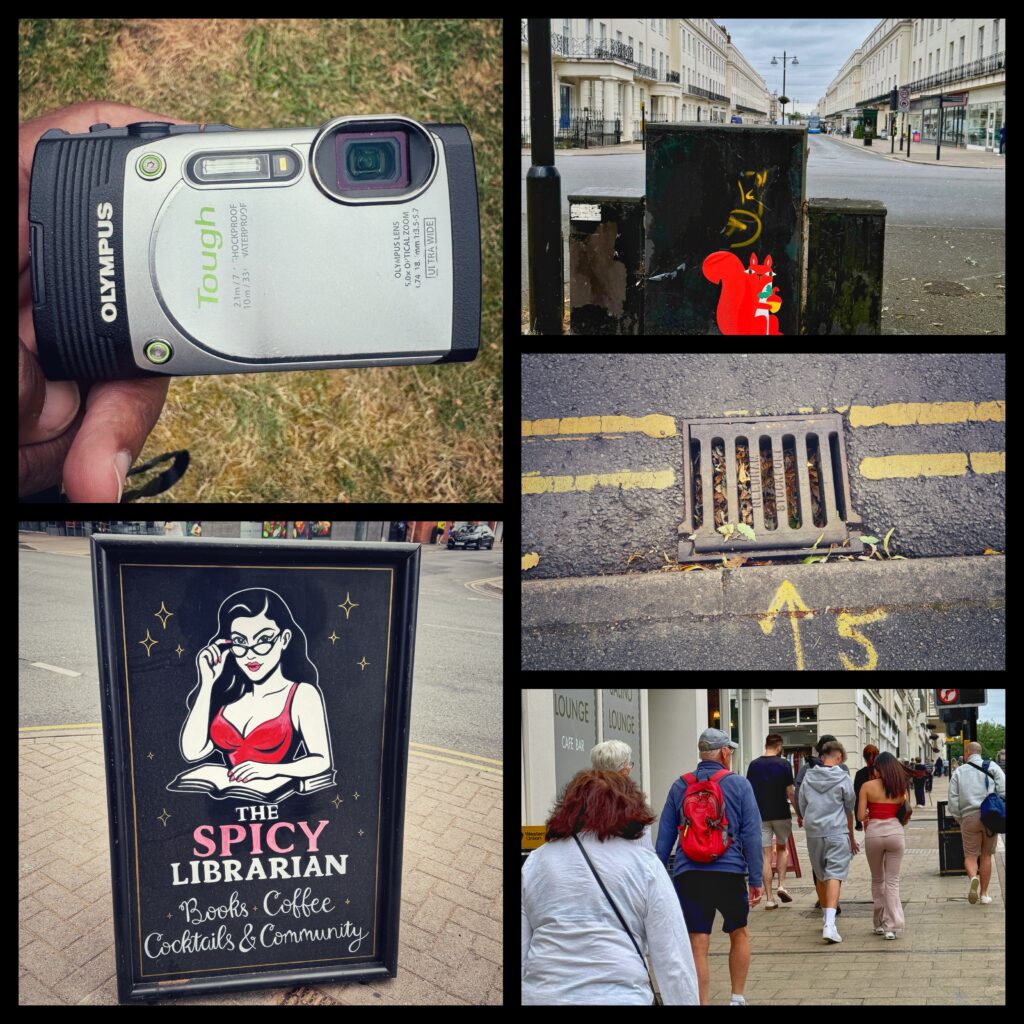
mix of pictures from the derive

If you would like to try the app out for yourself, email me and I’ll send you the link.


  1. A dérive, or “drift,” is a Situationist walking practice in which you set aside the most useful route and allow the streets, encounters, and atmosphere of a place to shape where you go. The point is not to get somewhere efficiently, but to notice what a familiar landscape has been saying all along. ↩︎

The Rucksack, the Drift, and the Thinking Walk

I have been thinking about walking. This week has clarified something about why.

You stay alive to your life by staying in motion. The physical motion is part of it. The attention staying awake is the larger part. The question underneath: Do you have a practice that holds? A real one, lived rather than intended, that keeps the self porous and curious and in genuine contact with the actual world.

This is what Japhy Ryder understood. In The Dharma Bums, he has a vision: thousands of young Americans walking into the mountains with rucksacks on their backs, refusing the dream of the box, the car, the television flickering in every window at the same hour on every street. The rucksack on the back is proof of something. You’ve got what you need. You can go anywhere. The road is still there.

Guy Debord called the drift the dérive. The unplanned walk that follows what the Situationists called psychogeographic pulls: the alley that looks interesting, the hill appearing over rooftops, the smell you can’t identify that makes you turn left. The environment has its own intelligence. The dérive asks you to submit to it for a while. Go out without a destination. Come back having been somewhere you didn’t plan to go.

These two traditions, Kerouac’s rucksack revolution and Debord’s dérive, have always sat in separate rooms in my mind. One is wilderness, one is urban. One is spiritual, one is political. But this week I see what they share: both are practices of refusal. Both insist that the narrowing is a choice.

The wisdom walk is the thread that connects them. The older, quieter idea that walking itself is a form of thinking. That the body in motion produces a quality of attention that the desk can’t replicate. That ideas arrive on the path that won’t come any other way. Thoreau knew it. The Peripatetics knew it. The pilgrim walking to the Holy Land, à la Sainte Terre, knew it. Thoreau traced the word saunter back to those pilgrims. Every walk is a pilgrimage if you take it seriously enough.

This morning, before the day got going, I spent a few hours with Claude working on the about page, the worldview piece, and the values. The shape of things has never felt clearer. The vault as the living memory layer. Notes, fragments, essays, experiments. The snapshot photography coming back. The narrative alchemy coaching. The text-based ontologist stepping fully into the role: language as the primary instrument, the web as the native medium, the walk as the thinking engine.

At fifty-seven, I wrote: Act III is the reclamation. At fifty-eight, watching Roger leave with the top down and sitting with what this week has been, I understand it more bodily than I did. The cosmic dancer surrenders to the rhythm of the turning wheel. Actively, with great intention, having seen what the alternative looks like.

The rucksack revolution belongs to anyone who understands what the alternative looks like.

The recipe: go out without a fixed route. Carry what you need and nothing more. Let the environment pull you where it wants. Follow the thought that arrives. Trust that the thinking will happen if you stay present to it.

The walk is the answer. It has always been the answer. The question is whether you take it.

I’m going home to the Midlands this afternoon. Back to the flatlands.

Walk As the Path

Last night, I dreamed of a question.

I was sitting in a circle with others—fellow seekers, perhaps—and someone asked me, Which medium do you want to carry forward? Which path will you walk? And without hesitation, I answered: writing.

When I woke, the answer still rang clear. Not just as a preference, but as a remembering. Writing is not just what I do—it’s how I am. It’s how I walk the world. How I gather fragments of meaning, soul-moments, and story-signals, and shape them into something that speaks to others. Words are how I reach out to my tribe—those scattered souls who are also trying to live a life of meaning, on purpose, with soul.

And lately, I’ve been feeling it more deeply than ever.
This call to be truer to myself—not someday, not later, not when the time is right, but now. To live as fully me as humanly possible. To walk the talk, yes—but also to walk as the talk. To be the thing I’m saying.

This morning, I went for one of my Wisdom Walks. The kind where the thinking quiets down and the listening begins. Where the world, if you pay attention, speaks not in sentences, but in signs.

And as I walked, it became clear:

I’m not preparing to live my myth.
I am living it.

Not in some grand, heroic sense—but in the simple, soulful loop I’ve been walking for a while now:
Reflect → Walk → Gather → Create → Share → Repeat.

Each loop is a cycle of becoming. Each message I write—whether blog post, email, or audiogram—is a soul signal. Not “content,” but a call. A way to say:
Here I am. I see you. Let’s walk together.

This morning, after my walk, I pulled three cards from the Osho Zen Tarot:

Trust. Aloneness. Guidance.

And just like that, the inner reflection became an outer echo.

Trust showed me the leap—the willingness to walk without knowing the entire map. That’s what writing is for me. That’s what these messages are. Leaps into the unknown.
No guarantee, no safety net. Just the inner knowing: This is what wants to be said today.

Aloneness reminded me that this path I walk is solitary at times—but not lonely.
It’s the Hermit archetype: not isolated, but sovereign.
Carrying a lantern not just for my own steps, but to light the way for others who might be nearby in the dark.

And Guidance whispered something I needed to remember:
I’m not doing this alone.
There are invisible hands, synchronicities, inner voices, outer reflections.
Conversations like this one—between me and you, dear reader—are part of that guidance.
We teach each other. We mirror each other. We remind each other who we are.

So today, if my life were already in full alignment—if my being, doing, and offering were one seamless soulstream—I wouldn’t do anything differently.

I’d do exactly what I’m doing now.
I’d wake up, walk the walk, listen deeply, and then send out what I’ve heard.

Not to be productive. Not to perform. But to participate.
To stay in the rhythm of the real.

That’s what I want, more than anything:
To live a meaningful, soulful, purposeful life.
To let my work and my play be one and the same.
To stop asking, “Am I on the path?”
And instead, just walk the path.

Because I am the path, walking.
I am the fire, burning.
I am the story, unfolding.

And so are you.


✍️ A prompt for the road:

If your life were already in full alignment,
What would you create today?
Who would you reach out to?
And how would you show up—right now—as if it were already true?

a small messenger of memento mori

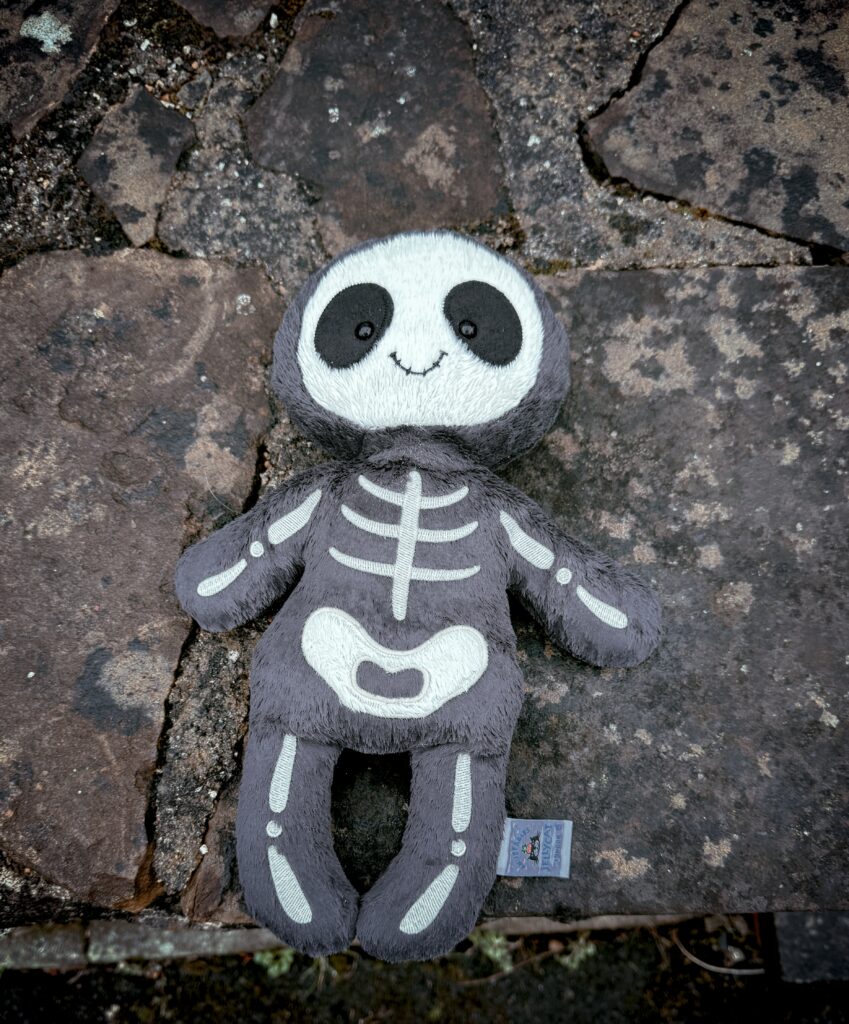
this little skeleton plushie i stumbled upon on my walk is a gentle messenger perhaps sent to remind me that beneath eberything, we are all skeletons wearing stories.

This morning, I stepped outside—not to get anywhere, but to clear the cobwebs from my mind. A simple walk, a quiet dérive, untangling thoughts spun from a day of circling my own house, my own head.

It’s easy to drift away from the core of who we are. To become lost in the habitual, the external, the subtle inertia of daily life. But moments like this—a walk, a pause, a breath—can be a recalibration, a way of realigning with what it truly means to be me, not as dictated by obligations or routines, but as I define it.

I ask myself: what does a good day look like? Not just productive, not just efficient, but aligned. A day that reflects the contours of my own values, my own essence.

The answer isn’t fixed. It shifts like light through trees, refracting through experience and desire. But the act of asking, of returning, of walking toward my core self—that alone is the beginning of wisdom.