There’s a useful little door in Peter Carroll’s chaos magic that doesn’t require you to become a magician, buy the robes, or swallow the whole metaphysical pill.
The door is this question:
What happens if I believe this — for a while?
That shift changes the whole game. Belief stops being a fortress that you settle in and becomes a tool. Or maybe even a costume. Something you can put on, walk around in, test against the world, and then take it off again before you start mistaking it for your skin.
This is the part of chaos magic that still feels useful even if you keep both feet on the ground and a healthy amount of scepticism in your pocket. It treats belief less like a sacred possession and more like an interface. A way of selecting what becomes visible, what becomes possible, what your body reaches for next.
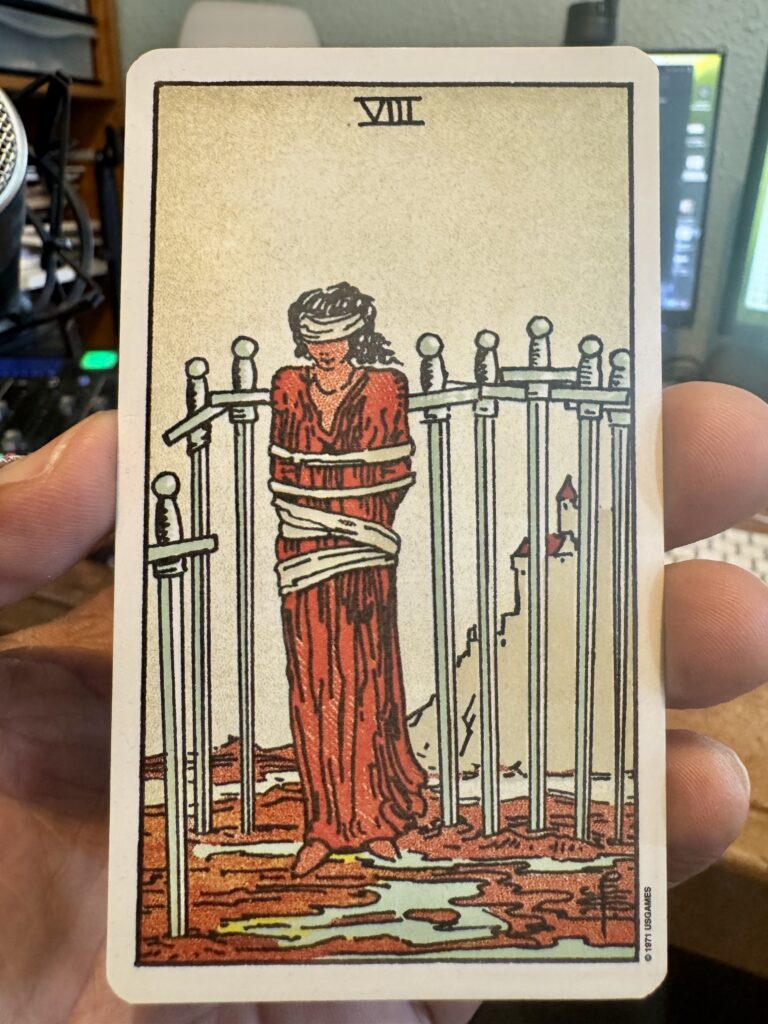
Most of us don’t experience belief that way. We inherit beliefs, absorb them, defend them, and confuse them with ourselves. A worldview becomes a room we forget we’re inside. We stop noticing the walls because they’ve been there so long.
Carroll’s move is mischievous: roll a die and inhabit a worldview for a while. Paganism. Monotheism. Atheism. Nihilism. Chaoism. Superstition. Not to find the winner. Not to discover the One True Lens. But to feel how each lens changes perception.
What do you notice as a pagan that you ignore as an atheist?
What becomes possible under superstition that vanishes under rationalism?
What does nihilism strip away?
What does monotheism gather into order?
What does chaoism loosen?
The point isn’t that all beliefs are equally true. The point is that beliefs do things. They organise attention. They open some doors and hide others. They alter the questions we ask, the risks we take, and the meanings we allow.
Robert Anton Wilson called these reality tunnels. A reality tunnel is not simply what you believe. It’s the whole perceptual apparatus that belief builds around you. The map doesn’t just describe the territory; it trains the traveller.
That’s where this starts to connect with writing, psychology, philosophy, and the everyday art of being human.
A writer can try on a belief to discover a voice.
A coach can help someone notice the story they’ve been living inside.
A blogger can use a post as a temporary model rather than a final verdict.
A person can ask, in the middle of an ordinary day, “What belief am I wearing right now, and is it still helping?”
This doesn’t mean treating life as make-believe. It means becoming more honest about the fact that we are already living through frames, assumptions, metaphors, inherited scripts, family myths, cultural software, old wounds, private hopes, and sentences we never consciously chose.
Chaos magic, at its most useful, says: if belief shapes experience, then learn to handle belief with care.
Don’t worship the model.
Don’t mistake the costume for the body.
Don’t let the map chain you to one road.
Try the lens. See what it reveals. See what it distorts. Then choose again.
For me, the enduring insight isn’t “nothing is true, everything is permitted” as some adolescent permission slip. It’s more sober than that, and stranger.
It’s the practice of epistemic agility.
The ability to move between frames without being captured by them. The ability to say, “This is useful, but not ultimate.” The ability to test a story without marrying it. The ability to remember that certainty can become a cage even when it began as liberation.
Maybe that’s the real magic here.
Not bending spoons.
Not commanding invisible forces.
But loosening the spell of the single story.
Learning to wear belief lightly enough that the soul can still breathe.