Working Notes: Gonzo Spirituality and the Bar of the Psyche

This old post has wandered back into consciousness: Holy Gonzo! Embracing Chaos and Truth on the Path to Self-Discovery. I reposted on social media over the weekend. I wrote it back in October 2024, but reading it now, I’m feeling drawn to explore the subject further. The phrase at the centre of it all is Gonzo Spirituality.

At the time, I was trying to name a kind of spiritual practice that didn’t require me to step away from the life I was actually living. I wasn’t drawn to the serene, white-robed, mountain-retreat version of spirituality. I didn’t want a path that demanded I become calmer, purer, softer-spoken, or more detached from the mess. That may work for some people, but it has never quite felt like my road. I want to embrace the mess, to root in it like a pig in…well, let’s just say, I like my spirituality messy. Cobbled together between late-night notes, contradictions, and strong black coffee. Lots of coffee.

Oh, and did I mention the demons? Not the demons you might find in Paradise Lost or in some ceremonial magick ritual, but the demons you find in your head – the fear, doubt, disbelief, anxiety, grief, hate, and lust, to name a few. These are the demons I want to pull up a stool next to me to talk to.

The older post framed this through Hunter S. Thompson and the spirit of Gonzo journalism. In Gonzo, the writer is not a detached observer pretending to be neutral. The writer is implicated. The writer is in the room, in the car, in the bar, in the fever dream, in the wreckage of the thing being described. There’s no clean separation between the report and the reporter.

That feels important.

Because maybe the same is true of self-discovery. Maybe I don’t get to stand outside my life, clipboard in hand, calmly assessing the evidence. Maybe the only honest way to understand the self is from inside the ride.
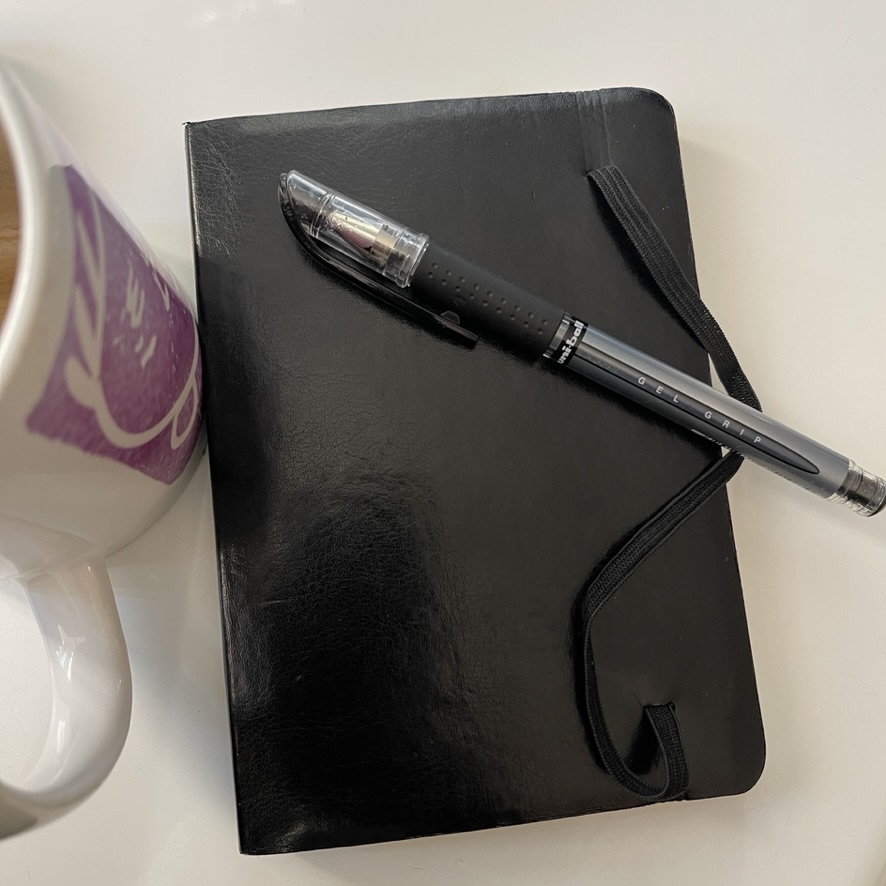
Buy the ticket. Take the ride. Bring a notebook.

That might be the first rule of Gonzo Spirituality.

It’s not my intent to glamourise chaos or to make suffering cool or to intimate that every bad habit is secretly holy. That would be too easy, and probably dangerous too. What I’m trying to get across is that the raw material of life can’t be understood by pretending it isn’t there.

The fear. The doubt. The jealousy. The ambition. The anger. The avoidance. The hunger. The old wounds. The ridiculous cravings. The part that wants transcendence and the part that wants another drink. The part that wants silence and the part that keeps refreshing the feed.

All of it belongs to the field.

Not all of it should be obeyed. But all of it can be listened to.

That’s where the image from the old post still grips me: the bar of the psyche.

Working Notes: Gonzo Spirituality and the Bar of the Psyche

I imagine walking into some dimly lit inner pub, somewhere off the main road of consciousness. The place smells faintly of old wood, soaked coats, and unfinished conversations. Sitting there already are the parts of myself I usually try to avoid. Fear has taken the corner seat. Doubt is nursing something dark. Anger is tapping its fingers on the table. The inner critic has opinions about the décor. The wounded child is quiet, watching the door.

The conventional move might be to banish them, heal them, silence them, transcend them, or surround them with light until they stop making trouble.

The gonzo move is different.

You sit down.

You buy the first round.

You ask, “So, what’s your story?”

This is where the older post now links directly to what I’ve been calling Narrative Alchemy. If stories are code, then these inner figures are not random glitches. They are subroutines, old scripts, survival programs, and half-written myths still running in the background. Some of them are outdated. Some are defensive. Some are dramatic as hell. But most of them began as attempts to protect something tender.

Fear may be guarding the edge of an old fall.

Anger may be protecting a boundary I never learned how to name.

Jealousy may be pointing toward a desire I haven’t admitted.

Doubt may be trying, clumsily, to keep me from self-deception.

Even the demons have data.

This doesn’t mean every inner voice is wise. Some are drunk. Some are liars. Some only know one song and will sing it badly until sunrise. But if I’m willing to listen beneath the noise, I may discover the wound, longing, or story they’ve been carrying.

That’s the work.

Not to turn the self into a clean, well-lit temple where nothing untidy is allowed through the door. More like turning the self into a strange old roadside tavern where the exiled parts can finally come in from the cold and be heard without being handed the keys.

This is where Gonzo Spirituality also pushes back against the dream of escape.

A lot of spiritual language can smuggle in a quiet contempt for ordinary life. The body becomes something to rise above. Desire becomes something to dissolve. The world becomes a distraction. Technology, noise, politics, relationships, work, money, ageing, grief, appetite, frustration — all of it becomes evidence that we are not yet “there.”

But where exactly is “there”?

And who benefits from convincing us that the sacred is always somewhere else?

The older post was already resisting that move. It wanted a spirituality that could happen in the middle of the life I had. Not after the inbox was empty. Not after the house was quiet. Not after I became a better, calmer, more luminous version of myself.

Right here.

In the day as it actually arrives.

In the walk.

In the blog post.

In the argument.

In the app notification.

In the muddy shoes by the door.

In the moment when I notice I’m irritated and, instead of pretending I’m above irritation, I ask what the irritation is trying to show me.

That feels close to what I now mean by existential consent.

Not passive acceptance. Not resignation. Not “everything happens for a reason” pasted over the wound like a motivational sticker. More like the willingness to begin with what is actually here.

This life.

This body.

This mood.

This history.

This nervous system.

This strange bundle of memory, appetite, language, contradiction, longing, and desire.

I don’t get another self to work with. I get this one.

So the practice becomes less about escape and more about authorship. Not authorship in the fantasy-control sense, as if I can simply rewrite reality by declaring a new story. But authorship as participation. As revision. As noticing the sentences I’m living inside and asking whether they are still true, still useful, still alive.

Gonzo Spirituality says: don’t wait until the manuscript is clean before you start reading it.

Read the messy draft.

Write in the margins.

Question the narrator.

Interview the villains.

Follow the footnotes.

Notice where the plot keeps looping.

And when necessary, revise the code.

This is where blogging enters the picture too. Because blogging, at least for me, has never simply been publishing. It has been a way of taking field notes from the ongoing experiment of being alive. The blog becomes the notebook on the road. The place where the life-material gets turned into language before it disappears. The place where confusion is allowed to become visible enough to work with.

In that sense, the old Gonzo Spirituality post belongs in the same lineage as Working Notes from the Textual Underground. It is another attempt to say: I am not writing from above the mess. I am writing from inside it.

The mess is not a failure of the method.

The mess is the material.

And maybe that’s why the piece still hums. Underneath the Hunter S. Thompson styling and the barroom imagery, there is a serious proposition:

Wholeness does not come from abandoning the life that made you. It comes from learning how to meet that life without flinching.

That includes the light, yes.

But also the shadow.

The awkward contradiction.

The part that still aches.

The part that wants more.

The part that sabotages.

The part that dreams.

The part that keeps walking.

Gonzo Spirituality is not a finished system. I don’t want it to become one. The moment it hardens into doctrine, it loses the very thing that makes it useful. Better to treat it as a working lens, a cracked map, a field method.

A way of entering the chaos with enough courage to listen.

A way of refusing sterile transcendence.

A way of finding the sacred not by floating above the world, but by paying closer attention to the strange, unedited texture of being here.

So yes, I still believe in the bar of the psyche.

I still believe in buying the demons a drink.

Not because they’re in charge.

Because they’ve been waiting a long time to tell their side of the story.
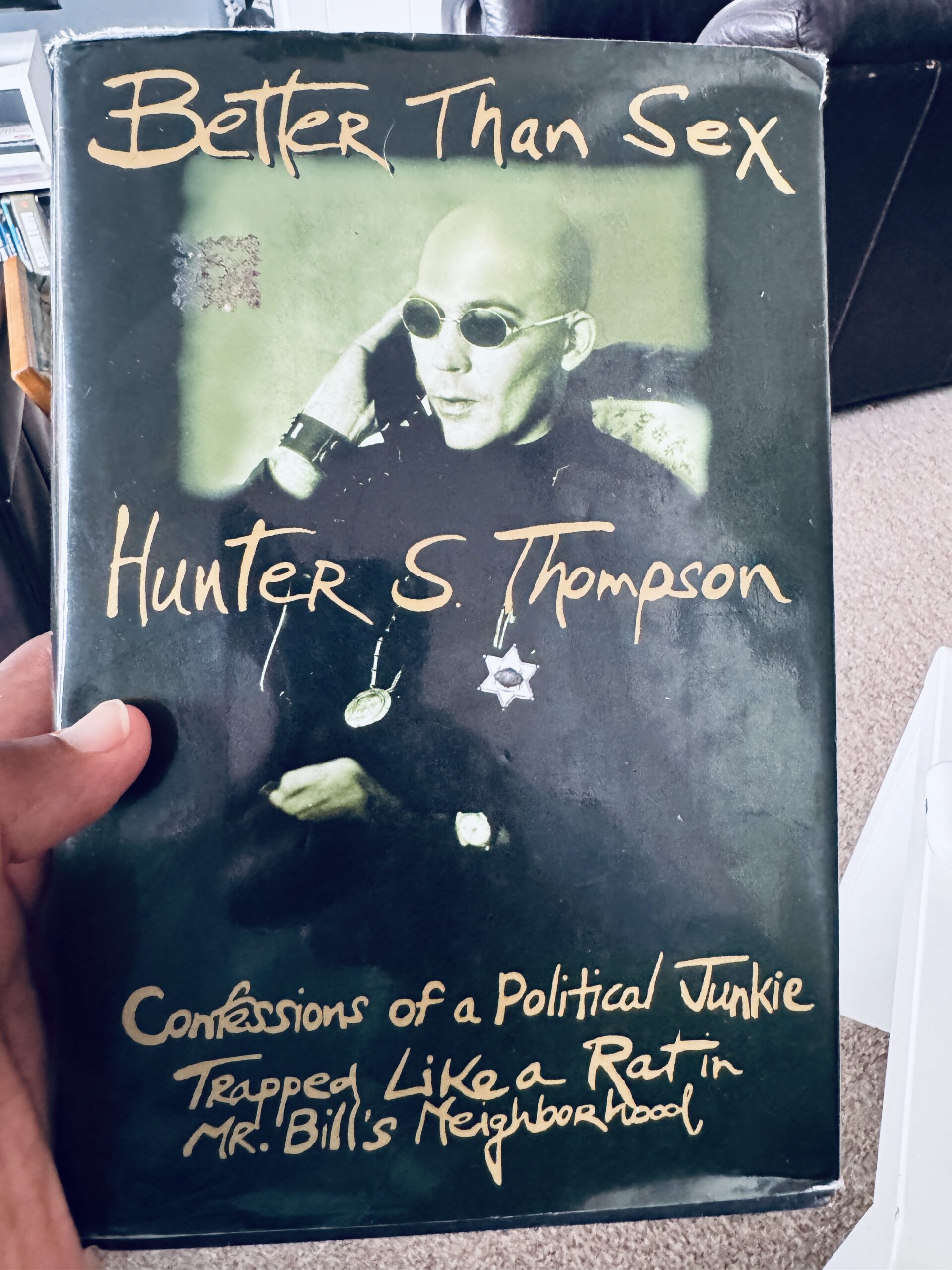
Better Than Sex, 30 Years Later: Revisiting the Book That Broke My Brain

07:39. I’m in my lounge chair drinking black coffee, the morning still soft around the edges.

For my morning read today, I’ve been revisiting Hunter S. Thompson, starting with the book that began my literary love affair with his work: Better Than Sex: Confessions of a Political Junkie.

There’s something about Hunter that still gets under my skin in the best possible way. He doesn’t simply report the story. He enters it. He becomes part of the event he’s describing. He’s not pretending to stand outside the madness with clean hands and a neutral expression. He is in the room, at the bar, in the campaign bus, and in the hotel lobby at 3 a.m., feeling the paranoia, the electricity, the absurdity, the rot, the strange comedy of American public life.

That’s what has always drawn me to first-person nonfiction. I like writing where the writer is in the story. Not as some inflated main character, but as a lens. A body. A nervous system. A witness with fingerprints.

It’s why I admire Hunter. It’s why I’ve always loved literary travel writing, diaries, notebooks, memoirs, and blogs. I like seeing the world through other people’s eyes, especially when those eyes are alert, damaged, amused, haunted, hungry, and alive.

Maybe that’s the deeper pull. I don’t just want information about the world. I want contact. I want the felt sense of being there. I want to know what the dust smelled like, what the coffee tasted like, what the light was doing on the wall, and what strange little thought passed through the writer’s mind while everyone else was looking at the obvious thing.

And beneath that, if I’m honest, is my own old desire: to be a participant in life, not merely a watcher from the sidelines.

I have to confess, I’ve been on the bench for a while (probably since Covid).

Not completely. I still walk. I still notice things. I still make my little field reports when I’m out and about. But I’m certainly not out in the world in the way I was when I was younger. Back then, being outside was not a lifestyle choice or some wellness prescription. It was the default condition of being alive. Nature was not a retreat from life. It was life. I went further afield. I climbed new mountains. I wandered through new bits of countryside. I chased the map outward.

I blame the internet.

Of course, they say a poor craftsman blames his tools, and they’re probably right. The internet didn’t chain me to the chair. I walked willingly into the glowing cave.

But as someone who gets intoxicated by knowledge-seeking, the internet is a particularly dangerous drug. It gives me exactly the thing I have always craved: endless corridors of thought, endless doors, endless shelves.

As a teenager, I used to wander the library stacks for hours. No subject was off limits. Philosophy, science, art, mythology, psychology, history, music, strange technical manuals, books with titles I barely understood. I loved the sheer possibility of it all. I’d leave with stacks of books, as if I were smuggling worlds under my arm.

So of course the internet became both a blessing and a curse.

Now I can explore the world without leaving my chair. I can roam through archives, maps, lectures, essays, documentaries, old interviews, obscure forums, digital museums, scanned manuscripts, and now, with AI, I have something like a portable Library of Alexandria sitting at my fingertips, awake whenever I call.

It’s astonishing.

It’s also a trap.

Because if you’re wired the way I’m wired, the search itself becomes the journey. You can spend the whole morning reading about mountains and never feel wind on your face. You can watch ten videos about someone else walking through a forest and never put on your boots. You can collect knowledge about aliveness while slowly becoming less alive.

That’s the part I’m trying to reckon with.

My Wisdom Walks are one way I force myself away from the screens. They get me out of the chair and back outside, mud, birdsong, breath, distance, and bodily time. But even there, I notice the limits I’ve allowed to creep in. Most of these walks are local. Useful, yes. Grounding, yes. But not quite the same as the old impulse to go further, to find a new ridge, a new stretch of river, a new patch of countryside where the map opens.

Back in the day, I tried to live by the North Face ethos: never stop exploring.

And there was another war cry too, one I picked up from outdoor culture and carried like a small personal commandment:

Get outside. Stay outside.

That phrase still has charge for me. It feels less like advice and more like a spell I forgot I knew.

Lately, I’ve been trying to rebuild my life around that old rhythm. I’ve created a mobile workflow: smaller cameras, a portable podcast setup, the iPad, or sometimes just the phone. The theory is simple enough: everything I can do at a desk, I can do outside.

In theory, this is beautiful. The barefoot philosopher’s office is wherever he can sit, walk, speak, photograph, think, and write. A bench. A woodland edge. The back of the car with the boot open. A picnic table. A patch of grass. A café after a long walk.

But then comes the catch.

WiFi.

So much of my life and work depends on having a decent internet connection. Uploading, sharing, checking, filing, syncing, posting, researching, responding, confirming. The whole apparatus of modern work hums invisibly behind the scenes, and I’ve let that hum dictate how far and how often I roam.

It’s ridiculous, really. I know it is.

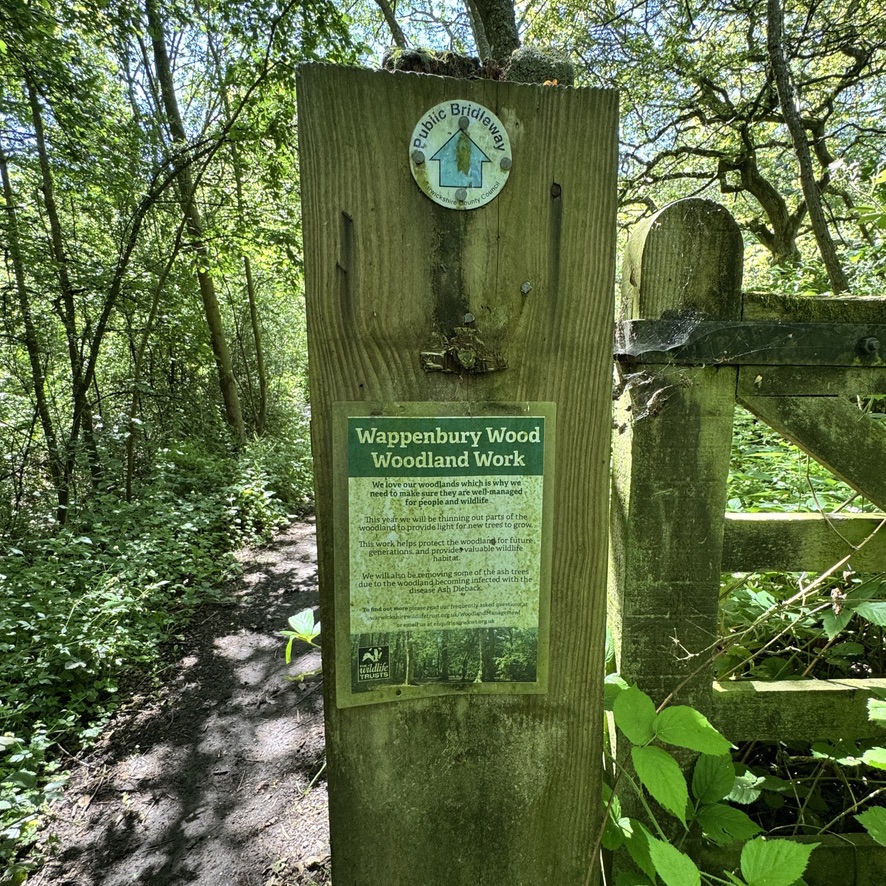
Yesterday, while roaming Wappenbury Wood, I found myself running up against this exact absurdity. I had paid for two hours of parking. I wanted to extend my time in the woods, but I couldn’t get a connection, so I couldn’t extend my parking through the RingGo app. There I was, surrounded by trees, wanting to remain in the place, and being tugged back by a parking meter I couldn’t speak to because the little rectangle in my hand couldn’t find a signal.

Better Than Sex

First-world problems, I know.

But also a sign.

Some might say ‘good’. If you’re outside, be outside.

And part of me agrees. Deeply. There’s wisdom in not turning every walk into a production. There was a time when I lost my way with that too. I spent more time looking at the world through a device than experiencing the place through my own eyes. I’d be composing the post before I’d even received the moment. I’d be thinking about the share while the living thing was still happening in front of me.

Thankfully, I’ve mostly kicked that habit.

I don’t bother processing photos while I’m out. I don’t feel the need to livestream the experience. I’m learning to let the walk be the walk. The camera comes out when it needs to. The note gets captured via my Plaud voice-note device. But I’m no longer trying to turn every outing into a broadcast.

That feels like progress.

But there’s another habit underneath it, and maybe this one is harder to break: the 9-to-5 mindset. The productivity culture mindset. The idea that if I’m away from the desk, I’m somehow not working. The idea that roaming, wandering, reading under trees, following curiosity, and letting the body move through the landscape are somehow indulgences rather than part of the work itself.

And this is where I need to remember what I actually believe.

Being outside is my work.

Or at least it is part of the working condition I’ve spent years trying to build my life around.

I’m not trying to become more efficient at sitting under artificial light and moving tasks from one column to another. I’m trying to build a life where thinking, walking, writing, noticing, reading, photographing, speaking, and making are woven together. A life where work is not a cage I return to after being alive, but a form of aliveness itself.

That doesn’t mean abandoning responsibility. It doesn’t mean pretending money, deadlines, clients, admin, and logistics don’t exist. The parking app still wants paying. The email still needs answering. The file still needs sending.

But it does mean the old industrial rhythm cannot be the master rhythm.

There is another rhythm available.

Harold Jarche’s PKM model comes to mind here: seek, sense, share.

I’ve always liked the simplicity of that. It gives shape without becoming a cage.

Seek: go out, read, wander, notice, collect, and encounter.

Sense: sit with what has been gathered, make meaning, connect it to the living archive, let the pattern reveal itself.

Share: publish, speak, teach, post, make the field note public, and offer the insight back to the commons.

Wappenbury Wood

Maybe the trick is to stop trying to do all three at once.

When I’m outside, perhaps I’m mostly in seek mode. I’m gathering. Walking. Looking. Letting the place work on me. Letting the body become an instrument again. I don’t need to process everything on the spot. I don’t need to share immediately. I don’t need to prove the walk was productive by turning it into output before I’ve even left the woods.

Then, later, somewhere with coffee and a signal, I can sense and share.

This might be the rhythm I’m looking for.

Not desk versus outdoors.

Not internet versus nature.

Not productivity versus wandering.

But phases. Movements. Breath.

Inhale: go out.

Hold: notice what the world is saying.

Exhale: write, speak, share.

The internet then becomes part of the cycle rather than the whole ecosystem. AI becomes a thinking companion, not a substitute for experience. The archive becomes a living field, not a bunker. The phone becomes a tool, not the eye I see through.

And the walk becomes what it has always wanted to be: a method.

The barefoot philosopher does not need to reject the digital world. That would be too simple, and frankly, false. My life is tangled with the web. My work is made of language, links, fragments, feeds, archives, posts, and conversations across distance. I am a child of the library and the internet. I don’t want to give that up.

But I do need to renegotiate the terms.

The chair is good. The coffee is good. The screen is useful. The infinite library is a miracle.

But the world is not inside the machine.

The world is outside, being rained on. It’s in the mud underfoot, the old trees at Wappenbury, the cold air in the lungs, the hill not yet climbed, the lane not yet followed, the bird I can’t name calling from somewhere beyond the path.

Hunter got into the story.

That’s what I’m hearing this morning.

Not just read about the madness. Enter the room.

Not just study life. Participate.

Not just watch other people’s field reports from the glowing cave. Make my own.

Get outside. Stay outside.

Seek. Sense. Share.

Find the rhythm again. The barefoot philosopher’s rhythm.

Holy Gonzo! Embracing Chaos and Truth on the Path to Self-Discovery

Editor’s Note:

Lately, I’ve been taking a deep dive into my own spiritual practice, and I’ve realised something: I’m not wired for that serene, detached retreat from the world kind of spirituality. I’m more about getting my hands dirty, pushing the boundaries in search of the edge. For me, the search for wholeness isn’t about disengaging from my current life or lifestyle. I want to stay fully in the thick of it—digital noise, tech chaos, and all. This journey, my journey, is a raw, unfiltered quest for the truth of who I am, right here in the heart of this modern life.

I’m a player working with the cards I’ve been dealt, ready to push things to the edge. As Hunter S. Thompson once said about the edge, “There is no honest way to explain it because the only people who really know where it is are the ones who have gone over.”

So, inspired by Hunter, I thought, What would a Gonzo approach to spirituality look like? This post is my answer. Dive in and enjoy.


Most of us have been sold a neatly packaged version of spirituality: serene, pristine, bathed in soft light and hushed tones. But what if spirituality didn’t have to be so… polite? What if instead of blissed-out detachment, we embraced spirituality with raw, unapologetic honesty—a blend of sacred insight and pure, unfiltered chaos? Enter Gonzo Spirituality.

This approach has the audacity of Hunter S. Thompson and the depth of an ancient mystic. It’s a spirituality that refuses to distance itself from the messiness of life. Think of it as a spiritual road trip where, instead of finding Zen in a mountain retreat, you’re scribbling notes in a dive bar at 2 a.m., demons in tow, demanding they tell you the truth about who you are.

What Is Gonzo Spirituality?

Gonzo spirituality isn’t interested in keeping things neat. It doesn’t ask that you leave your baggage, vices, or struggles at the door. Quite the opposite: it invites them in for a drink and asks, “What’s your story?” Much like Gonzo journalism, where the writer is as much a part of the story as the events they’re describing, Gonzo spirituality demands you go all in. You don’t get to stand at a safe distance, meditating your way into detachment. Instead, you become a character in your own spiritual drama, encountering each layer of your psyche like a neon-lit landmark on the long, winding highway of self-discovery.

This isn’t about finding peace through escape. It’s about staring life in the face, diving into the depths, and accepting every gritty, ridiculous, painful piece as part of the sacred. Here, transcendence isn’t somewhere “out there”; it’s in every odd detail, in the imperfections and contradictions, in the parts of ourselves we usually sideline.

Embracing the Inner Chaos: A Road Trip with Your Demons

Imagine this: you’re sitting at the bar of your own psyche, and your inner demons take the stools beside you. These aren’t villains or monsters. They’re your fear, doubt, disbelief, jealousy, and anger—those parts of you that you’d usually prefer to ignore. But in Gonzo spirituality, you don’t dismiss them. You buy them a round, lean in, and listen. What do they have to say? Why are they here?

It’s like parts integration but with an edgy twist. Instead of forcing yourself to feel only what’s “positive” or “enlightened,” you let every part of you have its say. You invite your demons not to defeat them, but to learn from them. What’s their truth? What wound or insecurity do they protect? Gonzo spirituality insists that even these parts have something valuable to offer.

By embracing your inner chaos, you’re opening up to a deeper, truer form of wholeness. Each “part” of you, from the inner critic to the wounded child, has a voice, and they’re all steering this wild ride towards self-understanding.

The Path of Radical Honesty

Gonzo spirituality is about stripping away the layers of pretence. Spiritual growth isn’t always about peace or purity. Often, it’s about radical honesty—a relentless pursuit of truth, no matter how uncomfortable. Hunter S. Thompson once said, “Buy the ticket, take the ride.” That’s what this path is: buying the ticket to a journey where you’ll witness every side of yourself, even the ones you’d rather keep hidden.

In this approach, there’s no pushing away “negative” emotions. There’s no dodging the so-called “low-vibration” aspects of life. Instead, it’s all fuel for the fire of self-discovery. Your impatience, your envy, your ambition—they all have a seat at the table. Gonzo spirituality isn’t sanitised, but it’s real. And in that raw authenticity, you find a connection to something undeniably sacred.

This is the path where you reach out to your shadows, not to battle or banish them, but to learn from them. Each part of you holds a story that, when woven together, reveals a truth far richer and more complex than any simple mantra. In this rawness, in this willingness to look even at the ugly parts, you start to touch the essence of who you are.

Finding Meaning in the Chaos

Gonzo spirituality finds meaning not in perfect order, but in beautiful, messy contradictions. It’s an invitation to see the sacred in every aspect of life, not just in the obvious places. What if enlightenment wasn’t a serene peak but a brief moment of clarity found in the frenzy, in the wild imperfection of being human?

The quest for self-understanding becomes a journey where we don’t merely observe our own chaos from a safe distance but become immersed in it, scribbling notes on our every thought, feeling, and experience. In this approach, transcendence comes not from stepping outside of our lives but from diving fully into the madness, the mystery, the grit.

This isn’t a tidy path. It’s loud, it’s chaotic, and it’s messy. But isn’t that what makes it beautiful? Each heartbreak, each inner battle, every moment of doubt becomes a brushstroke on the canvas of self. The Gonzo path doesn’t lead us to some final “spiritual achievement”; it offers us an ongoing exploration, a continual unfolding.

Holy Gonzo: A Fierce Love for Every Part of the Self

What Gonzo spirituality teaches us is that perhaps we don’t need to transcend our humanity to find peace. Maybe the sacred can be found in every unedited, unfiltered, imperfect piece of our lives. We don’t need to reach for an idealised state of being. We need only open ourselves to the fierce, messy love of being fully alive.

So if you’re feeling called to this path, don’t wait for the perfect moment. Start right here, right now, with everything you are. Sit down, grab a notebook, and let every part of you speak. Buy a ticket, take the ride, and see where this wild journey leads. In Gonzo spirituality, enlightenment isn’t a distant mountaintop. It’s the bar stool next to you, the conversation with your inner shadows, the mad, beautiful chaos of life—embraced fully and honestly, as it is.