This old post has wandered back into consciousness: Holy Gonzo! Embracing Chaos and Truth on the Path to Self-Discovery. I reposted on social media over the weekend. I wrote it back in October 2024, but reading it now, I’m feeling drawn to explore the subject further. The phrase at the centre of it all is Gonzo Spirituality.
At the time, I was trying to name a kind of spiritual practice that didn’t require me to step away from the life I was actually living. I wasn’t drawn to the serene, white-robed, mountain-retreat version of spirituality. I didn’t want a path that demanded I become calmer, purer, softer-spoken, or more detached from the mess. That may work for some people, but it has never quite felt like my road. I want to embrace the mess, to root in it like a pig in…well, let’s just say, I like my spirituality messy. Cobbled together between late-night notes, contradictions, and strong black coffee. Lots of coffee.
Oh, and did I mention the demons? Not the demons you might find in Paradise Lost or in some ceremonial magick ritual, but the demons you find in your head – the fear, doubt, disbelief, anxiety, grief, hate, and lust, to name a few. These are the demons I want to pull up a stool next to me to talk to.
The older post framed this through Hunter S. Thompson and the spirit of Gonzo journalism. In Gonzo, the writer is not a detached observer pretending to be neutral. The writer is implicated. The writer is in the room, in the car, in the bar, in the fever dream, in the wreckage of the thing being described. There’s no clean separation between the report and the reporter.
That feels important.
Because maybe the same is true of self-discovery. Maybe I don’t get to stand outside my life, clipboard in hand, calmly assessing the evidence. Maybe the only honest way to understand the self is from inside the ride.
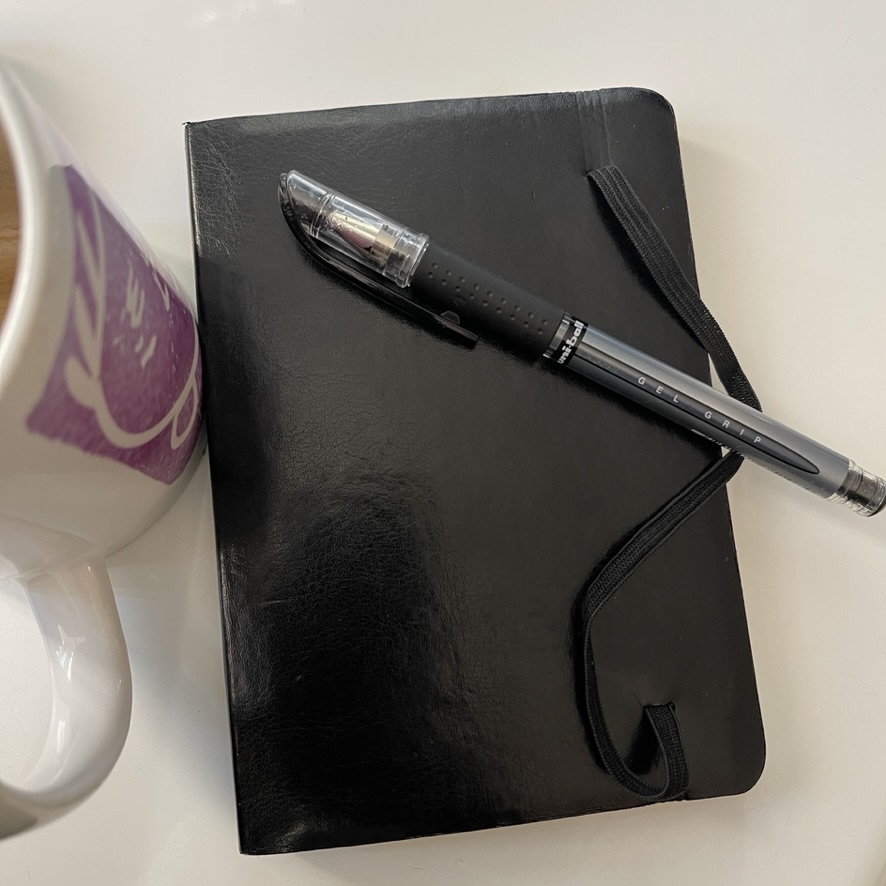
Buy the ticket. Take the ride. Bring a notebook.
That might be the first rule of Gonzo Spirituality.
It’s not my intent to glamourise chaos or to make suffering cool or to intimate that every bad habit is secretly holy. That would be too easy, and probably dangerous too. What I’m trying to get across is that the raw material of life can’t be understood by pretending it isn’t there.
The fear. The doubt. The jealousy. The ambition. The anger. The avoidance. The hunger. The old wounds. The ridiculous cravings. The part that wants transcendence and the part that wants another drink. The part that wants silence and the part that keeps refreshing the feed.
All of it belongs to the field.
Not all of it should be obeyed. But all of it can be listened to.
That’s where the image from the old post still grips me: the bar of the psyche.
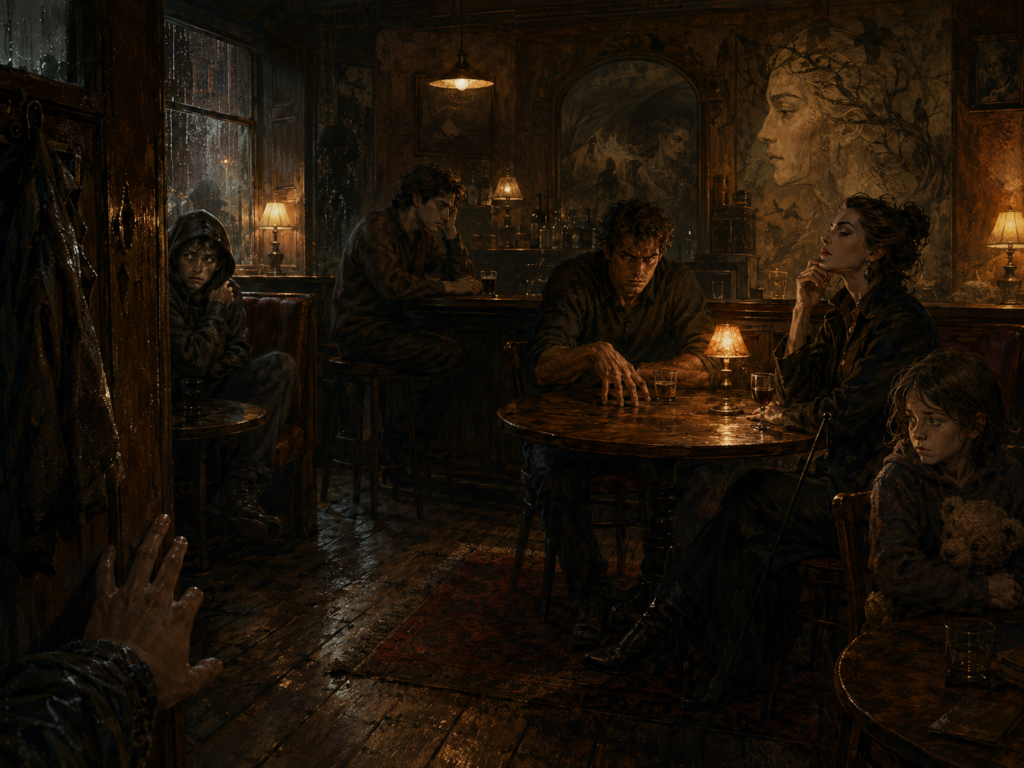
I imagine walking into some dimly lit inner pub, somewhere off the main road of consciousness. The place smells faintly of old wood, soaked coats, and unfinished conversations. Sitting there already are the parts of myself I usually try to avoid. Fear has taken the corner seat. Doubt is nursing something dark. Anger is tapping its fingers on the table. The inner critic has opinions about the décor. The wounded child is quiet, watching the door.
The conventional move might be to banish them, heal them, silence them, transcend them, or surround them with light until they stop making trouble.
The gonzo move is different.
You sit down.
You buy the first round.
You ask, “So, what’s your story?”
This is where the older post now links directly to what I’ve been calling Narrative Alchemy. If stories are code, then these inner figures are not random glitches. They are subroutines, old scripts, survival programs, and half-written myths still running in the background. Some of them are outdated. Some are defensive. Some are dramatic as hell. But most of them began as attempts to protect something tender.
Fear may be guarding the edge of an old fall.
Anger may be protecting a boundary I never learned how to name.
Jealousy may be pointing toward a desire I haven’t admitted.
Doubt may be trying, clumsily, to keep me from self-deception.
Even the demons have data.
This doesn’t mean every inner voice is wise. Some are drunk. Some are liars. Some only know one song and will sing it badly until sunrise. But if I’m willing to listen beneath the noise, I may discover the wound, longing, or story they’ve been carrying.
That’s the work.
Not to turn the self into a clean, well-lit temple where nothing untidy is allowed through the door. More like turning the self into a strange old roadside tavern where the exiled parts can finally come in from the cold and be heard without being handed the keys.
This is where Gonzo Spirituality also pushes back against the dream of escape.
A lot of spiritual language can smuggle in a quiet contempt for ordinary life. The body becomes something to rise above. Desire becomes something to dissolve. The world becomes a distraction. Technology, noise, politics, relationships, work, money, ageing, grief, appetite, frustration — all of it becomes evidence that we are not yet “there.”
But where exactly is “there”?
And who benefits from convincing us that the sacred is always somewhere else?
The older post was already resisting that move. It wanted a spirituality that could happen in the middle of the life I had. Not after the inbox was empty. Not after the house was quiet. Not after I became a better, calmer, more luminous version of myself.
Right here.
In the day as it actually arrives.
In the walk.
In the blog post.
In the argument.
In the app notification.
In the muddy shoes by the door.
In the moment when I notice I’m irritated and, instead of pretending I’m above irritation, I ask what the irritation is trying to show me.
That feels close to what I now mean by existential consent.
Not passive acceptance. Not resignation. Not “everything happens for a reason” pasted over the wound like a motivational sticker. More like the willingness to begin with what is actually here.
This life.
This body.
This mood.
This history.
This nervous system.
This strange bundle of memory, appetite, language, contradiction, longing, and desire.
I don’t get another self to work with. I get this one.
So the practice becomes less about escape and more about authorship. Not authorship in the fantasy-control sense, as if I can simply rewrite reality by declaring a new story. But authorship as participation. As revision. As noticing the sentences I’m living inside and asking whether they are still true, still useful, still alive.
Gonzo Spirituality says: don’t wait until the manuscript is clean before you start reading it.
Read the messy draft.
Write in the margins.
Question the narrator.
Interview the villains.
Follow the footnotes.
Notice where the plot keeps looping.
And when necessary, revise the code.
This is where blogging enters the picture too. Because blogging, at least for me, has never simply been publishing. It has been a way of taking field notes from the ongoing experiment of being alive. The blog becomes the notebook on the road. The place where the life-material gets turned into language before it disappears. The place where confusion is allowed to become visible enough to work with.
In that sense, the old Gonzo Spirituality post belongs in the same lineage as Working Notes from the Textual Underground. It is another attempt to say: I am not writing from above the mess. I am writing from inside it.
The mess is not a failure of the method.
The mess is the material.
And maybe that’s why the piece still hums. Underneath the Hunter S. Thompson styling and the barroom imagery, there is a serious proposition:
Wholeness does not come from abandoning the life that made you. It comes from learning how to meet that life without flinching.
That includes the light, yes.
But also the shadow.
The awkward contradiction.
The part that still aches.
The part that wants more.
The part that sabotages.
The part that dreams.
The part that keeps walking.
Gonzo Spirituality is not a finished system. I don’t want it to become one. The moment it hardens into doctrine, it loses the very thing that makes it useful. Better to treat it as a working lens, a cracked map, a field method.
A way of entering the chaos with enough courage to listen.
A way of refusing sterile transcendence.
A way of finding the sacred not by floating above the world, but by paying closer attention to the strange, unedited texture of being here.
So yes, I still believe in the bar of the psyche.
I still believe in buying the demons a drink.
Not because they’re in charge.
Because they’ve been waiting a long time to tell their side of the story.