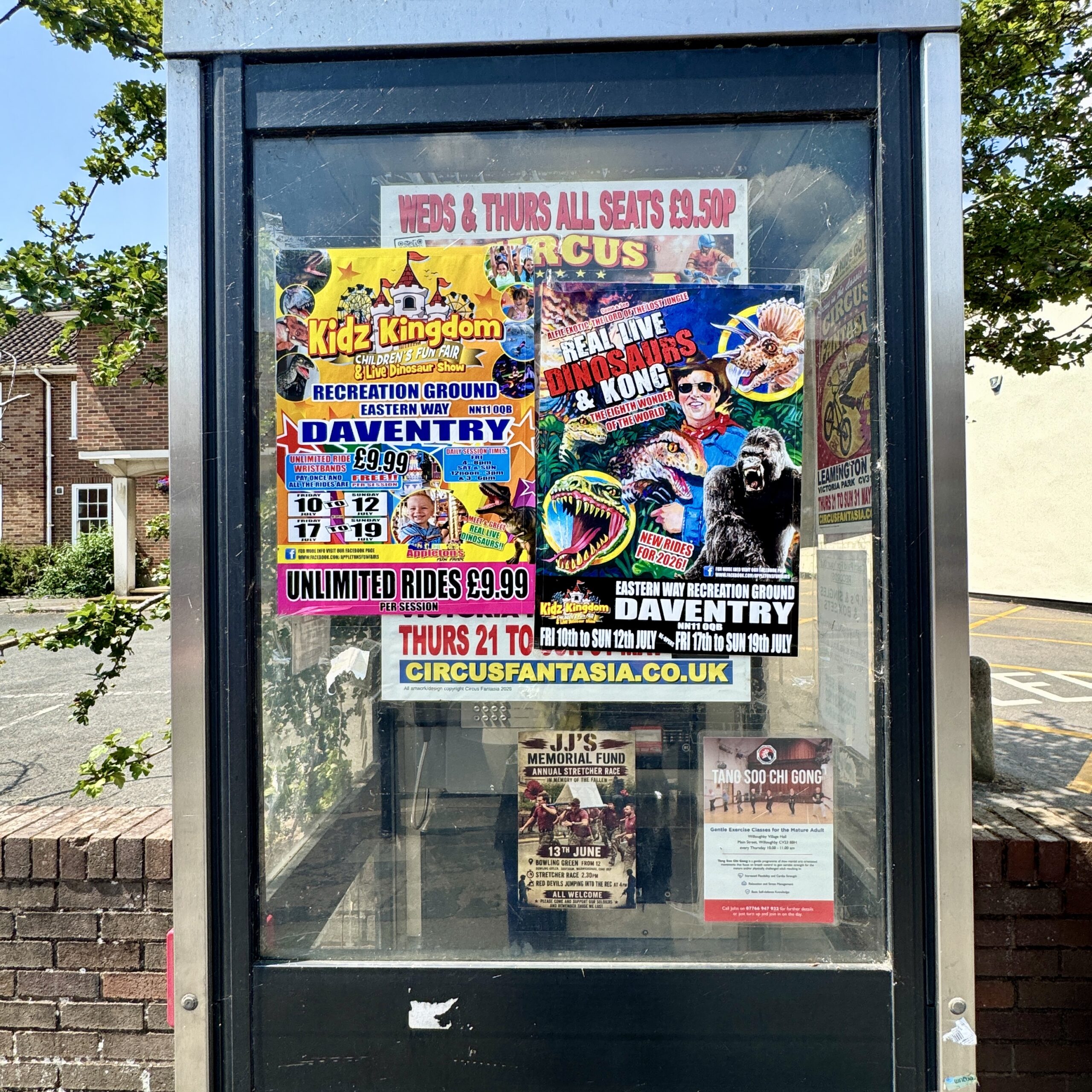
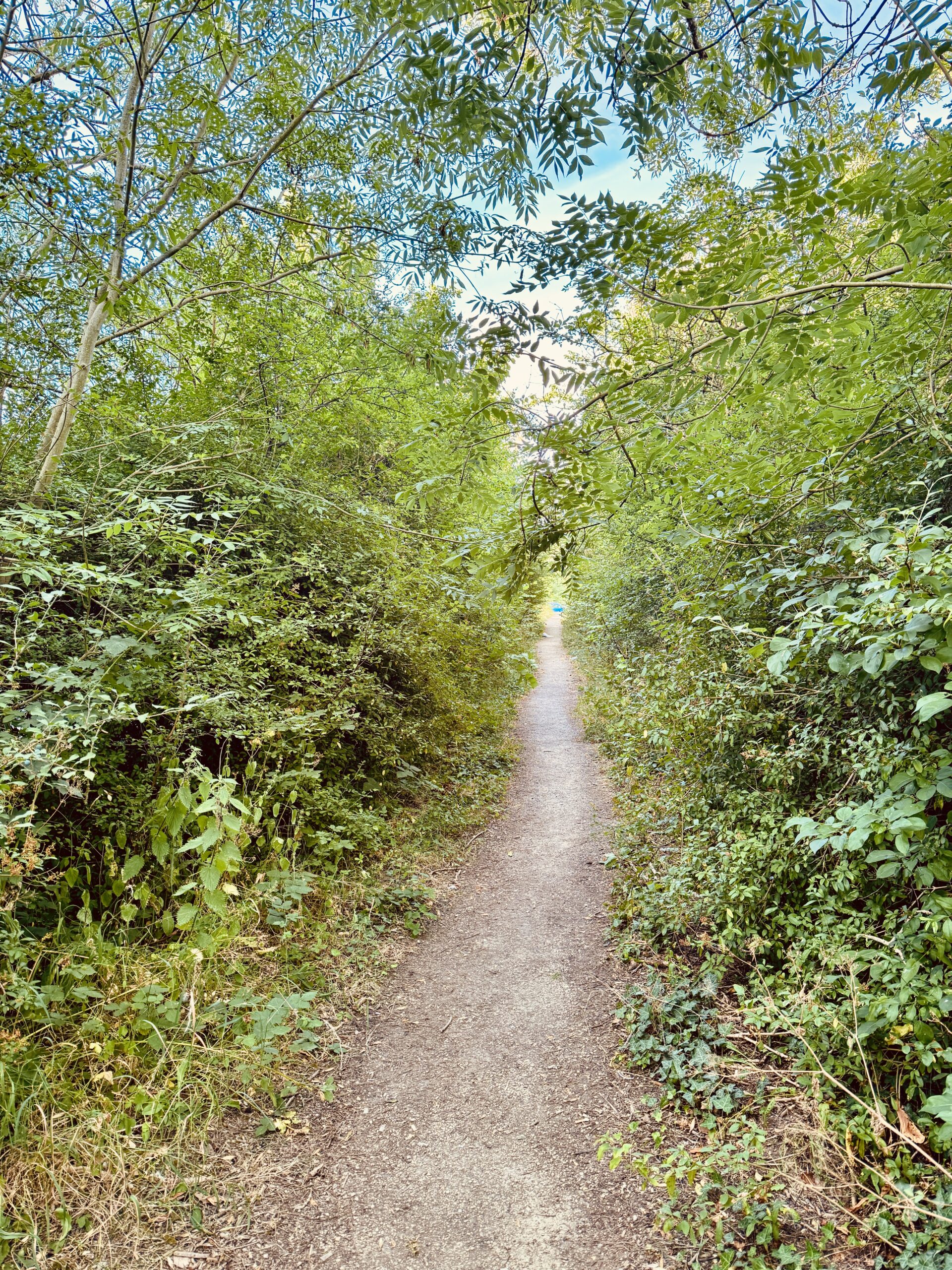
I walked to the gym this morning.
That sounds too ordinary to announce, which is probably why it matters. The gym is only seven minutes away by car. My normal routine is to get in, drive there, work out, drive back, eat something, shower, and be behind the desk by nine like a good citizen of the industrial clock. That’s the sensible move.
The 9-to-5 clock still lives in me. I can feel it. Even now, self-employed, answering to no manager hovering over my shoulder, I can still feel the old tribunal warming itself up somewhere behind my eyes. By nine o’clock, it says, you should be at the machine. You should look available. You should look as if work has started.
But I’d been reading about mythogeography, and the book had me thinking about walking as a way of meeting the world before the day hardens into tasks — the walk itself as the encounter, rather than fitness content, rather than a lifestyle hack with a ring closing at the end of it.
There’s something funny buried in that distinction. For most of human history people walked because they had to. To the next village, the field, the market, the church, the pub, and the place of work. Then the factories arrived, and the whistle, and the shift, and the mass-produced automobile, and life needed standardising to keep the machines running on time. Once walking stopped being necessary, it became romantic. It became leisure. It became something we schedule and recover with, on purpose, because the rest of the day has been arranged to make it unnecessary.
This morning I could feel that little historical joke in my legs.
The efficient version of the morning wanted the car. The wiser version, or at least the version I decided to listen to, wanted the path. So I walked.
A half hour there. An hour’s workout. A half hour back. Two hours, against one hour and fourteen minutes if I’d driven. On paper that’s a bad trade. I spent close to an extra fifty minutes doing what the car could have done in a fraction of the time. But the paper is using the wrong measure. The point was never to get my body from house to gym at maximum efficiency. The point was to be present in the morning instead of managing it, watch-checked and task-shaped, on the way to somewhere else.
I noticed, walking, how quickly my mind wanted to turn inward. I had the recorder going, talking through my thoughts as I went, which is useful and also slightly comic — there I was, trying to practise noticing, while mostly noticing the inside of my own head. The trees were there. The dogs were there. The pavement, the people saying good morning, and the small choreography of an ordinary street going about its business whether or not anyone pays attention to it. And I was “being productive” by running three things at once instead of looking at any of it properly. Something else for me to work on.
The bigger thing I was circling is this: work doesn’t have to happen in front of the screen that’s become the little altar where work proves it exists. The walk wasn’t a delay before the real work started. The walk was part of it. I forget that constantly, paying fealty to the desk as the one legitimate site of thinking when some thoughts flatly refuse to arrive there. Some thoughts need breath. They need footfall, a hedge, a stranger passing at the exact moment a sentence was about to form.
Everything becomes source material out there. Not in the hungry content-machine sense, where every living thing gets stripped for parts and fed into a content calendar. In the older, stranger, more generous sense. The world offers fragments. The walker gathers them. The blogger lays them next to each other and listens for the hum between them.
That’s what mythogeography and remix culture and old-school blogging all seem to share, now that I’m circling it directly. You wander. You collect. You juxtapose without rushing to judge what you’ve picked up. You let the field itself decide what kind of thing wants to come out of it — a walk, a note, a post, a question, a half-formed practice you’ll only recognise as a practice once you’ve done it three or four more times.
What if walking to the gym isn’t inefficient? What if it’s one of the ways I keep finding my way back to the actual ground of the work, rather than the desk that only pretends to be it?
The car would have got me there faster. The walk brought more of me with it.