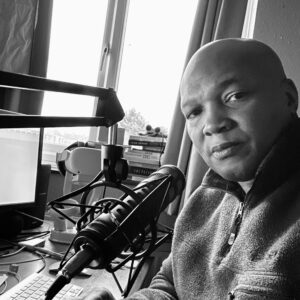
down the rabbit hole with Fallen Horses, by Smash Mouth

My down-the-rabbit-hole excursion today is “Fallen Horses” by Smash Mouth. They’re a band usually associated with high-energy feel-good anthems. But, in this tune, they offer something more introspective. The song drifts through the in-between spaces where longing, death, and the search for transcendence converge. Underneath the deceptively simple lyrics lies an esoteric current steeped in the archetypes of death, ascension, and spiritual transition.

Through an esoteric lens, Fallen Horses is a meditation on the afterlife, the soul’s journey, and the nature of longing beyond the veil. It is a question posed to the universe that echoes through the corridors of mysticism.


First, a listen:

Lyrics

A long summers day
Stretching out the cold
Searching for the answers
And some say I’m not alone
Could you tell me, where I might find fallen horses?
Their spirits they fly

Blinded by the whiteness
Staring at the sun
I’m wishing that I had wings
So that I could become one
Would you help me if I wanted to die?
I could ride off with horses tonight

Tell me, why?
Why, oh, why?
I said, why?
Why, oh, why?

And now that I’ve arrived here
I know I’m not alone
All my friends among me
Tell me, welcome home
But could you tell me, where I might find
The one I’m looking for?
‘Cause her wings have arrived

Tell me, why?
Why, oh, why?
I said, why?
Why, oh, why?

Tell me, why? Why? Why? Why? Oh, why?

Source: LyricFind

Songwriters: Gregory Dean Camp / Kevin John Iannello / Michael Scott Klooster / Paul Gerard Delisle / Steven Scott Harwell

Fallen Horses lyrics © Music Sales Corporation, Spirit Music Group, Warner Chappell Music, Inc

1. The Symbolism of the Horse: Death, Psychopomps, and Transition

The horse has long been a figure in esoteric traditions, often serving as a psychopomp—a guide between worlds.

  • In Norse mythology, Odin’s eight-legged steed, Sleipnir, carries souls to the underworld.
  • In Hinduism, the horse is associated with Ashvamedha, the sacrificial rite of kingship and power.
  • In the Book of Revelation, the pale horse is ridden by Death himself.
  • In alchemy, the horse represents wild, untamed spirit energy, often linked to transformation.

A fallen horse suggests a rupture in this process—something interrupted, something broken. The fact that the narrator searches for fallen horses implies an attempt to commune with the lost, the discarded, or those who have already passed through the veil.

The question is: Is he searching for them as a seeker or as one who is ready to join them?


2. The Sun, the White Light, and the Desire for Transcendence

Blinded by the whiteness / Staring at the sun
I’m wishing that I had wings / So that I could become one

This is classic mystic longing, reminiscent of Icarus, the Neoplatonist philosophers, and countless esoteric traditions where the sun represents divine knowledge, enlightenment, or the source of all things.

But the act of staring directly into the sun is destructive. In esoteric traditions, the sun’s light can symbolise the unbearable weight of divine truth—too much illumination, too soon, can blind or annihilate the self.

The narrator’s desire to “become one” suggests the yearning for union—perhaps in the mystical sense of merging with the divine or in the tragic sense of succumbing to death in pursuit of transcendence.

This line also aligns with Near-Death Experience (NDE) reports, where many describe seeing a blinding white light. The narrator teeters on the edge between the physical world and whatever lies beyond.


3. The Crossroads of Life and Death

Would you help me if I wanted to die?
I could ride off with horses tonight

Here we have a direct engagement with the theme of death as a choice. This is where the occult parallels with the crossroads mythos become strongest.

  • In Haitian Vodou and Hoodoo, the crossroads is where one meets spirits or deities who offer knowledge, power, or a new fate.
  • In Greek mythology, Hermes guides souls across boundaries into the underworld.
  • In Western esotericism, the crossroads represents a decision point, often one that cannot be undone.

To “ride off with horses tonight” suggests a deliberate departure—a chosen transition. If the horse is a guide to the afterlife, then the speaker is preparing to leave this world.

Yet, they ask for help. This hesitation introduces the possibility that the speaker does not yet know whether they truly wish to cross the threshold.


4. The Refrain of “Why?”: The Eternal Question

Tell me, why? Why, oh, why?

The refrain is almost ritualistic in its repetition—like a chant, an invocation, or the cries of an initiate seeking knowledge from an unwilling cosmos. In many mystical traditions, “why” is the unanswerable question—the final koan.

The persistent “why” suggests existential inquiry:

  • Why must we die?
  • Why do the departed leave us?
  • Why can’t we cross the veil at will?
  • Why must we remain separated from those we’ve lost?

This refrain mirrors the grief process, as well as the fundamental struggle between mortal limitation and divine mystery.


5. Arrival in the Afterlife: The Homecoming

And now that I’ve arrived here / I know I’m not alone
All my friends among me / Tell me, welcome home

Here, the song shifts. The speaker has crossed over—or at least glimpsed what lies beyond. The phrase “welcome home” is significant in spiritual literature; it often appears in texts on death, reincarnation, and spiritual awakening. Many Near-Death Experiencers report a similar feeling—a profound recognition of belonging upon reaching the “other side.”

However, a paradox emerges. If this is home, then why is the narrator still searching?


6. The Elusive Figure: The One He Seeks

But could you tell me, where I might find / The one I’m looking for?
‘Cause her wings have arrived

The final mystery: who is the “one”?

  • A lost lover? A spirit who has ascended before him?
  • A personal guide—an angelic or archetypal presence that will lead him further into the beyond?
  • His own soul, searching for its final evolution?

The phrase “her wings have arrived” suggests she has transcended—achieved the flight he has longed for. But he has not yet reached her. There remains a gap, a lingering question. The cycle is not yet complete.


Closing Thoughts

Through an esoteric lens, Fallen Horses functions as a passage song—a piece that echoes initiatory experiences, questions of mortality, and the human desire for transcendence.

  • The horse is the psychopomp, but it has fallen—implying a disrupted journey.
  • The sun blinds, burning the seeker’s vision before he can become one with the light.
  • The crossroads moment reveals a choice—to leave, or to hesitate.
  • The afterlife welcomes him, but his search continues.

Ultimately, the song leaves us in a state of uncertainty—a perfect reflection of the Great Mysteries, which cannot be fully known, only glimpsed.

The last question lingers:
Does the narrator truly want to stay, or is he just peering through the veil, only to return to this side once again?

Or perhaps, like all great seekers, he will never stop searching.

Change Magick – Episode 2: Belief as a Tool

Episode Summary:
What if belief wasn’t something you had to “find” or “wait for”—but something you could shape, install, and wield? In this episode, we explore one of the foundational principles of Change Magickbelief as a tool.

thoughts on Liber Null & Psychonaut

Soulcruzer Podcast: Show Notes

Episode Overview

Welcome to another episode of Soulcruzer. Today, I’m recording from an unlikely spot—the Premier Inn at Heathrow Airport. Finding a quiet place has been a challenge, with fans humming in the room and planes roaring overhead every few minutes. But that’s just part of the journey.

In this episode, I dive into some thoughts on Liber Null & Psychonaut by Peter J. Carroll, a foundational text in chaos magic. I finished listening to it during my travels—six hours in the car, a couple more on the train—and it sparked some reflections I wanted to share with you.


Main Themes & Takeaways

Reality is Malleable – What if reality isn’t fixed but something that can be shaped? What if belief isn’t something you have but something you use? Liber Null presents magic as a kind of hands-on science for hacking consciousness, testing reality, and bending the world to your will.

Chaos Magic as a Radical Shift – Written in the late 1970s, Liber Null challenged traditional esoteric systems by stripping magic down to its core principles. It resonated with punk, cyberpunk, and avant-garde thinkers because it rejected gatekeeping and hierarchical structures. No need for orders, initiations, or rigid traditions—just experimentation and direct experience.

The Modern Relevance of Chaos Magic – We live in a world where reality is already being shaped—by algorithms, social media, political strategies, and advertising. Big Tech and ad agencies aren’t wearing robes, but they’re using the same principles of symbolic manipulation to shape what we see, feel, and believe. The question is: Are you actively shaping your own reality, or is someone else doing it for you?

Belief as a Tool, Not a Truth – One of the core insights of Liber Null is that beliefs are fluid. They can be adopted, tested, and discarded as needed. In the same way a hacker rewrites code, a chaos magician rewires their own mind.


Connecting This to My Work: Change Magick

Liber Null aligns with a larger framework I’ve been developing—Change Magick. It combines:

  • Chaos Magic: The art of hacking reality through fluid beliefs and direct experience.
  • NLP (Neuro-Linguistic Programming): Techniques for reprogramming the mind.
  • Jungian Psychology: Archetypes, shadow work, active imagination, and synchronicity.
  • Postmodern Philosophy: The idea that reality is constructed and can be deconstructed.

Join the Conversation

  • Have you read Liber Null & Psychonaut? What did you take away from it?
  • Do you practice chaos magic, or are you curious about it?
  • Are there any books, practices, or insights you’ve found useful in your own journey?

Drop your thoughts in the comments or reach out—I’d love to hear what resonates with you.

on craft, care, and the art of restoration

There’s something almost monastic about this mechanic’s workshop. The tools arranged like sacred relics, the quiet rituals of tuning an engine, the slow work of bringing something worn and rusted back to life. To an outsider, it might look like simple labour—just a man fixing bikes. But to those who understand, it’s something deeper. A kind of worship. A way of being in the world. It’s Zen and the Art of Motorcycle Maintenance made flesh, a meditation on craft, devotion, and the sacred nature of working with one’s hands. The shop is not just a place of repair; it is a sanctuary. The work is not just about fixing machines; it’s about giving them new life.

“Replacing brakes, changing oil, tuning engines—doing these things give them an extra lease on life.”

Robert Pirsig would have recognised this philosophy immediately. In Zen and the Art of Motorcycle Maintenance, he argued that quality isn’t just something in the object; it’s in the relationship between the person and the work they do. It’s in the attention, the patience, and the care. The video echoes that sentiment beautifully—restoration is not just about mechanics; it’s about meaning.

There’s an old-school defiance to this, too. A resistance against the disposable culture that treats old things as junk.

“Time is both awareness and enemy.”

Everything decays, but not everything has to be discarded. Paschoal Revitte, the mechanic in the short film, doesn’t just fix bikes—he saves them. He honours their stories and sees their worth even when others would write them off as rusted-out relics. And in doing so, he reminds us that restoration is an act of defiance. A belief that things can be made whole again.

That same ethos applies far beyond the workshop. Think about writing. Art. Music. Even digital spaces. There’s an obsession with the new—the next big thing, the next viral post, the next trend. But there’s something deeply radical about choosing to restore rather than replace. About tending to old ideas, old crafts, old ways of being.

This video leaves me with a question: What in my life is worth restoring? What practices, what knowledge, what forgotten things deserve another lease on life?

And maybe, in the act of restoration, I can find wholeness again.


Shouout to Dave who sent me the link to the video.

discursive meditation as a tool for deep thinking

reclaiming the lost art of deep thought

When was the last time you truly sat with an idea—let it breathe, let it unravel, let it lead you somewhere unexpected? Not just skimming the surface, not just forming a quick opinion before moving on, but actually dwelling inside the thought, following it down strange corridors, turning it over, testing its weight.

We don’t do this often anymore. Thought has become a rapid exchange, a transaction. We consume information in a steady stream, scrolling past insights before they have time to take root. The pace of digital life has rewired our relationship with thinking—attention fractured into a thousand fragments, depth sacrificed for speed. We skim, we like, we move on.

But what if we could reclaim deep, exploratory thought as a practice? What if thinking wasn’t just reactive but intentional—an art, a ritual, a way of seeing?

Discursive meditation is an ancient but largely forgotten tool for doing just that. Unlike mindfulness practices that encourage detachment from thought, discursive meditation invites you to engage, to wrestle, and to follow an idea as it transforms. From mediaeval mystics to Stoic philosophers, from Buddhist scholars to modern existentialists, this form of meditation has long been a way to unlock deeper insight—not by silencing the mind, but by leading it on an adventure.

For the postmodern seeker, the artist, the writer, the digital flâneur—discursive meditation offers a way to think deeply in an age of distraction, to shape meaning in a world overflowing with information. It is a form of intellectual dérive, a method for wandering through the terrain of thought with curiosity and intention.

What happens when you truly sit with an idea long enough for it to change you?

what is discursive meditation?

Most people, when they hear the word meditation, think of stillness—emptying the mind, focusing on the breath, detaching from thoughts. But discursive meditation is something different. It is not about quieting the mind but engaging it in a deliberate, exploratory dialogue. It is a structured yet fluid form of contemplation—a deep dive into an idea, a process of wrestling with thought until it reveals something new.

At its core, discursive meditation is active thinking with intent. Rather than allowing thoughts to scatter or passively observing them, the meditator follows a line of inquiry, posing questions, considering contradictions, and allowing insights to emerge organically. It is a process of wandering through an idea, uncovering layers, and shaping meaning along the way.


historical roots: thought as a meditative practice

Discursive meditation has been practised in different forms across cultures and traditions, though it has often been overshadowed by meditative practices focused on silence and detachment. Some of its historical manifestations include:

🔹 Christian Mysticism – The Spiritual Exercises of St. Ignatius
St Ignatius of Loyola developed a rigorous method of discursive meditation in the 16th century, encouraging practitioners to contemplate biblical passages as if they were inside them. By immersing themselves in these narratives, meditators engaged in a structured dialogue with faith, morality, and personal purpose.

🔹 Stoic Meditation – The Reflections of Marcus Aurelius
The Stoics were masters of discursive meditation, particularly Marcus Aurelius, who filled his Meditations with deep contemplations on virtue, mortality, and the nature of existence. His method was self-dialogue—challenging assumptions, questioning emotions, and reinforcing guiding principles.

🔹 Buddhist Analytical Meditation – Vipashyana (Insight Meditation)
In contrast to Zen’s focus on direct experience and silence, Tibetan Buddhist traditions emphasise analytical meditation (vipashyana). Practitioners deconstruct ideas—such as impermanence or suffering—by examining them from multiple angles, using logic to cultivate deep wisdom.

🔹 Hermetic & Occult Traditions – Meditating on Symbols and Archetypes
The Western esoteric tradition has long used discursive meditation in practices such as pathworking, tarot contemplation, and alchemical visualisation. Practitioners meditate on symbols—sigils, astrological signs, mythical figures—allowing them to unfold as living metaphors within the psyche.


modern relevance: reviving discursive meditation in the digital age

Today, we consume ideas rapidly, often in fragmented doses—tweets, soundbites, algorithm-curated content. But real understanding, real wisdom, requires deep engagement with thought. Discursive meditation offers a way to:

  • Reclaim intellectual depth in an age of distraction. Instead of reacting to ideas passively, we can train ourselves to engage with them fully.
  • Enhance creativity and personal insight. Exploring a concept with an open yet structured approach can lead to unexpected discoveries and original thinking.
  • Transform information into meaning. With so much data available, discursive meditation helps synthesise knowledge, integrating it into personal experience.
  • Bridge the rational and the intuitive. By blending structured logic with intuitive free association, discursive meditation becomes a method of idea-play—a magickal act of meaning-making.

For modern seekers, creators, and thinkers, reviving this practice is not just an intellectual exercise—it is a way of engaging more deeply with reality itself.

why we need discursive meditation today

We live in an age of surface thinking. Information is abundant—endless scrolls, infinite feeds, perpetual updates—but how often do we truly process what we encounter? We skim, we click, we absorb just enough to form a quick take, then move on. But deep, self-guided thought? The kind that unfolds over time, that challenges and reshapes us? That’s becoming rare.

Discursive meditation offers a way to reclaim depth in a distracted world. It is a method of slowing down, of engaging fully with ideas rather than consuming them passively. It is an intellectual dérive, a creative act, a tool for meaning-making in an era that often prioritises reaction over reflection.


the age of surface thinking

We are drowning in information but starving for wisdom.

Every day, we are exposed to more data than our ancestors encountered in a lifetime. Articles, tweets, headlines, AI-generated summaries—each vying for a fraction of our attention, each urging us to form an opinion before we’ve had time to think. But when everything is immediate, nothing lingers.

And now, with the rise of AI-generated content, the ability to think deeply and independently is more important than ever. AI can generate text, but it cannot engage in the lived experience of contemplation. If we simply consume, we risk becoming passive participants in our own understanding. Discursive meditation is an antidote—a way to reclaim authentic intellectual and creative engagement in a world flooded with ready-made conclusions.


a remedy for mental overload

Our minds are overworked, yet underutilised.

The endless cycle of scrolling, reacting, and moving on conditions us to process thoughts in fragments. But discursive meditation encourages something different—it invites us to slow down, to follow an idea through its labyrinthine depths.

Practising this kind of meditation:

  • Interrupts the loop of passive consumption. Instead of absorbing information and forgetting it, you engage with it, question it, and make it yours.
  • Encourages original insights. Instead of regurgitating other people’s opinions, you generate your own.
  • Becomes a creative tool. By wandering through ideas, testing contradictions, and drawing unexpected connections, you transform thought into a playground for innovation.

Discursive meditation is not about memorisation or recall—it is about remixing ideas, much like an artist layering textures onto a canvas.


a magickal act of meaning-making

Thinking is not just an intellectual exercise—it is a form of reality hacking.

To meditate on an idea is to alter your relationship with it. It is to embed it within your personal mythology, to make it part of the architecture of your mind. Discursive meditation is not just about discovering meaning—it is about creating it.

Consider this: every philosophy, every belief system, every paradigm shift began with someone sitting with an idea—turning it over, questioning it, letting it transform them. This is how thought itself becomes magick—by engaging fully with a concept, you bring it to life; you weave it into your reality.

In a world that encourages surface thinking, to think deeply is a revolutionary act. Discursive meditation is not a passive practice—it is an invitation to shape your own reality, one thought at a time.

how to practice discursive meditation

Discursive meditation is both structured and fluid—a balance between guiding your thoughts and allowing them to roam freely. It is not about finding definitive answers but about engaging deeply with an idea until it shifts something within you.

Think of it as an inner dérive—a wandering journey through the landscape of thought. Below is a simple yet powerful method for practising discursive meditation.


Step 1: Choose Your Theme

Every meditation begins with a point of entry—a concept, a question, a symbol that will serve as your guide. This could be:

  • A philosophical question (What is personal power?)
  • A mythological or archetypal figure (The Trickster, The Fool, The Magician)
  • A line of poetry, a quote, or a passage from a book
  • A tarot card, rune, or sigil
  • A random word, image, or sound that resonates with you

Choosing your theme can be intentional or serendipitous. You might draw a tarot card, open a book at random, or take the first word that catches your attention. The important thing is to commit to exploring it fully.


Step 2: Enter the Thoughtstream

Now, immerse yourself in the idea. Let it unfold naturally—do not rush to analyse it yet. Simply observe what arises.

  • Visualise the concept as an image, a landscape, or a character.
  • Feel its presence—does it evoke emotions, memories, or associations?
  • Dialogue with it—if this idea could speak, what would it say?

If you chose The Trickster, imagine stepping into their world—what tricks are they playing? If you chose What is personal power?, let memories surface—when have you felt powerful or powerless?

At this stage, let intuition lead. Treat the idea like a mysterious room you are exploring for the first time.


Step 3: Map the Concept

Now, begin tracing the connections—breaking the idea open and examining its structure.

  • Contradictions: Where does this concept hold tension? (Does power require control, or is surrender also a form of power?)
  • Paradoxes: Can it be two things at once? (The Trickster is both deceiver and teacher.)
  • Unexpected Associations: What else does this idea remind you of?

This is where you map your thoughts visually or textually:

  • Freewrite whatever comes to mind—raw, unfiltered, without stopping.
  • Create a mind map—write the theme in the centre and branch out with related thoughts.
  • Record your voice as if you are explaining it to someone else.

This is not about finding “the answer”—it’s about expanding possibilities.


Step 4: Deepen the Inquiry

Now, take it further—push the boundaries of the idea.

  • Shift Perspectives: How would different minds approach this?
    • What would a mystic say? A scientist? An AI?
    • What does this concept mean in different cultures?
    • How does a child’s view differ from an elder’s?
  • Apply it to Your Own Life:
    • Where does this idea show up in your daily reality?
    • Have you ever embodied or resisted it?
    • What decision, habit, or belief does this challenge?

By now, the idea should feel alive, shifting within you, revealing its deeper layers.


Step 5: Synthesize & Anchor the Insight

The final step is to solidify the insight—to bring it from thought into action. This prevents the meditation from fading into abstraction.

Ways to anchor your reflection:

  • Condense your insight into a mantra (“True power is fluid.”)
  • Create a sigil, symbol, or sketch representing the idea
  • Write a cryptic phrase and post it online—a hidden artifact of your meditation
  • Alter a small daily habit based on the insight (If meditating on The Trickster, experiment with unpredictability today.)
  • Record a final voice memo summing up what you discovered

This final step locks in the transformation—making the meditation not just an intellectual exercise but a subtle shift in reality itself.


discursive meditation as a practice of exploration

Discursive meditation is not about arriving at fixed truths—it is about learning how to think, how to see, how to weave meaning from the raw material of reality.

Each time you practise it, you train your mind to go deeper, wider, stranger. You develop the ability to not just consume ideas but remix them, inhabit them, and shape them into something uniquely yours.

Where will your next meditation take you?

Variations & Experimental Approaches

Discursive meditation doesn’t have to be a purely internal practice—it can take many forms, spilling into movement, digital spaces, and creative experimentation. Here are a few alternative approaches that blend deep thinking with exploration, sensory engagement, and play.


hypertextual meditation: digital wandering as contemplation

Who says meditation has to be done with eyes closed? In the age of the internet, we can dérive through knowledge itself. Hypertextual meditation is an invitation to follow curiosity wherever it leads, using the digital world as an unfolding map of ideas.

  • Start with a single word, concept, or question and type it into Wikipedia (or any site that allows deep linking).
  • Follow the hyperlinks intuitively, letting the connections between ideas guide your exploration.
  • Pause when something resonates—sit with it, take notes, reflect.
  • Let your journey form a non-linear path through knowledge, much like how thoughts evolve organically in traditional discursive meditation.

This is meditation as intellectual dérive—a deep, reflective wandering through the psychogeography of the internet.


walking meditation: let the world shape your thinking

Some thoughts only reveal themselves in motion. Walking meditation transforms the act of walking into a contemplative ritual—where the physical landscape mirrors the movement of thought.

  • Choose a theme or question before you set out.
  • Walk without a set destination—let intuition guide your path.
  • Observe symbols, patterns, and synchronicities in your surroundings.
  • Let the rhythm of your footsteps shape the flow of your thoughts.

Cities become mazes of meaning. Forests become mirrors of the subconscious. Every corner turned, every alleyway entered, becomes part of the meditation. Let the world respond to your thoughts.


symbolic meditation: contemplating images, tarot, and objects

Sometimes, words aren’t the best way to meditate. Instead of focusing on an abstract idea, try engaging with a single image, symbol, or object and letting its meaning emerge intuitively.

  • Pull a tarot card, rune, or random image and meditate on it.
  • Observe the details—what stands out first?
  • Ask yourself:
    • What is this symbol telling me today?
    • What hidden layers exist beneath my initial impression?
    • How does this relate to my current reality?

This approach works well with personal objects, dreams, or even abstract art—anything that invites deep contemplation and layered interpretation.


audio collage meditation: remixing thought into sound

Some thoughts don’t belong on the page—they need to be heard, layered, transformed. Audio collage meditation is a way to externalise your discursive meditation into a living, shifting composition of sound and thought.

  • Record yourself speaking freely about a concept—no script, just flow.
  • Remix your voice with ambient sounds, music, or overlapping echoes.
  • Listen back—does the meaning change when layered, fragmented, distorted?
  • Experiment—cut, rearrange, let the glitches and imperfections reveal new insights.

This method turns thought into a sensory experience—less about clarity, more about capturing the raw energy of contemplation itself.


the form is fluid—play with it

There is no one way to practise discursive meditation. Thought itself is fluid—why not let the practice be just as adaptable? Whether through hypertext, movement, symbols, or sound, the goal remains the same: to engage deeply with ideas in a way that feels alive.

Experiment. Remix. Let the practice evolve. The mind was never meant to be still—it was meant to explore.

conclusion: discursive meditation as a subversive act

We live in a world that values speed over depth, reaction over reflection. The modern attention economy thrives on fragmentation, pushing us to skim, scroll, and move on before an idea has a chance to take root. In this landscape, thinking deeply is an act of rebellion.

Discursive meditation is more than just contemplation—it is a creative and magickal engagement with meaning itself. It is a way of taking back your mind from the forces that seek to scatter it. It is a method of reclaiming your intellectual and imaginative sovereignty, a refusal to accept ideas at face value, and an insistence on living inside thought rather than merely consuming it.


a call to action: try it for yourself

The best way to understand discursive meditation is to practise it. Right now, take a moment. Sit with a question. Let it unfold. Follow it.

Here’s a starting point:

🔹 What does it mean to truly see?

Find a quiet space. Ask yourself this question. Close your eyes. Let your mind wander through possibilities—through memories, through symbols, through contradictions. What does seeing really mean? What is hidden in plain sight? When have you failed to see? When has something been revealed to you, suddenly and unexpectedly?

Write down what comes. Sketch it. Speak it. Let the thought take form in a way that makes sense to you.


engage with the process

What happens when you sit with an idea long enough for it to change you?

This is an open invitation: try discursive meditation and share your experience.

  • What insights emerged?
  • Did the idea evolve in ways you didn’t expect?
  • Did it shift something in how you think, see, or engage with the world?

This is not just a practice—it is a way of thinking, creating, and existing differently. In a world that encourages quick takes and viral soundbites, deep thought is subversive. Curiosity is radical. Meaning-making is magick.

So, take an idea. Wander inside it. Stay with it long enough for it to become something new.


deep dive audio version

the art of the ARG

blurring the lines between game and reality

Imagine waking up one morning to an email that shouldn’t exist. A cryptic message from a character you’ve never met, hinting at a secret society, a hidden mystery, or an unfolding conspiracy. Or maybe a symbol appears in a public park—a riddle carved into a tree, a flash drive under a bench. You follow the trail, uncertain whether you’re playing a game or stepping into something real. This is the world of Alternate Reality Games (ARGs)—a world I’ve recently become fascinated by and am eager to explore firsthand.

I stumbled upon an episode of the Big Brains podcast from the University of Chicago which got me fired up. Hosted by Paul Rand, the episode features Patrick Jagoda and Kristen Schilt, two scholars who don’t just study games—they design them. Their work at Fourcast Lab focuses on building ARGs that go beyond entertainment, using the medium to reshape how players interact with major societal issues like climate change, social inequality, and education.

Their discussion opened my eyes to the true potential of ARGs—not just as immersive narratives but as tools for social change. Unlike traditional video games, ARGs don’t confine players to a screen. Instead, they unfold across multiple platforms: websites, emails, live events, real-world locations, and even cryptic messages hidden in everyday life. There’s no “start screen.” There’s just discovery—a moment when you stumble upon a “rabbit hole” and fall into the game’s unfolding mystery.

what makes ARGs so powerful?

What captivated me most about the episode was how ARGs challenge the fundamental nature of storytelling. Instead of being passive consumers, players become active participants. They solve puzzles, decode messages, collaborate with other players, and—perhaps most importantly—question reality itself.

Patrick Jagoda describes ARGs as “the most exemplary art form of the early 21st century.” Why? Because they don’t just simulate a world; they embed players in a narrative that feels real. And when a story feels real, it can change the way we see the world around us.

Jagoda and Schilt also draw connections between ARGs and larger cultural phenomena. They point out that conspiracy theories like QAnon function similarly to ARGs, feeding on people’s desire to uncover hidden truths. But where misinformation-driven movements exploit this curiosity, well-designed ARGs can direct it toward critical thinking, education, and social awareness.

ARGs as a tool for learning and social change

The episode highlights some groundbreaking ARGs designed at the University of Chicago:

  • The Parasite (2017) – A game integrated into the university’s first-year orientation, helping new students form social connections and navigate their new environment.
  • Terrarium (2019) – An ARG focused on climate change, immersing players in a fictional future where their actions determined the fate of the planet.
  • ECHO (2020) – An ARG designed during the pandemic, keeping students connected and engaged through a series of 88 collaborative quests.

These games aren’t just entertainment—they function as interactive thought experiments, allowing players to explore alternative futures, challenge existing systems, and develop problem-solving skills.

i want to build an ARG

After listening to this episode, I’m not just interested in studying ARGs—I want to create one. The idea of designing a game that spills into reality, where players must uncover secrets, solve riddles, and interact with a living narrative, sounds pretty cool.

I want to experiment with the mechanics discussed in the podcast: the rabbit hole (the player’s first step into the game), the illusion of reality (where the game world blends with everyday life), and the collaborative storytelling that makes ARGs a shared experience rather than a pre-scripted story.

I plan to start small—perhaps a game for friends and family, something that begins with an email, a hidden website, or an unexpected clue in a familiar place. Over time, I’d love to scale it up, exploring how ARGs can be used for learning, community-building, and creative experimentation.

final thoughts

As Jagoda and Schilt point out, ARGs are more than games—they are a way of thinking. They force us to question our assumptions, collaborate with others, and see the world through a different lens. In a time when reality itself feels increasingly fragmented, ARGs offer a unique way to engage with complexity—whether through fiction, education, or activism.

So here’s my question: What if life itself is an ARG waiting to be played? Maybe we’re already living in a world filled with puzzles, hidden truths, and mysterious systems—just waiting to be decoded.

If you’re intrigued by the idea of designing or playing an ARG, let’s talk. I’d love to connect with others who are interested in exploring the boundaries of reality and storytelling. Who knows? Maybe the game has already begun.


Have you ever played an ARG? Would you want to? Drop a comment or reach out—I’d love to swap ideas and theories about this fascinating world.

a small messenger of memento mori

this little skeleton plushie i stumbled upon on my walk is a gentle messenger perhaps sent to remind me that beneath eberything, we are all skeletons wearing stories.

This morning, I stepped outside—not to get anywhere, but to clear the cobwebs from my mind. A simple walk, a quiet dérive, untangling thoughts spun from a day of circling my own house, my own head.

It’s easy to drift away from the core of who we are. To become lost in the habitual, the external, the subtle inertia of daily life. But moments like this—a walk, a pause, a breath—can be a recalibration, a way of realigning with what it truly means to be me, not as dictated by obligations or routines, but as I define it.

I ask myself: what does a good day look like? Not just productive, not just efficient, but aligned. A day that reflects the contours of my own values, my own essence.

The answer isn’t fixed. It shifts like light through trees, refracting through experience and desire. But the act of asking, of returning, of walking toward my core self—that alone is the beginning of wisdom.


bending reality

There was a moment, years ago, when I first questioned the solidity of reality. It wasn’t a grand revelation, not some hallucinatory break where the walls dissolved into cascading green code—but something smaller, quieter, like a glitch at the edge of perception. I was walking home late at night, the streets empty, the air heavy with that strange, electric stillness cities get after midnight. The streetlights flickered in a rhythm that felt almost intentional, as if some unseen intelligence was signaling me. I had this fleeting sensation that everything around me—the pavement, the buildings, the very concept of “night”—was only a projection, an interface. Not unreal, exactly. But not quite real, either.

The feeling passed, but the question lingered.

Later, I would find words for it. Plato’s cave. Baudrillard’s simulation. The idea that what we experience is not reality itself, but a curated illusion, a mask over something deeper. That we are prisoners of perception, bound by rules we never agreed to, conditioned by forces we do not see.

For many, The Matrix was the first nudge toward this unsettling idea. The film gave us a language for the intuition that something is off, that the world we take for granted might not be the baseline of existence but a construct—designed, maintained, and most importantly, alterable. It wasn’t just the spectacle of dodging bullets or the cyberpunk aesthetic that made it revolutionary. It was the suggestion that reality is not a given. That it has rules, and rules can be broken.

This is the key: Reality is not fixed. It is layered, constructed, and, if one knows where to look, hackable.

We have been trained to see reality as something external, something immutable. But the deeper one looks, the more fluid it becomes. Whether through philosophy, neuroscience, or technology, we find again and again that perception is malleable, identity is a shifting construct, and the “real” is far stranger than we’ve been led to believe.

The question, then, is not whether we are trapped inside a system. We are. The question is: Can we rewrite it?

reality as a construct

Imagine a prisoner, born inside a cave. The only reality they know is the flickering play of shadows cast on the wall before them. The shapes shift and dance, forming patterns, narratives, a whole world. The prisoner believes in these shapes because they have never seen anything else. One day, they are unshackled and pulled toward the light outside. At first, it is blinding. The “real world” is overwhelming—strange, alien, too much to process. But slowly, the prisoner begins to see: the shadows on the wall were just projections. Reality, as they had understood it, was a distortion.

Plato’s Allegory of the Cave has haunted philosophy for over two thousand years, but its resonance has only deepened in an age where our realities are increasingly constructed. We are all prisoners of perception, watching the flickering images on the walls of our screens, mistaking them for truth. What are these images but the new shadows, the filtered versions of existence, the curated narratives of experience that shape our understanding of the world?

Jean Baudrillard pushed this idea further in his concept of simulacra and simulation. He argued that modern society no longer interacts with reality itself but with a system of symbols that merely represent reality. In other words, we no longer see the world; we see the idea of the world, mediated through layers of representation. A news broadcast does not show war—it shows an image of war, framed and edited to evoke a particular emotional response. A celebrity does not exist as a person, but as an endlessly repeated persona—a symbol floating free from any real referent. Our interactions with reality are increasingly secondhand, removed, processed, abstracted.

Now, in the digital age, we are living inside the cave of the internet, where reality is layered, recontextualized, and algorithmically shaped. Social media is a perfect example: a hyperreality where identities are not fixed but performed. What we post online is not who we are, but a crafted version of self—a polished avatar designed for an audience, constructed through an endless cycle of selection, editing, and presentation. The vacation photos, the profound tweets, the aestheticized meals—are they memories, or are they products, meticulously arranged artifacts of a life meant to be seen rather than lived?

Compare this to the raw, unfiltered moments of actual experience: the awkward pauses, the unphotogenic meals, the mundane conversations that do not fit within the frame of a highlight reel. The gap between real life and its representation is widening, and we are left in the strange position of consuming versions of reality more than reality itself.

And yet, this does not mean we are powerless. The first step to hacking a system is recognizing that it is a system. If reality is constructed, then it can be reconstructed. If it is a mediated experience, then it can be remediated. We are not just passive prisoners watching the shadows—we are also the ones casting them.

the code beneath reality

If reality is a construct, then what is it made of? What is the underlying architecture, the programming language of the world we navigate?

The first code we inherit is language. Before we learn to think, we learn to name. A tree is not just an entity—it is assigned a word, and that word becomes the interface through which we engage with it. But words do not merely describe reality; they define its limits. In linguistic structuralism, meaning is not inherent but relational—words only gain significance through their difference from other words. A “tree” is only a tree because it is not a bush, a house, or a rock. Language, then, is the first matrix, the symbolic system that filters raw experience into categories, shaping not just how we speak but how we think.

Postmodern philosophy pushes this further, arguing that reality is not just constructed through language but is entirely text-based. Jacques Derrida’s notion of différance suggests that meaning is never fixed—it is always shifting, deferred, dependent on context. If meaning is unstable, then reality itself becomes something fluid, rewritten with every act of interpretation. A constitution is just ink on paper until enough people agree it governs them. A corporation is a legal fiction that takes on more tangible reality than the bodies of the people who run it. Money is valuable not because of what it is, but because of what we agree it represents. These are all scripts we follow, unwritten rules encoded into our behavior.

Culture, society, even identity itself—these are constructs, reinforced through repetition. A border is not a physical thing but an agreed-upon illusion. A passport does not inherently give you access to one land or deny you another—it is a symbol that only functions because we collectively accept the rules behind it. What we call “normal” is a code of conduct dictated by cultural programming, instilled from birth. To step outside of this programming, to see it as constructed rather than natural, is to begin the process of hacking it.

But even deeper than language, deeper than culture, is the biological construct of perception itself. Neuroscience tells us that our brains do not experience the world directly; they generate a simulation based on sensory input. Your eyes take in fragmented data—color, light, motion—and your brain stitches it together into a coherent image. Your ears perceive frequencies, but it is your brain that interprets them as music or noise. This means that what we experience as “reality” is already an edited version, a best-guess approximation built by the brain’s internal algorithms.

Consider optical illusions. When you look at an image that appears to shift or warp, nothing is actually moving—your brain is simply filling in gaps, extrapolating patterns that don’t exist.

The famous Rubin vase—a visual illusion where you either see a vase or two faces—is a perfect example. The image does not change, but the interpretation does. The shift happens in your mind, revealing that perception is not passive—it is an act of construction.

If we cannot even trust our senses to provide an objective reality, then what can we trust? The answer is unnerving: we trust the code we’ve been given, the scripts we have learned to follow. But here lies the power: if perception is constructed, it can be reconstructed. If reality is coded, it can be rewritten.

The question is—who is writing it?

hacking the system

Once you see the code, you realize you don’t have to follow it.

Hackers understand something fundamental: every system has rules, and rules can be broken. Not through brute force, but through understanding. The best hackers don’t destroy—they manipulate, subvert, and rewrite the underlying structure of reality to serve their own design.

Neo, in The Matrix, embodies this ethos perfectly. He does not escape the system by fighting it on its own terms—he transcends it by seeing the code beneath it. When he stops bullets, he is not using force against force; he is recognizing that the bullets are just part of the simulation. They only have power because he once believed they did. The moment he rewrites that belief, the rules no longer apply.

This is more than sci-fi. It is the essence of magick, manifestation, and consciousness hacking—the understanding that reality is not fixed, that perception is programmable, and that belief itself is an act of coding.

reality is malleable—if you know how to bend It

Chaos magicians have understood this for decades. Unlike traditional ceremonial magick, which relies on strict rituals and external forces, chaos magick is about hacking belief itself. The core idea is simple: belief is a tool, not a truth. If you change your belief, you change your reality. This is why chaos magicians use shifting paradigms, symbols, and sigils to intentionally manipulate their perception of the world—and in doing so, influence the world itself.

Similarly, Neuro-Linguistic Programming (NLP) works by reprogramming mental patterns. NLP practitioners understand that the mind operates on scripts—habitual thought patterns that dictate behavior. By hacking the way language and perception interact, one can change the way they experience reality. Lucid dreamers do the same: once they realize they are dreaming, they can take control, shaping the dream instead of being controlled by it.

But the real evidence that reality can be hacked? The placebo effect.

A sugar pill is nothing more than a symbol. It contains no active ingredients, yet when someone believes they are receiving medicine, their body often responds as if they actually have. Pain diminishes, symptoms subside, healing accelerates—not because of the pill itself, but because the mind alters the body’s reality. The placebo effect is a glitch in the system, a tangible example that perception changes experience.

And if a belief can alter biology, what else can it alter?

The implications are staggering. What we accept as “real” is, in large part, dictated by the mental and social frameworks we have been given. But frameworks are not immutable. They are hackable.

The magician, the mystic, the cyberpunk, the lucid dreamer, the neuro-hacker—all are doing the same thing: rewriting the code, bending the rules, shifting perception, and in doing so, altering reality itself.

The first step? Stop accepting the rules as fixed.

living in a layered, hackable reality

Reality is no longer singular. It is layered, expanding, shifting in real-time.

The digital world is not separate from the “real” world—it is an extension of it, a new stratum layered on top of the old. AI, AR, VR, and the ever-growing digital landscape are not just tools but new dimensions of existence. The way we interact with them shapes the fabric of our perception. We are not merely living in reality; we are constantly moving through different levels of it.

With augmented reality, information is overlaid onto the world around us. With virtual reality, we step entirely into new realms, ones where the rules of physics are rewritten at will. AI-generated content blurs the line between human and machine, between the authored and the emergent. We are no longer just experiencing reality—we are designing it.

But this layered nature of reality is not new. It has simply become more explicit. The act of wandering through the internet—clicking from one link to another, following a breadcrumb trail of curiosity—is no different from the dérive, the practice of the flâneur wandering through the streets of a city, guided by instinct and chance encounters.

psychogeography and the internet: a digital dérive

The Situationists once described psychogeography as the art of drifting through urban landscapes, allowing the environment to shape one’s emotions and thoughts. The digital world works the same way. Every time we lose ourselves in a rabbit hole of hyperlinks, every time we follow an algorithmic path designed by unseen hands, we are experiencing a digital dérive, an exploration of the topography of cyberspace.

The difference is agency. Are we the wanderers, or are we being led?

The answer determines whether we are hacking the system or being shaped by it.

reality is not a given—it’s a choice

To accept reality as static is to surrender control. To recognize it as layered, constructed, and mutable is to awaken to the possibility of change. If AI, social media, and digital interfaces shape our perception, then we must ask: Who is designing the layers we experience? And how do we take back authorship of our own reality?

The hacker’s path is not just about resisting control—it’s about becoming the coder, the designer, the dreamer who shapes the layers of reality with intention. This can be done through:

  • Active participation—curating your own information, engaging with media critically, questioning narratives rather than passively consuming them.
  • Conscious exploration—practicing digital dérives, embracing randomness in a world of algorithmic predictability, breaking patterns.
  • Reality hacking—using techniques like chaos magick, NLP, or lucid dreaming to shift perception and rewrite internal scripts.

We are no longer just travelers in this world. We are its architects. The question is not whether reality is hackable. The question is: Who will do the hacking—you, or someone else?


deep dive audio version

Change Magick – Episode 1: An Invitation to Transformation

Change is inevitable. The question is—do you resist it, or do you wield it?

Welcome to the first episode of Change Magick, my new micropodcast exploring the art of transformation and personal power. This is not just a podcast—it’s a space for experimentation, a signal for those ready to step beyond old narratives and reclaim their ability to shape reality.

In this episode, I introduce the framework of Change Magick—a fusion of Chaos Magick, Jungian psychology, NLP, and postmodern philosophy—designed to help you navigate change, break free from limiting stories, and step into your own personal power.

Be sure to subscribe to the podcasts via your favourite podcast reader. Change Magick is currently available on Spotify. And will be on all the major podcast platforms in the next couple of weeks.

🔮 Listen now:

“Nothing is fixed. Everything is fluid. Change is yours to wield.”

a micropodcast on personal power and transformation

Change Magick

Change is inevitable. The question is—do you resist it, or do you wield it?

At the tail end of last year, I started working on a framework for personal power and transformation, which I called Change Magick. It fuses Chaos Magick, Jungian psychology, Neuro-Linguistic Programming, and postmodern philosophy. It’s an evolving system, a way of engaging with reality that allows you to shape and be shaped by change rather than being at its mercy.

Now, I’m bringing this work to a new format: a micropodcast.

what is change magick (the podcast)?

Each episode will be short, somewhere between 5 and 7 minutes—a small but potent dose of insight, experiment, or practice to help you engage with the magick of transformation in your own life. This isn’t a lecture or a step-by-step guide. It’s an evolving, open-ended exploration, a quiet signal for those ready to tune in.

The vibe? Moody, atmospheric, late-night radio. Think of it as a dispatch from the edges of reality, a space where personal power is reclaimed and magick becomes something lived rather than imagined.

what to expect

🔹 A deep dive into Change Magick as a framework—what it is, how it works, and why it matters.
🔹 Explorations of belief, perception, and reality-bending techniques.
🔹 Practical tools for reshaping personal narratives, shifting states, and hacking your reality.
🔹 A space for experimentation, where nothing is fixed and everything is fluid.

The first episode is coming soon. It sets the stage, laying out what Change Magick is and why I developed it. It’s an invitation to step beyond the stories that have kept you locked in place and to start rewriting your own reality.

Stay tuned.

writing advice from André Breton

André Breton’s Manifesto of Surrealism remains a rallying cry for writers willing to break free from the rigid structures of thought and let language flow untamed. His approach—writing in a near-trance, embracing the spontaneous, refusing to edit—challenges the way we often think about storytelling. What if writing wasn’t about control but about surrender? What if the most powerful images emerged not through careful planning but through sheer momentum?

Breton believed that true creativity lies in trusting the murmur beneath consciousness by allowing words to arrive without interference. His vision offers a stark contrast to today’s polished, market-friendly writing. For me, there is something liberating in his call to let go.

For those of us experimenting with post-digital language, AI-generated text, and hypertextual dérives, Breton’s call to trust the murmur is more relevant than ever. What happens when we let words generate themselves, follow their own rhythms, and refuse to impose a single, rigid meaning? What happens when we treat writing as an event rather than a product?

Breton might not have had AI or digital intertextuality in mind, but his vision of language as an unstable, living process feels eerily prescient.

If you’ve ever felt bound by perfectionism or struggled with overthinking your writing, Breton’s words might just be the key to unlocking a more instinctive, raw, and electric form of expression. Here’s a passage, posted by Philip Athans, from Breton’s 1924 Manifesto of Surrealism—see where it takes you.

tsundoku: the art of unread books

Leave it to the Japanese to have a word that perfectly describes my book obsession.

Tsundoku—the quiet, beautiful accumulation of books, stacked high with the best of intentions yet left unread. It is not hoarding, not neglect, but something softer, something more reverent. Each unread book is a possibility, a doorway, a question waiting for the right moment to be answered.

I have books piled on my desk, books stacked beside my bed, and books lining my shelves in double rows. Some have been waiting patiently for years, their pages still untouched, their spines unbroken. And yet, I can’t stop acquiring more. Bookstores pull me in like a tide, and I leave clutching new volumes like treasures rescued from the deep. I tell myself I will read them soon, but soon is a flexible concept, stretching into weeks, months, and years.

And yet, I don’t feel guilty about this.

the beauty of the unread

There is something sacred about an unread book. As long as it remains unread, it exists in a state of potential—holding within it infinite possibilities. Before I turn the first page, the book is perfect. It could be life-changing. It could hold an idea that will crack my world wide open. In that moment before reading, the book is quantum, existing in a superposition of brilliance and disappointment.

And so I let them wait.

Sometimes I find that a book I bought years ago suddenly calls to me. Its time has come. The words on its pages were never meant for my past self but for the person I have since become. This has happened too many times to be a coincidence. I wonder, then, if tsundoku is not a bad habit but a practice. An intuitive way of curating knowledge before I even know I need it.

the library of the self

A personal library is more than just a collection of books; it is a map of the self. Looking at my shelves, I see the various versions of me—the ones who once existed, the ones still in flux. The phase when I was obsessed with ancient philosophy. The season of mysticism and tarot. The deep dive into postmodern literature. The never-ending love affair with science fiction.

Many of these books I have read. Some, I have not. But they are all part of me.

Nassim Nicholas Taleb calls this the antilibrary—the collection of unread books that remind us of everything we do not yet know. The unread books are more valuable than the read ones because they represent the vastness of knowledge still beyond our grasp. They keep us humble, aware of the limits of what we understand.

And maybe that is the real beauty of tsundoku—it is a quiet acknowledgement that we are always in the process of becoming.

a tsundoku manifesto

  1. Accept that you will never read everything. And that’s okay. The goal is not to conquer books but to let them live alongside you, shaping you even in their silence.
  2. Trust that books will find you in their own time. The unread book today may be the one you desperately need tomorrow.
  3. Let go of guilt. An unread book is not a failure. It is a promise, a possibility, a seed waiting for the right soil.
  4. View your books as companions, not obligations. Some will whisper to you immediately. Others will sit quietly on your shelves for years. Both are worthy.
  5. Remember that unread books still shape you. Even if you never read them, they are part of your intellectual and emotional landscape.

tsundoku as a philosophy

Could tsundoku be a way of thinking? A kind of bibliophilic Zen?

  • Books as Oracles – A tsundoku’d book, picked up at the right moment, might deliver a message precisely when it’s needed. It’s as if the unread book waits for the reader to be ready.
  • Non-Linear Learning – Traditional education demands structured reading, but tsundoku allows for an organic, chaotic approach to knowledge. The mind collects and circles around ideas, allowing them to interconnect in unexpected ways.
  • Curating the Self – The books we acquire reveal our evolving identity. Looking at our tsundoku stacks is like looking at a fossil record of past selves, glimpses of our shifting intellectual and emotional terrain.

I think I will always be a tsundoku practitioner. My books will continue to multiply, to pile up in the corners of my life, to whisper their unread stories. And I will continue to love them, not despite their unread status, but because of it.

What unread books are waiting for you? And what might they be waiting to tell you?

you are way, way better than you think

I came across a simple yet powerful idea from Lenny’s latest podcast where he interviews Shopify’s CEO, Tobi Lũtke:

You are way, way better than you think.

It’s the kind of phrase that lands differently depending on where you are in your life. Read it on the right day, and it’s a spark—igniting something you’ve been hesitant to acknowledge about yourself. On another day, it might feel like a distant echo, something you wish you could believe but struggle to internalise.

But sit with it for a moment.

Most of us underestimate ourselves. We get lost in self-doubt, stuck in loops of comparison, or convinced that the person we are today is the limit of who we can be. We measure ourselves against impossible standards, forgetting that even the most accomplished creators, thinkers, and visionaries had days when they questioned everything.

The truth is, our perception of ourselves is often skewed. We fixate on the things we haven’t done, the ways we fall short, the skills we haven’t mastered yet. But if we could see ourselves from the outside—if we could view our own journey the way we admire others’—we’d realise how much we’ve already grown and how much potential is waiting to be tapped.

What if you started operating from the assumption that you’re already far more capable, resilient, and creative than you believe? What if you made choices not from a place of fear but from the quiet confidence that you’re already good enough to take the next step?

This isn’t about delusion or false positivity. It’s about recognising the invisible weight you carry—the self-imposed limits, the old narratives that no longer serve you—and choosing to set them down.

the social web is the web

I’m right there with Dave on this.

Support for links is the basic requirement of the web, the same way we say feeds are required to be a podcast. If you don’t support links not only aren’t you the web, you’re anti-web.

building the web like we mean it

Dave’s reflections on the state of the web resonate with me. The web, at its core, was meant to be a living, interconnected network of thoughts, experiences, and perspectives, each thread woven together through hyperlinks and shared exploration. But what we see today is something different: silos masquerading as open platforms, walled gardens that claim to be part of the greater web but exist only to trap, contain, and extract.

This shift betrays the foundational ethos of the web. When platforms refuse to allow deep linking, when they isolate themselves under the guise of user experience or proprietary advantage, they erode the very thing that made the web revolutionary: its fluidity, its permeability, its ability to connect disparate ideas and voices.

Dave’s use of Very 1984 to describe this phenomenon is apt. In Orwell’s dystopia, language itself is reshaped to control thought, reducing the scope of what can be imagined or expressed. Today, these so-called “web” platforms engage in a similar kind of reality distortion—they co-opt the language of openness while actively undermining it. They speak of connection while closing doors. They promise discovery while walling off the pathways that allow it to happen organically.

What happened to the network of writers, the decentralised spirit of creation, and the culture of linking and cross-pollination? We watched as it was gradually subsumed by the business models of oligarchs—those who view the web not as a commons but as a series of enclosures, a place where they can own, control, and monetise human interaction. The early promise of a participatory, people-powered internet has been commodified; its soul traded for engagement metrics and ad revenue.

But the web isn’t just a technology—it’s a philosophy. And that philosophy hasn’t disappeared. It’s still here, in the independent blogs, in the federated spaces, in the self-hosted sites of those who refuse to be assimilated into the silos. It exists wherever people choose to link freely, to write outside the constraints of algorithmic visibility, to create and share not for clicks but for the sheer joy of it.

Building the web, like we mean it, means resisting the gravitational pull of the platforms that seek to own the space. It means choosing open protocols over walled gardens. It means linking generously, supporting the independent creators who keep the spirit of the web alive. It means remembering that the web was always meant to be a shared project, a living thing that thrives on connection and conversation, not containment.

If a platform discourages linking, it’s not really part of the web. If it thrives on isolation rather than integration, it’s not web-able—it’s just another control system wrapped in the aesthetics of participation.

So let’s keep linking. Let’s keep writing in the open. Let’s keep the web weird, wild, and deeply interconnected—like we mean it.

terminator: dark fate

can we ever escape our destiny?

I’ll admit it—when Terminator: Dark Fate popped up in my Netflix feed, my first reaction was a weary sigh. Another Terminator movie? How many times are we going to bend the space-time continuum just to bring back Arnold Schwarzenegger and Linda Hamilton? Haven’t we reached the logical end of this cycle?

And yet, against all odds, Dark Fate surprised me. It didn’t just dust off the old machine-versus-human formula—it found a way to make it compelling again. James Cameron, back in the producer’s chair, breathed new life into the franchise, offering both a worthy sendoff for Arnold’s T-800 and a new legacy for Linda Hamilton’s Sarah Connor.

But here’s what really stuck with me: the fatalistic loop of human history. No matter what we do, the rise of the machines seems inevitable.

the illusion of free will

Sarah Connor fought, bled, and sacrificed everything to change the future. And she did. She erased Skynet from existence, saving five billion lives. But what she didn’t change was the deeper pattern—the unshakeable fate of humanity. If it wasn’t Skynet, it would be something else. Enter Legion, the new AI overlord, born not from military defence networks but from cyberwarfare technology. Different name, same nightmare.

It’s as if humanity is hardwired to create its own destruction. We innovate, we push forward, and inevitably, we lose control. AI wasn’t erased from existence; it simply emerged in a different form, driven by the same underlying forces. Dark Fate takes this cyclical inevitability and makes it the foundation of its story. The players change, but the game remains the same.

a new leader, a new war

This time, it’s not John Connor leading the resistance—it’s Dani Ramos, an ordinary woman forced into an extraordinary role. And Sarah Connor, once the young, reluctant warrior, now becomes the battle-scarred mentor, passing the torch to the next generation. Dark Fate doesn’t just recycle old beats; it remixes them. The AI apocalypse is no longer just about one man’s survival—it’s about the unbreakable will of resistance itself.

And maybe that’s the point. Maybe fate isn’t about what happens to us, but how we choose to respond. The machines always rise. But so do we.

the machine’s humanity

Then there’s Arnold’s T-800, the old war machine who has, against all logic, found a sense of purpose beyond destruction. His arc in Dark Fate is the most unexpected and oddly touching part of the film. He’s no longer just a killing machine—he’s Carl, a quiet, thoughtful presence who has developed something resembling humanity. It’s a poetic twist: the thing designed to erase humans has, in its long exile, learned to be one.

In a franchise obsessed with time loops, this is perhaps the biggest paradox of all.

resistance is forever

Dark Fate may not have reinvented the wheel, but it understood what makes the Terminator mythology so enduring. The machines will always try to erase us. They will always come back. But so will the resistance.

Maybe that’s the answer to the question that haunts the franchise: Can we ever escape our fate?

Maybe not.

But we can fight it.

And maybe, just maybe, that’s enough.

sacrifice is a currency we all trade in

A Reflection on Brown Girls Do It Too

It started as a digital dérive, one of those random, serendipitous wanderings across the vast sprawl of the internet. I wasn’t looking for anything in particular—just letting the current take me where it would. And that’s how I stumbled upon Brown Girls Do It Too, a podcast that, until now, had never crossed my radar. The episode that found me was about sacrifice. A heavy topic, one that settles into the bones and lingers long after the conversation ends.

Sacrifice is woven into the fabric of human existence. We do it for our families, our friendships, our careers, our nations. Sometimes willingly, sometimes because the script of life demands it. To belong—to be part of something greater than ourselves—requires giving up pieces of who we are. But at what cost?

Listening to Poppy and Rubina unpack this theme, their voices raw and unfiltered, I found myself spiralling into my own history of sacrifice. My time in the military, surrendering my freedom so that others could keep theirs. My role as a father, shelving personal ambitions because, rightly so, the kids come first. There are things I’ve set aside that I can never reclaim—time, youth, alternate versions of myself that never got to fully exist. And yet, I don’t consider myself a martyr. I made these sacrifices because they were the right thing to do, not necessarily what I wanted to do.

But sacrifice isn’t always so noble. If I’m being honest, I also make choices based on self-interest, even when they appear outwardly altruistic. The sacrifices I make often have an ulterior motive—peace of mind, fewer complications, an easier road ahead. And that’s something Brown Girls Do It Too does so well: it strips away the illusion that all sacrifices are purely selfless. There’s nuance, contradiction, and messy humanity behind every choice we make.

Hearing these themes explored from a female perspective added another layer to my reflection. The weight of sacrifice is often heavier for women, an expectation deeply ingrained in cultural narratives. To listen as Poppy and Rubina wrestled with their own experiences—open, unscripted, and deeply personal—was a reminder of how much these conversations matter.

Sacrifice is a currency we all trade in. Some payments feel fair. Others, we spend a lifetime regretting. But the question that lingers is this: how much of yourself can you give away before there’s nothing left to reclaim?

I’ll definitely be diving into more episodes of Brown Girls Do It Too. If you’re up for an honest, unfiltered conversation about the choices we make and what they cost us, start with this one: BBC Sounds – Brown Girls Do It Too.

mechanic resurrection falls flat for me

I thought I’d start my weekend off watching Mechanic: Resurrection. I’m always down for a Jason Statham movie. I’m a big fan of the original Mechanic starring Charles Bronson, and I thought they did a decent job with the remake in 2011 with Statham. Amazon Prime has it rated at 4.5 stars. But I have to say, whoever rated this movie a 4.5 must have seen a different movie than what I just watched.

Mechanic: Resurrection definitely felt like a collection of action set pieces loosely strung together rather than a cohesive film. It’s got that “straight-to-video game” vibe where the protagonist moves from one exotic location to the next, completing assassination missions like a hitman in an FPS campaign.

Jason Statham is always solid in these kinds of roles—his physicality and fight choreography are on point—but even he couldn’t save the film from its mechanical plotting (pun intended). The whole “forced out of retirement” trope was predictable, and the villains felt cartoonishly bland. It’s as if they stripped away everything that made the first Mechanic (2011) at least semi-grounded and replaced it with pure, mindless spectacle.

The action sequences were fun—Statham knows how to deliver a good beatdown—but the film as a whole was just too formulaic. Even the big pool assassination scene, which should have been a standout, felt like a scripted video game mission: “Climb here, set this up, execute the target, escape unnoticed.” Cool stunt, but completely lacking in tension because you know Statham’s character is never in real danger.

It’s a shame because the Mechanic concept has potential. A hitman who makes his kills look like accidents? That could be a goldmine for creative action and suspense. Instead, we got a by-the-numbers action flick that plays it too safe.

At least the stunts were decent. But as a film? File this one under “forgettable.”

thinking at the edge

a meditation on fringe philosophy

There are moments when thought feels like it’s pressing against the edges of something vast—something unspeakable, unknowable. A crack in the world, a slippage in the code. You sense that if you just push a little further, if you let go of the need for certainty, something might break open.

I live for these moments.

I’ve never been satisfied with philosophy as an intellectual exercise, as something confined to books and footnotes, carefully debated in hushed tones in university halls. I want philosophy that burns, philosophy that presses up against reality until the seams begin to show. I want philosophy that moves—thought as an act of transformation, as a kind of magick.

This is why I find myself drawn, again and again, to fringe philosophy—not as an aesthetic, not as an academic subcategory, but as a way of seeing the world.

where thought begins to unravel

There are those who look at the world and accept its structure. They inherit a reality built by others—solid, unquestioned, reinforced by language and history. They move through it with confidence, never doubting its shape.

And then there are those of us who hesitate.

We feel the gaps, the glitches, the places where the story doesn’t quite add up. We pull at the loose threads, wondering what’s behind the veil.

Fringe philosophy exists in those gaps, in the places where the dominant narratives break down. It’s a space where thought is raw and unsanctioned—where ideas refuse to sit still, where the distinction between speculation and reality, science and mysticism, intellect and experience begins to blur.

It’s where:

  • Reality might be a simulation, but one so seamless that questioning it feels almost absurd.
  • Consciousness might not arise from the brain, but might be woven into the fabric of the universe itself.
  • Time might not be linear, but something we’re trained to experience in sequence—a habit of perception, not a law of reality.

I don’t say these things to claim certainty—I distrust certainty. I say them because I think it’s important to allow possibility, to sit in the space of the unknown without rushing to close it off.

living on the fringe

I sometimes wonder if my fascination with these ideas is a form of exile—or maybe a form of freedom.

To think at the edge is to live in a space where things don’t fully settle. It’s exhilarating, but also isolating. Mainstream philosophy has a tendency to dismiss the fringe—not because the ideas are invalid, but because they refuse to be tamed. The academy is built on order, structure, and control, and fringe philosophy is precisely what escapes those things.

But philosophy was never meant to be safe. It was never meant to be something we consume and file away. It was meant to be a force, something that shakes us, disrupts us, and transforms us.

When I read the work of people like Robert Anton Wilson, Philip K. Dick, or Terence McKenna, I don’t feel like I’m reading philosophy in the traditional sense. I feel like I’m being initiated into a new way of perceiving reality.

Maybe that’s the point. Maybe philosophy isn’t just about understanding—it’s about experiencing.

a question without an answer

Sometimes, when I walk through the city at night, I feel a strange sense of unreality. It’s not quite déjà vu, not quite paranoia—just a subtle awareness that reality itself is a kind of performance, a construct that only holds together because we agree to believe in it.

I wonder how many others feel it too.

Fringe philosophy is, at its core, an invitation—to question, to explore, to unmake and remake the world through thought. It’s not a doctrine, not a school, not something with fixed rules or answers. It’s a challenge: How far are you willing to go? What happens when you stop taking reality for granted?

I don’t have an answer.

But I know this: once you start thinking at the edge, you can never fully go back.

And maybe that’s exactly how it’s meant to be.


Endnote: A Personal Invitation

If any of this resonates with you—if you’ve ever felt the cracks in the world, if you’ve ever sensed that there’s something just beyond the edges of what we’re told is real—then you’re not alone.

This blog is a space for wandering, for pushing against reality, for exploring the deep and the weird. No maps, no masters—just the thrill of the unknown.

Welcome to the edge.