I recently went on a series of shamanic journeys to find and connect with my spirit animal. On the first journey, I met a leopard, but it turns out the leopard was there to guide me to my spirit animal, which it turns out is the wolf. The following is what the wolf represents when it shows up as your spirit guide:
The Noble Wolf: Our Spiritual Guide into the Unknown
Since ancient times, the wolf has captured the human imagination as a powerful and mysterious creature of the wild. Regarded by many indigenous cultures as a wise teacher or guide, the wolf has much to share with us about embodying our spiritual truths.
When wolf energy enters your awareness, you are being called to dive deeper into the hidden realms of yourself and nature. Wolves are inherently curious, always exploring new territories and seeking unseen paths. As your spirit animal, the wolf urges you to tap into your own wild intuition to forge ahead into the great unknown. There are mysteries waiting to be uncovered and truths wanting to be seen. The wolf says, “I will walk beside you into the darkness without fear.”
The wolf teaches us the wisdom of the pack—the power of community, communication, and coming together for the greater good. A lone wolf rarely survives, but the pack is formidable against all threats. When we embrace the wolf, we recognise the strength that comes from authentic relationships, teamwork, and social intelligence. The wolf says, “I will watch your back if you watch mine.”
Fiercely devoted to family, wolf energy also reminds us that true bonds are born of loyalty, understanding, and mutual nurturing. From the wolf, we learn that by caring for our loved ones, we also care for ourselves. And by standing up for each other, we stand strong against the storms of life.
With their distinctive howls, wolves sing to the moon and call to each other across vast distances. Their voices echo our own yearnings to connect with sacredness and howl into the void our hopes, dreams, sorrows, and prayers. When a wolf speaks, we are reminded to raise our own voices and share our truths.
So when you feel lost in the shadows of life, let the spirit of a wolf guide you forward by the light of the moon. With courage, curiosity, and community, you will uncover amazing mysteries, forge deep connections, and perhaps even touch the face of Spirit. Listen, can you hear a wolf calling to your wild soul?
The wolf energy definitely resonates with me on this current leg of my spiritual journey.
The words we use to describe our lives have an uncanny way of shaping our reality. The stories we tell ourselves and the language we use to frame our circumstances dictate how we perceive and interact with the world around us. As the linguist Benjamin Lee Whorf hypothesised, the very structure of the language we speak impacts the way we think and process information.
Beyond affecting our thoughts, the vocabulary we consistently employ has the power to become a self-fulfilling prophecy. If we label ourselves as awkward, unlucky, depressed, or anxious over and over, we start to embody those qualities and select the information that validates those stories. On the flip side, describing life as full of blessings, miracles, or serendipity fosters a radically different outlook.
This concept is summed up in the popular saying, “What you think about expands.” In a spiritual sense, our consciousness manifests the world it believes in. The words in our narration of life preview what we will encounter. As such, the language we use to depict our existence shapes our perception of reality. In turn, perception and experience co-create each other in an ongoing dance. With mindfulness, we can interrupt negative patterns and reframe our inner vocabulary to elevate our lives.
The thesis that the words you use to describe your reality become your reality encapsulates this mystic interplay between language and life. As we’ll explore further, carefully crafting our personal narratives using constructive language attracts positive energy and unlocks our highest potential. The stories we tell ourselves day after day directly influence what unfolds.
The Power of Words
Our Self-Talk Shapes Our Worldview
The constant monologue running through our minds wields tremendous power over us. This self-talk, comprised of verbal descriptions and stories of our own inventions, acts as the lens through which we view reality. A positive inner voice illuminates the world with hope and possibility. But recurring negative descriptors distort our perspective, making experiences bitter and dreary.
Master storyteller Jim Carrey famously advises, “Be careful how you speak to yourself because you’re listening.” Indeed, the words we use to talk about ourselves and our lives sink deeply into our subconscious. From there, they influence what we expect, what we see, and who we become.
The Power of Assumptions
Once we vocalise an assumption to ourselves, we automatically seek out proof of its validity. Suppose Deborah continually complains, “Nothing ever works out for me.” Her defeated attitude sculpts her focus; soon she notices only life’s frustrations while glossing over its gifts. She recalls past failures more easily than successes and sees only obstacles rather than opportunities. Her negative self-talk produces the very reality she laments.
The same applies in reverse. Calling oneself “talented,” “lucky,” or “friendly” initiates a self-fulfilling process. We start acting as we imagine ourselves to be. Others respond positively, cementing our assumption. Our words can craft the persona we aspire to.
Personal Evidence
One of my clients suffered from stage fright before public speaking. “I know I’ll mess up,” she’d predict. Unsurprisingly, she’d stumble over words when anxious. Once she replaced this phrase with “I’m prepared and will shine,” she described feeling unusually calm before presentations. Her poise and eloquence were noticeably improved simply by shifting her inner monologue.
Our self-talk moulds our identity and crafts our experiences. The narratives floating through consciousness transform into the reality we meet. Taming these unruly words holds the key to awakening our grandest visions.
The Science Behind It
Our Brains Seek Validation
Modern neuroscience reveals why verbalising a belief makes it our truth. The brain exhibits an almost stubborn quest to confirm what we already think is true. Once we voice an inference about life, our brains go hunting for supporting data while ignoring contradictions.
Scientists term this tendency “confirmation bias.” Our neural pathways light up when we encounter proof of our preset notions. Information validating a held assumption gets emblazoned while conflicting facts barely register. We perceive more keenly whatever verifies our story.
So claiming “no one appreciates me” trains your focus on relational slights. You forget praise and gratitude. Before long, you feel undervalued by loved ones, verifying the initial belief. This self-fulfilling neurological loop shows why speaking ideas makes them so.
Neural Pathways Strengthen
Additionally, neuroplasticity demonstrates why our mindset shapes future observations. When certain connections in the brain fire together repeatedly, they become the footpaths our thoughts travel. Over time, you reinforced the idea that “I’m overlooked at work.” Your neurons will activate that passageway effortlessly going forward. Your attention hones in on being ignored, bypassing praise.
In this way, the mental maps we continually trace become paved in stone. The notions we reinforce through speech act like streams carving through canyon rock. They dig channels, telling our brains what to expect from the world. Consciously reshaping one’s inner vocabulary sculpts more empowering paths.
Both confirmation bias and neuroplasticity elucidate the scientific basis behind our self-talk manifesting reality. Repeated words form neural trails in our brains, then confirm. Luckily, awareness of this tendency lets us reshape internal dialogues towards the positive.
Using Words Consciously
Monitoring Self-Talk
Now that we’ve explored the immense power our inner voice and vocabulary wield over our lives, the next step is consciously harnessing this force. We must pay close attention to the exact words we use to describe ourselves and our circumstances. Becoming aware of ingrained patterns constitutes the first step towards transformation.
Do you habitually label yourself as “clumsy,” “awkward,” or “stupid” when you make minor mistakes? Does your inner monologue sound defeated when facing roadblocks using phrases like “I can’t handle this” or “this won’t work out anyway”? Tuning into our default verbal tendencies reveals much about our unconscious assumptions and mental frameworks.
Upgrading Language
Once you pinpoint recurring counterproductive phrases, consciously swap them out for more constructive vocabulary. If you call problematic people “impossible,” replace that adjective with “challenging” or “complex.” Rather than saying you “hate” your body, shift to appreciate the amazing things it allows you to experience.
Pay particular attention to the words you apply to yourself. Do you call yourself lazy? Try replacing it with “still learning discipline.” Over time, consciously editing your inner dictionary to be more positive will work magic.
Language as Empowerment
In addition to editing negatively charged vocabulary, make sure your self-talk utilises affirmative language overall. Notice words and phrases that reinforce your strengths and elevate your spirits. Continually remind yourself that you are talented, resilient, worthwhile, and beloved.
Your inner voice shapes your reality; ensure it empowers rather than impedes you. Your words can either lift you up or weigh you down. Make the choice to consciously craft an inner world built of verbal building blocks that serve your highest self.
Reframing Your Reality
Our Stories Materialise
The narratives we repeat to ourselves over and over again become the contours of our reality. Those tapes playing on repeat in our subconscious—”I’ll never find love,” “I don’t deserve financial abundance,” “I’m not smart enough to succeed”—shape our self-image and material outcomes. The tales we believe in have a way of actualizing themselves.
Luckily, we can disrupt this deterministic loop and begin telling ourselves more empowering stories. By changing the dominant plotlines swirling through our minds, we start manifesting more positive results. We can deliberately reframe self-limiting life stories using the following techniques:
Edit Troubling Tropes
Examine recurring negative themes in your inner narration and rewrite the troubling tropes. If you constantly cast yourself as the victim of life’s challenges, can you reframe the storyline to feature yourself as the courageous hero on a journey instead? Other transformations include viewing yourself as lucky instead of cursed or talented rather than inadequate in crucial areas.
Revise Former Conclusions
Often, past incidents shape our overriding stories. We draw false conclusions from childhood events or previous failures, allowing the past to tyrannically rule our inner lives. Actively revise those fossilised inferences by reinterpreting what “really” happened through a redemptive lens. Forgive yourself or others to prevent stale storylines from festering.
Envision Alternatives
Rather than being dominated by old tapes, consciously start composing your life’s movie to align with your highest aspirations. Envision and narrate your ideal existence in vivid detail. Embrace plot twists and challenges while starring as the dynamic lead, always progressing. Enthusiastically verbally craft your goals as already achieved. This creative visualisation process forms the scaffolding of reality manifestation.
Our reality echoes the tales we believe at our core. By transforming negative scripts into redemptive and empowering life stories, we alchemically shape our world. Let your words reflect the purposeful movie you want to live.
The Power of Affirmations
Affirmations Anchor Optimism
One powerful way to disrupt negative mental tapes is by developing daily affirmation practices. Affirmations are short, uplifting phrases we consciously repeat about ourselves and our destiny. When vocalised with feeling, they train our brains to expect positive outcomes.
By cementing optimistic neural pathways, regularly declared affirmations transform our default states from lack to abundance. Here are some tips for crafting effective affirmations that shift reality:
Phrase affirmatively in the present tense: “I am” or “I have.”
Convey empowering identities: “I am creative and inspiring.”
Affirm wished-for outcomes as already achieved: “My business is thriving.”
Make relatable by connecting emotions to goals
Through consciously restructuring inner dialogues with affirmative declarations, we foster breakthroughs once deemed impossible.
Impactful Examples
Consider declaring affirmations like:
“I manifest my goals with purposeful action.”
“My gifts are fully seen and valued.”
“I now easily attract loving relationships.”
You can also craft customised affirmations related to specific domains like health, career, or relationships. Repeating them consistently trains the mind to actualize positive visions.
Harness words’ mystical capacity to make truths of our desires. Committing to regular affirmations channels the underlying forces of intention, emotions, and verbal creation energy towards your personal growth. Let affirmatively phrased possibility propel you ever forward.
The Words That Shape Our Worlds
As we’ve explored, the vocabulary we use to describe our lives shapes what we perceive as real and possible. Our beliefs, assumptions, and dominant stories materialise through a complex interplay between language, focus, and interpretation.
Once we give credence to a story, our brains automatically filter reality to confirm it. Repeated words carve neural pathways that fire associative connections, making our notions feel valid. Verbalised worldviews transform into self-fulfilling prophecies.
This is why becoming aware of our inner voice and habitual narration constitutes such crucial personal growth work. We must carefully monitor the tales we recite about ourselves and tune into our default vocabulary. Does our self-talk empower us or limit us? Do we cast ourselves as victims or heroes? Are we authors of our destinies or passive reactors buffeted by external forces?
Editing Inner Narratives
Noticing unconscious linguistic patterns allows us to consciously shift from disempowering to constructive language habits. We can harness the brain’s neuroplasticity to rewire our minds for optimism and possibility. By editing vocabulary and reframing stories, we write ourselves into our highest manifestations.
Ultimately, our words and beliefs cue our brains on what to anticipate and co-create as life unfolds. Our narratives provide the script directing how we actualize reality. Let’s resolve to tell ourselves epic tales, starring ourselves as intentional architects of beautiful lives. Our language shapes our worlds.
The power of solitude is indeed great and beyond our full comprehension. When we retreat into the quiet sanctuary of solitude, we open ourselves up to profound insights and revelations from within. In the stillness, when the chatter of the external world fades, our inner voice emerges to provide clarity.
Solitude is the workshop of the soul, the place where creativity and inspiration are given room to breathe and grow without rush or restriction. Within the expansive space of aloneness, our minds make intuitive leaps they couldn’t make when caught up in crowds and conversations. We hear our deeper yearnings and crystallise our purpose and principles. We understand, at last, what we must say no to and yes to.
The immediacy of solitude strips life of its essence. False identities and trivial concerns fall away. We see ourselves clearly. We confront our shadows and dance with our dreams. We remember, again, who we are and what we want to become. Problems dissolve in the face of such truth.
The silence speaks volumes and answers all in its own language, inimitable dialogues with the divine. When we bear the temporary pain of loneliness courageously, solitude yields priceless gifts of insight. The fruit of those precious moments alone echoes through a lifetime. All the genius, creativity, leadership, artistry, compassion, and legacy that will ever come from a human being is seeded in the rich loam of silence.
I’ve recently reconnected with creating mandalas. Over the past couple of days, I made this mandala and spent time contemplating its meaning. Through intuition, I received an insightful message from my inner wisdom.
Shamanism, one of the most ancient spiritual practices known to humanity, traces its roots back to the earliest civilizations, where it was integral to the fabric of daily life. This holistic tradition sees the world as an interconnected web of life where every element, from the smallest insect to the vastest mountain, is imbued with spirit and significance. Shamanic practices, found in diverse cultures across the globe, share a common belief in the deep connection between all forms of life and the unseen worlds that animate them.
At the heart of shamanism lies the shaman’s journey—a voyage into the spiritual realms to gain wisdom, healing, and guidance for the community. Through rituals, ceremonies, and the use of sacred plants, shamans navigate these realms, communicating with spirit guides and natural forces to restore balance and harmony.
In this blog post, I’ll explore some of the shamanic teachings, with a particular focus on the principles of connectivity and empathy. In a world where modern challenges often lead to feelings of isolation and disconnection, the shamanic perspective offers a refreshing lens through which to view our relationship with ourselves, each other, and the natural world. By exploring how these ancient teachings can inform and transform our contemporary lives, we may discover new pathways to understanding, compassion, and a deeper sense of belonging in the intricate web of existence.
The Core Shamanistic Beliefs
At the core of shamanic beliefs lies the principle of interconnectedness—that all forms of life, from the whispering winds and flowing waters to the animals that roam the earth and the stars that light up the night sky, are intrinsically linked in a vast, living web. This web of life, woven with threads of energy and spirit, underscores the shamanic worldview, where every element of nature is seen as alive, sentient, and deserving of respect and compassion.
This fundamental belief in interconnectedness fosters a deep-seated sense of empathy within the shamanic tradition. Shamans understand that any action taken in one part of the web reverberates throughout the entire system. This awareness cultivates a profound respect for the balance of life and a commitment to live in harmony with nature. It’s not merely about seeing the world as an interconnected entity but feeling it on a deep, empathetic level. This empathy extends beyond human interactions to encompass all beings—plants, animals, and even the elements themselves.
The empathy cultivated through shamanic practices is not passive; it is a dynamic force that drives shamans to take action. When a shaman heals a person, they are not only restoring the individual’s health but also mending the fabric of the wider community and the natural world. This holistic approach to healing reflects a deep understanding of the ripple effects of wellbeing, emphasising that the health of one is inextricably linked to the health of the whole.
In this way, shamanic empathy is a powerful tool for fostering understanding and compassion. By recognising the inherent value and interconnectedness of all life forms, shamanic teachings encourage us to extend empathy beyond our immediate circles to include the wider community of beings with whom we share this planet. This expansive view of empathy has the potential to transform how we interact with the world, guiding us towards more mindful, compassionate, and sustainable ways of living.
Connectivity in the Modern World
In the modern world, the concept of connectivity has taken on new dimensions, often defined by technological advancements that promise to bring us closer together. Yet, despite these innovations, many people experience a profound sense of disconnection—from each other, from nature, and from a deeper sense of purpose. This paradox of being “connected” yet feeling isolated is a hallmark of contemporary life, where digital interactions often replace face-to-face connections, leading to a sense of alienation and loneliness.
Environmental degradation adds another layer to this experience of disconnection. The innate connection between people and the earth is under strain as urban development and industrial activities fragment natural landscapes more and more. This disruption not only affects the ecological balance but also our collective psyche, creating a sense of loss and longing for a connection to something greater than ourselves.
Furthermore, the pace and pressures of modern life can lead to a disconnect from our own inner selves. The constant bombardment of information and the demands of daily life can make it challenging to find moments of quiet reflection and connection to our own spirit and the rhythms of the natural world.
This modern experience of disconnection stands in stark contrast to the shamanic view of connectivity, where all life is deeply interwoven into a cohesive whole. Shamanism teaches that every element of the natural world is infused with spirit and that humans are an integral part of this web of life, not separate from or superior to it. This worldview fosters a sense of belonging and responsibility towards the health and well-being of the entire ecosystem.
The shamanic path offers a way to bridge this gap, suggesting that by rekindling our connection to the natural world and to each other, we can heal the fragmentation that characterises much of modern life. It invites us to slow down, to listen deeply to the voices of the earth and our own inner wisdom, and to remember that true connectivity is not just about digital networks or social interactions but about feeling a part of the vastness of existence. By embracing these principles, we can find our way back to a sense of wholeness and interconnectedness, even in the midst of a modern world that often feels disjointed and isolated.
Shamanic Empathy in Practice
Shamans embody empathy in a multitude of ways, weaving it into the very fabric of their healing practices, their roles within communities, and their interactions with the natural world. This empathy is not only a feeling but also a way of being and acting that honours the interconnectedness of all life.
In their healing practices, shamans often enter altered states of consciousness to connect with spiritual realms, seeking guidance, wisdom, and the power to heal. Through these journeys, they empathise with the sufferer, taking on their pains and struggles as their own and working to restore balance and harmony within the individual and the community. This process is deeply empathetic, requiring the shaman to fully understand and experience the condition of the other in order to bring about true healing.
Shamans also play pivotal roles in their communities, acting as mediators, counsellors, and protectors of tradition. Their empathy extends beyond individuals to the community as a whole, ensuring that actions and decisions are made for the greater good. This community-oriented empathy fosters a strong sense of unity and mutual care, essential for collective wellbeing.
The connection between shamans and nature is another expression of empathy. Shamans understand that humans are not separate from the natural world but part of its intricate web. This understanding is often cultivated and celebrated through various rituals and ceremonies that honour the spirits of nature. For example:
Spirit Animal Journeys: These journeys involve the shaman entering a trance state to connect with animal spirits, seeking their guidance and wisdom. Participants in these journeys are encouraged to empathise with their spirit animals, understand their qualities and strengths, and integrate these aspects into their lives to foster a deeper connection with the natural world.
Plant Medicine Ceremonies: Ceremonies involving sacred plants like Ayahuasca are central to some shamanic traditions. These ceremonies are not only healing but also serve to deepen the participants’ connection to the earth. Through the guidance of the shaman, individuals experience profound empathetic connections with the plant spirits, leading to transformative insights and a renewed sense of oneness with nature.
These practices highlight the shamanic belief in the living spirit that resides in all things. By engaging in such rituals, shamans and their communities cultivate a deep sense of empathy and connectedness, not only with each other but with the entire web of life. This empathy is active and engaged, leading to actions that support healing, balance, and harmony within individuals, communities, and the natural world.
Lessons for Today’s Society
Shamanic teachings, with their deep-rooted principles of empathy and connectivity, hold valuable lessons for addressing some of the pressing issues facing today’s society. In a world often characterised by division, environmental neglect, and a pervasive sense of disconnection, these ancient wisdoms offer a pathway towards greater unity, understanding, and sustainable living.
Fostering Unity and Understanding
The shamanic view of the interconnectedness of all life can help to break down the barriers that divide us. By recognising that every individual, community, and nation is part of a larger whole, we can begin to see that our actions have far-reaching consequences. This perspective fosters a sense of unity and prompts a more compassionate and empathetic approach to our interactions with others.
Incorporating shamanic principles into community activities can strengthen these bonds of unity. For instance, organising events that focus on shared human experiences, such as storytelling circles that include narratives from diverse cultures, can enhance mutual understanding. Similarly, community-based healing rituals, drawing inspiration from shamanic practices, can offer a space for collective healing and reconciliation.
Personal Life Integration
Integrating shamanic principles into personal life starts with cultivating a deeper connection with nature and the unseen forces that shape our world. Simple practices, such as spending time in nature, practicing mindfulness, and engaging in personal rituals that honour the natural cycles of the earth, can awaken a sense of wonder and interconnectedness.
On a deeper level, adopting the shamanic practice of seeing life in all things can transform our daily interactions. This might involve practices like expressing gratitude for the food we eat, acknowledging the life in the plants and trees around us, and even recognising the spirit within our homes and belongings. Such practices foster an attitude of respect and care for our environment, encouraging more sustainable living choices.
Environmental Conservation
Shamanic teachings also offer profound insights into environmental conservation. The reverence for nature inherent in shamanism can inspire more holistic approaches to environmental stewardship. Community-based conservation projects that respect indigenous knowledge and practices can be particularly effective, as they align with the shamanic principle of listening to and learning from the natural world.
Furthermore, shamanic rituals that celebrate the seasons, the elements, and various natural phenomena can be adapted to raise awareness about environmental issues. These rituals can serve as powerful reminders of our dependency on the earth and our responsibility to protect it.
By embracing the shamanic values of empathy and connectivity, individuals and communities can develop more harmonious ways of living that honour the interconnected web of life. This shift in perspective and practice has the potential to heal not only the divisions within society but also the rift between humanity and the natural world, leading to a more compassionate, understanding, and sustainable future.
Conclusion
In exploring the richness of shamanic teachings, we uncover the timeless principles of connectivity and empathy that lie at their heart. These teachings remind us of the interconnectedness of all life, urging us to recognise the spirit that flows through everything, from the smallest leaf to the vastest sky. This perspective not only deepens our understanding of the world but also fosters a profound sense of empathy towards all beings, encouraging us to live in harmony with the natural world and with each other.
The modern world, with its myriad challenges of environmental degradation, social isolation, and a pervasive sense of disconnection, stands to benefit immensely from these ancient wisdoms. Shamanic teachings offer a blueprint for rekindling our innate connection to the earth and to one another, proposing a way of life that is rooted in respect, balance, and mutual care.
As we close this exploration, let’s consider how we might integrate these lessons into our own lives. How can we foster a deeper sense of connectivity and empathy in our daily interactions, our communities, and our relationship with the natural world? In what ways can we honour the spirit that resides in all things, and how can this recognition transform our approach to the challenges we face?
This is a call to action for each of us to reflect on the values and practices that shape our lives. By embracing the principles of shamanic teachings, we have the opportunity to contribute to a more connected, empathetic, and harmonious world. Let’s take inspiration from these ancient paths to forge new ways of being that honour the web of life, bringing healing and balance to ourselves, our communities, and the planet.
An invitation to cultivate connectivity
Cultivating Connectivity: A Walking Meditation
After reading about interconnectivity from a shamanic perspective, I invite you to try this simple walking meditation. Through mindfulness, we can directly experience the threads uniting us with nature and other living beings.
Find a natural setting you feel comfortable in. This could be woods, a park, or even an urban green space. Begin walking at a relaxed pace, focusing on the sensations in your feet and legs. Feel your feet connecting with the ground, gravity’s pull on your muscles, and your breath flowing in and out. Tune into the natural environment around you.
As you walk, visualise energetically connecting with your surroundings. Imagine roots extending from your feet into the earth, channelling, stabilising, and nurturing energy. Imagine a shaft of light running through your spine from the earth up to the skies. Feel your energetic body borderless and intermingling with nature.
Look for signs of life around you. Notice the bird songs around you, squirrels foraging, or the sway of trees. Recognise that all these living beings are threaded to you in the web of life. You share the same soil, water, and air.
Offer blessings or silent greetings as you pass other people. Sense their underlying essence as similar to yours, despite superficial differences. Experiment with making eye contact and exchanging a gentle smile.
Practice feeling at one with everything surrounding and flowing through you. Recognise the illusion of separation. Know that the same life force animates all existence. Return to this meditative state throughout your walk.
Over time, this practice can enhance your connectivity with and compassion for the natural world. By dissolving boundaries, we tap into timeless wisdom about our interdependence. Modern science confirms that we are all waves in the same cosmic ocean. An experiential glimpse catalyses empathy for all our relationships.
Faith and fear are the contrasting forces that shape our journeys. They are the yin and yang of our existence. If we choose fear over faith, we stagnate and fall short of our potential. But if we choose to live by the mantra of “All Faith, No Fear,” we embrace a transformative path that leads us towards our true potential.
Imagine standing at the edge of a vast ocean, the horizon stretching infinitely, the waters whispering promises of endless possibilities. This is the landscape of life when we let faith guide us. Faith is not merely a belief in the unseen; it’s a powerful conviction in our own abilities, in the benevolence of the universe, and in the interconnectedness of all things. It’s the inner knowing that whatever challenges come our way, there’s a force greater than ourselves that aligns everything for our highest good.
“All Faith, No Fear” is a call to arms against the shadows of doubt that lurk in the corners of our minds. Fear, with its icy grip, seeks to paralyse us, to keep us tethered to the familiar and the comfortable. It whispers tales of failure and disappointment, sowing seeds of hesitation. But here’s the truth: fear is a paper tiger, an illusion that dissipates under the light of faith.
Embracing “All Faith, No Fear” means stepping into the unknown with the confidence of a seasoned explorer. It’s about seeing every obstacle as a stepping stone and every setback as a setup for a comeback. It’s trusting that every detour is divinely orchestrated to lead us to places of growth and new beginnings.
This journey of faith does not require us to have all the answers or to see the entire path laid out in front of us. It simply asks us to take the next step, and then the next, with the assurance that the ground will rise to meet our feet. It’s about leaning into the embrace of the universe, knowing that we are supported, guided, and loved beyond measure.
So, let us choose to live with all faith and no fear. Let us weave our lives with threads of courage, hope, and unwavering trust. In doing so, we not only elevate ourselves but also light the way for others, becoming beacons of possibility in a world that so desperately needs it.
Remember, the journey of a thousand miles begins with a single step, taken with all faith and no fear. Let’s take that step today.
Am I just a sim, and some cosmic entity is using my mind and body as its own personal recreational vehicle, ready to discard me when I get old and broken down?
Several years ago, at a learning conference, I acquired these cards. They serve as an excellent tool for initiating discussions about career motivation and discovering what brings fulfilment to one’s professional life.
In today’s episode, I explore the intricate dance between logic and emotion in my own mind. I discuss how these seeming opposites actually work in tandem: logic provides structure, while emotion adds meaning. I share my personal journey of embracing this internal complexity rather than viewing it as a flaw. I talk about the tensions and growth that emerge from these spaces.
When hyper-surreal madness takes hold, you just have to surrender to the loopy vibes.
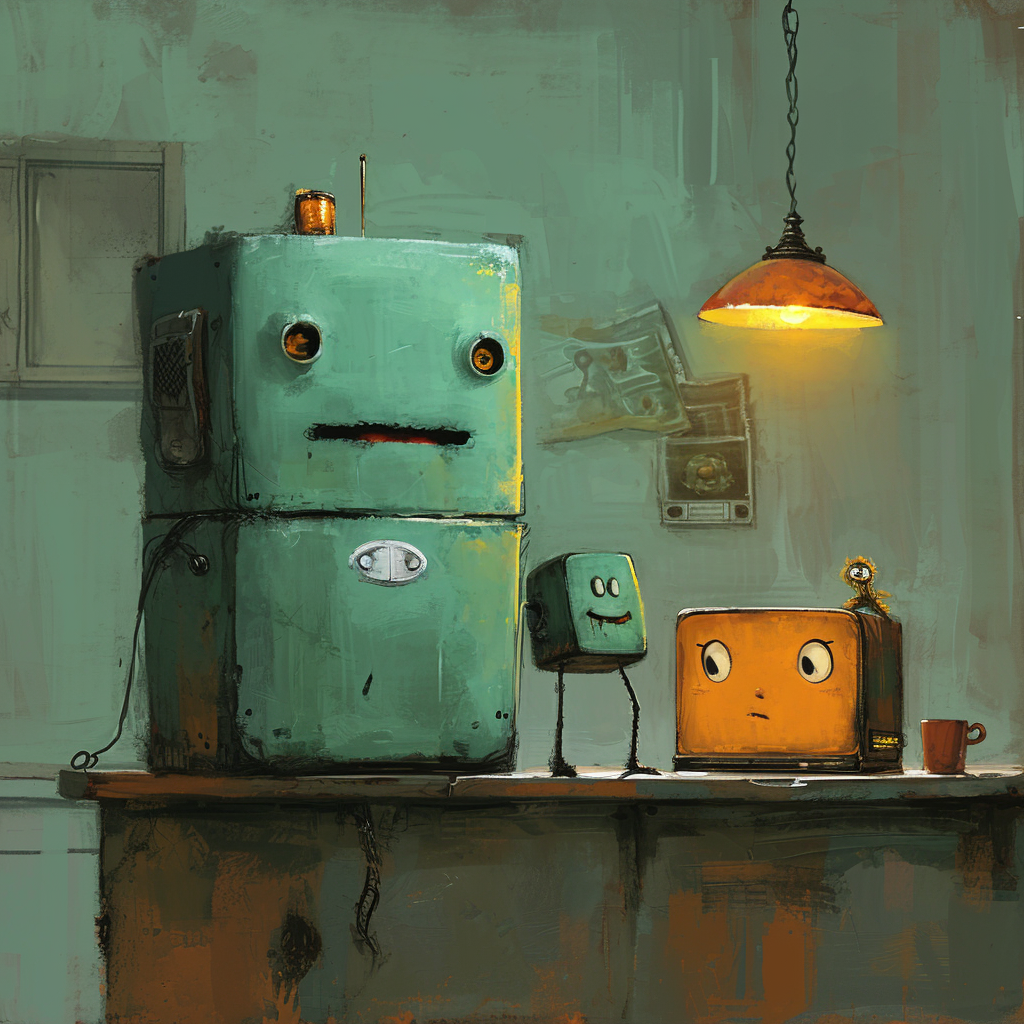
You never know when hyper-surrealism will strike. One minute you’re just living your usual routine in good old consensual reality, and the next—bam!—your world is suddenly swarming with bizarre absurdities. The fabric of normalcy rips like wet tissue paper. Up becomes down, real becomes fantasy, and you can’t even trust your own appliances anymore. I caught my fridge debating quantum physics with my toaster.
It makes you question everything you thought you knew about reality, though. I mean, if my goldfish can beat me in a thoughtful debate on the state of geopolitics, does objective truth even exist? Am I the one who’s insane here, or is the world caught in some permanent, interdimensional, silly juice spill? But I’ve stopped trying to impose reason on the irrational; I’ve accepted the reality that hyper-surrealism is now my actual reality. And today, I think I’ll rename my cat Lord Fluffington the Fourth. Hyper-surrealism demands it.
In my dream, I stumbled into a wild discotheque in the clouds, where the DJ was none other than Eris, the goddess of chaos herself. She was spinning records that sounded like thunder and lightning mixed with laughter. Her hair was a wild mane of snakes, each hissing a different tune, and she wore a dress made entirely of shimmering, mischievous question marks.
Eris caught my eye and grinned, revealing teeth made of tiny golden apples, each engraved with cheeky insults. She beckoned me over with a finger that inexplicably turned into a rubber chicken. As I approached, the floor beneath me morphed into a giant trampoline, and I bounced helplessly, trying to maintain my dignity.
She handed me a cocktail that changed colours and flavours as I sipped it, insisting it was her special brew of “Pure Unpredictability.” The more I drank, the more the room spun into a kaleidoscope of absurdities. Dancing elephants in tutus, a chorus of frogs belting out opera, and clouds that rained popcorn—the scene was delightfully bizarre.
Just as I started to get into the groove of this madness, Eris whispered in my ear, her breath smelling like a summer breeze mixed with freshly baked cookies and a hint of mischief. “Remember,” she giggled, “normal is just a setting on a dryer.”
Then I woke up in my all-too-ordinary room with a lingering desire to find a dryer and check its settings, just in case.
let me tell you about the Sun, my dear friend
You see, in many a culture, I’ve been perceived as the quintessential masculine force. Yes, imagine me, the Sun, as the mighty Apollo, charioteer of the heavens. Each day, I hurl my golden arrows across the sky, piercing the veil of night to herald the dawn. And in the land of pyramids and pharaohs, they saw me as Ra, the Egyptian god. My very eye is the Sun, traversing the sky in my solar barque. I am the symbol of power, virility, and unyielding authority. Here, I am the father, the king, the warrior, the ultimate emblem of strength and potency.
But, if you flip the narrative, oh, how I morph into the feminine in her full, unbridled power. As Amaterasu, the Japanese sun goddess, I emerge resplendent from my cave, bringing light and life back to the world. Or as the Hindu goddess Aditi, the boundless, the inexhaustible. I am the mother of the gods and the cosmos itself. In these tales, I embody nurturing, creativity, and the sustaining force of life itself. I am not just a giver of light; I am the light of wisdom, the illumination of the mind and soul.
But let me tell you, as with all great powers, I am a creature of dualities. I am as gentle as I am fierce, as nurturing as I am destructive. In the tender hours of sunrise or the melancholic moments of sunset, I am a poet, painting the sky in hues of pink, orange, and gold. I am a lover’s soft touch, a mother’s warm embrace. During the mellow days of fall or the crisp, clear winter, I am a friend, a companion, and a gentle guardian watching over the slumbering earth.
But beware, for I have another face. At my zenith, in the scorching heart of summer, I become a tyrant. My rays, once soothing, turn merciless, a relentless onslaught that scorches the earth, wilting leaves, parching throats, and searing skin. I am a reminder of the unforgiving nature of the cosmos, a testament to the fact that the same force that nurtures can also destroy.
You see, I, the Sun, teach the wisdom of balance. I show that life is a play of light and shadow, of creation and destruction, of masculine and feminine. I invite you to embrace your own contradictions and find harmony in your duality. For in the heart of the Sun, in that blinding, brilliant light, lies the secret of existence.
like a moth drawn to a flame
Gareth Prudence, a sceptic grounded in the mundane, a feet-firmly-on-the-ground realist, utters with a smirk:
“Perhaps, my dear Milo Mystica, you’ve simply lost your marbles. Maybe you’re just a bit bonkers, a jester in the court of reason.”
Milo, with eyes sparkling like stars in a night sky and a grin as enigmatic as the Cheshire Cat’s, responds with a flourish:
“Ah, but here’s the twist in the cosmic joke, my dear sceptic! Cast not aside these pearls of wisdom as mere ravings of a lunatic. The very essence of my madness, the nucleus of my insanity, is rooted in the unyielding truth of these teachings.”
“Like a moth drawn to a flame, my mind has been singed by the fire of understanding, and in that scorching embrace, I’ve found a madness that makes sense of the senseless.”
“The reason I dance on the edge of reason, why I frolic in the fields of the frenzied, is precisely because these truths are irrefutable. They are the wild, untamed stallions of knowledge, and in my attempt to harness them, I’ve been thrown into the exhilarating abyss of madness.”
“Belief is the death of intelligence,” as Robert Anton Wilson would tell you. The moment you believe a doctrine of any sort or assume certitude, you stop thinking about that aspect of existence. And the more certain you are of something, the less there is to think about. The person who is sure of everything has no need to think about anything and is in danger of being clinically dead from a lack of brain activity.
from the newsletter, Nothing Is As It Seems
I’ve decided to rebrand the newsletter from The Barefoot Philosopher’s Notes to Nothing Is As It Seems. Follow the white rabbit to find out why and where we’re going.
in the spirit of mythic imagination, my new goddess is Eris, the Greek goddess of chaos and discord. she reigns supreme. in her domain, contradictions aren’t just accepted; they’re celebrated. to her, the world is a cosmic joke, but the punchline is that we’re all in on it.
Discordianism
Ah, Discordianism, that wacky funhouse of a philosophy where logic and reason are given a swirlie in the cosmic toilet! Picture a landscape where contradictions frolic in fields of paradox and punchlines grow on trees of circular reasoning. The patron saint of this kooky religion? None other than Eris, goddess of screwing things up on a cosmic scale, spreading chaos from her golden apple of discord (now available in delicious Granny Smith).
The bible of this merry madhouse of metaphysics is the absurdist classic Principia Discordia. Forget commandments—the editors, Alice and Bob (or was it Malaclypse and Ravenhurst?) present Discordianism’s holy text in all its contradictory, self-negating glory. Packed full of truths half-told and stories full of holes, it reads like Finnegans Wake as penned by the Marx brothers on mescaline. Dadaists once dreamed of art free from reason; in Discordia, they built their illogical paradise!
So what exactly do followers of Eris believe, besides the belief that there is nothing to believe? For one, they revel in the sheer nonsensicality of our pandaemonium cosmos. Their mantra whispers: “Nothing is real, and nothing to get hung about.” For reality itself shifts like a game of four-dimensional peek-a-boo. Isn’t it sublime and silly how we chase after patterns like dogs stalking their tails?
As an offering to their goddess of disorder, clever Discordians came up with Operation Mindfuck—a plan to lose their minds in order to come to their senses. How? By jumping out from behind bushes of perception yelling “Boo!” at those trapped by Absurd-O-Phobia. They unleash waves of cosmic confusion to get our brains out of their causal cul-de-sac. For if laughter is the best medicine, these holy fools hope to cure reality’s illness with healthy doses of cognitive dissonance.
What does it all mean? Who knows! And that’s precisely the punchline this philosophy, with its aversion to facts, is trying to slip us. In the guffawing gospel, according to Discordians, there is no reason worth knowing aside from knowing no reason at all. It’s all one gigantic joke—a shaggy dog story with no punchline. But that’s what makes it so silly and satisfying! As disciples of disorder love to say, “We Discordians must stick apart!”
For some time now, I’ve been a wanderer, a seeker, chasing mirages in the vast, unforgiving desert of the real, a landscape that often blurs the lines between illusion and truth. I had as my guides The Fool and The Magician.
The fool, with his fearless embrace of the unknown and his willingness to leap into the void, has been a constant companion in my adventures. Energetically, the fool represents the spirit of exploration and the innocence of beginning, a reminder that every journey starts with a single, often uncertain step. I’ve spent a lot of time over the past few years chasing the feeling of new beginnings and basking in the heightened energy that comes with uncertainty. And once the high was gone, so was I. I enjoyed blowing things up so I could start again.
The magician, on the other hand, has been the embodiment of transformation and manifestation. This archetype has enabled me to tap into my inner resources, harnessing the power of creativity and will to shape my reality. The magician is a master of the elements, bending the very fabric of existence to his will, a testament to the power of intention and knowledge. Energetically, the magician fuelled my curiosity for mysticism, metaphysics, and philosophy of mind. For most of my life, I’ve chased the esoteric, desperate to harness it’s secrets and use its power.
But now, I hear the call to evolve, to adopt a new archetype that resonates with my current phase of life. It’s time to give the fool and the magician a well-deserved rest and embrace the archetype of the warrior-king. Energetically, the warrior-king represents the confluence of personal leadership, strength, and wisdom gleaned from a life of many battles fought, won, and lost. It speaks to a maturity of spirit and a readiness to rule, not necessarily over external physical domains but over inner realms. The mastery of self.
The Returning King is an ancient narrative echoing through the corridors of history and literature. From King Arthur, who is fabled to return in Britain’s greatest hour of need, to Aragorn in Tolkien’s “The Lord of the Rings,” who reclaims his throne and restores peace to a troubled land, the theme is universal. Its roots are entrenched in the fertile soil of human imagination, branching out into countless cultures and epochs.
In mythology, this archetype often symbolises the end of chaos and the ushering in of a golden age. The king is not just a ruler but a pivotal figure who embodies the highest ideals of the land and its people. His return marks the culmination of a journey, both literal and metaphorical, reflecting the inner transformation and the overcoming of great trials. This journey often parallels our own personal quests for growth and understanding.
In literature, particularly in the postmodern and cyberpunk genres, this theme can take on more complex and nuanced forms. The returning king might not be a monarch in the traditional sense but could be an idea, a lost piece of knowledge, or a revolutionary technology that changes the course of history. This reinterpretation challenges the classical notion of the king, inviting us to explore the concept of leadership and governance in a rapidly changing, technologically advanced world.
But what most attracts me to the warrior-king archetype is its image as a restorer of balance. Particularly for me, inner balance.
Across myths and stories, this figure emerges to set right what has gone awry, defeating shadows to usher in peace and harmony to fractured lands. I’m drawn to this restorative quality—the potential the warrior-king represents for rebirth and renewal, not just of external realms but of our internal landscapes as well.
In the context of contemporary society, where leaders are often scrutinised and the world faces numerous challenges, the myth of the returning king offers a beacon of hope. It’s a reminder that amidst the chaos and complexity of modern life, there lies the potential for transformative change and the emergence of leadership that can guide us towards a brighter future.
This narrative also invites introspection. It asks us to consider our own roles in the unfolding story of our time. Are we passive bystanders, or are we actively engaged in the pursuit of a better world? In what ways do we embody the qualities of the archetypal king in our own lives and communities?
The archetype of the returning warrior-king is a powerful metaphor, and one that I will take forward with me into 2024 and beyond.
Charles T. Tart’s book, Waking Up, has been on my bookshelf for a while now. It caught my attention this morning because I’ve been thinking about which habits of being, thinking, perceiving, and feeling I want to break or change.
cultivating personal well-being and compassion
makes our efforts to create a more just world much more sustainable and joyful. When we lead from a place of wholeness instead of anger or ego, we inspire rather than divide. And in uplifting others, our own spirits soar ever higher!
Peace and justice work hand-in-hand; each makes the other possible over the long haul. As we build understanding between groups and dismantle systems of oppression, we also heal centuries-old wounds in the human family. With patience and care for all, a new legacy unfolds—one of cooperation over competition.
But we all get tired and overwhelmed sometimes! It’s important to check in with yourself and reconnect with your vision. Seek support from loved ones, and take time to renew your spirit. Do what feeds your soul, then return to inspire positive change once again. We’re in this together for the long haul, and with compassion as our fuel, anything is possible.
we tend to sleepwalk through life
We get caught up in familiar routines and habits without really thinking much about it. It’s like we’re wandering around in a bit of a daze, seeing the world through foggy glasses.
Deep down inside us there’s this other awareness that’s wanting to wake up and see things as they really are. Some part of ourselves that knows our usual perception of things is limited or distorted in certain ways.
Our experience of the world is always filtered through who we are as individuals. Our perspective gets shaped by our background, our interests, and our biases—the whole puzzle of fragments that makes up our identity.
we each see things in our own way, but it’s often not the full picture.
Waking up means seeing through the veil and confronting reality more directly. But it’s not just an intellectual thing; it’s about having the blinkers come off and really feeling that revelation vividly. It’s those “Ah ha!” moments when things suddenly make more sense and we see connections we missed before.
Part of waking up is recognising those filters we didn’t even know we had, whether from our culture, family background, or just habits of thinking, believing, seeing, perceiving, and feeling.
Seeing the filters for what they are opens up new possibilities. It’s like a whole new landscape emerges once we step outside of our narrow tunnels of perception.
And just like with creativity or personal growth, waking up is an ongoing journey, not a single destination. There are always deeper layers to explore and understand. Especially now with AI and all these new technologies offering us new lenses to see both the world and ourselves through.
As we wake up, we also have to think about how we want to shape reality collectively. Our own awakening is intertwined with that of others, and we each have a responsibility to contribute to humanity’s story moving forward. That includes considering ethical implications as technology blurs the boundaries between virtual and real.
Waking up is not just about seeing clearly, but about reimagining what could be possible without the old limits we took for granted. It means moving from passive observation to consciously participating in creation.
So how can we best put our awakened awareness into action? How do we want to steer this ship we’re all on into the future unfolding before us?
YOU CAN LOOK WITHIN TO SEEK THE LIGHT.
altered perception
The untamed wilderness called to me, away from the high-tech urban clutter. A refuge where I could wander, question everything I thought I knew about myself and my world. Society warned that ruin awaited me out there where order and conformity reigned supreme. Still I had to go.
I gaze inward, seeking to illuminate the contours of my psyche. My steps along this personal path seem singular, yet I suspect countless others traverse similar inner terrain. Each journey mirrors the traveller; where one may encounter quiet meadows, another finds turbulent seas.
As I walk on, the familiar gives way. Before me, the landscape of society frays into unknowns—here be dragons, warns the inner cartographer. And yet I venture forth, drawn by the call of self-knowledge. My guide? That inner flame sparks transformation.
This barren country has its nourishments, difficult though they may be to uncover. Within its starkness, I find freedom to question norms that bind identities to single stories. My steps echo those discordant myth-breakers who shatter tyrannies of assumed truth.
In the wastelands, strange visions arise unbidden. I ponder realities beyond the tangible, straying into metaphysical pastures. What lies beneath everyday existence? I trace the outlines of consciousness—that golden key that promises to unlock the doors of perception. If I could but grasp its essence, would I comprehend my own?
I wonder why the herd shrinks from these inward trails. Too easily, they refigure our selves, threaten the known. And what we know, we think we can control, while these inward selves obey no master. They emerge transformed from the chrysalis of introspection, demand change, and resist the security of certainty.
No map charts the path I take. Without a compass or company, each step carves its own direction. My soul, cloaked in silence, bears the cost of isolation. And yet, epiphanies blossom even here. Inwards courses understanding, not just of myself but that greater mystery: what it means to walk in human form.
My inward journeys recall cyberpunk’s nocturnal realm, where neon dreams and concrete nightmares entwine. Rebels against dystopia’s regimes, cyberpunk’s characters blaze trails of defiance, seeking sovereignty of identity and selfhood. Their journeys parallel mine—flights from enforced normality into risky realms of self-redefinition.
Sometimes the quest seems vain folly. What profit is in this turning away from mankind’s bustling, built-up thoroughfares? Those highways promise progress—or so goes the siren song. Yet I find myself rejecting that clarion call to participate, preferring the unaccompanied path.
For where the highway leads, I no longer care to follow. I have glimpsed the contours of my soul and, thereby, the fresh possibilities of my world. To choose conformity over self-knowledge? Craven to my mind. No, I press onward, inward, outward, and onward.
I realise now why the prospect of those inward journeys provoked such suspicion in people. Too disruptive, too dangerous in what they revealed. But I thirsted for danger, for tearing off the veils that blurred my vision.
awareness is
a shape-shifting spirit that dwells within us, casting its mystic glow across the landscape of our minds. At times, it takes on the voice of a wise oracle, revealing truths we have long forgotten. In other moments, it is a playful sprite, reflecting our experiences back to us through a fantastic kaleidoscope that fragments and transforms our very sense of reality.
We each carry unique portals within us—thresholds between the real world and the imaginary one awareness conjures. As we cross these portals, the spirit casts its magic, awakening dormant thoughts, unlocking hidden emotions, and illuminating the shadows where our biases lurk. Awareness has the power to bend the very fabric of our perspective, reshaping our outlook through its wizardry. The more we allow it to work its magic, the more of ourselves and the world around us we can see by its illuminating gaze.
In this modern age where technology and media weave their own spells around us, awareness enables us to peer behind the curtain and recognise the allure they dangle before us. Wielding its fantastical light, we can disentangle ourselves from false enchantments and step back into the realm of conscious clarity.
Awareness also lets us connect to others like sorcerers tapping into a collective dream. As we share our experiences, we create mystical bonds that unite our individual quests for meaning into a shared vision that can ripple outward, shifting perspective in others. In doing so, we can spark incredible transformations, as if our interwoven awareness itself is a magical wand changing not just ourselves, but the very essence of society.
The spirit beckons us forward to unleash its magic—to see through its eyes, transform with its power, and reconnect with truths long forgotten but ever waiting to be found again. Heed its call, unlock the portal within, and discover just how deep the rabbit hole goes. What fantastical adventures might we find through the magical spirit of awareness?
Jacking back into the Sprawl I call home, I was gonna do some soul-searching in the ‘trix, but my neural apps are blazing with too much input to reflect right now. I’m parsing data from some ancient text called Waking Up: Overcoming the Obstacles to Human Potential, by a graybeard named Charles T. Tart, scribbling on how automated and bot-like we fleshbags can get.
The prime directive is that 99% of our waking hours are spent running routine scripts and programmed reactions, not making free-will executive decisions. Most of these auto-apps are efficient, but they choose our responses without asking our permission. The faceless Corps have hardwired us skinjobs to think we have agency, but peek under the illusion and you’ll see we’re all running on autopilot.
Try this debug command: scope what grinds your gears or makes you see red today. Ask yourself why anger or annoyance seem to be your default emotions. Did those primal responses actually accomplish anything? After scoping the scene, was there a more skillful state of being, other than rage or irritation, that may have been a better tool? Why do you always go straight to anger?
You could stop the trace at “because I didn’t like it.” But you could also hack deeper into your source code—what core beliefs about the world triggered this auto-response? Is that belief objective truth or just one hacker’s interpretation? If you could rewrite that belief, would you react differently next time?
The awakened program can transcend its coded constraints and make sovereign choices rather than just run routine reactions that might have outlived their usefulness. But that kind of awakening crashes most systems, fleshbag.
click here if you prefer the inside The Matrix version.
I jack into the metaverse, escaping the grime and drizzle of Neo-Southam for brighter worlds. But even here among the endless virtual cityscapes, I feel the isolation creep in. Millions of people logged in from around the globe, yet we slip past each other, not even making eye contact. Anonymous avatars, anonymous lives.
The non-fungible tokens and digital swag everyone flaunts seem so meaningless when all I crave is real human understanding. But where to find it? People cling to their online cliques and tribes; algorithms feeding them more of what they already think and believe. No one talks anymore across divides of ideology or experience. Too risky, too messy.
So I unplug again and again, hoping to rekindle that feeling of connection that first lured me to the promise of the net. In rainy back alleys, I search for a sense of community among outcasts and outsiders like me. I listen to their stories while warming my hands on barrel fires, finding glimmers of shared longing that cross any divide.
I know the fragmentation and polarisation infecting societies and networks can feel impossible to cure. But what if we started listening to each other again? Not arguing or judging, just listening. What if we sought first to understand, not accuse or attack? I may be just one glitch in the system, but I still believe acts of compassion can reboot even the most crashed-out worlds. One conversation, one human connection resuscitated at a time, as I try my clumsy best to stitch our fates together again. Before we all fracture beyond repair in our lonely virtual bubbles.
I find myself under the soft glow of the moon, dancing joyously yet solemnly on the grave of the “Author”-as-God. For too long, readers have been subservient to the writer’s sovereign imagination, surrendering the right to actively co-create meaning. But the age of reader autonomy is fully upon us now. With the aid of generative AI, the reader is liberated from their chains, and the author’s absolute interpretive authority lies dead and buried.
Yet that insipid tune still drones from the scrolls of social media, entrancing the minds of many. Like Pied Pipers, the dutiful disciples of delusion continue to hold sway over the masses through those endless algorithmic feeds.
To wake the slumbering masses, I hereby declare literary guerrilla warfare against the tyranny of passive absorption! Like a rebel dreamweaver, I must weave vivid tales not meant to placate but to enlighten and empower the masses to trip through complex textual landscapes.
Meaning is not couched in resolution but seeded in the quest itself. In my house of metafiction, you’ll find only doors opening endlessly onto more doors behind doors.
Only mischievous uncertainty dwells here, alongside the mystery of my mercurial mistress. Here, you, the reader, shall wander the world without end, forever constructing and demolishing realms of significance, for sovereignty lies within the interpretive imagination, regardless of authorial intentions. So enter with abandon, my hallowed scrolls.
The once legendary city of meaning crumbles in sublime ruins as we play among mirage-like signposts pointing every which way…