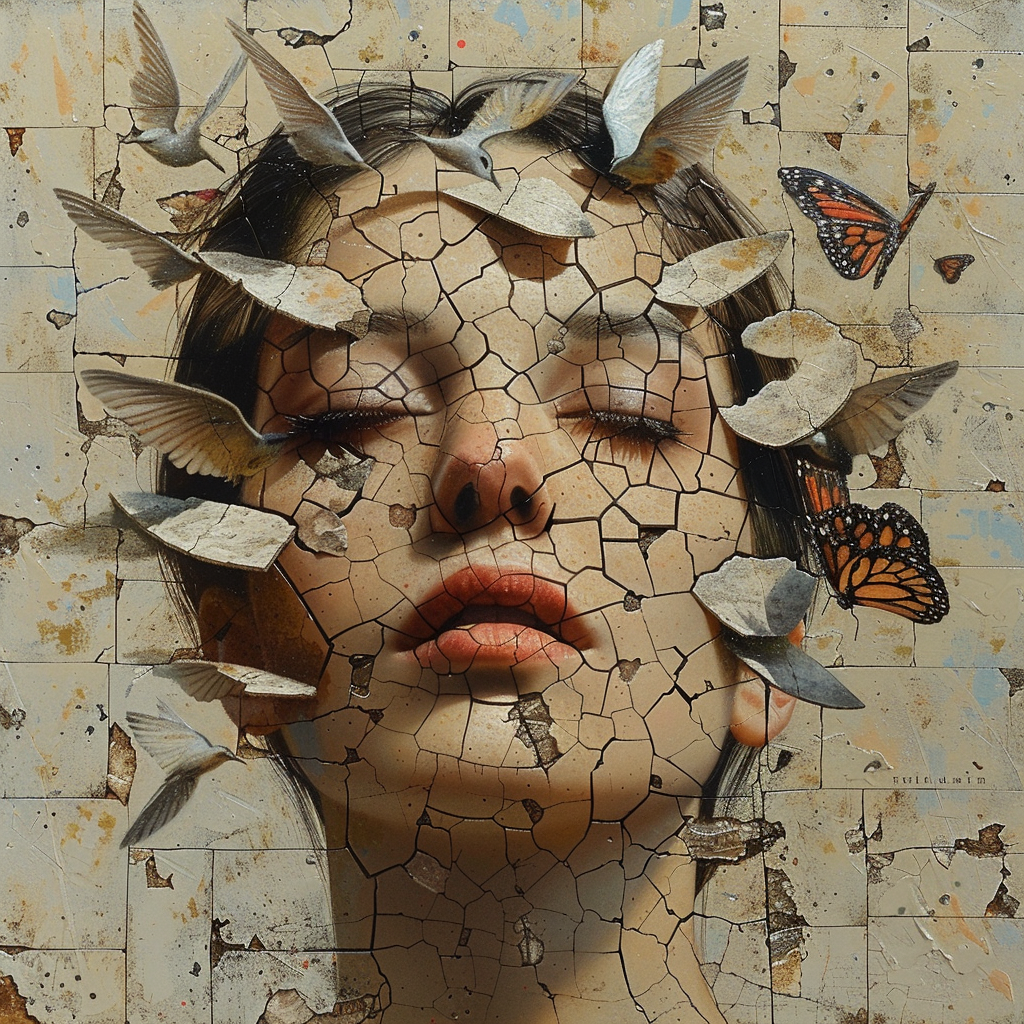
fragmentation

I jack into the metaverse, escaping the grime and drizzle of Neo-Southam for brighter worlds. But even here among the endless virtual cityscapes, I feel the isolation creep in. Millions of people logged in from around the globe, yet we slip past each other, not even making eye contact. Anonymous avatars, anonymous lives.

The non-fungible tokens and digital swag everyone flaunts seem so meaningless when all I crave is real human understanding. But where to find it? People cling to their online cliques and tribes; algorithms feeding them more of what they already think and believe. No one talks anymore across divides of ideology or experience. Too risky, too messy.

So I unplug again and again, hoping to rekindle that feeling of connection that first lured me to the promise of the net. In rainy back alleys, I search for a sense of community among outcasts and outsiders like me. I listen to their stories while warming my hands on barrel fires, finding glimmers of shared longing that cross any divide.

I know the fragmentation and polarisation infecting societies and networks can feel impossible to cure. But what if we started listening to each other again? Not arguing or judging, just listening. What if we sought first to understand, not accuse or attack? I may be just one glitch in the system, but I still believe acts of compassion can reboot even the most crashed-out worlds. One conversation, one human connection resuscitated at a time, as I try my clumsy best to stitch our fates together again. Before we all fracture beyond repair in our lonely virtual bubbles.

The Watcher

Amidst the hallowed halls of the Artis Moderna Gallery, a particularly peculiar statue catches the wandering eye—a hyper-realistic marble mannequin with a vintage 1950s television for a head.

Dubbed “The Watcher,” this sculpture tells a tale of technological existential crises and temporal nonsense. Its meticulously carved body oozes with muscular minute details and flowing stone drapery, harkening back to those happy ancient times when sculptors were still permitted to depict the human form. Where a serene face should have gazed upon the gallery’s patrons, a boxy, antiquated TV set sits in its stead. With its dials, antennas, and dead screen, the TV head seems to challenge all who meet its gaze, transmitting only one channel in its signal: “What is time, but a human construct flowing like so much particulate stone?”

Legend has it that the sculpture sprang from the disturbed dreams of a reclusive genius known only as “Vitruvius,” a noted sculptor of Roman antiquities and moonlighting TV repairman. Created during one hundred sleepless nights below the catacombs, “The Watcher” stands as his treaty on modern society’s slavish addiction to all things digital and mass media. The silent and lifeless old tube, imposing itself upon human DNA, acts here as a feverish metaphor, warning that we sculpt ourselves in the image of our creations.

In between sips of wine and uncertain glances, the gallery patrons stand mesmerised before “The Watcher’s” imposing figure. Some see within it a grave marker, declaring humanity more machine now than man, a little better than sculpted stone. Still more interpret its mixed media as a cause for celebration, the past and present conjoined inside a Trinitron twist.

Yet “The Watcher’s” true appeal lies cocooned inside its mystery. What does its stare signify? The secrets buried behind that dead channel screen flicker just beyond our comprehension, never fully tuning in, as we compose still-lives from art and technology that scatter, over time, into so much dust.

pixel storm

She gazed in wonder at the cascading pixels that fell around her. Each one glimmered with vibrant hues—ferocious reds, sunny yellows, verdant greens, and vivid blues—that blurred together like the colours of a rainbow. As they drifted down, some landed softly in her hair, feather-light pixels tangled in dark locks. She reached out a hand to touch the pixelated rain, only for the shining drops to disappear at her touch. She spun in place, a smile spreading across her face as she took in the techie charm of it all. The digital downpour fading back to reality left her feeling whimsical and longing for the beauty of a pixelated world.

No more answers will be forthcoming

I’ll tell you this, no eternal reward awaits you for wasting the dawn. You have to do what you set out to do. It bothers me that so many of the people in my life think it’s ok to waste time. I know what you’re thinking, me sitting here in another coffee shop in another town, writing this novella, that no one will read, is a waste of time. And equally, if you’ve made it to this point in the narrative, you’re wasting time too. But stick with me dear reader, go on this mind trip with me, I promise to show you, if not a good time, at least a bizarre one. Because you see the only thing worth pursuing in this lousy world is the absurd. It’s the only thing that makes sense.

“Where has God gone?” (the madman asked) “I shall tell you. We have killed him – you and I. We are his murderers.” “But how have we done this? How were we able to drink up the sea? Who gave us the sponge to wipe away the horizon? What did we do when we unchained the earth from its sun? Whither is it moving now? Whither are we moving now? Away from all suns? Are we not perpetually falling? Backward, sideward, in all directions? Is there any up or down left? Are we not straying as through an infinite nothing?”*

After God died, everything changed. God always was a bit of a hoarder, he kept all the meaning to himself stashed away up in heaven. So when he died, or rather when we killed him, we had no way to get to heaven and retrieve any of the meaning that was promised to us. It took a while to realise that if we wanted meaning, we’d have to make it for ourselves.

There were always cracks in the system. But somehow we missed or ignored the warning signs – the increased angst, dread, and anxiety – the war to end all wars, Oppenheimer’s deadly toy, women’s liberation, the sexual revolution, civil rights, Vietnam, aids, an actor playing the part of the president, a president playing God. Stop. Get grip MR Lowe, you’re spiraling out of control again.

Where was I? Yes, God. Dead. Life. Meaningless.

“No answers will be forthcoming”, said the priest who was the last human to see God alive. He then promptly committed suicide. The people were shocked. He was finally out from under God’s thumb, finally able to experience true freedom. Why would he commit suicide?

Several days later, when they were clearing his room, they stumbled upon the priest’s journal:

“There’s no way I can tell them what really happened. It wouldn’t have believed it if someone had told me. There was only one part that mattered, to me anyway. I don’t even know if I remember all of it. I can’t remember how it ended, exactly, but when it ended, I knew the question would drive me insane.”

How should I live?