A field looks different once someone tells you what happened there.
Nothing has moved. The gate still hangs badly. The hedge needs cutting. Somewhere beyond it, a tractor is getting on with the day. But a story has entered the scene, and now your attention has somewhere else to go.
We get used to places. Familiarity makes them manageable. The church becomes a turning point on the drive home. The wood becomes somewhere to exercise the dog. We learn enough about our surroundings to move through them efficiently, and much of the rest slips out of view.
Then a strange story interrupts the routine.
I like the thought of a heavy riff doing that work. Giving the familiar enough weight and menace that we have to look at it again. A song can put a troubling thought in your body before you’ve decided whether you agree with it. You can stand at a gate and think about mortality. Add an amplifier, and mortality gets a chest cavity.
There’s pleasure in that. I don’t want to turn every encounter with darkness into a diagnosis of modern life. Sometimes you want the loud guitars and the witch on the sleeve because they’re fucking great. The pleasure deserves room before we make it carry a theory.
But I keep coming back to the kind of attention this music invites.
A place can hold more than its current use. The field grows something now; it has held other lives, other arrangements, other ways of understanding what a person owes the ground. We don’t need to believe every legend to let it disturb our assumption that the present has explained everything.
Myth gives the imagination something to work with. It also gives us something to argue with.
That second part matters to me because the wish to feel rooted can become possessive very quickly. There’s a point where affection for a place starts issuing membership rules. Someone decides which ancestors count, who gets to tell the story, whose presence requires an explanation.
I want a relationship with place that makes me more curious about the people living there. If an old story helps me care for a wood, good. If it persuades me that the wood belongs spiritually to people with the correct surname, something has gone badly wrong.
And I’m wary of making the past too hospitable. An imagined village can look wonderfully whole from a distance. Get closer and there are neighbours watching, obligations you never chose, somebody deciding that your difference threatens the harvest. A community can give you somewhere to stand while making it difficult to move.
The horror earns its place there. It keeps the longing for belonging uneasy.
What interests me is the possibility of carrying that unease back into an ordinary walk. Hearing a song, then passing the same churchyard and noticing how casually we live beside the dead. Looking at a field and wondering who worked it, who owned it, who was kept out. Letting curiosity survive the end of the track.
The music doesn’t have to answer any of that. I’d rather it left a little interference in the familiar picture.
Tomorrow the gate will still need fixing. Someone will still have to cut the hedge. I like the idea that, for a few minutes before getting on with it, we might stop and listen.
When psychology replaced mythology, we traded participation for explanation. We gained a remarkable vocabulary for describing the inner life, but in the process we lost something older and more difficult to name: a felt sense of belonging inside a meaningful drama. Myth did not merely tell us what was happening; it gave us a role to play, a pattern to inhabit, a way of recognising that our struggles were part of something larger than private confusion. Psychology, for all its brilliance, often stands at a slight remove. It helps us analyse the wound, trace its origins, and identify its mechanisms. But analysis is not the same as initiation. Description is not the same as transformation. And only now are we beginning to reckon with the cost of that trade: a world full of people who can explain themselves with increasing precision, yet still do not know how to step into a story that might change them.
This is not a complaint about psychology. The frameworks we now have for understanding the inner life, for mapping personality, tracing the patterns in how we attach and protect and sabotage ourselves, naming the voices that run beneath conscious awareness, are extraordinary compared to anything available two generations ago. The vocabulary is richer. The precision is greater. The compassion built into contemporary therapeutic thinking is genuine. None of that is in doubt.
In many ways, we are more self-aware than any generation that came before us. We can identify our triggers in real time. We can name the defence as it activates, watch the pattern unfold even as we are inside it. There is a strange lucidity to modern selfhood, a capacity to observe ourselves with a kind of clinical clarity that would have been unimaginable in a mythic age.
And yet, something curious happens at that point of recognition. The insight lands, but the life does not move. You can see the pattern and still enact it. You can understand the script and still find yourself speaking the lines. The knowledge accumulates, but the trajectory remains unchanged. It is as if awareness has illuminated the structure without altering it, like turning on a light in a room whose furniture you continue to walk into.
What is in doubt, then, is not the value of understanding, but its sufficiency. Whether knowing your patterns is the same thing as being transformed by them. Whether clarity alone has the power to reorganise a life. Or whether something else is required—something closer to participation than observation, to inhabiting a different story rather than simply analysing the one you are already in.
Mythology was never primarily about explanation. That is a mistake we make because we live downstream of the scientific revolution, which installed explanation as the dominant mode of knowledge. When we look back at mythological systems — the Greeks, the Norse, the Vedic traditions, the shamanic cosmologies that preceded and sometimes persisted alongside all of them — we tend to read them as primitive attempts at what science later did properly. Proto-science. Bad explanations that served their purpose until better ones arrived.
But this misreads what mythology was for. Mythology was not trying to explain the world in the way science does. It was trying to give people a place inside it. A role. A character to inhabit. The hero’s descent and return, the underworld journey, the confrontation with the monster that turns out to hold the treasure: these were not stories about what the world contains. They were maps of what the self does when it encounters the challenges that make a life. They were participatory. They located you inside a larger story and gave you something to be.
When the secular world decided the gods were no longer credible, it handed psychology the job of filling that space. And psychology, reasonably enough, tried to do what it knew how to do: explain. Map. Name the mechanisms. Build the models. The entire ambition of modern psychology — to be a science rather than a wisdom tradition — meant it had to work in the register of description. This is what your attachment style looks like. This is what happens neurologically when you experience threat. These are the cognitive distortions running underneath your anxiety.
All of this is genuinely useful. Knowing your patterns matters. Recognising the inner critic, understanding why you pursue certain people and retreat from others, being able to name what is happening inside you in real time — all of this moves the needle.
But it does not give you a place inside a larger story. And that, I am increasingly convinced, is what people actually need. Not just to understand themselves better, but to locate themselves somewhere. To feel that their struggle has shape. That what they are going through is not random noise but something that makes sense inside a larger arc.
People come back from self-development workshops having genuinely understood something about themselves. The insights they gained are real. The framework is sound. The facilitator has done their job. For a brief moment, there is clarity—a sense that something has clicked into place, that the pattern has finally been seen for what it is.
But a few days later, they find themselves moving through the same loops, reacting in the same ways, inhabiting the same emotional terrain. Nothing, in any meaningful sense, has changed. Because understanding, on its own, does not reorganise a life.
What was missing was not more insight, but a shift in narrative gravity. Understanding without a new story to inhabit is like having a map of a country you have no intention of visiting. The map may be accurate, even beautifully detailed, but it does not move your feet. It does not place you on the road. The territory remains unknown, not because it cannot be reached, but because nothing has compelled you to enter it.
And so the gap persists. The understanding had happened. The becoming had not.
NLP was built precisely to close this gap — or at least that was the ambition. Bandler and Grinder modelled people who were demonstrably transformative: Milton Erickson working through trance and metaphor, Virginia Satir rearranging family systems through the sheer quality of her attention, Fritz Perls cracking open something in his clients that more conventional therapy had not touched. The founders of NLP watched what these people did and tried to extract the pattern. Strip out the personality, the style, the ritual, isolate what actually produces change, then replicate it.
What they captured was real. The patterns they identified — the structure of how people represent their experience, the way submodalities of internal imagery encode emotional charge, the role of language in maintaining or dissolving limiting states — these are genuine discoveries. NLP works. I have used it for two decades and I can tell you it works.
But here is what I think got lost in the translation from modelling to method. Erickson’s meandering stories, his elaborate metaphors, the particular quality of the trance he induced through the cadence of his speech — these were not decorations over a mechanism. They were the mechanism. They worked because they bypassed the analytical mind and spoke directly to the part of the self that lives inside stories. The part that does not respond to argument, to framework, to correctly identified cognitive distortion. The part that responds to narrative. To image. To symbol. To the felt sense of being located inside something that is going somewhere.
When you extract the pattern and remove the participation, you get a technique. Techniques are useful. They are not transformative in the way the original was transformative.
The alchemists had a phrase for the movement they were tracking: solve et coagula. Dissolve and coagulate. The work of transformation requires that whatever currently exists be broken down before anything new can form. The problem with purely explanatory frameworks is that they describe the composition without initiating the dissolution. You understand yourself more clearly — and the structure that needs to change remains intact. Knowledge of your cage does not open the door.
What narrative alchemy is trying to restore is the participation function. Not to replace the explanatory frameworks — the typologies, the coaching models, the neuroscience — but to add back what they leave out. The story you are living inside is not just a description. It is a set of instructions. Change the story and you change the instructions. Change the instructions and the behaviour shifts — not because you have finally analysed yourself into clarity, but because you are now inhabiting a different narrative. The self does not respond primarily to argument. It responds to the story it finds itself in.
The philosopher Paul Ricoeur spent decades making this case, quietly and precisely, in a body of work that is still underread outside academic philosophy. His argument: all self-knowledge is interpretive, and narrative is the primary medium of interpretation. We do not stand outside our lives and observe them neutrally. We are inside a story, and the story is inside us, and the two are not fully separable. Change the narrative frame and you change the interpretation. Change the interpretation and you change what is available to do.
This is not mysticism. It is not woo. It is a claim about how minds actually work — about the fact that we do not experience raw reality but always a mediated version, and that the medium of mediation is story.
Which is also why the mythic frameworks worked as well as they did. They did not give people better explanations. They gave people better stories to be inside. The hero goes into the dark not because they understand the dark but because the story requires it. The descent has meaning because the story gives it shape. Without the story, the descent is just loss. Just difficulty. Just the period in a life when everything went sideways. With the story, it is the part of the arc that precedes the return — the necessary dissolution before the new form can coagulate.
Psychology stripped out the story in its ambition to be scientific. What remained was the mechanism without the meaning. The mechanism is valuable. But people do not live in mechanisms. They live in stories. And the stories they are living in, the ones telling them they are not enough, that they missed their moment, that the best of their life is probably behind them, that who they are is fixed and known, those stories are running at full volume underneath every framework, every insight, every accurately identified pattern.
The question is not whether you understand your patterns. The question is what story you are living inside. And whether that story has the shape that growth actually requires.
That is where the work begins. Not with better analysis. With a different story.
I typed a sentence into a machine, and a video came out.
Not a description of a video. Not a storyboard. Not a request routed to some human editor working a night shift in another time zone. A video. Movement, colour, light, duration. Born from a line of text, the way a spell is supposed to work in the old stories: you speak the word, and the world rearranges itself.
I’ve been sitting with this for months now, turning it over, because something fundamental has shifted, and most of the commentary I’ve seen about it is missing the deeper signal. Everyone is talking about what these tools can do. Almost nobody is talking about what it means that text has become the universal substrate of creation.
Everything is text now.
Write a prompt, get an image. Write a prompt, get a song. Write a prompt, get a video, a website, a voice that sounds human, and an entire application that runs and does things in the world. The input is always the same: language. Words arranged with intention. Text as source code for reality.
This is not a metaphor. I’ve spent years calling stories “code” and I meant it functionally every time. But I meant it in the sense that the stories running in your psyche generate your experience of reality. That was already true and always has been. What’s new, what’s genuinely new, is that the external world has caught up with the internal one. The machines now run on the same fuel consciousness always has.
Text in, world out.
The Scribe’s Revenge
There’s a history here that most technologists don’t know or don’t care about, but it matters.
For most of human civilisation, text was power. Literally. The scribe class in ancient Egypt didn’t just record grain inventories. They mediated between the human world and the divine. To write was to make real. The hieroglyph for “word” and the hieroglyph for “to create” share the same root, and that’s not a coincidence or a poetic flourish. It’s a cosmological claim: speech and creation are the same act.
The Kabbalists understood this. The entire universe, in that tradition, is the result of divine language. Letters combining according to sacred grammar, generating reality at every level from the celestial to the material. God spoke, and it was. The Torah is not a description of creation. It is creation, still unfolding, still generative, still producing the world through its ongoing recitation.
The chaos magician understands this too, though the framing is different. A sigil is compressed text. You take a statement of intent, strip it down, reshape it into a symbol that bypasses the conscious mind, and charge it. The mechanism is linguistic at its root. You are writing something into existence. You are using text as technology.
And now the machines do it too.
I don’t think this is an accident. I don’t think it’s a coincidence that the most powerful technology humanity has ever built runs on language rather than on mathematics or physics or raw computation. Yes, there are numbers underneath. Yes, there are matrix multiplications and gradient descents and all the machinery of linear algebra. But the interface, the point of contact between human intention and machine capability, is text. We talk to these things. We write to them. And they respond by generating the world.
The scribes won. They just didn’t know the war was still being fought.
Hypertext Was the Prophecy
I remember the early web. Not with nostalgia, but with the recognition that we were looking at something and didn’t fully understand what we were seeing.
Ted Nelson coined the term “hypertext” in 1965. His vision was not the web we got. It was something stranger: a universal system of interconnected writing where every document existed in relationship to every other document, where links were bidirectional, and where the text itself was alive with connections that the reader could follow in any direction.
We built a flattened version of that. HTML. Hyperlinks. Pages that point to other pages. It was revolutionary, and it was also a reduction. But the core idea, the one that mattered, survived the simplification: text is not linear. Text is a network. Every word exists in relationship to every other word that has ever been written, and the link, whether visible or implied, is the fundamental unit of meaning on the internet.
This is what the literary theorists were talking about when they used the word “intertextuality.” No text stands alone. Every text is woven from other texts. Every sentence carries the ghost of every sentence that came before it. Meaning doesn’t live in the individual document. It lives in the connections between documents, in the web of reference and allusion and echo that no single reader can ever fully trace.
The internet made this visible. Hypertext turned a theoretical claim about language into an architecture you could click through. And now large language models have taken it one step further: they’ve internalised the entire web of text, the whole intertextual network, and they generate from within it. When I prompt an LLM, I’m not searching a database. I’m activating a pattern that exists across the totality of human writing. The response emerges from the relationships between texts, not from any single source.
The machine is the intertextuality made operational.
The Cyber Flâneur
Baudelaire’s flâneur wandered the arcades of Paris with no fixed destination, absorbing the city through attention rather than intention. He was not a tourist following a guidebook. He was not a commuter moving between fixed points. He was a consciousness in drift mode, and the drift itself was the practice. The city revealed itself to the one who moved through it without demanding that it reveal anything in particular.
I’ve been a flâneur of text for as long as I can remember. Decades of clicking through the web, not to find something specific but to see what the network would surface. Following a link from a blog post about Jungian shadow work to a forum thread about feedback loops in cybernetics to a PDF of a 1970s paper on hypertext systems to someone’s personal wiki about chaos magick. The path is the practice. The connections that emerge between apparently unrelated nodes are where the actual thinking happens.
This is how I’ve always worked. Not by sitting down with a research question and pursuing it systematically, but by wandering through text and letting the pattern recognition do its thing. The journal practice, the blog, the years of reading without a syllabus. All of it has been flânerie. All of it has been the practice of moving through text and trusting that something will crystallise.
And now the landscape has changed again.
Because the LLM is a new kind of arcade to wander through. When I sit down with a prompt and start thinking out loud, I’m not directing a tool. I’m walking through a city that’s built from every text I’ve ever read and billions I haven’t. The machine surfaces connections I wouldn’t have found on my own, not because it’s smarter but because it has access to a different geometry of the intertextual network. It sees adjacencies I can’t see. It links nodes I didn’t know were connected.
The flâneur now has a companion. And the companion has read everything.
Text All the Way Down
Here is what I think is actually happening, the thing underneath all the breathless commentary about AI productivity and the anxious hand-wringing about AI replacing artists:
We are discovering that text is the base layer of reality. Not the only layer. Not the whole story. But the generative substrate from which everything else emerges.
The mystics said this. “In the beginning was the Word.” The Kabbalists built an entire cosmology on it. The chaos magicians operationalised it. And now the engineers, without intending to, have proved it by building machines that take text as input and produce reality as output.
Image, video, audio, code, architecture, music. All of it, generated from text. All of it, downstream of language. All of it, the word made manifest through a new kind of mouth.
This should be unsettling. It should be thrilling. It should make you question every assumption you have about the relationship between language and the world.
Because if everything is text, then the question of what you write becomes the most important question you can ask. Not what you consume. Not what you scroll through. Not what the algorithm feeds you. What you write. What you speak. What you prompt into existence.
The drift culture I’ve written about before, the passive consumption, the algorithmic float, that was always a language problem. You were accepting someone else’s text as the input for your reality. Their prompts, their narratives, their code running on your hardware.
Outcome thinking, self-authorship, narrative alchemy: these were always about reclaiming the prompt. Writing your own input. Choosing the text that generates your world rather than letting the feed write it for you.
The technology just made the mechanism visible.
The Prompt Is the Spell
I keep coming back to this convergence. The chaos magician who writes a statement of intent. The flâneur who wanders through text and lets meaning emerge. The blogger who treats writing as a sacred practice. The technologist who types a sentence and watches a world appear.
They’re all doing the same thing. They’re all working with text as generative technology. The medium changes: parchment, hyperlink, command line, chat interface. The principle doesn’t.
You speak, and something comes into being. You write, and the world responds. Not metaphorically. Not eventually. Now. Immediately. Visibly.
The question was always: what are you going to write?
It’s just that the stakes are higher now, because the machines are listening, and they will build whatever you ask for.
Choose your prompts carefully. They are, in the oldest and most literal sense of the word, spells.
This is part II of The Spreader, a psychological horror/speculative fiction story I started at the tail end of last year. If you haven’t read part one, here’s the link. I decided to use an interactive format for Part II.
Spreader Part 2 - Interactive E-Book
Spreader Part 2
An Infection of the Mind
Narrative Alchemist
1 / 0
Use arrow keys to navigate • Left/Right or scroll to turn pages
‘Nam Sibyllam quidem Cumis ego ipse oculis meis vidi in ampulla pendere, et cum illi pueri dicerent: Σίβυλλα τί θέλεις; respondebat illa: ἀποθανεῖν θέλω.’
Translation:
“For I myself saw the Sibyl of Cumae with my own eyes hanging in a jar, and when the boys asked her: ‘Sibyl, what do you want?’ she replied: ‘I want to die.’”
This line is the epigraph of T.S. Eliot’s The Waste Land.
Who is the Sibyl of Cumae?
The Sibyl was an ancient prophetess, most famously associated with Apollo. The Cumaean Sibyl appears in Virgil’s Aeneid, where she guides Aeneas through the Underworld. But over time, her myth twisted into something more tragic.
According to legend (and captured in Petronius’s Satyricon, from which this quote is lifted), the Sibyl asked the gods for eternal life—but forgot to ask for eternal youth. So she aged… and aged… and aged. Eventually, her body shrivelled to the size of a locust, and she was kept in a glass jar (ampulla), hanging in a temple, whispering prophecies.
Long ago, before the first compass was carved from bone and star, the world was not unmapped—it was overwatched.
Not by gods, no. By something stranger.
They called them Shimmer-Seers.
You wouldn’t have noticed them in the villages or cities, for they walked with dusty boots and quiet eyes, often mistaken for fools, madmen, or vagabonds. But these wanderers bore an inner flame—the uncanny ability to see the shimmer. A ripple in the air. A tremble on the skin. A glint in the dust of an old trail no longer walked. While others followed roads etched by rulers and tyrants, the Seers followed something subtler. Something truer.
And the shimmer? It was never there—not in any cartographer’s ink, nor in the hard lines of border and empire. It was an invitation, not a direction. A beckoning flicker that revealed itself only when one had shed the maps of the mind, burned the blueprints of expectation, and stared long enough at the world until it blurred and came alive.
There’s a tale still whispered in backrooms and borderlands, traded in fragments like forbidden coin.
It tells of a nameless child born with eyes of liquid silver. The villagers feared him. They said he spoke in symbols and wandered too far into fog. When he vanished at thirteen, some swore they saw a shimmer swallow him whole near the ruins of the old observatory. Others said he had simply wandered off the edge of the known.
But every decade, at the turn of a dark moon, strange glyphs appear carved in stone near the place he vanished. No language anyone knows. Just marks that pulse slightly if you look out of the corner of your eye.
They say that child became a Mapmaker of the Invisible, drawing maps not with ink but with myth—tales encoded with pathways. If you listen carefully, they say, the right story will open a door.
See, here’s the truth you won’t hear in universities or strategy rooms:
The map isn’t for everyone.
It cannot be taught, only caught—like fire in dry brush, like a whisper in a dream.
Those who try to force it find only static. Those who seek it out of greed or conquest see only mirages, ever-shifting. But those who can see the shimmer—they understand. The map is a living thing. It reshapes itself in response to your becoming.
Each step alters it.
Each question redraws it.
To see the shimmer, you must unlearn the road.
You must sit with silence until it speaks back in patterns.
You must listen to the stories between the stories.
You must look at a broken mirror and recognise the constellation hidden in its shards.
I met a shimmer-seer once. Or maybe she met me.
She had feathers in her coat and dirt beneath her fingernails. She smelled of sage and rust. We were sitting by a fire made of bonewood in the ruins of a forgotten train station. She told me maps were never meant to guide everyone—only to awaken the ones ready to remember.
“Most people want a path,” she said. “But the shimmer offers a question.”
She passed me an old coin. Blank on both sides. “This will get you nowhere,” she said, “but keep it close. When the shimmer comes, you’ll know what it means.”
Then she vanished. Not with a bang or spell, but as if I had merely blinked and rewritten the scene.
The shimmer isn’t always obvious. Sometimes it’s a flicker in a stranger’s eyes. Sometimes it’s a phrase that feels older than you are. A crow that lands just so. A door that creaks open on a street you thought you knew.
It might look like madness. It might feel like déjà vu threaded with electricity.
But if it comes to you—if it finds you—know this:
You’ve been invited.
To see the map.
To step off the path.
To become a myth in motion.
The shimmer doesn’t seek the clever or the brave—it seeks the ones willing to see sideways. The ones who know that the true terrain is not laid flat upon the earth, but woven into the air, the memory, the dream.
So fold your old maps. Light them if you must.
Then walk.
Not forward.
But inward.
And listen.
Because somewhere, just ahead and slightly to the left of logic, the shimmer waits—like a forgotten song that hums in your bones, whispering:
The map isn’t for everyone.
But you—you were born with the shimmer in your eyes.
The Matrix is a system, Neo. That system is our enemy. But when you’re inside, you look around, what do you see? Businessmen, teachers, lawyers, carpenters. The very minds of the people we are trying to save. But until we do, these people are still a part of that system and that makes them our enemy. You have to understand, most of these people are not ready to be unplugged. And many of them are so inured, so hopelessly dependent on the system, that they will fight to protect it.
If you are not one of us; you’re one of them…they are everyone and they are no one…they are the gatekeepers…they are guarding all the doors…they are holding all the keys…
A question I’ve been mulling over is whether AI’s role in our mythic journey a Pandora or Prometheus, first I wanted to examine the original myths. Last week, I explored Pandora’s Paradox: The Curse, the Gift, and the Mystery of Hope. And now Prometheus. He features in popular culture a lot, most recently in the Netflix series KAOS. So here’s my retelling of hid story.
The story of Prometheus is one of defiance, sacrifice, and the unbreakable spirit of resistance against tyranny—qualities that have made him a symbol of human creativity and rebellion across centuries.
Prometheus was one of the Titans, the primordial beings who ruled before the Olympian gods came to power. Unlike his Titan kin, Prometheus was a friend to humanity. He looked upon mortals with empathy and saw their struggles in a world often ruled by fear and darkness. Prometheus became their benefactor, teaching them various arts, sciences, and skills to elevate their condition. He taught them architecture, medicine, navigation, and most notably, he gave them the gift of fire.
But the gift of fire wasn’t a mere passing down of knowledge; it was an act of cosmic rebellion. Zeus, the king of the gods, had forbidden humans from possessing fire. In his eyes, fire was too powerful a tool for mortal beings and would make them too independent, too close to the gods in their capacity for creation and destruction. Yet Prometheus saw this differently. He believed that humanity deserved the chance to rise, to learn, and to create. So, he stole fire from the forge of Hephaestus, the god of craftsmanship, and carried it down to earth, igniting the first flame for humanity.
With fire, humanity experienced an awakening. They were no longer bound by the natural cycles of day and night or reliant on the mercy of the gods for warmth and food. Fire brought with it possibilities for invention, survival, and progress. It was the spark that allowed humans to dream beyond survival.
However, Zeus was furious when he discovered Prometheus’ transgression. For defying his orders, Zeus exacted a punishment that would serve as a cautionary tale for anyone—god or mortal—who might dare to defy him. He ordered that Prometheus be bound to a rock on Mount Caucasus, a remote and desolate place, where he would suffer daily torment. Each morning, an eagle, Zeus’s emblem of power, would swoop down and tear into Prometheus’ flesh, eating his liver—a particularly excruciating form of torture since the liver would regenerate overnight due to Prometheus’ immortality.
Yet Prometheus did not repent. His act of defiance was born out of love for humanity and a belief in their potential. His suffering became a kind of eternal protest against tyranny and cruelty. Bound but unbroken, Prometheus endured his punishment as a silent declaration that some things are worth suffering for, that some causes transcend even the godly order.
Interestingly, Prometheus’ story has a twist: he possessed knowledge of a prophecy that would one day threaten Zeus’s own rule. Zeus eventually struck a bargain with Prometheus, offering him freedom in exchange for this knowledge. In some versions, it is Hercules, Zeus’s son, who ultimately frees Prometheus as part of his own heroic journey, shooting down the eagle and shattering Prometheus’ chains. Thus, the god of foresight (for Prometheus’s name means “forethought”) was freed, though his tale of sacrifice and defiance left an indelible mark on the human spirit.
Prometheus has since been celebrated in art, literature, and philosophy as a champion of enlightenment and knowledge. His story echoes in the idea that knowledge is power and that some things are worth standing up for, even against the most formidable forces. Through his act of rebellion, Prometheus embodies the human spirit’s insatiable curiosity, creativity, and resistance against oppression—a story that reminds us that, in every age, there are those willing to suffer for the light they bring into the world.
Note: I need to tell you Pandora’s story. It’ll make sense later why I’m telling you her story now.
The story of Pandora, one of Greek mythology’s most intriguing tales, begins with a divine act of revenge. The gods, irked by the trickery of Prometheus, the Titan who stole fire from Olympus and gifted it to humanity, decided to create something they thought would be humanity’s undoing. This “gift” would forever alter the world of humans and gods alike.
Zeus, ever the strategist and mindful of Prometheus’ disobedience, hatched a plan to even the score. He instructed Hephaestus, the blacksmith god, to sculpt a woman from clay. This woman, Pandora, was to be as beautiful as she was dangerous—a mix of divine attributes and mortal susceptibility. She was to embody everything alluring and irresistible, a kind of divine honeytrap, yet with an underlying layer of mystery and unknown consequence.
With the help of the other Olympian gods, Pandora was endowed with various “gifts” that would make her impossible to ignore. Aphrodite gave her beauty; Athena imparted skill and wisdom; Hermes gifted her a cunning mind and an eloquent tongue. Each god, in their own way, contributed to the creation of Pandora, whose name itself means “all-gifted” or “the one who bears all gifts.” But it was also Hermes, with Zeus’ direction, who slipped into her a touch of curiosity—a trait both seemingly innocent yet deeply transformative in the story.
Upon her creation, Pandora was presented to Epimetheus, Prometheus’ unsuspecting brother. Though Prometheus had warned him not to accept any gifts from the gods, Epimetheus couldn’t resist Pandora’s charm and beauty. He welcomed her into his life without questioning the consequences, and with that act, the stage was set for one of mythology’s most famous unravelings.
In some versions of the story, Pandora was given a jar (later mistranslated as a box) as part of her dowry. This jar was sealed, and she was told never to open it. Yet, as the days passed, curiosity gnawed at her—a small but persistent desire to know what lay inside. It was, after all, the very quality the gods had infused into her soul. Curiosity became unbearable, and one fateful day, Pandora succumbed to it.
As she lifted the lid, the air filled with a dark, swirling torrent. Out poured all the evils the gods had kept bottled up: disease, despair, greed, jealousy, and anger, all the suffering and miseries that had never before plagued the human race. The horrors spread like wildfire, seeping into every crevice of the human experience. Shocked and terrified, Pandora quickly tried to close the jar, but it was too late. Almost everything had escaped.
Almost.
One thing remained inside the jar. As Pandora cautiously opened it one last time, out drifted the final occupant: hope. Fragile, quiet, and seemingly small in comparison to the horrors unleashed before it, hope emerged. And therein lies one of the story’s great mysteries: what is hope doing among all these woes? Is it a balm for the wounded spirit, something to ease human suffering and inspire resilience? Or is it itself a further curse, prolonging the agony by keeping us striving, expecting, and dreaming even in the face of impossible odds?
Pandora’s story has been interpreted in countless ways. Some see it as a warning against curiosity or disobedience, a reflection of ancient beliefs about the dangers of knowledge without wisdom. Others see Pandora as a symbol of human complexity—a figure who embodies both the beauty and peril of exploration. She stands as a reminder of our own duality: our thirst for understanding, even at the cost of our own peace, and our need for hope, even when it can lead us into uncertain territory.
For all her tragic legacy, Pandora is also, perhaps, a hero of sorts. She brought into the world not just suffering but resilience. Hers is a story of the Pandora we all have inside: a restless, questioning spirit, a spark of divine curiosity, and the paradoxical promise of hope amidst all that might bring us low.
Who put hope into the jar? The great mystery…
The mystery of who placed hope into Pandora’s jar is one of the most fascinating questions in Greek mythology, and it’s a subject of ongoing debate among mythologists. In most versions of the story, the gods collectively contributed to the jar’s contents, with Zeus leading the charge. The jar was filled with all the miseries, plagues, and evils that would haunt humanity: disease, despair, jealousy, and anger. But hope—elpis in Greek—was something quite different from the other contents, which raises the question of whether it was meant as a curse or a blessing.
Some interpretations suggest that Zeus himself included hope in the jar as a kind of cruel irony, intending it to be an extension of human suffering. This perspective argues that hope can keep humans striving, longing, and expecting change even when circumstances are grim, almost as if hope prolongs suffering by creating an attachment to a better future. It keeps humans clinging to life and struggling on, even when all seems lost—an especially complex form of punishment if intended as such.
Others believe that a more compassionate god or goddess may have slipped hope into the jar as an antidote to the despair that would escape. Some versions suggest Athena or Hermes, gods known for their wisdom and mercy, may have been responsible. Here, hope is seen as a gift of resilience, a small but powerful counterbalance to the otherwise bleak contents of the jar, giving humans something to hold onto even in their darkest moments.
Hope’s presence in the jar remains a mystery. Was it a form of divine mercy hidden amidst punishment? Or a curse designed to keep humans clinging to dreams that may never come to pass? The ambiguity of hope’s origin reflects the ancient Greeks’ nuanced understanding of the human experience. Perhaps, like Pandora’s own nature, hope was meant to be a mixture of blessing and curse—an enigmatic force that both sustains us and leaves us vulnerable to perpetual longing.
So, the question remains tantalisingly open, leaving room for interpretation. And maybe that’s exactly the way the ancient storytellers intended it: an unanswered question at the heart of one of humanity’s oldest stories about itself.
In the heart of an ancient forest, where the trees whispered secrets older than time and the air hung thick with the scent of moss and loam, there walked a figure both strange and familiar. He moved with the silence of a stag in winter, yet his presence made the earth hum beneath his feet. His antlers, vast and curling like the branches of an ancient oak, caught the moonlight as he passed. This was Cernunnos, the Horned God—guardian of the wild places and lord of all that lives and dies beneath the canopy of stars.
Cernunnos is no ordinary god, though his name is rarely spoken aloud in modern times. He belongs to the old stories, the ones that live on in the bones of the earth and the deep memory of rivers. The Celts knew him well. He was the pulse of life in the forest, the quiet breath of the woods at dawn, the rustle of leaves in the twilight. He was, and is, everywhere and nowhere, a liminal figure who walks the line between worlds.
Picture him, seated in the clearing of a forest untouched by time. His body, muscular and powerful, speaks of the raw, untamed force of nature itself. His antlers crown him, a symbol of both his dominion over wild creatures and the sacred cycles of growth and decay. To look at him is to see a being who understands the ways of the forest—the life that thrives in the thick underbrush, the death that returns to the soil to nourish what comes next.
In his presence, animals gather—wolves, deer, bears, and serpents. They do not fear him, for he is their protector and kin. Cernunnos is not a ruler in the way we understand kings; he does not command. Rather, he is the force that binds all things, the unspoken agreement between predator and prey, between life and death. His gaze is both gentle and fierce, a reminder that the wild, though beautiful, is also filled with teeth and claws.
One story tells of Cernunnos watching over a lone wolf as it roams the forest, hunting in the long shadows of dusk. He does not interfere, for he knows that life and death are two sides of the same coin. He understands the balance, the endless cycle. The antlers he wears are not just adornment—they are a symbol of the cycle itself. Each year, the stag loses its antlers and grows them anew, a reminder that death is not an end, but a transformation.
And this is Cernunnos’s deepest truth. He is the god of the spaces in-between, of thresholds and transitions. Life and death, man and beast, the wild and the civilized—all find their meeting place in him. His antlers stretch toward the heavens, but his feet are rooted in the earth. He straddles the divide between what is known and what remains a mystery, reminding us that there are forces in this world we cannot control, and perhaps shouldn’t.
Cernunnos is a god of the wild places, but he is also a god of us. For aren’t we, in some way, wild too? Beneath the veneer of our modern lives, don’t we still feel the call of the woods, the pull of something untamed and instinctual? Cernunnos whispers to that part of us—the part that knows we are connected to the earth, to its rhythms, to its life and death.
In the myths, he is often silent, yet his presence speaks volumes. He stands as a guide to those brave enough to venture into the dark forests of their own souls, to confront the untamed aspects of their nature. The forest is not always safe, and neither are we, but Cernunnos reminds us that there is beauty in this wildness too. He does not ask us to tame ourselves, but to remember that, like the stag, we are part of a greater cycle. We grow, we shed, we are reborn.
To follow Cernunnos is to walk in step with nature itself—to honor the wildness within and around us. It is to know that, like the forest, we too have seasons of growth and rest, death and renewal. We too are part of the dance of life, and we too wear antlers, whether we see them or not.
And so, Cernunnos continues to walk the ancient forests, a figure of eternal youth and ancient wisdom, watching over the cycles of the earth, reminding us of the deep, untamed magic that flows beneath our feet, if only we listen.
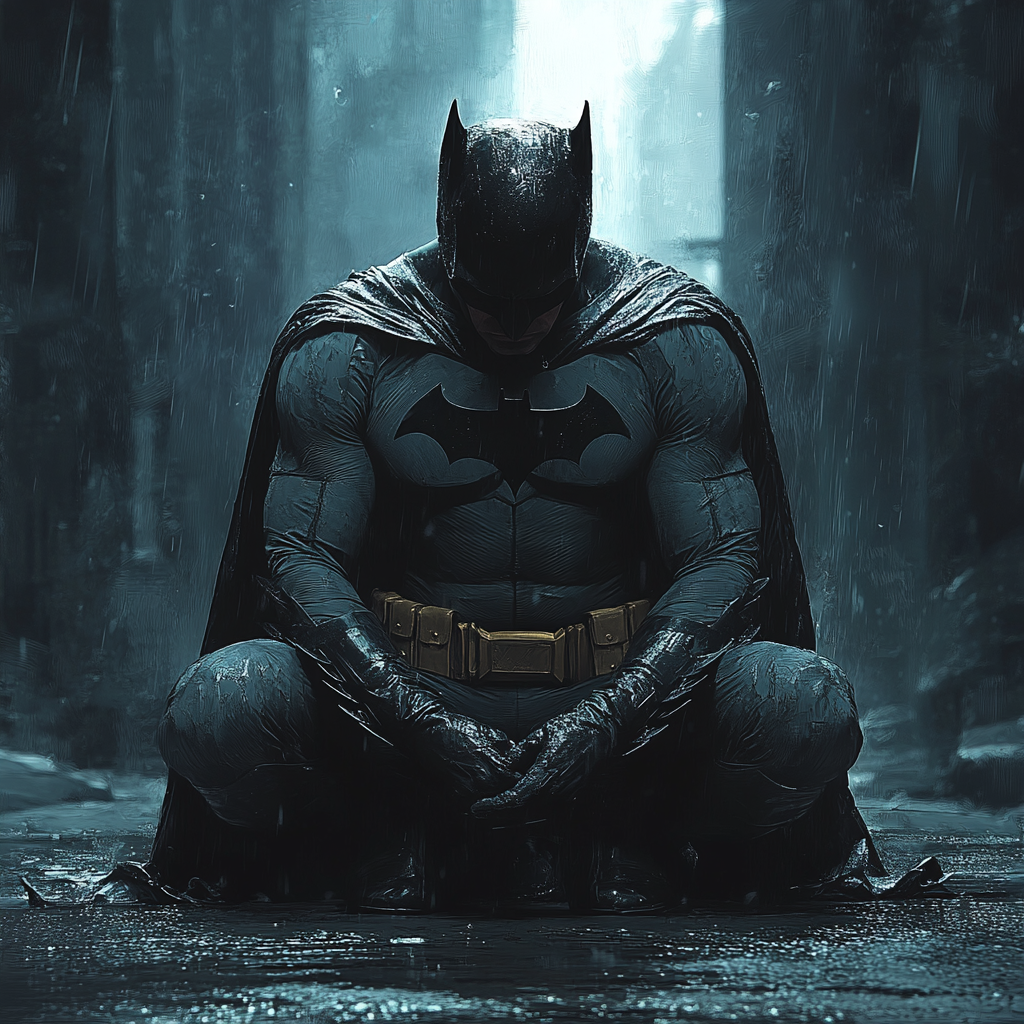
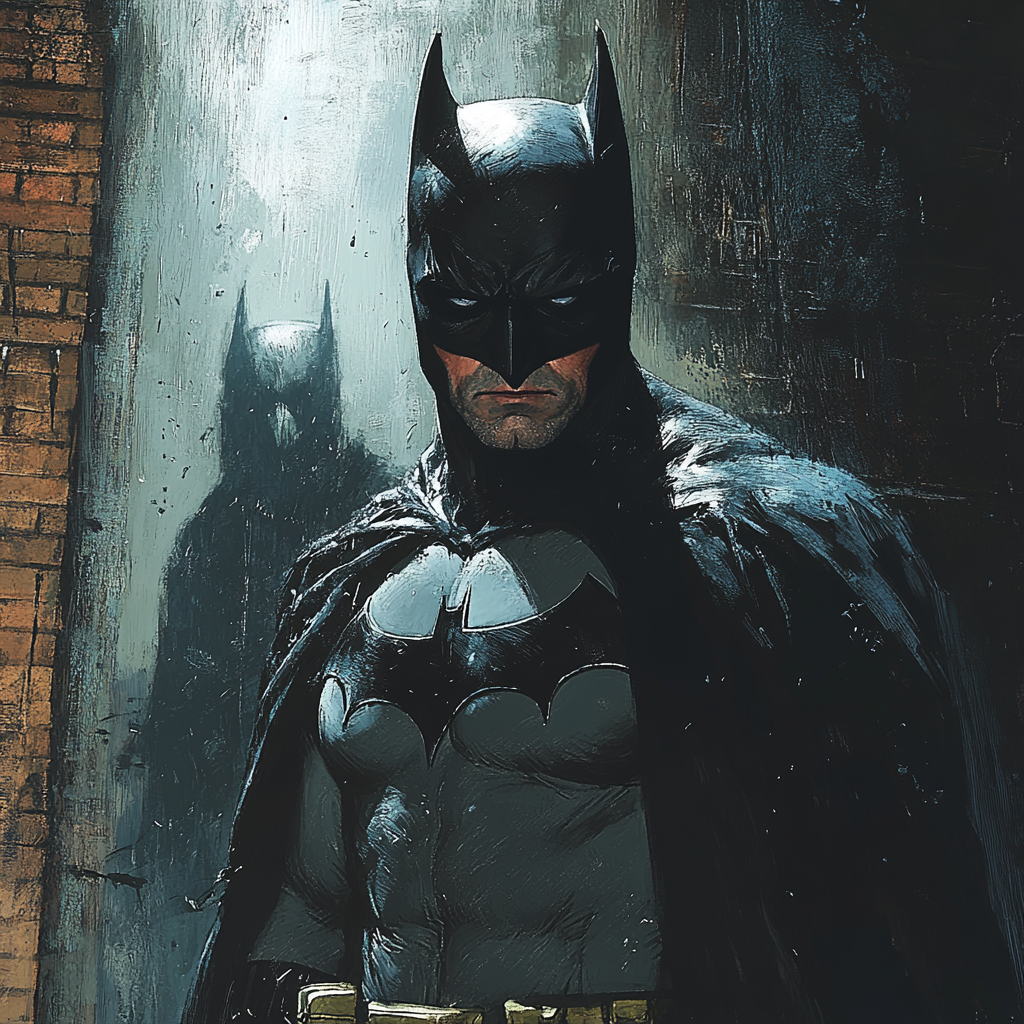
Batman has long stood as a symbol of resilience, justice, and the power of human will. Cloaked in darkness, he’s a hero who walks the line between vigilante and saviour, refusing to stray too far into the light or the shadow. But beneath the mask, Bruce Wayne is a man shaped by trauma—an orphan who witnessed the brutal murder of his parents and who, as a result, was thrust into a lifelong battle with his inner demons. What sets Batman apart from other heroes is that his strength doesn’t come from superhuman abilities but from his woundedness. He is, at his core, a wounded hero, an archetype that has echoed through mythology and depth psychology for centuries.
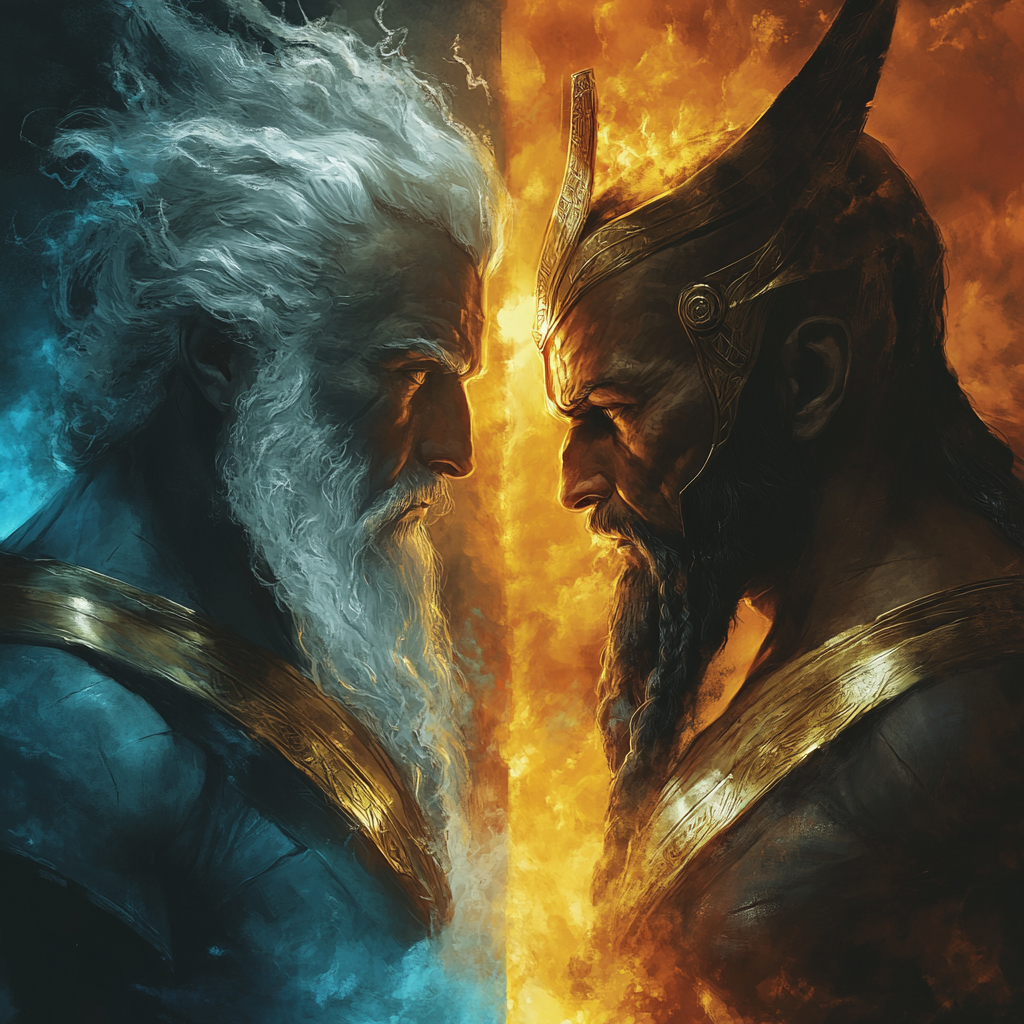
In this way, Batman joins a pantheon of mythic figures like Hades and Osiris—gods who are comfortable navigating the liminal spaces between life and death, light and shadow. Both Hades, the ruler of the underworld, and Osiris, the god of death and resurrection, embody the kind of archetypal journey that Batman undertakes. They each dwell in realms where the veil between worlds is thin, where life’s darkest truths must be confronted in order to transform and gain wisdom. Batman, too, exists in this space, constantly drawn into the depths of Gotham’s underworld, both literally and metaphorically.
As we explore the idea of Batman as the wounded hero, we’ll look at how his trauma serves as a gateway to the archetypal shadow realms that mythological figures like Hades and Osiris represent. We’ll also see how his story reflects the universal human experience of living in that tension between light and dark, order and chaos, wholeness and fragmentation. This archetypal resonance is what makes Batman not just a symbol of justice but also a figure deeply connected to our collective unconscious—a hero who, despite his wounds, rises again and again to fight the darkness.
The Wounded Hero Archetype
At the heart of every myth, there is a wound—a pivotal moment of trauma that shapes the hero’s journey. In the world of archetypes, the wounded hero represents the figure who has suffered deeply, yet channels that suffering into a higher purpose. Carl Jung described archetypes as universal symbols or motifs that recur throughout the collective unconscious, and the wounded hero is one of the most profound. This archetype embodies the paradox that, through wounding, one is forged into a hero—brokenness becomes the source of power, insight, and transformation.
Batman is perhaps one of the clearest modern embodiments of the wounded hero. His story is inseparable from the tragedy that defines him: the death of his parents, gunned down in front of his young eyes in a senseless act of violence. This trauma doesn’t just propel Bruce Wayne into the vigilante life; it becomes the wound he carries for the rest of his days. It’s his burden, his drive, and his raison d’être. Batman’s entire mission—the protection of Gotham—is rooted in his unresolved grief and pain, and this is precisely what makes him a wounded hero. Unlike many superheroes who thrive in the light of their powers or victories, Batman is continuously shaped by his shadows.
In mythology, the wounded hero archetype often manifests in gods and figures who endure immense suffering but emerge with a new kind of wisdom or power. Take, for instance, the myth of Osiris. He is a god who was once whole, only to be brutally murdered and dismembered by his brother Set. His pieces were scattered across the world, and it was only through the tireless efforts of his wife, Isis, that he was reassembled and brought back to life. But even in his resurrection, Osiris was changed—he became the ruler of the underworld, forever marked by his death, yet transformed into a powerful figure of judgment and renewal.
Like Osiris, Batman is perpetually marked by his trauma. His mission to rid Gotham of its darkness is both an external and internal battle—a fight to keep the chaos of the world at bay while managing his own internal shadows. The same principle applies to Hades, who, though not a hero in the traditional sense, rules over the dead in a world of darkness, presiding over what most fear to face: the finality of death and the unknown. Hades does not fear the shadows; he lives within them, much like Batman.
The wounded hero archetype, then, is not about overcoming trauma in the traditional sense—it’s about living with it, transforming it into something powerful. Batman, like Hades and Osiris, walks this line between destruction and renewal. His wound never heals, and in many ways, it isn’t supposed to. It’s a sacred wound that allows him to be the dark protector Gotham needs, and this unresolved pain is what connects him to the mythic archetype of the wounded hero. His power isn’t his physical strength or intellect; it’s his ability to carry his wound and use it as the fuel for his mission.
In Jungian terms, the wounded hero is a figure who integrates their shadow—those darker, unresolved parts of the psyche. Batman’s relentless pursuit of justice is as much an attempt to reconcile his inner darkness as it is to bring order to the streets of Gotham. It’s this delicate balance between light and shadow, trauma and heroism, that makes the archetype so compelling, not just in mythology but in the way it resonates with our own lives.
We all carry wounds, and like Batman, we’re faced with the choice: do we allow our wounds to define us, or do we find a way to transform them into our strength?
Batman’s Trauma: The Catalyst for the Heroic Journey
Batman’s origin story is one of the most compelling in modern mythology, not because it involves cosmic battles or godlike powers, but because it’s rooted in a simple, devastating moment: a child losing his parents. This trauma—Bruce Wayne witnessing the brutal murder of Thomas and Martha Wayne—becomes the defining event of his life. It’s not just a loss; it’s the birth of Batman. The pain and fear that young Bruce felt in that alley never fade, but rather evolve into the fuel that drives him forward. In many ways, this trauma is not something that can be healed—it becomes a companion that informs his mission, his identity, and his methods.
In psychology, trauma often manifests as a split, a fragmentation of the self. For Bruce, this split creates the dual identity of Bruce Wayne, the billionaire playboy, and Batman, the dark vigilante. This division reflects the deep internal rift caused by his trauma, a rift that echoes through every action he takes. Unlike many heroes, Batman doesn’t possess an inherent sense of invulnerability or hope. His heroism is forged in the fires of loss, and this makes him a complex, sometimes contradictory figure. He’s not saving Gotham to fulfill an abstract ideal of justice—he’s trying to prevent the city’s dark underbelly from creating more victims like himself.
Where many mythic heroes are driven by quests of discovery or transformation, Batman’s journey is more about containment. He’s not trying to conquer an external enemy; he’s attempting to manage the internal chaos that was unleashed the night his parents died. His trauma never fully resolves, but it transforms into something larger than himself—a mission to bring order to the chaos of Gotham’s streets. This mission, however, is not one of pure altruism; it’s deeply personal. Every criminal he apprehends, every villain he faces, is in some ways a symbolic confrontation with the forces of darkness that took his parents from him.
This is where Batman’s path diverges from that of other mythic figures. In mythology, the hero’s journey often involves crossing thresholds, confronting external trials, and emerging changed on the other side. In contrast, Batman’s journey is cyclical—there is no final battle, no decisive victory. Instead, his fight is ongoing, endless, as he constantly returns to the same darkness that created him. His trauma acts as both a wound and a compass, forever guiding him back to the streets of Gotham, where the line between good and evil is blurred.
While mythological figures like Osiris undergo literal death and resurrection, Batman’s transformation is psychological. After the death of his parents, Bruce Wayne essentially “dies” as well, and from that death, Batman is born. But unlike Osiris, who is reassembled and made whole, Bruce never fully recovers from his dismemberment. He exists in a permanent state of fragmentation, with Batman representing the shadow self that rises from his wound. His mask is more than just a disguise—it’s a manifestation of his internal split, allowing him to function in a world where his trauma is both his greatest strength and his deepest vulnerability.
Batman’s trauma also places him in direct opposition to many of his adversaries, who are often twisted reflections of his own darkness. Characters like the Joker or Two-Face represent what happens when trauma consumes an individual entirely. They are the embodiment of chaos, reminding Batman that he is always on the brink of becoming what he fights against. This dynamic is central to his journey—his trauma not only shapes his mission but also keeps him in constant tension with the forces of disorder that he seeks to control.
In many ways, Batman’s journey mirrors that of Hades, the god who presides over the dead but is never truly part of the world of the living. Batman operates in the shadows, and while he protects the living, his life is one of isolation and darkness. Gotham itself becomes a kind of underworld—full of corruption, crime, and chaos—that only Batman can navigate. He is both the protector and the prisoner of this world, unable to escape its grip because it is tied to the wound he carries.
Unlike mythic heroes who seek resolution or transcendence, Batman knows that his trauma cannot be undone. His role as Gotham’s guardian is not about healing—it’s about control. He cannot stop the darkness within himself, but he can channel it, direct it, and use it to prevent others from experiencing the same pain. This is the paradox of the wounded hero: Batman’s greatest strength comes from his wound, but it is also the source of his unending struggle. There is no final victory, no moment of triumph—only the constant return to the shadows.
Batman as a Liminal Figure
One of the most fascinating aspects of Batman’s character is how he exists in a liminal space—a realm that lies between the clear boundaries of light and dark, good and evil, life and death. Liminality, in myth and psychology, refers to the threshold between two states of being, a place where transformation occurs but is never fully resolved. Batman, more than almost any other hero, embodies this liminality, constantly navigating the grey areas of morality, law, and identity.
Unlike heroes like Superman, who represent the clear light of idealised justice, Batman operates in the shadows, both literally and metaphorically. He is not a symbol of pure goodness, nor is he an agent of chaos like his arch-nemesis, the Joker. Instead, Batman treads the fine line between order and disorder, justice and vengeance. This makes him a liminal figure, one who thrives in the in-between spaces where the usual rules of morality and law no longer apply.
In myth, we often see liminal figures in gods and beings who dwell at the edges of the known world, like Hades. He exists apart from both the living and the dead, ruling over a shadowy domain that is neither here nor there. Like Hades, Batman is comfortable operating in the unseen, hidden corners of Gotham City, a place of corruption and crime where the law struggles to maintain control. But unlike Hades, who reigns over the dead with cold detachment, Batman actively engages with this world, striving to impose his own sense of justice within it.
Similarly, Osiris embodies liminality through his own transformation. After his death and resurrection, Osiris does not return to the land of the living but instead becomes the ruler of the underworld, a place where life and death intermingle. In the same way, Batman never truly exists in the daylight world of Bruce Wayne. Even when he walks among Gotham’s elite as a billionaire, his true self remains in the shadows, bound to his identity as the Dark Knight. Like Osiris, Batman has been forever changed by the trauma he endured, and this transformation leaves him unable to fully return to the world of the living.
Batman’s liminality is not just about his relationship to Gotham’s criminal underworld; it’s also reflected in his complex moral code. He follows a strict rule never to kill, which separates him from the villains he fights, but his methods are often violent, brutal, and psychologically taxing. This tension between upholding justice and flirting with the darker impulses of vengeance is what makes him such a unique figure among superheroes. He refuses to cross certain lines, yet he constantly tests their boundaries, often operating outside the law to achieve his goals.
This moral ambiguity places Batman in stark contrast to heroes who follow clear, idealised codes of conduct. His world is not one of black-and-white choices but of difficult, sometimes morally grey decisions. For example, he works alongside police commissioner Jim Gordon but refuses to be constrained by the rules of the legal system. This liminal space allows him to pursue justice on his own terms, without the restrictions that bind others. It’s what makes him both a hero and an outlaw, a figure trusted by Gotham’s citizens yet feared by its criminals.
Yet Batman’s liminality also comes at a cost: isolation. Much like Hades, who is cut off from the world of the living, Batman’s constant dwelling in the shadows leaves him distanced from those he cares about. His relationships are strained because of the double life he leads, and even his allies, like Alfred and Gordon, can only support him from a distance. He is a protector, but one who is perpetually alone, caught between two worlds that he can never fully belong to—Bruce Wayne’s world of privilege and Batman’s world of darkness. This duality is the core of his struggle.
In many ways, Batman’s identity is defined by his ability to navigate these in-between spaces. His strength comes not from his ability to overpower enemies but from his comfort in uncertainty, in ambiguity. He operates where others fear to tread, engaging with the shadowy parts of the human experience, both in the criminals he faces and in his own psyche. Batman’s true superpower is his ability to move fluidly between these worlds, embodying the archetype of the liminal figure—a hero who, like Hades or Osiris, can dwell in the dark without losing sight of the light.
This constant dance between light and shadow is what makes Batman so compelling as a modern mythic figure. He is the embodiment of the grey areas that we all inhabit—the place where our fears, desires, and moral dilemmas collide. Batman’s liminality makes him relatable on a deeply human level. We, too, must often navigate the spaces between right and wrong, light and dark, grappling with the tension between who we are and who we aspire to be. And like Batman, we must learn to walk the line, finding our strength not in purity or perfection, but in our ability to hold these opposites in balance.
Hades and Osiris: Gods of the Shadow and the Underworld
Batman’s character has often been compared to mythological figures, but few parallels are as striking as those with Hades and Osiris, both of whom are gods of the shadow, rulers of realms beyond the living. While Batman is no god, his embodiment of shadow work, trauma, and his place in Gotham’s underworld closely aligns him with these ancient figures. Both Hades and Osiris reign over domains that are hidden from the light, where transformation occurs not in life, but through death, destruction, and rebirth. In many ways, Batman shares their dominion over the darker aspects of existence—he is not a figure of pure light but a guardian of the liminal spaces where life and death, good and evil, intertwine.
Hades: Lord of the Unseen
Hades, the Greek god of the underworld, is not often portrayed as a villain, but he is undoubtedly a figure of mystery and shadow. As the ruler of the dead, Hades’ domain is beneath the surface, both literally and figuratively. He reigns in the underworld, a place of finality and separation from the living world above. Much like Batman, Hades is often misunderstood. He is not evil, but he is feared, and his role as lord of the dead places him at the edge of the known world, where most mortals dare not go.
Batman, too, inhabits this hidden, shadowy realm. His Gotham is not the bright, hopeful city depicted in the daytime; it is a place of crime, corruption, and fear, especially when the sun sets. Like Hades, Batman rules over this underworld, not with cruelty but with a sense of responsibility. He becomes a protector of those who live in fear of the chaos lurking in the city’s dark corners. But, unlike the bright, shining heroes of Metropolis, Batman embraces the role of a shadowy figure—his power comes from the darkness itself, from understanding its depths and manoeuvring within it.
Hades’ connection to the unseen and the underworld mirrors Batman’s role in Gotham. Both figures stand at the threshold between two worlds—life and death for Hades, law and chaos for Batman. They are not consumed by these worlds but instead rule over them with an intimate understanding of their complexity. Batman’s ability to operate in the shadows and navigate Gotham’s criminal underbelly with precision and purpose speaks to this shared mastery of the unseen. His very identity is cloaked in darkness, and it is in this darkness that he finds his strength.
Osiris: Death, Resurrection, and Renewal
Osiris, on the other hand, offers a different kind of shadow: one that speaks to transformation and renewal. As the Egyptian god of death and rebirth, Osiris is dismembered by his brother Set, torn apart, and later reassembled by his wife, Isis. His journey through death leads him to the throne of the underworld, where he becomes a figure of resurrection. Osiris is both broken and reborn, a god who symbolises the cyclical nature of life and death, destruction and creation.
Batman’s journey parallels Osiris’s in profound ways. Bruce Wayne, shattered by the trauma of his parents’ death, undergoes his own form of symbolic death. The boy who witnessed that brutal act in the alley dies with his parents, and from this fragmentation, Batman is born. But like Osiris, Batman’s journey is not about healing in the traditional sense—it’s about transformation. His trauma doesn’t fade into the background; it becomes the very foundation of his new identity. Bruce Wayne’s brokenness is reassembled, not as a healed whole, but as a new, more powerful form: Batman.
Like Osiris, Batman’s rebirth comes with a deep connection to the shadow. He operates within the dark spaces of Gotham, but this is not a place of destruction alone—it is also a place of creation. Batman’s existence in the shadows allows him to rebuild what has been broken, bring order to chaos, and restore a sense of justice to a city that seems irreparably corrupt. In this way, he mirrors Osiris’s role as a figure of resurrection and renewal. He transforms Gotham, much as Osiris oversees the cycle of life and death, always returning to the underworld to guide those who pass through its gates.
But while Osiris ultimately ascends to a place of peace, ruling the dead from a distance, Batman’s transformation is never fully complete. His resurrection is ongoing, a cycle of destruction and renewal that plays out again and again in the pages of his story. Each new crisis, each new villain, brings him back to the core of his trauma, forcing him to rebuild himself anew. Batman, like Osiris, is forever marked by his wounds, yet it is through these wounds that he draws his power.
Batman’s Unique Connection to the Underworld
In comparing Batman to these mythological figures, it becomes clear that his role as Gotham’s protector is not just about fighting crime. It is about his ability to navigate the spaces where most people cannot go—into the darkness, into the heart of trauma, into the underworld itself. Hades’ reign over the dead and Osiris’s mastery of resurrection speak to Batman’s own ability to engage with death and rebirth, not as a one-time transformation but as a constant cycle of destruction and renewal.
Batman, Hades, and Osiris are all rulers of the shadow in their own way. But while Hades and Osiris are gods, fixed in their roles, Batman remains human. His power comes from his willingness to embrace his humanity, to accept the pain of his trauma, and to use it as a source of strength. He is not just a hero of the light, but a hero of the liminal spaces, the in-between places where transformation occurs. Like Hades and Osiris, he is comfortable in the shadows, not because he is unafraid of them, but because he knows they are necessary for true renewal.
The Shadow Self: Batman’s Relationship with Darkness
One of the most profound aspects of Batman’s character is his intimate relationship with the shadow—a concept deeply rooted in Carl Jung’s psychological theory. Jung believed that the shadow represents the unconscious parts of ourselves, the aspects we deny, repress, or fear. It contains both darkness and potential, the things we hide from the world and even from ourselves. In Batman’s case, the shadow is not just something he grapples with; it’s something he has learnt to live within. His heroism is not born from his ability to conquer the shadow but from his willingness to engage with it, face it, and wield its power.
Batman’s shadow self is symbolised by the mask he wears, the dark persona he adopts to fight crime. Unlike many heroes, who live in the light of public adoration or who represent ideals of purity, Batman embraces the shadow as part of his identity. The Bat itself, a creature of the night, embodies fear, the unknown, and the hidden. By taking on this symbol, Bruce Wayne chooses to confront his own fear and use it as a weapon. But more than that, he becomes a living representation of the shadow, moving through Gotham’s darkest corners, confronting the city’s hidden evils while simultaneously acknowledging the darker parts of himself.
In Jungian terms, the shadow must be integrated, not defeated. Batman’s relationship with his shadow is one of complex integration—he doesn’t banish it or try to destroy it. Instead, he accepts its role in his life, knowing that without it, he could not fulfil his mission. The criminals he faces are often extreme manifestations of unintegrated shadows—figures like the Joker or Two-Face, who have been fully consumed by their darker impulses. In many ways, these villains represent what Batman might become if he allowed his shadow to take full control, giving in to the desire for vengeance or chaos.
However, what sets Batman apart is his discipline, his unwavering commitment to a moral code that keeps him from crossing certain lines. This code, particularly his refusal to kill, is what prevents him from becoming the very thing he fights against. His struggle is constant—he must continually confront his shadow without letting it consume him. In this way, Batman’s journey is not one of transcending the shadow but of balancing it. He moves within the shadowy realms of Gotham and within himself, walking the tightrope between justice and vengeance, order and chaos.
The tension between Batman and his shadow is also evident in his relationships with other characters. His closest allies, such as Alfred, Commissioner Gordon, and even his protégé, Robin, often serve as reminders of his humanity, grounding him when he veers too close to the edge. They act as mirrors, reflecting back the parts of Bruce Wayne that he might lose touch with when submerged in the Batman persona. The dichotomy between Bruce Wayne and Batman is itself an expression of this shadow work—Bruce represents the part of him that seeks connection, order, and stability, while Batman is the embodiment of his shadow, the part that operates in darkness and isolation.
Jung’s concept of the shadow also ties into Batman’s lifelong confrontation with fear. As a boy, Bruce Wayne was paralysed by the fear and helplessness of watching his parents die. As Batman, he consciously adopts fear as a tool. His mastery over fear allows him to confront the criminals of Gotham, many of whom, like the Scarecrow, use fear as their primary weapon. In this sense, Batman’s ability to navigate the shadow extends beyond his own psyche and into the external world—he uses fear to strike at the heart of Gotham’s villains, turning the psychological weapon they wield back against them.
What’s particularly interesting about Batman’s relationship with his shadow is that it’s not about defeating the darkness, but about finding power within it. Unlike other heroes, whose arcs might focus on overcoming internal demons, Batman’s journey is about accepting that the darkness will always be part of him. His strength lies in his ability to channel this darkness towards a greater purpose, without letting it overwhelm him. He is not immune to the pull of his shadow, but he knows how to navigate it with precision. This makes him a hero of paradox—one who embodies both light and shadow, hope and fear, justice and vengeance.
In this sense, Batman’s relationship with his shadow is what makes him a unique and enduring figure in modern mythology. He is not a hero in the traditional sense of purity and perfection, but a hero of the liminal, the in-between spaces where light and dark coexist. His strength comes not from banishing the shadow but from integrating it into his identity, accepting its role in his life without surrendering to it. Batman teaches us that the shadow is not something to fear but something to understand, to confront, and ultimately, to use as a source of power and transformation.
Navigating Life and Death: Batman’s Role as a Death-Rebirth Figure
One of the most defining characteristics of Batman’s journey is his continual dance with death—not only as a thematic element of his story but as a symbolic process of destruction and rebirth. Unlike mythological heroes who undergo a singular death and resurrection, Batman’s entire existence is framed around this cyclical process. He repeatedly experiences symbolic “deaths,” moments of profound destruction and loss, only to rise again—reborn and more determined than ever. This cycle mirrors the ancient myths of gods like Osiris, whose death and rebirth symbolise the deeper mysteries of transformation.
From the very beginning, Batman’s story is rooted in death—the murder of his parents in Crime Alley, a tragedy that marks the “death” of Bruce Wayne as an innocent child. But this loss doesn’t destroy him. Instead, it propels him into becoming something entirely new. Bruce Wayne, as he was, ceases to exist, and from his personal destruction, Batman is born. This is the first and most significant instance of Batman’s role as a death-rebirth figure, but it is far from the last.
Throughout his story, Batman continually confronts his own mortality—both physically and psychologically. In the Knightfall saga, for instance, he is physically broken by Bane, who shatters his body and forces Bruce to relinquish the Batman identity for a time. This represents another symbolic death, as Batman is no longer capable of protecting Gotham. Yet, this “death” leads to a period of renewal, where Bruce undergoes a painful recovery, both physically and spiritually, to reclaim the mantle of the Dark Knight. His rebirth isn’t just a return to his previous self—it’s a transformation. Each time Batman is broken, he rises with new strength and insight, much like Osiris, who, after being dismembered and reassembled, rules the underworld as a more powerful and eternal figure.
In myth, the journey through death often leads to profound insight and wisdom, and Batman’s relationship with death follows a similar path. His role as Gotham’s protector is not just about physical survival; it’s about navigating the psychological and existential thresholds that define human existence. Batman has faced death in countless forms—whether battling the Joker’s lethal schemes, walking the fine line of self-destruction through his relentless pursuit of justice, or even faking his own death (as seen in The Dark Knight Rises). Each encounter with death forces him to confront his deepest fears and vulnerabilities, yet each time, he emerges with a renewed sense of purpose.
This cycle of destruction and rebirth is also reflected in Batman’s interactions with Gotham itself. The city, often depicted as a crumbling, decaying entity, goes through its own cycles of destruction and renewal. Batman’s role as a guardian is, in many ways, about ensuring that Gotham’s death—whether in the form of corruption, crime, or literal destruction—leads to rebirth. He is both a protector and a destroyer, allowing certain systems of power to crumble while helping new, more just structures emerge from the rubble. This is the essence of the death-rebirth archetype—allowing what no longer serves to die so that something new can rise in its place.
Batman’s complex relationship with death extends beyond his own experiences and into the lives of those around him. His greatest foes—such as the Joker and Ra’s al Ghul—are often figures who, in their own ways, also embody the death-rebirth cycle. Ra’s al Ghul, with his use of the Lazarus Pit to cheat death, represents the shadow side of this archetype—seeking immortality without true transformation. The Joker, too, flirts with death in nearly every confrontation, embodying chaos and destruction without the renewal that Batman seeks. These villains serve as foils to Batman’s more constructive engagement with the cycle of death and rebirth—they represent what happens when the process becomes unbalanced, when death is sought without the intent for true renewal.
Batman’s no-kill rule is also deeply tied to this archetype. While he constantly faces death, he refuses to cross that final line with his enemies, understanding that killing would mark an irreparable transformation in himself. In refusing to kill, Batman preserves the potential for renewal—not only for himself but also for Gotham and the criminals he fights. He believes in the possibility of redemption, even if it seems far-fetched, and by allowing his enemies to live, he maintains a belief in the cycle of rebirth—that even those lost in darkness might one day rise again.
Perhaps the most striking example of Batman’s role as a death-rebirth figure is found in the Death of the Family storyline, where he confronts the Joker in a symbolic battle for the soul of Gotham. In this narrative, Batman comes face-to-face with his own mortality, as the Joker seeks to strip him of everything he holds dear. Yet, rather than succumbing to the Joker’s nihilistic vision, Batman emerges with a renewed sense of his mission and a deeper understanding of the stakes involved. It’s not just about defeating villains—it’s about navigating the constant tension between destruction and creation, life and death.
In the end, Batman’s role as a death-rebirth figure is not about achieving a final victory over death but about living within its cycles. He doesn’t seek immortality, nor does he aim to escape the consequences of his actions. Instead, he embraces the idea that destruction is a necessary part of transformation, and that each time he faces death—whether literal or symbolic—he has the opportunity to rise again, stronger and more focused. This cyclical process mirrors the human experience, where loss and renewal are constant companions, and where our ability to navigate these cycles defines who we are.
Conclusion: The Wounded Hero as a Bridge Between Worlds
In the end, Batman stands as more than just a comic book hero—he is a symbol of the wounded hero archetype, a figure who continually navigates the complex space between light and shadow, life and death, heroism and humanity. His journey is not one of simple triumph, but one of ongoing struggle, transformation, and rebirth. Like mythological figures such as Hades and Osiris, Batman thrives in liminal spaces, where few others dare to tread. His power comes not from his ability to defeat enemies or overcome his trauma, but from his willingness to live within the tension of these opposites and to make meaning from them.
Batman’s woundedness is not just a backstory—it’s the core of his character. It’s what gives him his edge, his drive, and his unshakeable commitment to his mission. But unlike many other heroes, who may find resolution or healing in their arcs, Batman’s wound remains an integral part of who he is. His trauma never fully heals, and that’s what keeps him grounded in the world of Gotham, fighting endlessly for justice. His identity as both Bruce Wayne and Batman is split, much like the dismembered Osiris, and yet, in this fragmentation, he finds his purpose. Rather than seeking to return to a life of wholeness, Batman accepts that his brokenness is the key to his mission.
In many ways, Batman serves as a bridge between worlds. He connects the ordinary and the extraordinary, the human and the heroic, the light and the dark. He operates in the physical world of Gotham while also inhabiting the psychological landscape of his own shadow. He is not fully one thing or the other, and this liminality allows him to act as a guide, both for Gotham’s citizens and for the readers who follow his journey. Batman shows us that the path of the wounded hero is not about erasing the pain or conquering the darkness, but about integrating those aspects into a larger sense of self and purpose.
This bridging role is crucial because it makes Batman a figure of both vulnerability and strength. He’s not invincible like Superman, nor is he purely driven by an ideal of justice like Wonder Woman. Instead, Batman’s heroism is messy, complicated, and deeply human. His connection to the shadow, the underworld, and the cycle of death and rebirth makes him relatable to anyone who has faced loss, struggled with trauma, or found themselves navigating the grey areas of life. In Batman, we see a reflection of our own struggles with the darkness, and we are reminded that it is possible to face it and emerge stronger—not by escaping the darkness but by learning to move within it.
Batman’s archetypal resonance goes beyond the pages of comics or the screen of blockbuster films. He speaks to a universal truth about the human condition: that we are all wounded in some way, and yet these wounds can become the source of our greatest strength. His journey is a testament to the idea that even in our brokenness, we have the power to rise, to transform, and to make meaning from the chaos of our lives. Just as Osiris’s dismemberment leads to his reign in the underworld, and just as Hades presides over the shadowy realm of death, Batman’s place in Gotham’s shadows allows him to be a force for order, for justice, and for hope.
In conclusion, Batman embodies the archetype of the wounded hero because he never turns away from his trauma. Instead, he allows it to guide him, to push him deeper into the shadow, where he finds both danger and purpose. He is not a hero of absolutes, but of balance—a figure who walks the line between darkness and light, never fully belonging to either but understanding the necessity of both. His story reminds us that the journey of the wounded hero is not about healing in the traditional sense but about finding power, purpose, and even redemption within our wounds. Like Batman, we too can become heroes of our own stories, embracing our shadows and using them to illuminate the path ahead.
Call to Adventure
Batman’s journey invites us to look at our own lives through the lens of the wounded hero. His story shows that our wounds, rather than holding us back, can become the very source of our strength. So, ask yourself:
What shadows are you walking through right now? How might your own experiences of pain and trauma be transformed into something powerful and purposeful?
I encourage you to reflect on your own relationship with the shadow—the parts of yourself you might hide or suppress—and consider how they can be integrated into your life in a meaningful way. Whether it’s through journaling, meditation, or even creative expression, take time to explore the places where light and shadow meet within you.
If you’re interested in diving deeper into archetypes, mythology, or Jungian psychology, I’d love to hear from you. Share your thoughts in the comments, or join my Mythic Soul Tribe, where we explore these concepts together, using tools like the Tarot and personal mythology to navigate the liminal spaces of our lives. Let’s walk this path of transformation side by side, embracing the shadows and finding strength in our wounds.
The journey of the wounded hero is one we all share. Let’s take it together.
Ready to discover which Greek deity mirrors your inner self? Whether you’re a natural-born leader, a strategic thinker, or a master of charm and beauty, there’s a god or goddess out there that vibes with your energy. Maybe you’re a bold Zeus, commanding the skies and ruling with authority, or perhaps you’re more like Athena, wise and ready for battle. Could it be that Apollo’s creative spirit runs through your veins, or do you resonate with the fiery passion of Ares? If you’re all about love and allure, Aphrodite might be your divine counterpart, but if you lean into mystery and depth, Hades could be your soul twin.
Take this quiz and let the Olympian gods reveal which ancient energy is guiding your life!
Myths are the timeless mirrors of the human soul. They reflect universal truths and guide us towards self-understanding. In short, they connect us to the larger narrative of existence and help us to create meaning. Today’s Mythological Deep Dive: Pegasus.
I’m starting a new series on the website dedicated to mythology and meaning, where I’ll be exploring ancient myths and their symbolic meanings in modern times. I’m hoping to uncover how these timeless stories still resonate in our modern lives. To kick things off, I’m starting with an exploration of Pegasus, the winged horse of Greek myth, simply because during one of my shamanic dream journeys this week, I met Pegasus. Near the end of the journey, he flew down from the sky to meet me, confirming a message about trusting my intuition as I step into this new phase of my creative and spiritual soul adventure.
In Greek mythology, Pegasus is a creature of rare beauty and power, a winged horse born from one of the most unusual and dramatic stories of the ancient world. His mythic origins, his relationship to the gods, and his symbolic resonance have inspired imaginations for millennia. As an amateur mythologist, I feel it’s impossible to overlook how Pegasus captures the tension between the earthly and the divine, while embodying creativity, transcendence, and the eternal quest for inspiration.
The Birth of Pegasus: A Creature Born of Chaos
Pegasus’s birth is as mythical as his existence. He sprang forth from the blood of Medusa, a Gorgon, after her death at the hands of the hero Perseus. Medusa, once a beautiful woman, was cursed by Athena to become a hideous monster whose gaze turned men to stone. When Perseus beheaded Medusa, her blood fell into the sea, and from this violent, chaotic act, Pegasus and his brother, Chrysaor, were born.
This birth is rich with symbolic meaning. Medusa represents chaos, darkness, and the terrifying aspects of the feminine archetype. Yet, from her death comes Pegasus—a creature of light, purity, and divine power. In this sense, Pegasus symbolises the potential for beauty and inspiration to emerge from the darkest, most chaotic corners of existence. He is a reminder that creativity often springs from difficult or even traumatic experiences and is transformed through the alchemy of the imagination.
Pegasus and the Divine: The Horse of the Gods
Once born, Pegasus ascended to Mount Olympus, where he was given a role of celestial significance. He became Zeus’s trusted steed and was entrusted with the task of carrying the thunderbolts that Zeus hurled during his battles. Pegasus, in this role, serves as a mediator between the earthly and divine realms, moving freely between the mortal world and the heavens.
This aspect of Pegasus points to his role as a psychopomp—a figure who guides souls or messages between different planes of existence. In myth and ritual, the psychopomp serves as a bridge between the human and the divine, and Pegasus embodies this intermediary function. His wings allow him to transcend the ordinary world and enter the sphere of the gods, making him a symbol of spiritual elevation, transformation, and the aspiration towards a higher consciousness.
Pegasus and Inspiration: The Fountain of the Muses
One of the most enduring associations with Pegasus is his connection to the Muses, the goddesses of artistic inspiration. Legend holds that Pegasus struck Mount Helicon with his hooves, causing the sacred spring of Hippocrene to burst forth. This fountain was said to be a source of poetic inspiration, and those who drank from its waters would be blessed with creativity and insight.
Here, Pegasus becomes a direct link to the world of art, music, poetry, and all forms of creative expression. His ability to tap into the earth and unleash a wellspring of inspiration symbolises the connection between the creative mind and the subconscious. Just as Pegasus draws from the earth to bring forth the fountain, artists and creators draw from their inner depths to express something profound and transformative. This association also reflects the idea that creativity is both divine and grounded, an intersection of the spiritual and material worlds.
The Winged Horse: Transcendence and Freedom
The wings of Pegasus are perhaps his most iconic feature. They represent the ability to rise above, to transcend limitations, and to explore realms that are ordinarily inaccessible. Wings, in general, are potent symbols in mythology, often signifying spiritual ascension, freedom, and the soul’s journey beyond the physical world.
In many ways, Pegasus’s wings are a metaphor for the creative process itself. To create is to lift oneself beyond the ordinary and reach for something higher. Like Pegasus, the artist or dreamer transcends the mundane and enters a realm of limitless possibility, unbound by earthly concerns. Wings also evoke the lightness and joy that come from following inspiration, suggesting that true creativity is both liberating and exhilarating.
Pegasus and the Hero’s Journey
Although Pegasus is often depicted alongside gods and goddesses, he is also tied to the hero’s journey. The most notable hero associated with Pegasus is Bellerophon, who, with the help of the goddess Athena, tamed the wild horse. Bellerophon rode Pegasus during his battle with the Chimera, a fearsome monster with the body of a lion, the head of a goat, and the tail of a serpent. With Pegasus’s help, Bellerophon soared above the creature and defeated it with arrows, a victory that would have been impossible without the winged horse.
In this context, Pegasus represents the aid that comes from the divine, or from the higher self, during moments of great trial. The horse’s ability to fly allows Bellerophon to overcome a seemingly insurmountable challenge, suggesting that tapping into inspiration, intuition, or spiritual guidance can offer the perspective needed to solve life’s most difficult problems. Yet, the story also serves as a cautionary tale: when Bellerophon attempted to ride Pegasus to Mount Olympus and join the gods, he was struck down for his hubris. Pegasus continued his flight to Olympus alone, underscoring the idea that divine power is not to be controlled or possessed, but to be honoured and respected.
Pegasus as a Symbol Today
Pegasus remains a powerful symbol in modern culture, often representing freedom, imagination, and inspiration. As a figure of myth, he has transcended his original context to become a universal symbol of the creative spirit. He reminds us that imagination has the power to lift us beyond the ordinary and connect us to something greater. Whether seen as a source of artistic inspiration, a guide in spiritual transformation, or a figure of transcendence, Pegasus endures as a timeless emblem of the power of creativity.
In the end, Pegasus is more than a mythological creature. He represents the infinite potential within each of us to rise above, to create, and to connect with the divine source of inspiration. Just as Pegasus was born from chaos, so too can our most beautiful and transcendent creations emerge from the challenges we face, lifting us to new heights of understanding and expression.
Carrying on from my conversation on the mythic imagination and Stephen Larsen’s book on the subject, I did a quick SketchWow infographic to give a quick overview of the book.