Arthur Koestler reminds us that each whole thing is made of its own parts, while at the same time being part of a larger whole. He called this a holon.
No creature or system can exist by itself. Being part of a larger system, it must integrate or die!
I’ve always had this sense that we are interconnected. How I am affects how you are and vice versa. I cannot have an interaction with you without some part of you becoming part of me. My whole system rearranges itself to accommodate you. This happens continuously throughout the day, so much so, that by the end of the day, you are not the same person you were at the start of the day. Most of the time, you won’t even notice the difference unless it was something traumatic or highly charged emotionally. But over time, as you look back, you’ll notice the change.
Everything touches everything else.
And if we are to not only survive, but thrive, then we have to take individual ownership of who we are and how we want to be. It’s the only way we’ll ever be able to take care of the world around us, and thus ourselves.
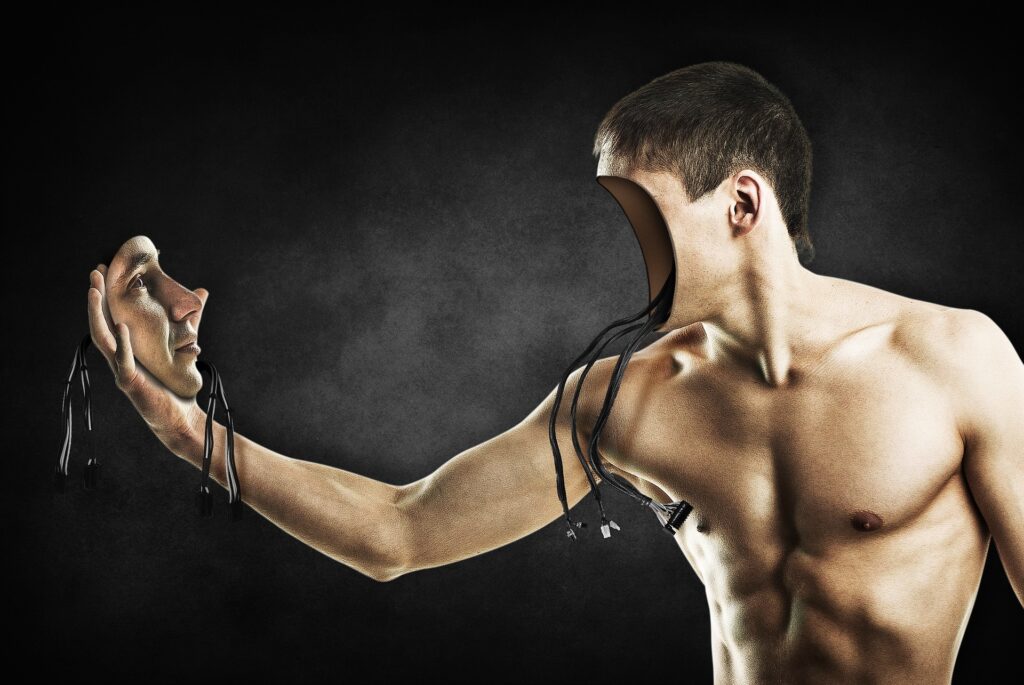
As I reflect on Koestler’s holon idea, I think about our own parts – our conscious self, higher self, and all the subpersonalities that make us who we are – how we must integrate these parts to be truly whole and congruent, thus making it possible for us to vibrate at a high enough frequency to reach of true potential.
And imagine if I’m at my best, and you’re at your best how much power is contained in our interaction.
This is going to be a short post today. It is Sunday, after all. And Sundays were made for chilling. We had family over for most of the day. My belly is about to burst from all the food we ate for Sunday lunch:
Everyone has left now. The house is once again quiet. I’m enjoying the silence. It’s that time on a Sunday evening when I turn my thoughts to the week ahead.
Tomorrow I’m delivery an important workshop on equity, diversity and inclusion to group of elected council members. The rest of the week will mainly be consumed with podcasting. I’ve recently taking on a new podcasting client helping them get their podcast up and running.
For the first series, I’m acting in the capacity as host and editor. It’s an interesting podcast. It’s called Voices of Resilience. It’s an interview style podcast where each episode, I interview a refugee, or displaced person about their story. The first two interviewees were from Syria. Both with very different experiences and reasons for leaving their home country. I have five more interviews to do this week.
Also this week, I have a meeting with a couple of potential partners in VR/Metaverse project we want collab and launch. The project is in its very early stages, so I don’t have a whole lot I can share about it yet.
And can you believe it? By the end of this week, we will be in December! 2023 is looming just around the corner. I was thinking today that it’s time for me to wind down 2022 and start thinking ahead to 2023 and what I want to accomplish next year.
It’s time for a new adventure. Time to start a new chapter in the Book of Clay. I’m not exactly sure what the plan is, but it involves VR and the Metaverse. After this week, I plan to shift all of my focus on clarifying my intentions and getting a solid plan in place so I can hit the ground running come 2023.
In Death: Unchained is a roguelike bow and arrow archery game.
You find yourself in an unholy world where you must constantly battle terrible creatures. Grab your longbow and go for the afterlife’s forsaken souls, angelic creatures, and demons.
Each level is procedurally created, so each time you play you will have a unique experience. The aim is to last as long as you possibly can before dying.
This is not your usual game with regular stages and a typical story. You are not attempting to “complete a level.” You’re trying to see how long you can last and how far you can get before dying. I love because you don’t have to think too much, just fight and die valiantly.
I’ve only been playing for a day, but it’s my new favourite VR game for the Quest 2. I can already see myself losing many hours to this game.
In Death: Unchained is a TOTAL winner.
Here’s my referral link if you do decide to buy it you’ll get 25% off.
Well, look at that! It’s Friday again already. This week has flown by, as do most weeks as you get older. You know the Eternal Footman is waiting to take your cloak. But who has time for that? I don’t. At least, that’s what I tell myself. But I know I’ll have to deal with him sooner or later. Until then, let the weekend begin.
From time to time, I like to flick through my old journal entries. You see, in addition to personal blogging, which is, in essence, a form public journal/diary, I also keep an offline journal, one reserved for me deepest, darkest thoughts. It’s also where I scribble out my poems and experimental fiction pieces. I’ve been hemming and hawing about publish another poetry book. I have one that is nearly ready. I just snickered to myself because it’s been nearly ready for a couple years now. I’m not a hundred percent sure what the hold up is.
As it’s the weekend, and my brain is a little fried, I thought I share with prose poem I wrote a while back. I was in a post-modern, surrealistic mood. I love playing with language. It is, after all, a virus, as William Burroughs said. You can slip language into a person’s mind, and cause all kinds of reaction. Even these 225 words you’ve read so far are having an affect on you of some sort.
And now I’m going to slip these words in and tinker with your mind a little more.
There were always cracks in the system. But somehow we missed or ignored the warning signs: the increased angst, dread, and anxiety; the war to end all wars; Oppenheimer’s deadly toy; women’s liberation; the sexual revolution; civil rights; Vietnam; Aids; an actor playing the part of the president; a president playing God. Stop. Get grip MR Lowe, you’re spiralling out of control again.
Where was I? Oh yes, God. Dead. Life. Meaningless.
It took us awhile to realise that if we wanted meaning, we’d have to make it for ourselves.
“No answers will be forthcoming”, said the priest who was the last human to see God alive. He then promptly committed suicide. The people were shocked. He was finally out from under God’s thumb, finally able to experience true freedom. Why would he commit suicide?
Several days later, when they were clearing his room, they stumbled upon the priest’s journal:
“There’s no way I can tell them what really happened. I wouldn’t have believed it if someone had told me. There was only one part that mattered, to me anyway. I don’t even know if I remember all of it. I can’t remember how it ended, exactly, but when it ended, I knew the question would drive me insane.”
How should I live?
Track of the Day: We Don’t Need Another Hero – Tina Turner
Hello good people! Greetings. It’s been a cold, wet day here in the West Midlands. I was in Birmingham most of the day co-facilitating a workshop on creating innovation in legal practice. We had about forty people altogether featuring a mix of lawyers, people who support lawyers, and law students. Overall, it was a successful workshop.
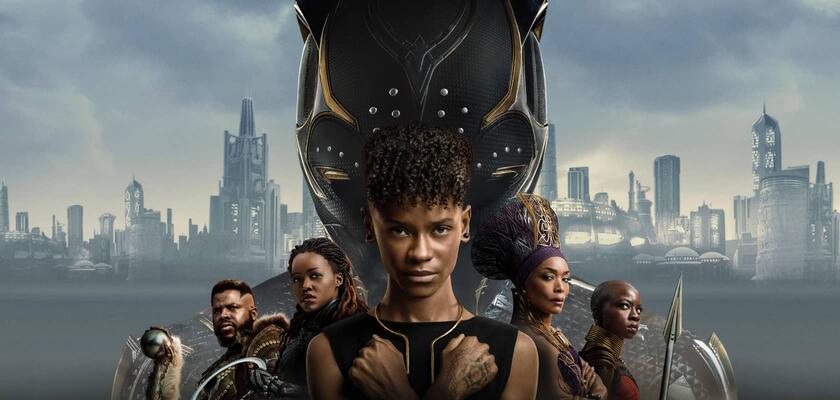
Last night, I saw Black Panther 2: Wakanda Forever. What a fantastic film. It was always going to be a tall order to follow up the success of “Black Panther 1”, but the team managed to pull it off. Ryan Coogler brings his passion, his appreciation for family rituals, and his deep love back to the world of Wakanda. Letitia Wright, Angela Bassett, and Danai Gurira shine as the lead female characters. Wright’s performance as Shuri is brilliant. And Tenoch Huerta brings Namor to life in ways I had not expected. Superb!
“Wakanda Forever” stands out. I’d put it up there, without a doubt, as one of the greatest Marvel movies to date. The acting, the cinematography, the story, were all superb.
Oh and I must give a nod to the director for weaving such a beautiful tribute to Chadwick Boseman in the film.
On another note, Happy Thanksgiving to all of my friends and family celebrating Thanksgiving today. I hope that you have found plenty to be thankful for in these uncertain and turbulent times.
I haven’t formally celebrated Thanksgiving Day for the past 10 years or so. It’s not a holiday in Britain.
Side note: Why have the British adopted Black Friday, which celebrates the worse in consumerism and not Thanksgiving? You would have thought that spending time with family and giving thanks for the good things in your life would have taken precedence over standing in long lines to be the first in the door to run around a shop like a lunatic to buy some piece of junk you probably don’t need just because it’s on sale!
Go figure, as they say!
As an adult, Thanksgiving used to be my favorite holiday. The family used to travel from all over the country to gather at my grandma’s house in New Jersey for Thanksgiving. She would put on a feast fit for kings.
When we first moved to England back in 2000, we came over with a bunch of other American families, and as a group of expats, we would gather together to celebrate the tradition of Thanksgiving. But once the project we came over for was finished, all the families, except for mine, moved back to the States. Because my wife is British, we stayed.
And over the years, we just stopped formally celebrating Thanksgiving Day.
Of course, giving thanks in the form of gratitude should be something that everyone practices regularly. There are numerous advantages to practicing gratitude on a regular basis. Here are a few that I think are important.
5 Reasons to be thankful
1 Gratitude improves your mental health by helping you manage emotions more effectively and avoiding negative thinking patterns like rumination or blame-placing guilt cycles that lead to depression symptoms like hopelessness and despair (not fun!).
2. Gratitude helps you appreciate what you have. Instead of complaining about what you don’t have, or obsessing over what you do have, practicing gratitude will help you see all the good things in life that are already there for you.
3. Gratitude can change your life. When we focus on being grateful for everything in our lives, we start to see our lives differently and become more aware of how lucky we are to have what we do have! This changes everything: your relationship with yourself and others, your moods and your energy levels.
4. Gratitude helps build self-confidence. When we practice gratitude regularly, it helps us realize how amazing we are as human beings—how powerful we are as creators of our own happiness! The more confident you are in yourself, the more confident you will be in your ability to attract all of the good things you want into your life.
And lastly:
5. Gratitude makes you more optimistic about the future. Practicing gratitude helps build resilience because when things go wrong—and they will at some point in your life—you won’t be as likely to fall apart if you know that everything has worked out well in the past and will continue working out well in the future because of all the good things that came before it!
If you’ve made it this far, here’s a big THANK YOU from me. I appreciate you giving up some of your valuable time to read my words. It means a lot to me.
Track of the Day: I’ve Got Plenty to be Thankful For – Bing Crosby
For thousands of years, humans believed that authority came from the gods. Then, during the modern era, humanism gradually shifted authority from deities to people.
I wasn’t playing games (Ok I did sneak off to watch some of the World Cup in VR), but apart from that, I was doing some serious work with a lady from Canada. She was giving me some useful tips on running events in AltSpaceVR which is Microsoft’s version of the Metaverse.
As I returned to the “real” world, a random question popped into my head: What is the downside of humanism? Where that came from, I’m not sure, but I decided to do some research on humanism.
Here’s what I found:
Humanism is a belief system that emphasizes the value and importance of human beings, as opposed to supernatural powers or deities. It focuses on human potential and culture, rather than religious belief.
Humanism is often associated with scientific thinking, but it is not strictly tied to science. It involves a philosophy based on reason and empathy for other humans and animals alike.
Humanists believe that people should live in harmony with nature, rather than dominating it; we should avoid harming other creatures unnecessarily. We can find meaning in our lives through things like art, music, literature and science—not just by following rules created by religions or governments.
Acceptance of all people regardless of race or religion
A focus on personal growth instead of dogma (and so fewer rules)
A belief that humans have a responsibility towards each other (rather than just towards God)
Some criticisms about humanism include:
A lack of ritual (some people find this comforting)
No belief in an afterlife or divine intervention (some people find this scary)
A lack of moral guidance (people have to make up their own minds about right and wrong)
Some people say humanism is a religion, but it isn’t. It doesn’t involve rituals such as prayer or worship, and there are no churches or priests who can perform weddings or funerals. Humanism is also different from atheism—people who don’t believe in God aren’t necessarily humanists, though many are.
From what I’ve found so far, I like humanism. Especially since I blow hot and cold on religion and spirituality. Sometimes I feel connected to a high power or spiritual energy; other times, I don’t. Humanism seems like a good play in terms of being a decent human being.
I suspect the big issue, though, is reconciling the religious/spiritual question.
The dream is a little hidden door in the innermost and most secret recesses of the soul, opening into that cosmic night which was psyche long before there was any ego-consciousness, and which will remain psyche no matter how far our ego-consciousness extends. Dreams are the facts from which we must proceed.
Carl Jung, The Meaning of Psychology for Modern Man
Dreams are wild things and don’t always lend themselves to easy interpretation. I’ve embarked on a journey to explore the mythic imagination. I’m excited to see what treasures I might find and what new magic I can learn.
Dreams offer a passageway to the mythic imagination. The challenge is remembering our dreams. They are often fleeting. The demands of the waking world quickly fill our minds with the day’s mundane but necessary thoughts. Practical stuff has no room for dreams. The dream world swiftly retreats back into the subconscious mind. There are times when we are aware that we have had a dream, but the details are vague, if they are there at all.
Enter the dream journal
A dream journal is a journal where you write down your dreams as soon as you wake up. Keeping a dream journal can help you better understand yourself and your emotions by considering the meaning of your dreams. They offer clues as to what is going on with your inner life and personal growth. They are also a way to create new ideas and solve problems in our lives—and sometimes help us make decisions about things we would otherwise be too afraid or stressed out to decide on our own.
I keep a dream journal from time to time. I seem to do this when I’m actively working on my mental or spiritual growth. The metaphors and symbols that appear in our dreams are potent guides.
Here is an example from one of my dream journal entries:
In this dream, I was walking down the high street in Southam on my way back to see someone. I was walking and thinking about starting another podcast. I didn’t want to start a “live” show because people don’t listen live, they prefer podcasts. I was thinking maybe I could start a Marc Maron style podcast. In the middle of my thoughts while walking, I noticed there were a lot of slugs on the pavement. Big brown slugs. I took a closer look and realised that they were actually slugs morphing into snakes. I thought I was imaging the slug/snakes were following me. It wasn’t until one of the slugs became a full on snake that I realised they were actually after me. This one snake in particular drew a bead on me and started coming directly for me. I walked faster, but it was gaining on me. I had a sudden flash of inspiration. If I walked onto the busy main road and the snake followed me, it would get turnover by a car. Just as I stepped backwards off of the curb, the snake struck. I jumped awake.
Date of entry: Tuesday, April 7, 2020
Considering the timeframe, it’s easy to see that this would have been my subconscious processing covid and the pandemic.
As a confirmation, here’s what the dream dictionary has to say about dreams that involve snakes:
Snakes commonly symbolize fear or transformation. Dreaming of a snake is a sign that you are afraid of something in your waking life, or it could be a forewarning of changes to come… or
A snake in your dream may represent something in your life that is unpredictable and out of your control. You are afraid of the unknown. Snake refers to hidden threats: Because snakes are sometimes hard to see and are slithering in bushes, they are also symbolic of a hidden threat and/or a betrayal.
I think this is a fairly easy dream to interpret. I have other more complex dreams in my journal, but I’ll refrain from sharing those just now. But I will let you know how my dream journaling goes over the course of the next several weeks.
Those of you who are Billy Joel fans will recognize the reference in the title of this post. And for those of us who are diehard Twitter fans, we’ll be singing the chorus from this song before too long.
My day job centres around helping leaders lead high performing teams. What’s happening at Twitter right now is a classic example of what not to do as a leader. People are the most valuable asset of any company. A good leader treats their people with dignity and respect, and should make everyone they lead feel valued for their contribution to the company. When a leader shows total disregard for the people they lead, that for me, is a signal of the beginning of the end of a cohesive, high performing team.
I’ve been keeping my fingers crossed hoping things will settle down at Twitter so we can get on with enjoying the platform we love. But after Musk’s decision to issue an ultimatum to his employees on last Thursday, I seriously doubt the company can survive.
I’ve been on Twitter since May 2007. I have a lot of time and content invested in the platform. I probably should have done this sooner, but better late than never. Today, I’ve initiated the download sequence to get my Twitter archive. Hopefully it’s not too late. Hopefully the team that handles the archives haven’t all left Twitter. I’ll let you know in 24 hours, which is how long Twitter says the process could take.
If you haven’t downloaded your archive, I recommend you do and here’s how to do it.
How to download your Twitter archive
When you download your Twitter archive, you take a snapshot of all your Twitter information, starting with your very first tweet.
Click on the More icon in the navigation bar right above the blue draft new Tweet icon. Select “Settings and Support” from the menu options. Click “Settings and privacy.” Select “Your account” from the menu options.
Click “Download an archive of your data.” You’ll be asked to enter your password, do so and click “Confirm.”
Next you’ll have to verify your identity. Click “Send code” to your email and/or your phone number. You’ll be redirected to the “Account information” page where you’ll be able to enter the code that was sent to your email or phone.
Once your identity is verified, click “Request archive.”
When your download is finished, Twitter will send you an email where you can download a .zip file of your Twitter archive.
If you have the app downloaded, you’ll get a push notification letting you know your Twitter archive has finished downloading. Navigate back to “Settings” on the app where you can click the “Download data” button under the Download data section.
Note: This may take a while. Twitter says “it can take 24 hours or longer for your data to be ready.”
It’s late Saturday afternoon as I sit down to write this post. I’m sitting in my favourite chill out chair which is a lush lazy boy recliner. I was going to make this a link post, but I haven’t actually spent much time on the Internet today, which is a good thing considering how much time I spent I spend there during the week. My total screen time this week, excluding time on my MacBook Pro, has been 28 hours and 32 min.
I’ve only just realised today that I don’t have Screentime turned on my MacBook Pro, but I do now, so next week’s figures will include my time spent on MacBook.
I haven’t been on the Internet that much today because I’ve focused on reading in between my Saturday chores. I’ve started rereading Robert Jordan‘s The Eye of the World which is the first of 14 books in The Wheel Time series. Having just finished Amazon Prime’s adapted version of The Wheel Time, I was inspired to get back into the novels.
The Wheel of Time
The Wheel of Time is a series of high fantasy novels written by American novelist Robert Jordan, with the latest three volumes co-written by Brandon Sanderson. The Wheel of Time was originally intended to be a six-book series, but it was expanded to 14 volumes, including a prequel novel and two companion works. Jordan died in 2007 while writing on what was to be the series’ last volume. He took copious notes so that another author might finish the book according to his specifications. Brandon Sanderson, another fantasy novelist, was called in to finish the final volume.
The series incorporates aspects from both European and Asian mythology, most notably the cyclical nature of time found in Buddhism and Hinduism, the metaphysical concepts of balance and duality found in Taoism, the Abrahamic concepts of God or Satan, and Leo Tolstoy’s War and Peace (1869).
The length, intricate imagined world and magic system, and big cast of characters make The Wheel of Time stand out. Each of the ninth through fourteenth books debuted at the top of the New York Times Best Seller list. The series was nominated for a Hugo Award. The series has sold over 90 million copies worldwide as of 2021, making it one of the best-selling epic fantasy series since The Lord of the Rings.
The following might be disturbing for some folks
I haven’t embed the video on my site, but here’s the link to video if you want to watch it.
Switzerland has legalized the “suicide machine,” which is a pod that offers a painless death within minutes. I haven’t gone into the details of who is allowed to use this device and under what circumstances. I assume it’s for people who have a terminal illness or who are in so much physical pain that death would be a welcome relief from the pain. Three thoughts flashed across my mind when I saw this report: One, they’ve made death look cool:
Two, I bet this isn’t free. What kind of world are we creating when you have to pay to die! And three, will this encourage people to commit suicide?
There was a sci-fi movie I watched once, I can’t recall the name now, but the plot was that a scientist had discovered definitively that there was life after death. The discovery plunged the world into chaos because people started committing suicide in droves.
I love technology, but at what point do we go too far?
This is Day 5 of our 30 Day Blogging Challenge. I’m really glad @MrFresh and @SMWGeek decided to embark on this journey. I know we’re only 5 days in, but I’m really enjoying the challenge and being back on here giving my blog some love. Long may it continue.
Admin note: some of links (generally the ones referencing books) are Amazon affiliate links. If you buy things from Amazon, please do consider using my links. You don’t have to purchase what I’m linking to, but still get a small commission from whatever you purchase. There’s no extra charge to you, and it helps me defray the cost of hosting fees and such.
I haven’t done a survey post in ages. As many of you may be new here, I thought, as a part of this 30 Day Blogging Challenge, I should do one, and give you a little bit more insight into this dude who calls himself soulcruzer.
1. Do you have any nicknames?
Hmm… I’ve had a few over the years. My family used to call me Pop when I was a kid. At West Point, some of my friends called me Buddha because of my bald head. They would come by my room and rub my head for good luck before a big exam. Some of my other friends called me “cabeza de melón” or “melon head” on account of my great big round noggin!
2. Are you named after anyone?
I was supposed to be. My dad wanted to do the medieval thing and name me after him and make me Coalet Lowe Jr. But, he used to get teased a lot when he was a kid because Coalet can also be a girl’s name. My parents settled on Clayton and then proceeded to call me by middle name – Lamont. None of my blood relatives call me Clayton, nor do they call me Clay.
3. Where did you grow up?
I’m a Jersey boy. I was born in Newark, New Jersey. But my best memories are from time growing up in Fort Monmouth/Eatontown, NJ.
4. What activities did you do in high school?
I played all the sports – football, basketball, wrestling, track and field, chess – until I found a copy of Arnold Schwarzenegger’s book, The Education of a Bodybuilder, after that, I became a die-hard gymrat. I still remain a gymrat to this day!
The United States Military Academy at West Point. I have some photos of me as a cadet, but it would take me too long to go find them right now, so here’s me as A-Man – one of the Army Mascots at sporting events and rallies.
6. What kind of music do you like?
My musical taste is ridiculously broad and varied. I’ll listen to just about any category of music. Some of my favourite categories are: rock (and it’s many sub-categories – classic, heavy metal, indie, grunge etc), hip-hop, and trip-hop. To get a real sense of my musical taste, check out my Mixcloud account:
7. When was the last time you cried?
At the risk of sounding macho, I don’t do the crying thing. I haven’t been able to shake the mental paradigm that says men don’t cry. 😢
8. If you were another person, would you be a friend of yourself?
Yeah, why not?!
9. What’s the first thing you notice about people?
If it’s a guy, I think, can I take this dude in a fight! If it’s a lady, then it’s her smile, face, and hair.
10. What’s one hobby that you’d like to take up?
I’ve become a huge fan of virtual reality and the metaverse. I’d love to take up 3D modelling as a hobby so I can make original art and objects to place in my metaverse worlds on Altspace VR. A hobby, I’m about to start is writing interactive fiction using Twine.
11. Do you have any irrational fears?
Not particularly. I do have a compulsion to squash tarantulas, and when I’m up high on tall buildings or cliff edges, I feel an urge to jump.
12. How many countries have you visited?
I think, at last count, it was 24. I’ve been to most of Western Europe, plus Hungary, Poland, Romania, Turkey, Tunisia, Malaysia, Canada, and Mexico.
13. What’s the biggest project on your to-do list right now?
Becoming a master of the metaverse. VR and the metaverse are on the cusp of becoming the biggest thing since the Internet. In fact, it’s the next evolution of the Web. I want to be ahead of the curve on this one, so I have been building my presence in the metaverse. Of course, the current issue is that there many versions of the metaverse – places like Engaga VR, Altspace VR, Horizon World, among others.
14. If you weren’t in your current job, what would you do?
My standard answer to this question is bullfighter or clown. But being a little more realistic, and something that is within my reach is brushing the dust off of my history degree and either becoming a medieval scholar or mythologist.
15. What’s your favourite type of pizza?
I’m a pepperoni and jalapeño man on thin crust. Sometimes, I’ll go all meat feast – pepperoni, sausage, pancetta, and mince meat.
16. What’s your favourite alcoholic drink?
I’m a single-malt whisky man. If I’m not on the hard stuff, a cold lager, will do.
17. If you were to reincarnated as an animal, which animal would you be?
I’m going to have to go with a cat. They’ve got it good. They get to come and go as they please. Hang out all night, and sleep all day.
18. What do you wish more people understood about you?
Brothers In Arms is one of my all-time favourite albums. I was a Dire Straits fan before MTV. When this album came out, I was ecstatic. I played it nonstop. Even to this day, I can sing every song on the album without looking at a lyrics sheet!
The album, to me, is in two parts. Part one is mostly about loneliness, disillusionment, and heartbreak, and part two is about the potential of destroying our one world as reflected in the many guerrilla wars that raged throughout the 80’s. In particular, the Nicaraguan conflict.
In the lead track, So Far Away, the protagonist of the song is in a long distance relationship brought on by his constant travel. He’s tired of ‘bein’ in love and being’ all alone.’ The longer he is gone, the further his love gets away from him. They are on two sides of the continent. She’s in the sun and he is in the rain. She keeps getting further and further away from him as the song suggest at the end. ‘You’re so far… so far away from me…” is repeated until the song fades out.
Money For Nothing, the runaway MTV hit, is about a working-class appliance delivery man who is envious of the perceived lifestyle of rock stars and the fact that they get paid a ton of money and get all the girls just for playing some guitars and drums, which to him amounts to doing nothing. Meanwhile, he has to just get by in life doing “real” work and get paid next to nothing for his hard work. By verse three, he wishes he had learned to play the guitar or drums and then he could have a cushy life too. I love the cameo appearance of Sting on the track with his distinct high pitch squeal… ‘Money for nothing and your chick for free…’
Walk Of Life balances out Money For Nothing with a guy who is excited to go watch an old blues singer named Johnny who is in town to sing the ‘oldies, goldies’ like “Be-Bop-A-Lula”, “Baby What I Say” and “I Gotta Women.” Songs the protagonist likes. He’s a huge fan of Johnny’s so much so that he can watch Johnny play all night: “Turning all the night time into the day.” The protagonist seeks refuge in Johnny’s songs from the walk of life which is full of ‘violence and double talk.’
With Your Latest Trick, we swing back to the theme of loneliness with a guy who has had his heart broken by a girl he’s madly in love with but doesn’t love him back in the same way. My favourite thing about this song is Mark Knopfler ’s use of metaphors to build a hazy dystopian picture of the city. I love his use of the piano keys as the keys to his heart. And the final epiphany, when he realises there is no more love between him and his girl: “Like a bowery bum when he finally understands that the bottle is empty and there’s nothing left.”
Knopfler balances out Your Latest Trick with Why Worry like he does with Money For Nothing and Walk of Life. In Your Latest Trick, we get the opposite view of love. Here are two people who support each when things are bad and they are feeling down. The song opens with the protagonist offering support to his girl who is feeling down about the world which has made her sad. But as bad as things maybe now, he reminds her that it will get better, so why worry, there will be ‘laughter after pain’ and ’sunshine after rain.’ “These things have always been the same.” It’s part of the rhythm of life. He knows when it’s his turn to feel down, she will do the same for him and help him through his blues.
I love the whole album, but part two really struck a chord with me. When it came out in 1985, I was 17 and longing for real world adventure. The kind of adventure the romanticised version of war promises to boys who are on the verge of becoming men.
In my boyhood naïveté, I wanted to be a mercenary. I used to buy Soldier of Fortune Magazine every month and read it from cover to cover. I was fascinated by the Rhodesian Bush War and many of the soldier of fortune tales that came out of that conflict. The Wild Geese movie with Richard Burton, Roger Moore, Richard Harris, and Hardy Kruger, was one of my favourite films at the time. I wanted that kind of camaraderie. Heck, when I was 16, I had researched and planned to runaway from home to join the French Foreign Legion! Not having a passport, and needing my mom to get me one, proved to be a barrier.
Part two of the album, to me, is mainly about the guerrilla wars that were being fought in Central America at the time, particularly the Nicaraguan Revolution and the Contra War.
Part two opens with Ride Across the River, a brilliant song. It shows war from two perspectives – one from the revolutionaries who are fighting what they consider to be a just and noble war in support of freedom. They are ‘the chosen’ and are ready ‘to pay with our lives if we must.’ And I’m wondering if Knopfler uses the river, which, appears in the chorus, as a metaphor for death. It calls to mind the River Styx from Greek mythology where Charon, the ferryman, would taxis the souls of the dead from Gaia (Earth) to the Underworld of Hades. The revolutionaries in the song are committed to death. They know they are “ Gonna ride across the river, deep and wide/Ride across the river to the other side.”
The soldiers of fortune in the song are not so naive. They don’t care about freedom and noble causes. They are in it for the money. And they “don’t give a damn who the killing is for.” To them, it is “the same old story with a different name/Death or glory, it’s the killing game.” And like the revolutionaries, they too, know, that they will more than likely be taking a ride across the river.
The revolutionaries are optimistic. They are fighting the good fight: “Today in the mountains; tomorrow the world.”
The Man’s Too Strong is tricky. The revolutionaries’ cause starts off noble, but the death and destruction of war soon brings out the worst in men and the cause becomes tarnished by the evils of humanity and the corruption that evolves out of those who lose sight of the cause and become blinded by the power they wield over life ad death.
In this song, we meet the guerrilla leader who has finally been caught by The Man.
The Man’s Too Strong feels like a confessional song. The warlord tells his story:
… I have legalized robbery And called it relief I have run with the money I have hid like a thief Rewritten histories with my armies and my crooks Invented memories I did burn all the books
Through all of the bad things he has done, he has ‘striven for peace.’ A peace, he would never know.
The Man doesn’t want the guerrilla leader to die a martyr so brings him out into the courtyard to publicly denounce him:
“You always was a Judas, But I got you anyway.”
The Man is not satisfied with just killing the guerrilla leader, he wants him to suffer. He tells him what he has done to his daughter and wife.
The captured warlord, who knows his execution is imminent, prays to God for absolution:
Oh father, please help me For I have done wrong The man’s too big The man’s too strong
In One World, the protagonist has the blues. Nothing seems to be going right for him:
Can’t get no sleeves for my records Can’t get no laces for my shoes Can’t get no fancy notes on my blue guitar
He confesses that he “can’t get no antidote’ for his blues.
He seems to be trying to find a reason for why the world is in the state that it’s in. But nothing seems to make sense and the reasons people give for their actions can’t be trusted. He’s been told that it’s mostly vanity that drives our actions. That’s the way it has always been and always will be. He has to accept that “there’s no such thing as sanity, and that’s the sanest fact.” There is no remedy for his blues.
He concludes that if the politicians can’t find “a way to be one world in harmony,” there can never be an antidote to the blues he is feeling.
The last song, and the title track for the album, Brothers in Arms takes us back to the war torn country we met in Ride Across The River. It’s told from the point of view of one of the rebels who has aged now. He is resigned to the fact, that as a rebel, he can never go home again, that the mountains, where the rebels hide, have become his home. He misses his real home:
But my home is the lowlands And always will be
He does hope that one day, the fighting will stop, and the rebels can go back to their homes in the lowlands and lush valleys and be with their families and no longer ‘burn to be brothers in arms.’
Verse two holds a specially place in my heart. As a former soldier, these words ring true:
Through these fields of destruction Baptisms of fire I’ve witnessed your suffering As the battle raged high And though they did hurt me so bad In the fear and alarm You did not desert me My brothers in arms
I will always be close to my brothers in arms.
In the next verse, we return to the one world theme. Where the bluesman in One World has given up hope, the aged rebel in Brothers In Arms still holds on to hope that while for now we all live in different worlds maybe one day we will realise that we, in fact, only have one world. And we are “fools to make war on our brothers in arms.”
“This is what fools people: a man is always a teller of tales, he lives surrounded by his stories and the stories of others, he sees everything that happens to him through them; and he tries to live his own life as if he is telling a story.”
Carl Young said that the most important question we can ask ourselves is “What myth are you living?” That seems like an odd question to ask, considering most of us probably think of myths as make-believe or associate myths with Greek and Roman mythology. We consider ourselves too enlightened for myths. Instead, we put our faith in the scientific method and reason to answer our questions about life. And we trust that technology will give us the power to change or destroy what we don’t like.
But how do you answer the question of ‘what is the meaning of my life?’
“The psychological dangers through which earlier generations were guided by symbols and spiritual exercises of their mythological and religious inheritance, we today…must face alone…This is our problem as modern, “enlightened” individuals, for whom all gods and devils have been rationalised out of existence.
What are myths?
Myths are:
“An intricate set of interlocking stories, rituals, rites, and customs that inform and give the pivotal sense of meaning and direction to a person, family, community, or culture.”
If you view myths in this light, then myths are all around us. We just chose simply not to recognise them as such.
To examine the myths operating in your life, ask yourself why you do the things you do in the way that you do them. This might be a hard question to answer because, when you are living the myth, it is nearly invisible to you. Our myths become “truths,” reinforced by cultural consensus.
Here’s and example:
“Most Americans would consider potlatch feasts, in which Northwest Indian tribes systematically destroy their wealth, to be irrational and mythic but would consider the habit of browsing in malls and buying expensive things we don’t need (conspicuous consumption) to be a perfectly reasonable way to spend a Saturday afternoon.”
So, back to Carl Jung’s question, “What myth(s) are you living?” Is it a narrative you’ve created or are you simply buying into the prevailing cultural consensus? Do you have any personal myths you would rewrite to make them more empowering?
Last thing I’ll say about myths for now and then I’ll leave you to rummage through your personal myths (“truths”).
Think of myth as:
The software, the cultural DNA, the unconscious information, the meta program that governs the way you see “reality” and the way you behave.
“Fantasy is as essential as air, forming the medium or the ether in which all the other activities of mind take place…Fantasy, in fact, plays a major role in building the world, in guiding the choices and adaptations we make, and the relationships we form. Fantasies are among the most powerful of the catalysts that infuse and organise our lives, dictating romantic, familial, and professional goals; fueling behaviour; engendering plans for the future. In turn, our experiences, and the myths and stories of the culture in which we live, shape our fantasies.”
We had an awesome night of adventuring in Dungeons & Dragons land. We found ourselves facing off against a four-armed copper state brought to life by some fanatical cult members, who, like all cult members, had some weird delusional version of how the world should work. And being cultists, they were willing to bring about their demented version of reality by any means necessary.
Vulred Sarren, the wood elf, played by me, was having an off night. He couldn’t land a blow to literally save his life. He must have somehow offended the gods. Even Lady Luck turned her back on him. It was a good thing he had companions – a human ranger, a dwarf cleric, a gnome rogue, and a gnome wizard who, coincidentally, was also having a bad night. None of her spells were working.
None of us fancied fighting this living copper statue in the cellar where we found it, so we lured it outside the inn.
I smugly cast a Wall of Wind to hold it in place. But before I could congratulate myself on my ingenuity, the living statue flew over my 15-foot-high wall and landed right in the middle of us. Our jaws went slack, and the fight was on.
I was 13 when my friend Brian, who was three years older than me, introduced me to Dungeons & Dragons. I was already heavily into heroic fantasy and its kin, sword and sorcery fantasy. I used to save up my lunch money and allowance until I had enough to buy an armful of fantasy books from Barnes and Noble at least once a month. I used to love it when the weekend rolled around and I could head to the mall and browse the fantasy shelves. I’d spend a couple of hours in the shop admiring the covers of the sword and sorcery books and reading the back covers until I found a few that really grabbed my attention.
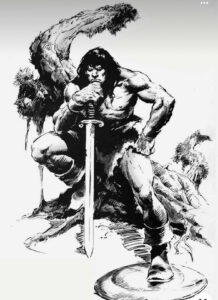
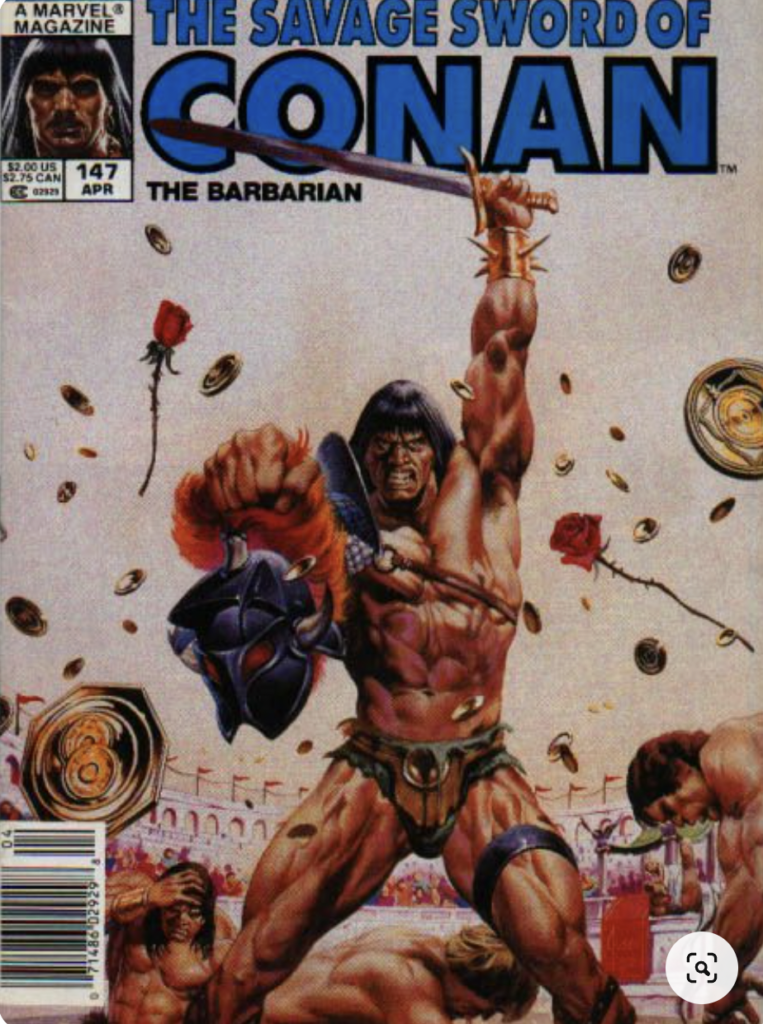
By the time I graduated from high school, I had a collection of hundreds of these fantasy books. My prized books were all of Robert E. Howard’s Conan the Barbarian novels and Marvel’s adaptation of the novels in The Savage Sword of Conan, the black-and-white magazine-style comic. True story: when I left home for West Point, my mom, who hated these books, she called them demon books, gave away my whole collection. But she knew I would have never forgiven her if she had given away my Conan collection.
During my time at West Point, my fantasy obsession faded. I threw myself into history books instead. I had determined I was going to be a Great War captain like Caesar, Hannibal, Grant, and Patton. If I wanted to accomplish that, I knew I had to be a student of war. I studied all the masters: Sun Tzu, Napoleon, Clausewitz, Rommel, Patton, and Grant, among others.
After I graduated from West Point, my love of heroic fantasy mainly lived on through whatever movies came out in that genre. My reading was mostly occupied with current events and history. I loved history books almost as much as I had loved sword and sorcery books. I ended up majoring in History and by the time I graduated, I had amassed a huge history book collection.
After the army, I let history give way to business books and self-help and personal development books. I think, in the process, I lost a vital part of who I am at my core.
It is this missing piece that I am trying to find again.
So I was ecstatic when my wife tagged me in a Facebook post of a local Dungeon and Dragons group that was looking for new players. I answered the call for new adventures quickly. This was my chance to get back into the game. That was a few weeks ago. I am now into second week with the group on a big campaign to stop a cultist group that has been terrorising the local villagers and using them as sacrifices in their bizarre rituals.
It’s easy to dismiss fantasy as a detachment from reality, a waste of time, especially for responsible adults. The only myth you’re rewarded for believing in is consumerism and the capitalist narrative that supports it.
But as psychologists like Carl Jung and James Hillman suggest, by doing this and cutting ourselves off from our mythic imagination, we inhibit our personal and spiritual growth by forcing our psyche to accept a limited version of itself.
The two books that really opened my eyes so I could see just how detached I have become from my true self and living a life of meaning are:
I can’t say that I’m a Lorde fan—not that there’s anything wrong with her music; it’s just not my usual thing. But I came across her blog, which she runs on Tumblr (I think people need to keep an eye on Tumblr; it’s poised for a comeback as a blogging platform). She was very open about the pressure to make a buck on concert tours, especially when all she and other musicians really want to do is play for the fans.
I don’t know how much you’ve been following the live music industry conversation, but lemme hit you with a five minute explainer, cause I think it’s interesting, and good to know about if you’re going to concerts at the moment. Basically, for artists, promoters and crews, things are at an almost unprecedented level of difficulty. It’s a storm of factors. Let’s start with three years’ worth of shows happening in one. Add global economic downturn, and then add the totally understandable wariness for concertgoers around health risks. On the logistical side there’s things like immense crew shortages (here’s an article from last week about this in New Zealand), extremely overbooked trucks and tour buses and venues, inflated flight and accommodation costs, ongoing general COVID costs, and truly. mindboggling. freight costs. To freight a stage set across the world can cost up to three times the pre-pandemic price right now. I don’t know shit about money, but I know enough to understand that no industry has a profit margin that high. Ticket prices would have to increase to start accommodating even a little of this, but absolutely no one wants to charge their harried and extremely-compassionate-and-flexible audience any more fucking money. Nearly every tour has been besieged with cancellations and postponements and promises and letdowns, and audiences have shown such understanding and such faith, that between that and the post-COVID wariness about getting out there at all, scaring people away by charging the true cost ain’t an option. All we want to do is play for you.
I know you’re probably sick to death of hearing about the fate of Twitter. I am too, but because it’s a platform I love, I can’t resist reading every article about its demise that comes through my feed. It’s like rubbernecking on the highway. When you see an accident off to the side, you feel compelled to look, which in turn causes you to slow down, which, through the ripple effect, turns into a mile-long traffic jam.
Stop rubbernecking!
Sorry, I can’t help myself.
This article in The Verge feels like the scene where the villain hits the self-destruct button, lets out an evil laugh, and then heads to the roof to escape in his helicopter. When your CISO, Chief Privacy Officer and Chief Compliance Officer ALL resign at the same time, you know the ship is going down!
Sources say:
Over the last two weeks. Elon has shown that he cares only about recouping the losses he’s incurring as a result of failing to get out of his binding obligation to buy Twitter. He chose to enter into that agreement! All of us are being put through this as a result of the choices he made.
Elon has shown that his only priority with Twitter users is how to monetize them.
I don’t often mark TV shows down in my calendar, but for The English, I did. The Guardian called it a rare, sensational masterpiece, with Lucy Mangan giving it 5-stars! How could I not watch it?! As a kid, I was a huge Western fan. I picked up my love of cowboys from my dad. He was a huge fan of Louis L’ Amor. He had all the books, like The Sacketts, among others. And whenever a western was on TV, we were there to watch it. Some of my favorites:
I was curious to know if The English would live up to my expectations of a Western. The basic story line follows a revenge narrative.
The English takes place in the mythical mid-American landscape in the year 1890. It is about Cornelia Locke, an Englishwoman who comes to the new and wild West to get revenge on the man she thinks killed her son. When she meets Eli Whipp, a former cavalry scout who was born into the Pawnee Nation, they work together and find out that they have a common past that they must defeat at all costs if they want to live.
I am 3 episodes in and I am not disappointed. Chaske and Blunt are awesome together. The dialogue is superb. The action is graphic and dark. And the cinematography is stunning. I’m looking forward to seeing how the story plays out. It’s on BBC iPlayer in the UK. I think it might be on Prime in the US.
I gotta another wild hair
Well, it’s on. I’m embarking on a 30 day blogging challenge with my Twitter friends, @SMWGeek and @MrFresh who, like me, are OG bloggers from back in the day when blogging was cool and everybody had a Blogger or a Livejournal account, and we blogged everyday about everything and nothing. We shared our thoughts, our hobbies, our frustrations, our passions. Our blogs were an extension of ourselves. They were personal blogs back then. You were doing it for the love. Then blogs got popular and somebody figured out how to make money from them. That was the beginning of the end of personal blogging. The snake oil salespeople could smell the blood of the innocent. They promised to show us how we could make money blogging in our underwear. The marketeers could see the gold rush coming, and they moved in with their banner ads and Macromedia Flash videos. The personal blog was dead. Blogs became like the suburbs of the 1950s uniformed and bland, with every blog looking the same. No more Geocities. Myspace tried to keep the gig alive, but Zuckerberg had other plans. Now it’s all about the niche blog and content marketing, if you’re blogging at all and not doomscrolling or suffering anxiety from all the FOMO induced posts on Instagram.
So every now and then I get a wild hair on my butt and decide it’s time to do another 30 day blogging challenge to get myself back in the habit of OG blogging with the hope that maybe it might rekindle the fire of personal blogging.
If you’ve made it this far, then go ahead and make a nostalgic old man feel good by leaving a comment below. I will be cross-posting the 30 day challenge posts to Twitter and Mastodon, but if you want to be guaranteed to get my posts, then go ahead and subscribe to the blog or add it to your RSS feed reader.
This blog has been running since February 2004. Long may it continue.
They are there, protecting our meanderings. You don’t fear hunger, in such places, neither fear poverty of the spirit. Close, again, to water and stone, near the symbols of ancient European unity and Arab History, I can dismiss the present as a passage. The trouble, though, is that I don’t know where I come from, and even less, where I’m heading for.
I have been an intellectual wanderer for most of my life. Sometimes the wandering makes me feel lost. I should have a home, someplace to settle down. It feels like the “place” is somewhere out there, but because I’ve been away for so long, I’ve forgotten where it is. I wonder if this feeling has something to do with being an immigrant. I’m an American who hasn’t visited his homeland in 17 years! Maybe what I’m feeling is New Jersey beckoning me to come home. I’m not the sentimental type. And besides, I’ve always prided myself on being a citizen of the world, with home being where I lay my hat.
My propensity to wander is probably why I have always felt that blogging is the right medium for me. With my blog, I have the freedom to roam. To echo my friend @darrenkeith3 words, social media, specifically microblogging, has made me lazy when it comes to long-form blogging, which is funny for me to say considering I’ve been an advocate of microblogging for at least the last couple of years. I convinced myself that social media is good for my personality, which is fuelled by shiny objects and new ideas. I’m like a magpie, easily distracted. Social tech apps like Twitter and Instagram allow me to fire off a singular thought and then move on. I don’t have to stick around and create a sustained narrative across many supporting paragraphs or paint super detailed word pictures. I can fire off 240 characters and forget.
But i think with all of the turmoil going on with social media platforms, I think I’m going to follow @darrenkeith3 message and get back to the blog where I have total control and freedom.
Side note: If you follow me on social media, why not consider subscribing to my blog instead? That way, you’ll be guaranteed to get my latest posts and not have to worry about algorithms coming between us.
Putin has begun training high school students for war. You know you’re in the shit when you have to start training 15- and 16-year-old boys how to fire an assault rifle and dress a field wound. This, he hopes, will put fear into the people at home and convince them that Russia really is under serious threat from the West. Of course he also wants to fix the problem he’s having with recruits showing up to the frontlines without enough training. He needs the numbers. And he figures this way, he can shave some time off of basic training and get these kids to the frontlines as soon as possible. Because, after all, Russia is under threat. Or is it? Or is the threat something Putin has cooked up in his own mind.
Sources say:
“The Kremlin is operating in a truth vacuum and trying to con citizens into believing Russia’s war against Ukraine and possibly against the west eventually is a righteous defence against a threat.
This smells like desperation to me, which I think makes Putin even more dangerous. Desperate men will do desperate things to get their own way. I’m half tempting to climb onto the loft and break out my old combat gear just in case the world does go to hell in bucket. I know one thing though, I won’t be enjoying the ride.
Kyle Pope took Gwen Ifill‘s “missing white woman syndrome” and turned it into a website called areyoupressworthy.com. With some basic demographic information, you can find out if anyone would care if you went missing. Well, damn! It looks like I’m only worth 6 news stories!
A maximum of 10.3% of Americans would hear about me. I might be able to bump the percentage up if the five of you who read this blog notice I’ve been gone for a while. Of course, if I dropped my age to 22 and became a white female living in Nevada, then 92.4% of Americans would hear about me, and I’d stand a better chance of being found. The whole point of this exercise is to make the bias in press coverage visible. How press worthy are you?
Track of the Day: Life is a Highway – Tom Cochrane
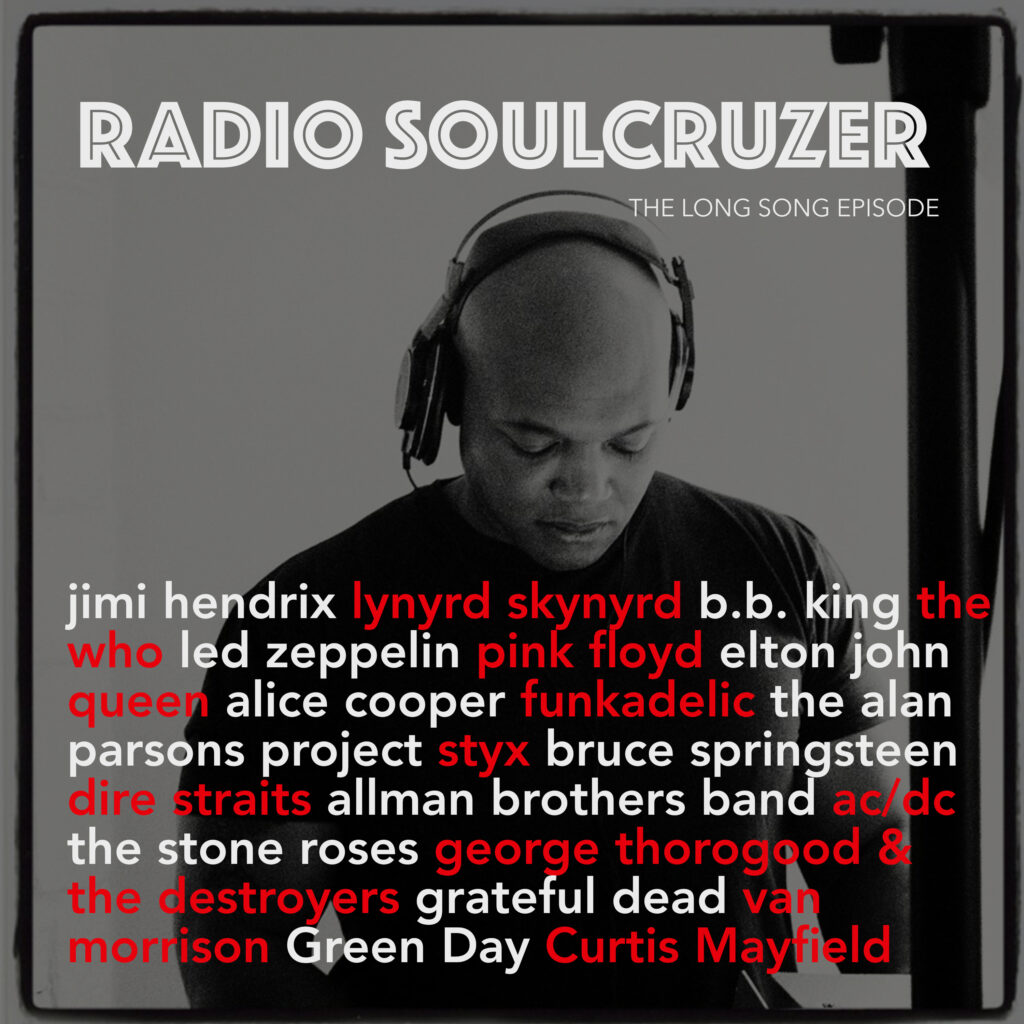
I got the idea for this episode from Jimi Hendrix’s song “Voodoo Chile,” which is on his album “Electric Ladyland.” The song clocks in at 14 minutes and 59 seconds! It’s a monster track. Well, that got me thinking about other lengthy tracks that I love. I compiled a list and then turned to my peeps on Twitter and Facebook to crowdsource other people’s favorite tracks over 6 minutes long. The results – a monster 3 hour show of some great tunes that clock in at least 6 minutes.
My life has been ridiculously strange of late. I’ve been going through one of those wobbly periods where I believe the whole of the human race is wicked and probably deserves to burn in Hell, if Hell exists.
One of the things you have to deal with on social media is when the bandits get turned loose. They gnaw on your brains like zombies and cause people to spontaneously combust. These things happen. And when they do, ordinary folks like me and you start looking for the nearest emergency exit.
Take Tumblr, for instance. It’s a relic of the old internet. It’s been holding on for dear life for at least the past 10 years. Then the pandemic hit. And Gen Z started swarming to Tumblr like blue-assed flies on a fresh cowpat. 61% of its new users and nearly half of its active users are under 24. It seems the woke have found a new place to congregate.
Tumblr also has more active daily users than its sibling rival, WordPress.com. That surprises me. I can’t help but think there might be some truth in the rumor that blogging is dead! No, I can’t believe that. I won’t believe that. I refuse to believe that!
I bet Papa Mullenweg is happy to see his big gamble pay off. Tumblr’s revenue has jumped 55% since last year. If you ask the Tumblr crew what it feels like to be making a comeback, you’re likely to hear them spit L.L. Cool J at you:
Still, these things happen. I need to re-up my Tumblr game in case I have to flee Twitter in the middle of the night with only my go-bag in tow. You never know with these things. On the other hand, Musk might turn out to be a benevolent dictator like Lee Khan Yew, and we’ll all be able to thrive in Twitterville.
Just in case, I need to be ready. Noah built the ark before the rain. You can find me on Tumblr as “Soulcruzer One“
Bruno Latour, the French philosopher who died on 9 October 2022, was a man who lived in many different worlds.
As a “actor-network theorist,” he contended that everything, no matter how small or seemingly inconsequential, is part of intricate networks of relations. This is true regardless of the size of the thing or how trivial it may seem.
As an “immersionist,” he held the belief that rather than observing the worlds we study from above or below, we ought to fully submerge ourselves in those realms.
As a pluralist, he advised us not to reduce all of reality to just one thing, whether it be nature, culture, or society, and to instead pay respect to the many different worlds that exist.
In addition, as a public thinker and activist, he had a profound concern for the future of the planet and all of its inhabitants, both human and nonhuman.