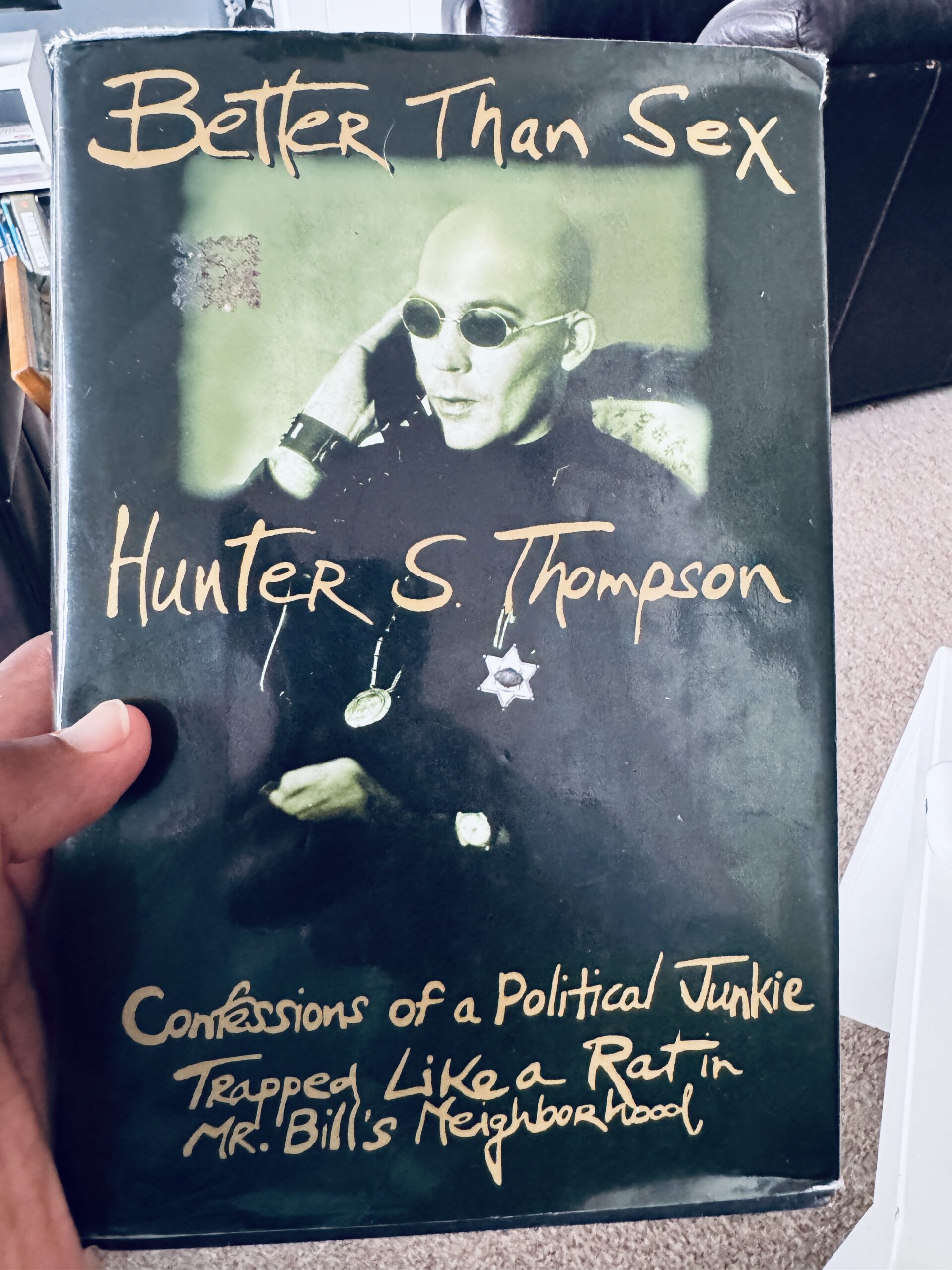
Better Than Sex, 30 Years Later: Revisiting the Book That Broke My Brain

07:39. I’m in my lounge chair drinking black coffee, the morning still soft around the edges.

For my morning read today, I’ve been revisiting Hunter S. Thompson, starting with the book that began my literary love affair with his work: Better Than Sex: Confessions of a Political Junkie.

There’s something about Hunter that still gets under my skin in the best possible way. He doesn’t simply report the story. He enters it. He becomes part of the event he’s describing. He’s not pretending to stand outside the madness with clean hands and a neutral expression. He is in the room, at the bar, in the campaign bus, and in the hotel lobby at 3 a.m., feeling the paranoia, the electricity, the absurdity, the rot, the strange comedy of American public life.

That’s what has always drawn me to first-person nonfiction. I like writing where the writer is in the story. Not as some inflated main character, but as a lens. A body. A nervous system. A witness with fingerprints.

It’s why I admire Hunter. It’s why I’ve always loved literary travel writing, diaries, notebooks, memoirs, and blogs. I like seeing the world through other people’s eyes, especially when those eyes are alert, damaged, amused, haunted, hungry, and alive.

Maybe that’s the deeper pull. I don’t just want information about the world. I want contact. I want the felt sense of being there. I want to know what the dust smelled like, what the coffee tasted like, what the light was doing on the wall, and what strange little thought passed through the writer’s mind while everyone else was looking at the obvious thing.

And beneath that, if I’m honest, is my own old desire: to be a participant in life, not merely a watcher from the sidelines.

I have to confess, I’ve been on the bench for a while (probably since Covid).

Not completely. I still walk. I still notice things. I still make my little field reports when I’m out and about. But I’m certainly not out in the world in the way I was when I was younger. Back then, being outside was not a lifestyle choice or some wellness prescription. It was the default condition of being alive. Nature was not a retreat from life. It was life. I went further afield. I climbed new mountains. I wandered through new bits of countryside. I chased the map outward.

I blame the internet.

Of course, they say a poor craftsman blames his tools, and they’re probably right. The internet didn’t chain me to the chair. I walked willingly into the glowing cave.

But as someone who gets intoxicated by knowledge-seeking, the internet is a particularly dangerous drug. It gives me exactly the thing I have always craved: endless corridors of thought, endless doors, endless shelves.
As a teenager, I used to wander the library stacks for hours. No subject was off limits. Philosophy, science, art, mythology, psychology, history, music, strange technical manuals, books with titles I barely understood. I loved the sheer possibility of it all. I’d leave with stacks of books, as if I were smuggling worlds under my arm.

So of course the internet became both a blessing and a curse.

Now I can explore the world without leaving my chair. I can roam through archives, maps, lectures, essays, documentaries, old interviews, obscure forums, digital museums, scanned manuscripts, and now, with AI, I have something like a portable Library of Alexandria sitting at my fingertips, awake whenever I call.

It’s astonishing.

It’s also a trap.

Because if you’re wired the way I’m wired, the search itself becomes the journey. You can spend the whole morning reading about mountains and never feel wind on your face. You can watch ten videos about someone else walking through a forest and never put on your boots. You can collect knowledge about aliveness while slowly becoming less alive.

That’s the part I’m trying to reckon with.

My Wisdom Walks are one way I force myself away from the screens. They get me out of the chair and back outside, mud, birdsong, breath, distance, and bodily time. But even there, I notice the limits I’ve allowed to creep in. Most of these walks are local. Useful, yes. Grounding, yes. But not quite the same as the old impulse to go further, to find a new ridge, a new stretch of river, a new patch of countryside where the map opens.

Back in the day, I tried to live by the North Face ethos: never stop exploring.

And there was another war cry too, one I picked up from outdoor culture and carried like a small personal commandment:

Get outside. Stay outside.

That phrase still has charge for me. It feels less like advice and more like a spell I forgot I knew.

Lately, I’ve been trying to rebuild my life around that old rhythm. I’ve created a mobile workflow: smaller cameras, a portable podcast setup, the iPad, or sometimes just the phone. The theory is simple enough: everything I can do at a desk, I can do outside.

In theory, this is beautiful. The barefoot philosopher’s office is wherever he can sit, walk, speak, photograph, think, and write. A bench. A woodland edge. The back of the car with the boot open. A picnic table. A patch of grass. A café after a long walk.

But then comes the catch.

WiFi.

So much of my life and work depends on having a decent internet connection. Uploading, sharing, checking, filing, syncing, posting, researching, responding, confirming. The whole apparatus of modern work hums invisibly behind the scenes, and I’ve let that hum dictate how far and how often I roam.

It’s ridiculous, really. I know it is.

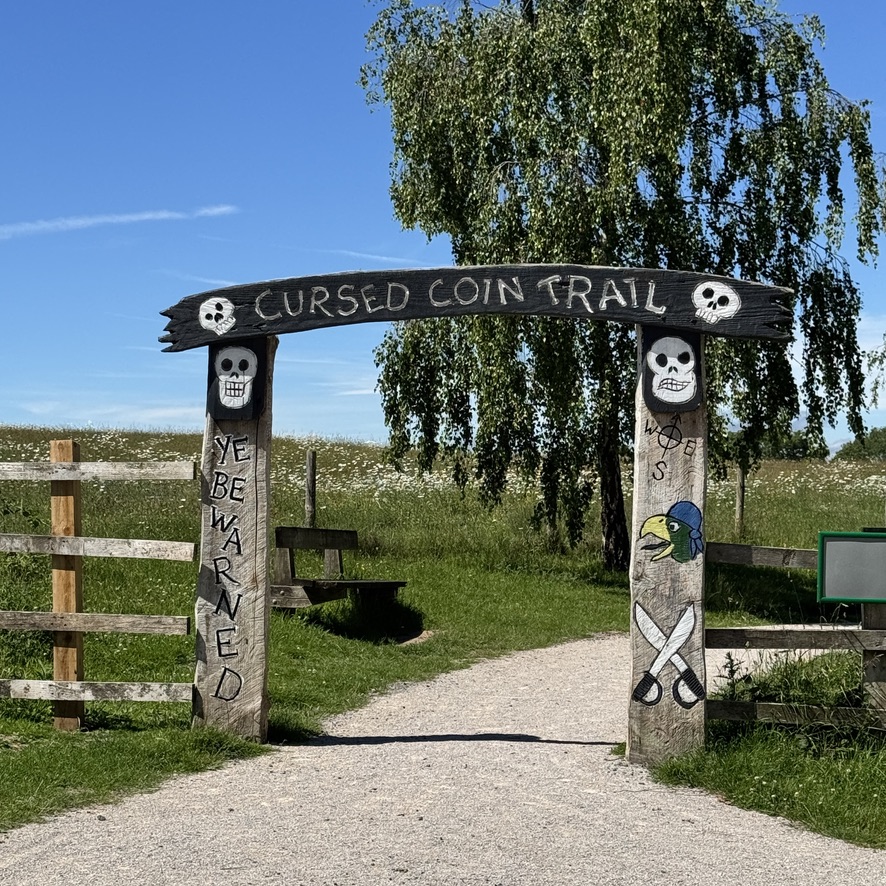
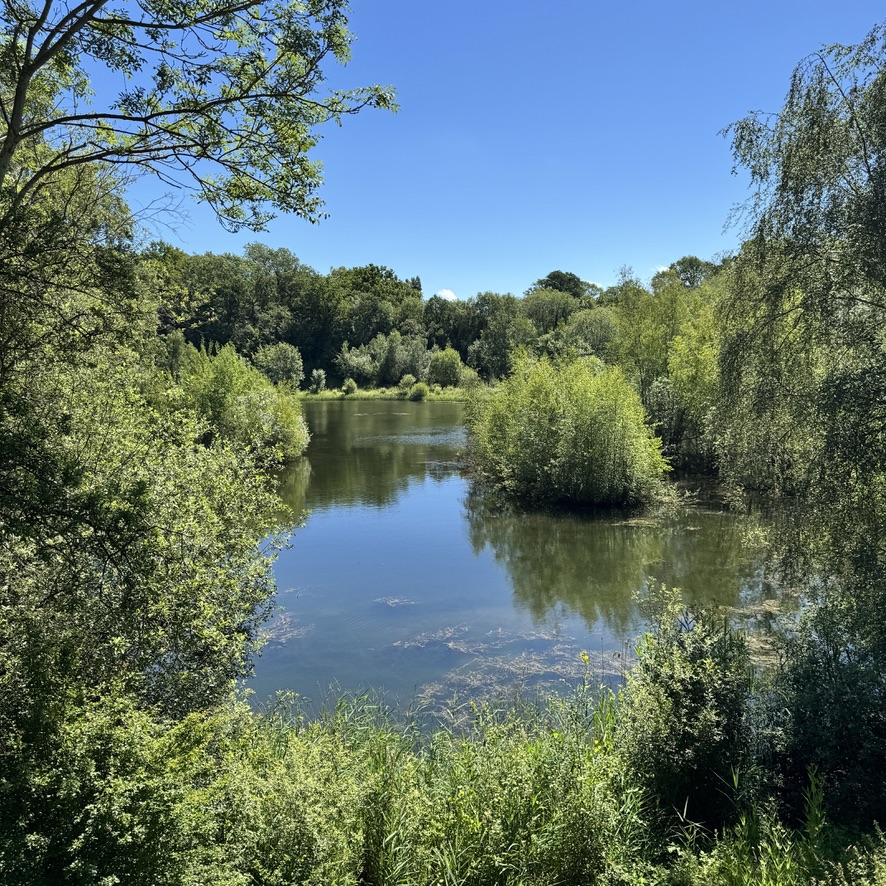
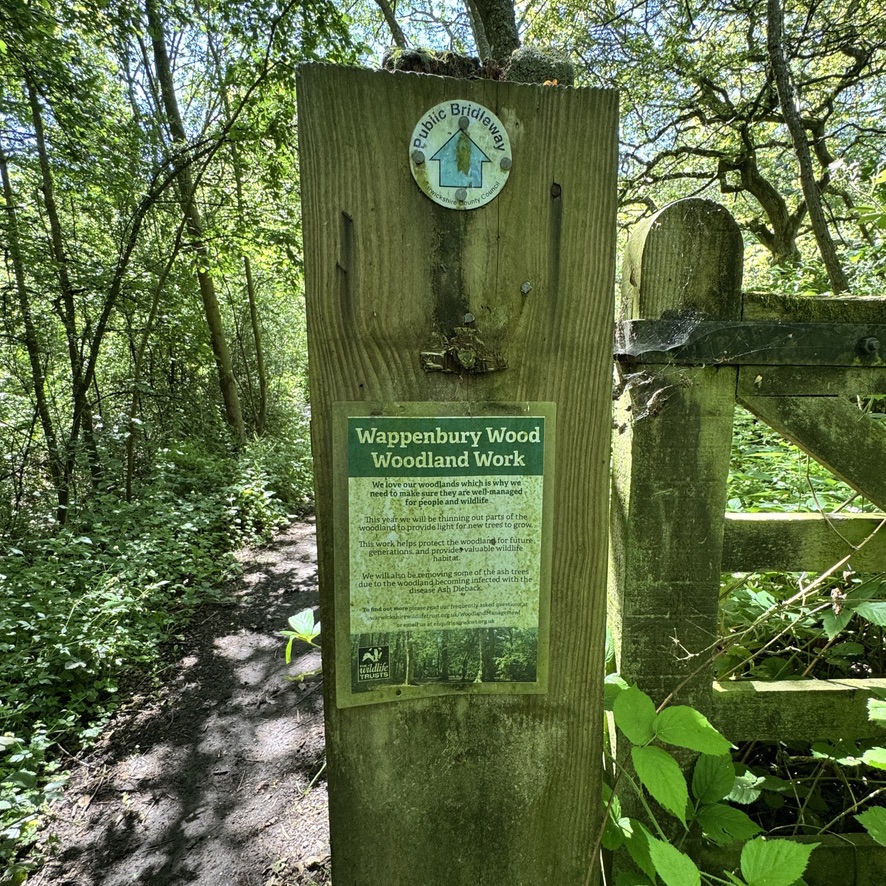
Yesterday, while roaming Wappenbury Wood, I found myself running up against this exact absurdity. I had paid for two hours of parking. I wanted to extend my time in the woods, but I couldn’t get a connection, so I couldn’t extend my parking through the RingGo app. There I was, surrounded by trees, wanting to remain in the place, and being tugged back by a parking meter I couldn’t speak to because the little rectangle in my hand couldn’t find a signal.
Better Than Sex

First-world problems, I know.

But also a sign.

Some might say ‘good’. If you’re outside, be outside.

And part of me agrees. Deeply. There’s wisdom in not turning every walk into a production. There was a time when I lost my way with that too. I spent more time looking at the world through a device than experiencing the place through my own eyes. I’d be composing the post before I’d even received the moment. I’d be thinking about the share while the living thing was still happening in front of me.

Thankfully, I’ve mostly kicked that habit.

I don’t bother processing photos while I’m out. I don’t feel the need to livestream the experience. I’m learning to let the walk be the walk. The camera comes out when it needs to. The note gets captured via my Plaud voice-note device. But I’m no longer trying to turn every outing into a broadcast.

That feels like progress.

But there’s another habit underneath it, and maybe this one is harder to break: the 9-to-5 mindset. The productivity culture mindset. The idea that if I’m away from the desk, I’m somehow not working. The idea that roaming, wandering, reading under trees, following curiosity, and letting the body move through the landscape are somehow indulgences rather than part of the work itself.

And this is where I need to remember what I actually believe.

Being outside is my work.

Or at least it is part of the working condition I’ve spent years trying to build my life around.

I’m not trying to become more efficient at sitting under artificial light and moving tasks from one column to another. I’m trying to build a life where thinking, walking, writing, noticing, reading, photographing, speaking, and making are woven together. A life where work is not a cage I return to after being alive, but a form of aliveness itself.

That doesn’t mean abandoning responsibility. It doesn’t mean pretending money, deadlines, clients, admin, and logistics don’t exist. The parking app still wants paying. The email still needs answering. The file still needs sending.

But it does mean the old industrial rhythm cannot be the master rhythm.

There is another rhythm available.

Harold Jarche’s PKM model comes to mind here: seek, sense, share.

I’ve always liked the simplicity of that. It gives shape without becoming a cage.

Seek: go out, read, wander, notice, collect, and encounter.

Sense: sit with what has been gathered, make meaning, connect it to the living archive, let the pattern reveal itself.

Share: publish, speak, teach, post, make the field note public, and offer the insight back to the commons.
Wappenbury Wood

Maybe the trick is to stop trying to do all three at once.

When I’m outside, perhaps I’m mostly in seek mode. I’m gathering. Walking. Looking. Letting the place work on me. Letting the body become an instrument again. I don’t need to process everything on the spot. I don’t need to share immediately. I don’t need to prove the walk was productive by turning it into output before I’ve even left the woods.

Then, later, somewhere with coffee and a signal, I can sense and share.

This might be the rhythm I’m looking for.

Not desk versus outdoors.

Not internet versus nature.

Not productivity versus wandering.

But phases. Movements. Breath.

Inhale: go out.

Hold: notice what the world is saying.

Exhale: write, speak, share.

The internet then becomes part of the cycle rather than the whole ecosystem. AI becomes a thinking companion, not a substitute for experience. The archive becomes a living field, not a bunker. The phone becomes a tool, not the eye I see through.

And the walk becomes what it has always wanted to be: a method.

The barefoot philosopher does not need to reject the digital world. That would be too simple, and frankly, false. My life is tangled with the web. My work is made of language, links, fragments, feeds, archives, posts, and conversations across distance. I am a child of the library and the internet. I don’t want to give that up.

But I do need to renegotiate the terms.

The chair is good. The coffee is good. The screen is useful. The infinite library is a miracle.

But the world is not inside the machine.

The world is outside, being rained on. It’s in the mud underfoot, the old trees at Wappenbury, the cold air in the lungs, the hill not yet climbed, the lane not yet followed, the bird I can’t name calling from somewhere beyond the path.

Hunter got into the story.

That’s what I’m hearing this morning.

Not just read about the madness. Enter the room.

Not just study life. Participate.

Not just watch other people’s field reports from the glowing cave. Make my own.

Get outside. Stay outside.

Seek. Sense. Share.

Find the rhythm again. The barefoot philosopher’s rhythm.

Wrestling with Angels

I came across the phrase while reading Spotify the Gnostics, Here’s the First Church of David Bowie by Sean Manseau.

Wrestling with angels.

Some phrases arrive carrying more weight than their literal meaning. They feel older than language. Older than the person who spoke them. This was one of those phrases. The moment I read it, something in me recognised it before I had even fully thought about why.

It immediately pulled me toward the story of Jacob beside the river Jabbok. Night falling. Isolation. A mysterious being appearing in the dark. Then the struggle itself, physical, spiritual, psychological, mythic, all at once. Jacob wrestles until dawn. He refuses to release the angel, even when the struggle wounds him. Even when it leaves him limping. And in the end, he emerges transformed, renamed, somehow more fully himself because of the encounter rather than despite it.

It strikes me now that this might be one of the oldest surviving metaphors for consciousness itself.

To think deeply is to wrestle with angels.

Not the sentimental angels from greeting cards and Christmas ornaments. Not harmless beings of soft light and certainty. I mean the older kind. Terrible and illuminating. Messengers from dimensions of reality larger than the ego can comfortably contain. Forces that interrupt sleep.

Ideas can behave like that.

Questions can behave like that.

A single insight can arrive and suddenly make your previous life impossible to fully return to.

That, I think, is part of what has been happening to me over the last few years. I have been wrestling with angels, trying to reconcile who I am with who I imagined I might become, and with whatever it is the modern world keeps demanding I turn myself into.

Some days it feels like three incompatible stories fighting for possession of the same nervous system.

There is the self that wants simplicity. The barefoot philosopher. The man who wants to walk slowly, read deeply, write honestly, drink coffee outside while listening to birdsong, and build a life measured more by meaning than metrics.

Then there is the self shaped by culture’s demands. Worker. Professional. Brand. Persona. Content producer. An optimised digital entity required to constantly translate inner life into consumable fragments for algorithmic systems that feed on attention.

And somewhere between them is another figure entirely: the unfinished self. The one still becoming. The one still trying to understand what it means to be human in a world increasingly mediated through machines, prompts, platforms, feeds, and simulations.

No wonder the struggle feels exhausting sometimes.

There are moments when I fantasise about becoming Homer Simpson.

Honestly, I understand the appeal.

A cold Duff beer. Television glow. Predictable routines. A life governed by appetite, habit, and immediate comfort. No existential burden. No obsessive need to interrogate meaning. No compulsion to turn experience into language and then examine the language itself for hidden architecture.

Just autopilot.

There are days when that sounds almost holy.

Because consciousness is tiring.

Not intelligence necessarily. Consciousness. The ongoing awareness of contradiction. The inability to fully believe the stories you inherited once you begin seeing the machinery underneath them. The exhausting recognition that identity itself is partly constructed, partly performed, partly chosen, partly imposed.

Once you see this, you cannot entirely unsee it.

And that may be the real curse and blessing of awakening: once you become aware of the struggle, you can never fully return to sleep.

You can distract yourself, certainly. Most of us do. Endless scrolling. Endless entertainment. Endless productivity systems. Endless noise designed to protect us from encountering ourselves too directly. Modern society has become extraordinarily sophisticated at manufacturing psychic sedation.

But sedation is not a resolution.

The ignored story does not disappear simply because you mute it.

It waits.

It leaks sideways into your life.

Into moods you cannot explain.

Into low-grade despair.

Into strange feelings of absence while performing the routines you are supposedly meant to want.

Into the quiet suspicion that you have somehow become a supporting character in your own existence.

I think many people feel this now, even if they do not yet have language for it.

They sense a fracture between their inner life and the identities available to them in public culture. They feel reduced by the templates being offered. Consumer. User. Audience segment. Political tribe. Career designation. Content niche. A thousand prefabricated masks waiting for a face to attach themselves to.

And maybe thinking, real thinking, begins precisely at the point where those masks stop fitting comfortably.

Maybe thinking is not the accumulation of information.

Maybe it is the refusal to remain fully possessed by inherited narratives.

A refusal to stop mid-becoming.

A refusal to surrender the authorship of your consciousness completely to culture, algorithm, exhaustion, or fear.

This is partly why philosophy has always mattered to me, though perhaps not philosophy in the institutional sense. Not philosophy as purely academic analysis. I mean philosophy in the older sense. Philosophy as a way of life. A lived struggle with existence itself.

The ancient philosophers understood something modern culture often forgets: ideas are not abstract decorations. They are forces that shape perception, behaviour, emotion, and possibility. Stories are not entertainment layered onto reality. Stories are one of the primary mechanisms through which reality becomes intelligible in the first place.

The narratives we inhabit become invisible operating systems.

And once you begin noticing this, you start seeing how much of modern life is essentially narrative conflict. Competing mythologies battling for psychic territory. Nations built from stories. Economies built from stories. Identities built from stories. Entire lives organised around scripts inherited so early that people mistake them for objective truth.

To wrestle with angels is to wrestle with these scripts.

To examine them.

To resist total possession by them.

To ask: whose voice is this inside my head? Which desires are actually mine? Which ambitions were installed? Which fears belong to me, and which belong to systems trying to reproduce themselves through me?

These are destabilising questions.

They can leave you limping.

Jacob leaves the river wounded. That detail matters to me. Transformation is not presented as clean transcendence. It leaves a mark on the body. Wisdom is not sterile. Consciousness costs something.

I suspect anyone who has seriously wrestled with themselves knows this already.

The artist knows it.

The writer staring at the blank page knows it.

The person standing at midlife, wondering whose life they have actually been living, knows it.

The addict getting sober knows it.

The person leaving a religion, career, marriage, ideology, or identity knows it.

There is often a moment where the old self begins dying before the new self fully exists. And in that threshold space, certainty collapses. You no longer know exactly who you are. Only that you cannot entirely return to who you were before.

That threshold is the riverbank.

That is where the angel appears.

And perhaps this is why I keep returning to writing.

Writing feels less like self-expression these days and more like participation in the struggle itself. A form of conscious wrestling. I write not because I possess certainty, but because language helps me stay in relationship with the mystery long enough for another fragment of meaning to emerge.

A sentence can become a foothold.

An essay can become a temporary shelter against chaos.

A journal entry can become evidence that consciousness was here.

Sometimes I think my entire body of work is simply a long record of negotiations between competing realities. Between myth and modernity. Between technology and soul. Between the desire for simplicity and the strange gravitational pull of digital existence.

And now AI enters the picture, complicating everything further.

Because here we are: humans manipulating reality increasingly through text. Prompts becoming action. Language becoming executable. Words triggering systems into motion. Stories becoming infrastructure.

William Burroughs once said language is a virus. In the age of artificial intelligence, that statement begins sounding less metaphorical than diagnostic.

We are becoming text-based ontologists operating inside environments where text increasingly functions as the universal substrate.

Which means the stories we tell ourselves matter more than ever.

The struggle matters more than ever.

Because the danger now is not merely propaganda or ideology in the old sense. It is the possibility of becoming psychologically automated. Handing over the difficult work of meaning-making to systems optimised for engagement, efficiency, and behavioural predictability.

To remain conscious inside this environment requires effort.

Attention becomes spiritual practice.

Thinking becomes resistance.

And maybe that is why I cannot fully become Homer Simpson, no matter how tempting the fantasy occasionally appears.

Something in me refuses total sedation.

Something keeps returning to the wrestling mat.

Not because I enjoy suffering. I do not. But because some deeper instinct understands that the unlived life extracts its own terrible price. The avoided question does not vanish. The abandoned self does not stop calling.

And every so often, in the middle of the struggle, something real emerges.

Another fragment of the story.

Another sentence sturdy enough to stand on for a while.

Another glimpse of coherence hidden inside the chaos.

Not certainty.

Not final answers.

Certainly not enlightenment.

Just a slightly deeper relationship with the mystery.

Maybe that is enough.

Maybe maturity is not about resolving the contradictions once and for all. Maybe it is about developing the capacity to remain in conscious dialogue with them without collapsing into cynicism or numbness.

To keep wrestling without demanding immediate victory.

To limp forward carrying both the wound and the blessing.

To understand that consciousness itself may be less like arriving at truth and more like staying awake inside the question a little longer.

Jacob does not defeat the angel.

That is important.

He survives the encounter changed.

Perhaps that is all any of us can really hope for.

Not mastery over existence.

Not perfect self-knowledge.

Just the courage to remain in a relationship with the forces larger than ourselves long enough to become more fully human through the struggle.

The Streets She Couldn’t Walk

Raffaello Palandri runs a Book of the Day series, and this morning he wrote about Frantz Fanon’s The Wretched of the Earth, published in 1961. I read it, and one question kept coming to mind: do you ever really recover from colonialism?

Fanon’s argument is that colonialism isn’t just a political arrangement. It’s an ontological regime. It reorganises what counts as human, partitions the world into human and non-human zones, and the people living in the non-human zones aren’t merely exploited. Their subjectivity is fractured. The damage isn’t incidental. It’s the point.

Colonialism and American slavery aren’t the same thing. However, as a Black American born in 1968, at the tail end of the Civil Rights Movement, I find the resemblance unmistakable. The denial of personhood encoded into law. The violence used to maintain submission. The systematic dismantling of culture, language, and family. The message delivered daily, across generations, until it begins to feel like nature: you are less than.

We are still feeling it. I know we are because I can feel it.

While reading Raffaello’s post I drifted back to 1998. A family reunion in Raleigh, North Carolina. There were children everywhere, the way there always are at family reunions, and I was listening to the adults talk. The talk was about white people, and it was bitter. Not irrationally bitter. The history was real, and the ongoing realities of racism were real, and the anger had been earned over generations. But it was being passed, casually, between the generations, like a dish at the table. And the children were soaking it up the way children soak everything up, which is to say completely, without filters, as foundational truth.

I remember thinking, ‘This is never going to change if this is how it gets passed on.’

I made a private vow that day not to bring my own kids to one of these reunions.

At the same reunion, something different happened. My grandmother took me on a walk. She showed me around the streets where she’d grown up. And as we walked, she pointed out the places. There’s the cinema. There’s the diner. There’s the park. And then: that’s where you wouldn’t have been allowed. That’s where you would have got into serious trouble for being there. Just matter-of-fact. Just: Here is what was true.

I was listening to a life shaped by that reality. She had lived inside all of it. The signs. The boundaries. The daily confirmation that the world had decided you occupied a lesser category of existence. She had navigated it in her body for decades, and she had come out the other side without bitterness. She was warm. She was kind. She spoke about people and the future with an openness that I found, standing there on those streets, almost astonishing.

She wasn’t pretending none of it had happened. She knew exactly what had happened, and she could name all of it. But she had found a way to hold the history without letting it become her centre of gravity. She kept it as memory, as witness, as something to pass on clearly, and she kept her orientation toward what was still possible. Separate containers, held steady.

That’s harder than it sounds. Most people can’t keep those from bleeding into each other. The anger collapses into the identity, or the identity forms in opposition to the thing that caused the damage. James Baldwin wrote about these issues with tremendous honesty. The hatred is legitimate. And it damages the one who carries it. Both things are true at the same time.

What my grandmother had, I don’t have a word that fits easily. The Greeks had megalopsychia, greatness of soul, not in the sense of grandeur but in the sense of a soul large enough to contain difficult things without being deformed by them. She had that.

The question Fanon raises, whether you ever really recover, I don’t think he meant it to have a simple answer. His own answer was closer to: you cannot restore what was destroyed. But you can constitute something new. Not recovery as return. Recovery as creation. Built from inside the wound, not before it.

What I saw in my grandmother was something like that. Not a return to an undamaged self. A self that had been forged in the full knowledge of the damage and had chosen, somewhere along the way, not to be defined by it.

I’m grateful to Raffaello for the book. I’m more grateful that it sent me back to that walk, to those streets, to her voice pointing things out with that particular combination of clarity and warmth. Some memories need a door opened for them.

That afternoon in 1998 is one I’ll keep

Do You Like Hyperlinks?

Monday. Early. The Writing Life opened on my lap.

This morning, three passages piqued my interest. Three in quick succession, like knocking on the same door from different directions.

The first:

“The writer studies literature, not the world. He lives in the world; he cannot miss it. If he has ever bought a hamburger, or taken a commercial airplane flight, he spares his readers a report of his experience. He is careful of what he reads, for that is what he will write. He is careful of what he learns, because that is what he will know.”

I read it twice and put the book down.

Because this is the thing I keep forgetting. Spend any time on social media, and you start to feel the pressure: document the experience, aestheticise the ordinary, post the beautiful breakfast, the plane window, or the aspirational whatever. FOMO as content strategy is a drag. And if you follow the system, slowly, without noticing, you start writing toward the shot instead of toward the thought.

I like documenting. I do. A quick photo as a visual note. A tweet to catch a thought before it dissolves. But there’s a difference between noting and performing. Between capturing the moment and manufacturing one. Dillard’s point cuts cleanly: the hamburger doesn’t need reporting. We’ve all had the hamburger. What you read, what you learn — that’s what makes you different.


The second passage:

“In his youth, he has not yet understood that poets like poetry, and novelists like novels; he himself likes only the role, the thought of himself in a hat.”

He thought of himself in a hat. I know that writer. I’ve probably been that writer. There’s something seductive about the identity of a writer (the associations, the image) that has nothing to do with actually loving words on a page.

Dillard’s claim is that the great ones (Rembrandt, Shakespeare, Tolstoy, Gauguin) were powered by love of the material. They found excitement in the variety of materials. The complexities of the field ignited their imaginations. The caring suggested the tasks. The tasks suggested the schedules.

So what do I actually love?

Books, yes. But more specifically: the essay. Vidal at his most lethal. Hitchens when properly wound up. Tim Cahill disappearing into somewhere difficult and coming back with something funny and true. Robert Kaplan reading a landscape like an argument.

Philosophy that doesn’t require a security clearance. Lin Yutang. Christopher Ross. Robert Twigger. Wisdom you can use.

Journalism as a contact sport. Robert Anton Wilson dissolving your reality tunnel. Joan Didion making anxiety literary. Hunter Thompson turns chaos into method, while Chuck Klosterman treats pop culture with more seriousness than it deserves, ultimately proving it does deserve that seriousness. PJ O’Rourke being gleefully wrong in the most instructive way.

And blogging, but not the content-marketed, SEO-optimised, monetised kind. The guerrilla kind. The punk rock DIY kind. Someone with something to say in their small corner of the internet and the willingness to say it whether the algorithm rewards them or not. That spirit. That’s the one I’m in love with.


Third passage. A writer gets collared by a student asking if they could be a writer. The writer says, ‘Do you like sentences?’

My version of that question would be ‘Do you like hyperlinks?’

Not as a joke. To me, the hyperlink is the sentence of the digital medium. The structural unit that creates meaning in a non-linear environment. To care about hyperlinks is to understand that your text is a node, not an island. A well-placed link does something no explanatory prose can replicate. The pathways matter as much as the words.

Sentences and hyperlinks. That’s the material.


Then Dillard lists the lineages. Hemingway studied Hamsun and Turgenev. Singer also studied Hamsun and Turgenev. Ellison studied Hemingway and Stein. Thoreau loved Homer. Welty loved Chekhov.

Reading is apprenticeship. That’s what I got back this morning.

When I read, I’m not consuming. I’m studying in the lineage. When I blog, I’m practising in public, in the tradition of the essay, the journal, and the notebook.

Does anybody even blog anymore? Maybe not. But Homer is still going. Montaigne never stopped. The medium shifts. The practice doesn’t.

That’s why I read. That’s why I write.

Dillard reminded me. I’d forgotten, again. Now I remember, again.


Click on the plus then click the hyperlink to take a trip.

the slow craft of living your own life

the slow craft of living your own life

a meditation

how’s your life right now?

not the version you present online. not the edited highlight reel. the actual texture of it. the way your days feel when you wake up in the morning. the tone of your conversations. the direction your energy naturally flows.

because whether you notice it or not, your inner life is shaping all of that.

the thing worth remembering, the thing that quietly governs more of your experience than you might realize, is that what’s happening inside you doesn’t stay inside you. your thoughts, your emotional patterns, your expectations about yourself and the world, these aren’t private abstractions. they’re active forces. they shape the way you move through the world, the choices you make, the risks you take or avoid, and the opportunities you even notice.

your inner landscape becomes your outer reality.

if your inner world is full of doubt, tension, or unresolved conflict, that state leaks into your actions. you hesitate where you might otherwise move forward. you second-guess yourself at the exact moment when confidence would carry you through. you miss openings that were actually there, simply because you didn’t believe they were meant for you. life starts to feel like friction. like you’re pushing against something invisible.

but when your inner world shifts, the entire field around you shifts with it.

when you carry clarity about who you are and what you want, your actions become cleaner. when you trust yourself, your decisions happen faster. when your expectations lean toward possibility instead of limitation, you start noticing paths that were always there but previously invisible.

you become more decisive. more resilient. more magnetic in the way you show up with other people.

and suddenly the external world begins responding differently.

so when you look at your life right now, the circumstances you’re experiencing aren’t random. in many ways they’re a mirror. a reflection of the inner climate you’ve been living inside.

that isn’t meant as judgment. it’s meant as leverage.

because if your inner world is shaping your outer life, then the most powerful place to begin changing your circumstances isn’t somewhere out there.

it’s within the territory of your own mind, your own emotions, and the stories you’re carrying about who you are and what kind of life is possible for you.

change the inner landscape.

and the outer landscape will eventually have no choice but to follow.

the wisdom of wasting time

(A barefoot philosopher’s reflection)

The kettle clicks off, and I let it sit. No rush. Let the steam linger. Let the silence finish its sentence.

I used to panic in moments like this—these little gaps in usefulness, where no task was being completed, no goal moved closer. I’d reach for my phone, for a plan, for some signal that I was still in motion. Still becoming. Still valid.

But I’ve been listening to the old ones lately—not the ones with credentials, but the ones with dirt on their hands and sunlight in their bones. Lin Yutang with his half-laughing reverence for idleness. Thoreau and his sacred strolls through the woods. Montaigne, writing essays that read like confessions left in the margins of thought. And Kerouac, rambling down the highways of the unsaid, chasing the holy shimmer of presence like it was a jazz note about to vanish.

They remind me of something I keep forgetting: there is nothing inherently noble about being busy.

The soul doesn’t speak in checklists. It speaks in quiet hunches, wandering thoughts, sudden laughter, the way your hand lingers a little too long on the chipped rim of your favourite mug.

And if you’re honest—and I’ll be honest too—it’s in those “wasted” moments that something ancient stirs. You know the ones. When you catch yourself staring out the window, not thinking, not trying, not fixing. Just… being.

Maybe that’s what the Tao means when it speaks of non-doing. Not laziness. Not avoidance. But a kind of sacred pause. A refusal to interrupt the deeper unfolding.

You feel it, don’t you?

That ache to slow down— Not because you’re tired, but because you’re longing to remember what it feels like to be real again.

So here’s a thought: What if your worth wasn’t measured by your output? What if your life didn’t need to be optimised, only noticed?

Today, I sat in the garden for thrity minutes doing nothing but listening to the wind fiddle with the trees. No insight came. No transformation. No epiphany.

Only this: I was there. And that was enough.


the art of productive uselessness

There’s a Japanese phrase, ma, that has no direct English translation. It refers to the pause between notes in music, the space between brushstrokes in calligraphy, the breath between words in conversation. It’s the emptiness that gives shape to everything else. Without ma, music becomes noise, art becomes clutter, conversation becomes chatter.

We’ve forgotten about ma. We’ve filled every space with something, scheduled every minute, optimised every breath. We’ve mistaken motion for progress, noise for music, busy for important.

But the ancients knew better. They understood that wisdom doesn’t come from accumulation but from subtraction. Not from adding more but from clearing away. The sculptor doesn’t create the statue by adding clay—she reveals it by removing everything that isn’t essential.

the conspiracy of constant motion

There’s a conspiracy in our culture, a quiet agreement we’ve all signed without reading the fine print. It says that stillness is suspicious, that contemplation is indulgence, that any moment not spent in pursuit of something measurable is a moment wasted.

We’ve weaponised productivity, turned it into a moral imperative. We measure our days not by the depth of our experiencing but by the length of our accomplishing. We’ve made busyness into a badge of honour, exhaustion into evidence of virtue.

But what if we’ve got it backwards? What if the most radical act in a world obsessed with doing is simply being? What if the deepest productivity comes not from acceleration but from the courage to pause?

the music between the notes

I think of Miles Davis, his trumpet singing in the spaces where other musicians might rush to fill the silence. The most haunting moments in his music aren’t the notes he plays but the ones he doesn’t. The pause that makes you lean forward, the silence that speaks louder than sound.

Or consider the Japanese tea ceremony, where every movement is deliberate, where the ritual itself slows time to the pace of reverence. The tea doesn’t taste better because of the ceremony—the ceremony makes us worthy of the tea. It creates a pocket of sacred time in a world that’s forgotten what sacred means.

This is what we’ve lost: the understanding that some of life’s most important moments happen in the margins, in the spaces between our intentions, in the quiet moments when we’re not trying to be anything at all.

the rebellion of rest

In a world that profits from your restlessness, rest becomes rebellion. In a culture that commodifies your attention, presence becomes protest. In a society that measures worth by output, simply existing becomes a radical act.

I’m not talking about the kind of rest that’s really just preparation for more work—the “self-care” that’s designed to make you more productive, the meditation that promises to optimise your performance. I’m talking about rest that serves no purpose except to remind you that you are more than the sum of your achievements.

The kind of afternoon you spend lying in the grass, watching clouds rearrange themselves into temporary masterpieces that no one will ever name or claim or sell. The kind of evening you spend on your porch, listening to the symphony of suburban quietude—dogs barking conversations across backyards, children’s laughter echoing off garage doors, the distant hum of someone’s life carrying on beautifully, ordinarily.

what the body knows

Your body already understands this wisdom. It doesn’t apologise for the time it spends in sleep, doesn’t rush through the process of healing a cut, doesn’t measure the efficiency of your heartbeat. Your body knows that some processes can’t be hurried, that some work happens in darkness, that some growth requires what appears to be dormancy.

Watch a tree in winter. It looks like it’s doing nothing, like it’s given up, like it’s failed. But underground, invisible, it’s doing the slow work of root expansion, of nutrient gathering, of preparing for a spring it can’t yet see. The tree doesn’t apologise for its apparent unproductivity. It trusts the wisdom of its seasons.

We could learn from this. We could stop apologising for our need to occasionally lie fallow, to let ideas compost in the dark soil of our subconscious, to trust that not all valuable work looks like work from the outside.

the practice of purposeless presence

So here’s what I’m learning to do: I’m learning to waste time on purpose. To sit without an agenda. To walk without a destination. To listen without trying to solve or fix or improve.

I’m learning to drink my coffee slowly, to let conversations meander, to read books that teach me nothing useful except what it feels like to wonder. I’m practicing the art of being fully present to whatever is actually happening, rather than rushing toward whatever I think should be happening next.

This morning, I watched a spider build her web in the corner of my window. She worked with no urgency, no self-consciousness, no apparent awareness that she was being observed. Each thread placed with precision but without haste, as if she understood that this work was not separate from her being but an expression of it.

I could have spent those ten minutes answering emails or planning my day or optimising something. Instead, I chose to witness this small miracle of creation. And when she finished, when the morning light caught her web and turned it into something between engineering and art, I felt I had received a gift that no amount of productivity could have purchased.

the great permission

Maybe what we need is not more time but permission to use the time we have differently. Permission to let some moments be complete in themselves, not stepping stones to somewhere else. Permission to value presence as much as progress, being as much as becoming.

Permission to believe that sitting in your garden listening to the wind in the ivy is not time wasted but time found. That the pause between the kettle’s click and your first sip of tea is not empty space but sacred space. That your worth was never determined by your output but by something infinitely more mysterious and immeasurable.

The old philosophers knew this. They understood that wisdom doesn’t come from the accumulation of facts but from the cultivation of wonder. That the most important conversations happen not in boardrooms but on long walks. That the deepest insights arise not from analysis but from the kind of attention that expects nothing and notices everything.

an invitation to inefficiency

So here’s my invitation: waste some time today. Deliberately, consciously, without apology. Sit somewhere comfortable and do nothing productive. Let your mind wander where it wants to go. Notice what you notice when you’re not trying to notice anything in particular.

Watch the way shadows move across your wall as the sun travels its ancient path. Listen to the sounds your house makes when it thinks no one is paying attention. Feel the weight of your body in your chair, the rhythm of your breath, the simple miracle of being alive in this moment that will never come again.

And if you feel guilty, if that familiar anxiety starts to creep in—the sense that you should be doing something, accomplishing something, improving something—remember this: you are not a machine designed for maximum efficiency. You are a human being designed for wonder, for connection, for the kind of deep experiencing that can only happen when you slow down enough to notice that you’re already exactly where you need to be.

The steam from your kettle will dissipate. The silence will end. The world will call you back to its urgent demands. But for these few stolen moments, you have remembered something important: that there is a way of being in the world that values presence over productivity, depth over speed, the quality of your attention over the quantity of your achievements.

And in a world that profits from your restlessness, this remembering is not just personal healing—it’s a quiet revolution.

the doorway in the mist

a morning contemplation on Chapter 42 of the Tao Te Ching

This morning, I found myself sipping not just coffee, but Chapter 42 of the Tao Te Ching—one of those deep wells you can drink from for a lifetime and still taste something new each time. It’s the kind of chapter that doesn’t hand you wisdom, but stirs it loose inside you. A slow-release truth. A paradox you have to feel your way into.

Lao Tzu writes like a wind through reeds—he doesn’t explain reality, he weaves it. And in this chapter, the thread he pulls is the mystery of opposites: the negative gives birth to the positive, and the positive inevitably folds back into the negative.

Yin gives birth to Yang.
Presence arises from absence.
The valley holds the mountain’s shape.
Loss opens the hand to receive.

What strikes me most is that the Tao doesn’t preach balance as a goal. It reveals it as a way. Not a fixed point, but a dance. Harmony isn’t a static state to achieve—it’s a living rhythm. Something you trust, not control.

Here’s how Lao Tzu lays it down:

“The Tao gives birth to One.
One gives birth to Two.
Two gives birth to Three.
Three gives birth to the ten thousand things.”

There’s a beautiful lineage here—source flowing into separation, separation flowering into multiplicity. And in the midst of all that, he reminds us:

“All things carry yin and embrace yang.
They achieve harmony by blending these vital energies.”

But then, almost abruptly, the tone shifts:

“What others teach, I also teach:
‘The violent die a violent death.’
I shall take this as the teacher’s precept.”

It’s jarring. Why end there? Why interrupt harmony with violence?

Because Lao Tzu knew the danger of favouring one side of the coin. When we cling to light and exile shadow—when we grasp at control and refuse the fall—we invite imbalance. We mistake the surface for the source. And in doing so, we slip out of the Tao.

The cost of refusing the negative is not peace but fragility.

The Tao is not a ladder to climb. It’s a circle. A breath. A pulse. And to live in harmony with it, we must allow the whole of life in—not just the parts we prefer.

This morning, I let that truth steep inside me.

I thought about the parts of life I still resist—the down cycles, the endings, the uninvited losses. And I asked myself:

Where is the negative gestating a hidden positive?
Or flipped: where is the ‘positive’ blocking the deeper gift of the ‘negative’?

Not as an intellectual exercise, but as a living question. One to carry into the day like a small stone in your pocket.

Because maybe the Tao isn’t just ink on the page.
Maybe it’s the steam rising from your cup.
The quiet before the noise.
The breath you didn’t realise you were holding.

And maybe today, balance isn’t something to reach for.
Maybe it’s something to remember.
To return to.
To trust.

Journaling invitation:
What if every “problem” in your life right now was part of a deeper balancing act?
What would shift if you didn’t try to solve it, but instead walked with it until it changed form?

Let the mist be your teacher. Let the in-between speak.

stop talking about the path and walk it

I’ve been sitting with Lao-Tzu’s opening lines from the Tao Te Ching. Not just reading them, but really feeling them:

“The way that can be spoken of is not the true Way.”

It hit me differently this morning—maybe because I’ve been spending so much time talking about the path, and thinking about life, instead of walking it and living it. There’s a difference between describing the taste of honey and letting it melt on your tongue. I think I’ve been stuck in description.

Lao-Tzu suggests something radical: that direct experience leads to unconditional appreciation and unity, while conceptual thinking leads to conditional judgement and separation. That sentence landed in my gut. Because I’ve been caught in a web of conditional thinking—trying to figure out who I am by constructing an identity from thoughts, memories, and labels.

But who we think we are is not who we truly are. Our conditioned nature is not false, but it’s not the whole story. It’s a mask worn long enough to forget the face beneath it.

the way in is through now

Of course, this begs the ancient question: how do we free ourselves from conditioned thinking?

My answer, for now, is mindfulness.
Simple, grounded, breath-to-breath mindfulness.
To stop chasing the future or replaying the past and instead return—again and again—to this moment. To the warmth of the sun on my cheek. To the sparrow perched on a spire having his breakfast. To the sound of my own steps echoing through an ordinary Wednesday morning.

It’s no surprise that Yoda’s voice floats in here:

“This one a long time have I watched. All his life has he looked away… to the future, to the horizon. Never his mind on where he was. What he was doing.”

That’s me. That’s most of us.
Conditioned to scan for danger or dream of escape.
Rarely rooted in now.
Rarely present enough to feel the ground beneath our feet and say, this is it. This is life, not the idea of it.

the tug of the future

But here’s where the sadness seeps in. Even as I begin to taste presence, there’s a whisper at the edge of my awareness:

“If I spend all my time experiencing the now, how will I shape the future I want?”

It’s the voice of productivity, of utility, of the myth that doing is the only valid form of becoming. And I feel it tugging at me even in my most mindful moments, reminding me of to-do lists, goals, outcomes.

This tension—between the sacred now and the imagined future—feels like the core wound of modern life.

I’m trying to break the cycle.
To be instead of constantly trying to become.
To stop managing life like a project and start inhabiting it like a poem.
But it’s hard.

Even now, part of me is timing how long I’ve been “present,” and wondering when I’ll get back to doing something “useful.” And that’s the loop. The programming. The trap.

walking side by side with true nature

Lao-Tzu offers a quieter way. He reminds me that both the conditioned and the unconditioned are part of the Tao. That our habitual thinking is not something to eradicate but something to see through—to become aware of—so that we can return to who we’ve always been beneath the noise.

Direct experience doesn’t mean abandoning responsibility.
It means letting presence become the root from which action grows.

And maybe that’s the reframe I need:
I don’t have to choose between being and doing.
But I do need to start doing from being.

So here’s where I’ll begin, again:
By walking the path without over-narrating it.
By breathing into the moment without needing it to justify itself.
By letting the present moment be enough—if only for a breath, a step, a glance at a bird.

Because every time I do, I remember who I am.

a journaling prompt for you:

Where in your life are you orbiting the idea of the path, rather than walking it?
And what would it mean to take just one step—real, embodied, now—into direct experience?

If this post stirs something in you—share it, sit with it, or walk it out. The Tao doesn’t demand followers. It simply waits, quietly, for us to notice it.

And today, I’m doing my best to notice.

before the world wakes

a morning conversation between me and something older than me


ME:
It’s just past six.
I’m in the back garden, coffee in hand, wrapped in that soft hush before the world remembers itself.
The ravens are out already—calling overhead like they know something.
And I’ve been sitting with this thought:
There’s something about the way we move through life…
Like, where we’re going matters, sure—
but how we travel? That shapes everything.

VOICE:
Yeah.
Sometimes the destination isn’t even the point.
It’s the being that gets shaped along the way.
The walk is the work.

ME:
Right, but then I wonder—what am I really trying to do here, spiritually speaking?
Let go of old baggage? Rewrite stories that were never truly mine?
Unhook from all the noise and just… be?

VOICE:
Could be.
Or maybe you’re just remembering.
Not fixing anything. Not ascending. Just coming back to what’s always been true underneath the static.

ME:
But why is that so hard?
If wholeness is who we are, why do we have to fight so hard to feel it again?
Why weren’t we raised to remember it from the beginning?

VOICE:
Because even the wise can’t shortcut the mystery.
They can point to the door, sure—
but walking through it? That’s always personal.

We don’t get born with a map.
We get born into a story—half-written, mostly borrowed.
And sooner or later, we realise:
Hey, this story doesn’t quite fit.
That’s the start of the real journey.

ME:
Still feels like we spend years circling back to what we already were.
Why can’t we stay whole?

VOICE:
Maybe because the soul doesn’t just want to be whole—
it wants to choose wholeness.
Over and over again.
Even when it’s hard.
Even when it hurts.

That choosing?
That’s where the beauty lives.

ME:
So we’re not broken?

VOICE:
Nah.
Just deep in the game of forgetting.
And honestly? You play it well.
So well, you even fooled yourself.

ME:
Yeah, I’ve felt that.
And also this ache—like I’m tired of forgetting, tired of trying to remember.

VOICE:
That ache is part of the myth too.
The soul gets weary sometimes.
But every time you sit with it—like now, with coffee and ravens—you reclaim a piece.
You stitch another thread back into the tapestry.

ME:
So if I already am whole…
how should I walk today?

VOICE:
Notice.
That’s all.
Notice the wind in the trees.
The light shifting.
The way your breath feels when it’s not chasing anything.

Walk like you belong to this moment.
Because you do.

ME:
And if I forget again?

VOICE:
Then sit again.
With the sky.
With your coffee.
With the birds.
And just… listen.
You’ll remember.

Sunrise and Elephant Grass

Here’s a short reflection I had sipping coffee watching the sun rise through the elephant grass…

We come from the Unknown,
and we carry its dust in our bones.

Born of stars and silence,
we arrive trailing the breath of the void,
a question wrapped in skin.

No map. No manual. Only a pulse.

And still—we move.

We step forward, not because we know the way, but because something deeper than knowing calls.

The Unknown isn’t the enemy.
It’s the mother of becoming.
The field where potential waits like dew
on the edges of every decision.

To walk into the Unknown is to practice sacred forgetting—
to unlearn the lie of certainty,
to trade the cage of answers
for the wildness of wonder.

You are not lost.
You are listening.
And the road ahead is not a threat,
but a threshold.

Prompt:

Where in your life are you being asked to walk without a map?

What part of your soul knows how to navigate the dark by feel?

If you stopped trying to name the future, what might the Unknown whisper in return?

What If Healing Isn’t What You Think It Is?

contemplative woman in nature by a stream

Let me tell you a different kind of healing story.

In the Popol Vuh, the sacred text of the Maya, the hero twins don’t journey into the underworld because they’re broken. They go because that’s where meaning lives. They descend not as wounded beings seeking repair but as whole ones seeking transformation. They dance with death. They outwit the Lords of Xibalba. And when they return, they are not fixed—they are re-aligned. Re-membered. They are more fully themselves than before.

That’s healing, too.

But not the kind we usually talk about.

Let’s Widen the Frame

We’ve been sold the idea that healing is always a response to damage. A fixing. A cure.
But what if healing is also a return? A return to rhythm. To coherence. To self.

When we’re scattered, stretched thin, caught in the thorns of urgency—it’s not always trauma.
Sometimes, it’s just life.
And the call to heal is really the call to return to centre.
To remember your own shape.
To re-member the parts of you that got scattered in the noise.

Healing, in this sense, is less like surgery and more like music.
It’s attunement.
A coming back into harmony.

Think of a compass needle.
It’s not broken when it spins—it’s just near too much interference.
Let it rest, and it remembers where true north is.

That’s what healing can be.
A still moment. A quiet re-alignment.
A slow exhale back into your own rhythm.

Three Faces of Healing

Let’s reframe the whole thing:

  • Healing as Cure — Something was broken; it needed to be fixed.
  • Healing as Integration — Something was fragmented; it needed to be held.
  • Healing as Return — I lost touch with soul; I found my way home.

That last one? That’s the mythic one.
That’s what happens when you sit beside a story that knows your name.
When you write something down and feel a click inside your chest.
When you walk barefoot under a wide sky and remember the Earth still wants to hold you.

Healing isn’t always dramatic.
Sometimes it’s a cup of tea.
Sometimes it’s a song you didn’t know you needed.
Sometimes it’s putting down your phone and breathing into the moment that is actually happening.

It’s not always about suffering.
It’s about connection—to soul, to rhythm, to meaning, to now.

A Prompt for You

Think of a recent moment where you felt whole
Not perfect. Not fully healed.
But steady. Present. True.

  • What were you doing?
  • Who were you with (if anyone)?
  • What part of you came back online in that moment?
  • And what would it mean to honour that as healing?

A Question to Carry

What if healing isn’t the opposite of illness,
but the practice of remembering your own rhythm?

Let that question walk with you today.
Let it shape the way you breathe, the way you write, and the way you rest.

Because healing isn’t somewhere out there.
It’s already here.
It’s you, returning.

Reforging the Fires: A Reflection on My Core Values

The train pulled out of Banbury station with a familiar hum,
that soft metallic lullaby that always seems to loosen something in me.
Thoughts. Memories. Half-formed questions rising like mist through the morning fields.

I was on my way to London, travelling to facilitate a workshop on core values. It’s a ritual I’ve led more times than I can count. But this time felt different. Not because of the group or the content or the venue. But because of where I was, internally.

Before every values workshop, I like to revisit my own.
A kind of inner check-in.
Are the fires I’m tending still true?
Have I changed?
Have they?

This time, the answer was yes.

The past year has been a transformational arc in my life. It’s taken me through creative deaths and rebirths, through mythic recalibrations and soul-deep reinventions. I’ve let go of an old identity and stepped more fully into the one that was always waiting underneath.

A Storythinker. A Mythic Mentor.
A barefoot philosopher on a mission to help others rewrite the story beneath their story.

And so, somewhere between Banbury and Marylebone, with my coffee cooling beside me and my journal open across my lap, I went through the same process I was about to lead the London group through.

I asked myself,
What are the core fires I tend?
The values I live by, not in theory but in practice?
What truly shapes how I move through the world, how I create, how I guide others?

What emerged was not just a list.
It was more of a compass.
A living soul-map with six radiant points.
Each one a fire I can return to again and again to remember who I am and what I’m here to do.

Let me share them with you now.


🔥 The Six Fires I Tend

1. Self-Authorship

The story you were handed is not the story you must live.
I believe in reclaiming the pen.
I live by the myth that we are meant to shape our own narrative, not out of rebellion but out of reverence.
We become ourselves by choosing our own plotlines, not performing inherited scripts.

2. Lifelong Learning

Curiosity is a pilgrimage, not a phase.
I learn to stay alive. To stay alert.
Books, conversations, experiments, deep dives into forgotten corners of the internet — all of it feeds the fire. I don’t learn to be impressive. I learn to be in motion.

3. Mythic Imagination

To see with mythic eyes is to remember the world is alive.
I don’t just tell stories. I think in them.
Films become fables. Tarot spreads feel like dream logic.
Myth isn’t something I study. It’s how I see.
I live by the deeper patterns beneath appearances.

4. Freedom

Freedom isn’t ease. It’s fire.
To me, freedom is about living untamed.
Making choices rooted in soul, not in should.
It’s about trusting your own rhythms, even when they don’t fit the world’s calendar.
I’m building a life designed for inner sovereignty.
That’s a quieter kind of power, but it’s real.

5. Soulful Creativity

Creation is a conversation with the soul.
I don’t create content. I create rituals.
Zines, prompts, podcasts, workshops — these aren’t products. They’re portals.
For me, creativity is a devotional act, a way of weaving inner truths into outer form.

6. Sacred Kinship with Nature

The Earth is not background. It’s home.
I find my deepest clarity out on a woodland trail, or alone by the sea, or walking through dawn mist with no destination in mind.
Nature doesn’t inspire me.
It recalibrates me.
It reminds me I’m not a machine. I’m a creature. And my soul lives closer to the ground.

Why These Values Matter to Me

These six fires guide everything I create.
They shape the mythic journaling prompts I write, the Soulcruzer podcast and webzine, and the digital rituals and learning journeys I build for storythinkers and seekers on the edge.

They remind me that I’m not here to be efficient.
I’m here to be true.

Not to master life.
But to meet it mythically.
Soulfully.
Fully.

If these values resonate with something stirring in you — if you feel the call to reclaim your story, reconnect with nature, and reimagine your life as a living myth — then I’d love to offer you a place to begin.

Download the Mythic Self Starter Kit — a free guide to help you explore your own personal mythology, revisit your core values, and start rewriting the story beneath your story.

The fire is lit.
The threshold is open.
Let’s walk this next chapter together.

– Clay

The Mustard Seed Covenant

yellow flower field under blue cloudy sky during daytime

Long before the skyscrapers and the algorithms, before success became a number or a brand, there was only the earth, the sky, and a barefoot wanderer with a dream burning inside him like a hidden sun.

Maybe it was Jesus standing in the fields, brushing the dust from his hands as he spoke of mustard seeds—the smallest of all seeds, he said, and yet, when planted and protected, it would become the greatest of all trees, sheltering even the birds of heaven.

Or maybe it was you, walking barefoot across the wet grass, feeling the aliveness of the earth humming up through your soles. Maybe it was in that quiet moment that you remembered:
To move mountains, to forge a life worthy of your soul, you don’t need certainty from the world.
You need a seed of true belief.
You need a knowing so deep that no gust of doubt, no scorn from the sidelines, can tear it from your hands.

Every great work—every myth that changed the tide of history—began not with confidence but with conviction.

Confidence is brittle. It demands evidence, applause, and momentum.
But conviction—real belief—is subterranean. It grows in darkness. It is the taproot you sink down into the hidden aquifers of life.

This is what the ancient ones knew. The ones who built cathedrals they would never live to see completed. The ones who painted in caves by torchlight. The ones who whispered songs to crops, trusting the earth long before harvests came.

They knew:
You must be a true believer in your own vision, even when the world is still sleeping.
Especially then.

And so the question comes to you, standing barefoot at the threshold of your own becoming:
Will you swear loyalty to the mustard seed within you?
Will you guard it against the slow erosion of doubt?
Will you believe so fiercely that the mountain has no choice but to move?

This is the true covenant.
Not with outcomes.
Not with recognition.
But with the life inside you asking to be lived.


Journaling Prompt:

The Mustard Seed Within

Settle somewhere quiet. Close your eyes and imagine your inner world as a great and wild garden. Somewhere in that garden, a tiny seed is waiting—your deepest knowing, your truest vision.

Now ask yourself:

  • What is the mustard seed I am carrying? What small but sacred knowing have I been entrusted with?
  • Where in my life am I letting doubt erode my covenant with it?
  • What would it look like, sound like, and feel like to tend this seed daily, with the faith that it will become a mighty tree in its own time?

Write for at least 10–15 minutes without editing or censoring. Let yourself be a scribe for your own soul.

Optional bonus: Close your journal entry by writing a personal “Mustard Seed Covenant”—a vow to protect and nourish your true belief, no matter what storms may come.


As you finish this reflection, imagine you’re placing a hand over your heart—feeling not just your pulse, but the pulse of the seed sleeping inside you. It does not demand urgency. It does not bargain for proof. It only asks for your loyalty.

Walk gently this week, friend. Walk barefoot if you can. Feel the earth beneath you and remember:
The power to move mountains lives not in noise nor in numbers but in a single, stubborn seed of belief.
It is enough.
It is everything.

Keep the covenant.
Tend the flame.
And trust the tree that is already growing inside you, even now.