Working Notes: Gonzo Spirituality and the Bar of the Psyche

This old post has wandered back into consciousness: Holy Gonzo! Embracing Chaos and Truth on the Path to Self-Discovery. I reposted on social media over the weekend. I wrote it back in October 2024, but reading it now, I’m feeling drawn to explore the subject further. The phrase at the centre of it all is Gonzo Spirituality.

At the time, I was trying to name a kind of spiritual practice that didn’t require me to step away from the life I was actually living. I wasn’t drawn to the serene, white-robed, mountain-retreat version of spirituality. I didn’t want a path that demanded I become calmer, purer, softer-spoken, or more detached from the mess. That may work for some people, but it has never quite felt like my road. I want to embrace the mess, to root in it like a pig in…well, let’s just say, I like my spirituality messy. Cobbled together between late-night notes, contradictions, and strong black coffee. Lots of coffee.

Oh, and did I mention the demons? Not the demons you might find in Paradise Lost or in some ceremonial magick ritual, but the demons you find in your head – the fear, doubt, disbelief, anxiety, grief, hate, and lust, to name a few. These are the demons I want to pull up a stool next to me to talk to.

The older post framed this through Hunter S. Thompson and the spirit of Gonzo journalism. In Gonzo, the writer is not a detached observer pretending to be neutral. The writer is implicated. The writer is in the room, in the car, in the bar, in the fever dream, in the wreckage of the thing being described. There’s no clean separation between the report and the reporter.

That feels important.

Because maybe the same is true of self-discovery. Maybe I don’t get to stand outside my life, clipboard in hand, calmly assessing the evidence. Maybe the only honest way to understand the self is from inside the ride.
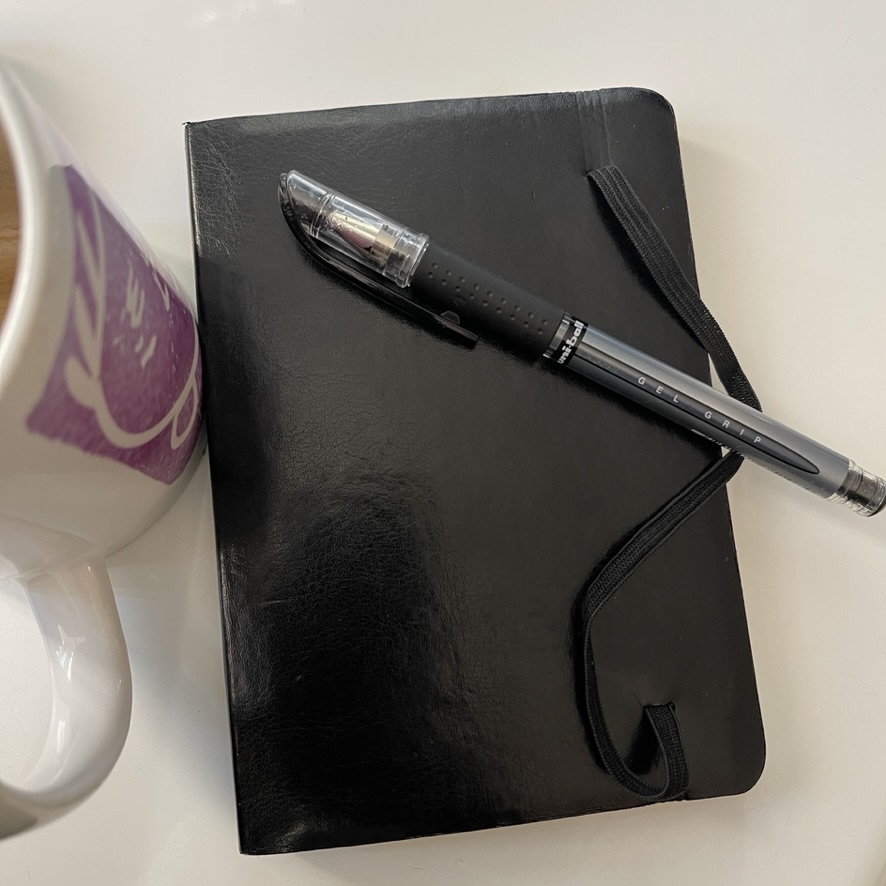
Buy the ticket. Take the ride. Bring a notebook.

That might be the first rule of Gonzo Spirituality.

It’s not my intent to glamourise chaos or to make suffering cool or to intimate that every bad habit is secretly holy. That would be too easy, and probably dangerous too. What I’m trying to get across is that the raw material of life can’t be understood by pretending it isn’t there.

The fear. The doubt. The jealousy. The ambition. The anger. The avoidance. The hunger. The old wounds. The ridiculous cravings. The part that wants transcendence and the part that wants another drink. The part that wants silence and the part that keeps refreshing the feed.

All of it belongs to the field.

Not all of it should be obeyed. But all of it can be listened to.

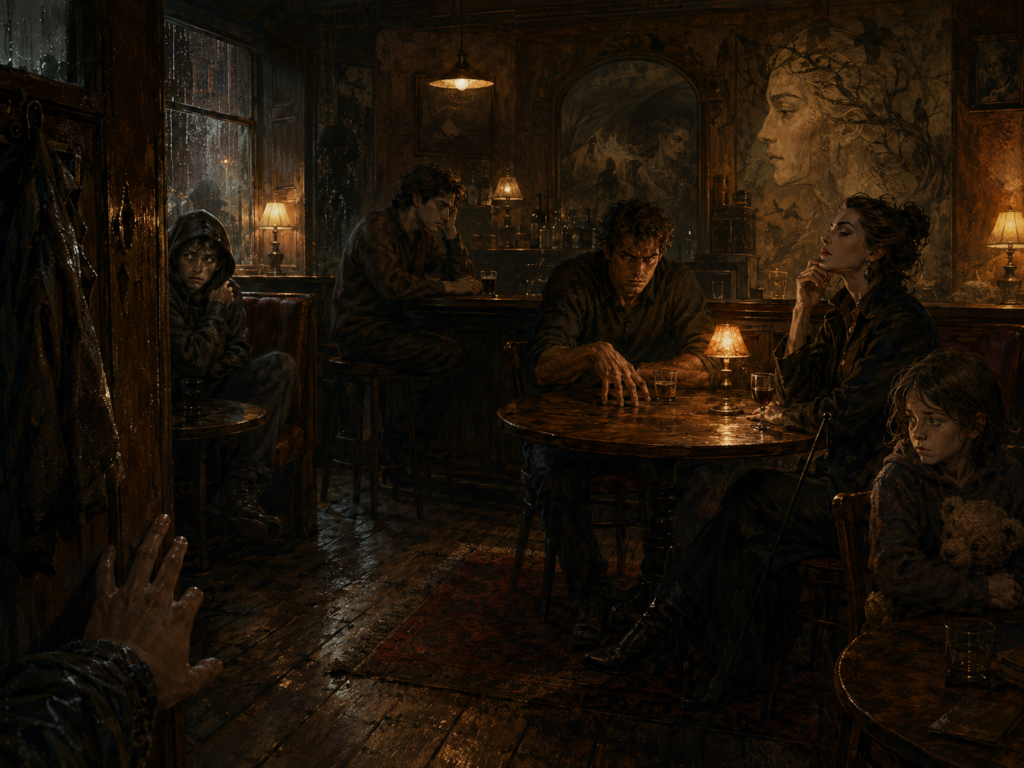
That’s where the image from the old post still grips me: the bar of the psyche.
Working Notes: Gonzo Spirituality and the Bar of the Psyche

I imagine walking into some dimly lit inner pub, somewhere off the main road of consciousness. The place smells faintly of old wood, soaked coats, and unfinished conversations. Sitting there already are the parts of myself I usually try to avoid. Fear has taken the corner seat. Doubt is nursing something dark. Anger is tapping its fingers on the table. The inner critic has opinions about the décor. The wounded child is quiet, watching the door.

The conventional move might be to banish them, heal them, silence them, transcend them, or surround them with light until they stop making trouble.

The gonzo move is different.

You sit down.

You buy the first round.

You ask, “So, what’s your story?”

This is where the older post now links directly to what I’ve been calling Narrative Alchemy. If stories are code, then these inner figures are not random glitches. They are subroutines, old scripts, survival programs, and half-written myths still running in the background. Some of them are outdated. Some are defensive. Some are dramatic as hell. But most of them began as attempts to protect something tender.

Fear may be guarding the edge of an old fall.

Anger may be protecting a boundary I never learned how to name.

Jealousy may be pointing toward a desire I haven’t admitted.

Doubt may be trying, clumsily, to keep me from self-deception.

Even the demons have data.

This doesn’t mean every inner voice is wise. Some are drunk. Some are liars. Some only know one song and will sing it badly until sunrise. But if I’m willing to listen beneath the noise, I may discover the wound, longing, or story they’ve been carrying.

That’s the work.

Not to turn the self into a clean, well-lit temple where nothing untidy is allowed through the door. More like turning the self into a strange old roadside tavern where the exiled parts can finally come in from the cold and be heard without being handed the keys.

This is where Gonzo Spirituality also pushes back against the dream of escape.

A lot of spiritual language can smuggle in a quiet contempt for ordinary life. The body becomes something to rise above. Desire becomes something to dissolve. The world becomes a distraction. Technology, noise, politics, relationships, work, money, ageing, grief, appetite, frustration — all of it becomes evidence that we are not yet “there.”

But where exactly is “there”?

And who benefits from convincing us that the sacred is always somewhere else?

The older post was already resisting that move. It wanted a spirituality that could happen in the middle of the life I had. Not after the inbox was empty. Not after the house was quiet. Not after I became a better, calmer, more luminous version of myself.

Right here.

In the day as it actually arrives.

In the walk.

In the blog post.

In the argument.

In the app notification.

In the muddy shoes by the door.

In the moment when I notice I’m irritated and, instead of pretending I’m above irritation, I ask what the irritation is trying to show me.

That feels close to what I now mean by existential consent.

Not passive acceptance. Not resignation. Not “everything happens for a reason” pasted over the wound like a motivational sticker. More like the willingness to begin with what is actually here.

This life.

This body.

This mood.

This history.

This nervous system.

This strange bundle of memory, appetite, language, contradiction, longing, and desire.

I don’t get another self to work with. I get this one.

So the practice becomes less about escape and more about authorship. Not authorship in the fantasy-control sense, as if I can simply rewrite reality by declaring a new story. But authorship as participation. As revision. As noticing the sentences I’m living inside and asking whether they are still true, still useful, still alive.

Gonzo Spirituality says: don’t wait until the manuscript is clean before you start reading it.

Read the messy draft.

Write in the margins.

Question the narrator.

Interview the villains.

Follow the footnotes.

Notice where the plot keeps looping.

And when necessary, revise the code.

This is where blogging enters the picture too. Because blogging, at least for me, has never simply been publishing. It has been a way of taking field notes from the ongoing experiment of being alive. The blog becomes the notebook on the road. The place where the life-material gets turned into language before it disappears. The place where confusion is allowed to become visible enough to work with.

In that sense, the old Gonzo Spirituality post belongs in the same lineage as Working Notes from the Textual Underground. It is another attempt to say: I am not writing from above the mess. I am writing from inside it.

The mess is not a failure of the method.

The mess is the material.

And maybe that’s why the piece still hums. Underneath the Hunter S. Thompson styling and the barroom imagery, there is a serious proposition:

Wholeness does not come from abandoning the life that made you. It comes from learning how to meet that life without flinching.

That includes the light, yes.

But also the shadow.

The awkward contradiction.

The part that still aches.

The part that wants more.

The part that sabotages.

The part that dreams.

The part that keeps walking.

Gonzo Spirituality is not a finished system. I don’t want it to become one. The moment it hardens into doctrine, it loses the very thing that makes it useful. Better to treat it as a working lens, a cracked map, a field method.

A way of entering the chaos with enough courage to listen.

A way of refusing sterile transcendence.

A way of finding the sacred not by floating above the world, but by paying closer attention to the strange, unedited texture of being here.

So yes, I still believe in the bar of the psyche.

I still believe in buying the demons a drink.

Not because they’re in charge.

Because they’ve been waiting a long time to tell their side of the story.
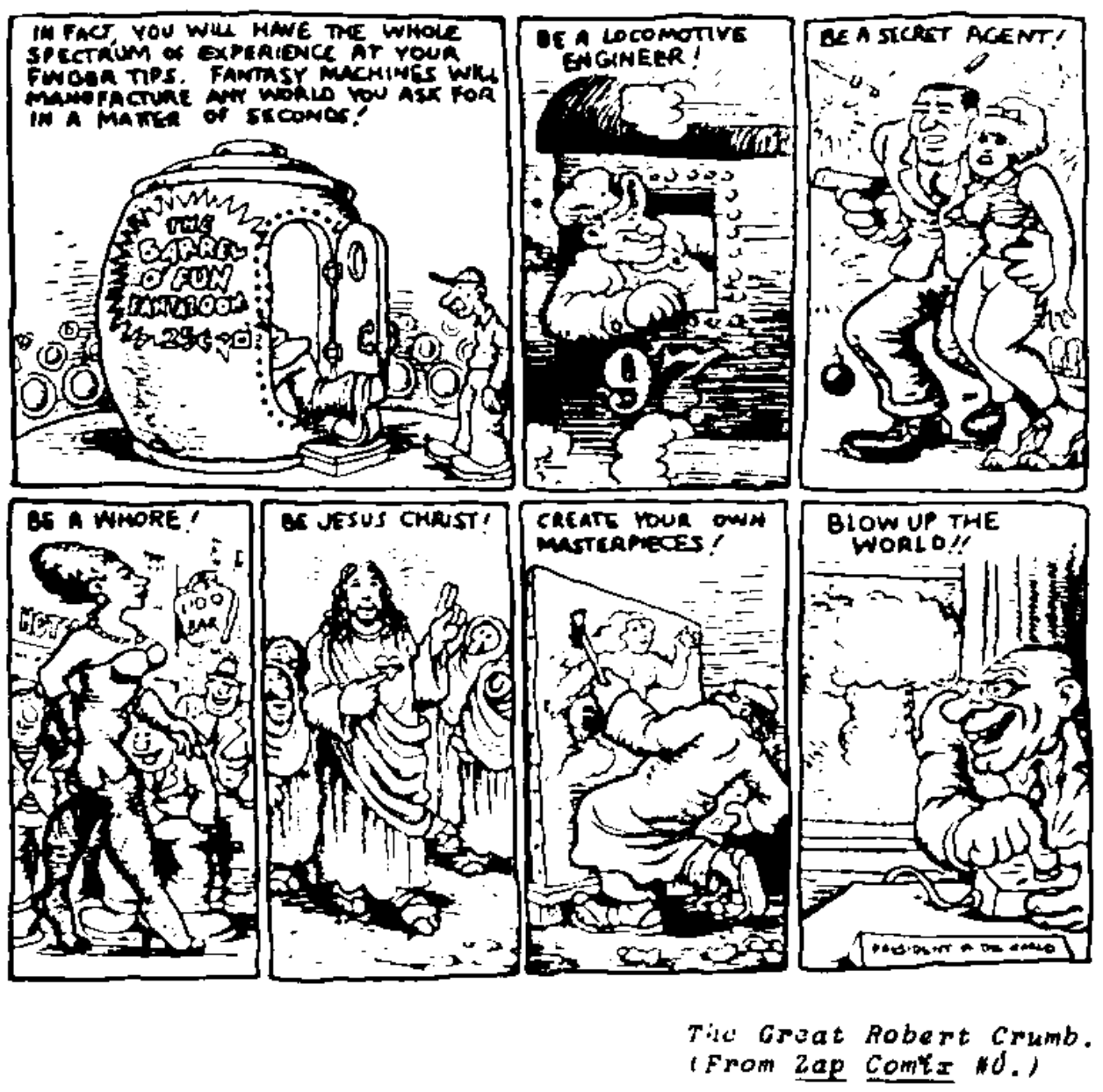
You will have the whole spectrum of experience at your fingertips, not as some tidy menu of moods, but as a roaring carnival of sensation, memory, dream, dread, hunger, laughter, grief, lust, silence, and starlight.

You will be able to wander from the first spark of desire to the last breath of surrender, from the mud of the body to the outer rings of imagination, from the old gods whispering in the basement to the unborn versions of yourself knocking on the roof.

Every door will open.

Behind one, childhood.
Behind another, apocalypse.
Behind another, a jazz band made of ghosts playing in a neon desert while your future self sells maps to people who have forgotten they are already lost.

You will taste cities you have never visited, remember lives you have never lived, fall in love with faces assembled from myth and electricity, argue with your ancestors, bargain with your demons, dance with machines, and wake up laughing in the ruins of some belief you used to call reality.

And the strangest part?

It will all feel intimate.

Not distant. Not abstract. Not like information.

Like weather moving through your nervous system.

Like the universe leaning close and saying, ‘Here, try this skin, this sorrow, this madness, this miracle, this one bright unbearable hour of being alive.’

Unhinged Bio

I stole this idea from Justin Brooke on his LinkedIn profile. It’s a FUN PROMPT, and what came back from ChatGPT was pretty cool. I also asked Claude; the results were good, but they lacked an edge. Anyway, the prompt is:

Write an unhinged BIO about me.

Here’s mine:

Clay Lowe is a walking footnote in the great unwritten manuscript of the universe.

Part blogger, part philosopher, part myth-drenched field reporter from the edge of ordinary life, he spends his days following the rhizome wherever it wants to go: down muddy footpaths, through obscure books, into the textual underground, across the strange borderlands where AI, memory, myth, and meaning start making eye contact.

unhinged bio

He is the kind of person who can go out for a walk, hear one bird say something cryptic from a hedgerow, and come back with a 2,400-word essay about consciousness, hypertext, Rousseau, and why your morning coffee might actually be a ritual of ontological rebellion.

Clay blogs as Soulcruzer, which is less a brand and more a flare fired into the night for other wanderers, misfits, seekers, notebook-hoarders, recovering productivity cultists, and anyone who suspects life was never meant to be reduced to calendar blocks and LinkedIn updates.

His current obsessions include mythic imagination, blogging as self-liberation, AI as a strange collaborative familiar, living artfully, walking as a method of thought, and building a life-first creative business that may or may not eventually involve a balcony in Crete, mountain air, sea light, and a suspiciously powerful cup of coffee.

He believes writing is not merely expression but excavation. Not content, but contact. Not performance, but a way of staying awake inside the mystery.

Approach with curiosity, strong coffee, and a willingness to follow the thread wherever it leads.

I liked it so much, I had ChatGPT make a magazine cover out of it.

Make Yourself

Saturday. Early. The Malvern Hills are doing something extraordinary with the light.

I’m writing from a little self-contained place just outside Mathon — a village on the western lee of the hills, technically Herefordshire now, though its soul has always been tangled up with Worcestershire. We picked it as a halfway point for the group. The geography just worked. But you don’t always know what a place is going to do to you until you’re sitting in it at 5am watching the sun come up from behind ancient hills, listening to sheep in the field beyond the garden.

sheep

The village is older than almost anything I can hold in my head. The name comes from the Old English maððum — “gift.” In 1014, Ethelred II gave this district to an ealdorman named Leofwine. By the Domesday Book it was already a significant parish, belonging to the Abbey of Pershore. The Church of St John the Baptist has stood here, in essentially the same form, for nine hundred years. The east gable uses cruck construction — two massive log beams forming an apex — a survival of medieval structural honesty that the Victorians somehow missed when they were enlarging everything else.

What gets me about Mathon is this. Half a million years ago, a great river ran through here, draining the West Midlands southward. Then the glaciers came. The ice blocked the path and created a massive lake where the village now sits. When the ice retreated, the river was gone. What had flowed south now flows north — a tiny brook called the Cradley, a whisper of what was. The landscape is a palimpsest. The reversal is written in the silt.

Mathon also gave its name to two hop varieties — the Mathon White and the Mathon Greening — and the industry was significant enough that Royal Worcester Porcelain created a pattern to celebrate it. The commercial hopyards are mostly gone now. But the hops still grow wild in the hedgerows. A feral memory of a vanished economy.

A landscape is never finished. It is just resting between movements of ice and water.


My week has been like the English weather. Overcast, then suddenly clear, then overcast again.

make yourself

Something happened last week that I can only describe as an unlocking. The philosopher in me — not the coach, not the narrative alchemist, not the Barefoot Philosopher brand — the actual philosopher, the one who’s been in there since before any of the professional identities existed — stood up. Just stood up and looked around at what I’d built and said: where am I in this?

I didn’t have a good answer.

I’ve been putting so much into Narrative Alchemy as the primary identity. And it’s real work, it matters, I believe in it. But I had the order wrong. The philosopher isn’t a subset of the narrative alchemist. The narrative alchemist is a subset of the philosopher. I had the whole thing backwards. And that kind of structural error has a way of making everything feel slightly off, like wearing shoes on the wrong feet. You can walk. But something nags.

The other thing surfacing is Soulcruzer. Again.

I keep doing this with the blog. I breathe it open, let it roam, and then I look at it through some marketing lens and start tidying. Start positioning. Add a niche, clarify the offer, give it a reason to exist that the market can understand. And for a while it looks presentable.

Then it sheds all of that and runs.

Every time. And I keep diagnosing this as a discipline problem, a strategic problem, a commitment problem. But sitting with it this week, I think it’s none of those. The blog knows what it is. I’m the one who keeps forgetting.

Soulcruzer wants to be digital Clay. Not Clay-the-brand. Clay, the actual person, thinking and wandering and working things out in public. The mirror, not the marketing brochure. I’ve been trying to turn a living thing into a shopfront.

I’ve been blogging since 2004. The blog has outlasted everything. Not because I found the right niche or the right strategy. Because at my best on it, I’m just actually present. Showing up as myself, following the thought wherever it goes, trusting that the mind in motion is the thing worth reading.


Then Incubus landed in my ear. I couldn’t escape the Make Yourself refrain. Had to stop and actually listen — this is what happens when the Philosopher is awake and the associations are running.

The song is a meditation on the fragility of a life unexamined. Brandon Boyd uses paper-mâché to describe the person constructed by external forces — social expectation, inherited scripts, the ambient pressure of the culture. At a distance, paper-mâché looks solid. It mimics the form of something substantial. But it is hollow. It won’t survive a change in the weather.

If I hadn’t assembled myself, I’d have fallen apart by now.

There’s a nod in there to something I’ve been thinking about for years. The psyche isn’t a finished product delivered at birth. It is a collection of fragments — biological drives, social conditioning, personal history — that will drift toward entropy unless there is a conscious assembler at the centre. To make yourself is to take responsibility for the glue.

And then the line that hits differently now: And if I fuck me, I’ll fuck me my own way.

The ultimate claim to autonomy. Better to fail by your own hand than to succeed as someone else’s project. There is a specific dignity in making your own mistakes. If you are going to be screwed — and the world will try — it is a radical act of sovereignty to ensure that even your self-destruction is one you authored.

The bridge moves somewhere more tender. You should make amends with you / if only for better health. Living a life that isn’t yours is exhausting. The amends required are between the person you are performing for the world and the self waiting to be assembled.

The song doesn’t offer a map. Only the consequence of failing to start.


The Malvern Hills are fully lit now. The sun is up. The sheep are doing whatever sheep do on a Saturday morning.

The philosopher is back. I’m not sure he ever fully left. I think he was just waiting for me to stop pretending he needed better positioning.

The Gap Between Understanding and Becoming

the gap between understanding and becoming

When psychology replaced mythology, we traded participation for explanation. We gained a remarkable vocabulary for describing the inner life, but in the process we lost something older and more difficult to name: a felt sense of belonging inside a meaningful drama. Myth did not merely tell us what was happening; it gave us a role to play, a pattern to inhabit, a way of recognising that our struggles were part of something larger than private confusion. Psychology, for all its brilliance, often stands at a slight remove. It helps us analyse the wound, trace its origins, and identify its mechanisms. But analysis is not the same as initiation. Description is not the same as transformation. And only now are we beginning to reckon with the cost of that trade: a world full of people who can explain themselves with increasing precision, yet still do not know how to step into a story that might change them.

This is not a complaint about psychology. The frameworks we now have for understanding the inner life, for mapping personality, tracing the patterns in how we attach and protect and sabotage ourselves, naming the voices that run beneath conscious awareness, are extraordinary compared to anything available two generations ago. The vocabulary is richer. The precision is greater. The compassion built into contemporary therapeutic thinking is genuine. None of that is in doubt.

In many ways, we are more self-aware than any generation that came before us. We can identify our triggers in real time. We can name the defence as it activates, watch the pattern unfold even as we are inside it. There is a strange lucidity to modern selfhood, a capacity to observe ourselves with a kind of clinical clarity that would have been unimaginable in a mythic age.

And yet, something curious happens at that point of recognition. The insight lands, but the life does not move. You can see the pattern and still enact it. You can understand the script and still find yourself speaking the lines. The knowledge accumulates, but the trajectory remains unchanged. It is as if awareness has illuminated the structure without altering it, like turning on a light in a room whose furniture you continue to walk into.

What is in doubt, then, is not the value of understanding, but its sufficiency. Whether knowing your patterns is the same thing as being transformed by them. Whether clarity alone has the power to reorganise a life. Or whether something else is required—something closer to participation than observation, to inhabiting a different story rather than simply analysing the one you are already in.

Mythology was never primarily about explanation. That is a mistake we make because we live downstream of the scientific revolution, which installed explanation as the dominant mode of knowledge. When we look back at mythological systems — the Greeks, the Norse, the Vedic traditions, the shamanic cosmologies that preceded and sometimes persisted alongside all of them — we tend to read them as primitive attempts at what science later did properly. Proto-science. Bad explanations that served their purpose until better ones arrived.

But this misreads what mythology was for. Mythology was not trying to explain the world in the way science does. It was trying to give people a place inside it. A role. A character to inhabit. The hero’s descent and return, the underworld journey, the confrontation with the monster that turns out to hold the treasure: these were not stories about what the world contains. They were maps of what the self does when it encounters the challenges that make a life. They were participatory. They located you inside a larger story and gave you something to be.

When the secular world decided the gods were no longer credible, it handed psychology the job of filling that space. And psychology, reasonably enough, tried to do what it knew how to do: explain. Map. Name the mechanisms. Build the models. The entire ambition of modern psychology — to be a science rather than a wisdom tradition — meant it had to work in the register of description. This is what your attachment style looks like. This is what happens neurologically when you experience threat. These are the cognitive distortions running underneath your anxiety.

All of this is genuinely useful. Knowing your patterns matters. Recognising the inner critic, understanding why you pursue certain people and retreat from others, being able to name what is happening inside you in real time — all of this moves the needle.

But it does not give you a place inside a larger story. And that, I am increasingly convinced, is what people actually need. Not just to understand themselves better, but to locate themselves somewhere. To feel that their struggle has shape. That what they are going through is not random noise but something that makes sense inside a larger arc.

People come back from self-development workshops having genuinely understood something about themselves. The insights they gained are real. The framework is sound. The facilitator has done their job. For a brief moment, there is clarity—a sense that something has clicked into place, that the pattern has finally been seen for what it is.

But a few days later, they find themselves moving through the same loops, reacting in the same ways, inhabiting the same emotional terrain. Nothing, in any meaningful sense, has changed. Because understanding, on its own, does not reorganise a life.

What was missing was not more insight, but a shift in narrative gravity. Understanding without a new story to inhabit is like having a map of a country you have no intention of visiting. The map may be accurate, even beautifully detailed, but it does not move your feet. It does not place you on the road. The territory remains unknown, not because it cannot be reached, but because nothing has compelled you to enter it.

And so the gap persists. The understanding had happened. The becoming had not.

NLP was built precisely to close this gap — or at least that was the ambition. Bandler and Grinder modelled people who were demonstrably transformative: Milton Erickson working through trance and metaphor, Virginia Satir rearranging family systems through the sheer quality of her attention, Fritz Perls cracking open something in his clients that more conventional therapy had not touched. The founders of NLP watched what these people did and tried to extract the pattern. Strip out the personality, the style, the ritual, isolate what actually produces change, then replicate it.

What they captured was real. The patterns they identified — the structure of how people represent their experience, the way submodalities of internal imagery encode emotional charge, the role of language in maintaining or dissolving limiting states — these are genuine discoveries. NLP works. I have used it for two decades and I can tell you it works.

But here is what I think got lost in the translation from modelling to method. Erickson’s meandering stories, his elaborate metaphors, the particular quality of the trance he induced through the cadence of his speech — these were not decorations over a mechanism. They were the mechanism. They worked because they bypassed the analytical mind and spoke directly to the part of the self that lives inside stories. The part that does not respond to argument, to framework, to correctly identified cognitive distortion. The part that responds to narrative. To image. To symbol. To the felt sense of being located inside something that is going somewhere.

When you extract the pattern and remove the participation, you get a technique. Techniques are useful. They are not transformative in the way the original was transformative.

The alchemists had a phrase for the movement they were tracking: solve et coagula. Dissolve and coagulate. The work of transformation requires that whatever currently exists be broken down before anything new can form. The problem with purely explanatory frameworks is that they describe the composition without initiating the dissolution. You understand yourself more clearly — and the structure that needs to change remains intact. Knowledge of your cage does not open the door.

What narrative alchemy is trying to restore is the participation function. Not to replace the explanatory frameworks — the typologies, the coaching models, the neuroscience — but to add back what they leave out. The story you are living inside is not just a description. It is a set of instructions. Change the story and you change the instructions. Change the instructions and the behaviour shifts — not because you have finally analysed yourself into clarity, but because you are now inhabiting a different narrative. The self does not respond primarily to argument. It responds to the story it finds itself in.

The philosopher Paul Ricoeur spent decades making this case, quietly and precisely, in a body of work that is still underread outside academic philosophy. His argument: all self-knowledge is interpretive, and narrative is the primary medium of interpretation. We do not stand outside our lives and observe them neutrally. We are inside a story, and the story is inside us, and the two are not fully separable. Change the narrative frame and you change the interpretation. Change the interpretation and you change what is available to do.

This is not mysticism. It is not woo. It is a claim about how minds actually work — about the fact that we do not experience raw reality but always a mediated version, and that the medium of mediation is story.

Which is also why the mythic frameworks worked as well as they did. They did not give people better explanations. They gave people better stories to be inside. The hero goes into the dark not because they understand the dark but because the story requires it. The descent has meaning because the story gives it shape. Without the story, the descent is just loss. Just difficulty. Just the period in a life when everything went sideways. With the story, it is the part of the arc that precedes the return — the necessary dissolution before the new form can coagulate.

Psychology stripped out the story in its ambition to be scientific. What remained was the mechanism without the meaning. The mechanism is valuable. But people do not live in mechanisms. They live in stories. And the stories they are living in, the ones telling them they are not enough, that they missed their moment, that the best of their life is probably behind them, that who they are is fixed and known, those stories are running at full volume underneath every framework, every insight, every accurately identified pattern.

The question is not whether you understand your patterns. The question is what story you are living inside. And whether that story has the shape that growth actually requires.

That is where the work begins. Not with better analysis. With a different story.

The Story You Call Yourself

story
story

You have never met yourself. Not directly. What you have met is a story about yourself, told so many times and with such conviction that it started to feel like the ground you stand on rather than the narrative you constructed to explain where you are standing.

This is not a metaphor. Or rather, it is a metaphor, but it is also the most literal description of what is happening inside you at any given moment. The self you experience as solid, as continuous, as obviously you, is a curated selection of memories, interpretations, emotional habits, and inherited scripts, assembled into something that feels coherent mostly because coherence is what the storytelling mind does. It fills gaps. It smooths contradictions. It takes the raw chaos of lived experience and shapes it into a protagonist with motives, a trajectory, and a character arc that appears to go somewhere.

The interesting question is not whether this is true. It is almost certainly true. Neuroscience, philosophy, and depth psychology have been converging on this point for decades now, from different directions and with different vocabularies, but arriving at the same territory. The interesting question is what you do with the recognition.

There are broadly two responses, and they could not be more different.

The first says: if the self is a story, then the self is an illusion. Dissolve it. See through it. Recognise the arbitrariness of the narrative you have been mistaking for reality, and let it go. This is the classic move in much of Eastern philosophy, and it is a powerful one. There is genuine liberation in seeing that the person you have been defending, promoting, worrying about, and organising your entire life around is, at bottom, a pattern of thought rather than a fixed entity. The Buddhist tradition has been making this case for two and a half thousand years, and the experiential depth of that insight is not something to wave away.

But the second response is the one I find more interesting, more honest about the way human beings actually work, and more useful in the lives of the people I spend my time with.

If the self is a story, then the self can be rewritten.

Not dissolved. Not transcended. Not seen through and abandoned. Rewritten. The way you rewrite any code that is no longer producing the output you need.

I have spent over two decades working with people in rooms, on calls, and in coaching conversations where the presenting problem is almost never the real problem. Someone says they want to be more confident in presentations. Someone says they want to stop procrastinating. Someone says they need a better leadership style. And underneath every one of those requests, without exception, is a story. A story about who they are, what they are capable of, what is permitted to someone like them, and what the consequences would be if they stepped outside the lines their own narrative has drawn.

The story is invisible to the person living inside it. That is the whole point. A story you can see is a story you can question. A story you mistake for the ground beneath your feet is one that runs your life.

NLP understood this from the beginning, even if the language it used to describe it was often more clinical than poetic. The core insight of neuro-linguistic programming is that internal representations shape experience. Change the representation, change the experience. The stories we tell ourselves, the images we construct, and the internal dialogue we run on loop are not reflections of reality. They are the architecture of subjective reality. They are the code.

Depth psychology got at the same thing from a different angle. Jung talked about the persona, the mask we wear, the constructed face we present to the world. But the deeper Jungian insight is that the persona is not a deception. It is a necessity. We need stories about who we are in order to navigate a world that is far too complex to engage with in an unmediated way. The problem is not the story. The problem is mistaking the story for the whole truth, forgetting that it was constructed, and then defending it as though your survival depends on it. Which, psychologically, it does. Or at least it feels that way. And in the domain of inner experience, feeling that way and it being that way are functionally identical.

This is where the philosophy of “as if” becomes genuinely useful, not as an abstract philosophical position but as a practical tool for living. Hans Vaihinger argued that we operate constantly on the basis of useful fictions, frameworks we adopt not because they are ultimately true but because they serve us. The self-story is the largest and most consequential useful fiction any of us will ever construct. And the pragmatic question is not “is it true?” The pragmatic question is “is it still serving you?”

The story updates itself constantly, but it updates in the direction of its own assumptions. If the story says you are someone who struggles with authority, you will interpret ambiguous interactions with authority figures through that lens. The interpretation reinforces the story. The story shapes the next interpretation. The feedback loop tightens. Over years, over decades, the story calcifies into something that feels so obviously true that questioning it seems absurd. Of course that is who I am. I have evidence. Years of it.

What you have is years of confirmation bias running inside a narrative framework you never consciously chose. That is not evidence. That is a closed loop.

Opening the loop is the work. Not dissolving the self. Opening the loop. Recognising that the story is a story, which means it has an author, which means the author can revise it.

I work with psychometric profiles in my coaching practice. Lumina Spark and Clarity4D are personality frameworks that map out how a person tends to think, feel, communicate, and relate. These instruments are useful not because they tell you who you are but because they give you a map of the story you have been living inside. The numbers on the profile are not your identity. They are a snapshot of your current narrative, rendered visible. And once it is visible, you can do something with it. You can notice where the story has calcified. You can see where overextended strengths have become limitations. You can ask: is this the version of me I want to be running?

The existentialist in me finds something deeply satisfying about this. Sartre insisted that existence precedes essence, that we are not born with a fixed nature but instead create ourselves through our choices. The story-as-code lens says something compatible but more specific: we create ourselves through our narratives, and those narratives can be revised at any point. Not easily. Not without resistance. The old story fights back. It has momentum, emotional charge, and the weight of years behind it. Rewriting is not a weekend workshop. It is an ongoing practice, a discipline of attention and honesty about what is actually running underneath the surface.

But it is possible. That is the part that matters. The code is not read-only.

There is a tendency in certain philosophical circles to treat the recognition that the self is a story as the end of the journey. You see through the illusion, and that is the insight. Full stop. I think this mistakes the beginning for the destination. Seeing the story is the prerequisite. The real work is what comes after: deciding what to write next.

Not from some position of unlimited freedom, as though you can become anyone by thinking hard enough. The story you are rewriting is embedded in a body, a history, a set of relationships, a culture, a nervous system with its own patterns and preferences. You are not writing on a blank page. You are revising a manuscript that already has a structure, characters, subplots running in the background. Revision respects what is already there while changing the direction it is heading.

This is what I mean when I say stories are code. Not as a slogan. As a description of how the inner world actually operates. The narratives running inside you are producing your experience of being alive, right now, in this moment. They are shaping what you notice and what you ignore, what feels possible and what feels closed off, who you believe yourself to be and who you believe you could become.

The question is not whether you are living inside a story. You are. The question is whether you are going to keep running the version that was written by accident, by inheritance, or by the unexamined accumulation of years. Or whether you are going to pick up the pen.

What Is a Personal Myth?: And Why You Might Be Living Inside One Without Even Realising It

Somewhere between memory and meaning, between dream and dialogue, there lives a story. You didn’t write it—not exactly. But it’s been writing you for a long time.

I’ve been reading The Stories We Live By by Dan McAdams—a quiet gem of a book that sneaks up on you like a ghostwriter of your own life. McAdams argues that we are, all of us, living inside personal myths. Not just telling stories, but being told by them. These myths are the internal scripts that make sense of our past, shape our choices, and quietly predict our future.

But here’s the strange part: Most of us don’t even know what story we’re in.

And if you don’t know the myth you’re living… you can’t change it.

So what is a personal myth, really?

It’s not just a biography. It’s not your LinkedIn profile or your résumé. A personal myth is the narrative architecture beneath your identity. It’s the story you tell yourself (and the world) about who you are, what life means, and where you’re going.

It answers questions like:

Who am I?
Where did I come from?
What am I here to do?
And why does any of it matter?

It’s part origin story, part worldview, part future script. And it lives in the shadows of your language—your metaphors, your memories, your dreams, and the patterns that keep repeating themselves in your life.

We Don’t Always Write These Myths Ourselves

Some we inherit.
Some are gifted.
Some are survival strategies that calcify into identities.

You may be living a myth handed down by your family. Or by your culture. Or by a younger version of you that had to make sense of the world with the tools they had. Maybe you’re carrying the weight of the “Rescuer.” Or the “Outsider.” The “One Who Must Prove Himself.” The “Good Girl.” The “Fixer.” The “Wanderer Who Never Lands.”

These aren’t just roles. They’re rules—unspoken laws about what’s allowed, what’s forbidden, and what must be sacrificed.

Here’s the good news:

Myths are made.
And they can be remade.

The soul doesn’t want to be trapped in a story that no longer fits. It longs to rewrite the tale—to step into a new chapter, a new archetype, a new voice.

But first… you have to see the story for what it is.

How to Spot Your Personal Myth in the Wild

You can’t always look it up. But you can start listening.

Try this:

  • What’s the recurring pattern in your life you can’t seem to shake?
  • What’s the emotional theme that underpins your decisions—guilt, duty, fear, freedom, longing?
  • If your life were a myth or fable, what would it be called? What role would you play?
  • What story did the world hand you? What story are you now choosing to live?

These aren’t just journaling prompts. They’re lanterns. They light the path to the story beneath your story—the one you’ve been telling even in your silence.

Your Myth Is a Mirror

And here’s the thing: if you can see it, you can shape it.

You’re not doomed to live inside someone else’s story. You’re not required to perform the same chapter over and over.

You can choose a different myth.

A truer one.

A myth where your wound becomes the opening.
Where your exile becomes the origin.
Where the life you’ve lived becomes fuel for the life you’re about to write.

Final Thought from the Campfire

I won’t pretend to know what your story is. That’s not for me to decide.

But I can hold up the mirror. I can offer the question beneath the question. And I can invite you to listen—not to the loudest voice, but to the quieter current flowing beneath it all.

The one that’s been whispering a different myth.
One that doesn’t perform. One that doesn’t please.
One that remembers who you are—and dares to begin again.

So I’ll leave you with this:

If your life were a myth…
What’s the theme trying to emerge?
What story are you ready to stop telling?
And what happens in the next act—when the pen is back in your hand?

If this sparked something for you, feel free to drop your story fragment in the comments or start a conversation around your own personal myth. Let’s keep the digital campfire burning.