
There are two kinds of stories: the ones you tell about yourself, and the ones so large you’ve forgotten anyone is telling them.
Every so often I catch one of the first kind halfway out of my mouth. “I’m not the kind of person who…” The rest of the sentence hardly matters. The interesting part is the speed with which the narrator moves in, checks the record, and decides what someone called Clay would or would not do.
I don’t remember appointing this narrator. Most of the time I don’t hear him. He speaks in my voice and knows enough history to sound convincing. A preference becomes a trait; an old embarrassment becomes a law about what is possible this afternoon.
Once you hear the voice, the solid self begins to look less solid. Zoom in and you find a life being narrated as it is lived. Zoom out far enough and you find whole cities, economies and civilizations doing the same thing. The scale changes. The trick does not.
Worcester has a needle that taught me how to see the trick. From a distance it looks like part of a church. Up close, the church is gone.
The Autobiography You Never Chose
We tend to speak about the self as if it were an object carried somewhere inside the body. I have a self in much the same way that I have a passport, a favourite jacket and a National Insurance number. It has qualities. It has a past. It persists through time. When I say “I”, this inner object steps forward to answer.
The closer I look, the harder it is to find.
What I find instead is activity: remembering, selecting, explaining, defending, anticipating, revising. A face in an old photograph becomes “the person I was then”. A difficult year becomes “the time I lost my way” or “the year I finally stopped pretending”. A choice made under pressure gets recruited as evidence of courage, cowardice, loyalty or fear. The event does not arrive with its meaning attached. The narrator supplies it, often years later, then edits the earlier chapters so that the latest version feels as though it had been there from the start.
This does not mean the self is fake. A story can be constructed and still be true enough to live by. It means the self is a process rather than a possession: a telling under way, not a book already printed and bound.
That distinction opens a little space around the facts.
I have old drafts of myself stored everywhere. Some exist in notebooks and blog posts. Others live in the bodies of people who knew me at a particular time. The Army officer. The trainer. The coach. The man who was certain he needed a plan. The man who kept changing the plan. None of them was an impostor. Each was a working version assembled from the demands, desires and available language of the moment.
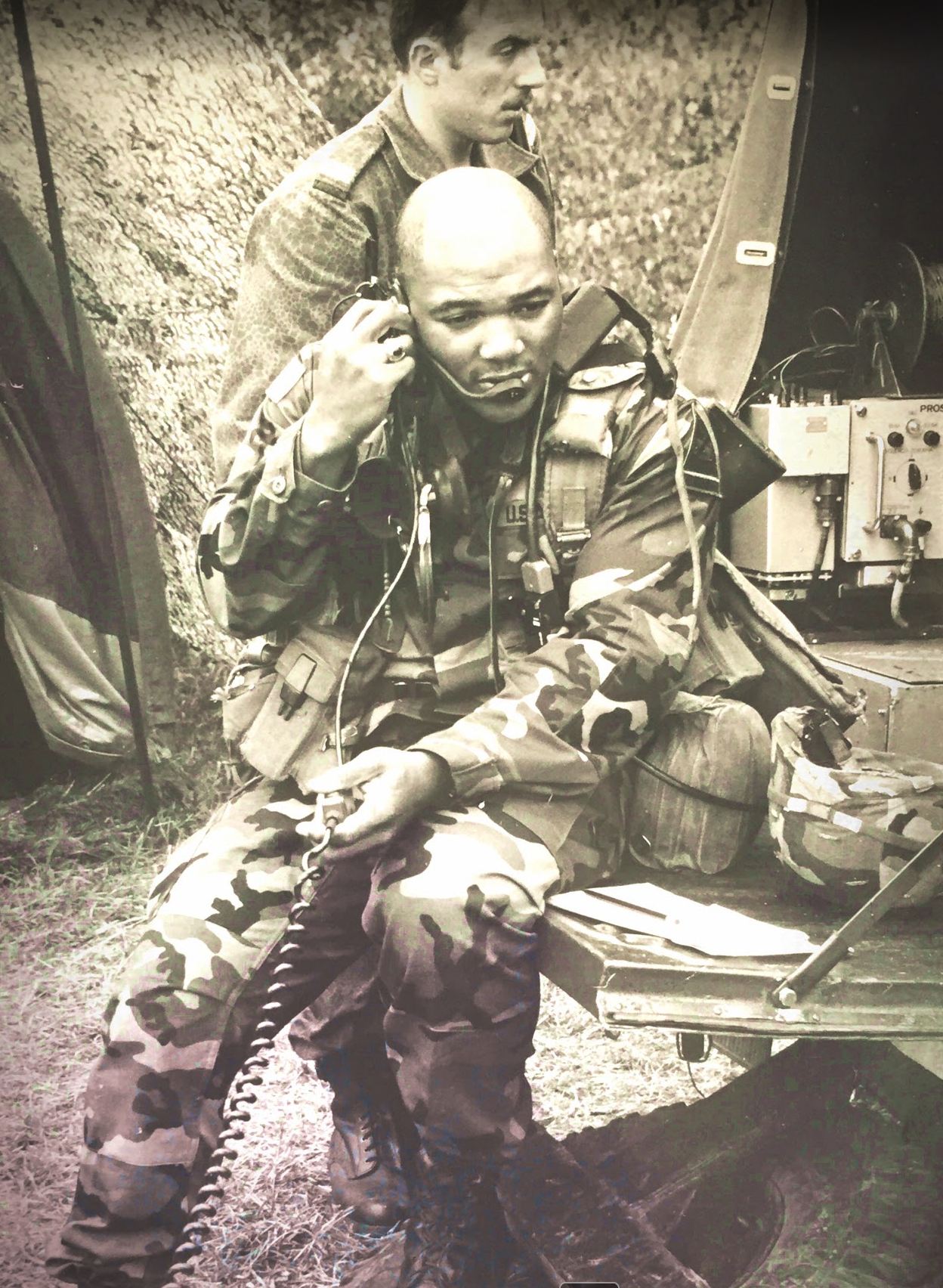
Some passages have changed without ceremony. I no longer need to make a declaration each time I outgrow an opinion or discover that I can do something I had placed outside my character. I act differently for long enough and the narrator catches up. The new behaviour enters the record. The old sentence begins to sound dated.
Other passages survive long after their circumstances have gone. We read them aloud out of habit: I’ve never been good with money. I always lose interest. People like me don’t do that. I’m too old to begin again. The sentence may have started as a description of one period or one wound. Repetition turns it into identity. Identity then edits perception. We notice the evidence that keeps the sentence intact and pass over whatever might trouble it.
Take two people carrying the same hard event. One tells it as the moment life singled them out for punishment. The other tells it as the period in which they learned what they could survive. Neither narration changes what happened. Neither should be used to tidy away injury, grief or injustice. The second person still suffered. The first may have learned a great deal. “Victim” and “learner” are not moral ranks.
But the narration changes what the event is allowed to do next. One version keeps the past in the role of author. The other places the event inside a life that is still being written. The difference shows up in attention, expectation and action: which invitations we notice, which risks feel available, which kinds of help we can accept, what we imagine will happen when we try.
This is where reality becomes participatory without becoming wishful thinking. We do not make rain stop by describing ourselves as dry. We do not narrate poverty, illness or another person’s power out of existence. The world pushes back. Bodies, institutions and bank balances have their say.
Yet our telling helps decide which part of that world we meet.
A morning can begin with the sentence, “I’m already behind.” Once spoken, it recruits the inbox, the unwashed cup, the unfinished draft and the missed call. By nine o’clock the whole room has joined the prosecution. Another sentence might begin with the same facts: “There is more here than I can finish today. What matters now?” Nothing external has vanished. The cup still needs washing. The email still waits. But attention has stopped gathering evidence for failure and started making a choice.
That is authorship at its least glamorous and most useful. Not declaring yourself the hero of a new life. Not pasting a triumphant caption over pain. Catching a sentence early enough to keep it from becoming the only account in the room.
If this were only about the individual, it would be self-help. The unsettling part is that the same machinery is running at scales too large for any one person to see at once.
The Needle: A Story You’re Standing Inside
I came out of the car park in Worcester and headed towards a spire.
I wasn’t trying to complete the city. There was no list of attractions in my hand, no pressure to collect the right photographs. I had time before meeting the rest of my crew, so I followed the thing that caught my eye. Above the modern buildings, a narrow point of stone marked the sky. From where I stood, I assumed there would be a church beneath it.
There wasn’t.
Glover’s Needle is the tower and spire that survive from St Andrew’s Church. The church body was demolished in 1949. Up close, the structure feels both substantial and strangely incomplete. Gates keep you from entering most of it, but I found a place where I could put my hand on the stone. The large openings hold no glass. Sky, trees and newer buildings occupy the frames where an interior once separated sacred space from street.
Near the base lay someone’s sleeping gear.
That stopped the ruin becoming picturesque. Here was the remnant of a building that once offered one kind of shelter, standing beside the evidence of a person needing another. Cars went by. People crossed between the college buildings. The old church had lost its walls, but grief, hunger, hope, loneliness and the need for somewhere to lie down had not left the neighbourhood.
I walked around the Needle trying to read it. That is one way to describe mythogeography: reading a place with more than the official caption switched on. Dates and architecture matter, but so do the body, the name, the missing wall, the discarded object, the angle from which the ruin still pretends to be whole. A place contains the story printed on its plaque and the stories the plaque cannot hold.
St Andrew’s had stood on the site for centuries. A storm destroyed its earlier spire in 1733; Nathaniel Wilkinson rebuilt the spire in 1751. Worcester’s glove trade supplied the nickname. People looked at the tall, narrow structure and called it Glover’s Needle, turning an ecclesiastical landmark into an emblem of the city’s labour and craft.
Already the stone carried more than one account. It pointed towards heaven and towards the workshops. It belonged to the parish and to civic imagination. It ordered a skyline while bells ordered time.
Then the city changed around it. Housing near the church came down in the 1920s. The congregation dwindled. The building decayed. In the 1940s the council accepted the church from the Bishop of Worcester and chose to demolish the body, create a garden of remembrance and leave the tower and spire standing alone.
The Needle did not pass through four tidy historical costumes, each replacing the last. The stories overlapped. That is closer to how places work. Still, I could feel at least four lives pressing against one another: parish church, glovers’ landmark, stranded relic, civic monument. Faith, labour, loss and heritage all claimed the same vertical line. Each telling lit certain details and pushed others into shade.
The most forceful narration was the gap itself. Someone decided that the tower would remain and the nave would not. The demolition created the object I encountered. Worcester did not simply preserve its history; it edited it. The skyline kept the upward gesture. The street lost the room that had once gathered bodies beneath it.
That edit changed what a passer-by can imagine. The isolated spire tells two stories at once: endurance and disappearance. It can serve as heritage, navigation point, memory, peregrine perch or portal, depending on who approaches and what they carry.
The surroundings have kept revising it. Worcester College stands close by, with the Arts Centre and the library in view. I remember looking through a window into a lecture room and seeing the phrases “The Heart of Worcestershire” and “Love to Learn”. The old parish had gathered people around salvation, duty and a sacred order. The college gathers them around skills, possibility and a future. A spire, a library and a theatre now share the ground: faith, knowledge and imagination standing within sight of one another.
Then I walked down towards the Severn. From the river I turned and looked back. Trees concealed the missing body, and the spire performed its small trick again. If you did not know the church was gone, you would see a church. The eye supplied the absent building because the surviving outline gave it enough to work with.
If you didn’t know, you wouldn’t know.
We often see the surviving outline of a belief, an institution or an identity and assume the whole structure remains behind it. We let the visible gesture stand in for the vanished interior. Up close, the gates and empty windows tell another story.
Mythogeography gives the official account some company. It asks who chose the plaque, whose labour became a nickname, whose home was cleared, who sleeps beside the monument now, what the tourist photograph crops out, and what the body notices before the mind has prepared a theory. It reads the surface without trusting the surface to be the whole place.
Stand in front of the Needle long enough and a disorienting thought arrives. If something made of stone can carry so many biographies, what about the things made almost entirely of language?
Money. Progress. Justice.
You cannot trip over justice in the street. Money has coins and notes, servers and ledgers, but its force comes from agreement, law, habit and belief. Progress can point to antibiotics, sewers and fewer children dying before adulthood; it can also make a larger television or a faster delivery service sound like proof that history is moving in the right direction. These words do not float harmlessly above the physical world. They tell us what to build, reward, measure, defend and destroy.
Consider economic growth. In the dominant telling, a healthy economy grows. Politicians of opposing parties argue about who can produce more of it, not whether endless expansion remains a sensible aim on a finite planet. Rising gross domestic product becomes the main plot. Forests, care work, exhaustion and polluted rivers appear as side characters, if they enter the account at all.
Degrowth begins by refusing that plot. It proposes a planned, democratic reduction of production and consumption, especially where material use is highest, alongside redistribution and a shift towards social and ecological well-being. You can reject its policies. You can argue about feasibility, justice and who would bear the cost. But before degrowth becomes an economic programme, it performs a narrative act: it removes “more” from the role of automatic good.
Once that sentence cracks, other questions enter. Growth of what? For whom? Paid for by whom, living where, under what conditions? Which forms of life flourish when output rises, and which ones get converted into fuel for the graph?
The same pattern appears elsewhere. Marriage changed when enough people stopped treating it as a fixed natural arrangement and recognised the law’s story about whose love counted. Smoking changed when the suave adult with a cigarette became, through science, testimony and policy, a person inhaling an addictive product sold by companies that knew the harm. The physical acts did not change first. Their public meanings did, then rooms, laws, habits and expectations changed around them.
Changing the story does not guarantee a better world. Propaganda changes stories too. So does advertising. A new narration can hide damage as efficiently as an old one. The point is less comforting: what we call reality already contains narration, and someone always benefits when the telling disappears from view.
The Same Spell, Different Scales
The machinery looks similar at both scales.
A sentence gets repeated. Repetition wears away the quotation marks. We forget that someone once chose the words. Description hardens into fact, and fact begins issuing instructions.
“I’m not the kind of person who…”
“A successful economy must grow…”
“That is just how the city is…”
Personal mythology and civilizational mythology share this movement from telling to forgetting. The difference lies in how revision happens.
I can catch one of my own sentences and decide to test another. The change may take practice, and old wounds do not yield because I have found a clever phrase, but a personal myth can turn on a choice. I can make one phone call, take one unfamiliar road, refuse one inherited role, then give the narrator new evidence to work with.
No one can revise a civilization alone. Collective myths have laws, markets, schools, rituals, architecture and armed power behind them. They have winners who will defend the plot and people whose survival depends on arrangements they did not choose. Telling seven billion people a better story is not politics. It is a slogan looking for a stage.
Collective revision happens through accumulation and struggle: a word coined, a testimony believed, a strike held, a law challenged, a household organised differently, an old building used for a new purpose. Enough people act as if another account might be true. Institutions follow late, resist, absorb the language, or change shape. The new story remains partial and contested because other narrators are still speaking.
I am responsible for my telling, but I am not sovereign over the conditions in which I tell it. My private revision is neither nothing nor everything. It is one vote cast in language and behaviour for the kind of world I am willing to help rehearse.
This is where personal mythology, change magick and mythogeography meet for me. Personal mythology reads the story called “me”. Change magick treats belief as something to test rather than a prison that must be obeyed. Mythogeography walks into the material world and looks for the edits that power has made there. Each practice asks a version of the same question: what story am I standing inside, and what becomes visible when I notice the telling?
The Needle taught me to ask that question with my hand on stone. It also taught me not to stop at the first answer. Church, industry, monument, absence: each account revealed something. None owned the place.
Perhaps the same courtesy applies inward. The former officer, trainer, coach, writer, husband, father, seeker and fool do not need to fight for the title of the real self. They are voices in a life that remains under narration. The work is not to find the final edition. It is to notice which voice has seized the pen and whether the next sentence leaves room to live.
Revisioning
When I think of Glover’s Needle now, I return to the view from the river.
The spire rises above the trees and the missing church comes back through expectation. My eye completes the structure. Then I remember the walk towards it: the gates, my hand on the stone, the empty window holding sky, the sleeping gear near the wall, the college slogans, the steps descending towards people reading beside the Severn.
The place did not give up one true meaning. It taught me to move between tellings without becoming careless about the facts. The church existed. The nave was demolished. Someone needed shelter. The river kept moving. Around those facts, narrators selected, framed and forgot.
Three small practices follow from that walk:
- The audit: Catch one “I’m not the kind of person who…” sentence this week. Ask when it entered the story and whether your life still supports it.
- The reading: Choose one object in your town and trace its biographies. Read the plaque, then walk around the back. Practise re-narration on stone before attempting it on yourself.
- The catch: Notice one inherited assumption in your speech: growth, progress, success, “that’s just how things are”. Put the quotation marks back around it and listen for who is speaking.
From the river, the Needle still looks whole. That may be its final gift: the reminder that a convincing outline can make us invent the structure behind it.
Discover more from soulcruzer
Subscribe to get the latest posts sent to your email.