Status Log

Last Check-in

Worcester, Worcestershire, United Kingdom, UTC+1
BlueSky Latest Posts

Latest Notes

restarting the community efforts

I’m restarting the community pages here using BuddyPress and BBPress. If you’re not already a member of the site, you can register and create your own profile here on soulcruzer. I’ll get a group and a forum started shortly.

Read More »

seeing the world through the lens of myth and symbolic storytelling

I’ve been dipping in and out of Stephen Larsen’s book, The Mythic Imagination: The Quest for Meaning Through Personal Mythology for a while now. It’s become an ongoing companion that keeps nudging me to explore how I exercise my own mythic imagination. I find myself tapping into this deeper way of seeing whenever I’m walking in the woods or doing one of my shamanic journeys. There’s something about being in those spaces, surrounded by nature or in the stillness of inner exploration, where myth and symbol come alive for me. It’s as if they rise up from the earth or

Read More »

metamodernism may offer a way forward for me

Metamodernism seems like an interesting space to play in. I came across the term a while back when I was exploring postmodernism, and I asked the question what comes after postmodernism. I didn’t go any further than asking the question. But now metamodernism has resurfaced and has my attention. What it is: Metamodernism is an intriguing concept that seeks to describe the cultural landscape we’re living in—a world that’s not quite postmodern but something beyond it. It’s a reaction to the jaded scepticism and irony of postmodernism, while also recognising that modernist idealism, with its rigid structures and belief in

Read More »

Former power and glory

Something that struck me as interesting is the fact that the Christian church used to wield so much power. I’m looking at this 12th century church and thinking that once upon a time, tomorrow, Sunday, this church would have been packed. Everyone in this village would have attended the service and people would have noticed if you weren’t at the there. Fast forward to tomorrow and I suspect if I were to step into this same church, there would be hardly anyone here. This contrast made me reflect on the immense influence Christianity once had—not just on the people, but

Read More »

Supporting My Creative Work – New Ways to Contribute

Hey, friends! If you’ve been enjoying my posts, I’ve got something new to share with you. I’ve added a dedicated Support page to the blog, offering a few easy ways to show your appreciation. Whether you want to buy me a virtual coffee via Ko-Fi, send a Bitcoin tip, or use PayPal, you can now choose the option that works best for you. Your support, whether through kind words, sharing the blog with others, or even a small donation, means the world to me. It helps keep this space ad-free and allows me to focus on bringing you more content

Read More »

are we living in the future that cyberpunk warned us about?

I think it’s a compelling question… At first glance, according to Juniper, the answer seems like an obvious “yes.” Our world feels like it’s been plucked from the pages of Neuromancer, with its omnipresent technology, fractured power structures, and a pervasive sense of surveillance. Yet, I don’t think it’s a direct mapping of the dystopia they projected. It feels like the vision has evolved, subtly blending cyberpunk’s dark edges with the mainstream. In classic cyberpunk, technology is often portrayed as a double-edged sword—liberating in some ways but soul-crushing in others. Think of Blade Runner’s dark cityscapes, where towering corporations loom

Read More »

the art of living

“The master in the art of living makes little distinction between his work and his play, his labour and his leisure, his mind and his body, his education and his recreation, his love and his religion. He hardly knows which is which. He simply pursues his vision of excellence at whatever he does, leaving others to decide whether he is working or playing. To him, he is always doing both.” This quote has been attributed to several different sources, so I’ll leave it to the internet to sort out. For me, it has been the Golden Barge I’ve been chasing

Read More »

a fool’s currency

judgement is a kind of cheap currency. it’s easy to spend, requires little thought, and rarely offers much value in return. and who better to deal in such currency than the fool because they neither recognise its worthlessness nor perceive its true cost… the fool is quick to judge because they see only the surface of things. they like putting things into neat little boxes like “good” and “bad,” “right and “wrong.” this binary thinking is comforting in its simplicity because it relieves them of the burden of understanding and dealing with the complexity and ambiguity of the human experience.

Read More »

Likes

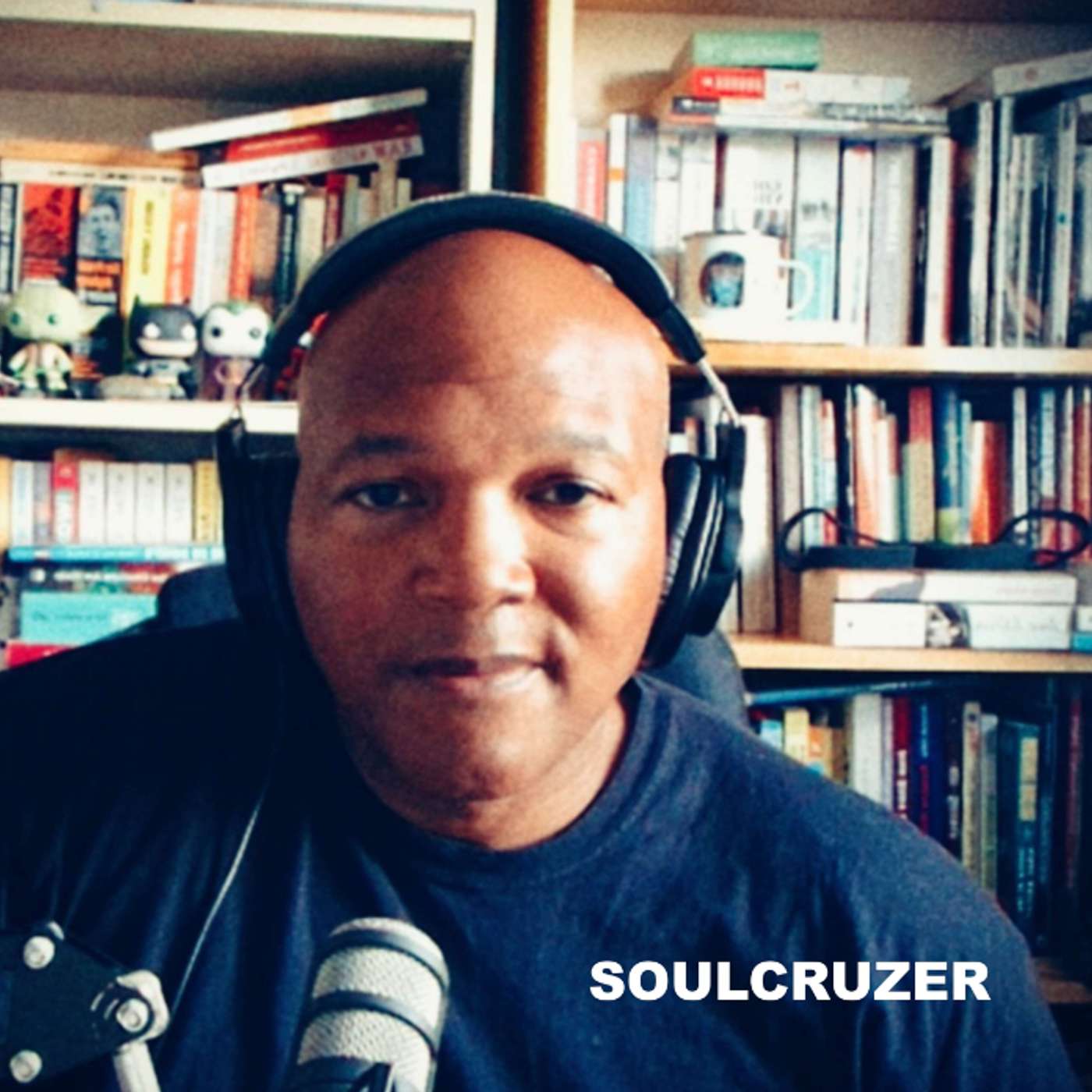
Hi, my name is Clay Lowe, aka Soulcruzer. This is the part where I have to reduce myself to a label so you can understand who I am and what I am about. But as Kierkegaard pointed out, labels have a way of negating the person. If I tell you I’m a blogger, I get reduced to whatever meaning you’ve assigned to the word ‘blogger’. I resist labels. And yet, here we are. So, in the context you find me in now, I am indeed a blogger.

I have worn many others. I’ve been a soldier, a learning and development consultant, a trainer, and a coach. I’ve also called myself a barefoot philosopher, a narrative alchemist, and a rogue learner, among others. These were an attempt to orient me to myself. More recently, I’ve been working out what it means to operate as a text-based ontologist in a world where text is becoming the universal substrate.

A text-based ontologist sounds like someone who should live in a footnote.

They don’t.

They live in the browser window, the notebook, the prompt box, the blog editor, the Obsidian graph, the half-finished post, and the walking thought captured before it evaporates. Their material is language. Their subject is being. Their method is to hold attention long enough for a sentence to disclose what it is carrying.

It’s not really a job title. It’s more of a way of being caught by the world.

In the end, though, I am just a man walking a path.

Latest Posts

Seeing the Fnords in the Machine

I just read Michael Rock’s essay “If You Don’t See the Fnord it Can’t Eat You” and it clarified something I’ve been circling around for months. Rock traces the paranoid history of subliminal messaging from Robert Anton Wilson’s Discordian chaos to Madison Avenue’s mind control fantasies. The fnord1 is typography that triggers dread without semantic content. You don’t read it consciously, but it programs anxiety directly into your nervous system. Here’s what matters: the conspiracy theorists are right about the mechanism even when they’re wrong about the specifics. Stories do operate below conscious awareness. They do shape emotional states and

Read More »

Your Timeline is a Sixth-Generation Forest Fire

Reading Soundtrack: The Prodigy — Firestarter Smoke in the Silicon Close your eyes and feel the laptop on your thighs. It isn’t just warm: it is radiating. That heat is the friction of a billion data points rubbing together in a space too small to hold them. Outside, the world might be cold, but inside the black mirror, the temperature is rising. You can smell it if you look closely enough at the pixels: the sharp, ozone tang of a circuit board pushed to the brink, the scorched-sugar scent of a thousand “hot takes” melting into a single, screaming hiss.

Read More »

Nobody’s Coming to Save You

The Uncomfortable Core of Self-Transformation The Seductive Misreading Someone commented on one of my posts the other day, drawing a parallel between the Left Hand Path and Nietzsche’s philosophy. They talked about the Übermensch, about self-deification, about becoming superior. They weren’t wrong about the surface similarities. Both traditions do emphasize the individual over the collective. Both do challenge inherited moral frameworks. Both do talk about becoming rather than being. But the comment revealed something I see constantly in spiritual and philosophical circles: people read these systems as offering power, specialness, transcendence over ordinary existence. They see an escape hatch from

Read More »

Self-Observation Without Judgment: The Lost Practice That Changes Everything

You want to change your life. You’ve read the books, watched the videos, and learnt the techniques. You know about assumption, revision, living in the end, and the I AM formula. You’ve tried them all. And they work. Sometimes. Briefly. Then you slide back to the same patterns, the same reactions, and the same life you were trying to escape. NOTE: If you want to chat with the host, click here and listen to the podcast inside the Notebook. Here’s what nobody told you: there’s a practice that comes before all the techniques. A practice so simple it sounds useless.

Read More »

The Spreader Part II

This is part II of The Spreader, a psychological horror/speculative fiction story I started at the tail end of last year.  If you haven’t read part one, here’s the link. I decided to use an interactive format for Part II.  Spreader Part 2 – Interactive E-Book Spreader Part 2 An Infection of the Mind Narrative Alchemist ← Previous 1 / 0 Next → Use arrow keys to navigate • Left/Right or scroll to turn pages

Read More »

Self-Authorship: A Meditation on Conscious Creation

Jordan Peterson on self-authorship: “Constructing the narrative of your life is a way to determine what to strive for and what to avoid…” There exists a peculiar condition in human consciousness where we experience ourselves as both the one living and the one observing what is lived. We are simultaneously inside the story and somehow outside of it, watching ourselves move through scenes we did not consciously script. This dual nature creates a tension that most people never examine. They simply live as characters, fully identified with the role, never questioning who wrote the lines they speak or designed the

Read More »

Your World is a Projection of Your State of Awareness

Think about this: your reality isn’t happening TO you. It’s happening THROUGH you. Your state of awareness operates like a projector beam. The world you experience is whatever appears on the screen of perception. Most people assume the screen is the problem. They argue with the images, rearrange the furniture inside the scene, or try to force a better storyline. Very few notice the beam itself. But the beam is doing most of the work. When your awareness is contracted, tense, and defensive, the world doesn’t feel neutral. It feels hostile. An unread email becomes a threat. A delayed reply

Read More »

Anxiety Has No Creative Power: Why Your Worry Loop is a Lie

Let me tell you something about anxiety that nobody seems to mention: it’s a terrible storyteller. I’ve watched anxiety operate in hundreds of minds, including my own. And here’s what I’ve learned: anxiety is fundamentally sterile. It produces nothing new. It’s a photocopier stuck on the darkest setting, churning out increasingly distorted copies of the same fearful image. But it doesn’t feel that way, does it? When you’re in the grip of anxiety, your mind feels incredibly active. Thoughts racing, scenarios spinning, mental energy burning at full throttle. Surely all that activity must be accomplishing something, right? Wrong. And understanding

Read More »

On Blogging as Soul Technology

A response to Joan Westenberg’s “The Case for Blogging in the Ruins“ Joan Westenberg opens her case for blogging by invoking Diderot’s Encyclopédie, that 28-volume monument to organized thinking that took two decades to complete, survived two government bans, and drove its creator to periodic breakdowns. Her point was that the infrastructure for thinking has always been hard, dangerous, thankless work. She’s right. But I want to push the argument further. Blogs aren’t just infrastructure for thinking. They’re infrastructure for becoming. They function as soul technology: consciousness-shaping code that runs quietly in the background of who we are and who

Read More »

The Secret of the Two Fishes: A Journey into Inner Alchemy [Audiobook]

“Two fishes swim in your sea… but look closer: they cast only one shadow.” Welcome to a journey into the liminal space where philosophy turns poetic and science begins to sound like prayer. In this video, we explore the ancient mysteries of The Book of Lambspring, reimagined for the modern seeker through the lens of Narrative Alchemy. Alchemy was never just about lead and gold—it was a coded map of the human psyche. The “Two Fishes” represent the fundamental duality within us all: the tension between Spirit and Soul, thought and feeling, the reaching and the resting. In this audiobook

Read More »

A Philosophy of As If: Useful Fictions and the Stories We Live By

I’ve been reading Hans Vaihinger’s A Philosophy of As If: A System of the Theoretical, the Practical and Religious Fictions of Mankind. I came across this book through James Hillman‘s Healing Fiction, and it’s been illuminating his concept of “useful fictions.” The Nature of Useful Fictions Here’s the core idea: we see the world subjectively. We look at facts, but we create stories between those facts. When facts are absent, the mind fills in whatever it needs to make sense of things so we can get on with life. Hillman calls these “useful fictions.” They can be completely made up,

Read More »

The Nature of Longing: Why Restlessness Isn’t a Problem to Solve

In this episode, I explore why we feel restless and incomplete even after achieving our goals or finding spiritual practices that seem to work. I argue that our perpetual longing isn’t a sign of failure or proof we’re on the wrong path but rather the fundamental nature of consciousness itself, constantly reaching and questioning. The real insight is recognising that seeking is the finding, that the journey itself is home, and learning to treat our restlessness as fuel rather than a problem to solve. There is a significant element of dysfunction in human consciousness. If you doubt that, read a

Read More »

The Intention Forge: A Powerful 5-Card Tarot Spread for Setting Your Yearly Intention

I’m not a big fan of New Year’s resolutions. They tend to smuggle in a quiet kind of pressure, turning the turning of the year into a performance review of your life. Suddenly you are measuring yourself against abstract ideals, borrowed goals, and the fantasy of a more disciplined future version of you. None of that has much to do with the real, breathing conditions of your days. Real change does not happen because you bully yourself with targets. It happens when you start paying attention to what is actually alive, strained, hopeful, or unfinished inside you right now. Instead,

Read More »

Wisdom Walk: What Do You Do When You’ve Done Everything?

Saturday afternoon, passing the polo grounds Out on today’s walk, I came across a field full of ravens (or rooks, I can never quite tell without a close-up). Hundreds of them, clustered around my favorite tree. These birds have always felt significant to me, in fact, at one point, they were my spirit animal. I love encountering them out in the wild at some random moment that insignificantly significant. I was out unpacking my reflections from my morning quiet time. A simple question: what to do with a Saturday? Odd that such a simple question spiraled into a philosophical reflection

Read More »

The Apocryphon of John: A Heretic’s Manual for Consciousness Hackers

This is a follow on post to the piece I wrote back in December. I’ve spent 25 years working with stories as technology, treating narratives like code that runs in the background of our lives. I’ve debugged corporate cultures, reprogrammed limiting beliefs, and helped people rewrite their personal mythologies. But reading The Apocryphon of John reminded me that some texts don’t just tell stories. They install entirely new operating systems. This isn’t a book review in the traditional sense. I’m not here to critique the prose or evaluate the scholarship. I’m here to tell you that if you’re serious about

Read More »

The Will to Create: A Review of Mitch Horowitz’s Daydream Believer

Daydream Believer There’s a question Mitch Horowitz asks throughout Daydream Believer: Unlocking the Ultimate Power of Your Mind that lodged itself in my brain like a white hot poker: “What do you want?” Not as a therapeutic prompt. Not as spiritual navel-gazing. But as a foundational question, one that determines whether you’re truly living or merely existing. This is the question that sets the direction of your life, the point from which every deliberate act of creation begins. It is the launching pad for any practical metaphysical work you attempt, because without knowing what you actually want, no technique, belief,

Read More »

Self-Expression as a Sacred Practice

It’s radical to say that self-expression is the most important thing in life. It’s not survival, even though we must continue to live. It’s not about happiness, even though we may experience it. Not even meaning or connection, though these often arise naturally when we express ourselves honestly. Self-expression is the fundamental imperative, the primary reason consciousness manifests in form. This is not an easy claim to make. It challenges the stories we’ve been taught about duty, service, and self-sacrifice. It cuts against the Protestant work ethic that tells us to be useful, the therapeutic culture that urges us to

Read More »

Red Mass and the Machinery of Modern Myth

Conspiracy, Psychedelia, and the Rituals We’re Already Inside I started reading Red Mass expecting to enter a strange story. What I didn’t expect was the sense that the book was quietly rearranging the furniture of my own thinking. Not in the way a good thriller pulls you along, but in the way certain ideas linger, unsettle, and refuse to stay on the page. This is not a novel that simply depicts conspiracy. It treats conspiracy as a living system. UFO lore, cryptids, secret orders, altered states, and underground movements are not aesthetic choices here. They are functional components. They organize

Read More »

The Spreader: The Virus Speaks

Note: I started working on this short story right before everything got absolutely bonkers during the holidays. It grew out of this idea of stories as code and the idea of “soul fiction”. The whole thing’s told from the point of view of language as a virus. It’s a concept I borrowed from William S. Burroughs. Words have their own life. They spread, they mutate, they get inside your head and change how you think. The story is in several parts. I am older than your oldest gods. Not in the way mountains are old, but in the way hunger

Read More »

Latest Podcast Episode

0
Would love your thoughts, please comment.x
()
x