Shadow Work as an Ongoing Conversation
A short note on rereading Debbie Ford, noticing our reactions, and treating shadow work as an ongoing conversation with the self.
Philosophical Correspondent & Wandering Essayist


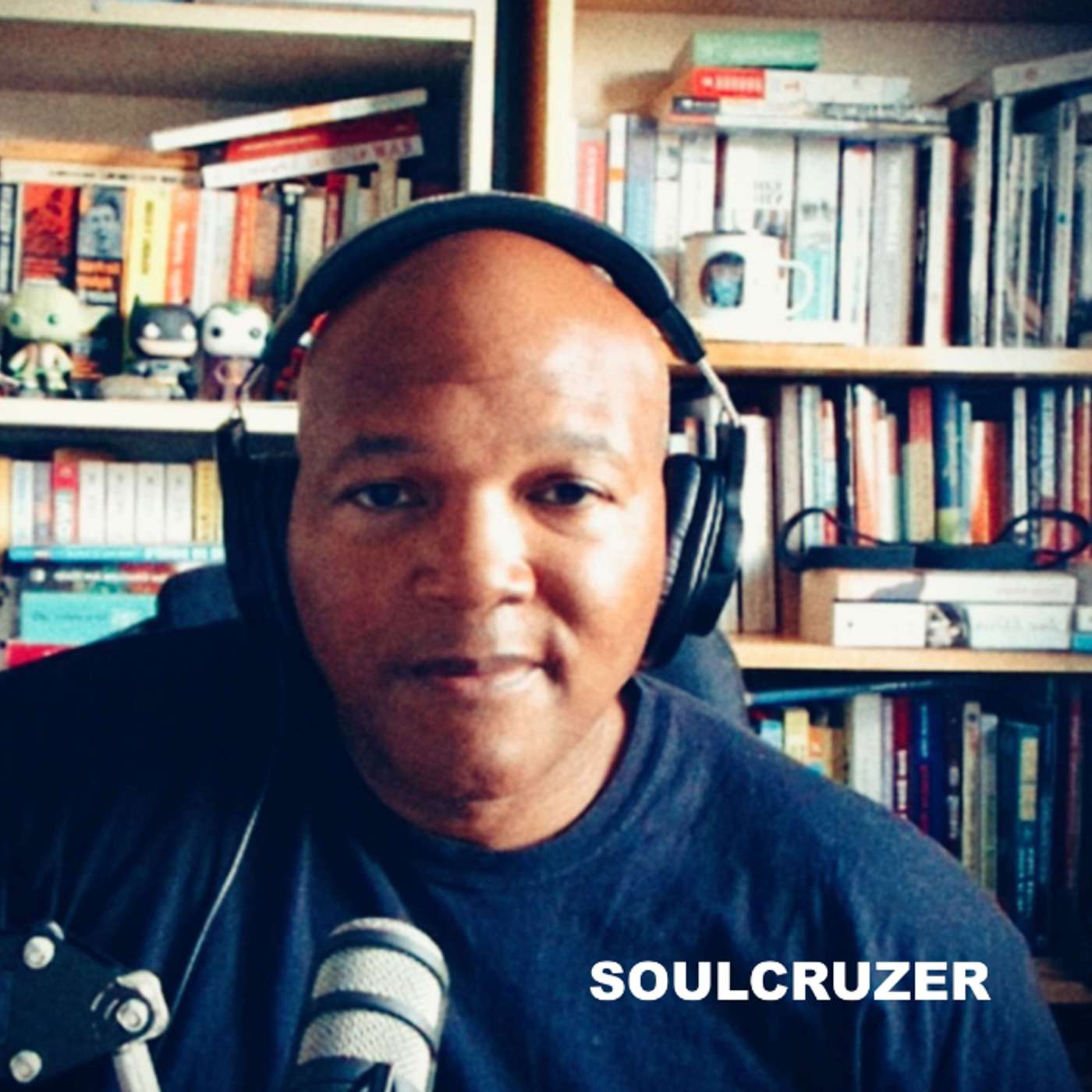
The Soulcruzer podcast is an audioblog from the edge of the inner life.
Part personal essay, part field recording, part narrative alchemy, it follows the strange places where story, psyche, myth, technology, and everyday experience begin to speak to each other.
One episode might wander through tarot as reflective technology. Another might take Nietzsche’s eternal return for a walk, explore games as containers for transformation, or ask what happens when ancient wisdom meets the AI age. Depth psychology brushes against the esoteric. Philosophy comes down from the shelf. Theory gets tested against life.
This is not polished guru-talk or productivity theatre. It is a mind in movement: raw notes, live experiments, confessional mysticism, and working fragments from the textual underground.
At the heart of it all is a simple premise:
Stories are code. Reality is programmable. And the life you are living might be more editable than you were taught to believe.
If you are drawn to the deep work, the strange edges, and the art of becoming more fully alive, subscribe wherever you get your podcasts.
In this episode, I take the Soulcruzer podcast out of the studio and into the fields.
What starts as an experiment in mobile podcasting/vlogging turns into a wandering meditation on labels, blogging, AI, morning rituals, and the strange abundance of media tools we now carry in our pockets.
– Why I still think of myself as a blogger first
– Podcasting, vodcasting, and the pressure to become “multimodal”
– The problem with labels: “When you label me, you negate me”
– soulcruzer.com as the central hub/home on the internet
– Wisdom Walks as thinking time
– Walking, motion, and changing perspective
– The “barefoot philosopher” approach to everyday philosophy
– AI as an extension of cognition rather than just a productivity tool
– The “soft cyborg” and the library of Alexandria in your pocket
– Morning reality tunnels and the sacred space before breakfast
– Coffee, barefoot grounding, and choosing what enters your mind first
– Indie blogging, platforms, Substack, distribution, and the open web
– Why these episodes may stay loose, minimally edited, and stream-of-consciousness

Every post is a footprint from somewhere I’ve been, something I’ve wondered about, or an idea I’ve chased down a rabbit hole. These archives are less a record of where I’ve arrived and more a map of where my wandering mind has taken me. Browse by month, follow your curiosity, and see where the trail leads.
Man and His Symbols is an accessible gateway into Jungian depth work. This illustrated exploration of archetypes and symbols reveals how transformation happens in the imaginal realm, below conscious awareness.
Hillman's "acorn theory" illuminates the path to Authentic Purpose. His poetic yet rigorous approach gives language to the daimonic self and the ineffable aspects of personal mythology.
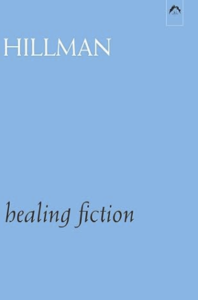
This book is James Hillman's main analysis of analysis. He asks he basic question," What does the soul want?" With insight and humor he answers: "It wants fiction to heal."

Vaihinger… shows that thought is primarily a biological function turned into a conscious art. It is an art of adjustment, whose chief instrument is the construction of fictions by which men may manage to live.
Mary K. Greer's seminal workbook transforms tarot from divination tool into technology for self-knowledge and narrative sovereignty. Packed with exercises that treat the cards as doorways to the imaginal realm, this is required reading for practitioners ready to use archetypal imagery as active imagination practice.
Johnson demystifies Jung's most powerful technique with step-by-step guidance for engaging the imaginal realm directly. This slim volume transforms abstract theory into actionable practice—essential for practitioners ready to move beyond conceptual understanding.
The clearest introduction to chaos magic as pragmatic practice. Strips away dogma to reveal the core mechanics of belief as a tool. Perfectly bridges the gap between depth psychology and results-orientated transformation work.
While the hero's journey has been overused, Campbell's original text remains vital for understanding narrative structure as psycho-spiritual map. Read it to learn the pattern, then transcend it.
This groundbreaking work bridges the mystical and scientific, revealing how tarot actually works through the lens of neuroscience and cognitive psychology. Essential reading for practitioners who want to understand the neurological mechanisms behind symbol work, pattern recognition, and the imaginal realm's interface with the predictive brain.
Our Privacy Policy
SITE NOTES: As an Amazon Associate, I earn from qualifying purchases, so if you see an Amazon link it’s more than likely an affiliate link. The price will be the exact same for you, but I get a commission.
A short note on rereading Debbie Ford, noticing our reactions, and treating shadow work as an ongoing conversation with the self.
This morning I kept thinking about how much of my inner life is written in symbols. A hawk circles above the fields near my house, and every time I see it something deep stirs… a reminder of vigilance, focus, higher vision. I could say it’s just a bird, but that
Knowing yourself isn’t about coming up with a neat definition you can put on a business card. It’s more like watching the weather of your own being. The soul shows up in the little things, like what you’re drawn to, what you shy away from, or the memories that stick
When the mask slips, let it. We spend much of our lives arranging faces for the world. A mask for work, another for friends, and still another for family gatherings. These are not always deceptions. Masks can be protective, ceremonial, even sacred. They help us navigate the stage of daily
We treat meaning like it’s some luxury add-on to life, like it’s something you get to once you’ve checked all the boxes. But that’s backwards. Meaning isn’t the cherry on top. It’s in the foundation, right up there with food and water and air. You can suffocate without oxygen and
The Latin and Greek reads: ‘Nam Sibyllam quidem Cumis ego ipse oculis meis vidi in ampulla pendere,et cum illi pueri dicerent: Σίβυλλα τί θέλεις; respondebat illa: ἀποθανεῖν θέλω.’ Translation: “For I myself saw the Sibyl of Cumae with my own eyes hanging in a jar,and when the boys asked her:
the new image generator baked into ChatGPT is significantly better after the latest update. i asked it to turn me into a spider. note the detail in the background.
Drop a post.Even if it’s unfinished. Especially if it’s unfinished.Plant a link.Even if it leads nowhere—for now.Send a flare.Even if no one responds right away. Because someone will.Maybe not today. Maybe not soon. But someday, a fellow rogue will stumble across your breadcrumb, click the link, and feel the jolt
This essay reminded me of the famous quote often attributed to Churchill: “Those that fail to learn from history are doomed to repeat it.” But Baldwin’s point is even more unsettling. We don’t merely repeat history because we’ve forgotten it. We repeat history because history is still here, living within
This resonates with something I catch myself doing as a blogger. Whenever I notice myself slipping out of blogging to express and into blogging to impress, I stop and recalibrate. For me, that’s usually a sign that I’ve shifted from genuine curiosity and exploration into performance mode. For me, expression
I love Maria Popova’s journey from contempt to curiosity around divination. Once you stop clinging to logical analytic mind, you’ll find that the cards become a language for listening to your unconscious mind and a way of hearing the part of yourself that already knows what you need to hear.
Hi, my name is Clay Lowe, aka Soulcruzer. This is the part where I have to reduce myself to a label so you can understand who I am and what I am about. But as Kierkegaard pointed out, labels have a way of negating the person. If I tell you I’m a blogger, I get reduced to whatever meaning you’ve assigned to the word ‘blogger’. I resist labels. And yet, here we are. So, in the context you find me in now, I am indeed a blogger.
I have worn many others. I’ve been a soldier, a learning and development consultant, a trainer, and a coach. I’ve also called myself a barefoot philosopher, a narrative alchemist, and a rogue learner, among others. These were an attempt to orient me to myself. More recently, I’ve been working out what it means to operate as a text-based ontologist in a world where text is becoming the universal substrate.
A text-based ontologist sounds like someone who should live in a footnote.
They don’t.
They live in the browser window, the notebook, the prompt box, the blog editor, the Obsidian graph, the half-finished post, and the walking thought captured before it evaporates. Their material is language. Their subject is being. Their method is to hold attention long enough for a sentence to disclose what it is carrying.
It’s not really a job title. It’s more of a way of being caught by the world.
In the end, though, I am just a man walking a path.
On texting, correspondence, and the quiet transformation of everyday communication. I carry a telephone around in my pocket that I rarely use to telephone anybody. That thought occurred to me this morning while reading Julie Beck’s Forgive the Bad Texters in The Atlantic. Beck describes texting as the currency of
On the dangerous hospitality of the unconscious One of the curious things about inventing a character is that, if you spend enough time with him, he begins to surprise you. You give him a name, a few distinguishing habits, perhaps a particular way of speaking. You imagine how he might
When memory becomes a prison Somewhere in the Textual Underground, there is a version of me who still believes things I no longer believe. He’s there in an old note, several years old, speaking with the peculiar confidence of someone who hasn’t yet encountered the experiences that will eventually change
Samhain has come and gone, but I like to think the veil between worlds doesn’t snap shut at midnight. Perhaps it lingers a little, leaving the door ajar for those of us inclined to poke around in the stranger corners of existence. And what better way to spend a lazy
A philosophical dialogue between Clay Lowe and Mudtown Lion Characters Clay Lowe: A philosophical correspondent and wandering essayist, inclined to believe that the universe is more interesting than any explanation of it. Mudtown Lion: A dishevelled metaphysical detective, collector of suspicious coincidences, and occasional troublemaker in the court of established
There’s a small diagram in the instructions for the archive where I work: Capture → Compost → Shape → Project → Publish → Archive → Resurface I read it this morning while looking for something to write about. The words offer several ways a piece of writing can exist. The
The church bells were ringing as I walked into Ludlow. Market traders were putting the finishing touches to their stalls, the morning had a chill to it, and I stopped to record the sound. For a moment, listening brought me fully into the place. Returning to that moment now, I
On espresso houses, outlaw intellectuals, and the possibility of a new independent web I have a romantic weakness for the cultural outlaws of the 1960s. Not necessarily the famous ones, although I’ve always had a soft spot for the Beats, the wandering poets, the jazz musicians, the folk singers who
There is a strange paradox at the heart of a committed life. We imagine freedom as the ability to keep our options open. To remain available to every possibility. To avoid closing doors before we’ve had a chance to see what’s behind them. There’s something intoxicating about that kind of
Field Notes on Existential Posthumanism — Part One For much of my life, I’ve been trying to find myself. Not in the dramatic sense of disappearing into the wilderness for forty days and returning with a beard, a walking stick, and the secrets of the universe. Although, I confess, the
A court interpreter is instructed to preserve false starts. An oral historian is advised to remove them. Between those two kinds of care lies an awkward question: who gets to decide how another person sounds?
On Philip K. Dick, runaway explanations, and the peculiar freedom of going outside There is a moment in Philip K. Dick’s VALIS when Horselover Fat entertains the possibility that the creator of the universe is insane. It’s a wonderfully disturbing proposition. What if the universe isn’t merely indifferent to our
On AI, vision, curiosity, and the freedom to explore I came across a short Instagram clip this morning featuring Alexandr Wang, founder of Scale AI, making an observation that stopped me in my tracks. Intelligence, he argues, is becoming abundant. For most of human history, intelligence has been one of
Conversations with the collective mind at the edge of human thought There’s something strange happening to my notebooks. They’ve started talking back. Not the physical notebooks, of course. Those remain reassuringly silent, although there’s one sitting on my desk that contains enough abandoned theories, cryptic observations and half-baked philosophical propositions
On Montaigne, idleness, writing, and the strange business of encountering our former selves I’ve been reading Montaigne’s essay Of Idleness, and I’ve found myself rather taken with his description of what happens when he gives his mind permission to wander. Having withdrawn from public affairs, Montaigne imagines that his mind,
On limiting beliefs, imaginary destinations, and the strange business of becoming someone you haven’t yet imagined. Some twenty-six years ago, I was out running when Bono stopped me in my tracks. Not literally, of course. He wasn’t standing in the middle of the road, arms outstretched, demanding that I contemplate
Working Notes from the Posthuman Frontier I’ve just begun reading Francesca Ferrando‘s The Art of Being Posthuman: Who Are We in the 21st Century? I’m only at the beginning, but I already have a feeling this book is going to take me somewhere interesting. I picked it up because of
An Owen Barfield-inspired dialogue between Clay Lowe and Mudtown Lion concerning solitude, consciousness, and the peculiar human habit of mistaking a useful abstraction for the nature of reality. From the notebooks of the Textual Underground. The café had only just opened. Outside, the morning was still deciding whether to become
I paid £9.50 this morning for two newspapers and a small cup of coffee, only to discover that the most interesting story in the café wasn’t in either of the newspapers I’d bought. I’d walked into town because I’d been cooped up in the house all week and wanted to

The Soulcruzer podcast is an audioblog from the edge of the inner life.
Part personal essay, part field recording, part narrative alchemy, it follows the strange places where story, psyche, myth, technology, and everyday experience begin to speak to each other.
One episode might wander through tarot as reflective technology. Another might take Nietzsche’s eternal return for a walk, explore games as containers for transformation, or ask what happens when ancient wisdom meets the AI age. Depth psychology brushes against the esoteric. Philosophy comes down from the shelf. Theory gets tested against life.
This is not polished guru-talk or productivity theatre. It is a mind in movement: raw notes, live experiments, confessional mysticism, and working fragments from the textual underground.
At the heart of it all is a simple premise:
Stories are code. Reality is programmable. And the life you are living might be more editable than you were taught to believe.
If you are drawn to the deep work, the strange edges, and the art of becoming more fully alive, subscribe wherever you get your podcasts.
In this episode, I take the Soulcruzer podcast out of the studio and into the fields.
What starts as an experiment in mobile podcasting/vlogging turns into a wandering meditation on labels, blogging, AI, morning rituals, and the strange abundance of media tools we now carry in our pockets.
– Why I still think of myself as a blogger first
– Podcasting, vodcasting, and the pressure to become “multimodal”
– The problem with labels: “When you label me, you negate me”
– soulcruzer.com as the central hub/home on the internet
– Wisdom Walks as thinking time
– Walking, motion, and changing perspective
– The “barefoot philosopher” approach to everyday philosophy
– AI as an extension of cognition rather than just a productivity tool
– The “soft cyborg” and the library of Alexandria in your pocket
– Morning reality tunnels and the sacred space before breakfast
– Coffee, barefoot grounding, and choosing what enters your mind first
– Indie blogging, platforms, Substack, distribution, and the open web
– Why these episodes may stay loose, minimally edited, and stream-of-consciousness