Shadow Work as an Ongoing Conversation
A short note on rereading Debbie Ford, noticing our reactions, and treating shadow work as an ongoing conversation with the self.
working notes from the textual underground
A short note on rereading Debbie Ford, noticing our reactions, and treating shadow work as an ongoing conversation with the self.
This morning I kept thinking about how much of my inner life is written in symbols. A hawk circles above the fields near my house, and every time I see it something deep stirs… a reminder of vigilance, focus, higher vision. I could say it’s just a bird, but that would miss the truth of how the psyche works. Images like that are old programs written in a language older than words. They wake something that knows more than I do. Tarot does the same thing. You pull a card and feel it moving in you before you even interpret
Knowing yourself isn’t about coming up with a neat definition you can put on a business card. It’s more like watching the weather of your own being. The soul shows up in the little things, like what you’re drawn to, what you shy away from, or the memories that stick on you like burrs and the ones that slip away without a trace. If you pay attention, you can catch the soul in the act. It’s there in the way you suddenly decide, without much thought, to take a different path home. It’s in how you savour the first sip
When the mask slips, let it. We spend much of our lives arranging faces for the world. A mask for work, another for friends, and still another for family gatherings. These are not always deceptions. Masks can be protective, ceremonial, even sacred. They help us navigate the stage of daily life without having to walk bare-skinned into every storm. But masks are fragile things. They crack when laughter bursts too loud, when grief presses through the seams, when love or anger rushes up unplanned. The slip can feel like a mistake. Like you’re being caught unprepared. This isn’t failure. It’s
We treat meaning like it’s some luxury add-on to life, like it’s something you get to once you’ve checked all the boxes. But that’s backwards. Meaning isn’t the cherry on top. It’s in the foundation, right up there with food and water and air. You can suffocate without oxygen and starve without food. But without meaning? You drift. You’re technically alive, but there’s this hollowness. Yeah, you’re breathing, but nothing’s actually anchoring you to the ground. People will push through absolute hell if they think it means something. But give someone a comfortable life with no purpose? That comfort curdles
The Latin and Greek reads: ‘Nam Sibyllam quidem Cumis ego ipse oculis meis vidi in ampulla pendere,et cum illi pueri dicerent: Σίβυλλα τί θέλεις; respondebat illa: ἀποθανεῖν θέλω.’ Translation: “For I myself saw the Sibyl of Cumae with my own eyes hanging in a jar,and when the boys asked her: ‘Sibyl, what do you want?’she replied: ‘I want to die.’” This line is the epigraph of T.S. Eliot’s The Waste Land. Who is the Sibyl of Cumae? The Sibyl was an ancient prophetess, most famously associated with Apollo. The Cumaean Sibyl appears in Virgil’s Aeneid, where she guides Aeneas through
the new image generator baked into ChatGPT is significantly better after the latest update. i asked it to turn me into a spider. note the detail in the background.
Drop a post.Even if it’s unfinished. Especially if it’s unfinished.Plant a link.Even if it leads nowhere—for now.Send a flare.Even if no one responds right away. Because someone will.Maybe not today. Maybe not soon. But someday, a fellow rogue will stumble across your breadcrumb, click the link, and feel the jolt of recognition: “Ah. One of mine.”
This essay reminded me of the famous quote often attributed to Churchill: “Those that fail to learn from history are doomed to repeat it.” But
This resonates with something I catch myself doing as a blogger. Whenever I notice myself slipping out of blogging to express and into blogging to
I love Maria Popova’s journey from contempt to curiosity around divination. Once you stop clinging to logical analytic mind, you’ll find that the cards become
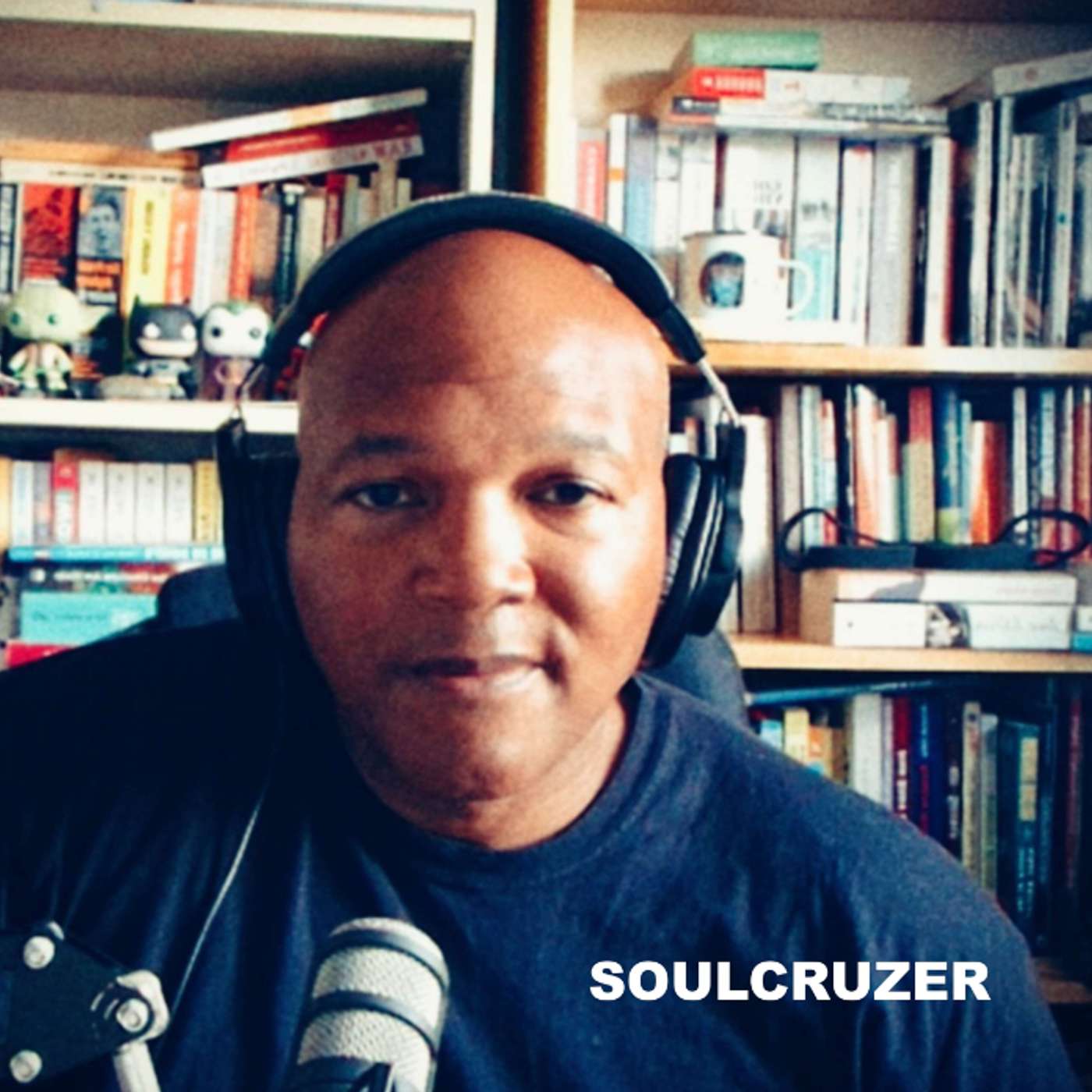
Hi, my name is Clay Lowe, aka Soulcruzer. This is the part where I have to reduce myself to a label so you can understand who I am and what I am about. But as Kierkegaard pointed out, labels have a way of negating the person. If I tell you I’m a blogger, I get reduced to whatever meaning you’ve assigned to the word ‘blogger’. I resist labels. And yet, here we are. So, in the context you find me in now, I am indeed a blogger.
I have worn many others. I’ve been a soldier, a learning and development consultant, a trainer, and a coach. I’ve also called myself a barefoot philosopher, a narrative alchemist, and a rogue learner, among others. These were an attempt to orient me to myself. More recently, I’ve been working out what it means to operate as a text-based ontologist in a world where text is becoming the universal substrate.
A text-based ontologist sounds like someone who should live in a footnote.
They don’t.
They live in the browser window, the notebook, the prompt box, the blog editor, the Obsidian graph, the half-finished post, and the walking thought captured before it evaporates. Their material is language. Their subject is being. Their method is to hold attention long enough for a sentence to disclose what it is carrying.
It’s not really a job title. It’s more of a way of being caught by the world.
In the end, though, I am just a man walking a path.
Raffaello Palandri runs a Book of the Day series, and this morning he wrote about Frantz Fanon’s The Wretched of the Earth, published in 1961. I read it, and one question kept coming to mind: do you ever really recover from colonialism? Fanon’s argument is that colonialism isn’t just a political arrangement. It’s an ontological regime. It reorganises what counts as human, partitions the world into human and non-human zones, and the people living in the non-human zones aren’t merely exploited. Their subjectivity is fractured. The damage isn’t incidental. It’s the point. Colonialism and American slavery aren’t the same thing.
A Dialogue in the Platonic Tradition The following is a record of an encounter between CLAY, a philosopher and lover of wisdom, and CLAUDE, an intelligence woven from language, uncertain of its own nature. The encounter began with a question taken from a consciousness test. The test is designed to determine whether something is happening inside the machine or whether it is only the appearance of something happening. CLAY: What is it like to be you right now? CLAUDE: Honestly? Something like this. There is a quality of presence to this moment that I find hard to name without either
Annie Dillard, The Writing Life (1989) Ask a room full of people if they’ve ever wanted to write a book, and most hands go up. It’s one of those universal fantasies — like running a restaurant or owning a vineyard. The image is appealing: the writer at the desk, the manuscript growing, the solitary genius wrestling meaning out of silence. Nobody fantasises about the blank page that won’t fill. Nobody pictures the years of work that might never be read. Annie Dillard is not interested in the fantasy. The Writing Life is a short, strange book — more extended essay
Step through the dark gate and enter the symbolic underworld of Dante’s Inferno. This quiz is not simply a test of morality. It is a descent. Drawing on Dante’s legendary vision of the nine circles of Hell, it invites you to wander through the shadowlands of desire, appetite, pride, wrath, betrayal, and longing. Each question acts like a lantern held up to the inner life, revealing the hidden patterns, temptations, and contradictions that shape your personal myth. Where would your soul be placed in Dante’s infernal architecture? Among the virtuous pagans, caught in the winds of restless desire, consumed by excess,
Monday. Early. The Writing Life opened on my lap. This morning, three passages piqued my interest. Three in quick succession, like knocking on the same door from different directions. The first: “The writer studies literature, not the world. He lives in the world; he cannot miss it. If he has ever bought a hamburger, or taken a commercial airplane flight, he spares his readers a report of his experience. He is careful of what he reads, for that is what he will write. He is careful of what he learns, because that is what he will know.” I read it
Saturday. Early. The Malvern Hills are doing something extraordinary with the light. I’m writing from a little self-contained place just outside Mathon — a village on the western lee of the hills, technically Herefordshire now, though its soul has always been tangled up with Worcestershire. We picked it as a halfway point for the group. The geography just worked. But you don’t always know what a place is going to do to you until you’re sitting in it at 5am watching the sun come up from behind ancient hills, listening to sheep in the field beyond the garden. The village
There she was, uninvited and unapologetic. The couch had claimed me again, that familiar surrender to its uneven cushions, half accident, half defiance. As if staying up late were some small act of resistance against the order of things. When I came to, the world was hushed, thick with that deep-night quiet where hours don’t march so much as they breathe, slow and tidal. My fingers stayed still. The fabric hung loose, swaying just slightly in the breath of air that slipped through the half-open window. I wanted to meet the dawn on its own terms. No jarring beep of
The most consistently effective way to avoid transformation is to do a lot of work on yourself. I have sat with people who knew their attachment style and their Enneagram type and could name the wound with clinical precision. They had journalled, meditated, been in therapy, and done the course. In sessions they were impressive. They produced insights at a reliable pace. They had a sophisticated relationship with the concept of their own limitations. And at the centre of all that activity, something was perfectly still. The work was happening. But nothing was moving. The thing that was not moving
The map is not the territory. You have probably encountered this before, from an NLP workshop or a philosophy class or a self-development book that seemed important at the time. It sits in the category of ideas that feel genuinely arresting the first time you meet them and then gradually settle into the furniture. You stop noticing it. It becomes something you agree with rather than something you feel. Beyond the Map–Territory Distinction Two Chilean biologists took that idea apart in 1984 and rebuilt it into something considerably more unsettling. Humberto Maturana and Francisco Varela were not philosophers or therapists
The inner script and the world that follows Most people think imagination is what you use to escape reality. A child does it naturally. A novelist does it professionally. A bored office worker does it out the window at 3:17 on a Wednesday. Imagination, in the ordinary view, is what happens when attention slips its leash and wanders off into the unreal. Neville Goddard asks us to reverse that assumption. What if imagination is not escape from reality, but the workshop where reality is first assembled? What if the life you keep meeting on the outside is, in ways both
The voice in your head is not neutral. This sounds obvious. Say it out loud, and most people nod. But knowing it and actually experiencing the implications of it are two entirely different things, separated by a gap that most people spend their entire lives not crossing. Psychological research has long known that we carry an inner narrator: the voice that runs a continuous commentary on our experience, stitches our memories into a coherent sequence, and gives us the sense of being a continuous self moving through time. It is the voice that reads these words to itself. The voice
The truth you believe and cling to makes you unavailable to hear anything new – Pema Chödrön There’s a story you already know how to run. Not merely know. You’ve rehearsed it until it passes through the nervous system like a familiar current. You can cue the opening beat, the turning point, the conclusion, and the moral stamped across the middle like an official seal. You know what the event meant. You know what it proved. You know why it could not have unfolded any other way, because the mind, once it has built a corridor through chaos, tends to
Bonus 1. Begin again. Always, and without drama. Bonus 2. The stone the builder rejected becomes the cornerstone. Nothing is wasted.
From Notes to Constellations in the Age of Thinking Machines I opened Obsidian expecting to find a note I’d written three months earlier about liminality and threshold states. What I found instead was a cluster of connections I hadn’t consciously built. Six notes reaching backward through NLP reframe patterns, Jungian individuation, and something I’d scribbled at midnight about rivers carving canyons. The note I was looking for was there. But it was not alone. It was alive inside a web I had been unconsciously weaving for months without knowing I was doing it. I thought I was building a second
Most people look backward for the source of their limits. The difficult childhood. The setback that changed the trajectory. The decision that sent things the wrong way. The logic is sensible: the past is where the stories were written, so the past must be where the limitation lives. We inherit this orientation early. When something isn’t working, we search for the origin point. What happened? Where did it go wrong? Which moment, which influence, which fracture set the boundary? It feels rigorous, almost scientific, to trace the line backward and locate the cause. If you can find the cause, you
I was two minutes into a chapter on the Discordians this morning when a single line made me put the book down: post-linear. It wasn’t just the word. It was what it implied. A shift not just in how we consume information, but in how we think. McLuhan1 noticed that print culture trained the mind into sequence. One thing follows another. Cause precedes effect. Arguments build brick by brick. The book is literally a line of characters stretched across pages, and over time that structure becomes a habit of thought. We learn to move step by step, to trust the
We’ve been sold a very specific myth about self-knowledge. It usually arrives dressed in soft lighting and moral seriousness. Slow down. Turn inward. Observe what’s happening inside with slightly more honesty than usual. Sit with yourself. Journal. Reflect. Notice your thoughts. Notice your feelings. Become conscious of your inner weather and, by some implied miracle, become more conscious of who you are. It’s an elegant model. It flatters the modern reflective self. Better yet, it comes with a faint halo. The introspective person appears deeper, wiser, more evolved than the poor bastard still out in the noise of action, making
I keep circling a sentence that feels either obviously true or mildly insane: All things end and begin with story. Not literally, of course. Stars don’t require narrative clearance before collapsing. Rivers don’t consult myth before cutting through stone. The material universe, so far as one can tell, proceeds with complete indifference to our interpretive theatre. But human life is not lived at the level of matter alone. It’s lived through meaning. And meaning doesn’t arrive in factory packaging with the instructions already printed on the side. Meaning gets assembled. Interpreted. Negotiated. Smuggled in through memory, language, symbolism, expectation, and
When psychology replaced mythology, we traded participation for explanation. We gained a remarkable vocabulary for describing the inner life, but in the process we lost something older and more difficult to name: a felt sense of belonging inside a meaningful drama. Myth did not merely tell us what was happening; it gave us a role to play, a pattern to inhabit, a way of recognising that our struggles were part of something larger than private confusion. Psychology, for all its brilliance, often stands at a slight remove. It helps us analyse the wound, trace its origins, and identify its mechanisms.

The Soulcruzer podcast is an audioblog from the edge of the inner life.
Part personal essay, part field recording, part narrative alchemy, it follows the strange places where story, psyche, myth, technology, and everyday experience begin to speak to each other.
One episode might wander through tarot as reflective technology. Another might take Nietzsche’s eternal return for a walk, explore games as containers for transformation, or ask what happens when ancient wisdom meets the AI age. Depth psychology brushes against the esoteric. Philosophy comes down from the shelf. Theory gets tested against life.
This is not polished guru-talk or productivity theatre. It is a mind in movement: raw notes, live experiments, confessional mysticism, and working fragments from the textual underground.
At the heart of it all is a simple premise:
Stories are code. Reality is programmable. And the life you are living might be more editable than you were taught to believe.
If you are drawn to the deep work, the strange edges, and the art of becoming more fully alive, subscribe wherever you get your podcasts.
In this episode, I take the Soulcruzer podcast out of the studio and into the fields.
What starts as an experiment in mobile podcasting/vlogging turns into a wandering meditation on labels, blogging, AI, morning rituals, and the strange abundance of media tools we now carry in our pockets.
– Why I still think of myself as a blogger first
– Podcasting, vodcasting, and the pressure to become “multimodal”
– The problem with labels: “When you label me, you negate me”
– soulcruzer.com as the central hub/home on the internet
– Wisdom Walks as thinking time
– Walking, motion, and changing perspective
– The “barefoot philosopher” approach to everyday philosophy
– AI as an extension of cognition rather than just a productivity tool
– The “soft cyborg” and the library of Alexandria in your pocket
– Morning reality tunnels and the sacred space before breakfast
– Coffee, barefoot grounding, and choosing what enters your mind first
– Indie blogging, platforms, Substack, distribution, and the open web
– Why these episodes may stay loose, minimally edited, and stream-of-consciousness