Shadow Work as an Ongoing Conversation
A short note on rereading Debbie Ford, noticing our reactions, and treating shadow work as an ongoing conversation with the self.
working notes from the textual underground
A short note on rereading Debbie Ford, noticing our reactions, and treating shadow work as an ongoing conversation with the self.
This morning I kept thinking about how much of my inner life is written in symbols. A hawk circles above the fields near my house, and every time I see it something deep stirs… a reminder of vigilance, focus, higher vision. I could say it’s just a bird, but that would miss the truth of how the psyche works. Images like that are old programs written in a language older than words. They wake something that knows more than I do. Tarot does the same thing. You pull a card and feel it moving in you before you even interpret
Knowing yourself isn’t about coming up with a neat definition you can put on a business card. It’s more like watching the weather of your own being. The soul shows up in the little things, like what you’re drawn to, what you shy away from, or the memories that stick on you like burrs and the ones that slip away without a trace. If you pay attention, you can catch the soul in the act. It’s there in the way you suddenly decide, without much thought, to take a different path home. It’s in how you savour the first sip
When the mask slips, let it. We spend much of our lives arranging faces for the world. A mask for work, another for friends, and still another for family gatherings. These are not always deceptions. Masks can be protective, ceremonial, even sacred. They help us navigate the stage of daily life without having to walk bare-skinned into every storm. But masks are fragile things. They crack when laughter bursts too loud, when grief presses through the seams, when love or anger rushes up unplanned. The slip can feel like a mistake. Like you’re being caught unprepared. This isn’t failure. It’s
We treat meaning like it’s some luxury add-on to life, like it’s something you get to once you’ve checked all the boxes. But that’s backwards. Meaning isn’t the cherry on top. It’s in the foundation, right up there with food and water and air. You can suffocate without oxygen and starve without food. But without meaning? You drift. You’re technically alive, but there’s this hollowness. Yeah, you’re breathing, but nothing’s actually anchoring you to the ground. People will push through absolute hell if they think it means something. But give someone a comfortable life with no purpose? That comfort curdles
The Latin and Greek reads: ‘Nam Sibyllam quidem Cumis ego ipse oculis meis vidi in ampulla pendere,et cum illi pueri dicerent: Σίβυλλα τί θέλεις; respondebat illa: ἀποθανεῖν θέλω.’ Translation: “For I myself saw the Sibyl of Cumae with my own eyes hanging in a jar,and when the boys asked her: ‘Sibyl, what do you want?’she replied: ‘I want to die.’” This line is the epigraph of T.S. Eliot’s The Waste Land. Who is the Sibyl of Cumae? The Sibyl was an ancient prophetess, most famously associated with Apollo. The Cumaean Sibyl appears in Virgil’s Aeneid, where she guides Aeneas through
the new image generator baked into ChatGPT is significantly better after the latest update. i asked it to turn me into a spider. note the detail in the background.
Drop a post.Even if it’s unfinished. Especially if it’s unfinished.Plant a link.Even if it leads nowhere—for now.Send a flare.Even if no one responds right away. Because someone will.Maybe not today. Maybe not soon. But someday, a fellow rogue will stumble across your breadcrumb, click the link, and feel the jolt of recognition: “Ah. One of mine.”
The algorithms have been good for a long time were good at herding us into different pens, and for the purposes of getting me to spend
Intentional silence is not simply the absence of sound or action but an active state of presence. It’s a way of reclaiming time, thought, and
Tim reminds us of how important HTML is to the web. If you don’t have a subscription to Wired, you can listen to the audio
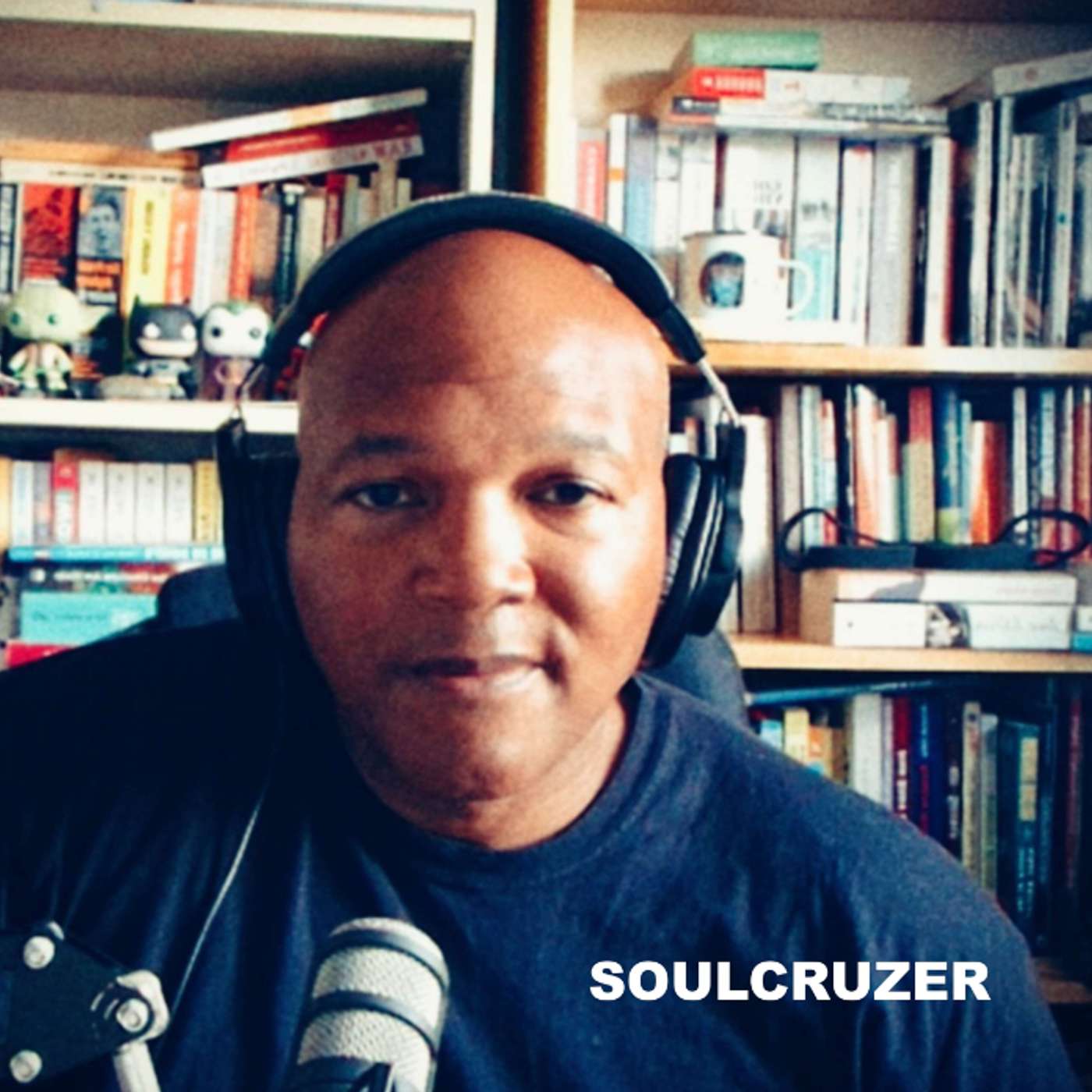
Hi, my name is Clay Lowe, aka Soulcruzer. This is the part where I have to reduce myself to a label so you can understand who I am and what I am about. But as Kierkegaard pointed out, labels have a way of negating the person. If I tell you I’m a blogger, I get reduced to whatever meaning you’ve assigned to the word ‘blogger’. I resist labels. And yet, here we are. So, in the context you find me in now, I am indeed a blogger.
I have worn many others. I’ve been a soldier, a learning and development consultant, a trainer, and a coach. I’ve also called myself a barefoot philosopher, a narrative alchemist, and a rogue learner, among others. These were an attempt to orient me to myself. More recently, I’ve been working out what it means to operate as a text-based ontologist in a world where text is becoming the universal substrate.
A text-based ontologist sounds like someone who should live in a footnote.
They don’t.
They live in the browser window, the notebook, the prompt box, the blog editor, the Obsidian graph, the half-finished post, and the walking thought captured before it evaporates. Their material is language. Their subject is being. Their method is to hold attention long enough for a sentence to disclose what it is carrying.
It’s not really a job title. It’s more of a way of being caught by the world.
In the end, though, I am just a man walking a path.
There’s a practice older than psychology, older than most of the traditions we have names for: the practice of turning attention inward and looking honestly at what’s there. Not to fix it. Not to optimise it. But to see it. This is what the alchemists called the Great Work. Not the turning of lead into gold, but the turning of an unconscious life into a conscious one. A slow, patient, sometimes uncomfortable awakening inside your own story. If you’ve found yourself drawn to Jung, Campbell, Rumi, or the contemplative traditions, if there’s a quiet sense that the person you present
The ancient problem Heraclitus posed wasn’t really about rivers. That’s what gets lost in twenty-five centuries of footnotes. When he said you can’t step into the same river twice, he wasn’t offering a meditation on water. He was pointing at something about time, change, and the peculiar human resistance to accepting either one. The river is always different water. You know this. What the footnotes tend to leave out is the other half of the observation, which Heraclitus also made: you are different too. The person stepping in this morning is not quite the same as the one who stepped
There’s a particular kind of illusion that doesn’t announce itself as an illusion. It arrives quietly, disguised as a choice. Not something obviously false or fantastical, but a reasonable option sitting alongside the others. Coherent. Plausible. Even reassuring. And that’s precisely what makes it dangerous. Because not every option we perceive is real. Some are constructed in the moment—stories the mind generates when reality presents a cost we would rather not face. This micro-lesson explores that moment. The moment where a genuine choice appears, carrying with it something difficult: a loss, a boundary, a risk, a necessary change. And just
Maybe becoming the seeker and the sage isn’t about choosing between movement and stillness. Maybe it’s about learning how to live inside both at once. I think that’s where a lot of people get caught. They imagine the seeker as the unfinished one, the one still wandering, still questioning, still unsatisfied. Then they imagine the sage as the one who’s arrived, the one who knows, the one who doesn’t need to search anymore. But the more I sit with it, the less convincing that split feels. Because what’s a sage without wonder? And what’s a seeker without any capacity for
Main Character Syndrome Is a Narrative Problem Most people encounter the idea of “Main Character Syndrome” and immediately ask the wrong question. They treat it as a social media quirk, a harmless bit of TikTok narcissism where teenagers romanticise their commute with a cinematic filter. It’s understandable. It’s also a dead end. What we are actually looking at is a form of narrative entropy. It is the moment where the story you tell yourself stops being a map of the territory and starts being a wall. When you become the undisputed protagonist of your own life, everyone else in the
I was reading Jung the other day, and this phrase caught my attention: The unconscious as dragon and treasure. Five words that contain, if you sit with them long enough, the entire architecture of inner transformation. Not a theory. Not a clinical framework, but a map drawn in mythic language that tells you something essential about the terrain you will cross if you ever decide to do the real work on yourself. Podcast version: To think of the unconscious as both dragon and treasure is to recognise that the very thing that frightens you, disrupts you, and destabilises you is
You have never met yourself. Not directly. What you have met is a story about yourself, told so many times and with such conviction that it started to feel like the ground you stand on rather than the narrative you constructed to explain where you are standing. This is not a metaphor. Or rather, it is a metaphor, but it is also the most literal description of what is happening inside you at any given moment. The self you experience as solid, as continuous, as obviously you, is a curated selection of memories, interpretations, emotional habits, and inherited scripts, assembled
The Soulcruzer Mixtape Series is back, because some things are worth coming back to! If you’ve been here a while, you’ll know what this is. If you’re new, here’s the short version: it’s a curated set of songs, talked through, with a little context around why they matter and why they sit next to each other in this particular order. Take a break from the algorithm and enjoy some intentional listening with a bit of conversation around it. The series is back now as a companion to the live sessions over on Mixcloud. The live sessions are their own thing,
a meditation how’s your life right now? not the version you present online. not the edited highlight reel. the actual texture of it. the way your days feel when you wake up in the morning. the tone of your conversations. the direction your energy naturally flows. because whether you notice it or not, your inner life is shaping all of that. the thing worth remembering, the thing that quietly governs more of your experience than you might realize, is that what’s happening inside you doesn’t stay inside you. your thoughts, your emotional patterns, your expectations about yourself and the world,
The conversation is long today. If you prefer to listen, here you go: It started with a book. It usually does. I pulled Dario Nardi‘s The Magic Diamond off the shelf this morning more or less at random, the way you do when your hand knows something your mind hasn’t caught up to yet. I’ve been in this long enough to trust that impulse. The books find me as much as I find them. And this one, it turns out, had something specific to say. Not just about Jungian typology, though it has plenty of that. It had something to
On staying visible while going deep. The temptation to disappear into the work, the gold rush noise, and why the explorer who transmits is more valuable than the one who goes silent in the jungle.
I typed a sentence into a machine, and a video came out. Not a description of a video. Not a storyboard. Not a request routed to some human editor working a night shift in another time zone. A video. Movement, colour, light, duration. Born from a line of text, the way a spell is supposed to work in the old stories: you speak the word, and the world rearranges itself. I’ve been sitting with this for months now, turning it over, because something fundamental has shifted, and most of the commentary I’ve seen about it is missing the deeper signal.
Caution: This post contains spoilers. The show tells you who the hero is before the first episode ends. Carol Sturka, a curmudgeonly novelist living in Albuquerque, wakes up to find that nearly every human being on Earth has been absorbed into a peaceful, cooperative hive mind following the arrival of an extraterrestrial virus. She is one of only thirteen people whose biology is immune to the transformation. The rest of humanity, now called the Others, are content, collaborative, and disturbingly helpful. No war. No crime. No hunger. Just seven billion people who want to know what you need and when
I have been rewatching Game of Thrones, and something unexpected happened. The first time through, I watched it the way most of us did. Tracking plot. Waiting for payoff. Asking the surface question: who wins? The second time through, that question dissolved entirely, and I found myself watching something else. I was watching archetypes move. Watching wounds ripen across eight seasons. Watching destiny shift from spectacle into symbol. The series did not change. I did. And that is precisely what the mythic imagination does. It asks us to look again, not at the story, but through it. This is what
Most people encounter a new technology and immediately ask the wrong question: How do I use this to do what I already do, but faster? It’s understandable. It’s also a dead end. I call it the retrofit trap. You take an entirely new category of capability and bolt it onto your existing workflow like a spoiler on a minivan. You get the same thing you had before, slightly cheaper, marginally quicker. Nothing actually changes. You automate the assembly line and call it innovation. This is how most people are approaching AI right now. Write my emails faster. Summarise this document.
There is a model hiding inside every moment you have ever course-corrected, changed your mind, or walked out of a room sensing something had shifted. It is not a philosophy. It is not a metaphor. It is a working system, and once you see it, you cannot unsee it. The model is cybernetic. It is the same logic that keeps a thermostat maintaining temperature, that guides a missile to a target, that allows a living body to heal itself. It runs on a continuous loop of sensing, comparing, and adjusting. And it turns out that the four pillars at the
I spent twenty years in corporate learning and development watching people master outcome frameworks while their actual lives drifted sideways. They could build project plans with military precision, cascade objectives down organisational charts, and define KPIs that would make a statistician weep with joy. Then they’d leave the office and scroll through their phones on autopilot, accepting whatever the algorithm fed them next, living lives that were happening to them rather than through them. The paradox gnawed at me: infinite choice had somehow produced a culture of drift. We live in an age where you can customise your coffee order
This one started with me sitting down in the studio and noticing a pattern that’s been floating around the last couple of days. Everywhere I turn, people are talking about where we’re going as human beings, what we’re becoming, and how all this change is messing with our sense of place. AI is in the background of that conversation, obviously, but this episode isn’t me doing an “AI episode” as such. It’s more me circling the deeper question behind the noise. Over the past 48 hours I’ve been listening to and watching a bunch of stuff, and it’s all orbiting
Today’s episode was one of those “running to catch up with myself” kind of days. Busy. On the move. Meaning to sit down and record… and then something else pops up. But I don’t mind that rhythm. There’s something alive about feeling like you don’t quite know whether you’re coming or going. So this one turned into a proper ramble. A stream-of-consciousness audio blog. No tight structure. Just what was on my mind. And what was on my mind? Social audio. Whatever Happened to Short-Form Social Audio? I’ve been having a conversation over on BlueSky with my long-time audio friend

The Soulcruzer podcast is an audioblog from the edge of the inner life.
Part personal essay, part field recording, part narrative alchemy, it follows the strange places where story, psyche, myth, technology, and everyday experience begin to speak to each other.
One episode might wander through tarot as reflective technology. Another might take Nietzsche’s eternal return for a walk, explore games as containers for transformation, or ask what happens when ancient wisdom meets the AI age. Depth psychology brushes against the esoteric. Philosophy comes down from the shelf. Theory gets tested against life.
This is not polished guru-talk or productivity theatre. It is a mind in movement: raw notes, live experiments, confessional mysticism, and working fragments from the textual underground.
At the heart of it all is a simple premise:
Stories are code. Reality is programmable. And the life you are living might be more editable than you were taught to believe.
If you are drawn to the deep work, the strange edges, and the art of becoming more fully alive, subscribe wherever you get your podcasts.
In this episode, I take the Soulcruzer podcast out of the studio and into the fields.
What starts as an experiment in mobile podcasting/vlogging turns into a wandering meditation on labels, blogging, AI, morning rituals, and the strange abundance of media tools we now carry in our pockets.
– Why I still think of myself as a blogger first
– Podcasting, vodcasting, and the pressure to become “multimodal”
– The problem with labels: “When you label me, you negate me”
– soulcruzer.com as the central hub/home on the internet
– Wisdom Walks as thinking time
– Walking, motion, and changing perspective
– The “barefoot philosopher” approach to everyday philosophy
– AI as an extension of cognition rather than just a productivity tool
– The “soft cyborg” and the library of Alexandria in your pocket
– Morning reality tunnels and the sacred space before breakfast
– Coffee, barefoot grounding, and choosing what enters your mind first
– Indie blogging, platforms, Substack, distribution, and the open web
– Why these episodes may stay loose, minimally edited, and stream-of-consciousness