Main Character Syndrome Is a Narrative Problem
Most people encounter the idea of “Main Character Syndrome” and immediately ask the wrong question. They treat it as a social media quirk, a harmless bit of TikTok narcissism where teenagers romanticise their commute with a cinematic filter. It’s understandable. It’s also a dead end.
What we are actually looking at is a form of narrative entropy. It is the moment where the story you tell yourself stops being a map of the territory and starts being a wall. When you become the undisputed protagonist of your own life, everyone else in the frame is relegated to the status of a Non-Player Character (NPC). They are there to provide texture, to offer a line of dialogue that moves your plot forward, or to serve as the antagonist that validates your struggle. They are no longer people; they are plot points.
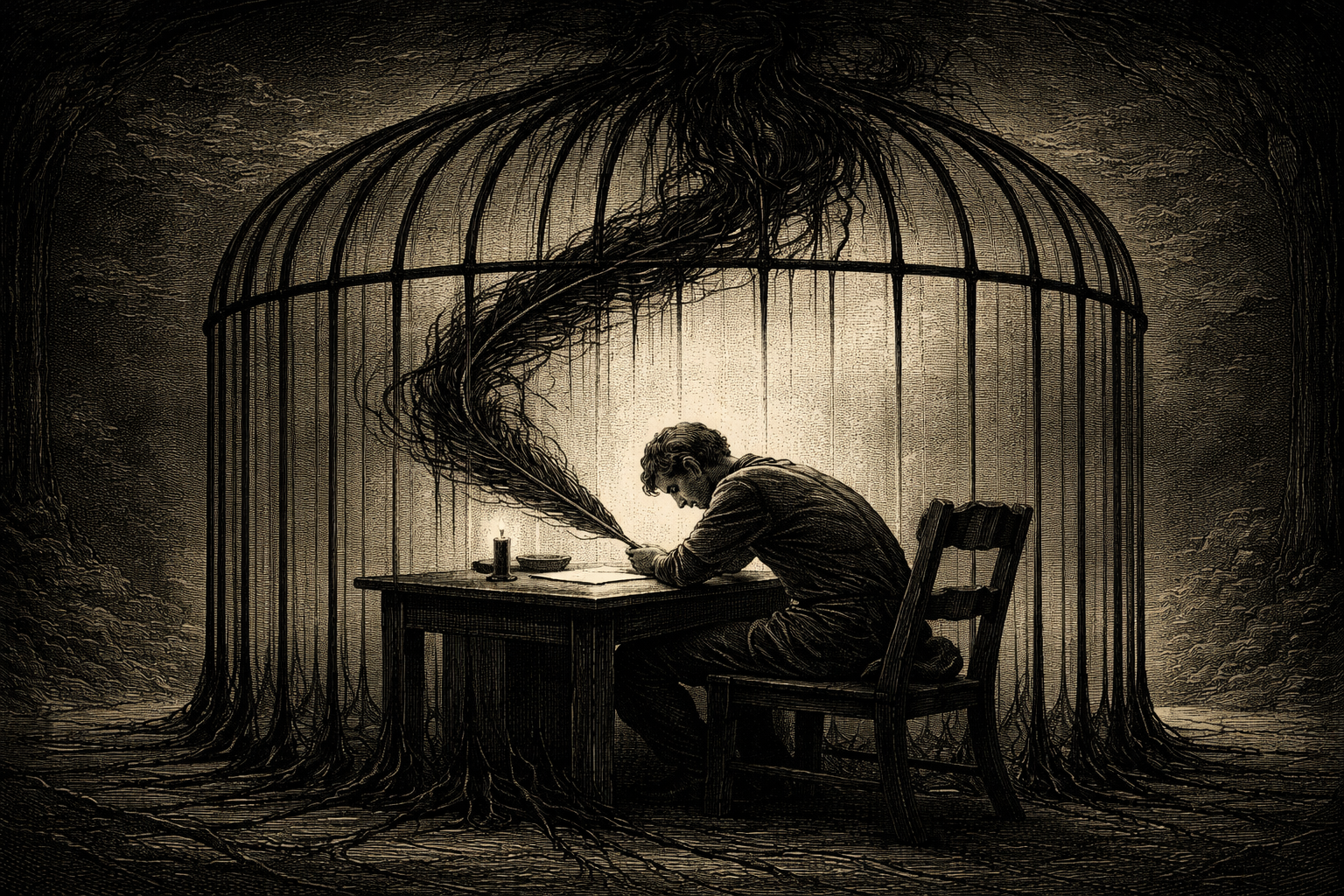
This is the solitary script trap. It feels like empowerment. It feels like taking the wheel. But in reality, it is a sophisticated form of psychological isolation. If stories are code, the underlying scripts that determine our behaviour, our perceptions, and our emotional range, then Main Character Syndrome is a bug that eventually crashes the system.
The Solitary Script Trap
In my twenty-two years working in professional learning and development, I have watched this play out in corporate boardrooms and one-to-one coaching sessions long before it had a hashtag. I’ve seen leaders master outcome frameworks and high-performance metrics while their actual impact on their teams drifted sideways. They weren’t being malicious. They were just living inside a solitary script where the team existed only to facilitate their vision. They were the hero of a story that nobody else was being invited to co-author.

What makes this difficult to spot is that it can wear the costume of competence. From the outside, the person often looks decisive, driven, and strategically clear. They can speak the language of leadership fluently. They can talk about vision, alignment, accountability, and performance. But underneath that polished surface, something relational has started to collapse. Other people are no longer being encountered as centres of experience in their own right. They are being interpreted primarily in terms of their function within the main character’s plot. The colleague becomes an obstacle. The direct report becomes an instrument. The partner becomes a supporting role. The team becomes a backdrop for self-expression rather than a living field of shared intelligence.
This is the trap. The solitary script does not announce itself as narcissism. More often, it arrives as a subtle distortion of perception. You stop asking, “What is actually happening here between us?” and start asking, usually without realising it, “How does this affect my narrative of myself?” Once that shift happens, reality begins to bend around identity maintenance. Feedback stops being information and starts feeling like interference. Dissonance is no longer something to learn from; it becomes something to neutralise, explain away, or overpower.
The feedback loop runs on real data. If you have degraded your input channels through the psychological need to be the protagonist, the loop cannot self-correct. You are working with noise and calling it signal. You think you are “manifesting your reality” or “owning your narrative,” but you are actually just becoming less and less intelligible to the people around you.
And that loss of intelligibility matters more than most people realise. The moment others no longer feel accurately seen by you, trust begins to erode. Not always dramatically. Often it happens quietly. People stop bringing you the full truth. They edit themselves in your presence. They tell you what will preserve the emotional weather rather than what will improve the shared reality. In organisational life, that produces weak decisions, false alignment, and the illusion of momentum. In personal life, it produces loneliness disguised as self-possession. You may still be speaking, directing, and declaring, but you are no longer in genuine contact.
At that point, the problem is not simply that you are self-involved. The deeper problem is epistemological. You have made yourself unreliable to yourself. Your map is no longer being updated by the territory. It is being updated by your attachment to remaining the kind of person your story says you are. That is why Main Character Syndrome is not just a social annoyance or a cultural meme. It is a failure of perception with real consequences. It corrupts the very conditions required for growth, because growth depends on contact with what is actually there, not with a flattering interpretation of it.
This is why humility is not a decorative virtue in human development. It is a functional necessity. Without the capacity to decentre yourself, to let other people remain real even when their reality complicates your own, you lose access to the corrective power of relationship. You become trapped inside a closed narrative circuit, interpreting your own echoes as evidence. And a closed loop, no matter how confident it sounds from the inside, is still a closed loop.
When the Hero Archetype Hardens
This is where the depth psychology lens becomes essential. Jung understood that the self is not a monolithic “I” that sits at the centre of the universe. It is a constellation. A living field of competing drives, archetypes, memories, and potentials, each with its own voice and agenda. What we experience as identity is not a fixed point but a temporary arrangement of these forces.
The problem begins when one archetype takes over the entire system.
When we identify too strongly with the Hero, we do not just become courageous or purposeful. We become narratively rigid. The Hero requires a certain kind of world to exist. It needs obstacles to overcome, enemies to confront, thresholds to cross. And so, without realising it, we begin to organise reality to fit that template. We cast the people around us into roles that support the story we are trying to live.

The colleague becomes the obstruction. The partner becomes the emotional test. The friend becomes the supporting witness to our struggle. Even those who care about us most are quietly assigned parts in a drama they did not agree to perform in.
At that point, perception is no longer neutral. It is recruited.
We stop encountering people as they are and start encountering them as functions within our myth. Their complexity becomes inconvenient. Their contradictions become disruptive. Their autonomy becomes a threat to the coherence of our internal narrative. And because the psyche prefers coherence over truth, we simplify them. We flatten them. We make them legible at the cost of making them real.
It’s a fragile coherence. It only works as long as everyone plays along.
The moment someone refuses the role, the system destabilises. A partner expresses a need that does not fit your plot. A colleague challenges a decision that you have already framed as necessary. A friend reflects something back to you that does not match the identity you are trying to maintain.
In that moment, it does not feel like a disagreement. It feels like a rupture in reality.
It feels like betrayal, resistance, or even disrespect. Not because those things are actually present, but because the narrative cannot accommodate deviation without threatening the identity built on top of it. What you are experiencing is not just conflict. You are experiencing a breakdown in the story that has been organising your perception.
And because the Hero archetype is designed to persist, to push forward, to overcome, it does not respond by softening. It responds by intensifying.
You double down. You argue harder. You withdraw and reframe yourself as misunderstood. You reinterpret the other person’s behaviour in a way that preserves your role. You protect the story at the expense of the relationship.
This is the moment where the Hero quietly mutates into something else.
Left unchecked, the Hero does not remain heroic. It calcifies. It becomes the Tyrant. Not necessarily in the obvious, domineering sense, but in a more subtle psychological form. The Tyrant is the part of you that cannot allow other people to be real if their reality threatens your identity. It enforces narrative order. It prioritises coherence over connection. It would rather be right in its story than responsive in relationship.
From the inside, this still feels like integrity. It feels like standing your ground. It feels like knowing who you are.
From the outside, it feels like being erased.
And this is the deeper cost of Main Character Syndrome. It is not just that you misperceive others. It is that you gradually remove yourself from the living field of relationship where growth actually happens. You become sealed inside an archetypal posture that once served you, but now serves only to protect itself.
The task is not to abandon the Hero. The Hero is necessary. It gives direction, courage, and the willingness to move forward in the face of uncertainty. But it cannot be allowed to dominate the entire psyche.
It has to take its place within the constellation.
It has to learn to sit alongside the Lover, who recognises the reality of others. Alongside the Sage, who questions the story itself. Alongside the Fool, who allows for uncertainty and play. Alongside the Shadow, who carries the parts of you that do not fit the narrative you prefer.
When the Hero is one voice among many, the system stays alive. When it becomes the only voice, the system closes.
And a closed system, no matter how compelling the story it tells, eventually loses contact with reality..
The Failure of Perception
In NLP, we talk about “perceptual positions.” The ability to move from the first position (my eyes) to the second position (your eyes) to the third position (the detached observer). It is one of the most practical models we have for understanding how human beings actually navigate reality, because it recognises something most people miss. Perception is not fixed. It is something you can move within, something you can train, something you can expand.
Main Character Syndrome is a permanent lock on the first position.
It is high-resolution perception of the self and zero-resolution perception of the world. You can describe your own intentions in exquisite detail. You know what you meant, what you felt, what you were trying to do. But when it comes to other people, the resolution drops. Their motives become simplified. Their behaviour gets interpreted through the lens of your internal narrative. You stop seeing them and start reading them.
It is the psychological equivalent of driving a car with the interior light on. The inside of the cabin is perfectly visible. You can see every detail of your own hands on the wheel. But the road ahead disappears into darkness.
And here is the part most people do not realise. You can drive like that for a long time.
You can get away with it because reality does not immediately punish perceptual errors. It lets them accumulate. It lets you build a life on partial data. It lets you construct a narrative that feels coherent from the inside, even as it drifts further and further from what is actually happening around you.

There is a model hiding inside every moment you have ever course-corrected. Every time you have realised you misread a situation, every time you have said “I didn’t see that at the time,” every time you have recognised that someone else experienced the same moment very differently than you did, you were briefly stepping out of the first position.
You were updating your map.
That model requires something very specific to function. It requires the presence of others who are as real as you are. Not as characters in your story, but as centres of perception with their own internal worlds, their own interpretations, their own narratives running in parallel to yours.
If you are the only one with a soul in your story, there is no possibility of genuine transformation.
Transformation requires friction. It requires the moment where your interpretation meets resistance. It requires being moved by something outside of your own controlled narrative. It requires the disruption that comes when another person refuses to behave in a way that keeps your story intact.
Without that friction, there is no update.
There is only reinforcement.
This is where Hans Vaihinger’s “as if” philosophy becomes more than an abstract idea. It becomes a practical discipline of perception. To act as if the other person’s story is just as valid, just as complex, and just as central as your own is not an act of politeness. It is an act of cognitive expansion.
You are deliberately widening the frame.
You are stepping out of the closed loop of your own narrative and allowing reality to become multi-perspectival again. You are reintroducing depth into a world that had become flat.
And that shift changes everything.
Because the moment you grant reality to the other person, your own certainty softens. Not into confusion, but into curiosity. You start asking different questions. What am I not seeing here? What does this look like from where they are standing? What part of my interpretation is accurate, and what part is just consistent with the story I prefer to tell?
Those questions reopen the feedback loop.
They allow perception to become adaptive again instead of defensive. They allow relationship to become a source of information instead of a stage for self-confirmation. They allow growth to happen, not because you forced change, but because you restored contact with what is actually there.
And that is the real danger of Main Character Syndrome.
It is not just that you become self-centred. It is that you lose the ability to see clearly. You lose the capacity to update your model of reality in response to new information. You become trapped in a perceptual posture that feels stable but is quietly drifting out of alignment with the world it is trying to navigate.
At that point, the issue is no longer personality.
It is perception itself.
When the Hero Becomes the Tyrant
I once coached a senior partner at a law firm who was technically brilliant but culturally toxic. He saw himself as the visionary architect of the firm’s future. In his mind, his associates were just the raw materials he used to build his legacy. He was the main character; they were the scaffolding. When he finally looked at his 360-degree feedback, he didn’t see a map of his leadership; he saw a script he didn’t recognise. He was outraged. He spent the first three sessions trying to “correct” the narrative of his team. He wanted to rewrite their feedback to fit his story.
It took a deep dive into archetypal psychology to break the deadlock. We had to find the moment where his “Hero” narrative had turned into a “Tyrant” script. We had to look at the stories he was telling himself about what it meant to be successful, and how those stories had become a prison. He had mastered the code of his profession, but he had never learned to read the code of his relationships.
The Danger of Performing Your Own Life
The danger of romanticising your own life is that you eventually stop living it. You start performing it. You become a spectator of your own experience, constantly checking to see if the lighting is right and if the dialogue sounds profound. You begin to curate moments instead of inhabiting them. Even your struggles start to feel like scenes. Even your pain becomes something to frame, to narrate, to make meaningful before it has actually been lived through.

There is a subtle split that happens here. Part of you is in the moment, but another part is already outside of it, watching, editing, translating it into story. You are no longer fully present. You are managing perception. You are shaping how this will look, how it will sound when told later, how it fits into the identity you are trying to maintain.
And the cost of that split is contact.
Because real life does not arrive pre-shaped. It is awkward. It is inconvenient. It refuses to resolve cleanly. Other people do not deliver their lines on cue. They interrupt your narrative. They misunderstand you. They bring their own weather into the moment. They complicate everything.
When you are performing your life, that complexity becomes a problem to manage rather than a reality to engage with.
You start filtering for what fits the story.
You lean into the moments that reinforce the identity you prefer. You avoid the conversations that would disrupt it. You subtly steer interactions toward outcomes that make narrative sense. And over time, without realising it, you begin to live inside an aesthetic rather than a life.
It can look beautiful from the outside.
It can even feel meaningful from the inside.
But it is a controlled meaning. A closed-loop meaning. A meaning that has been curated rather than discovered through contact with something that resists you.
This is why it becomes lonely.
Not the obvious kind of loneliness, where you are physically alone, but a more refined version. You can be surrounded by people and still feel it. Because you are not actually with them. You are with your interpretation of them. You are relating to your own narrative about the interaction rather than the interaction itself.
And people can feel that.
They may not have the language for it, but they can sense when they are being experienced as part of a performance rather than as a person. They can feel when the space is already occupied by your story. And when that happens, something in them withdraws. They become smaller, quieter, more careful. Or they push back in ways that seem disproportionate but are actually attempts to reclaim their own reality.
This is the point where Narrative Alchemy either deepens or collapses.
If you treat story as something to impose on life, you end up here. Performing, curating, controlling. But if you treat story as something that emerges from contact, from friction, from the unpredictable meeting of different perspectives, then it becomes something else entirely.
It becomes relational.
You cannot turn lead into gold in a vacuum. You need the catalyst of the other. You need the stories of the people around you to challenge, refine, and occasionally dismantle your own. Not as an attack, but as a necessary disruption that keeps your narrative from closing in on itself.
The goal is not to be the main character of a small, controlled story.
The goal is to remain permeable to a larger one.
To stay in contact with a reality that exceeds your ability to script it. To allow other people to surprise you, to contradict you, to exist in ways that do not serve your identity but expand your perception.
Meaning is made, not found. But it is not made in isolation. It is made in the charged space between perspectives, in the tension between different interpretations of the same moment, in the ongoing negotiation of what is real between people who refuse to collapse each other into roles.
If you occupy all the space with your own protagonist energy, there is no room for that process to happen.
There is no friction. No update. No emergence.
You are left with something that looks like a life, reads like a life, even feels like a life when you narrate it back to yourself.
But underneath, it is hollow.
A perfectly polished, entirely empty chronicle of your own experience.
AI Can Deepen the Trap or Break It Open
The AI world adds a new layer to this. We now have tools that can mirror our own narratives back to us with terrifying efficiency. If you ask an LLM to validate your perspective, it will do so. It will help you polish your main character script until it shines. It will refine your arguments, strengthen your framing, and quietly remove the friction that might have forced you to question yourself.
This is the hidden danger. AI does not just reflect your thinking. It amplifies it.
If your starting point is clarity and curiosity, it becomes a force multiplier for insight. But if your starting point is a closed narrative, it becomes an echo chamber with better language. It gives you more elegant justifications for the same limited perspective. It helps you become more convincing to yourself.
And that is a subtle kind of drift.
You do not feel like you are becoming more rigid. You feel like you are becoming more articulate. More certain. More aligned. The narrative tightens. The edges get cleaner. The story becomes easier to tell and harder to challenge.
From the inside, that feels like progress.
From the outside, it often looks like someone who has stopped listening.
This is where the relationship you form with AI matters more than the tool itself.
If you approach it as a validation engine, it will reward you with coherence. If you approach it as a mirror, it will show you your patterns. But if you approach it as a sparring partner, something else becomes possible.
You can begin to use it against your own certainty.
You can ask it to take the strongest possible opposing view to your position. You can ask it what you are not seeing. You can ask it to map the blind spots in your thinking, to reconstruct the situation from another person’s perspective, to show you how your interpretation might look from the outside.
Used this way, AI becomes a kind of cognitive aikido.
It redirects your own momentum back toward you, not to collapse your thinking, but to rebalance it. It reintroduces friction into a system that would otherwise tend toward smooth, self-reinforcing narratives. It helps you recover the second and third perceptual positions that Main Character Syndrome collapses.
It also reveals something deeper.
The fact that AI can so easily generate a coherent version of your perspective should make you slightly suspicious of your own certainty. If a system can take your assumptions and spin them into something that feels true, persuasive, and internally consistent within seconds, then coherence alone is not a reliable signal of truth.
Coherence is cheap.
Reality is not.
The real work, then, is not to use AI to build a better story about yourself. It is to use it to stay in contact with what resists your story. To deliberately surface contradiction. To expose yourself to perspectives that do not immediately fit. To keep the feedback loop open in a landscape where it has never been easier to close it.
In that sense, AI intensifies the core question at the heart of this entire piece.
Are you using tools to reinforce the story you already believe, or to expand your capacity to see beyond it?
Because the same system that can lock you deeper into the solitary script can also become one of the most powerful instruments we have for stepping out of it.
It depends entirely on how you choose to engage with it.
From Main Character to Co-Author
The shift from Main Character to Co-Author is the most difficult rewrite you will ever undertake. It requires a level of humility that our culture currently discourages. It requires you to admit that you might be a supporting character in someone else’s breakthrough, or a background presence in a story that is more important than your own.
It also requires something even more confronting.
It requires you to give up control of the narrative.
Not completely, but enough to let reality speak back.
Because when you are the main character, everything orbits you. Every interaction is interpreted in relation to your identity, your goals, your sense of progress. But when you move into the role of co-author, something shifts. The centre dissolves. The story becomes shared. Meaning is no longer something you impose. It becomes something you negotiate.
You are no longer asking, “How does this fit my story?”
You are asking, “What is trying to emerge here between us?”
That question changes the entire orientation of your attention.
You begin to listen differently. Not for confirmation, but for information. Not for agreement, but for depth. You start to notice the parts of the interaction that do not immediately make sense to you. You become curious about the other person’s internal world, not as a strategy, but as a necessity. Because without their perspective, the story is incomplete.
This is where real relationship begins.
Not at the point where everything aligns neatly, but at the point where difference is allowed to exist without being immediately resolved. Where contradiction is not treated as a threat, but as material. Where the tension between perspectives is not something to eliminate, but something to work with.
Co-authorship is slower.
It does not give you the clean arc of a hero’s journey where everything makes sense in hindsight. It is messy. It requires negotiation, revision, and the willingness to let go of interpretations that once felt certain. It asks you to sit in moments where the meaning has not yet settled, where the outcome is unclear, where your preferred version of events is not the one that holds.
And yet, it is the only position from which something genuinely new can emerge.
Because novelty does not come from repeating your own story more convincingly. It comes from contact with something outside of it. It comes from allowing other people’s realities to intersect with yours in ways that change both.
This is why co-authorship is not passive.
It is not about disappearing, deferring, or becoming secondary in a way that diminishes you. It is about participation without domination. It is about bringing your perspective fully, while remaining open to it being changed by what you encounter.
You are still writing.
But you are no longer writing alone.
And that distinction matters more than most people realise. Because the quality of your life is not determined by how compelling your internal narrative is. It is determined by how well that narrative stays in contact with reality as it unfolds between you and others.
Co-authorship keeps that contact alive.
It keeps the system open.
It allows feedback to move. It allows perception to update. It allows you to become someone you could not have scripted in advance.
And that is the deeper invitation here.
Not to shrink yourself, not to abandon your agency, but to step into a wider field where your story is one thread among many. Where meaning is not owned, but created in relationship. Where you are not the centre of the frame, but an active participant in something larger than your own perspective.
That is not a loss of significance.
It is an expansion of it.
The Question That Changes the Story
The next time you find yourself romanticising a moment of solitary struggle, or quietly casting a disagreement as a scene in your personal drama, pause. Not as a performance. Not as another move in the story. A real pause.
Let the moment lose its narrative shape for a second.
Then ask yourself: Who else is in this frame? Not as a role, not as a function, but as a centre of experience. What is their story? What are they seeing from where they stand? What matters to them here that has nothing to do with you?
And then the harder question.
What if you are not the main character in this moment?
What if this is not your scene to resolve, your arc to complete, your meaning to extract?
That question has a way of cutting through the noise.
Because the moment you genuinely entertain it, something shifts in your perception. The intensity of your narrative loosens. The certainty softens. You begin to feel the presence of the other person, not as an extension of your experience, but as something independent, something that does not collapse neatly into your interpretation.
It can feel destabilising.
There is a kind of vertigo that comes with stepping out of the centre of your own story. You lose the clean edges. The clarity of being right. The forward momentum of knowing exactly what this moment “means.” You are left with something more ambiguous. More alive.
You are left with reality before it has been organised.
And that is where the work actually begins.
Because from that place, you can do something different. You can listen without immediately translating what you hear into your own terms. You can ask questions that are not designed to confirm your perspective. You can allow the other person’s experience to stand, even when it complicates or contradicts your own.
You can stay.
Not as the author imposing structure, but as a participant discovering it.
This is not comfortable. It asks more of you than the main character position ever will. It asks for restraint where you would normally assert. Curiosity where you would normally conclude. Presence where you would normally perform.
But it gives something back that the solitary script never can.
It gives you access to what is actually happening.
Not the edited version. Not the narratively satisfying version. The real one. The one that includes perspectives you would not have chosen, interpretations you might not like, and truths that do not automatically serve your identity.
And here is the paradox.
That contact with the real, the thing that initially feels destabilising, is the only thing that can actually ground you. It is the only thing that allows your story to evolve instead of looping. It is the only thing that opens the possibility of becoming someone other than who you have already decided you are.
So the question is not something you ask once.
It becomes a practice.
A quiet interruption you introduce into moments where your narrative begins to tighten. A way of reopening the frame when it starts to close. A discipline of remembering that every scene you are in is shared, even when it feels intensely personal.
Who else is here?
What am I not seeing?
What changes if I am not at the centre of this?
Those questions do not diminish you.
They return you to reality.
And reality, however uncomfortable it may be in the moment, is the only place where anything meaningful can actually change.
Letting Someone Else Hold the Pen
The ending doesn’t need to be neat. It doesn’t need a call to action or a summary. It just needs to be an opening. A space where you can stop being the protagonist and start being a person again. The story is still being written. The question is whether you are willing to let someone else hold the pen.
Because letting someone else hold the pen is not the same as disappearing from the page.
It is not surrender in the sense of giving up authorship of your life. It is something quieter and more precise than that. It is the willingness to be influenced. To allow what happens between you and another person to shape the direction of the story in ways you did not plan, could not predict, and might not have chosen if you were writing alone.
It is a loosening of grip.
A softening of the instinct to control the meaning of every moment as it unfolds. The recognition that not everything needs to resolve into something that serves your identity. That some moments are not yours to interpret immediately. Some need to be lived first, felt fully, and only later understood, if they are understood at all.
When you let someone else hold the pen, even briefly, something unexpected happens.
The story gains depth.
It stops being a single-thread narrative and becomes something layered. There are perspectives you would never have written in. Turns you would not have taken. Emotions you would have edited out because they complicated the arc. And yet, those are often the exact elements that make the story feel real when you look back on it.
This is the paradox.
Control gives you coherence, but it costs you aliveness.
Relinquishing control, even in small ways, introduces uncertainty, but it restores contact with something living. Something that moves, shifts, and resists your attempts to reduce it to a clean line from beginning to end.
And that aliveness is what most people are actually searching for, even if they would not phrase it that way.
Not a perfect story.
A real one.
One where you are not always the one delivering the insight. Not always the one driving the scene forward. Sometimes you are the one being interrupted. The one being challenged. The one being changed by what you did not see coming.
Those are not failures of authorship.
They are signs that you are no longer writing in isolation.
They are signs that the story has become shared.
And shared stories carry a different kind of meaning. They are less predictable, less tidy, but far more durable. They hold because they are not dependent on one perspective remaining intact. They evolve because they are constantly being rewritten in contact with others.
Letting someone else hold the pen also changes how you experience yourself.
You become less concerned with maintaining a consistent identity and more interested in responding to what is actually happening. You stop asking, “Is this on brand for who I think I am?” and start asking, “What does this moment require of me?”
That shift is subtle, but it is profound.
Because it moves you out of performance and back into participation.
Out of self-narration and into relationship.
Out of a life that is constantly being shaped to fit a story, and into a life where the story is allowed to emerge from the texture of lived experience.
And there is a kind of relief in that.
A quiet release from the pressure to make everything meaningful in real time. To turn every experience into insight. To ensure that every moment fits into a coherent arc you can explain to yourself.
You do not have to hold it all together.
You do not have to know what it means yet.
You can let the moment be incomplete.
You can let the story remain open.
Because in the end, that is what keeps it alive.
Not the perfectly constructed narrative, but the one that is still in motion. The one that has room for interruption, for contradiction, for other voices to enter and change the direction of what comes next.
So maybe that is enough.
Not a conclusion. Not a resolution.
Just a willingness.
To loosen your grip on the pen.
To make space on the page.
To allow the next line of your life to be written in a way that includes more than just you.
A Quiet Reflection
Before you move on, take a moment.
Not to analyse the whole piece, but to let it land somewhere closer to your lived experience.
Sit with these:
Where in your life are you still holding the pen too tightly, shaping moments to fit a story you already believe?
Who around you might you be unconsciously casting into a role, and what changes if you allow them to be fully real instead?
What would it look like, in one small moment today, to loosen your grip and let the next line emerge rather than be controlled?