“Do I dare disturb the universe?”
– T.S. Eliot – Love Song of J. Alfred Prufrock
working notes from the textual underground
“Do I dare disturb the universe?”
– T.S. Eliot – Love Song of J. Alfred Prufrock
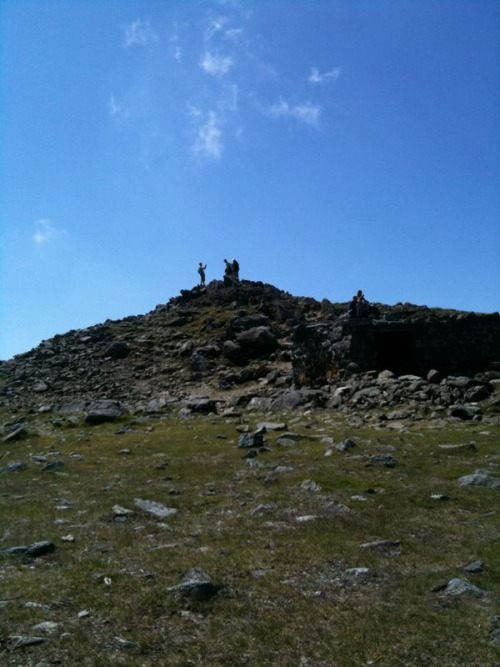
Relaxing on top of penygadir.
“The clock is king.”
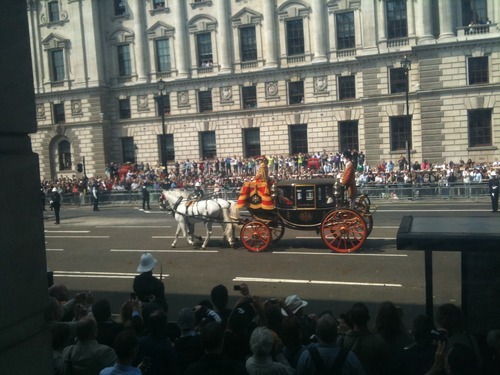
I am trying to figure out how we, as individuals, benefit when a government cuts valuable programs that serve children, education, and the old and at the same time raises taxes. Short term pain? Long term gain? What is the long term gain and how will it make me and my family better off? If you cut 250, 000 jobs, where do those people go? What do they and their families do?
“Short term pain…” ha I think King said it best while shoveling shit in the movie Platoon: “You gotta be rich to think like that in the first place…”
I guess this will round out my British experience. This will be the first time I have lived under a conservative (with a splash of lib dem) government.

The contemporary commuting couple.
(nice tans, must have just come back from holiday.)
The new coalition government is proposing to cut child benefit, the child and working tax credit, statutory maternity pay, the winter fuel allowance, and concessionary bus fare, yet the new governments seems happy to continue having the taxpayers pay for NHS executives to keep their prestige Mercedes-Benz, Jaguar, Audi, and Lexus company cars at cost of millions of pounds to the taxpayer. What message am I suppose to take from this?
He’s not a policeman. He’s not a fireman. He’s not an emergency medic. It’s 6:00am. There is no traffic. The light I’m waiting for turns green. He runs his red light. I have to break to keep from crashing into him. He put two lives in danger for the sake of 2 minute. I wonder if the 2 minutes he saved worth the risk. What will that 2 minutes buy him today? And will it be worth two lives?
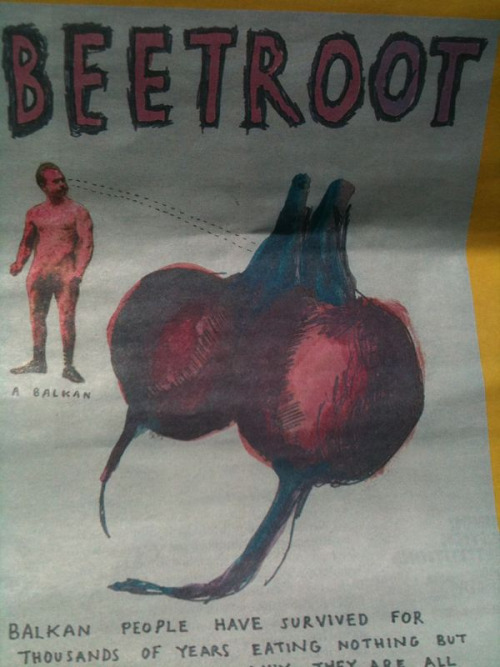
Looks like ripped out testicles to me…

without fear infamy, i will answer thee (a day out at the london dungeon)
Does anybody know the answer to this Zen riddle: a Zen Master comes around to his pupils, he is carrying a big stick. He says to them: ‘If you say I am holding this stick I will hit you with it and if you do not say I am holding this stick I will hit you with it.’
What would you say?
“Some times we don’t ask a question because we are afraid of the answer we might get. Like Schrodinger’s Cat, the answer I want still exist as long as I don’t ask the question.”
back in the digital lab…

a singing dinosaur and cat fightin women in bikinis or how to make a video go viral…

The key to the universe is hidden in the underlying rhythm of life, in and out, burst, birth and rebirth. Everything else is a side show.
“Truth emerges from between the spaces. Look closer. You may be surprised by what you find.”
How can you talk about the non-existence of time in the context of time?
Did God create the universe because he/she/it was bored? Andrew Cohen seems to suggest that God was tired of being in perfect peace and wanted a change. Hanging out beyond space and time wasn’t doing it for God anymore, and having nothing better to do, God created the universe for his/her/its entertainment.
Welcome to the show.
I think the moment you attempt to describe God using language, you automatically limit God. We confine God with language, then we kill each other who has the best description of something that can’t be described.
“Luck? Desperation? Presumption?”

How can you have pleasure without pain?
I have on my list to explore happiness. What is it? And how do we get it. I had an opportunity to hear Jairek Robbins speak in London. In his presentation he cites a book called Authentic Happiness by Dr. Martin Seligman, who is a leading researching in the field of Positive Psychology. Watch Brian Johnson’s Philosopher’s Note video to get a quick 10 minute summary of the book.
I wanted to know my signature strengths, so I registered on Dr. Seligman’s website and took the Survey of Character Strengths.
My signature strengths are:
1. Curiosity and interest in the world.
2. Social intelligence.
3. Love of learning.
4. Capacity to love and be loved.
5. Forgiveness and mercy.
According Dr Seligman the road to happiness begins with structuring your life such that you play to your signature strengths. I wasn’t at all surprised by my top 3 signature strengths, #4 I could understand, but #5 I was shocked to find as one of my signature strengths. I guess I don’t see that I go around meting out a whole lot of forgiveness and mercy.
I had a good think about how to these strengths manifest themselves in my life now and how I could develop a simple mission statement that encompasses the essence of my top three strengths. I came up with this:
“I love finding out about stuff and sharing it with other people.”
That’s about a simple as it gets for me. I love it. Just identifying my signature strengths has already cleared some of the fog.
The Signature Strengths
Seligman identified 24 character strengths. These he distilled from the six key virtues he uncovered from researching the classic wisdom literature both Eastern and Western. The six virtues are:
1. Wisdom
2. Courage
3. Love
4. Justice
5. Temperance
6. Spirituality
Here’s how Seligman’s 24 character strengths fit within the core virtues:
1. Wisdom and Knowledge – cognitive strengths that entail the acquisition and use of knowledge
* Creativity [originality, ingenuity]: Thinking of novel and productive ways to conceptualize and do things; includes artistic achievement but is not limited to it
* Curiosity [interest, novelty-seeking, openness to experience]: Taking an interest in ongoing experience for its own sake; finding subjects and topics fascinating; exploring and discovering
* Open-mindedness [judgment, critical thinking]: Thinking things through and examining them from all sides; not jumping to conclusions; being able to change one’s mind in light of evidence; weighing all evidence fairly
* Love of learning: Mastering new skills, topics, and bodies of knowledge, whether on one’s own or formally; obviously related to the strength of curiosity but goes beyond it to describe the tendency to add systematically to what one knows
* Perspective [wisdom]: Being able to provide wise counsel to others; having ways of looking at the world that make sense to oneself and to other people
2. Courage – emotional strengths that involve the exercise of will to accomplish goals in the face of opposition, external or internal
* Bravery [valor]: Not shrinking from threat, challenge, difficulty, or pain; speaking up for what is right even if there is opposition; acting on convictions even if unpopular; includes physical bravery but is not limited to it
* Persistence [perseverance, industriousness]: Finishing what one starts; persisting in a course of action in spite of obstacles; “getting it out the door”; taking pleasure in completing tasks
* Integrity [authenticity, honesty]: Speaking the truth but more broadly presenting oneself in a genuine way and acting in a sincere way; being without pretense; taking responsibility for one’s feelings and actions
* Vitality [zest, enthusiasm, vigor, energy]: Approaching life with excitement and energy; not doing things halfway or halfheartedly; living life as an adventure; feeling alive and activated
3. Humanity – interpersonal strengths that involve tending and befriending others
* Love: Valuing close relations with others, in particular those in which sharing and caring are reciprocated; being close to people
* Kindness [generosity, nurturance, care, compassion, altruistic love, “niceness”]: Doing favors and good deeds for others; helping them; taking care of them
* Social intelligence [emotional intelligence, personal intelligence]: Being aware of the motives and feelings of other people and oneself; knowing what to do to fit into different social situations; knowing what makes other people tick
4. Justice – civic strengths that underlie healthy community life
* Citizenship [social responsibility, loyalty, teamwork]: Working well as a member of a group or team; being loyal to the group; doing one’s share
* Fairness: Treating all people the same according to notions of fairness and justice; not letting personal feelings bias decisions about others; giving everyone a fair chance.
* Leadership: Encouraging a group of which one is a member to get things done and at the time maintain time good relations within the group; organizing group activities and seeing that they happen.
5. Temperance – strengths that protect against excess
* Forgiveness and mercy: Forgiving those who have done wrong; accepting the shortcomings of others; giving people a second chance; not being vengeful
* Humility/Modesty: Letting one’s accomplishments speak for themselves; not regarding oneself as more special than one is
* Prudence: Being careful about one’s choices; not taking undue risks; not saying or doing things that might later be regretted
* Self-regulation [self-control]: Regulating what one feels and does; being disciplined; controlling one’s appetites and emotions
6. Transcendence – strengths that forge connections to the larger universe and provide meaning
* Appreciation of beauty and excellence [awe, wonder, elevation]: Noticing and appreciating beauty, excellence, and/or skilled performance in various domains of life, from nature to art to mathematics to science to everyday experience
* Gratitude: Being aware of and thankful for the good things that happen; taking time to express thanks
* Hope [optimism, future-mindedness, future orientation]: Expecting the best in the future and working to achieve it; believing that a good future is something that can be brought about
* Humor [playfulness]: Liking to laugh and tease; bringing smiles to other people; seeing the light side; making (not necessarily telling) jokes
* Spirituality [religiousness, faith, purpose]: Having coherent beliefs about the higher purpose and meaning of the universe; knowing where one fits within the larger scheme; having beliefs about the meaning of life that shape conduct and provide comfort
1 from: http://www.shortellcoaching.com/joomla/what-are-signature-strengths.html
Absolutely love this.