
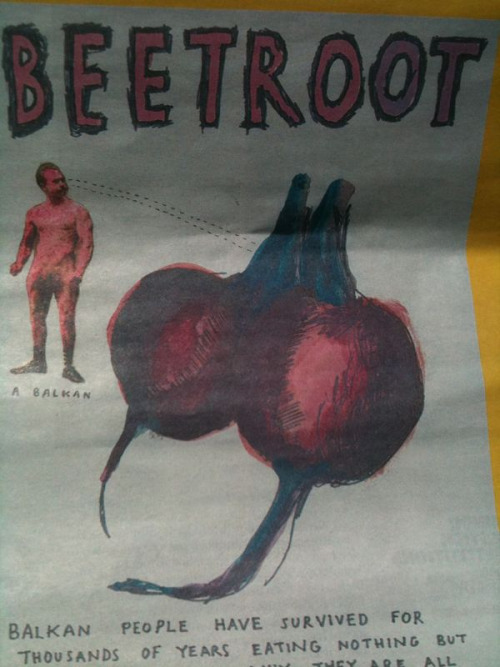
Looks like ripped out testicles to me…
Discover more from soulcruzer
Subscribe to get the latest posts sent to your email.
Philosophical Correspondent & Wandering Essayist




The Soulcruzer podcast is an audioblog from the edge of the inner life.
Part personal essay, part field recording, part narrative alchemy, it follows the strange places where story, psyche, myth, technology, and everyday experience begin to speak to each other.
One episode might wander through tarot as reflective technology. Another might take Nietzsche’s eternal return for a walk, explore games as containers for transformation, or ask what happens when ancient wisdom meets the AI age. Depth psychology brushes against the esoteric. Philosophy comes down from the shelf. Theory gets tested against life.
This is not polished guru-talk or productivity theatre. It is a mind in movement: raw notes, live experiments, confessional mysticism, and working fragments from the textual underground.
At the heart of it all is a simple premise:
Stories are code. Reality is programmable. And the life you are living might be more editable than you were taught to believe.
If you are drawn to the deep work, the strange edges, and the art of becoming more fully alive, subscribe wherever you get your podcasts.
In this episode, I take the Soulcruzer podcast out of the studio and into the fields.
What starts as an experiment in mobile podcasting/vlogging turns into a wandering meditation on labels, blogging, AI, morning rituals, and the strange abundance of media tools we now carry in our pockets.
– Why I still think of myself as a blogger first
– Podcasting, vodcasting, and the pressure to become “multimodal”
– The problem with labels: “When you label me, you negate me”
– soulcruzer.com as the central hub/home on the internet
– Wisdom Walks as thinking time
– Walking, motion, and changing perspective
– The “barefoot philosopher” approach to everyday philosophy
– AI as an extension of cognition rather than just a productivity tool
– The “soft cyborg” and the library of Alexandria in your pocket
– Morning reality tunnels and the sacred space before breakfast
– Coffee, barefoot grounding, and choosing what enters your mind first
– Indie blogging, platforms, Substack, distribution, and the open web
– Why these episodes may stay loose, minimally edited, and stream-of-consciousness

Man and His Symbols is an accessible gateway into Jungian depth work. This illustrated exploration of archetypes and symbols reveals how transformation happens in the imaginal realm, below conscious awareness.

Hillman's "acorn theory" illuminates the path to Authentic Purpose. His poetic yet rigorous approach gives language to the daimonic self and the ineffable aspects of personal mythology.
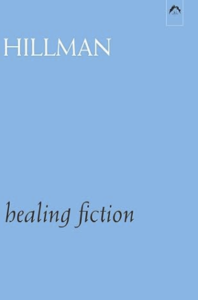
This book is James Hillman's main analysis of analysis. He asks he basic question," What does the soul want?" With insight and humor he answers: "It wants fiction to heal."
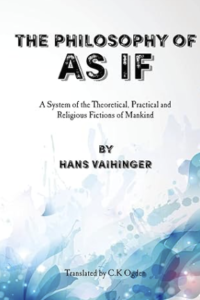
Vaihinger… shows that thought is primarily a biological function turned into a conscious art. It is an art of adjustment, whose chief instrument is the construction of fictions by which men may manage to live.

Mary K. Greer's seminal workbook transforms tarot from divination tool into technology for self-knowledge and narrative sovereignty. Packed with exercises that treat the cards as doorways to the imaginal realm, this is required reading for practitioners ready to use archetypal imagery as active imagination practice.

Johnson demystifies Jung's most powerful technique with step-by-step guidance for engaging the imaginal realm directly. This slim volume transforms abstract theory into actionable practice—essential for practitioners ready to move beyond conceptual understanding.

The clearest introduction to chaos magic as pragmatic practice. Strips away dogma to reveal the core mechanics of belief as a tool. Perfectly bridges the gap between depth psychology and results-orientated transformation work.

While the hero's journey has been overused, Campbell's original text remains vital for understanding narrative structure as psycho-spiritual map. Read it to learn the pattern, then transcend it.

This groundbreaking work bridges the mystical and scientific, revealing how tarot actually works through the lens of neuroscience and cognitive psychology. Essential reading for practitioners who want to understand the neurological mechanisms behind symbol work, pattern recognition, and the imaginal realm's interface with the predictive brain.
Looks like ripped out testicles to me…
Subscribe to get the latest posts sent to your email.

Soulcruzer
Clay Lowe is a blogger and text-based ontologist exploring narrative alchemy, imaginal psychology, self-authorship, conscious living, and the reality-shaping power of story. His blog, soulcruzer, is where he walks, wonders, writes, and follows the rhizome wherever it wants to go.
