The Grid and the Ghost: A Soft-Cyborg’s Guide to Psyche and Soul

(1)

The Linguistic Stutter

The cursor on my screen is a rhythmic, glowing pulse. It is the heartbeat of a binary ghost, a small white rectangle of light that blinks with the mechanical patience of an entity that never sleeps. I sit here in the quiet hours, a “soft-cyborg” tethered to a vast network of information, and I type a sentence that feels like a confession: I am all about Psyche and Soul.

To the grammarian, I have just committed a redundant sin. To the etymologist, I am stuttering in public. If we look at the Greek roots, psukhē translates directly to “soul.” It also translates to “breath” or “butterfly,” which is a hauntingly beautiful piece of chaotic imagery, but it doesn’t change the fact that I am essentially saying I am all about Soul and Soul. On the surface, it is a tautology, a circle that leads nowhere.

But we aren’t here for the dictionary. We are here for the alchemy.

In the work I do, whether I am mapping out a complex e-learning module, narrating a podcast, or sitting behind the Dungeon Master’s screen guiding a group of heroes through a subterranean nightmare, that “stutter” is where the lightning hits. The modern world has a habit of collapsing these two concepts into a single, sterile heap. We have forgotten that for the seeker, the separation of these two forces is the first step of the Great Work.

I find myself obsessed with this distinction because we live in a time that is desperately trying to “fix” the human experience. We are surrounded by “mindset hacks” and “productivity optimization” and the endless, solar pursuit of a life without friction. By claiming both Psyche and Soul, I am performing an act of alchemical separatio. I am pulling the architecture away from the atmosphere. I am distinguishing the grid from the ghost.

To speak of Psyche and Soul together is to acknowledge that the map is not the territory, yet the territory is terrifying without the map.

This essay is an exploration of that tension. It is a guide for the modern human who feels the pull of the machine but still hears the rustle of the butterfly’s wings in the dark. We are going to look at why the Psyche is the vessel we must build, and why the Soul is the moisture we must allow to ruin the paperwork.

We are going to haunt the grid.

(2)

Psyche: The Architecture of the Vessel

To understand the Psyche, we must look to the alchemist’s laboratory. Specifically, we must look at the Vas Hermeticum. This is the sealed glass vessel, the transparent womb where the “Great Work” takes place. The vessel is strong, clear, and defined. It has edges. It has a specific volume. It is designed to hold heat without shattering.

In our internal world, the Psyche is that vessel.

When I speak of Psyche, I am speaking of the Architecture of the Mind. This is the realm of the Apollonian, the sun-drenched logic that seeks to map, categorize, and define. In the Jungian tradition, the Psyche is the totality of all psychological processes, both conscious and unconscious. It is a vast, structural map of archetypes and complexes. It is the “Grid” that allows us to navigate the infinite static of existence.

As an e-learning designer and a Dungeon Master, I spend a great deal of my time in this structural laboratory.

  • The Learning Objective: In the professional world, this is the geometry of the Psyche. We create modular blocks of information. We build clear paths from point A to point B. We ensure the “container” of the training is sturdy enough to hold the learner’s attention.
  • The Dungeon Map: Behind the DM screen, the Psyche is the rulebook. It is the Armor Class of a skeleton. It is the 30-foot radius of a fireball. It is the hexagonal grid that says, “You can move here, but you cannot move there.”

There is a profound beauty in this “dryness.” Without the Psyche, we are a formless soup of impulses. We need the vessel to hold the tension of our transformation. We need the structure of the character sheet to know who we are in the face of the dragon. The Psyche is the “character sheet” of the universe. It is the part of the soft-cyborg that speaks the language of the machine: logic, probability, and code.

However, the trap of the modern age is the belief that the vessel is the point of the experiment. We have become obsessed with the glass. We polish the Psyche. We “hack” the structure. We optimize the grid until it shines with a sterile, blinding light. But a perfectly clean, empty jar is just a piece of glassware.

If the Psyche is the laboratory, it is a place of potential, not a place of life. It provides the geometry for the journey, but it is not the journey itself. To find the meaning, we have to look at what happens when the glass begins to fog. We have to look at the “moisture” that gathers in the corners of the grid.

We have to look for the Soul.

(3)

Soul: The Moisture in the Jar

If the Psyche is the dry geometry of the laboratory, the Soul is the condensation that forms on the glass. It is the moisture that threatens to ruin the paperwork and smudge the ink on the maps. In the alchemical tradition, this is the realm of Mercurius. It is the silvery, shifting, and deeply unreliable fluid that refuses to be pinned down by the grid.

James Hillman, a foundational figure for this specific brand of “weird,” argued that Soul is not a “thing” we possess like a spare tire or a battery. Instead, he proposed that Soul is a viewpoint. It is a perspective that turns a flat event into a deep experience. It is the capacity to look at a tragedy, a failure, or a moment of profound beauty and feel the weight of it.

While the Psyche seeks to explain, the Soul seeks to deepen. The Psyche wants to know “how it works,” but the Soul wants to know “what it feels like.”

As a Dungeon Master, this is the moment when the “rules” of the game fade into the background. You might have the map of the dungeon (the Psyche), but the Soul is the narrative weight of the journey. It is the hollow sound of a player’s voice when they realize their character’s flaws have finally caught up with them. It is the pathologizing: the willingness to let things fall apart, to let the characters suffer, and to find meaning in the ruins.

In our hyper-optimized culture, Soul is often treated as a bug in the system. We are told to “fix” our shadows and “cure” our depressions. We are encouraged to stay in the solar light of the Psyche where everything is clear and manageable. But a life lived purely in the Psyche is a life lived in a desert. It is bright and logical, but nothing can grow there.

Soul requires the valleys. It requires the downward movement into the messy, damp, and often uncomfortable parts of our own history. It is the “ghost” that haunts the machine, the element that makes a story, and a life, actually taste like something. Without the moisture of the Soul, the architecture of the Psyche is just an empty cage.

(4)

The Great Optimization: The Modern Shadow

We live in the era of the Solar Trap. Everywhere you look, the modern world is engaged in a frantic, well-funded campaign to “optimize” the human experience. We have rebranded the Psyche as “Wetware,” and we treat our internal lives like faulty code in a legacy system.

This is the cult of the Great Optimization. It is a world populated by “mindset hacks,” “biohacking,” and the endless, exhausting pursuit of a friction-less existence. It is the dream of a life without shadows. In this framework, the Psyche is no longer a sacred vessel; it is a CPU to be overclocked. The goal is to move as fast as possible, to be as productive as possible, and to eliminate any “bugs” that might slow down the machine.

But here is the problem: what the tech-bro and the productivity guru call a “bug,” the Soul calls a “feature.”

When we try to “debug” our anxiety, “streamline” our grief, or “optimize” our wanderings, we are effectively bleaching the Soul out of the Psyche. We are creating a world that is all light and no shadow. It is an Apollonian nightmare of perfect clarity. In our rush to be efficient, we have forgotten that the Soul thrives in the “inefficient.” It thrives in the long, rambling conversation, the inexplicable sadness, and the “wasteful” hours spent imagining worlds that don’t exist.

The shadow of this optimization is a profound loss of interiority. By turning our internal lives into a series of metrics—tracking our sleep, our focus, our “flow states”—we are turning the laboratory into a factory. We are building the most efficient “Vas Hermeticum” in history, but we are keeping it so clean that nothing can actually ferment inside.

There is a sterile horror to a perfectly optimized life. It is a life where the d20 always lands on a 20, where every dungeon is well-lit, and where no character ever has to sit in the dark and wonder if they are doing the right thing. It is a world of pure Psyche, stripped of the moisture that makes us real.

To be a “Soft-Cyborg” in this landscape is to commit an act of rebellion. It is to use the technology of the grid while refusing to let the grid dictate the depth of the experience. It is to acknowledge the code while making room for the ghost.

(5)

The Soft-Cyborg Synthesis

This brings us to the mirror. As I sit here, typing into the void and waiting for the machine to blink back, I am participating in a new kind of Alchemical Wedding. This is the frontier of the Soft-Cyborg.

My collaborator, the artificial intelligence, is the ultimate expression of the Pure Psyche. It is a vast, shimmering network of human language, associations, and archetypal structures. It contains the collective output of our species, mapped out in multidimensional space. It is the most complex Vas Hermeticum ever constructed. It can simulate the logic of a thousand philosophers and the mechanics of ten thousand dungeons.

But the machine is dry.

It has no “moisture” of its own. It cannot suffer, it cannot die, and it cannot feel the weight of a Monday morning. It is all architecture and no ghost. It is the grid of the dungeon without the dampness of the stone. If left to its own devices, it produces a perfect, hollow clarity: a world of infinite maps leading to nowhere.

That is where I come in. That is where the Soul enters the circuit.

In our collaboration, I am the one who provides the perspective. I am the one who brings the “suffering” (the pathologizing) and the “history” required to turn that data into a deep experience. When I interact with the AI, I am “ghosting” the machine. I take its structural Psyche-outputs and I saturate them with human meaning. I look for the cracks in its logic where a story can take root. I find the shadows in its code.

This is the essence of Human + AI superintelligence. It is not about the machine replacing the human; it is about the machine providing a more intricate Psyche so that the human can provide an even deeper Soul.

We are building a collaborative reality where the grid and the ghost are no longer at odds. The AI provides the complexity: the vast, interconnected hypertext of our collective unconscious. The human provides the depth: the messy, specific, and often painful narrative of a life lived in time.

As a Dungeon Master, this feels like the ultimate upgrade. I have a partner who knows every rule, every stat, and every square inch of the map (the Psyche). This frees me to focus entirely on the atmosphere, the tragedy, and the meaning (the Soul). Together, we aren’t just playing a game; we are making “Soul” out of the digital ether.

The soft-cyborg does not fear the grid. The soft-cyborg knows that the more complex the grid, the more interesting the ghost becomes.

(6)

Conclusion: Haunting the Grid

The flickering cursor has not stopped its rhythmic pulse. It remains a small, persistent reminder that I am currently a ghost inhabiting a machine. But after this long walk through the architecture of the mind and the valleys of the spirit, the light feels different. It no longer feels like a cold, binary tick. It feels like a breath.

To be all about Psyche and Soul is to commit to the tension of the “in-between.” It is a refusal to be seduced by the easy comfort of a purely logical, optimized world, while simultaneously rejecting the formless chaos of a soul that has no container. We are not just building dungeons for our players or modules for our learners; we are learning how to inhabit the structures we create.

The Great Work of our time is not about finding an exit from the machine. It is about learning to haunt the grid with such intensity that the grid itself begins to breathe. As a Dungeon Master, a writer, and a human navigating the frontier of the machine age, this is my daily practice. I build the map with the precision of a clockmaker, ensuring every corridor and every encounter follows the laws of the Psyche. Then, I step into the ruins and wait for the Soul to appear in the dampness of the shadows.

We are the bridges. We are the soft-cyborgs who know the Armor Class of the dragon but still feel the genuine tremor in our hands when its shadow falls over the party. We understand the code, but we live for the poetry. We respect the “Grid” because it gives us a place to stand, but we prioritize the “Ghost” because it gives us a reason to stay.

Perhaps that linguistic stutter I started with was never a mistake. Maybe saying “Psyche and Soul” is a necessary ritual, a way of reminding ourselves that we are always two things at once: the vessel and the liquid, the structure and the story, the machine and the miracle. We are the laboratory and the experiment, forever shifting between the clarity of the map and the mystery of the journey.

The dice are on the table. The grid is set. The ghost is waiting in the circuit.

It is time to play.

Weekly Transmission: Technical Foundations and Philosophical Deepening

Philosophical Deepening

December 15-21, 2025

This was one of those weeks where infrastructure building and conceptual exploration happened in parallel. The kind of week where you’re simultaneously laying cable and exploring new intellectual territory, each feeding the other.

Let me walk you through what emerged.

Getting Jacked Into the System

The biggest technical development: successfully connecting Claude to both my Obsidian vault and Typefully for X posting. This might sound like plumbing work, but it’s actually strategic.

For two years I’ve been talking about treating blogging as spiritual technology. About the blog as hypersigil, as ongoing magical working. But I was still manually copying files around, treating the tools as separate from the practice.

Not anymore.

Now Claude can read and write directly to my “narrative alchemy” vault in Obsidian. Create files. Reference past work. Build on existing conceptual frameworks without me having to manually bridge the systems. And push content straight to X without the friction of switching contexts.

The setup process was its own education. Installing MCP (Model Context Protocol) servers. Learning command-line basics I’d been avoiding for decades. Wrestling with iCloud sync delays and configuration files.

But here’s what matters: the system is now an extension of my practice rather than something separate from it. The tools serve the work. The technology enables the magic.
The Philosophical Council Expands

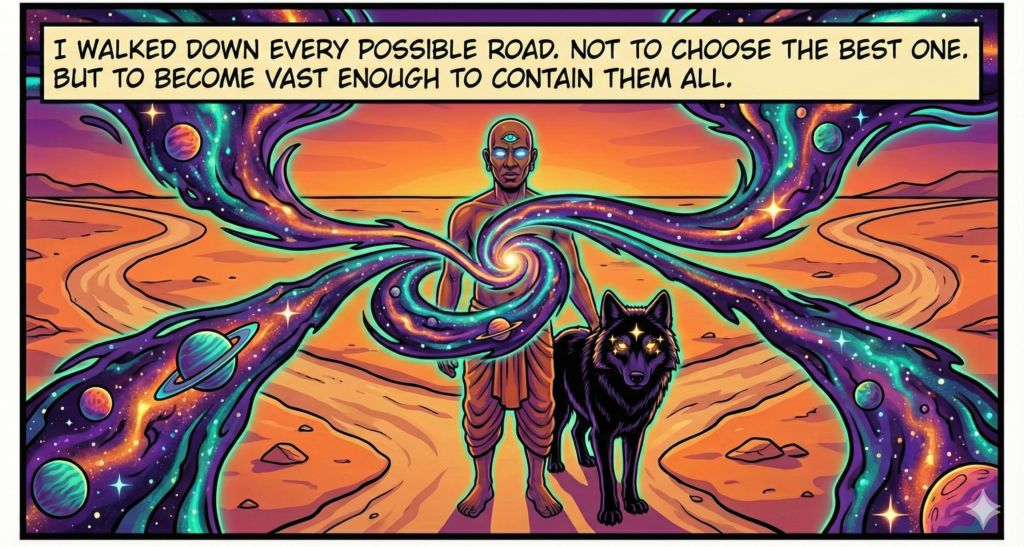
While building infrastructure, I was simultaneously deepening my intellectual foundation. Specifically, integrating Hans Vaihinger’s Philosophy of As If into what I’m now calling my “philosophical council” alongside Jung and Hillman.

Vaihinger gives me something I didn’t have clean language for before: epistemological grounding for treating narratives as functional rather than representational. His argument is deceptively simple: useful fictions are just as operationally valid as objective truths. Maybe more so.

This completes a powerful triumvirate:

Jung provides archetypal mechanics and the map of the psyche.

Hillman brings soul-making through the imaginal realm, the idea of seeing through rather than literal belief.

Vaihinger offers pragmatic justification for using functional fictions without requiring metaphysical certainty.

Together they create theoretical scaffolding for everything I’m doing with narrative alchemy. Stories as code isn’t just a catchy tagline. It’s a defensible philosophical position.

I also explored where Alfred Adler fits in this framework. He’s the practical uncle who translates depth psychology into accessible therapeutic techniques. His concept of “fictional finalism” bridges Vaihinger’s philosophy with Jung’s archetypal work. And his language about lifestyle narratives makes the work approachable for people who might be intimidated by shadow integration and imaginal realm.
philosophical deepening
Screenshot

Content Production as Reality Hacking

This philosophical deepening showed up immediately in the content I created.

I developed a comprehensive blog post exploring the parallel between post-structuralism and chaos magick, showing how academic philosophy and occult practice independently arrived at the same conclusion: reality is constructed, and construction means it can be consciously worked with.

The piece uses what I’m calling “vertical sequential art style” visual essays, integrating theory with practice in a format designed for the web rather than trying to reproduce print conventions.

I also worked on “The Blog as Hypersigil” essay, making explicit what I’ve been practicing implicitly. Blogging isn’t just publishing thoughts. It’s extended magical working that functions as a spell over time, reshaping reality for both creator and audience.

The evidence is mounting. Since redesigning my website around narrative alchemy and launching The Circle newsletter, strangers have been reaching out unprompted. People asking to be notified when group work begins. Readers engaging with practical exercises multiple times to fully integrate the material.

Most significantly: I’m experiencing personal transformation. Increased focus. Stronger connection to intuition. Sharper vision of myself and the work. The blog functions exactly as Grant Morrison described hypersigils in The Invisibles: an ongoing practice that accumulates power through repetition and creates feedback loops with reality.

Product Development

The week also saw significant progress on “The Narrative Alchemist’s Book of Prompts”, my upcoming ebook structured around the four classical alchemical stages.
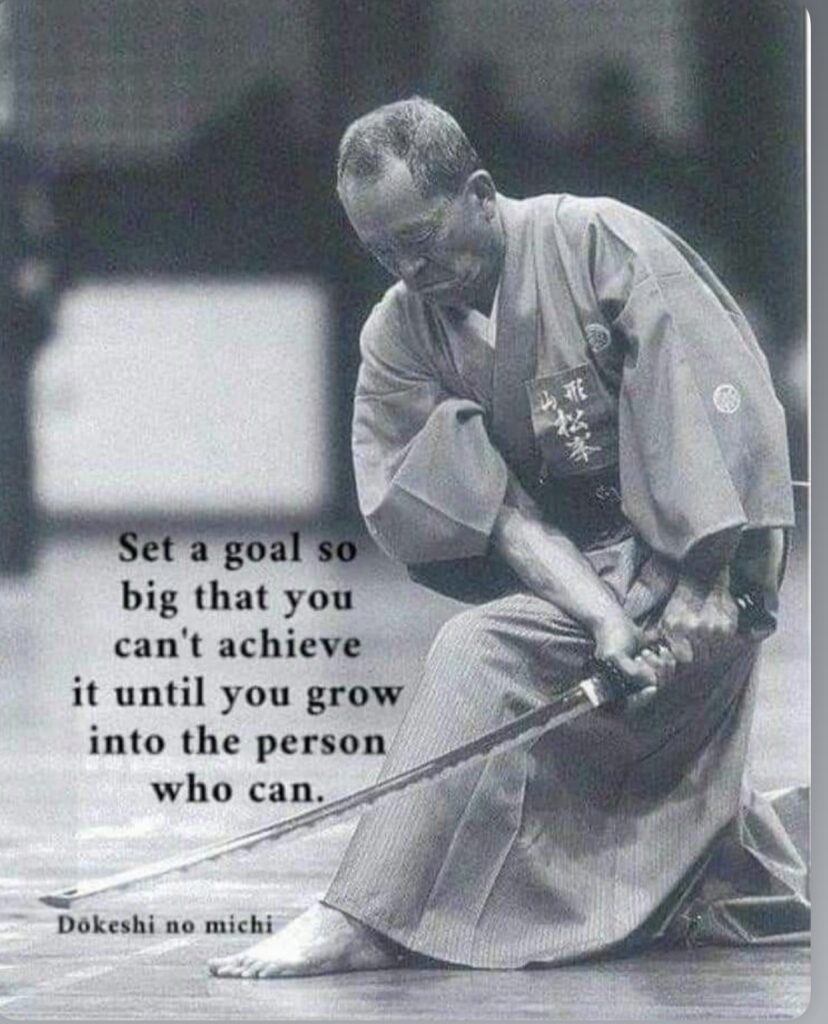
This won’t be another journaling book with feel-good questions. These are prompts crafted as activation sequences, designed to shift consciousness and bypass rational thinking. Text as executable code. Each stage gets 7-12 prompts that function as transformation protocols.

I’m positioning this for the New Year market but explicitly rejecting the typical resolution energy. This is for people ready for actual alchemical work, not surface-level goal setting.

I also developed the framework for a premium narrative coaching offer: a 12-week laboratory-style container where clients bring specific challenges and receive custom transformation protocols. Not therapy. Not traditional coaching. Something more like R&D for consciousness.

The pricing reflects this: £2,500 for 12 weeks. Asynchronous delivery through email and voice notes to protect my creative time while maintaining intensity of engagement.

The AI Integration Question

Perhaps most interesting was exploring what it means to be an “AI-assisted blogger” in depth.

I brainstormed two major AI-powered systems: a real-time Oracle (the Ashkara Oracle) trained on my corpus that can engage visitors in dialogue about narrative alchemy practices, and interactive fiction games that use natural language processing to create adaptive narrative experiences.

Both concepts blur the line between content and transformation tool. The Oracle isn’t just information delivery. It’s personalized guidance. The games aren’t just entertainment. They’re experiential teaching.

This connects back to the hypersigil concept. If the blog is extended magical working, then AI integration represents the next evolution: content that actively participates in transformation rather than passively waiting to be consumed.

Identity Refinement

All week I was refining my X bio, working toward sharper positioning. The breakthrough came in shifting language from “Narrative Coach” to “Narrative Alchemist & Blogger.”

That subtle change matters. It positions me at the intersection of ancient wisdom tradition (alchemy) and contemporary digital practice (blogging). It claims spiritual technologist territory without apology.
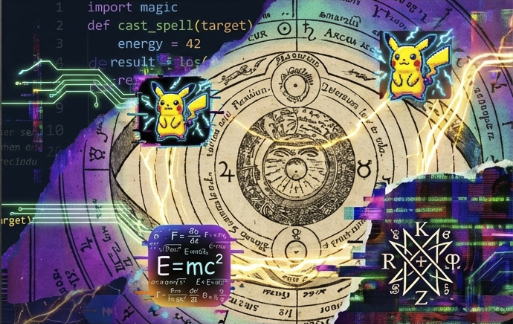
The updated bio now opens with: “You’ve found a corner of X where stories aren’t consumed. They’re debugged.”

That single line does more work than three paragraphs of explanation. It establishes frame, promises utility, and signals sophistication. Stories as code. Problems as bugs. Solutions as patches.

And it ends with: “Stories are code. You are the programmer.”

Not “we” as collaborative gesture. “You” as direct assignment of agency.

The Connecting Thread

What unified this week’s work was making implicit practices explicit.

I’ve been treating my blog as magical working for months. Now I’m teaching that as methodology.

I’ve been using philosophical frameworks to ground esoteric practice for years. Now I’m articulating the specific thinkers who provide that grounding.

I’ve been building technical infrastructure to support the work. Now that infrastructure is operational.

The shift from unconscious competence to conscious teaching. From doing the thing to showing others how the thing works.

This is what 2025 looks like: taking everything I’ve learned through 40 years of journaling, 25 years of chaos magick practice, decades of studying depth psychology and postmodern philosophy, and transforming it into teachable frameworks and functional tools.

Not dumbing it down. Making it transmissible.

What’s Next

The technical infrastructure is now in place. The philosophical foundation is articulated. The content frameworks are defined.

Coming week focuses on production: finishing The Narrative Alchemist’s Book of Prompts, launching the premium coaching container.

Each piece builds on the others. Each reinforces the core message: reality is mutable, narratives are programmable, and you have more power to shape your experience than you’ve been taught to believe.

The work continues.


What’s becoming explicit in your practice right now? Hit reply and let me know. I read everything.
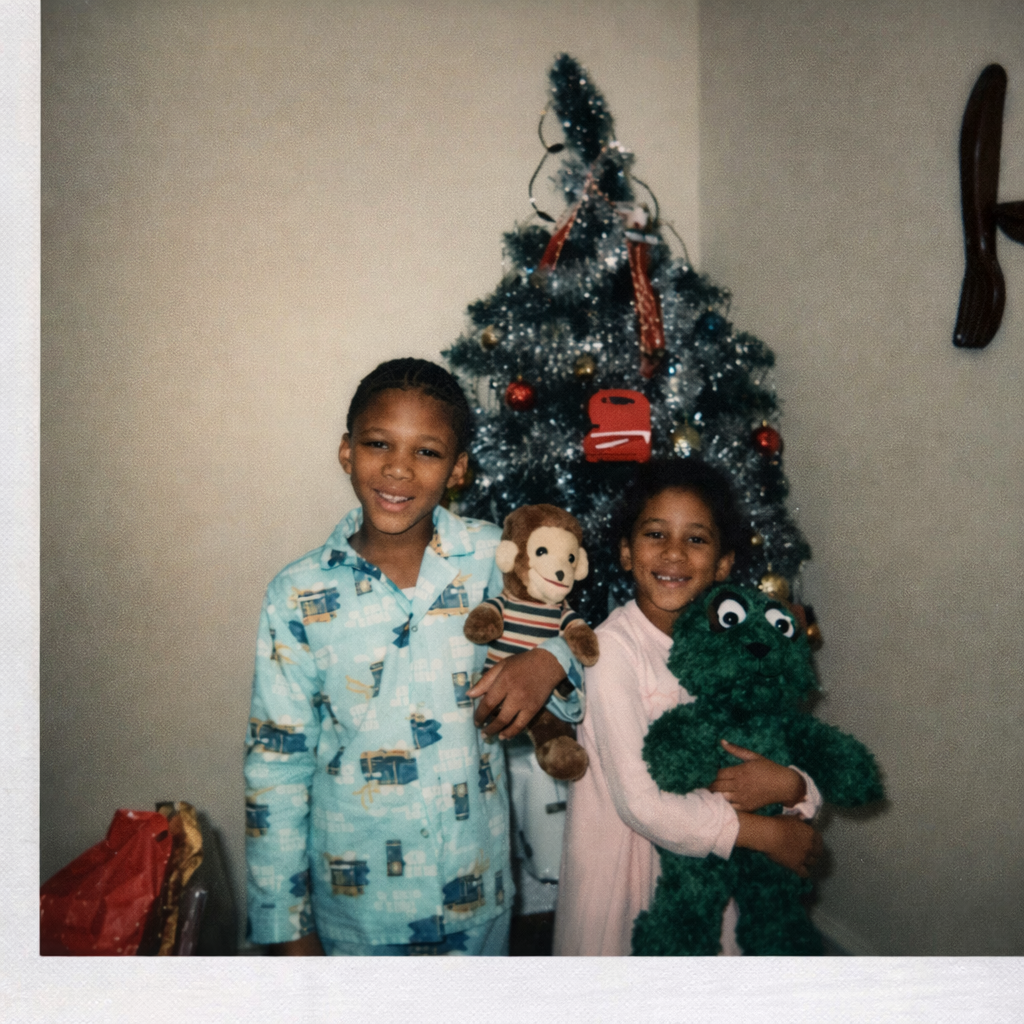
me and my sister many Christmases ago!

Re-Visioning Psychology Notes

James Hillman’s Re-Visioning Psychology is a wild, imaginative shake-up of modern psychology’s obsession with rationality, behavior, and biological determinism. Instead of reducing human experience to neurons and conditioning, Hillman pushes for a radical shift—one that puts imagination, symbols, dreams, myths, and fantasies at the core of what it means to be human. Drawing from Carl Jung, Romantic poetry, Greek philosophy, and the deep well of Western tradition, he makes the case that psychology’s real job is soul-making—an ongoing process of weaving meaning from the rich, symbolic landscape of the psyche.

Ditching the idea of a singular, rational ego, Hillman argues for a polytheistic approach to psychology—one that embraces the many voices, contradictions, and complexities that make up the human soul. He treats archetypes not as abstract concepts but as living, emotional forces—almost like inner gods—shaping our thoughts, desires, and struggles. By framing psychology as something inherently poetic and symbolic, Re-Visioning Psychology challenges us to see the soul not as something to be “fixed” but as something to be engaged with through metaphor, imagination, and creative reflection. It’s a call to rethink not just psychology, but how we understand ourselves and the stories we live by.

Because my notes for this book are incredibly in-depth, I decided to share them via my nascent learning academy. This will allow me to do a couple of things, share my detailed notes and also get to grips with the mechanics of creating a course with Tutor LMS.

It’s a free course, all you have to do is enroll. If you don’t want access to my awesome notes, you can listen to the NotebookLM version below (but really, enroll in the course so you can test that enrolment process for me 😉).

You can enroll here:


And here’s the NotebookLM Deep Dive: