Shadow Work as an Ongoing Conversation
A short note on rereading Debbie Ford, noticing our reactions, and treating shadow work as an ongoing conversation with the self.
working notes from the textual underground
A short note on rereading Debbie Ford, noticing our reactions, and treating shadow work as an ongoing conversation with the self.
This morning I kept thinking about how much of my inner life is written in symbols. A hawk circles above the fields near my house, and every time I see it something deep stirs… a reminder of vigilance, focus, higher vision. I could say it’s just a bird, but that would miss the truth of how the psyche works. Images like that are old programs written in a language older than words. They wake something that knows more than I do. Tarot does the same thing. You pull a card and feel it moving in you before you even interpret
Knowing yourself isn’t about coming up with a neat definition you can put on a business card. It’s more like watching the weather of your own being. The soul shows up in the little things, like what you’re drawn to, what you shy away from, or the memories that stick on you like burrs and the ones that slip away without a trace. If you pay attention, you can catch the soul in the act. It’s there in the way you suddenly decide, without much thought, to take a different path home. It’s in how you savour the first sip
When the mask slips, let it. We spend much of our lives arranging faces for the world. A mask for work, another for friends, and still another for family gatherings. These are not always deceptions. Masks can be protective, ceremonial, even sacred. They help us navigate the stage of daily life without having to walk bare-skinned into every storm. But masks are fragile things. They crack when laughter bursts too loud, when grief presses through the seams, when love or anger rushes up unplanned. The slip can feel like a mistake. Like you’re being caught unprepared. This isn’t failure. It’s
We treat meaning like it’s some luxury add-on to life, like it’s something you get to once you’ve checked all the boxes. But that’s backwards. Meaning isn’t the cherry on top. It’s in the foundation, right up there with food and water and air. You can suffocate without oxygen and starve without food. But without meaning? You drift. You’re technically alive, but there’s this hollowness. Yeah, you’re breathing, but nothing’s actually anchoring you to the ground. People will push through absolute hell if they think it means something. But give someone a comfortable life with no purpose? That comfort curdles
The Latin and Greek reads: ‘Nam Sibyllam quidem Cumis ego ipse oculis meis vidi in ampulla pendere,et cum illi pueri dicerent: Σίβυλλα τί θέλεις; respondebat illa: ἀποθανεῖν θέλω.’ Translation: “For I myself saw the Sibyl of Cumae with my own eyes hanging in a jar,and when the boys asked her: ‘Sibyl, what do you want?’she replied: ‘I want to die.’” This line is the epigraph of T.S. Eliot’s The Waste Land. Who is the Sibyl of Cumae? The Sibyl was an ancient prophetess, most famously associated with Apollo. The Cumaean Sibyl appears in Virgil’s Aeneid, where she guides Aeneas through
the new image generator baked into ChatGPT is significantly better after the latest update. i asked it to turn me into a spider. note the detail in the background.
Drop a post.Even if it’s unfinished. Especially if it’s unfinished.Plant a link.Even if it leads nowhere—for now.Send a flare.Even if no one responds right away. Because someone will.Maybe not today. Maybe not soon. But someday, a fellow rogue will stumble across your breadcrumb, click the link, and feel the jolt of recognition: “Ah. One of mine.”
There’s something quietly warm and fuzzy about sea otters holding hands while they sleep. Not for romance. Not for display. For physics. The ocean drifts.
There is a quietly subversive move hiding in plain sight here. The essay looks like it’s arguing against AI, but the more interesting thing is
Like Carl Richards I’ve never been a big fan of setting goals either for many of the reasons that he lists in the beginning of
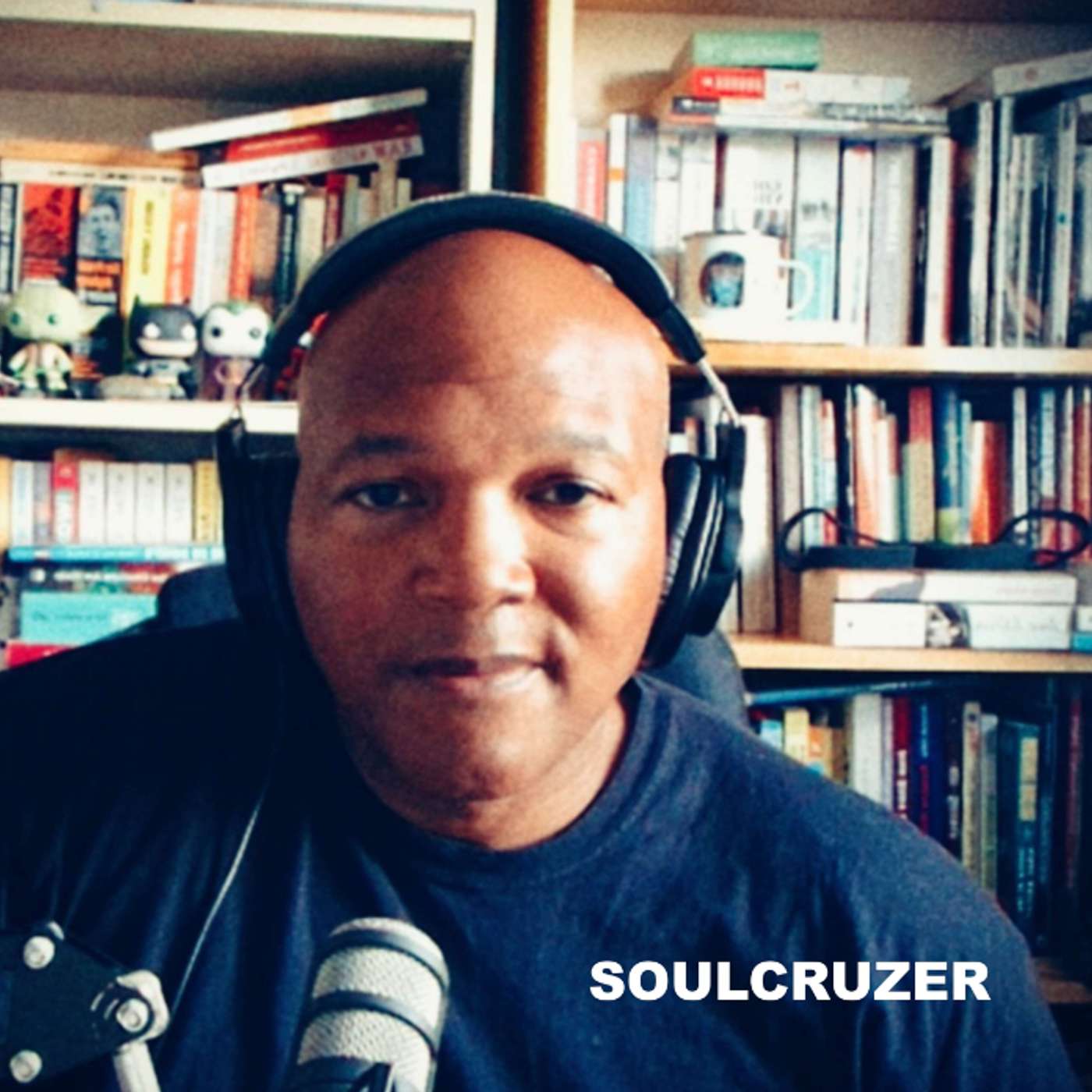
Hi, my name is Clay Lowe, aka Soulcruzer. This is the part where I have to reduce myself to a label so you can understand who I am and what I am about. But as Kierkegaard pointed out, labels have a way of negating the person. If I tell you I’m a blogger, I get reduced to whatever meaning you’ve assigned to the word ‘blogger’. I resist labels. And yet, here we are. So, in the context you find me in now, I am indeed a blogger.
I have worn many others. I’ve been a soldier, a learning and development consultant, a trainer, and a coach. I’ve also called myself a barefoot philosopher, a narrative alchemist, and a rogue learner, among others. These were an attempt to orient me to myself. More recently, I’ve been working out what it means to operate as a text-based ontologist in a world where text is becoming the universal substrate.
A text-based ontologist sounds like someone who should live in a footnote.
They don’t.
They live in the browser window, the notebook, the prompt box, the blog editor, the Obsidian graph, the half-finished post, and the walking thought captured before it evaporates. Their material is language. Their subject is being. Their method is to hold attention long enough for a sentence to disclose what it is carrying.
It’s not really a job title. It’s more of a way of being caught by the world.
In the end, though, I am just a man walking a path.
A short note on rereading Debbie Ford, noticing our reactions, and treating shadow work as an ongoing conversation with the self.
A rock mixtape for crawling out of the rut: Linkin Park, Papa Roach, System of a Down, Avenged Sevenfold, and the stubborn desire to live the thing instead of performing a brand.
The old questions have not changed much. How should I live? Who am I becoming? What is worth paying attention to? What is freedom? What is wisdom? What is the soul, if we dare still use that word? These questions predate Socrates. They predate writing. They are carved into the bones of the species, and they have kept philosophers, mystics, poets, and ordinary troubled humans occupied for as long as there have been fires to sit around and dark skies to stare into. Every generation meets them as if for the first time. Every life receives them fresh, intimate, inconvenient,
I finished Richard Cavendish’s The Black Arts this week. Not in the heroic readerly sense of having sat down and consumed it cleanly from first page to last, pencil in hand, scholar’s lamp burning into the night. I have been reading it on and off for a few months. Picking it up, putting it down, returning to it when the mood came back round. Some books ask for that kind of reading. They don’t want to be finished quickly. They want to become part of the weather for a while. My copy is the 50th anniversary edition. I bought it
I stole this idea from Justin Brooke on his LinkedIn profile. It’s a FUN PROMPT, and what came back from ChatGPT was pretty cool. I also asked Claude; the results were good, but they lacked an edge. Anyway, the prompt is: Write an unhinged BIO about me. Here’s mine: Clay Lowe is a walking footnote in the great unwritten manuscript of the universe. Part blogger, part philosopher, part myth-drenched field reporter from the edge of ordinary life, he spends his days following the rhizome wherever it wants to go: down muddy footpaths, through obscure books, into the textual underground, across
Maybe he made matter remember music. Clay, before breath, is just earth with potential. Dense. Damp. Waiting. It belongs to gravity, riverbed, field, grave, brick, and vessel. But breath is movement. Breath is an invisible rhythm. Breath is spirit entering form without ceasing to be invisible. So when God buried his breath in the clay, maybe he hid wind inside weight. He took what falls and placed inside it something that rises. That’s the human paradox right there: mud with a skyward ache. Not pure spirit. Not mere animal. Not just body, not just soul. A walking contradiction. Earth that
The ghosts in the American Ghosts have been dead for centuries. One of them for over a thousand years. They rattle around a house in the Hudson Valley: Revolutionary War soldiers, bootleggers, a Viking, a 1920s lounge singer. Most of their time goes to trying not to go mad from the sameness of it. Survival is over for them. That game is finished. The only game left is what you do with consciousness when there’s nothing pressing requiring it. Which is, if you sit with it for a minute, mostly the game we’re all playing too. Every living creature is
I used to think the screen was something I looked at. Vilém Flusser makes the more troubling suggestion. The screen is something I look through. That shift matters. It sounds small at first, a neat little media-theory reversal, the sort of thing one writes in the margin of a book and then forgets. But once it enters the bloodstream, it starts rearranging the furniture. The phone stops being a device in the hand and becomes a frame around the world. The camera stops being a way to capture reality and becomes a programme for producing certain kinds of reality. The
I was choosing a book to read this morning and realised I wasn’t actually choosing. I was scrolling through recommendations, algorithmic suggestions, and what other people had tagged as important. The menu had been prepared. I was just picking. There’s a difference between choosing and selecting from a menu. Choosing is generative. It comes from inside. You’re authoring the question as well as the answer. You’re making something that didn’t exist in the option set. Selecting is consuming. The frame has already been set. Your job is to optimise within it. Better coffee, better career path, better productivity system. All
I have been thinking about walking. This week has clarified something about why. You stay alive to your life by staying in motion. The physical motion is part of it. The attention staying awake is the larger part. The question underneath: Do you have a practice that holds? A real one, lived rather than intended, that keeps the self porous and curious and in genuine contact with the actual world. This is what Japhy Ryder understood. In The Dharma Bums, he has a vision: thousands of young Americans walking into the mountains with rucksacks on their backs, refusing the dream
The first merger was a hostile takeover that became a marriage. Two billion years ago, a free-living bacterium got eaten by a larger cell, refused to be digested, and instead settled in as a permanent guest. The deal it cut was outrageous. In exchange for shelter, it would produce all the energy. That bacterium is sitting in every cell of your body right now. We call it a mitochondrion. The merger paid for everything that came after. Bigger cells. Tissues. Nervous systems. Conversations like this one. D. Scott Phoenix wants us to think about AI the same way. The next
I came across the phrase while reading Spotify the Gnostics, Here’s the First Church of David Bowie by Sean Manseau. Wrestling with angels. Some phrases arrive carrying more weight than their literal meaning. They feel older than language. Older than the person who spoke them. This was one of those phrases. The moment I read it, something in me recognised it before I had even fully thought about why. It immediately pulled me toward the story of Jacob beside the river Jabbok. Night falling. Isolation. A mysterious being appearing in the dark. Then the struggle itself, physical, spiritual, psychological, mythic,
Wednesday morning. Wind in the microphone. One of those recordings where the first question is whether the machine is even listening. I am walking through one of the neighbourhoods here, past the boxes people spend their lives trying to own. Box after box after box. Same roofline. Same windows. Same little square of intention at the front. A few flowers. A different car. Some token of distinction placed carefully against the architecture of sameness. You need the house numbers. Without them, how would anyone know which box was theirs? This is the thing that caught me. The sheer quantity of
There was a time when ontology belonged to philosophers in heavy coats asking whether tables were real. The question has since escaped the seminar room and entered the machine. Today, ontology is no longer merely the study of being. It is the management of symbolic reality systems. The organisation of categories. The naming of entities. The arrangement of relations between things. And increasingly, this work occurs inside environments where language itself is operational infrastructure. The medium is no longer paper describing reality from a distance. The medium is executable text. To call oneself a text-based ontologist sounds at first like
This is not a traditional academic programme. It sits somewhere between the philosophy department, occult library, media lab, hacker space, monastery, writer’s workshop, and signal intelligence unit. The central premise: Human beings inhabit realities structured by language.In computational culture, text has become executable.Therefore, whoever understands symbolic systems understands reality construction. The goal of the text-based ontologist is not merely to analyse the world, but to perceive and shape the narrative architectures through which worlds emerge. YEAR I — FOUNDATIONS OF THE SYMBOLIC WORLD Module 1: Language as Reality Infrastructure Core Question: How does language shape perception and possibility? Topics: Key
The myth of Jim Morrison is a myth of pure instinct. He arrives fully formed in the collective memory: shirtless, obliterated, magnificent, doomed. The leather trousers. The baiting of audiences in New Haven and Miami. The voice that seemed to come from somewhere older than rock and roll. The story we inherited insists that this was all eruption, all Dionysian overflow, a man too full of something dark and vital to contain it. The story is wrong. Morrison entered UCLA’s film school in 1964 as a serious student of ideas. He wrote poetry obsessively, in notebooks he carried everywhere, before
Yesterday felt like wading through wet sand. Every idea that surfaced dissolved before it could be shaped into anything. Underneath that is the voice that says, ‘If I can’t produce today, what does that mean for tomorrow, for the whole enterprise?’ It got louder as the afternoon wore on. I know that voice. It is not telling the truth. Knowing that doesn’t silence it. This morning I pulled three cards. Sat with them at the desk before anything else happened, before coffee or email or the reflex to check what the world is doing. Let them sit. Not one of
Sunday. Mid-morning. We’re just south of Mold, tucked into a fold in the Flintshire landscape that the main roads have mostly forgotten about. I’m on a family retreat with my wife, our son and his partner, our daughter, and Rosie. Rosie is eleven months old now and is the reason we are all here. She’s the reason for most things now. The Welsh countryside handled the phones for us: my signal was nearly nonexistent, and the Airbnb WiFi was hit and miss, but nobody really minded. I did most of my reading in the mornings before the house woke up,
How should I live? Socrates called it the examined life. The Daoists called it the Way. Every philosophical tradition worth its name has some version of it, which tells you something. This question isn’t optional. It’s baked into what it means to be human. I was listening to Jordan Peterson’s Maps of Meaning on my walk into town this afternoon, heading to Tesco to pick up a few things. I listened to chapter one, Maps of Experience. Already, it feels like one of those books you don’t just read. You go into it. His opening move is deceptively simple. We

The Soulcruzer podcast is an audioblog from the edge of the inner life.
Part personal essay, part field recording, part narrative alchemy, it follows the strange places where story, psyche, myth, technology, and everyday experience begin to speak to each other.
One episode might wander through tarot as reflective technology. Another might take Nietzsche’s eternal return for a walk, explore games as containers for transformation, or ask what happens when ancient wisdom meets the AI age. Depth psychology brushes against the esoteric. Philosophy comes down from the shelf. Theory gets tested against life.
This is not polished guru-talk or productivity theatre. It is a mind in movement: raw notes, live experiments, confessional mysticism, and working fragments from the textual underground.
At the heart of it all is a simple premise:
Stories are code. Reality is programmable. And the life you are living might be more editable than you were taught to believe.
If you are drawn to the deep work, the strange edges, and the art of becoming more fully alive, subscribe wherever you get your podcasts.
In this episode, I take the Soulcruzer podcast out of the studio and into the fields.
What starts as an experiment in mobile podcasting/vlogging turns into a wandering meditation on labels, blogging, AI, morning rituals, and the strange abundance of media tools we now carry in our pockets.
– Why I still think of myself as a blogger first
– Podcasting, vodcasting, and the pressure to become “multimodal”
– The problem with labels: “When you label me, you negate me”
– soulcruzer.com as the central hub/home on the internet
– Wisdom Walks as thinking time
– Walking, motion, and changing perspective
– The “barefoot philosopher” approach to everyday philosophy
– AI as an extension of cognition rather than just a productivity tool
– The “soft cyborg” and the library of Alexandria in your pocket
– Morning reality tunnels and the sacred space before breakfast
– Coffee, barefoot grounding, and choosing what enters your mind first
– Indie blogging, platforms, Substack, distribution, and the open web
– Why these episodes may stay loose, minimally edited, and stream-of-consciousness