The Shimmer-Seers

Long ago, before the first compass was carved from bone and star, the world was not unmapped—it was overwatched.

Not by gods, no. By something stranger.

They called them Shimmer-Seers.

You wouldn’t have noticed them in the villages or cities, for they walked with dusty boots and quiet eyes, often mistaken for fools, madmen, or vagabonds. But these wanderers bore an inner flame—the uncanny ability to see the shimmer. A ripple in the air. A tremble on the skin. A glint in the dust of an old trail no longer walked. While others followed roads etched by rulers and tyrants, the Seers followed something subtler. Something truer.

And the shimmer? It was never there—not in any cartographer’s ink, nor in the hard lines of border and empire. It was an invitation, not a direction. A beckoning flicker that revealed itself only when one had shed the maps of the mind, burned the blueprints of expectation, and stared long enough at the world until it blurred and came alive.


There’s a tale still whispered in backrooms and borderlands, traded in fragments like forbidden coin.

It tells of a nameless child born with eyes of liquid silver. The villagers feared him. They said he spoke in symbols and wandered too far into fog. When he vanished at thirteen, some swore they saw a shimmer swallow him whole near the ruins of the old observatory. Others said he had simply wandered off the edge of the known.

But every decade, at the turn of a dark moon, strange glyphs appear carved in stone near the place he vanished. No language anyone knows. Just marks that pulse slightly if you look out of the corner of your eye.

They say that child became a Mapmaker of the Invisible, drawing maps not with ink but with myth—tales encoded with pathways. If you listen carefully, they say, the right story will open a door.


See, here’s the truth you won’t hear in universities or strategy rooms:

The map isn’t for everyone.

It cannot be taught, only caught—like fire in dry brush, like a whisper in a dream.

Those who try to force it find only static. Those who seek it out of greed or conquest see only mirages, ever-shifting. But those who can see the shimmer—they understand. The map is a living thing. It reshapes itself in response to your becoming.

Each step alters it.

Each question redraws it.

To see the shimmer, you must unlearn the road.

You must sit with silence until it speaks back in patterns.

You must listen to the stories between the stories.

You must look at a broken mirror and recognise the constellation hidden in its shards.


I met a shimmer-seer once. Or maybe she met me.

She had feathers in her coat and dirt beneath her fingernails. She smelled of sage and rust. We were sitting by a fire made of bonewood in the ruins of a forgotten train station. She told me maps were never meant to guide everyone—only to awaken the ones ready to remember.

“Most people want a path,” she said. “But the shimmer offers a question.”

She passed me an old coin. Blank on both sides. “This will get you nowhere,” she said, “but keep it close. When the shimmer comes, you’ll know what it means.”

Then she vanished. Not with a bang or spell, but as if I had merely blinked and rewritten the scene.


The shimmer isn’t always obvious. Sometimes it’s a flicker in a stranger’s eyes. Sometimes it’s a phrase that feels older than you are. A crow that lands just so. A door that creaks open on a street you thought you knew.

It might look like madness. It might feel like déjà vu threaded with electricity.

But if it comes to you—if it finds you—know this:

You’ve been invited.

To see the map.

To step off the path.

To become a myth in motion.

The shimmer doesn’t seek the clever or the brave—it seeks the ones willing to see sideways. The ones who know that the true terrain is not laid flat upon the earth, but woven into the air, the memory, the dream.

So fold your old maps. Light them if you must.

Then walk.

Not forward.

But inward.

And listen.

Because somewhere, just ahead and slightly to the left of logic, the shimmer waits—like a forgotten song that hums in your bones, whispering:

The map isn’t for everyone.

But you—you were born with the shimmer in your eyes.

Pegasus: A Creature Born of Chaos

I’m starting a new series on the website dedicated to mythology and meaning, where I’ll be exploring ancient myths and their symbolic meanings in modern times. I’m hoping to uncover how these timeless stories still resonate in our modern lives. To kick things off, I’m starting with an exploration of Pegasus, the winged horse of Greek myth, simply because during one of my shamanic dream journeys this week, I met Pegasus. Near the end of the journey, he flew down from the sky to meet me, confirming a message about trusting my intuition as I step into this new phase of my creative and spiritual soul adventure.


In Greek mythology, Pegasus is a creature of rare beauty and power, a winged horse born from one of the most unusual and dramatic stories of the ancient world. His mythic origins, his relationship to the gods, and his symbolic resonance have inspired imaginations for millennia. As an amateur mythologist, I feel it’s impossible to overlook how Pegasus captures the tension between the earthly and the divine, while embodying creativity, transcendence, and the eternal quest for inspiration.

The Birth of Pegasus: A Creature Born of Chaos

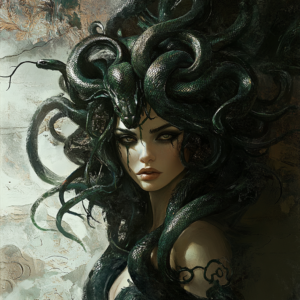
Pegasus’s birth is as mythical as his existence. He sprang forth from the blood of Medusa, a Gorgon, after her death at the hands of the hero Perseus. Medusa, once a beautiful woman, was cursed by Athena to become a hideous monster whose gaze turned men to stone. When Perseus beheaded Medusa, her blood fell into the sea, and from this violent, chaotic act, Pegasus and his brother, Chrysaor, were born.

This birth is rich with symbolic meaning. Medusa represents chaos, darkness, and the terrifying aspects of the feminine archetype. Yet, from her death comes Pegasus—a creature of light, purity, and divine power. In this sense, Pegasus symbolises the potential for beauty and inspiration to emerge from the darkest, most chaotic corners of existence. He is a reminder that creativity often springs from difficult or even traumatic experiences and is transformed through the alchemy of the imagination.

Pegasus and the Divine: The Horse of the Gods

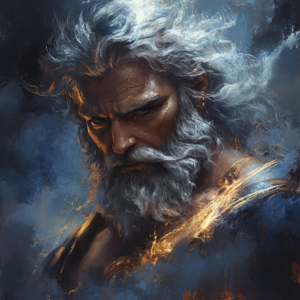
Once born, Pegasus ascended to Mount Olympus, where he was given a role of celestial significance. He became Zeus’s trusted steed and was entrusted with the task of carrying the thunderbolts that Zeus hurled during his battles. Pegasus, in this role, serves as a mediator between the earthly and divine realms, moving freely between the mortal world and the heavens.

This aspect of Pegasus points to his role as a psychopomp—a figure who guides souls or messages between different planes of existence. In myth and ritual, the psychopomp serves as a bridge between the human and the divine, and Pegasus embodies this intermediary function. His wings allow him to transcend the ordinary world and enter the sphere of the gods, making him a symbol of spiritual elevation, transformation, and the aspiration towards a higher consciousness.

Pegasus and Inspiration: The Fountain of the Muses

One of the most enduring associations with Pegasus is his connection to the Muses, the goddesses of artistic inspiration. Legend holds that Pegasus struck Mount Helicon with his hooves, causing the sacred spring of Hippocrene to burst forth. This fountain was said to be a source of poetic inspiration, and those who drank from its waters would be blessed with creativity and insight.

Here, Pegasus becomes a direct link to the world of art, music, poetry, and all forms of creative expression. His ability to tap into the earth and unleash a wellspring of inspiration symbolises the connection between the creative mind and the subconscious. Just as Pegasus draws from the earth to bring forth the fountain, artists and creators draw from their inner depths to express something profound and transformative. This association also reflects the idea that creativity is both divine and grounded, an intersection of the spiritual and material worlds.

The Winged Horse: Transcendence and Freedom

The wings of Pegasus are perhaps his most iconic feature. They represent the ability to rise above, to transcend limitations, and to explore realms that are ordinarily inaccessible. Wings, in general, are potent symbols in mythology, often signifying spiritual ascension, freedom, and the soul’s journey beyond the physical world.

In many ways, Pegasus’s wings are a metaphor for the creative process itself. To create is to lift oneself beyond the ordinary and reach for something higher. Like Pegasus, the artist or dreamer transcends the mundane and enters a realm of limitless possibility, unbound by earthly concerns. Wings also evoke the lightness and joy that come from following inspiration, suggesting that true creativity is both liberating and exhilarating.

Pegasus and the Hero’s Journey

Although Pegasus is often depicted alongside gods and goddesses, he is also tied to the hero’s journey. The most notable hero associated with Pegasus is Bellerophon, who, with the help of the goddess Athena, tamed the wild horse. Bellerophon rode Pegasus during his battle with the Chimera, a fearsome monster with the body of a lion, the head of a goat, and the tail of a serpent. With Pegasus’s help, Bellerophon soared above the creature and defeated it with arrows, a victory that would have been impossible without the winged horse.

In this context, Pegasus represents the aid that comes from the divine, or from the higher self, during moments of great trial. The horse’s ability to fly allows Bellerophon to overcome a seemingly insurmountable challenge, suggesting that tapping into inspiration, intuition, or spiritual guidance can offer the perspective needed to solve life’s most difficult problems. Yet, the story also serves as a cautionary tale: when Bellerophon attempted to ride Pegasus to Mount Olympus and join the gods, he was struck down for his hubris. Pegasus continued his flight to Olympus alone, underscoring the idea that divine power is not to be controlled or possessed, but to be honoured and respected.

Pegasus as a Symbol Today

Pegasus remains a powerful symbol in modern culture, often representing freedom, imagination, and inspiration. As a figure of myth, he has transcended his original context to become a universal symbol of the creative spirit. He reminds us that imagination has the power to lift us beyond the ordinary and connect us to something greater. Whether seen as a source of artistic inspiration, a guide in spiritual transformation, or a figure of transcendence, Pegasus endures as a timeless emblem of the power of creativity.

In the end, Pegasus is more than a mythological creature. He represents the infinite potential within each of us to rise above, to create, and to connect with the divine source of inspiration. Just as Pegasus was born from chaos, so too can our most beautiful and transcendent creations emerge from the challenges we face, lifting us to new heights of understanding and expression.

what myth are you living?

Here’s the audio version of today’s blog post:

“This is what fools people: a man is always a teller of tales, he lives surrounded by his stories and the stories of others, he sees everything that happens to him through them; and he tries to live his own life as if he is telling a story.”

Jean-Paul Satre, Nausea

Carl Young said that the most important question we can ask ourselves is “What myth are you living?” That seems like an odd question to ask, considering most of us probably think of myths as make-believe or associate myths with Greek and Roman mythology. We consider ourselves too enlightened for myths. Instead, we put our faith in the scientific method and reason to answer our questions about life. And we trust that technology will give us the power to change or destroy what we don’t like.

But how do you answer the question of ‘what is the meaning of my life?’

via GIPHY

As Joseph Campbell said:

“The psychological dangers through which earlier generations were guided by symbols and spiritual exercises of their mythological and religious inheritance, we today…must face alone…This is our problem as modern, “enlightened” individuals, for whom all gods and devils have been rationalised out of existence.

What are myths?

Myths are:

“An intricate set of interlocking stories, rituals, rites, and customs that inform and give the pivotal sense of meaning and direction to a person, family, community, or culture.”

If you view myths in this light, then myths are all around us. We just chose simply not to recognise them as such.

To examine the myths operating in your life, ask yourself why you do the things you do in the way that you do them. This might be a hard question to answer because, when you are living the myth, it is nearly invisible to you. Our myths become “truths,” reinforced by cultural consensus.

Here’s and example:

“Most Americans would consider potlatch feasts, in which Northwest Indian tribes systematically destroy their wealth, to be irrational and mythic but would consider the habit of browsing in malls and buying expensive things we don’t need (conspicuous consumption) to be a perfectly reasonable way to spend a Saturday afternoon.”

Sam Keen, Your Mythic Journey

What we hold as “truths” is somebody else’s myth.

So, back to Carl Jung’s question, “What myth(s) are you living?” Is it a narrative you’ve created or are you simply buying into the prevailing cultural consensus? Do you have any personal myths you would rewrite to make them more empowering?

Last thing I’ll say about myths for now and then I’ll leave you to rummage through your personal myths (“truths”).

Think of myth as:

The software, the cultural DNA, the unconscious information, the meta program that governs the way you see “reality” and the way you behave.