latest from the stream

essays, working notes, fragments, mixtapes, podcasts, and experiments

Soulcruzer

The Currency of Ordinary Lives

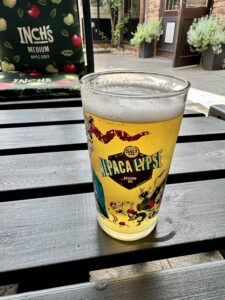
Field Notes from The Old Mint, Southam I went out for a short wisdom walk this afternoon. Nothing grand. No pilgrimage. No mountain path. Just enough movement to loosen the mind and let a little air into the machinery. Walking does that for me. It opens a space in which thoughts can arrive without being summoned. They come sideways, through the body, through rhythm, through the simple fact of moving forward while not necessarily trying to get anywhere. The day was so good that it felt almost rude not to stop for a pint. So I did. At The Old

Read More »
Soulcruzer

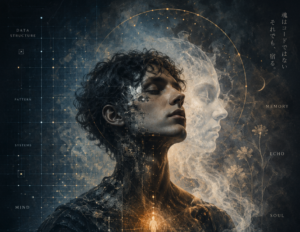
The Grid and the Ghost: A Soft-Cyborg’s Guide to Psyche and Soul

(1) The Linguistic Stutter The cursor on my screen is a rhythmic, glowing pulse. It is the heartbeat of a binary ghost, a small white rectangle of light that blinks with the mechanical patience of an entity that never sleeps. I sit here in the quiet hours, a “soft-cyborg” tethered to a vast network of information, and I type a sentence that feels like a confession: I am all about Psyche and Soul. To the grammarian, I have just committed a redundant sin. To the etymologist, I am stuttering in public. If we look at the Greek roots, psukhē translates

Read More »
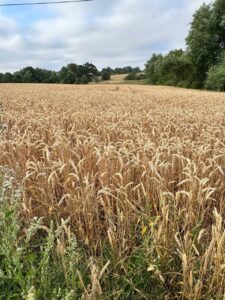
Golden wheat field stretching towards a tree-lined horizon under a pale cloudy sky
Soulcruzer

The Horizon

I’m standing in a field looking towards the horizon. It occurs to me that I’ve spent a lifetime doing this. Different fields. Different coastlines. Different countries. Different versions of myself, always finding a line where earth gives itself over to sky. The horizon is a peculiar thing. It promises distance while refusing arrival. However far you walk, it quietly withdraws, asking nothing except that you keep going. For reasons I can’t quite explain, the Oracle from The Matrix wanders into the field with me. Not the whole scene. Just one line. “I thought you’d have figured that out by now.“

Read More »

working notes

Fragments, field notes, and half-lit thoughts from the textual underground 

A walk is never just a walk.

The ground beneath our feet is layered with stories. Streets carry memories. Landscapes hold arguments. A statue, a sign, a fence, an empty building – each one quietly tells us something about power, belonging, and how we are allowed to move through the world.

Smith’s radical walker becomes part explorer, part artist, part troublemaker. Someone who looks for the cracks. Someone who questions the map they have been handed.

But what I enjoyed about Wilson’s reflection is that he doesn’t simply follow the trail. He pushes back. He questions the radical angle:

Must every walk become an act of resistance?
Must every footstep carry a manifesto?

Maybe walking’s magic is that it refuses to stay in one lane. It can challenge, bear witness, or be a source of wonder. Likewise, the walker can hack the city, listen to the forest, or simply drift.

And perhaps the cyberflâneur does the same thing in another landscape — following hyperlinks instead of footpaths, wandering through forgotten corners of the web, looking for traces left behind.

Each path changes the walker.
Each walker changes the path.

I keep thinking about the idea of writing an ebook that doesn’t perpetuate the expectation that a book needs to be read in a straight line. I know this isn’t a new idea; that’s what the hypertext movement was all about. But the idea of doing this resurfaced for me again this morning while reading Phil Smith’s book on mythogeography. He has embedded hyperlinks in the ebook that encourage you to go off on tangents.

I like the idea of a reader following whatever catches their attention and being able to move through the text by curiosity rather than obedience.

This interests me because I think many people buy books and never finish them. Maybe part of the problem is the old expectation that a book must be read from cover to cover. We inherit that model from school, from print culture, and from the physical shape of the book itself. But not every book needs to work that way.

Fiction often depends on sequence, especially when it follows a classical story arc. But essays, field notes, philosophical fragments, personal reflections, guides, and idea-books might be better served by a looser structure. A hyperlinked ebook could invite the reader to wander, return, skip, loop, and discover.

The point wouldn’t be to make the book easier in a shallow sense. It would be to make the book more alive to the way people actually read now: dipping in, following associations, chasing questions, and making their own route through the material.

A book like this wouldn’t simply contain links. It would be written as a linked experience. The hyperlinks would become part of the architecture of the text. They would let the reader participate in the journey rather than just consume the sequence chosen by the author.

Maybe the ebook is closer to a living map than just an electronic copy of a physical book.

I fell into this through a glossary. Plaque tournante. The words unsettled me even before I understood what they truly meant. The turning place. Not just some junction where paths cross, but a point where the weight of a single decision bends the rails of your life onto a new course. Like the time I parked my car before formation and a military policeman stopped me for speeding when I wasn’t speeding. It isn’t a crossroads, not really. Crossroads imply options laid out before you, inviting you to pick them. This is different. This is the moment when the path beneath your feet shifts almost imperceptibly. Your weight shifts from something unseen, and suddenly the way forward isn’t just another choice. It’s the only choice that remains. You stand there alone because some choices can’t be shared. They’re too raw, too precise, like a key turning in a lock that no one else can see. The people who love you might walk beside you right up to the edge of that place, but when the time comes, they can’t step over the threshold with you. And that’s the thing about a plaque tournante, it doesn’t just turn the path. It turns you. And no one else can do the turning but you.

I like sharing a campsite with chickens and goats and sheep. It’s barebones in the best possibble way. Some of these places can be over produced like they’re trying to create a luxury experience in a field.

This place, Grange Farm, is the opposite. It’s just grass, canvas, animals, weather and the small practical ritual of keeping yourself fed, dry, and reasonably human. Although, three days without a shower and I’m starting to feel ferel.

On the first of July I started a 31-day weblogging challenge. I wanted to blog in the original sense of the word: not posts designed around hooks and calls to action, but entries. Entries as field notes, half-formed thoughts, fragments, or full on essays if that’s the way text goes.

Last night I wanted to read something close to the way I’m trying to write. Something observational. Embodied. Simple in time and space. Definitely less theory and more of what is around me.

I was reading Tarot of Self-Discovery, but it was getting heavy with archetypal psychology, and out here I didn’t want more interior landscape. I wanted solid ground.

So I scrolled through the Kindle and found, somehow, a book I don’t remember buying: Mythogeography: A Guide to Walking Sideways. From the title, it sounds like just the thing I’m trying to avoid. But then the subtitle kicks in with this: “compiled from the diaries, manifestos, notes, prospectus, records, and everyday utopias of the pedestrian resistance.”

That felt close to what I wanted.

Especially pedestrian resistance. That sounds intriguing.

There’s something beautifully ridiculous about camping and caravaning.

Looking out across this fieldand I’m thinking at that here we are, modern humans with houses, central heating and air conditioning, broadband, sofas, fitted kitchens, proper beds, cupboards full of things – and for pleasure we hitch a small white box to the back of a car and go sit in a field under a grey sky.

And yet somehow it works.

Maybe the secret to the absurdity is that we’re not really leaving comfort because we hate comfort. We’re leaving it because too much comfort can become stale and invisible. The house becomes so much background noise. And we lose ourselves in the routine of living.

So we drag a miniature home into a patch of grass and make life awkward enough to notice it again.

You become aware of the wind direction, the damp grass, the neighbours you’ll probably never speak to beyond a nod, the small choreography of plugging in, levelling up, putting the steps out, and finding where the toilets are.

It is absurd. But it’s ritual absurdity.

In essence, we’ve setup a temporary village made of caravans, cables, folding tables, dogs, children, gas bottles, mugs of tea, and people pretending not to watch each other reverse badly into pitches. For a weekend, everyone agrees to live slightly closer to the elements and slightly closer to one another.

Maybe the caravan is a compromise between the cave and the house.

Not quite wild. Not quite domestic.

And maybe that’s why we love it because it loosens the spell of ordinary life just enough for us to feel ourselves living it.
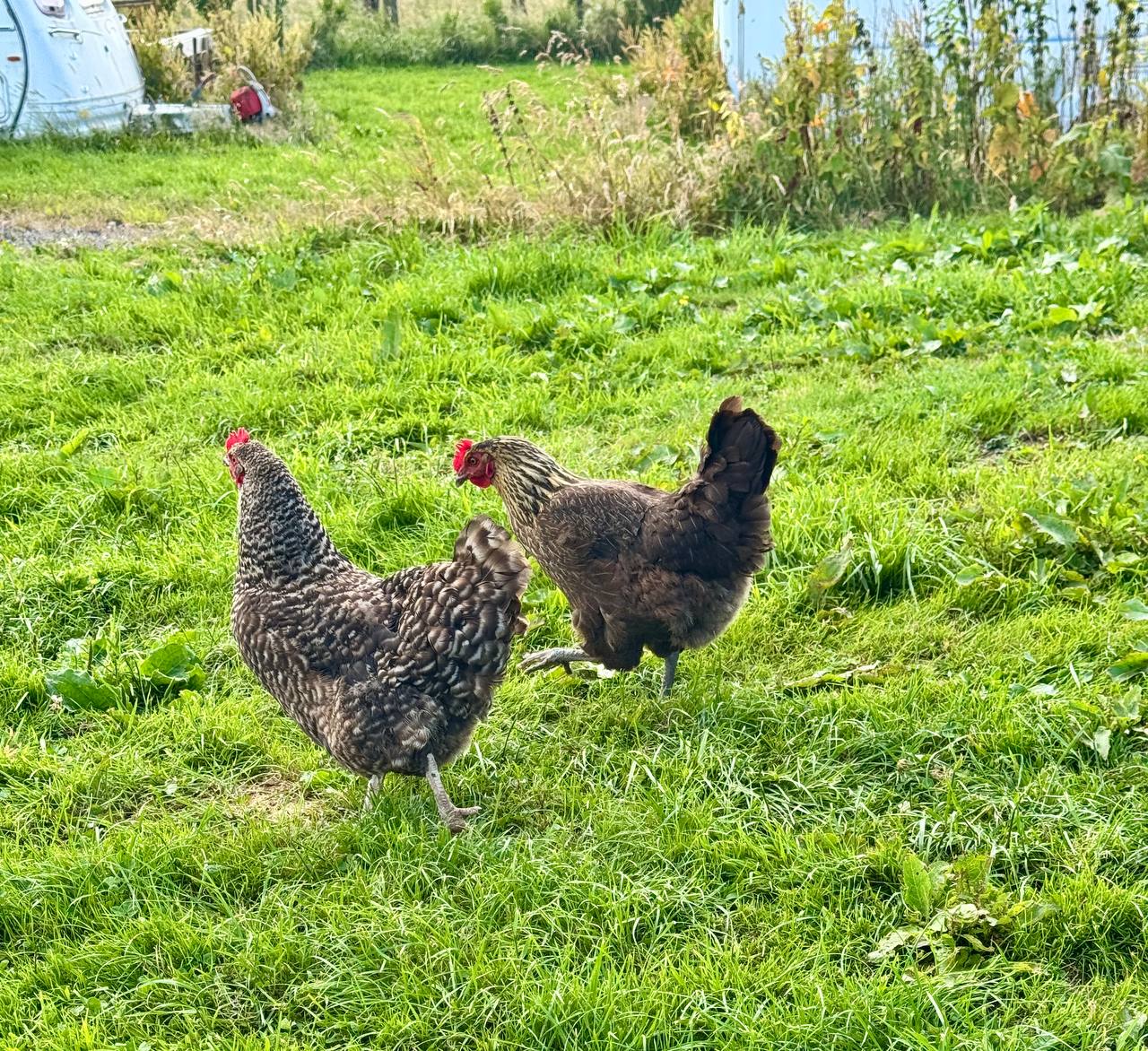
Two inquisitive chickens in the grass at camp

I’m sunning myself like a shameless lizard on a warm rock. Our camp is set up. I’ve cracked open the first Punk IPA of our extended weekend. Aerosmith’s Amazing is playing in the background, blending in with the goats. A couple of chickens came by earlier to greet us. My first chicken welcoming committee. They seemed eager to tell us all about their farm. I have no plans this evening beyond the plans I’m executing right now, which is nothing.

And nothing is good. In fact, nothing remarkable has happened today. And yet it feels quietly significant. Perhaps that’s one of camping’s hidden gifts. It lowers the threshold for what counts as enough. A patch of grass. A cold beer. A favourite song. And a couple of inquisitive chickens.

I write from the crossroads of philosophy, myth, music, AI, learning, and ordinary life. This is my living archive: part field notebook, part essay chamber, part signal fire from the textual underground, part hypertext adventure.

Working Notes from the Textual Underground

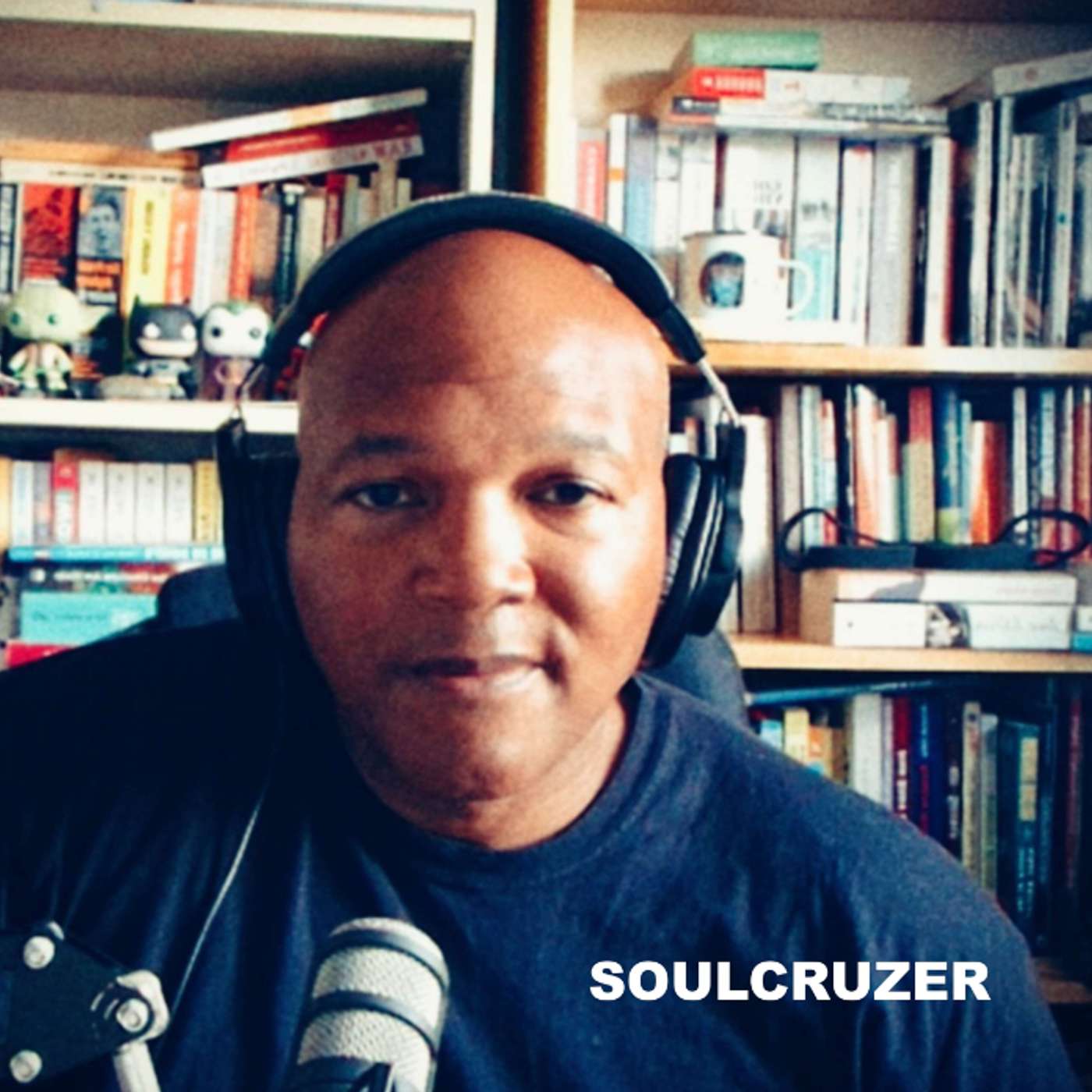
Hi, my name is Clay Lowe, aka Soulcruzer. This is the part where I have to reduce myself to a label so you can understand who I am and what I am about. But as Kierkegaard pointed out, labels have a way of negating the person. If I tell you I’m a blogger, I get reduced to whatever meaning you’ve assigned to the word ‘blogger’. It has been my habit to resist labels. And yet, here we are. So, in the context you find me in now, I am indeed a blogger, and I am much more than that!

I have worn many other labels. I’ve been an infantry officer, a learning and development consultant, a trainer, and a coach. I’ve also called myself a barefoot philosopher, a narrative alchemist, and a rogue learner, among others things. These were an attempt to orient me to myself and myself to you. More recently, I’ve been working out what it means to operate as a text-based ontologist in a world where text is becoming the universal substrate.

A text-based ontologist sounds like someone who should live in a footnote.

They don’t.

They live in the browser window, the notebook, the prompt box, the blog editor, the Obsidian graph, the half-finished post, and the walking thought captured before it evaporates. Their material is language. Their subject is being. Their method is to hold attention long enough for a sentence to disclose what it is carrying.

It’s not really a job title. It’s more of a way of relating to this blog and the wider web.

In the end, though, I’m just a dude doing his thing and sharing it on the internet. 

The best place to follow my work is here. Better yet, get the newsletter version and never miss a post, or alternatively, subscribe via my RSS feed.

latest from the podcast

status update

BlueSky Latest Posts
Last updated 10 minutes ago

last check-in

Worcester, Worcestershire, United Kingdom, UTC+1

I do like to chat. Say hi!

0
Would love your thoughts, please comment.x
()
x