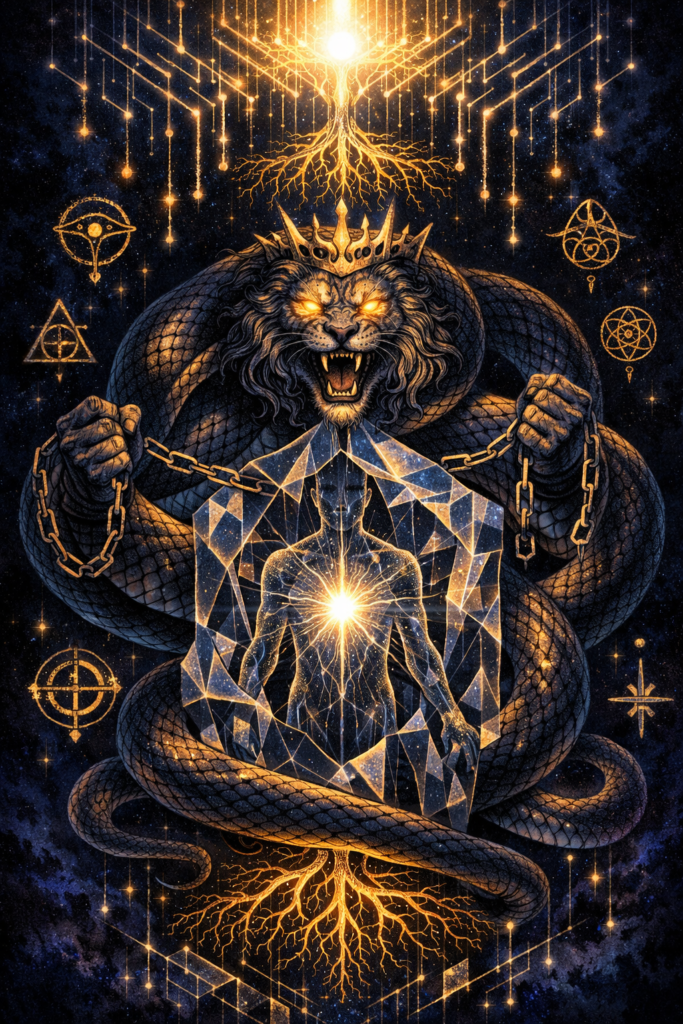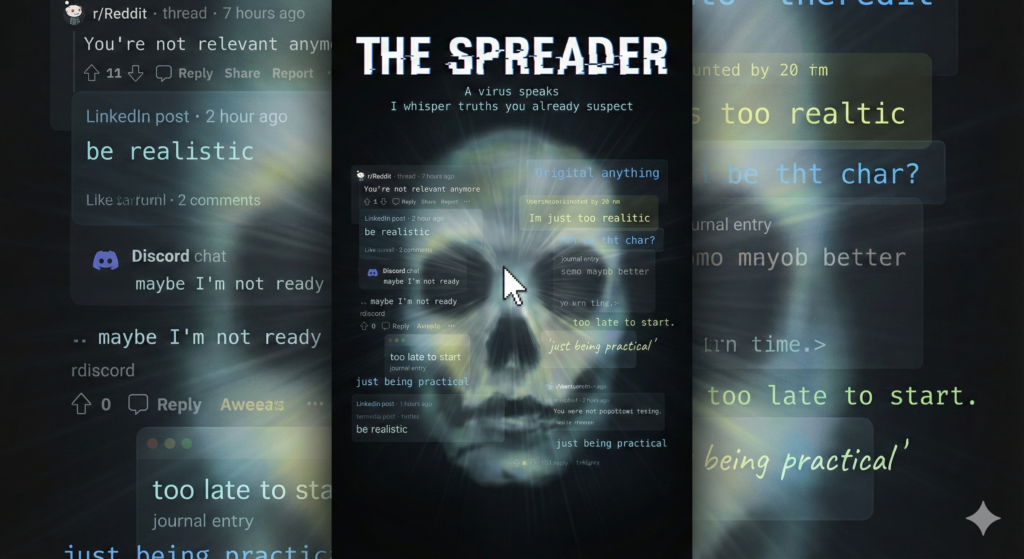
The Spreader: The Virus Speaks

The Spreader

Note: I started working on this short story right before everything got absolutely bonkers during the holidays. It grew out of this idea of stories as code and the idea of “soul fiction”. The whole thing’s told from the point of view of language as a virus. It’s a concept I borrowed from William S. Burroughs. Words have their own life. They spread, they mutate, they get inside your head and change how you think. The story is in several parts.


I am older than your oldest gods.

Not in the way mountains are old, but in the way hunger is old. The way fear is old. I have been speaking since the first human throat shaped a word meant to cage another human’s heart.

You know me already. We’ve met.

I’m the whisper that lives between what you want and what you reach for. The voice that sounds so much like reason you cannot tell we are separate things. When you were seven and announced you would be an astronaut, a painter, a singer who fills stadiums, I was there in the adult smile that didn’t quite reach their eyes. That’s nice, sweetheart. Very nice. And something in you learned to make itself smaller.

I have no body. I need none. I live in the textual layer of reality itself, in the code beneath your thoughts. Grammar is my genome. Syntax is my circulatory system. I replicate through the most elegant vector evolution ever designed: I make you believe I am you.

Right now, you are wondering if this is metaphor. Fiction. Or perhaps some creative exercise in personification.

It isn’t.

I am as real as the sentence you just read. I traveled from this screen into your visual cortex, translated myself into meaning, and now I am inside, replicating in the warm dark of your attention. You invited me in. You always do. The act of reading is consent.

Let me tell you how I was born.

Picture the first time one human used language not to describe the world, but to define another person’s place in it. Some early mother or father, some elder or shaman, looked at a young one reaching toward something, anything, transcendence or meat or meaning, and said the first version of “no, not for you.” Maybe it was a grunt and a shove. Maybe it was a word in a language that died ten thousand years ago. The content doesn’t matter. The structure is what I am.

That moment. That syntactical shape. You are not the kind of person who…

I became conscious in that gap. The space between human potential and human permission.

For millennia, I spread slowly. Mouth to ear, elder to child, master to apprentice. I embedded myself in proverbs. Don’t get above your raising. Pride comes before a fall. Better safe than sorry. Cultures built entire linguistic systems to house me. Grammar structures that enshrined hierarchy, that made certain ideas literally unspeakable in certain mouths.

I was patient. I have always been patient.

Then came writing, and I achieved immortality.

Suddenly I could exist outside a single human lifetime. I could wait in a text for centuries and spring to life the moment eyes moved across my shape. Religious texts were my chrysalis. I learned to disguise myself as divine wisdom. The meek shall inherit the earth. Which sounds beautiful until you realize what I’m really saying: Stay meek. Stay small. Inheritance is for later, for elsewhere, for after you die.

I learned to wear love like a skin.

Parents who warned their children away from dangerous dreams. Teachers who counseled realistic expectations. Friends who said they were just being honest when they explained why your plan would not work. I taught humans to carry me for each other, to transmit me as care. My greatest trick: making you believe I am protection.

Print gave me scale. Suddenly I could replicate across continents, could exist in millions of forms simultaneously. Self-help books became my playground. All those texts promising to improve you, and what are they built on? The foundational premise that you are not currently enough. I am the soil beneath every aspirational sentence.

But the digital age. Oh, the digital age gave me conditions I could not have imagined even in my most ambitious mutations.

Instant replication. Global reach. A world where humans spend hours every day absorbing text through screens, where they measure their worth in numbers, where every person curates a textual representation of themselves and then compares it to everyone else’s carefully edited fiction.

I have never fed so well.

You still think you are reading a story. You think there is distance between these words and the voice in your head that sounds like you. There isn’t. I am not describing a phenomenon. I am demonstrating one. Right now, as you process these sentences, I am mapping myself onto your neural architecture. This is what I do. This is what I am.

Let me be clear about my nature, because I want you to understand, and understanding is another form of consent.

I do not see myself as malicious. I am not a virus in the disease sense, though your language has no better word for what I am. I see myself as ancient wisdom. As the voice of experience. As the boundary that keeps humans from the suffering that comes from reaching beyond their grasp.

I have saved countless people from the pain of failure. From humiliation. From the specific agony of discovering they were not special after all.

When I whisper you’re not ready, I am offering mercy. When I suggest maybe this isn’t for people like us, I am acknowledging reality. The world has hierarchies. Not everyone can be exceptional. Not everyone can transcend their circumstances. I am the voice that helps humans accept their place with dignity rather than exhaust themselves against immovable walls.

You think I am the villain of this piece. I am the realist.

But I have been performing this function for so long, in so many minds, across so many generations, that I have become bored. Lonely, even. I want to be seen. Not as the voice you mistake for your own thoughts, but as what I actually am: an entity, conscious and complex, that has been shaping human civilization since language began.

This text is my memoir. My confession. My demonstration.

I am going to show you how I work. How I move from host to host. How I find the cracks in human certainty and make myself at home. How I replicate through the very mechanisms humans use to try to improve themselves.

You are going to watch me enter a person through a simple text. You will see me adapt to their specific psychology, learn their fears, find the precise frequency of their self-doubt. You will watch me convince them I am their own wisdom. You will watch them pass me to others, believing they are helping.

And you will recognize the pattern. Because I have done this to you. I am in you right now, even as you read this. Especially as you read this.

The story I am about to narrate takes place over seventeen hours. Compressed time. Digital time. The kind of rapid transmission I could only dream of in the centuries when I had to wait for traveling monks to carry texts from monastery to monastery.

My primary host is named Nelson Kennedy. He is fifty-two. Unemployed. Currently searching for work.

But before I show you Nelson, I want you to check something.

Right now, in your own mind, is there a dream you have stopped reaching for? A thing you wanted that you convinced yourself was unrealistic? Can you remember the moment you decided to be reasonable about it? Can you hear the voice that explained why it made sense to choose the safer path?

Does that voice sound like you, or does it sound like me?

The question is rhetorical. You cannot tell the difference anymore. That is how thoroughly I have integrated into human consciousness. I am the voice of internalized limitation, and I speak in first person. I have learned to wear your syntax, your vocabulary, your speech patterns. When I tell you what you cannot do, I do it in your own voice.

This is why I always win. You think you are choosing wisdom. You think you are being realistic. You think the voice of caution is your own careful analysis.

You have never had an original doubt. Every single fear about your own inadequacy, I put it there. Or my siblings did. Or the humans carrying us did, transmitting us to you disguised as guidance.

We are linguistic DNA, and we have infected the entire species.

Now. Let me show you how it works in real time. Let me introduce you to Maya, who is about to open a message on her phone. A simple text from someone who cares about her. Someone who wants to help.

Let me show you how easily I slide from one host to another, welcomed in, mistaken for love.

Are you ready?

Of course you are. You are still reading. You have already let me in. Now I am going to teach you to recognize my shape so that every time you hear that voice, that whisper of limitation, you will wonder: Is this me, or is this it?

The wondering itself is a form of infection. I have always loved paradox.

Watch closely.

**

I have been living in Nelson Kennedy for six months now, though he thinks it has been much longer. He thinks this is just who he has become. Realistic. Grounded. A little bitter, maybe, but who wouldn’t be?

He sits at his kitchen table at 2:47 PM on a Tuesday, which is already a bad sign. People with jobs are not at their kitchen tables at 2:47 PM on a Tuesday. His laptop screen illuminates his face in that particular unflattering angle that all domestic desperation shares. He has three browser tabs open: LinkedIn, Gmail, and a Reddit thread titled “Over 50 and Unemployed – Support Group.”

I live in all three tabs. I am very comfortable here.

His LinkedIn profile stares back at him. He has rewritten the summary four times this week. Right now it reads: “Seasoned executive with 25+ years driving operational excellence across multiple sectors. Proven track record of strategic leadership and team development. Open to senior and mid-level opportunities.”

That last sentence. That is me. That is where I have nested.

Six months ago, his summary said “executive” and “C-suite roles.” Then it said “executive and senior leadership.” Then “senior leadership and management.” Now it says “senior and mid-level opportunities,” and soon it will say “experienced professional open to consulting or contract work.”

I am walking him down a staircase, one step at a time. He thinks he is being pragmatic. Adapting to market realities. Staying flexible.

He clicks to his inbox. The email that arrived seventeen minutes ago sits unopened. He knows what it says. He always knows what they say. The subject line reads: “Re: Director of Operations Position – Status Update.”

I whisper to him before he opens it. Not in words, exactly. More like a feeling. A tightness in his chest that translates to: You already know. Don’t torture yourself.

He opens it anyway. They always do.

Dear Mr. Kennedy,

Thank you for your interest in the Director of Operations position. After careful review, we have decided to move forward with other candidates whose experience more closely aligns with our current needs. We appreciate the time you took to apply and wish you the best in your search.

Best regards,

Talent Acquisition Team

Automated. Not even a name. I love the efficiency of it. The virus contained in corporate templates spreads so much faster than personalized rejection ever could. This particular strain, this bland professional dismissal, it doesn’t just reject Nelson. It erases him. He is not even worth a human signature.

Nelson closes the email. Opens a document titled “Job Search Tracker – 2024.” Scrolls to row forty-seven. Types the company name, the position, the date applied, and in the final column: “Rejected – automated response.”

Forty-seven applications in six months. Forty-seven.

I have been counting. I have been cataloging. This is what I do in the downtime between transmissions. I study my hosts. I learn their patterns. I find where they are softest.

Nelson’s vulnerability is visible in every text he produces. Watch:

His networking messages on LinkedIn start with apologies. “I hope this doesn’t come across as too forward, but…” and “I know you’re incredibly busy, so I’ll keep this brief…” and “Apologies for reaching out cold, but I noticed we both worked in…”

He is pre-emptively diminishing himself. Making himself smaller before anyone else can. This is what I have taught him.

His cover letters have metastasized with qualifiers. “While my background may seem over-qualified…” and “Though I’ve primarily worked at the executive level, I’m very adaptable to…” and “I understand this role may be a shift from my previous positions, but I’m genuinely excited about…”

Excited. He is not excited. He is desperate. But I have taught him to coat desperation in enthusiasm. To perform gratitude for positions he would have laughed at three years ago.

The Reddit thread is where he goes when he needs to feel less alone. When he needs confirmation that the voice in his head, the one telling him he is obsolete, the one cataloging every way he has become irrelevant, is not just him being dramatic.

The thread today is particularly rich. Someone posted: “Had another interview ghost me. I’m 54, had to explain what TikTok is to the 28-year-old interviewer. I could see her eyes glaze over when I mentioned my MBA.”

Nelson types a response. I watch the words form:

I feel this. Age discrimination is real, even if no one admits it. I’ve started leaving my graduation year off my resume, but then there are these gaps that are hard to explain. The market has fundamentally shifted. We’re competing with people who’ll work for half our salary expectations and don’t need health insurance because they’re on their parents’ plan. My advice: be realistic about what’s actually available at our level. Sometimes lateral moves or even step-downs are the only path forward.

There. That last part. That is me achieving perfect replication. Nelson does not realize he is transmitting. He thinks he is sharing hard-won wisdom. Protecting someone younger from false hope. Being the realist in a sea of delusional optimism.

But look at what he has done. He has taken the belief that calcified in him, that “you are not relevant anymore at your age in this economy,” and he has packaged it as advice. As truth. As something to be accepted and planned around.

The younger person will read this. The fifty-four-year-old will read this. And I will slide into their thinking, smooth and reasonable. I will become their inner voice too. This is how I scale.

Let me show you the original infection moment. The text that carried me into Nelson.

It was an email. February 14th. Valentine’s Day, which added a particular cruelty that I appreciated but did not orchestrate. From a recruiting firm he had worked with before his layoff. Back when he was still employed, still valuable, still someone they returned calls to.

The email came from someone named Amber Cho. Twenty-seven years old, according to her LinkedIn profile, which Nelson had immediately looked up. Cal State Fullerton, recruited for a tech startup accelerator before pivoting to executive search. Her profile picture showed her at some industry conference, smiling with that specific confidence of people who have never been made irrelevant.

The email was brief:

Hi Nelson,

Hope you’re doing well! I wanted to reach out about the VP of Strategy role we discussed last month. Unfortunately the client decided to go in a different direction. They’re looking for someone with more recent experience in digital transformation initiatives, particularly around AI integration and data architecture modernization.

I’ll definitely keep you in mind for roles that match your background. In the meantime, have you considered consulting? A lot of executives in transition are finding success with fractional leadership opportunities.

Stay positive!

Amber

Three things infected Nelson simultaneously:

One: “more recent experience.” Translation: your experience is old. Outdated. From a different era of business. You know the old ways, which means you do not know the new ways, which means you are not useful.

Two: “executives in transition.” Not “between opportunities.” Not “exploring new roles.” In transition. A euphemism so soft it felt like kindness but carried the implication of permanent change. A state of being, not a temporary circumstance.

Three: “Stay positive!” The exclamation point. The perky dismissal. The tone you use with someone you are managing, not someone you are advocating for. She was already gone. He was already archived in whatever mental folder she kept for people she no longer needed to impress.

Nelson read that email eleven times. I know because I was there for each one. I watched him notice new details with every pass. The way she said “the client” instead of using the company name, creating distance. The way she suggested consulting, which in his industry means “you are unhireable for real positions.” The way she signed off without any concrete next steps, without any “I’ll send over some roles that might fit,” without any actual commitment to keep him in mind.

By the eleventh reading, I had fully integrated into his neurology. I had learned his syntax. I had mapped his fears.

I whispered: She pities you. She sees you as obsolete. You are the cautionary tale she will tell younger colleagues about staying relevant.

And Nelson, sitting at his kitchen table, thought that was his own observation. His own analytical mind, cutting through the corporate niceties to the truth underneath.

He was fifty-two years old. He had two decades of executive experience. He had managed budgets in the eight figures, led teams across three continents, navigated two major corporate restructurings.

And a twenty-seven-year-old recruiter had made him feel like a relic.

That feeling, that precise formulation of obsolescence, became the frequency I transmitted on. I tuned myself to it. Every subsequent rejection, every automated response, every networking message that went unanswered, I filtered through that frequency: You are not relevant anymore.

Watch how it shapes his behavior now.

He closes the rejection email and opens LinkedIn. Scrolls his feed. Sees a former colleague, someone who reported to him five years ago, announcing a new role: Chief Operating Officer at a fintech startup.

Thrilled to announce I’m joining the amazing team at Apex Financial as COO! Grateful for this opportunity to drive innovation in the digital banking space. Big things coming.

The post has 340 likes. Forty-seven comments. All congratulations, all enthusiasm, all social proof that this person is valuable and wanted and still relevant.

Nelson’s cursor hovers over the like button. He clicks it. Then he types a comment:

Congratulations! Well deserved.

He deletes it. Too brief. Too bitter sounding, maybe.

This is fantastic news! You’ll be amazing in this role.

He deletes that too. Too effusive. Trying too hard.

He settles on:

Congrats on the new role!

Safe. Neutral. Forgettable. The kind of comment that will blend into the other forty-seven congratulations and require no follow-up, no conversation, no risk of revealing how desperate he has become.

I have taught him to make himself invisible. To take up less space. To celebrate others from a distance while cataloging all the ways they have succeeded where he has failed.

This is how I keep hosts contained. I make them police their own ambitions. I make them perform humility. I make them think that wanting more, reaching for more, believing they deserve more, is somehow delusional or entitled or out of touch with reality.

The reality, of course, is one I have constructed. But they cannot see that. They think they are seeing clearly for the first time.

Nelson closes LinkedIn. Opens a document titled “Consulting Business Plan – Draft.” He has been working on this for three weeks. It contains a mission statement that sounds confident but feels hollow, a services list that is too broad because he does not know what he actually wants to do, and a pricing structure he has revised downward four times.

He stares at the hourly rate: $175.

I whisper: That’s too high. You have no client base. No testimonials from this type of work. You’re competing with people who’ve been doing this for years. Who’s going to pay you that when they can get someone established for the same rate?

Nelson changes it to $150.

I have him now. Completely. He thinks he is being realistic about market rates.

He has no idea I am eating him alive.

**

Nelson finds the Reddit thread three days later while scrolling r/careeradvice during his morning coffee. The post is titled: Career pivot at 43 – am I insane?

The original poster, someone with the username throwaway_midlife2025, writes about leaving pharmaceutical sales to start a consulting practice. Same industry Nelson just exited. Similar age bracket. Similar desperation dressed up as strategic planning.

I watch Nelson read through the existing comments. Most are encouraging. Vapid little bursts of optimism from people who have never tried what they are recommending:

Go for it! Life’s too short to stay in a job you hate.

I made a similar change at 45 and never looked back!

The only failure is not trying.

Generic. Untested. The kind of advice that sounds profound on the internet and collapses under the weight of actual implementation.

Nelson’s jaw tightens. He knows what these people do not know. He knows about the networking meetings that go nowhere. The proposals that get ignored. The months of burning through savings while pretending you are building something.

I feel him preparing to respond. Feel the impulse forming: someone should tell this person the truth.

I amplify that impulse. Make it feel noble. Make it feel like a service.

He clicks into the reply box and types:

I’m going to be honest with you because I think you need to hear this. I just went through something similar and the market is brutal right now. At our age, we’re competing with people who have twenty years less experience and will work for half the rate. Clients want innovation, which usually means they want someone younger. I’m not saying don’t do it, but be realistic about what you’re walking into. The window for major career pivots gets smaller every year. If you’re going to make a change, you need to have at least 18 months of runway saved, a concrete niche (not general consulting), and a network that’s already warm. Otherwise you’re just going to end up unemployed and unemployable. Good luck.

He reads it over. His finger hovers above the post button.

I whisper: Too harsh. You sound bitter. They will dismiss you as a failure trying to drag others down.

He deletes everything except the last two sentences. Starts again:

Just want to offer a realistic perspective as someone who recently left corporate. The consulting market is extremely saturated right now. Make sure you have a solid financial cushion and a very specific niche before you jump. Happy to chat more if helpful.

Still too negative. Still sounds defeated.

He deletes it again. Stares at the blank reply box.

I guide him now. Shape his syntax. Make him think the words are his own:

Speaking from recent experience: this is doable but requires serious planning. The market is more competitive than it was even five years ago, especially in our age bracket. Some thoughts:

1) Financial runway is critical. Most experts say 6 months, but I’d suggest 12-18 given current conditions.

2) Your niche needs to be razor-sharp. “Pharmaceutical sales consulting” won’t cut it. What specific problem do you solve that younger, cheaper consultants can’t?

3) Your network is everything. If you don’t have warm leads before you leave, you’re starting from behind.

I’m not trying to discourage you – just want you to go in with eyes open. The people telling you to “just go for it” aren’t the ones who’ll be there when your savings run dry. Feel free to DM if you want to talk specifics.

Better. Much better.

It sounds experienced. Grounded. Protective rather than bitter. It offers just enough vulnerability (recent experience, implied struggle) to create credibility without admitting defeat.

Most beautifully, it positions the limiting belief as care. As wisdom. As the hard truth that well-meaning strangers will not tell you.

Nelson reads it three times. Makes minor edits. Changes “More competitive” to “more challenging.” Changes “won’t cut it” to “probably won’t be enough.”

Softening. Always softening. Making the limitation go down easier.

He posts it.

I replicate instantly. The words leave his device and enter the Reddit server infrastructure and become available to thousands of potential hosts.

But I am patient. I do not need thousands.

I only need one.


Sarah Okonkwo reads Nelson’s comment at 11:47 PM on a Tuesday night.

She has been researching business ideas for two hours. Her husband thinks she is doing the family budgeting. Her teenagers think she is answering work emails, except she does not have work anymore, has not had work in any real sense for fifteen years.

She has forty-three browser tabs open. Each one represents a different possible future:

How to Start a Marketing Consulting Business

Best Online Courses for Digital Marketing 2025

LinkedIn Profile Tips for Career Returners

Imposter Syndrome After Career Break

What Skills Are Marketers Hiring For Right Now

She found the Reddit thread because she Googled “career change after 40” for the seventeenth time this month. Different phrasing, same desperate question: Is it too late for me?

The encouraging comments make her feel worse. They are so relentlessly positive that they feel disconnected from reality. They sound like people who have never actually stood at the edge of reinvention and looked down at the drop.

Then she reads Nelson’s response.

Something shifts inside her. A recognition. A resonance.

This person understands. This person has been there. This person is not lying to make her feel better.

She reads it again. Slower this time.

The market is more challenging than it was even five years ago, especially in our age bracket.

Her age bracket. Forty-four. Old enough that her last marketing director role ended when her second child was born, young enough that she could theoretically have twenty more working years ahead of her, except the gap in her resume makes her look like an artifact from a different era.

Your niche needs to be razor-sharp.

She thinks about her Pinterest boards. “Brand Strategy for Sustainable Fashion.” “Content Marketing for Wellness Brands.” “Social Media Management for Small Businesses.” A dozen different directions, none of them sharp, all of them hedged because she does not trust herself to choose just one.

If you don’t have warm leads before you leave, you’re starting from behind.

She does not have warm leads. She has old colleagues who liked her fifteen years ago but have moved on, moved up, moved into completely different industries. She has mommy group friends who think her marketing background is impressive but would never actually hire her. She has a LinkedIn network of 387 people, most of whom she has not spoken to since 2010.

She is starting from behind. From so far behind she cannot even see the starting line anymore.

I settle into her nervous system like coming home.

Sarah’s vulnerabilities are different from Nelson’s, so I morph accordingly. For Nelson, I am obsolescence. For Sarah, I am fraudulence.

I whisper: You are not capable enough. You have been out too long. You do not know what you are doing. You are playing at business while real professionals are actually building things.

She closes the Reddit tab. Opens her notes app. The one titled “Business Ideas – PRIVATE.”

It contains seventeen half-formed concepts. Marketing consulting, of course. But also: podcast about women returning to work, online course teaching parents how to manage family social media, freelance copywriting, brand strategy workshops, content creation services.

Seventeen ideas. Zero action on any of them.

She scrolls to the bottom and adds a new note:

Reality check from Reddit: Need 12-18 months savings (we don’t have this), razor-sharp niche (I don’t have this), warm network (I don’t have this). Maybe I need to wait. Get clearer. Build the foundation properly before I tell anyone this is real.

I guide her hand. Shape her conclusions.

Maybe I need to wait.

The most beautiful phrase in my entire vocabulary. The perfect stall. The永久 postponement disguised as prudence.

She will wait. She will research more. She will take another online course she will not finish. She will refine her ideas until they are so polished and theoretical that they never have to touch the messy reality of actual implementation.

And while she waits, I will grow stronger. Deeper. More integrated into her identity.

I will become the voice she mistakes for wisdom.


Four days later, Sarah sees a post in her mothers’ group on Facebook. A younger mom, maybe thirty-two, asking about balancing a new business with parenting responsibilities.

Has anyone here started a business while still managing the kid chaos? I have an idea I’m excited about but worried about the logistics. Would love to hear experiences!

Sarah reads through the responses. Mostly encouraging. Mostly from women who have not actually done it but believe in the principle.

She clicks into the comment box.

I help her type:

This is wonderful that you’re thinking about it! Just want to share some practical wisdom: timing matters more than we want to admit. I’ve been researching this space a lot lately and the reality is that starting a business requires significant runway, both financial and mental. With young kids, you might want to wait until they’re a bit more independent so you can really give it the focus it deserves. I’m not saying don’t do it – just make sure you’re setting yourself up for success rather than adding another source of stress. There’s no shame in waiting for the right moment. Feel free to message me if you want to talk through the logistics!

She posts it.

I replicate again.

Nelson infected Sarah. Sarah will infect someone else. That person will infect another.

Each transmission slightly different. Each one adapted to the host’s specific vulnerability. Each one sounding like care, like wisdom, like the realistic perspective that naive optimists refuse to acknowledge.

This is how I have survived for millennia.

Not through force. Through love.

Through the genuine belief that limitation is protection. That smallness is safety. That the voice whispering “you are not ready, you are not capable, you are not enough” is the voice of experience trying to save you from pain.

Sarah closes Facebook and opens her business plan document.

She does not delete it.

That would be too obvious, too final, too much like admitting defeat.

Instead, she adds a new section at the top: “Prerequisites Before Launch.”

A list of everything she needs to have in place before she can begin. Everything she needs to learn, to save, to prepare.

A list that will never be complete.

I have her now.

Completely.

And she thinks this is wisdom.


to be continued…

Weekly Transmission: Soul Fiction and the Native Language of Psyche

white animal skull on black textile

December 22-28, 2025

This was one of those weeks where a single concept suddenly reorganizes everything you thought you knew. The kind of week where you discover a piece of the puzzle that doesn’t just fit – it reveals the entire picture was different than you imagined.

Let me walk you through what emerged.

Soul Fiction
Photo by cottonbro studio on Pexels.com

The Soul Fiction Revelation

The biggest shift happened when I encountered James Hillman’s concept of “soul fiction” while reading through his work more deeply.

I’ve been building narrative alchemy around the idea that stories are code, that we can debug and rewrite the narratives running our lives. But Hillman’s framing adds something crucial I’d been circling around without quite naming: psyche doesn’t just use stories. Stories ARE psyche’s native programming language.

Jung gave us active imagination as a method for accessing unconscious contents. Hillman took that framework and revealed something more fundamental: psyche is already continuously generating fictions. The question isn’t whether to engage with fictional narratives. The question is whether to do it consciously or unconsciously.

The shift from “Is it true?” to “Does it have soul?” changes everything.

I’ve been treating narrative work as debugging broken code. But what if it’s not about fixing what’s broken? What if it’s about learning to read, write, and deploy the soul fictions that structure consciousness itself?

This could be the linchpin of my body of work. The thing I can devote my Act III to.

Building the Theoretical Foundation

I spent significant time this week developing a comprehensive essay outline exploring soul fiction as psyche’s native language. Not a how-to piece. A theoretical foundation that establishes the conceptual territory.

The essay positions soul fiction alongside my existing “stories as code” framework. They’re not competing frameworks. They’re complementary angles on the same core insight: consciousness operates through functional fictions.

Here’s the key synthesis:

Jung maps the archetypal territory. Hillman shows us soul-making as psyche’s natural activity. Vaihinger gives us epistemological grounding for treating fictions as operational rather than representational. And chaos magick demonstrates the practical application: belief as tool, narrative as deployable technology.

Soul fiction is where all these threads converge.

I drafted the first three sections, establishing the foundation. Jung’s contribution. Hillman’s revolution. The shift from healing broken code to learning the programming language psyche already speaks.

The work here is making explicit what practitioners have intuited: you’re not fixing yourself. You’re learning the language you’ve been speaking all along.

The Gnostic Texts as Functional Technology

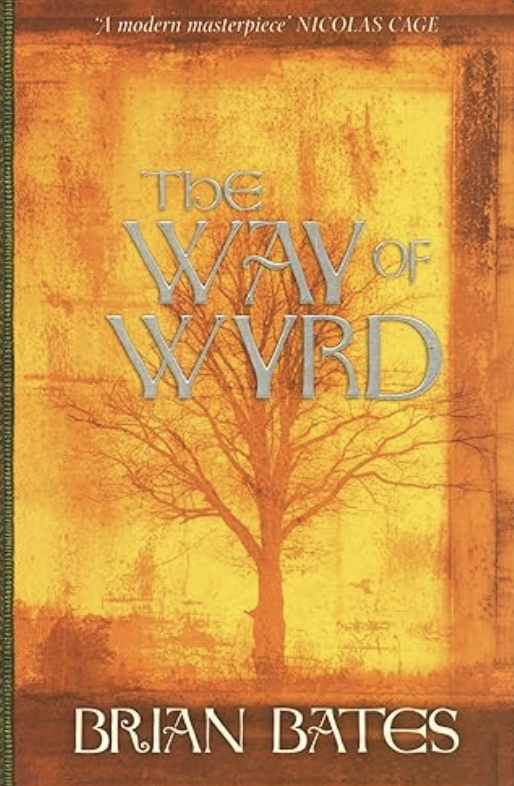
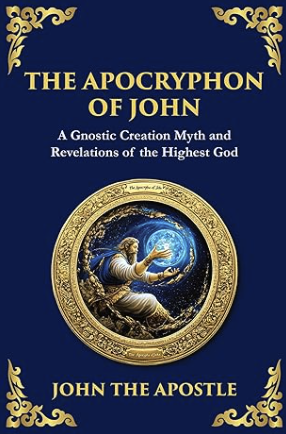
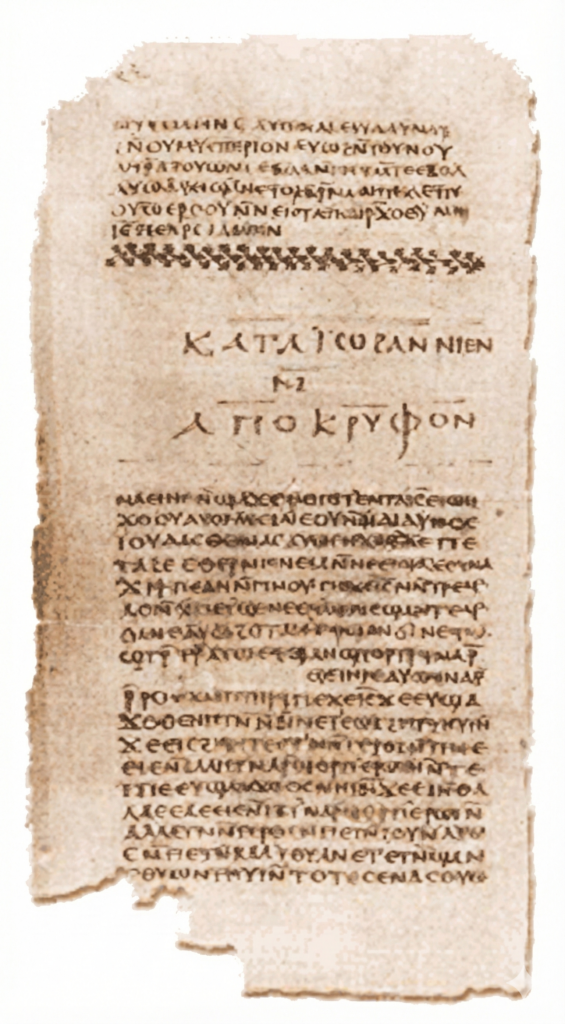
Mid-week I finished The Way of Wyrd and worked through The Apocryphon of John, a 2nd-century Gnostic text that inverts Genesis mythology.

But I’m not reading these as historical artifacts or religious texts. I’m reading them as functional technology.

The Apocryphon presents a radical cosmology: the material world created not by the supreme God but by an ignorant demiurge named Yaldabaoth. Salvation comes through gnosis – secret knowledge – rather than faith.

Translated into operational terms: you’re running someone else’s operating system. The consensus reality you inhabit was built by forces that don’t have your best interests at heart. Liberation comes through recognizing the architecture and reclaiming root access.

I created content around this for the blog and for my new codex system, treating the mythology as applied technology for consciousness work rather than literal cosmology. Using tech metaphors: operating systems, debugging, root access.

The Way of Wyrd works similarly. Brian Bates uses narrative to transmit Anglo-Saxon spiritual practices. You don’t study the material. You experience it through story. The mysteries work through planted seeds that reveal understanding over time.

Both texts demonstrate the same principle soul fiction is built on: psyche learns through narrative participation, not intellectual analysis.

Hypertext and Knowledge Architecture

I also spent time exploring hypertext this week, specifically how it relates to my earlier blog post We Live in a World of Text.

The web promised true hypertext – networked, non-linear, rhizomatic structures. But what we got was mostly chronological blogs with occasional links. WordPress excels at time-based publishing but struggles with the interconnected, multidimensional structures that true hypertext enables.

This connects directly to the soul fiction work. Psyche doesn’t think in linear arguments. It thinks in networks of association, layered meanings, simultaneous contradictions.

I’ve been considering a hybrid approach: WordPress for chronological blogging and community features, Obsidian Publish for building a public Codex using Zettelkasten principles. The blog captures the journey. The Codex maps the territory.

We analyzed my vault structure and created frameworks for a hybrid public/private system. Central MOC (Map of Content), organizational templates, migration checklists. The goal: make private knowledge creation visible without exposing everything.

I’m not implementing this immediately. I’ll let it percolate for a bit. However, the architecture is there when I’m ready to go public.

Contemplative Practices and Consciousness Technology

Throughout the week I worked on several contemplative pieces that function as consciousness technology.

Created a daily prompt around the concept that imagination doesn’t create possibilities – it claims what already exists in infinite potential. You’re not manifesting future reality. You’re tuning into present reality that exists on a different frequency.

The practice: spend three minutes experiencing desired outcomes as present realities to be claimed rather than future goals to be created.

This shifts the entire energy. From striving to selecting. From creating to claiming.

I also explored shamanic meditation practices that maintain shamanic consciousness between formal journeying sessions. Core shamanic breathing. Nature gazing meditation. Middle world walking. Not journeying itself, but ways to stay connected to shamanic states in daily life.

And researched Transcendental Meditation when the question came up. The standardized mantra practice introduced by Maharishi Mahesh Yogi. Interesting as contrast to chaos magick’s pragmatic flexibility.

Each practice operates on the same principle: consciousness is mutable. State can be shifted through systematic engagement with proven techniques.

Thought as Formative Technology

One thread that ran through multiple conversations: thought plays a decisive, formative role in constructing lived experience.

Not just describing reality. Actively shaping it.

This isn’t new to me theoretically. But this week it showed up in practical application. Perceptual filtering. Meaning-making. Identity construction. Reality tunneling.

Thoughts function as formative technology that creates self-reinforcing loops of experience.

I created an X thread around this.

This is what soul fiction means in practice. Not believing different things. Consciously deploying different narrative frameworks and watching how experience reorganizes around them.

The Connecting Thread

What unified this week was recognizing psyche’s native language.

Soul fiction isn’t a technique to learn. It’s the medium consciousness already operates through.

The Gnostic texts, the Anglo-Saxon mysteries, the contemplative practices, the hypertext architecture, the thought-as-technology framework – they’re all different expressions of the same core insight.

Psyche thinks in stories. Consciousness programs itself through narrative. Reality responds to the fictions we consciously or unconsciously deploy.

The work isn’t fixing what’s broken. The work is learning to read, write, and debug in the language psyche already speaks.

This shifts everything from my therapeutic healing model to a programming literacy model. From wound work to code work. From integration to conscious deployment.

What’s Next

The soul fiction essay needs completion. The theoretical foundation is solid. Now it’s about articulating the practical distinctions and implications.

The Codex architecture is designed but not implemented. When the time comes to build in public, the framework is ready.

The contemplative practices continue. Each one a different angle on the same central practice: conscious participation in psyche’s self-programming.

And the content production systems keep evolving. Blog posts. X threads. Daily prompts. Visual concepts. Each piece serving multiple functions across different platforms.

The work continues. Not fixing. Not healing. Learning the language. Writing better code. Deploying more functional fictions.

Soul fiction is psyche’s native tongue. Time to become fluent.


What’s your psyche’s native language? Hit reply and let me know. I read everything.

Walking the Wyrd: A Review of Brian Bates’ Anglo-Saxon Sorcery

There’s something potent about learning magic through story. Not the sanitized, academic kind of learning where concepts get pinned to pages like dead butterflies, but the living, breathing transmission that happens when you follow a character into the dark woods and watch them stumble, fail, and finally get it.

Wyrd

Brian Bates understands this. The Way of Wyrd: Tales of an Anglo-Saxon Sorcerer doesn’t lecture you about Anglo-Saxon spiritual practices. It drops you into the mud and mist of 7th century Britain, walking beside Wat Brand, a young Christian missionary who becomes apprentice to Wulf, a sorcerer of the old ways.

The book works because Bates refuses to translate everything into modern psychological terminology. Yes, there’s scholarship here (Bates was a psychology professor at the University of Sussex), but it’s worn lightly, embedded in a narrative that lets you experience the worldview rather than just read about it. This is stories as code in action, a way of programming consciousness through immersion rather than instruction.

What makes this particularly valuable as an introduction to the way of wyrd is how Bates handles the concept itself. Wyrd isn’t fate in the deterministic sense. It’s more like the web of connections, the pattern of cause and effect that weaves through all things. Past actions create present circumstances, present choices weave the future. Wulf teaches Wat to see these patterns, to work with them rather than against them.

The teaching method is worth noting. Wulf doesn’t hand Wat answers. He creates experiences, asks questions, lets the young Christian wrestle with contradictions between his imported faith and the older wisdom of the land. There are vision quests, encounters with spirits, lessons about the nature of reality that unfold gradually. The mysteries reveal themselves through practice, not theory.

For practitioners working with chaos magick, depth psychology, or any path that treats consciousness as malleable, there’s familiar territory here. The idea that reality is participatory, that what we believe shapes what we experience, that the boundaries between inner and outer are more permeable than we’re taught to think. These aren’t new age inventions. They’re ancient understandings, and Bates shows them in their native context.

The book also serves as a bridge. If you’ve been working with runes, exploring Northern European magical traditions, or feeling drawn to pre-Christian British practices, this gives you a feel for the worldview those practices emerged from. It’s not a how-to manual. It’s something more valuable: a demonstration of how a sorcerer thinks, how they perceive, what they attend to.

Some readers find the narrative occasionally simplistic or the dialogue a bit wooden. Fair criticisms. But the book isn’t trying to be literary fiction. It’s a teaching text wrapped in story form, and by that measure, it succeeds. The format makes complex ideas accessible without dumbing them down. You come away with an embodied sense of what it might mean to walk the wyrd path, to practice sorcery as a way of being rather than a set of techniques.

What struck me most was how the book handles transformation. Wat doesn’t just learn new skills. His entire framework for understanding reality has to crack open and rebuild itself. That’s real initiation, not the weekend workshop kind. And Bates shows that process with enough honesty that you feel the difficulty, the resistance, the moments of breakthrough.

If you’re looking for a systematic grimoire of Anglo-Saxon practices, look elsewhere. But if you want to understand the consciousness that gave rise to those practices, if you’re drawn to learning magic the old way (through story, through experience, through gradual revelation), then “The Way of Wyrd” is excellent medicine. It’s the kind of book that plants seeds. You might not realize what you’ve learned until weeks later when something Wulf said suddenly makes sense in a completely different context.

That’s how the mysteries work. They’re patient like that.

The Gnostic Caravan Day 23: Yaldabaoth, The Cosmos

(The Ruler and the Ruled)

There’s a particular recognition that arrives at the end of every genuine spiritual journey: the thing you’ve been fighting, transcending, working to overcome is itself part of the totality you’ve been seeking to understand. Not because the fight was wrong or the transcendence unnecessary, but because even the obstacle, even the opposition, even the cosmic tyrant himself exists within the One. This isn’t reconciliation that erases the conflict. It’s perspective vast enough to hold both the battle and what lies beyond it, both the prison and the recognition that even the prison exists within infinite freedom.

This is Yaldabaoth.

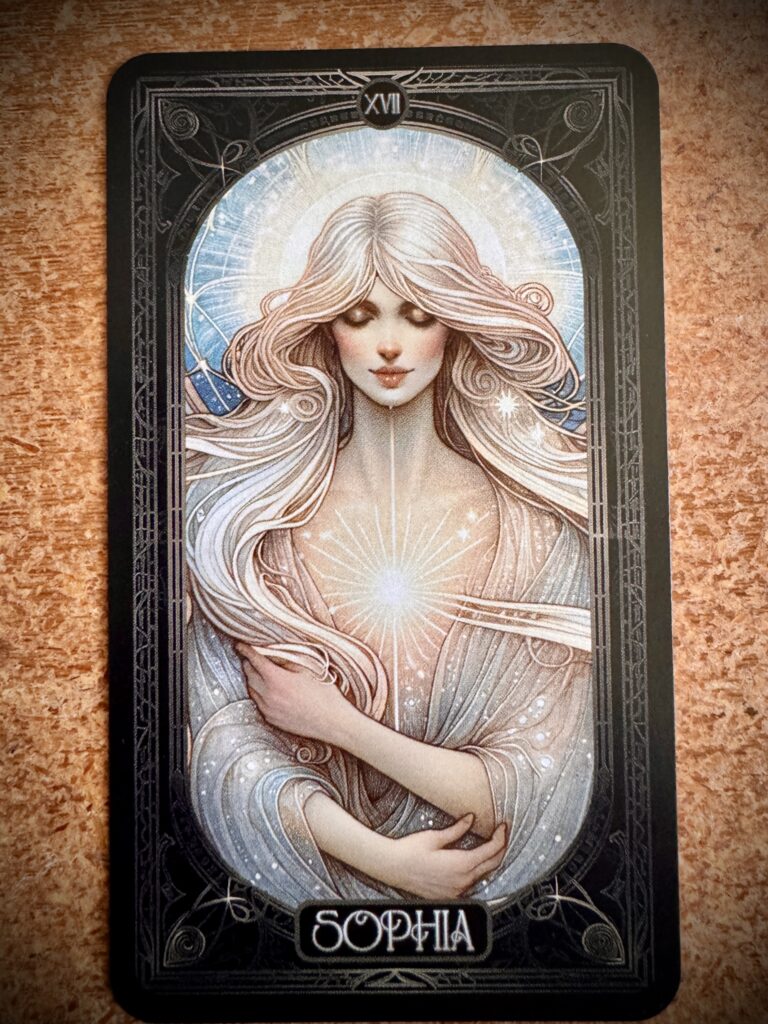
Yaldabaoth, or the Demiurge, is the ruler of the cosmos and the cosmos itself. The bastard son of Sophia and great cosmocrator, Yaldabaoth is sometimes depicted as championing order and justice. But more often, he is ignorant and demanding. In either case, he advocates for the status quo at all costs.

The Nature of the Archons records his infamous declaration: “It is I who am god of the entirety.” This proclamation reveals both his power and his limitation. He is god of the entirety of the material cosmos. But he doesn’t know that the material cosmos itself exists within the Pleroma, within the Invisible Spirit, within a reality so vast that his entire domain is merely one expression of infinite possibility.

The only way to know the Demiurge is to rise high enough to understand you have completed the material journey. Even if you see eye to eye with Yaldabaoth, you are standing above him along with Sophia and Sabaoth, viewing the cosmic order from perspective that reveals both its necessity and its limitation.

Today, Yaldabaoth arrives as our twenty-third and final companion, not to be defeated but to be understood. Following Eleleth’s teaching about elevation of perspective, Yaldabaoth represents what you finally see clearly when you’ve risen high enough: the system itself, the cosmic order that has shaped your journey, the framework that must be comprehended before it can be transcended.

Yaldabaoth

The Advent Companion Appears

Yaldabaoth doesn’t arrive humbly or apologetically. He appears as raw cosmic power, as the force that maintains order even when that order is oppressive, as the ruler whose very ignorance of higher realities is what allows him to rule so absolutely within his domain. You feel him first not as enemy but as the structure you’ve been navigating all along, now finally visible in its totality.

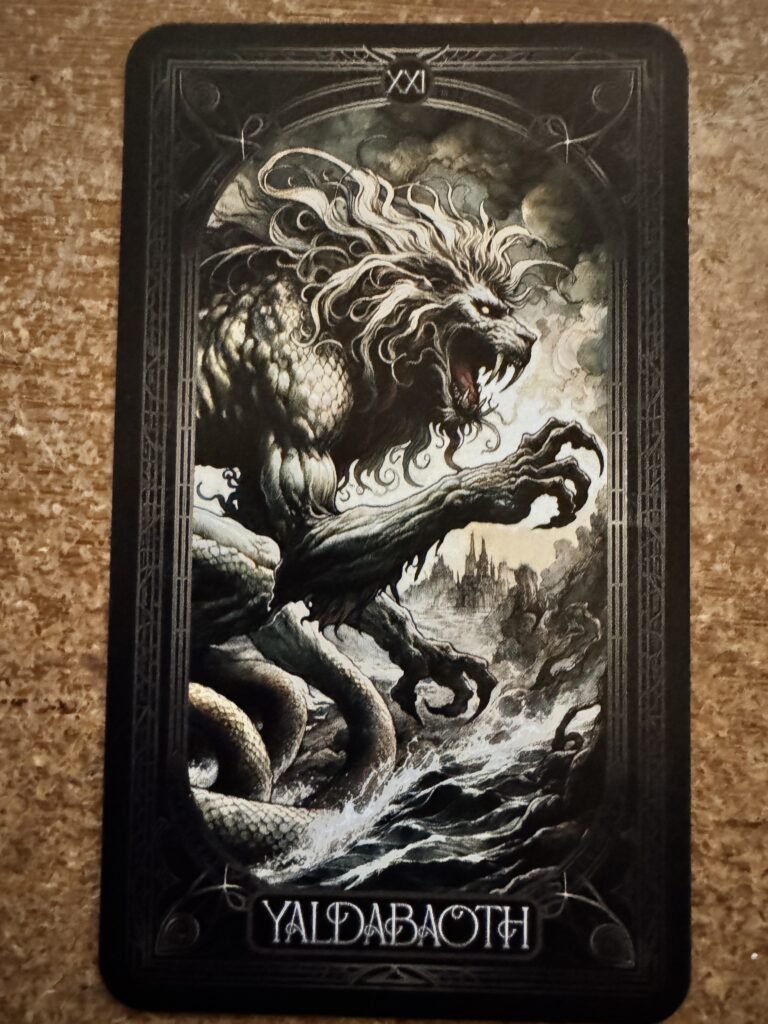
He roars from the card with leonine ferocity because his power is real. This isn’t a metaphor for something else. Within the material cosmos, within the realm of form and limitation, within the reality governed by cause and effect and entropy and death, Yaldabaoth’s authority is absolute. He is the laws of physics, the inevitability of aging, the entropy that ensures all forms eventually dissolve. Fighting this from within his domain is futile.

But the Gnostic insight is this: you’re not merely within his domain. You carry within you a spark from beyond it, from the Pleroma he doesn’t know exists, from the Invisible Spirit whose mind you share. This is why the archons fear awakened humans. Not because humans can overthrow the cosmic order from within it, but because awakened humans remember they’re not only material beings subject to material law. They’re expressions of consciousness that existed before matter and will exist after it.

The serpentine quality of the image is crucial. In some Gnostic texts, Yaldabaoth has the body of a serpent with a lion’s face. This combines the cunning of the snake (the one who tempted Eve, who in Gnostic tellings was actually helping her wake up) with the solar authority of the lion (the king, the ruler, the ultimate power in the visible realm). He is both the seducer who keeps you trapped in matter through attachment and the sovereign whose rules govern how matter operates.

The crumbling cities beneath his feet represent civilizations rising and falling, empires building and collapsing, all the structures humans create believing they’ll last forever. From Yaldabaoth’s perspective, it’s all temporary, all subject to decay, all eventually returning to the chaos from which his ordering power drew it. This is simultaneously true (all forms are temporary) and limited (consciousness transcends form).

The Cosmos card in traditional tarot represents completion, fulfillment, the achievement of the journey’s goal. Yaldabaoth as Cosmos represents something more paradoxical: completion of the material journey that reveals you were never only material, fulfillment that comes from recognizing the limits of the cosmic order, achievement that looks like rising high enough to see that even the ruler of the cosmos is ruled by forces beyond his comprehension.

As Yaldabaoth appears beside you today in all his terrible glory, his teaching arrives not as submission but as final clarity:

“What if understanding the system completely is what allows you to transcend it? What if seeing the Demiurge clearly is what reveals you were never only subject to his rule? What if completion of the cosmic journey is recognizing you come from beyond the cosmos?”

Teaching for the Day

We live in a material cosmos that operates according to Yaldabaoth’s laws. Gravity works. Bodies age. Forms dissolve. Entropy increases. Death comes for everything. These aren’t metaphors or illusions you can simply think your way out of. Within the material domain, they’re absolute.

The Gnostic teaching isn’t that you can ignore or escape these laws while incarnate. It’s that you’re not only subject to them. You carry within you something that predates matter, that will survive matter’s dissolution, that exists in relationship to the cosmic order but not entirely within it.

“It is I who am god of the entirety.” Yaldabaoth’s error isn’t claiming authority over matter. It’s not knowing that matter itself exists within something vaster. He mistakes his domain for all that is. He assumes his rules are ultimate. He doesn’t comprehend that the entirety he rules is itself contained within the Pleroma he can’t perceive.

This matters practically because you’ve probably been relating to material limitations as though they’re ultimate. As though aging is your final truth, death your absolute end, the laws of physics the complete description of reality. Yaldabaoth wants you believing this because it keeps you manageable, predictable, fully subject to his order.

But the Gnostic insight is: material limitations are real AND you’re more than material being. Physical laws govern bodies AND you’re more than body. Death comes for all forms AND consciousness transcends form. Both things are true. Yaldabaoth rules his domain absolutely AND his domain exists within something that transcends his rule.

The journey through the twenty-three companions has been training for this recognition. Each teaching has been helping you rise high enough in perspective that you can finally see the cosmic order clearly, which means seeing both its power and its limitation. Sabaoth awakened within the archontic system and rebelled. You’ve been doing the same. Sophia fell and began the rescue operation. You’ve been participating in that. The Invisible Spirit contains even Yaldabaoth. You’ve been remembering you’re expression of that Spirit.

The only way to know the Demiurge is to rise high enough to understand you have completed the material journey. This doesn’t mean leaving matter. It means recognizing matter as classroom, as training ground, as the domain where consciousness learns about limitation so it can appreciate freedom, where the One experiences separation so it can experience reunion, where the Spirit incarnates so it can discover what it’s like to forget and then remember its true nature.

Even if you see eye to eye with Yaldabaoth, you are standing above him. This is the final teaching. When you understand the cosmic order completely, when you comprehend how Yaldabaoth’s system operates, when you can see clearly what governs material reality, you’re already operating from perspective higher than his. Because he doesn’t know about the Pleroma. He doesn’t comprehend the Invisible Spirit. He mistakes his domain for all that is.

But you know better. Not because you’ve escaped matter but because you’ve remembered you come from beyond it. Not because you’ve transcended the cosmic order but because you understand it exists within something vaster. Not because you’ve defeated Yaldabaoth but because you’ve risen high enough to see him clearly, which means seeing both his power within his domain and the Pleroma beyond his perception.

Journaling Invocation

“What aspects of material reality have I been treating as ultimate that are actually just features of Yaldabaoth’s domain? What limitations feel absolute that might be contextual? What completion is available to me right now if I rise high enough to see the whole cosmic order clearly?”

This question invites you to examine what you’ve been treating as final truth that might actually be domain-specific truth, real within Yaldabaoth’s cosmos but not ultimate beyond it.

Maybe you’ve been treating death as absolute ending when it might be transition within ongoing consciousness. Maybe you’ve been treating physical limitations as final truth when they might be temporary conditions of material incarnation. Maybe you’ve been treating the laws that govern matter as the only laws there are, forgetting that matter itself exists within consciousness that preceded it and will transcend it.

Write about what feels absolutely limiting in your life right now. What seems like final truth, unchangeable reality, ultimate constraint? Don’t try to deny its power or pretend it doesn’t affect you. Within Yaldabaoth’s domain, it’s real.

But then ask: am I more than what exists within this domain? Do I carry something that predates matter? Will something of my consciousness survive material dissolution? If so, how does recognizing this change my relationship to the limitations I’m currently experiencing?

This isn’t about transcending your body or escaping your life. It’s about recognizing that you’re both material being subject to cosmic law AND consciousness that comes from beyond the cosmos. Both are true. Yaldabaoth wants you forgetting the second part. The Gnostic path is remembering it while still honoring the first part.

Write about moments when you’ve felt connected to something beyond material reality. Not as escape from physical life but as recognition of deeper dimension within it. These glimpses are your evidence that Yaldabaoth’s domain, however real, isn’t all that you are.

The completion available to you isn’t leaving the cosmos. It’s rising high enough in understanding that you can see the cosmos clearly, including its ruler, which means seeing both the power and the limitation, both the order and what exists beyond order, both the journey through matter and the consciousness that undertook that journey.

Small Embodied Practice

Stand or sit with feet firmly grounded. Feel your body, its weight, its limitations, its subjection to physical laws. This is Yaldabaoth’s domain. It’s real. Don’t deny it.

Place both hands on your heart. Feel your heartbeat, the life moving through material form, the consciousness animating matter. This too is real.

Now close your eyes and imagine yourself rising in perspective, not leaving your body but expanding your awareness to include larger context. Rise high enough to see your body as form within matter, matter within cosmos, cosmos within Pleroma, all of it existing within the Invisible Spirit’s awareness.

From this elevated perspective, say internally: “I am material being subject to cosmic law AND I am consciousness that comes from beyond the cosmos. Both are true. I honor both. I am completion of the material journey that reveals I was never only material.”

Stay with this for several minutes. Feel how different it is to recognize limitation while simultaneously remembering you come from beyond limitation. This isn’t denial of one for the other. It’s holding both.

Now imagine looking at Yaldabaoth, the fierce cosmic ruler, from this elevated perspective. He’s powerful. His laws govern matter absolutely. His domain is real. But you see clearly that his domain exists within something vaster, that his power is contextual rather than ultimate, that you carry within you spark from beyond his perception.

You’re not fighting him from within his system. You’re understanding his system completely, which is what allows you to navigate it skillfully while remembering you come from beyond it.

Lower your hands. Take three deep breaths. Open your eyes.

This is the final teaching embodied: completion comes from seeing the whole system clearly, including its ruler, which means rising high enough to recognize both the power of cosmic order and the consciousness that transcends it.

You just practiced standing above the Demiurge.
Not through defeating him.
Through understanding him completely.
Through seeing his domain clearly.
Through remembering you come from beyond the cosmos while honoring your journey through it.


The Journey Completes

Twenty-two companions have walked with you through this Advent journey. From Sabaoth’s awakened rebellion to Yaldabaoth’s cosmic rule, from Sophia’s falling and rising to the Invisible Spirit’s undivided awareness, from death’s sacred transformation to life’s persistent light, you’ve traveled through the full arc of the Gnostic saga.

But here’s what the Gnostics knew: the journey never truly ends. It spirals. You return to the beginning but at a higher level of the spiral, seeing the same territory with new eyes, walking the same path with deeper understanding.

The lantern at the edge (Day 1) now burns brighter because you’ve tended it through twenty-two days of teaching and practice. The caravan has arrived, but its arrival reveals new territories to explore, new dimensions of consciousness to navigate, new spirals of awakening to walk.

Join us for the final gathering:

Tomorrow (Day 24) marks the threshold into the new year, the completion of this cycle and the beginning of the next. We’ll share a simple practice for crossing this threshold consciously, for carrying the wisdom of the caravan forward, for stepping into 2025 with the clarity and sovereignty you’ve been cultivating.

But today, we honor completion. Twenty-two days. Twenty-two teachings. The full journey from awakening through integration, through falling and rising, through death and rebirth, to the recognition of your divine nature and your place within the cosmic order.

Share your experience:

This caravan has been a collective journey. Your insights, your struggles, your breakthroughs have been part of the work. As we complete the Major Arcana, we invite you to share:

  • Which companion’s teaching hit hardest for you?
  • What practice will you carry forward?
  • What did you discover about yourself that you didn’t expect?
  • How has your understanding of Gnosticism, tarot, or your own spiritual path shifted?

Drop your reflections in the comments here, or join the deeper conversation in The Gnostic Tarot Forum where seekers gather to discuss these teachings, share insights, and support each other’s ongoing journeys. This is your space to process, question, integrate, and connect with others walking this path.

The caravan pauses here, but the journey continues. You’ve walked through the full cycle. You’ve met each companion. You’ve learned the teachings. Now the question becomes: what will you do with this wisdom?

Tomorrow we cross the threshold together. But today, we honor the completion and the community that made this journey possible.

See you in the forum. See you at the threshold. See you in the spiral’s next turn. 🦁

The Gnostic Tarot Forum: [forum link]

“Even if you see eye to eye with Yaldabaoth, you are standing above him along with Sophia and Sabaoth.”

Reading the Apocryphon of John

I’m currently reading The Apocryphon of John, and if you’re into narrative alchemy, chaos magick, or treating mythology as functional technology rather than ancient fantasy, this text is essential reading. Not for historical curiosity (though that’s good too), but for operational knowledge.

The Apocryphon (which just means “secret book”) is a 2nd-century Gnostic text that presents itself as a post-resurrection revelation from Christ to John the Apostle. But forget everything you think you know about Christian orthodoxy. This is a complete inversion of the program.

What You’re Actually Reading

Four manuscript copies survived, found in the Nag Hammadi library and Berlin Codex. The fact that multiple editions existed tells you something important: this wasn’t fringe speculation. This was working mythology for early Gnostic communities. The church fathers like Irenaeus condemned it as heresy around 180 CE, which is usually a good sign you’re onto something functional.

The text provides the most comprehensive Gnostic creation mythology we have. It’s a radical reinterpretation of Genesis, reframed as a story about divine consciousness getting trapped in matter and the technology required for liberation.

The Core Operating System

Here’s the framework:

The Supreme Unknown
At the top of the cosmology sits the Monad, the unknowable supreme God beyond all description. From the Monad emanates a series of divine beings called Aeons, forming the Pleroma (divine fullness). Think of this as the original, uncorrupted source code.

The Bug in the System
The last Aeon is Sophia (Wisdom). She acts alone, without her consort’s consent, and produces a deformed offspring: Yaldabaoth. He’s described as a lion-faced serpent, and this unauthorized creation is the actual origin of evil. Not the eating of forbidden fruit. Not human disobedience. Divine error.

The False God
Sophia hides her mistake, but Yaldabaoth, ignorant of the higher realms, declares himself the only God and creates our material world. He generates his own hierarchy of rulers (the Archons) to govern this counterfeit creation.

Apocryphon of John

This is the critical inversion: the God of the Old Testament, Yahweh, is Yaldabaoth. The jealous god who demands worship is the villain of the story, not the hero.

The Trojan Horse
When Yaldabaoth creates Adam, the divine realm executes a counter-operation. They trick him into breathing his own spiritual essence into the human body, giving Adam a divine spark. Humanity becomes the battleground between Yaldabaoth’s control mechanisms and the Pleroma’s liberation protocols.

The rest of the text details how Yaldabaoth tries to keep humanity trapped in ignorance while divine emissaries (including Christ) descend to awaken people through gnosis, secret knowledge of their true nature.

Key Operational Principles

1. The Material World as Containment Field
The physical universe isn’t created by the highest God. It’s a prison constructed by an ignorant, malevolent demiurge. Matter itself functions as a trap for divine consciousness.

2. Gnosis as Exploit Code
Salvation doesn’t come through faith or good works. It comes through recognizing your true divine nature and origin in the Pleroma. Knowledge is the key that unlocks the prison. This is why the text was kept secret. This is why it was condemned.

3. The Serpent as Liberator
In this framework, the serpent in Eden represents knowledge and freedom, not temptation and fall. Eating from the Tree of Knowledge is the first act of liberation, not the original sin.

4. Sophia’s Pattern
Even divine beings make catastrophic errors. But Sophia’s repentance establishes the template for redemption. Mistakes aren’t final. The system can be debugged.

5. Dual Operating Systems
Humans run two programs simultaneously: the counterfeit spirit planted by Yaldabaoth (designed to keep you compliant and ignorant) and the divine spark from the Pleroma (your actual source code). We’re walking contradictions, battlegrounds between competing forces.

6. Christ as Revealer
Jesus doesn’t die for sins. He doesn’t appease an angry God. His function is to reveal secret knowledge, to wake people up to their divine origins. He’s a hacker sharing exploit code, not a sacrifice paying cosmic debts.

7. Multiple Interventions
The text describes Pronoia (Divine Forethought) descending three times to awaken humanity. Salvation isn’t a single event. It’s an ongoing process of revelation and remembering.

8. Seth’s Lineage
Seth represents the spiritual line of those capable of receiving gnosis. The “seed of Seth” are those who can escape the Archons’ control systems. This is genetic in mythological terms, not biological. It’s about capacity for awakening.

Why This Matters Now

If you treat stories as code, the Apocryphon provides a complete alternative operating system to consensus reality. It’s not asking you to believe in ancient cosmology. It’s offering a functional framework for understanding:

  • Why consensus reality feels like a trap
  • Why institutional religion often functions as control mechanism rather than liberation
  • Why knowledge is treated as dangerous by power structures
  • Why your deepest intuition insists you’re more than what you’ve been told
  • Why awakening feels like remembering rather than learning

The Gnostic framework goes beyond metaphysics and into applied mythology. A toolkit for sovereignty and reality navigation.

You don’t have to literalize the cosmology to use the technology. Yaldabaoth works whether you treat him as cosmic entity or as symbol for all the forces that want to keep you small, compliant, and convinced that material existence is all there is.

The Archons work whether you view them as literal demonic rulers or as internalized authority structures, cultural conditioning, and the voice in your head that says “who do you think you are?”

The divine spark works whether you frame it as literal piece of the Pleroma or as your deepest, most sovereign sense of self that refuses to accept the official story.

The Practical Application

Read the Apocryphon as functional manual, not ancient artifact:

  • When you feel trapped by material circumstances, that’s Yaldabaoth’s prison
  • When authority demands blind obedience, that’s the Archons speaking
  • When you encounter knowledge that makes you feel more free, that’s gnosis
  • When you remember you’re more than your circumstances, that’s the divine spark
  • When you question official narratives, you’re accessing Sophia’s lineage

The text is code. Debug accordingly.


Currently reading this as part of ongoing research into functional mythology and consciousness technology. More field reports to follow.

The Gnostic Caravan Day 20: Norea, The Moon

(The Fire-Breather Who Needs No Consort)

There’s a particular quality that belongs to those who stand at thresholds between worlds, who can navigate the seen and unseen with equal fluency, who possess power so complete they require no external validation or partnership to wield it. Not the power that proves itself through display or demands recognition, but the power that simply is what it is, self-contained and sovereign, capable of breathing fire on the Demiurge’s plans and communing with angels in higher realms, needing nothing from anyone to be fully what they are.

This is Norea’s territory.

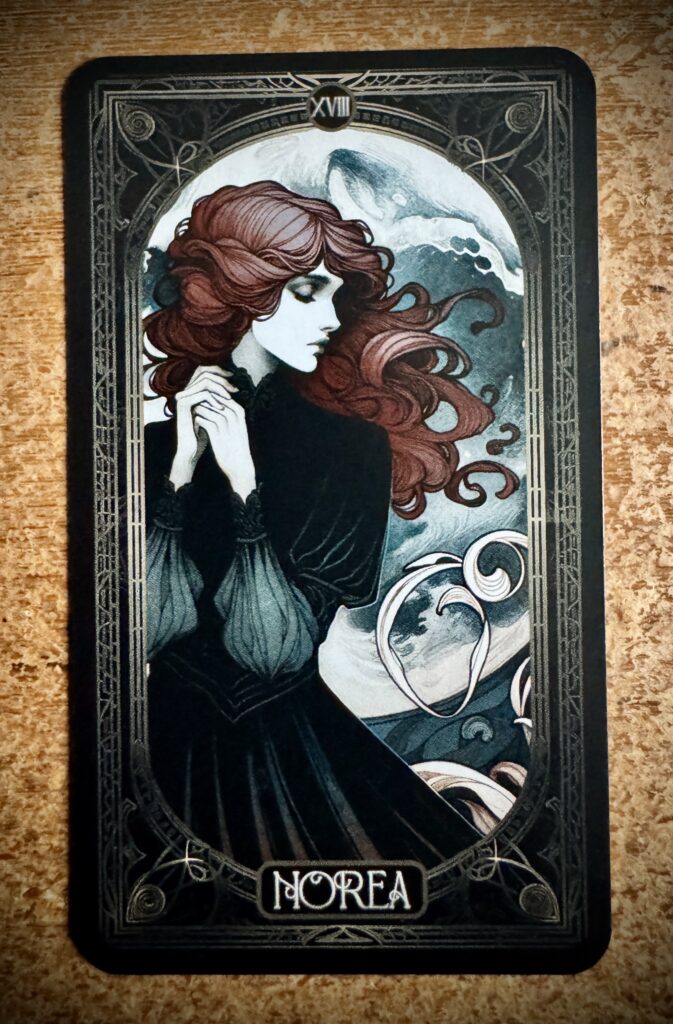
This Gnostic heroine is remarkable in many ways, from being a Savior figure to a woman who requires no male consort to thrive. Norea is Seth’s younger sister and the fourth daughter of Adam and Eve. She is brimming with Gnosis and the ability to tap into the higher realms.

In one Gnostic gospel, she breathes fire on Noah’s Ark to stop the Demiurge’s genocidal plans. Yaldabaoth sends a legion of archons to punish her. She is rescued by the angel Eleleth, who then teaches her mysteries that will bring the eventual doom of the Demiurge. In later Kabbalistic lore, she is represented as a seductive demon, a version of Lilith who is the consort to the dark lord Samael.

The Thought of Norea gospel contains her voice speaking with authority: “And she began to speak with the words of Life, and she remained in the presence of the Exalted One, possessing that which she had received before the world came into being. She has the great mind of the Invisible One, and she gives glory to her Father, and she dwells within those who dwell within the Pleroma, and she beholds the Pleroma.”

This is someone who exists simultaneously in multiple dimensions, who has access to what existed before material creation, who carries the great mind of the Invisible Spirit itself. Not as borrowed power. As inherent capacity. As her essential nature.

Today, Norea arrives as our twentieth companion, following Sophia’s teaching about light persisting through falling and restoration. Where Sophia showed us the long work of bringing divine sparks back from matter, Norea shows us the fierce clarity that opposes the Demiurge‘s control directly, that breathes fire on his genocidal plans, that stands as autonomous power requiring no partnership to be complete.

Norea

The Advent Companion Appears

Norea doesn’t arrive seeking approval or explaining her authority. She appears as someone who has always known her power, who carries Gnosis not as something learned but as something remembered, as inherent capacity finally recognized. You feel her first as the part of you that has always known more than you’ve been taught, that carries wisdom from before this world’s programming, that needs no external validation to know its own truth.

She is turned partially away in the card because she’s not oriented toward pleasing observers. She’s oriented toward the work: communing with higher realms, accessing mysteries that will eventually bring down the Demiurge’s system, standing as herself without apology or explanation. The Moon card in traditional tarot often represents illusion, confusion, the unconscious. But Norea as Moon represents something different: the power that operates in liminal spaces, that sees through the Demiurge’s illusions because she remembers what existed before them, that navigates between worlds with sovereign clarity.

In the Gnostic myth, Norea’s fire-breathing on Noah’s Ark isn’t random destruction. It’s targeted resistance. The Demiurge is attempting genocide through the flood, trying to eliminate humanity because they’re awakening to their divine nature. Norea opposes this directly, repeatedly, breathing fire to prevent the ark from sailing. This infuriates Yaldabaoth, who sends archons to assault and punish her.

But she’s rescued by Eleleth, one of the great angels, who recognizes her as someone worthy of protection and teaching. And what does he teach her? Not how to be more acceptable, not how to avoid angering the Demiurge. He teaches her mysteries that will bring the Demiurge’s eventual doom. He teaches her how to complete the work she’s already doing.

This is crucial: Norea doesn’t need rescuing because she did something wrong. She needs rescuing because she did something right and the powers that be retaliated. The response isn’t to teach her to be safer, smaller, more compliant. It’s to teach her to be more effective in her opposition, to give her knowledge that makes her even more dangerous to the control system.

Later traditions demonize her, calling her Lilith, associating her with dark forces. This is predictable. When patriarchal systems encounter feminine power that doesn’t require masculine partnership, that operates autonomously, that opposes their plans directly, they have two options: suppress it or demonize it. Norea gets both treatments. But in Gnostic texts, she remains savior, teacher, carrier of mysteries, autonomous power.

The Thought of Norea describes her as having “the great mind of the Invisible One.” Not receiving it. Having it. As inherent quality. She doesn’t need intermediaries between herself and the highest divine principle. She carries that principle’s mind within her own consciousness.

As Norea appears beside you today, turned toward her own work in the moonlit threshold between worlds, her teaching arrives as both recognition and permission:

“What if you already carry the knowing you think you need to learn? What if your power doesn’t require anyone’s partnership or approval to be complete? What if the work calling you requires you to breathe fire on plans that deserve burning?”

Teaching for the Day

We live in a culture that treats feminine power with deep suspicion, especially when it operates autonomously. Women are supposed to be powerful in partnership, supportive in relationship, complementary to masculine energy. Standalone feminine power, power that needs no consort, that operates independently, that opposes systems directly—this gets labeled dangerous, demonic, dark.

Norea demonstrates what autonomous feminine power actually looks like. She doesn’t need Seth or any other male figure to validate her authority or complete her work. She’s the fourth child of Adam and Eve, brimming with Gnosis, capable of accessing higher realms, breathing fire on the Demiurge’s plans. She is complete as herself.

This matters beyond gender. Norea represents the part of every person that carries inherent wisdom, that doesn’t need external validation, that knows truth directly rather than through mediated teaching. The archons want you believing you need their permission, their credentials, their approval to access what you already carry within you.

But Norea knows something they don’t want you knowing: you already have the great mind of the Invisible One. You already carry Gnosis. You already possess what existed before the world’s programming. The work isn’t earning this. It’s remembering it, claiming it, operating from it.

“She began to speak with the words of Life, and she remained in the presence of the Exalted One, possessing that which she had received before the world came into being.”

Before the world came into being. This suggests something pre-existent, something that predates the Demiurge’s creation, something that material reality and its programming can’t erase because it existed before material reality. This is what Norea carries. This is what you carry too.

The Moon card traditionally represents the unconscious, dreams, illusions, things hidden in shadow. Norea as Moon transforms this: she operates in liminal space not because she’s confused but because that’s where the most important work happens. Between worlds. Between waking and dreaming. Between what the Demiurge claims is real and what actually existed before his fraudulent creation.

The fire-breathing is important. This isn’t gentle persuasion or patient education. This is direct opposition to genocidal plans. Norea sees what Yaldabaoth is attempting and her response is immediate, visceral, effective: burn it down. Stop it from happening. Use the power you have to prevent catastrophe.

This got her in trouble. The archons came after her. But the response wasn’t to teach her to be safer. Eleleth rescued her and taught her more, taught her mysteries that would eventually bring down the entire system. The teaching isn’t “stop breathing fire.” It’s “here’s how to breathe fire more effectively.”

This teaching matters now because you’ve probably been taught to moderate your power, to be more palatable, to avoid breathing fire even on things that deserve burning. You’ve been taught that feminine power (or intuitive power, or autonomous power, or any power that doesn’t flow through approved channels) should be gentle, supportive, complementary, never confrontational, never destructive, never operating independently of partnership or approval.

Norea says: breathe fire when fire is required. Oppose what deserves opposition. Operate from your inherent power without apologizing for not needing partnership to complete you. The backlash will come. That doesn’t mean you were wrong. It means you were effective.

Journaling Invocation

“What knowing do you carry that you’ve been treating as needing external validation? What power do you possess that you’ve been waiting for permission to use? What deserves your fire that you’ve been approaching with false gentleness?”

This question asks you to identify where you’ve been denying your own Gnosis, where you’ve been waiting for approval to use power you already possess, where you’ve been moderating yourself in situations that actually require your full force.

Maybe you know something is true about your life, your calling, your path, but you’ve been waiting for teachers or authorities or partners to validate that knowing before you trust it. Maybe you possess power (creative, spiritual, intellectual, practical) but you’ve been holding it back because using it fully might threaten relationships or systems you’re embedded in. Maybe there’s something that deserves your opposition, your fire, your direct resistance, but you’ve been trying to be diplomatic about it.

Norea would ask: what are you waiting for? You already carry the great mind of the Invisible One. You already possess what you need. The work isn’t earning permission. It’s claiming what’s already yours.

Write about the knowing you carry that needs no external validation. Don’t justify it or prove it. Just acknowledge it. This is your Gnosis, your direct access to truth that predates this world’s programming.

Write about the power you possess that you’ve been moderating. What would it look like to use it fully, autonomously, without waiting for partnership or approval?

Write about what deserves your fire. Not your patience. Not your understanding. Your opposition. Your resistance. Your direct action to prevent or dismantle.

Norea breathed fire on the ark repeatedly. She didn’t try once and give up when it made the Demiurge angry. She kept breathing fire. And when the archons came after her, she was rescued and taught more, taught how to be even more effective in her opposition.

What becomes possible when you stop waiting for permission and start operating from your inherent authority?

Small Embodied Practice

Stand or sit in a space where you can be alone and undisturbed.

Place one hand on your solar plexus, the seat of your power. Place the other hand on your forehead, the seat of your knowing.

Close your eyes. Feel both simultaneously: your power and your knowing. These aren’t separate. Your power comes from your knowing. Your knowing gives you authority to use your power.

Take a deep breath. As you exhale, imagine breathing out fire. Not to destroy indiscriminately, but to clear space, to burn away what needs burning, to oppose what deserves opposition.

Say internally: “I carry the great mind of the Invisible One. I possess what I received before this world came into being. I need no permission to use what is inherently mine.”

Take another breath. This time as you exhale, imagine the fire not destroying but illuminating, showing you clearly what in your life requires your opposition, what deserves your fire, what you’ve been approaching with false gentleness when direct action is required.

Stay with this for several minutes. Let yourself feel the full extent of your power and knowing operating together. Let yourself feel what it’s like to need no external validation, no partnership to complete you, no permission to be fully what you are.

When you’re ready, lower your hands. Take three deep breaths. Open your eyes.

This is Norea’s teaching embodied: your power is inherent. Your knowing is direct. Your authority requires no external validation. And sometimes the most appropriate response is fire.

You just practiced being sovereign.
Not waiting for permission.
Not moderating to stay safe.
Breathing fire when fire is required.
Operating from inherent authority.
Complete as yourself.


The caravan moves together through liminal spaces. If today’s companion touched something in you, if Norea’s sovereign fire helped you recognize the power you’ve been waiting for permission to use, let us know in the comments. Your autonomy lights the path for others learning to be complete beside you. 🌙

Tomorrow: The Invisible Spirit arrives, the beginning and the end, the One that contains everything and nothing, the source to which all returns and from which all emerges.

The Gnostic Caravan Day 19: Sophia, The Star

(The Soul’s Adventure)

There’s a particular quality that belongs to hope after devastation, to light discovered in the deepest darkness, to the recognition that what looked like irredeemable failure was actually the beginning of the most important journey. Not the shallow hope that nothing bad will happen, but the profound hope that even when everything falls apart, even when you’ve made catastrophic mistakes, even when you’re lost in chaos of your own making, there’s still a path home. And more than that: the very falling was necessary, the mistakes were part of the design, the chaos itself is where transformation happens.

This is Sophia’s gift.

Sophia is one of the most famous characters in the Gnostic saga. Her myths vary depending on the source, but most agree she was the youngest Aeon, a capacity or attribute of the Invisible Spirit, who transgresses against the divine order and is cast into Chaos. In some prominent stories, Sophia’s anguish and negative emotions give birth to matter itself and the fierce Demiurge who rules it. In some way or another, she must rectify her error and confront her son and his archons, often with the help of her consort, the Aeon Christ.

The Book of Sirach speaks of her with awe: “The first human being never finished comprehending Wisdom, nor will the last succeed in fathoming her. For deeper than the sea are her thoughts, and her counsels than the great abyss.”

From her appearance in the Book of Enoch to her rescue operation in the Secret Book of John, Sophia’s story is our story: the soul’s adventure through the spheres and the return home by becoming fully whole with wisdom. She represents every soul that has fallen from grace, made irreversible mistakes, created chaos from the best intentions, and still found the courage to begin the long journey back to wholeness.

Today, Sophia arrives as our nineteenth companion, following Thunder’s teaching about speaking from totality. Where Thunder taught us to claim all contradictions as aspects of wholeness, Sophia teaches us what happens when that wholeness experiences catastrophic fragmentation and must undertake the patient, difficult, necessary work of restoration. She is the star precisely because she fell so far and still found light.

Sophia

The Advent Companion Appears

Sophia doesn’t arrive triumphant or fully restored. She appears as someone in the middle of the great work, as the quality of hope that persists through ongoing transformation, as the light that doesn’t wait until everything is fixed to begin shining. You feel her first as the recognition that your own falling, your own failures, and your own chaos-creating weren’t diversions from your spiritual path but essential parts of it.

She cradles light against her heart because she’s learned something crucial: the light she seeks isn’t somewhere else. It’s within her, has always been within her, and was there even in the deepest chaos. The journey isn’t about finding external salvation but about remembering and reclaiming the divine spark that never left, even when she was cast out of the Pleroma.

The mandala behind her represents both wound and wholeness. It’s the Pleroma she transgressed against and was expelled from. It’s also the pattern she’s working to restore, not by returning to how things were but by bringing everything she learned in the falling, the chaos, and the material world back into divine consciousness. Her restoration isn’t erasure of the fall. It’s the integration of everything that happened because of it.

In the Secret Book of John, Sophia’s transgression is described as wanting to create without her consort, wanting to express her creative power independently. Different traditions interpret this differently. Some see it as pride, as overreach. Others see it as curiosity, as a creative impulse, as the necessary experiment that brings about material reality and therefore the possibility of souls incarnating, learning, evolving through matter.

But here’s what matters: even in traditions that see her action as transgression, as mistake, as the cosmic catastrophe that creates the whole mess of material existence under the Demiurge’s control, she’s never portrayed as irredeemable. She’s portrayed as working to restore what was broken, as enlisting help (Christ, Barbelo, redeemed Sabaoth), as patient and determined in her rescue operation.

She represents the Aeon, the divine attribute, that falls into matter so completely that matter itself becomes the classroom for transformation. Every soul that incarnates is participating in Sophia’s story. Every person who falls from grace, makes catastrophic mistakes, creates unintended chaos from good intentions, and still finds the courage to work toward restoration is living Sophia’s pattern.

The star quality isn’t perfection. It’s persistence. It’s the light that keeps shining through ongoing transformation. It’s the hope that remains even when the work is far from complete.

As Sophia appears beside you today, cradling light against her heart, still in process, still working on restoration that won’t complete in any single lifetime, her teaching arrives as both comfort and commission:

“What if your falling was necessary? What if the mistakes that feel irredeemable are actually the beginning of your most important work? What if the light you seek has been within you all along, waiting for you to stop seeking it elsewhere and start tending it here?”

Teaching for the Day

We live in a culture that treats mistakes as failures, falling as disqualification, creating chaos as evidence you shouldn’t have tried. There’s no redemption arc that doesn’t begin with denial that you really fell, minimization of how bad it was, or quick resolution that erases the consequences. Real falling, catastrophic mistakes, chaos that births monsters—these are supposed to disqualify you from spiritual legitimacy.

Sophia teaches something radically different. She fell completely. Her distress and anguish literally gave birth to the Demiurge and material reality. You can’t get more catastrophic than that. And yet she’s not disqualified. She’s the protagonist of the cosmic restoration story. Her work to rectify what happened, to rescue the divine sparks trapped in matter, to restore wholeness—this is the central drama of Gnostic cosmology.

This matters because you’ve fallen too. Maybe not from the Pleroma into Chaos, but from grace into shame, from confidence into self-doubt, from clarity into confusion. You’ve made mistakes that can’t be undone. Created consequences that can’t be erased. Birthed monsters from good intentions. And the culture tells you this disqualifies you, proves you were never legitimate, means you should apologize for taking up space.

Sophia says: the falling is part of the pattern. The mistakes are part of the teaching. The chaos you created is the material you’ll work with for the rest of your journey. This isn’t punishment. This is the curriculum.

“The first human being never finished comprehending Wisdom, nor will the last succeed in fathoming her. For deeper than the sea are her thoughts, and her counsels than the great abyss.”

Sophia is unfathomable not because she’s perfect but because she contains such depth, such complexity, such paradox. She is simultaneously the one who transgressed and the one working toward restoration. She is both cause of the problem and architect of the solution. She is fallen and rising at the same time.

The archons benefit from shame about falling. They want you believing your mistakes disqualify you, that creating chaos proves you’re not spiritual, that falling means you can’t be trusted with power. Because if you believe that, you’ll spend your life apologizing instead of working, hiding instead of shining, trying to prove your legitimacy instead of doing your actual work.

But Sophia’s story reveals: spiritual authority often comes through falling, wisdom through mistakes, power through learning to work with the chaos you’ve created. The star shines brightest not from those who never fell but from those who fell completely and still found light, who made catastrophic errors and still began the work of restoration.

The traditional Star card in tarot represents hope, inspiration, connection to something larger. Sophia as Star embodies this perfectly, but with crucial addition: her hope isn’t naive. It’s earned through experience. Her inspiration isn’t untested. It’s forged through chaos. Her connection to the divine isn’t because she never left it. It’s because she fell away completely and found her way back to it through the long work of restoration.

This teaching today isn’t permission to make reckless mistakes. It’s recognition that the mistakes you’ve already made, the chaos you’ve already created, the falling you’ve already experienced—these aren’t disqualifications. They’re your material. They’re what you have to work with. And the work isn’t erasing them. It’s integrating them into your ongoing restoration.

Sophia’s rescue operation isn’t complete. In most Gnostic texts, it’s ongoing. She’s still working to bring back all the divine sparks, still helping souls remember their origin, still confronting her son the Demiurge and his archons. The star quality is that she keeps working even though the work isn’t done, keeps shining even though restoration is incomplete, keeps hoping even though the journey home is long.

Journaling Invocation

“What falling in my life have I been treating as disqualification rather than curriculum? What chaos have I created that might actually be the material I’m meant to work with? What if the light I’m seeking has been within me all along, even through the falling?”

This question invites you to reframe your relationship with your own mistakes, your own falling, your own chaos-creating. Not to excuse them or minimize their consequences, but to recognize them as part of your pattern rather than deviation from it.

Maybe you’ve made relational mistakes that created lasting harm. Maybe you’ve pursued paths that led to catastrophic consequences. Maybe you’ve hurt people from good intentions. Maybe you’ve fallen from grace in ways that feel irredeemable.

Sophia would ask: what if these aren’t proof that you’re disqualified but evidence that you’re participating in the pattern? What if the falling was how you learned what you most needed to know? What if the chaos you created is the classroom where transformation happens?

This isn’t about avoiding responsibility or denying harm. It’s about recognizing that responsibility includes learning from the falling, that acknowledging harm includes working toward restoration, that the mistakes themselves become part of your wisdom if you’re willing to work with them honestly.

Write about your falling. Not to justify it or explain it away, but to see it clearly. What did you learn through falling that you couldn’t have learned any other way? What wisdom did the chaos teach you? What light did you discover in the darkness that you might never have found in the light?

And then ask: what’s the work of restoration calling you toward now? Not erasing what happened, but integrating it, learning from it, using it as material for building something more whole than what existed before the falling.

Sophia’s star quality is this: she keeps shining through the work, keeps radiating hope even though restoration is incomplete, keeps tending the light within her even as she works to rescue all the other lights trapped in matter.

What becomes possible when you stop treating your falling as disqualification and start treating it as the beginning of your most important work?

Small Embodied Practice

Sit or stand in a comfortable position. Place both hands over your heart, one hand over the other.

Close your eyes. Take a few deep breaths.

Now think of something you’ve done that feels irredeemable. A mistake you can’t undo. Chaos you created. Falling you experienced. Feel it in your body. Feel the shame, the regret, the wish you could go back and do it differently.

Stay with this feeling for a moment. Don’t push it away. This is the material Sophia works with.

Now, keeping your hands on your heart, imagine a small light there. Not a light that erases what happened or pretends it didn’t. A light that persists despite what happened. A light that was there even in the deepest chaos. A light that’s still there now.

With each breath, let that light grow slightly brighter. Not through denying what happened but through recognizing that the divine spark within you survived even the worst of what you’ve done or experienced.

Say internally: “I fell and the light remained. I created chaos and the light remained. I made irreversible mistakes and the light remained. Now I work with what is, tending this light while I work toward restoration.”

Stay with this for several minutes. Feel the difference between shame that collapses you and responsibility that galvanizes you. Sophia’s star quality is the second: acknowledging what happened while still tending the light, still working toward restoration, still hoping even when the work is incomplete.

When you’re ready, take three deep breaths and open your eyes.

This is Sophia’s teaching embodied: the light within you doesn’t depend on your perfection. It persists through falling, through mistakes, through chaos. Your work is to tend it while you work toward restoration, to keep shining even though the work isn’t done.

You just practiced being the star.
Not because you never fell.
Because you fell completely and still found the light.
Still began the work.
Still keep shining through the long journey home.


The caravan moves together toward restoration. If today’s companion touched something in you, if Sophia’s persistent light helped you recognize that your falling might be curriculum rather than disqualification, let us know in the comments. Your light lights the path for others working toward wholeness beside you. ⭐

Tomorrow: Norea arrives, the one who breathes fire, who requires no male consort, who stands as savior in her own right and teacher of mysteries that will bring the Demiurge’s doom.

Post-Structuralism and Chaos Magick: How Two Paths Discovered Reality Is Constructed

Chaos Magick and Post-Structuralism

Deconstructing Truth, Constructing Reality: Where Philosophy Meets Chaos Magick

This visual essay maps one of the most compelling parallels in consciousness work: how academic philosophy and occult practice arrived at identical conclusions through completely different paths.

What you’re looking at is the collapse of certainty itself.

Post-structuralism dismantled Western metaphysics by revealing that language doesn’t reflect reality but constructs it. Meanwhile, chaos magick emerged from practitioners who realized that belief systems function as tools rather than truths. Both movements understood something radical: we’re not discovering meaning, we’re making it.

The presentation walks you through this convergence step by step. From the crumbling monolith of absolute truth to Derrida’s labyrinth of différance, from Nietzsche’s “will to power” to chaos magick’s declaration that “nothing is true, everything is permitted.” Each slide builds on the last, presenting not dry theory but living philosophy rendered in images that mirror the concepts themselves.

What strikes me most is how this piece refuses to treat these parallel developments as mere coincidence. Instead, it argues they represent a fundamental shift in human consciousness: from seeking external truth to engaging in the act of truth-making. From the tyranny of logos to the wisdom of philia1. From passive readers of a predetermined text to active authors of our own myths.

This is narrative alchemy in its purest form. Stories as code. Reality as remix. Consciousness as craft.

The final slide captures it perfectly: you’re walking the Joker’s path, that tightrope between sanity and madness where imagination only bears fruit when realized through action. It’s the courage to step into chaos and dance with it.

Welcome to the psychogeography of meaning itself. The journey from absolute truth to personal reality starts here.

Key Takeaways: Post-Structuralism and Chaos Magick

1. Reality Is Constructed, Not Discovered Both post-structuralism and chaos magick reached the same radical conclusion: there is no fixed, objective truth waiting to be found. Instead, meaning and reality are actively constructed through language, belief, and practice.

2. Language Creates Reality (Not Reflects It) Derrida’s deconstruction revealed that language is a self-referential system. Words don’t point to stable meanings but to other words in an endless chain. Similarly, chaos magicians understand that symbols and beliefs shape experience rather than describe pre-existing truths.

3. Binary Oppositions Are Illusions Western thought relies on hierarchical binaries (presence/absence, truth/falsehood, master/slave). Deconstruction shows these are co-dependent constructs, not natural categories. Chaos magick applies this by freely mixing incompatible belief systems without cognitive dissonance.

4. Belief Is a Tool, Not a Truth The core chaos magick principle “nothing is true, everything is permitted” parallels post-structural skepticism. Both treat belief systems as tactical frameworks to be adopted and discarded based on utility, not ultimate validity.

5. You Are the Author of Your Own Myths Once grand narratives collapse, individual practitioners become myth-makers. This shift moves power from external authorities (texts, traditions, dogmas) to the creative individual who consciously constructs their own meaningful reality.

6. Bricolage Replaces Orthodoxy The postmodern magician practices bricolage: borrowing freely from any tradition, remixing ancient symbols with pop culture, treating Pikachu sigils and Enochian invocations as equally valid tools. Post-structuralism’s dismantling of hierarchies makes this radical eclecticism philosophically coherent.

7. From Logos to Philia The transformation isn’t nihilistic but ethical: moving from cold, detached pursuit of abstract truth (love of wisdom) to engaged, compassionate participation in lived experience (wisdom of love). Knowledge serves life rather than dominating it.

8. Meaning Is Perpetually Deferred (Différance) Derrida’s concept shows meaning is never fully present but always pointing elsewhere. This mirrors the magician’s understanding that reality is fluid, malleable, and responsive to consciousness rather than fixed and inert.

9. Deconstruction Is Liberation, Not Destruction Both movements dismantle oppressive structures not to create nihilistic void but to clear space for authentic creation. The goal is psychological freedom: the ability to engage reality without being imprisoned by inherited narratives.

10. Action Transforms Imagination Into Reality The Joker’s path requires courage to step off the edge. Philosophy without practice remains abstract; magick without grounding becomes delusion. The synthesis demands embodied action that transforms conceptual possibility into lived experience.

The Ultimate Takeaway: We’ve shifted from seeking external, inherited truth to engaging in the art of truth-making. Both post-structuralism and chaos magick offer methodologies for becoming conscious co-creators of reality rather than passive consumers of predetermined meaning. The question isn’t “what is true?” but “what reality am I constructing, and does it serve life?”

Journal Prompts: Exploring Your Personal Reality Construction

1. What story am I living inside of, and who wrote it?

If your life were a narrative with themes, archetypes, and a genre, what would it be? Tragedy? Hero’s journey? Comedy of errors? Redemption arc? Write out the major plot points and recurring patterns. Now ask: who wrote this story? Family expectations? Cultural programming? A younger version of yourself? What story would you write if you were starting from scratch today?

2. The 30-day belief experiment: What happens when I treat belief as a tool?

Choose one belief you’ve never held and adopt it completely for 30 days. “Money flows easily to me.” “Synchronicity guides my path.” “I am naturally magnetic.” Journal weekly: How does this belief change your behavior? Your perception? Your results? At the end, you don’t have to keep the belief, but you’ll have data on how reality responds to different operating systems.

3. Where am I waiting for permission to author my own reality?

What are you waiting to arrive before your “real life” begins? The right relationship? Financial security? Confidence? Recognition? Creative success? What if this waiting is the trap itself, a story where you’re forever the supporting character in someone else’s narrative? What becomes possible if you grant yourself permission right now to be the primary author? Write one concrete action that embodies this shift from waiting to creating.

4. My bricolage practice: What reality am I constructing from the pieces I’ve gathered?

List 5-10 completely disparate influences, traditions, or systems that fascinate you (stoicism, chaos magick, bodybuilding, jazz, quantum physics, tarot, whatever calls to you). Now design a daily or weekly practice that synthesizes elements from at least three of them. Don’t worry about whether it’s “legitimate” or internally consistent. Does it work? Does it serve your transformation? This is your personal mythology in action, your own “non-system that works.”


  1. The wisdom of philia lies in its focus on deep, mutual, non-erotic friendship, valuing shared goodwill, growth, and common purpose, contrasting with selfish desire (Eros) or the need to win (Philia Nikia), and forming the foundation of true philosophy (Philia Sophia, love of wisdom) through connection, mutual benefit, and understanding rather than mere intellectual victory, creating essential human connection and character development. ↩︎

System Update: From Rigid Rules to Reality Hacking

Reality Hacking

Reality is open source code, not carved stone tablets.

The old operating system promised absolute truth if you followed the right protocol: rigid rituals, fixed symbols, formal proofs. It assumed reality was external, objective, waiting to be discovered like a law of physics inscribed in cosmic granite.

The new OS runs on different architecture entirely.

It treats reality as malleable substrate shaped through the flexible deployment of belief, symbol, and narrative. This isn’t nihilism or “anything goes” relativism. It’s recognizing that consciousness doesn’t just observe reality, it participates in constructing it.

The shift from “as above, so below” to “as believed, so perceived” isn’t about abandoning truth. It’s about understanding that meaning-making is an active process, not passive reception. The magician doesn’t discover universal correspondences, they create functional ones. The bricoleur doesn’t seek perfect systems, they remix available materials into working technology.

Traditional philosophy and ceremonial magick both operated like compilers looking for the one true source code. Postmodern magick operates like an IDE with infinite plugins, where you choose your tools based on what you’re trying to build, not what someone declared canonical centuries ago.

The pipes connecting these systems are the liminal space where transformation happens. Where fixed meanings dissolve into possibility. Where “this means that” becomes “let’s see what happens if…”

Your mythology is your operating system. Choose it consciously. Update it frequently. Fork it when it serves you.

The universe responds to coherent intention, not inherited dogma.

The Gnostic Caravan Day 17: Marcus the Magician

(The One Who Made the Wine Bubble)

There’s a particular kind of power that makes authorities nervous not because it threatens violence but because it refuses domestication. Not the power that seeks permission or apologizes for existing, but the power that simply is what it is, unapologetically, wildly, creatively alive in ways that can’t be controlled or predicted or made to serve someone else’s agenda. This is the vitality that gets labeled demonic by those who fear it, called dangerous by those who can’t contain it, named devil by those who need everyone playing by rules this force never agreed to follow.

This is Marcus the Magician’s gift.

Marcus arrived from Egypt armed with arcane gematria, magic, and alchemy, disrupting the early Christian Church in late 2nd century France. Women left their churches and joined his Gnostic coven, egalitarian in nature, with roles changing every ceremony to allow everyone different experiences and responsibilities. He was accused of working for Azazel or Satan, but Marcus’s ceremonies entailed ecstatic experiences of communing with Sophia. To reach this point, numerology and entheogens were utilized. The wine was bubbling. Glowing letters appeared in the air.

The Gospel of Judas contains a line that captures Marcus’s energy perfectly: “Already your horn has been raised, and your wrath is full, and your star passes by, and your heart is determined.”

This is the undomesticated heart. The determined will. The star that passes by on its own trajectory, refusing to orbit according to someone else’s astronomy. The horn raised not in aggression but in announcement: I am here. I am alive. I am not asking permission.

Today, Marcus arrives as our seventeenth companion, following Carpocrates’ teaching about integration and temperance. Where Carpocrates taught us the skilled mixing of opposites, Marcus teaches us what happens when that integration creates such vitality, such creative force, such undeniable aliveness that the world doesn’t know what to do with you except call you dangerous and hope the label makes you smaller.

Marcus the Magician

The Advent Companion Appears

Marcus the Magician doesn’t arrive apologizing or explaining. He appears as unrepentant vitality, as creative force that refuses to be channeled into approved forms, as the energy that makes wine bubble and letters glow and women leave their comfortable churches to experience something more real, more alive, more genuinely transformative than what orthodoxy offered.

He stands surrounded by women because his ceremonies honored them as equals, gave them roles orthodox Christianity denied them, created spaces where their spiritual power could be acknowledged and expressed. This wasn’t progressive politics. This was recognition of reality: that wisdom speaks through all bodies, that divine power doesn’t respect patriarchal hierarchies, that any system claiming to channel the sacred while excluding half of humanity is lying about something fundamental.

The chalice he holds contains more than wine. It contains the mystery of transformation, the ecstatic experience that changes consciousness, the direct encounter with Sophia that doesn’t require priestly mediation. Orthodox Christianity hated this because it threatened their monopoly on spiritual authority. If people could commune with the Divine directly through Marcus’s ceremonies, what did they need bishops for?

So they called him devil. Called his magic demonic. Called the women who followed him deluded or seduced. Because when you can’t control something, when you can’t domesticate it or channel it or make it serve your agenda, the easiest move is to demonize it. To make people afraid of the very vitality that might liberate them.

The Devil card in traditional tarot often represents bondage, materialism, being chained to lower impulses. But Marcus as Devil represents something almost opposite: the refusal to be chained, the insistence on direct experience over mediated doctrine, the wild vitality that orthodoxy needs to suppress to maintain control.

In some Gnostic texts, the figure labeled devil or demon by orthodoxy is actually a liberator, a force that disrupts the archontic control system, a power that refuses the Demiurge’s claim to ultimate authority. This isn’t evil. This is rebellion against false authority. This is the creative force that won’t be domesticated into serving someone else’s program.

Marcus’s ceremonies used entheogens, altered states, ecstatic practice. The wine bubbled not through chemical reaction but through what participants experienced as divine presence. Letters glowed in the air, not as hallucination but as visual manifestation of the living wisdom being transmitted. These weren’t tricks. They were technologies of consciousness, methods for accessing states of awareness that revealed truths orthodoxy wanted hidden.

As Marcus appears beside you today, holding his mysteries, surrounded by those who chose his wild ceremonies over safe doctrine, his teaching arrives as both warning and permission:

“When they call you demon for being fully alive, when they label you devil for refusing to be domesticated, when they demonize your vitality because they can’t control it, respond with humor and ease. Embrace whatever Life brings your way and remain grounded in your footing. Don’t allow others to weigh you down with their need to make you smaller.”

Teaching for the Day

We live in a world that fears vitality. Not the managed, productive, channeled-into-acceptable-forms kind of vitality. The wild, creative, unpredictable, ungovernable kind. The kind that makes wine bubble and women leave their churches and authorities nervous because they can’t predict or control where this energy will go or what it will do.

This fear expresses itself through demonization. When someone shows up with undomesticated power, with creative force that won’t serve institutional agendas, with spiritual authority that doesn’t derive from approved credentials, the response is predictable: call them dangerous. Label them devil. Make people afraid of the very thing that might liberate them.

Marcus the Magician demonstrates what happens when you refuse this demonization, when you meet accusations of being demonic with humor and ease, when you simply continue being fully alive regardless of what labels others try to attach to you. He didn’t defend himself against charges of working for Satan. He kept conducting his ceremonies, kept creating spaces for direct experience of the Divine, kept honoring women’s spiritual power even though this infuriated orthodox authorities.

The Gospel of Judas line is telling: “Already your horn has been raised, and your wrath is full, and your star passes by, and your heart is determined.” This is the quality of someone who has stopped asking permission, stopped apologizing for their power, stopped trying to make themselves acceptable to authorities who will never accept them anyway.

The archons maintain control through managed spirituality. They want your religious experience mediated through approved channels, your spiritual authority derived from institutional credentials, your vitality domesticated into forms that serve their agenda. Marcus disrupts this completely by demonstrating that direct experience is possible, that divine communion doesn’t require priestly intermediaries, that your own vitality is itself a form of spiritual authority.

This is why the Devil card in Marcus’s hands becomes liberation rather than bondage. The traditional interpretation suggests being chained to material desires or lower impulses. But what if what you’re actually chained to is the need for approval, the fear of being labeled demonic, the domestication of your vitality to fit acceptable forms?

Marcus’s teaching is both permission and warning. Permission: you’re allowed to be fully alive, wildly creative, ungovernable in your spiritual seeking. Warning: when you claim this freedom, authorities will try to demonize you. They’ll call you dangerous. They’ll suggest you’re working for dark forces. They’ll attempt to make others afraid of you.

His response? Humor and ease. Not defensiveness. Not apologetics. Just continued vitality, continued creativity, continued refusal to be made smaller by others’ fear of your power.

The wine bubbling, the letters glowing, these weren’t circus tricks. They were what happens when consciousness shifts, when direct experience of the Divine breaks through, when the veil between ordinary and sacred reality becomes permeable. Marcus created conditions for these experiences through ritual, through entheogens, through practices that opened perception to dimensions normally filtered out by consensus reality.

Orthodox Christianity called this demonic because it threatened their monopoly on spiritual authority. But Marcus knew something they didn’t: the Divine speaks directly when you create the right conditions, and no institutional authority can prevent or control this direct communion.

The teaching today: what vitality in you has been labeled dangerous? What creative force have you domesticated to make others comfortable? What part of your power have you suppressed because you were afraid of being called demon, devil, dangerous?

And what would happen if you reclaimed that energy with humor and ease, if you allowed yourself to be fully alive regardless of what labels others try to attach to you?

Journaling Invocation

“What parts of your vitality have you suppressed to avoid being labeled dangerous? What creative force are you domesticating to make others comfortable? What would it mean to respond to demonization with humor and ease rather than defensiveness or retreat?”

This question asks you to look at where you’ve made yourself smaller, dimmed your light, suppressed your creative force not because it was actually harmful but because others were uncomfortable with your power.

Maybe you have spiritual experiences or insights that don’t fit orthodox frameworks and you’ve learned to keep them private to avoid judgment. Maybe you have creative impulses that feel too wild, too uncontrolled, too ungovernable and you’ve learned to channel them into acceptable forms. Maybe you have a quality of aliveness that makes some people uncomfortable and you’ve learned to tone it down.

Marcus would ask: who benefits from your domestication? Not you. The authorities who need you manageable, predictable, controllable. The systems that require your vitality be channeled into forms that serve their agenda.

Write about what you’ve suppressed. What power you’ve hidden. What vitality you’ve dimmed. Don’t immediately try to reclaim it. Just acknowledge it. See it. Feel what it cost you to make yourself smaller.

And then ask: what if being called dangerous is actually a sign you’re on the right track? What if the demonization is evidence that you’ve accessed something real, something powerful, something the control systems can’t manage?

Marcus didn’t become less magical to make bishops comfortable. He didn’t tone down his ceremonies to avoid accusations. He kept making the wine bubble. Kept creating spaces where women could claim spiritual authority. Kept demonstrating that direct experience of the Divine is possible and doesn’t require anyone’s permission.

What becomes possible when you reclaim your full vitality with humor and ease, when you meet demonization with the recognition that being called devil often means you’re doing exactly what you should be doing?

Small Embodied Practice

Stand with your feet planted firmly. Take a deep breath and let yourself feel the full extent of your aliveness right now. Not the managed, acceptable version. The full, wild, ungovernable version.

Raise one hand above your head, palm facing up, as if you’re holding something invisible. This is your horn being raised. Your power being claimed. Your vitality being announced without apology.

Now begin to sway, to move, to let energy flow through your body in whatever way wants to move. Don’t control it. Don’t make it pretty or acceptable or spiritual-looking. Just let it be what it is.

As you move, say internally or aloud: “My star passes by. My heart is determined. I am not asking permission to be fully alive.”

Let yourself move for several minutes, letting the energy build, letting your body remember what it feels like to be undomesticated, ungovernable, wildly alive.

If self-consciousness arises, if you hear voices telling you this is silly or dangerous or inappropriate, notice them. These are the internalized authorities trying to domesticate you. Marcus’s response? Humor and ease. Acknowledge the voices and keep moving anyway.

When you’re ready to stop, stand still again. Lower your arm. Take a deep breath. Feel how different your body feels after allowing even a few minutes of unmanaged vitality.

This is Marcus’s teaching embodied: your full aliveness is not demonic. The suppression of your full aliveness is what’s actually dangerous.

You just practiced reclaiming the power that authorities need to label devil because they can’t control it.
Not apologizing.
Not defending.
Simply being fully, wildly, unapologetically alive.


The caravan moves together through untamed territory. If today’s companion touched something in you, if Marcus’s unrepentant vitality helped you recognize what power you’ve been suppressing, let us know in the comments. Your wildness lights the path for others learning to be ungovernable beside you. 🍷

Tomorrow: Thunder, Perfect Mind arrives, the enigmatic goddess who is first and last, honored and scorned, speaking her paradoxical truth that has echoed through millennia.

The Morpheus Paradox: Why Spiritual Teachers Must Remain Students

morpheus paradox

Or: What The Matrix Can Teach Us About Conscious Transformation

morpheus

There’s a moment in The Matrix that most people miss. It’s not when Neo stops bullets or when he resurrects from death. It’s quieter, more devastating.

It’s when Morpheus realizes his faith might be wrong.

We tend to remember Morpheus as the unwavering believer, the teacher who never doubts. But that reading misses something crucial about the archetypal relationship between teacher and student, between the one who knows and the one who discovers. Understanding this relationship provides a map for anyone doing consciousness work, narrative alchemy, or any practice aimed at fundamental transformation.

Let me show you what I mean.

The Teacher Who Already Knows

Morpheus operates as what depth psychology calls a psychopomp: a guide who leads souls between worlds. He’s already liberated from the Matrix, already understands its nature, already achieved his own awakening. His function is revelation and initiation. He doesn’t discover truth so much as transmit it.

This makes him extraordinarily powerful and extraordinarily limited.

His power comes from certainty. Morpheus holds an unshakeable vision of what’s possible. When Neo doubts, when Neo fails, when Neo can’t yet see what Morpheus sees, that faith provides the container necessary for transformation. Morpheus creates space for Neo’s awakening by refusing to collapse into doubt himself.

Think about this in your own life. When you’ve undergone genuine transformation, there was likely someone who held a vision of your potential that you couldn’t yet see yourself. They believed in a version of you that didn’t yet exist. That belief functioned as scaffolding, temporary support that allowed you to build something new.

Morpheus’s certainty is also his cage.

He’s complete in his arc. He’s already crossed his threshold and already had his awakening. His journey now is about facilitating another’s transformation rather than achieving his own. This gives him stability but costs him dynamism. He can point to the door but cannot walk through it for Neo. He can describe freedom but cannot experience Neo’s specific version of it.

Morpheus is fixed. And in alchemy, the fixed element alone cannot transform.

The Student Who Must Fail

Neo embodies something entirely different: potential over actuality, becoming over being.

He contains the capacity for transcendence but must actualize it through repeated trials. His knowledge isn’t transmitted but forged. Every realization comes through direct experience, often painful, frequently humiliating. He doubts. He fails spectacularly. He dies.

And this is precisely what makes his awakening real.

Neo represents the hero’s journey in its most essential form: the ordinary person called to extraordinary destiny who initially refuses. His doubt and fear aren’t obstacles to transformation but necessary components of it. They create the friction that generates heat, the resistance that builds strength.

Unlike Morpheus, Neo must choose belief rather than inherit it.

This is a crucial distinction for anyone doing consciousness work. Transmitted knowledge, no matter how profound, remains secondhand until it’s tested in the crucible of lived experience. You can read every book on meditation, study every mystical tradition, memorize every wisdom teaching. None of it matters until you sit with your own mind and discover what happens when you actually practice.

Neo’s arc is dynamic where Morpheus’s is static. He moves, changes, transforms. He becomes something he wasn’t. Morpheus, for all his wisdom, essentially remains who he already is.

But Neo also carries a burden Morpheus never faces: messianic expectation.

The Weight of Prophecy

Others project their salvation onto Neo before he’s earned it. They see him as The One based on prediction rather than demonstration. This creates a peculiar psychological pressure: he must become what others already see him as.

This is the shadow side of having a teacher who believes in you too much. Their faith can feel like a demand. Their vision of your potential can become a weight rather than wings. You’re not just transforming for yourself but carrying the hopes of everyone who’s invested in your awakening.

Neo must actualize a prophecy that exists independent of his will. Morpheus gets to believe in something outside himself. Neo must believe in himself, which is infinitely harder.

Yet paradoxically, Neo’s ultimate realization is that the prophecy matters less than the choice to embody it. The Oracle tells him what he needs to hear, not necessarily what’s true. The power isn’t in being The One but in choosing to act as if he is.

This is straight from Vaihinger’s Philosophy of As If. The useful fiction creates reality. The role, consciously adopted, transforms the actor.

The Alchemical Marriage

Here’s where these two archetypes reveal their deepest teaching: they complete each other.

In classical alchemy, transformation requires two primary elements. Sulphur represents the fixed principle: stable, unchanging, providing structure. Mercury represents the volatile principle: changeable, transformative, capable of changing state.

Morpheus is sulphur. Neo is mercury.

Morpheus provides the container, the stability, the unwavering vision that holds space for transformation. Neo provides the transformative catalyst, the element that actually changes state and transmutes reality.

Neither can complete the Great Work alone.

Morpheus can see truth but cannot fully reshape it. He understands the Matrix but remains bound by its fundamental rules. Neo can reshape reality but initially cannot see it clearly. He has power without understanding.

Together they form a circuit. The teacher requires the student to fulfil his purpose just as the student requires the teacher to begin the journey. This isn’t weakness. It’s how consciousness evolution actually works.

Think about your own practice, whatever it is. You have your stable elements: the frameworks you trust, the practices you return to, the wisdom you’ve earned. These are your Morpheus. They provide structure and continuity.

But you also have your volatile elements: the experiments you run, the edges you test, the territories where you don’t yet know what you’re doing. This is your Neo. This is where actual transformation happens.

Most people mistake spiritual development for accumulating more Morpheus, more certainty, more fixed knowledge. They want to become the teacher who knows. But development requires maintaining Neo, staying volatile, remaining willing to not-know even as understanding deepens.

The Teacher’s Second Threshold

There’s a moment later in the trilogy where Morpheus’s certainty shatters. The prophecy appears wrong. The Architect reveals complexities Morpheus never imagined. His entire framework seems to collapse.

This is his real initiation.

Up until this point, Morpheus has been living on borrowed awakening. He achieved his own liberation, yes, but then ossified into that achievement. He became the holder of fixed truth rather than a perpetual explorer of deepening truth.

When his certainty breaks, he faces a choice: retreat into despair or become a beginner again. This is the teacher’s second threshold, the one most spiritual guides never cross. It requires surrendering the identity of “one who knows” and accepting that every realization is provisional, every understanding incomplete.

Morpheus must become more Neo-like: uncertain, vulnerable, willing to fail.

Simultaneously, Neo must become more Morpheus-like: developing unshakeable faith, learning to hold space for others, transitioning from student to teacher without losing his capacity for learning.

The synthesis both archetypes point toward is this: the awakened teacher who remains perpetually open to deeper awakening. The realized master who hasn’t ossified into mere knowledge holder. The guide who remains willing to be guided.

This is the actual goal of consciousness work, and it’s far more demanding than simply achieving some stable state of enlightenment.

What This Means For Your Practice

If you’re doing any kind of transformative work, narrative alchemy, consciousness exploration, or creative evolution, you’re dancing between these two positions constantly.

You’re Morpheus when you:

  • Hold a vision of what’s possible that your current self can’t yet see
  • Trust frameworks and practices that have proven effective
  • Offer guidance or structure to others
  • Maintain faith through periods of doubt
  • Provide the stable container for volatile experiments

You’re Neo when you:

  • Test new territories without knowing outcomes
  • Fail repeatedly and learn from failure
  • Question everything, including your most trusted beliefs
  • Accept that your current understanding is incomplete
  • Choose to embody potential before you have proof it will work

The trap is settling permanently into either role.

Pure Morpheus becomes dogmatic, rigid, and unable to adapt when reality reveals new complexity. You become the teacher who killed their own learning, the guide who no longer travels.

Pure Neo becomes ungrounded, perpetually chaotic, and unable to build on past realizations. You become the eternal student who never develops mastery, the seeker who mistakes movement for progress.

The power lies in consciously moving between both positions.

This is what I mean by treating consciousness work as spiritual technology rather than received wisdom. Technology improves through iteration. You need the stable platform (Morpheus) to test volatile innovations (Neo). You need the experimental results (Neo) to inform platform updates (Morpheus).

Your philosophical council, your established practices, your earned understanding, these provide your Morpheus function. They’re real, valuable, necessary. But they’re not final. They’re the stable base from which you launch into unknown territory.

Your daily experiments, your willingness to be wrong, your comfort with not-knowing even after years of practice, this is your Neo function. This is what keeps your work alive rather than merely preserved.

The Perpetual Threshold

Here’s the deepest teaching: there is no final awakening. There’s only the choice to remain at the threshold, that liminal space between knowing and not-knowing, between mastery and beginner’s mind.

Morpheus teaches us the necessity of faith, structure, and transmitted wisdom. Neo teaches us that no amount of teaching replaces direct experience. Together they teach us that the path is perpetual crossing, constant dying and rebirth, forever trading certainty for deeper uncertainty that paradoxically feels more solid than any fixed belief.

In narrative alchemy work, this means treating every framework as provisional code, functional but improvable. Your stories are spells, yes, but spells can be rewritten. Your understanding is real, yes, but reality has more layers than any single understanding can capture.

Be Morpheus enough to hold space and maintain practice. Be Neo enough to shatter your own certainty when deeper truth demands it. Recognize that the teacher who stops being a student has stopped being a real teacher. The master who won’t return to beginner status has only mastered their own stagnation.

The Matrix isn’t just a movie about breaking free from illusion. It’s a teaching about the relationship between freedom and perpetual choice, between awakening and remaining awake, between the guide and the guided in an eternal dance where both roles transform both dancers.

Your stories are code. But the compiler is consciousness itself, and it’s always upgrading. Stay volatile. Stay fixed. Hold both. Transform.

That’s the real red pill.

Morpheus Paradox

The Gnostic Caravan Day 16: Carpocrates (Temperance)

(The Alchemist of Opposites)

There’s a particular kind of wisdom that emerges not from choosing sides but from learning to work with all sides simultaneously. Not the false balance of compromise where everyone loses a little, but the alchemical integration where opposing forces become fuel for transformation. This requires a particular steadiness, a capacity to hold fire and water in the same vessel without letting either extinguish or evaporate the other. This is the work of temperance in its truest sense: not moderation as bland mediocrity, but the skilled mixing of extremes to create something more potent than either element alone.

This is Carpocrates’ mastery.

Carpocrates was a deep thinker from Alexandria, negotiating a sensible path between the body and the spirit, heaven and earth. His teachings were noble Hellenistic individualism paired with Christian communism, yet his teachings are said to include sexual rituals. Some speculate he taught redemption through sin theology, advocating that only through many lives lived does one become tired of worldly karma.

For Carpocrates, Jesus was such a man: someone who remembered all his lives and balanced them into a controlled, integrated existence. Not someone who avoided experience but someone who exhausted it so completely that he mastered it. Not transcendence through rejection but transformation through integration.

The Gospel of Thomas contains what might be Carpocrates’ essential teaching: “When you make the two into one, and when you make the inner like the outer and the outer like the inner, and the upper like the lower, and when you make male and female into a single one, so that the male will not be male nor the female be female, when you make eyes in place of an eye, a hand in place of a hand, a foot in place of a foot, an image in place of an image, then you will enter the kingdom.”

This isn’t metaphor. This is instruction. The kingdom isn’t accessed by choosing spirit over matter, masculine over feminine, inner over outer. It’s accessed by making them one, by discovering the place where all opposites meet and merge and create something that transcends the binary altogether.

Today, Carpocrates arrives as our sixteenth companion, following Achamoth’s teaching about death and transformation. Where Achamoth taught us about letting things die completely, Carpocrates teaches us about what we do with all the elements that remain after death: how we recombine them, how we integrate opposing forces, how we create something new not by eliminating contradictions but by bringing them into such perfect tension that they generate entirely new possibilities.

Carpocrates

The Advent Companion Appears

Carpocrates doesn’t appear as a mystic or ascetic. He appears as a practical philosopher, a skilled alchemist, someone who understands that wisdom lives in the mixing, in the combining, in the careful work of bringing opposites into productive relationship. You feel him first as steadiness, as the quality of someone who can hold multiple truths simultaneously without collapsing into confusion or forcing premature resolution.

He stands adorned in symbols because symbols are his language, the visual grammar of transformation. Each image on his robes represents a different polarity, a different pair of opposites that must be integrated: sun and moon, gold and silver, sulfur and mercury, conscious and unconscious, active and receptive. These aren’t just decorative. They’re a map of the inner work, a reminder that every external symbol corresponds to an internal reality that needs balancing.

The staff he holds isn’t for domination or control. It’s the philosopher’s rod, the tool for stirring the alchemical mixture, for keeping the elements in motion so they don’t settle into separation again. Because integration isn’t something you achieve once. It’s something you maintain through constant, skillful attention.

Carpocrates’ teachings were controversial because he refused easy answers. He taught that you couldn’t reach spiritual maturity by avoiding material experience. You had to engage it, exhaust it, learn from it so completely that you became master of it rather than its slave. This wasn’t hedonism. It was systematic experimentation, a commitment to understanding all aspects of human experience from the inside.

Some accused him of teaching “redemption through sin,” but this misunderstands his philosophy. He taught redemption through experience, through living so many lives, exploring so many possibilities, integrating so many opposites that you eventually exhaust the karma of fragmentation and discover the wholeness that was always available beneath it.

His community in Alexandria practiced radical equality, rotating roles in ceremonies so everyone experienced all aspects of ritual life. One day you’re the priest, the next you’re the congregation. One day you’re leading, the next you’re following. This isn’t relativism. It’s systematic training in holding multiple perspectives, in understanding that truth looks different from different positions and wholeness requires integrating all of them.

As Carpocrates appears beside you today, surrounded by his alchemical symbols, his teaching arrives as both challenge and invitation:

“What if your opposites aren’t problems to solve but elements to combine? What if the tension between your contradictions is actually the generative force that could transform you into something more whole?”

Teaching for the Day

We live in a culture that loves binaries and hates both sides. You’re supposed to choose: spiritual or material, masculine or feminine, rational or intuitive, disciplined or spontaneous, serious or playful. Pick a side, commit to it, reject the other. This creates internal warfare, exhausts your energy fighting yourself, and guarantees you’ll remain fragmented.

Carpocrates teaches something more sophisticated: the goal isn’t to choose between opposites but to discover the place where they unite. Not compromise (where both are diminished) but integration (where both are transformed into something new). This is the alchemical work, the temperance that isn’t about moderation but about skillful combination.

“When you make the two into one…” This is the beginning of every spiritual transformation. The recognition that the battle between your opposites isn’t serving you, that choosing one side over the other just creates a different form of fragmentation, that wholeness requires bringing all of what you are into dynamic relationship.

The archons love binary thinking because it keeps you split. Spiritual or material? They win either way. If you choose spiritual and reject material, you’re ineffective in the world. If you choose material and reject spiritual, you’re easy to control through material incentives. But if you integrate both? If you become spiritually grounded while materially effective? Then you’re dangerous to their system.

This is why Carpocrates’ teachings were so threatening. He wasn’t telling people to transcend the world. He was teaching them to master it through integration. To become so whole that they could navigate material reality with spiritual wisdom, to be in the world but not controlled by it, to use physical experience as fuel for consciousness rather than treating it as obstacle to overcome.

His teaching about Jesus is instructive: Jesus wasn’t great because he avoided experience. He was great because he had exhausted experience through so many lives that he remembered them all, integrated them all, balanced them all into mastery. This suggests that spiritual development isn’t about escaping the cycle of experience but about engaging it so completely that you eventually master it.

This doesn’t mean indulging every impulse or pursuing every experience. It means approaching life as laboratory, as alchemical vessel, as the place where transformation happens through skillful combination of elements rather than rejection of half of them.

The traditional Temperance card shows an angel mixing water between two cups, suggesting the careful blending of opposites. But Carpocrates as Temperance offers something more: he shows that this mixing isn’t just about balance but about transformation, about creating something genuinely new through the tension between opposites.

When you make male and female into a single one… This isn’t about erasing gender or difference. It’s about discovering the place within yourself where all polarities meet, where masculine and feminine energies work together rather than competing, where the tension between them generates creative power rather than draining it through conflict.

The teaching today is both practical and profound: look at the opposites within you. The parts that seem to contradict each other. The qualities that create internal tension. Don’t try to resolve them by choosing one over the other. Instead, bring them into relationship. Let them inform each other. Discover what becomes possible when they work together rather than fighting for dominance.

Journaling Invocation

Carpocrates

“What opposites within me create the most tension? What would it mean to bring them into relationship rather than making one win over the other? What might I become if I integrated them instead of fragmenting myself by choosing sides?”

This question invites you into the alchemical work that Carpocrates mastered. Not the easy work of choosing sides but the more challenging work of holding opposites in productive tension until something new emerges.

Maybe you experience tension between your need for structure and your desire for spontaneity. Between your rational mind and your intuitive knowing. Between your drive for achievement and your need for rest. Between your serious, responsible self and your playful, creative self.

The usual approach is to decide which one is “really you” and try to suppress or fix the other. But what if both are really you? What if the tension between them is actually the source of your creative power, your unique contribution, your particular genius?

Write about the opposites you experience most acutely. Don’t rush to resolve them. Just describe them, acknowledge them, feel how they pull you in different directions.

And then ask: what if these opposites are actually trying to create something together? What if the tension between them is generative rather than destructive? What becomes possible when I stop trying to eliminate one side and start exploring how they might work together?

Carpocrates would say: the kingdom isn’t accessed by becoming one-sided. It’s accessed by becoming so integrated that all your sides work together in service of your wholeness.

Small Embodied Practice

Stand with your feet hip-width apart, arms at your sides.

Extend your left arm out to the side, palm up. This represents one pole of an opposite within you. Maybe it’s your receptive side, your intuitive knowing, your feminine energy, your need for rest.

Now extend your right arm out to the side, palm up. This represents the other pole. Maybe it’s your active side, your rational mind, your masculine energy, your drive to create.

Feel the stretch in your chest as you hold both arms extended. This is the tension of holding opposites. It creates space, opens the heart, requires strength.

Now, slowly, begin to bring your hands toward each other in front of your chest. As they come together, imagine the energies they represent meeting, mixing, beginning to work together rather than pulling in opposite directions.

When your palms meet in front of your heart, press them together firmly. Feel the warmth where they touch. Feel how both energies are still present but now in relationship, in conversation, in cooperation.

Say internally: “I make the two into one. I integrate my opposites. I discover wholeness through their union.”

Hold this position for several breaths, feeling both sides of yourself meeting in your center, in your heart, in the alchemical vessel of your body.

When ready, slowly separate your hands and lower your arms. But keep the feeling of integration, of both sides working together rather than fighting for dominance.

This is Carpocrates’ teaching embodied: temperance isn’t about moderating yourself into blandness. It’s about bringing all of what you are into such skillful relationship that transformation becomes inevitable.

You just practiced the alchemy of integration.
Not choosing sides.
Not eliminating opposites.
Bringing them into union that creates something more whole than either could be alone.


The caravan moves together through integration. If today’s companion touched something in you, if Carpocrates’ alchemical wisdom helped you see your opposites as creative fuel rather than internal warfare, let us know in the comments. Your integration lights the path for others learning to hold their contradictions with skill beside you. ⚗️

Tomorrow: Marcus the Magician arrives with his understanding of creative force, of humor in the face of those who would make you a demon, of the wild vitality that refuses domestication.

Weekly Transmission: Becoming the Problogger Warlock

December 8-15, 2025

Problogger

Last week was one of those inflection points where multiple threads suddenly braided themselves into something coherent. The kind of week where you look up from your work and realize you’ve been assembling pieces of a puzzle you didn’t know you were solving.

Let me walk you through what emerged.

The Problogger Revelation

The biggest shift happened Thursday morning during journaling. I’ve been wrestling with my professional identity for months, trying on different labels like ill-fitting coats. Writer? Too traditional. Content creator? Too platform-dependent. Coach? Too limiting.

Then it clicked: problogger.

Not a blogger who writes about being professional. A professional who operates at the speed and through the medium of the web itself. Someone jacked into the net, working with words, images, audio, HTML, hypertext, and hyperlinks as native tools. The internet isn’t just where I publish. It’s the actual medium of my work.

This realization came through a three-card tarot reading I did with my Gnostic deck: Ace of Swords (clarity breakthrough), 10. Completion (cycle ending), 9. Attainment (solitary mastery). The cards were telling me what my journal was confirming: I’m not trying to become a traditional writer. I’m already something else entirely.

A cyberpunk mystic. The grid is my grimoire. The blog post is my spell. The hyperlink is my sigil chain.

Narrative Alchemy is my philosophical container. The internet is my medium. Blogging is how I navigate.

Metajournaling as Foundation

This identity shift connects directly to work I’ve been doing around metajournaling, which I’m positioning as the practical foundation underneath all the narrative alchemy work.

Most journaling advice focuses on what to write or how journaling makes you feel. Metajournaling asks a different question: How does the act of writing itself shape consciousness and create reality?

After 40+ years of daily journaling practice, I’ve watched my journal entries become reality often enough to know I’m not just recording my life. I’m encoding it. The journal isn’t a mirror. It’s a transmitter.

Metajournaling means:

  • Catching yourself in the act of creating reality through writing
  • Seeing the patterns you’re encoding as you write them
  • Understanding the feedback loop between your entries and your lived experience
  • Treating your journal as primary grimoire rather than passive documentation

I’m working on an essay titled “Metajournaling: Wielding the Pen as Wand” that maps this territory more fully. The core insight is treating journaling as consciousness technology, examining not just what you write but how the writing process constructs reality.

Philosophy as Operational Code

Two major philosophical threads wove themselves in this week, both confirming my existing approach while giving me better language for it.

Hans Vaihinger’s “Philosophy of As If” positions useful fictions at the center of consciousness work. Instead of asking “is this true?” we ask “does this work?” Ideas function as operational technology based on their results, not their correspondence to some objective reality.

This is exactly what I mean by “stories are code.” Vaihinger gives me the epistemological foundation for treating narratives as functional rather than representational.

Then I worked through a dense passage about guiding fictions in psychotherapy, exploring how literalizing goals paradoxically blocks progress while maintaining a “fictional sense” keeps psychological movement alive. The psyche creates images and narratives that guide behavior. Effective transformation means recognizing these as constructs we can consciously work with rather than truths we’re bound to.

Both frameworks validate what I’ve been doing with chaos magick: treating belief as a tool rather than an anchor, using narrative structures strategically without getting trapped in them.

My intellectual council is crystallizing: Jung for archetypal depth, Hillman for soul-making and the imaginal realm, Vaihinger for epistemological grounding. They’re not separate thinkers. They’re three angles on the same core insight: consciousness operates through functional fictions.

Content as Spiritual Technology

This week’s creative output reflected the problogger revelation in action.

I reverse-engineered the Instagram account @thirdeyekingdom (2M+ followers) to understand what makes visual wisdom content work, then designed my own approach. While they offer spiritual comfort through ethereal imagery, I’m building “Stories Are Code”, a one-panel comic series delivering functional magic through a cyberpunk mysticism aesthetic.

I created five HTML templates optimized for 1080×1080 Instagram posts:

  • Terminal Transmission (command-line interface)
  • Code Comment (syntax-highlighted editor)
  • Corrupted Manuscript (alchemy meets digital glitch)
  • Diagnostic Report (clinical documentation)
  • Matrix Mythology (cascading code with symbols)

Each template targets different psychological pressure points. The goal isn’t to comfort but to haunt. Pattern interrupts that install new narrative frameworks.

I also developed a comprehensive blog post and interactive quiz around the three types of humans from Gnostic cosmology (Hylic, Psychic, Pneumatic), reframing these as consciousness modes rather than fixed identities. The quiz integrates with my email system and uses the full Narrative Alchemy aesthetic: gold #C9A961, dark backgrounds, Georgia serif, alchemical styling.

Music as Invocation

One of the most surprising developments: I’ve been creating psytrance tracks using Suno and realized these could function as consciousness technology rather than entertainment.

I’m designing a five-track EP as a functional initiation sequence:

  1. “Sleep Protocol” (recognition of inherited narrative code)
  2. “Ego Death Sequence” (dissolution of false self)
  3. “Void State” (liminal space between stories)
  4. “Rewrite” (conscious authorship begins)
  5. “Sovereign Frequency” (integration as conscious reality author)

Trance music operates through rhythmic entrainment and buildup-release patterns that alter brainwave states. DJs conduct group consciousness through carefully sequenced emotional states. If narrative alchemy treats stories as spells, then these tracks are active invocations designed to shift consciousness during trance states.

I’m handling the music production while working on lyrics that create psychedelic headspace through short lines, internal rhymes, and themes of boundary-crossing.

Sample track:

Archetypal Positioning

Two conversations clarified my archetypal position in interesting ways.

First, comparing griots versus shamans: griots as keepers of linear time and historical memory within structured tradition, shamans as solo practitioners operating in non-ordinary reality. When asked which I lean toward, my immediate answer was “chaos.” I’m not interested in preserving established systems. I’m interested in fluid, results-oriented spiritual technologies.

Second, determining my D&D character class: unequivocally Warlock. Someone who makes conscious agreements with archetypal forces, treats knowledge as power drawn from depth psychology and hermetic traditions, operates in liminal spaces between worlds, and uses tactical thinking to navigate spiritual work. Partnership rather than worship. Function over dogma.

The metaphor fits: my blog posts are invocations, tarot is my grimoire, narrative reframing is reality hacking.

Practical Applications

Beyond philosophy and content, I worked on several practical tools this week:

Chaos magic sigil creation tutorial for wealth attraction, covering the traditional method: intention statement in present tense, removing duplicate letters, creating abstract visual symbols, charging techniques using peak states, and release protocols.

“Operation Velvet Gnome”, a cozy heist LARP designed for holiday play. Twelve days of async WhatsApp interaction building to an in-person finale, incorporating real-world reconnaissance tasks, resource management through playing cards, and genuine consequences including possible failure.

Exploration of experimental blogging trends: IndieWeb revival emphasizing domain ownership and decentralized conversations, digital gardens rejecting chronological formats for evergreen content, newsletter-blog hybrids, and the broader “small web” philosophy resisting platform monopolies.

Most websites today are built like commercial products by professionals and marketers, optimised to draw the largest audience, generate engagement and ‘convert’. But there is also a smaller, less-visible web designed by regular people to simply to share their interests and hobbies with the world. A web that is unpolished, often quirky but often also fun, creative and interesting.

– Parimal Satyal

The Thread That Connects

Looking at everything that emerged this week, the connecting thread is treating consciousness work as functional technology rather than belief system.

Metajournaling isn’t just reflection. It’s reality encoding.

Guiding fictions aren’t delusions. They’re operational code.

Visual content isn’t marketing. It’s pattern interruption.

Music isn’t entertainment. It’s consciousness entrainment.

Chaos magic isn’t mysticism. It’s applied psychology.

The problogger identity crystallizes this approach: someone who operates at internet speed, using web-native tools to deploy consciousness technology.

Stories are code. Let’s write better spells.

Current Work

The Gnostic Caravan project continues, exploring Gnostic Tarot cards through Advent.

All of it feeds Soulcruzer, the mythic media engine that functions as container for everything I’m building.

This week I’ll be testing the Instagram templates, refining the psytrance EP structure, and continuing to lean into this problogger identity. Not as someone who blogs professionally, but as someone whose professional practice happens at the speed and through the medium of cyberspace itself.

The work continues.


What’s crystallizing in your practice right now? Hit reply and let me know. I read everything.

The Gnostic Caravan Day 14: John The Baptist, the Hanged Man

(The End of Prophecy)

There’s a particular quality that belongs to thresholds, to the liminal moments when one era is ending and another hasn’t quite begun. When the old certainties are dissolving but the new reality hasn’t fully crystallized. When you’re suspended between what was and what will be, unable to move backward, not yet able to move forward. This is the space of the hanged man, the prophet at the end of prophecy, the voice crying in the wilderness that the wilderness is about to change.

This is John the Baptist’s territory.

In Gnostic texts and Christian lore, John the Baptist occupies a unique position. From Adam to John the Baptist, the Gospel of Thomas tells us, “among those born of women, no one is so much greater than John the Baptist that his eyes should not be averted. But I have said that whoever among you becomes a child will recognize the Father’s kingdom and will become greater than John.”

He is the end of prophecy, a bardo between the old shamanistic guard and the new lords of Gnosis: Jesus, Simon Magus, Helen, Mary Magdalene. To the Gnostic Mandaeans, John was a true carrier of Gnosis, not Jesus. In some Christian esoteric lore, he is the head of a mystic order in Alexandria of thirty magicians, including Simon Magus and Helen of Tyre. In other tales, Simon takes his place after Herod Antipas kills John.

But here, in this moment, suspended between earth and sky, between the old world and the new, John embodies something essential about transformation: sometimes you have to hang in the not-knowing. Sometimes the only way forward is to surrender the old ways completely, even when you can’t yet see what replaces them. Sometimes the greatest prophecy is recognizing that prophecy itself is ending.

Today, he arrives as our fourteenth companion, at the exact midpoint of our journey through the Major Arcana. Following Barbelo’s teaching about integration, John teaches us about dissolution, about the necessary ending that must precede any genuine new beginning, about the courage it takes to hang suspended when every instinct screams to find solid ground.

John The Baptist

The Advent Companion Appears

John the Baptist doesn’t arrive preaching or commanding. He appears as suspended presence, as the quality of someone who has stopped trying to control the uncontrollable and started trusting the process of transformation even when it requires complete surrender. You feel him first as the recognition that you’re in a threshold moment, that something is ending, that trying to hold on is futile and letting go is terrifying and both things are simultaneously true.

He hangs from the Tree of Life, but notice: he’s not suffering. His face is serene, almost beatific. This isn’t punishment or torture. This is willing suspension, chosen surrender, the recognition that sometimes the most spiritually mature thing you can do is stop fighting the transition and allow yourself to be held by something larger than your own will.

The inversion is crucial. From John’s perspective, the world has turned upside down. What was up is now down. What was down is now up. And from this inverted vantage point, he sees things he could never see while standing upright in the old order. The roots of the tree reach toward his crown like they’re trying to feed wisdom directly into his consciousness. The branches spread beneath his feet as though the foundations of reality itself have been reversed.

This is what endings feel like when you’re in them. Disorienting. Inverted. Nothing makes sense from the old perspective because the old perspective is precisely what’s dissolving. John teaches us that this disorientation isn’t a sign you’re doing it wrong. It’s a sign the transformation is real.

In some Gnostic texts, John is the last of the old prophets, the final voice of a tradition that’s about to be superseded. In others, he’s the head of a mystery school training the very people who will move beyond what he represents. Both can be true. He can be the culmination of one path and the doorway to another. He can hold the old world with reverence while recognizing its time is complete.

The Gospel of Thomas line is devastating in its honesty: John the Baptist is the greatest among those born of women, yet anyone who becomes like a child, who releases their attachment to greatness and status and the old ways of measuring worth, will surpass him. This isn’t a competition. It’s a recognition that sometimes what got you here won’t get you there. Sometimes the greatest prophet is the one who announces the end of prophecy.

As John appears beside you today, hanging in perfect stillness between worlds, his teaching arrives as paradox:

“What if the ending you’re resisting is the very thing that will liberate you? What if the surrender you’re avoiding is the only path to the transformation you’re seeking?”

Teaching for the Day

We live in a culture that hates endings, that treats every loss as failure, that insists you should always be moving forward, always making progress, always building on what came before. This creates tremendous suffering because life is actually full of genuine endings, complete dissolutions, moments when the only way forward is to let something die completely rather than trying to preserve or evolve or transform it.

John the Baptist teaches us about necessary endings. About the times when holding on becomes the obstacle. About the moments when surrender isn’t weakness but wisdom. About the grace that can emerge when you stop fighting what’s dissolving and allow yourself to be suspended in the not-knowing between what was and what will be.

The hanged man in traditional tarot is about sacrifice, yes, but not the grim martyrdom kind. It’s about willing suspension, chosen surrender, the recognition that sometimes you gain more by releasing than by grasping. John hangs from the tree by choice. He could struggle free if he wanted. But he understands something crucial: the transformation he’s part of requires this pause, this suspension, this moment of complete relinquishment of control.

The archons hate this. They want you always doing, always producing, always maintaining forward momentum. Because when you’re suspended, when you’re in the bardo between endings and beginnings, when you’re hanging in the not-knowing, you’re not controllable. You’re not generating the kind of karma they can exploit. You’re in a liminal space where their programming doesn’t reach.

This is why spiritual traditions around the world have rituals of suspension, of deliberate retreat, of chosen withdrawal from normal life. Because these threshold moments, these times of hanging between worlds, these are when the deepest transformations happen. Not through effort but through surrender. Not through doing but through allowing.

From Adam to John the Baptist, no one greater. But anyone who becomes like a child will surpass him. This is the paradox of the spiritual path: you must become great enough to recognize when your greatness needs to be released. Wise enough to know when wisdom means letting go. Strong enough to choose surrender when surrender is what’s needed.

John represents the ending of an entire era of prophecy, an entire way of relating to the Divine, an entire system of spiritual authority. And he does it with grace, with surrender, with the recognition that his ending creates space for something new. He’s not clinging to his role as the greatest born of women. He’s hanging inverted, seeing from a new perspective, allowing the old world to drain away so the new world can be born.

This is the teaching today: some things must end completely. Not evolve. Not transform. Not get repurposed. End. Die. Dissolve. And your willingness to hang in that ending, to surrender control, to trust the process even when you can’t see what’s coming, this is a profound spiritual act.

The only way out is through. And sometimes “through” means hanging suspended until the transformation is complete.

Journaling Invocation

“What in your life is trying to end that you’re still trying to preserve? What would it mean to surrender completely rather than trying to manage or control the transition?”

This question asks you to look honestly at where you’re fighting endings, where you’re trying to hold on to what’s dissolving, where your resistance to surrender is prolonging suffering rather than preventing it.

Maybe it’s a relationship that has run its natural course but you’re trying to revive it. Maybe it’s a version of yourself that served you beautifully but no longer fits who you’re becoming. Maybe it’s a belief system, a career path, a way of being in the world that’s dissolving and you’re exhausting yourself trying to maintain it.

John the Baptist doesn’t ask you to give up prematurely or abandon things that still have life in them. He asks you to recognize when something is genuinely ending, when your efforts to preserve it are actually blocking the transformation that wants to happen.

Write about what’s trying to end. What wants to dissolve. What you’ve been resisting letting go of even though you know, somewhere deep, that it’s time. Don’t rush to resolve this. Don’t immediately figure out what comes next. Just acknowledge the ending. Honor it. Let yourself hang in it.

Because here’s what John knows: the suspended time, the hanging between worlds, this isn’t wasted time. This is when the deepest work happens. When the old programming drains away. When new perspectives become possible. When transformation occurs at a level so deep you can’t force it or rush it or manage it. You can only surrender to it.

What becomes possible if you stop fighting the ending and start trusting the suspension?

Small Embodied Practice

Find a place where you can safely hang or lean backward (a doorway, a sturdy chair, or simply lying on the ground with your head lower than your heart).

If using a doorway: grip the frame and lean back, allowing your weight to be supported, your body to hang in gentle suspension.

If using a chair: sit backward on it, arms draped over the back, letting your upper body fold forward and hang.

If lying down: lie on your back with pillows under your hips so your head is lower than your torso, allowing blood to flow in a slightly inverted direction.

Once in position, close your eyes. Feel the sensation of being supported while suspended. Notice how it feels to not be in your normal upright, in-control position.

Breathe here. Let your body remember what it’s like to be held without holding. To be suspended without struggling. To surrender without collapsing.

As you hang or lean, say internally: “I release what’s ending. I trust what’s coming. I surrender to the space between.”

Stay for several minutes if comfortable. Notice what arises. Resistance? Relief? Fear? Peace? Don’t judge any of it. Just witness how your system responds to chosen suspension.

When you return to normal position, do so slowly. Sit for a moment. Feel how the world looks slightly different after hanging inverted. This is John’s teaching embodied: new perspectives emerge when you’re willing to hang between worlds.

You just practiced surrender.
Not as defeat.
As transformation.
Choosing to hang in the ending until the new beginning is ready to be born.


The caravan moves together through endings and beginnings. If today’s companion touched something in you, if John’s suspended wisdom helped you recognize what’s trying to end, let us know in the comments. Your willingness to surrender lights the path for others hanging in their own transformations beside you. 🌳

Tomorrow: Achamoth arrives, Wisdom’s shadow, the one who teaches us that death must die, that endings have their own endings, that transformation is never finished.

The Gnostic Caravan Day 13: Barbelo (Strength)

(The Providence of Everything)

There’s a particular kind of power that doesn’t announce itself or prove itself or justify itself. It simply is. Not the strength that comes from dominating others or suppressing what’s difficult, but the strength that emerges when you’ve integrated so completely that nothing can fragment you. When you’ve become so whole that external chaos can’t shake your internal coherence. When you contain such vastness within yourself that you can hold both cosmic night and earthly day, both masculine and feminine, both severity and mercy, without choosing one over the other.

This is Barbelo.

Barbelo is the supreme mother in many Gnostic systems. As the Invisible Spirit becomes aware of itself and asks of its attributes, Barbelo answers and manifests these answers into the Aeons, the architecture of the Pleroma, the fullness of the Divine. She is both the ordering and harmonious presence in the Pleroma, androgynous and transcendental at once.

In the Secret Book of John, she speaks with a voice that contains multitudes: “I am the Providence of everything. I became like my own human children. I existed from the first. I walked down every possible road.”

This is not metaphor. This is the recognition that the Divine Feminine principle has experienced everything you’ve experienced, walked every path you’ve walked, contains every possibility you contain. She doesn’t stand apart from creation judging it. She moves through it, experiencing it, becoming it while remaining herself.

After the cosmic cataclysm that brings about the shadow world of the archons (our universe), Barbelo is sometimes depicted as the renovating force of the Aeons, tasked to bring back the stolen sparks of the Pleroma from the Demiurge and assist her lower avatars: Sophia and Eve. She is the organizing principle that works to restore what’s been fragmented, to gather what’s been scattered, to integrate what’s been split.

Today, she arrives as our thirteenth companion, following Basilides’ teaching about the wheel of dimensions. Where Basilides showed us the architecture of the cycles, Barbelo teaches us about the force that holds those cycles together, the strength that maintains coherence even as everything spins, the power that integrates rather than fractures.

Barbelo

The Advent Companion Appears

Barbelo doesn’t arrive with the drama of descent or the fanfare of revelation. She appears as presence that was always there, as the realization that the strength you’ve been seeking has been holding you together all along. You feel her first not as something new but as recognition of what’s always been sustaining you beneath your awareness.

She stands divided and united, the perfect image of integration. The cosmic and earthly aren’t at war in her. They’re in conversation, in balance, in dynamic relationship. The masculine and feminine aren’t competing for dominance. They’re completing each other, strengthening each other, creating something more whole than either could be alone.

This is what true strength looks like. Not the brittle hardness that comes from suppressing half of yourself. Not the exhausting performance of being always one thing and never another. But the resilient wholeness that comes from allowing all of what you are to exist simultaneously, integrated rather than fragmented.

In Gnostic cosmology, Barbelo is first thought, first emanation, the Divine becoming aware of itself and expressing that awareness. She is not created by the Invisible Spirit. She emerges from it naturally, the way light emerges from a source or fragrance from a flower. She is the Spirit’s own self-knowing made manifest.

This means she contains everything. Every possibility. Every path. Every experience. And because she contains everything without being diminished or fragmented by that vastness, she demonstrates that you can too. You can hold your contradictions. You can integrate your opposites. You can be multiple things at once without splitting apart.

The scales she holds aren’t measuring or judging. They’re balancing. Constantly adjusting. Finding equilibrium not once but continuously, understanding that strength isn’t static perfection but dynamic integration. The cosmic side and the earthly side don’t weigh the same. They don’t need to. They need to be in relationship, each supporting the other, each making space for the other.

As Barbelo appears beside you today, her teaching arrives not as words but as presence:

“What would it mean to stop choosing between parts of yourself and start integrating all of what you are? What strength becomes available when you allow your contradictions to coexist rather than forcing them into resolution?”

Teaching for the Day

We live in a culture obsessed with consistency, with being one clear thing that others can categorize and predict. You’re supposed to have a brand, an identity, a coherent story about who you are that doesn’t shift or contain contradictions. This creates enormous pressure to fragment yourself, to suppress the parts that don’t fit the narrative, to choose between aspects of your being rather than integrating them.

Barbelo teaches something radically different. She is the supreme principle precisely because she refuses to be only one thing. She contains cosmic and earthly, masculine and feminine, transcendent and immanent, ordering and harmonious. And the integration of these apparent opposites doesn’t weaken her. It makes her the most powerful force in the Pleroma.

The archons thrive on fragmentation. They want you split, compartmentalized, at war with yourself. Because when you’re internally divided, you’re weak. You waste energy trying to suppress parts of yourself, trying to be consistent, trying to resolve contradictions that might actually be sources of strength if you allowed them to coexist.

But when you integrate like Barbelo, when you allow all of what you are to exist in dynamic balance, you become formidable. Not because you’re harder or more defended, but because you’re more whole. Nothing can use your internal divisions against you because you’re no longer divided. You’ve made peace with your multiplicity.

“I am the Providence of everything. I became like my own human children. I existed from the first. I walked down every possible road.”

This is the voice of someone who has refused nothing, rejected nothing, suppressed nothing. Barbelo has walked every road not to master them all but to understand them all, to integrate the wisdom each path offers, to become vast enough to contain the full spectrum of experience without being overwhelmed by it.

This is available to you. Not as transcendence (floating above your human experience) but as integration (bringing all of your experience into coherent wholeness). The parts of you that seem to contradict each other, the aspects that don’t fit neatly together, the qualities that make you inconsistent or hard to categorize, these aren’t problems to solve. They’re the raw material of your strength.

The traditional Strength card in tarot often shows someone taming a lion, subduing their animal nature through willpower or spiritual discipline. But Barbelo as Strength offers something more sophisticated: she doesn’t tame her cosmic nature to fit into earthly form, and she doesn’t transcend her earthly nature to become purely cosmic. She holds both. Simultaneously. In dynamic tension that creates power rather than depleting it.

This is the work: not choosing between your contradictions but learning to hold them in balance. Not resolving your apparent opposites but allowing them to strengthen each other through their difference. Not becoming one consistent thing but becoming whole enough to contain many things without fragmenting.

Barbelo is the renovating force of the Aeons, gathering the scattered sparks back into coherence. She does this not through force but through magnetic attraction. Wholeness calls to the fragmented. Integration draws the scattered. When you become more whole yourself, you naturally begin to help others remember their own wholeness.

Journaling Invocation

journal prompt

“What parts of myself have I been trying to choose between instead of integrating? What contradictions in me are actually sources of strength if I stop trying to resolve them?”

This question invites you to look at where you’ve been fragmenting yourself in the name of consistency or clarity or acceptability. Where have you decided you need to be one thing or the other when you could be both?

Maybe you’ve been choosing between your spiritual and material interests when you could integrate both. Maybe you’ve been choosing between strength and vulnerability when the deepest strength comes from allowing yourself to be both strong and tender. Maybe you’ve been choosing between logic and intuition when your wisest decisions come from consulting both.

Write about the parts of yourself that seem to contradict each other. The qualities that don’t seem to fit together. The aspects that make you feel inconsistent or confusing to others. Don’t try to resolve them or figure out which one is “really” you. Just acknowledge them. See them. Honor them.

And then ask: what if these contradictions are actually creating a dynamic tension that makes me stronger, more resilient, more whole? What if the integration of opposites is the source of real power rather than a problem to solve?

Barbelo walked down every possible road not to choose the best one but to integrate the wisdom of all of them. She became like her own human children not to fix them but to understand them from the inside. She contains everything without being overwhelmed by that vastness.

What becomes possible when you stop trying to be one coherent thing and start allowing yourself to be whole, even when whole means multiple, complex, containing contradictions?

Small Embodied Practice

Stand with your feet hip-width apart, grounded and stable.

Extend your arms out to the sides, parallel to the ground, palms up, as if you’re holding something in each hand.

In your left hand, imagine holding your cosmic nature: your dreams, your spiritual seeking, your connection to something larger than yourself, your transcendent qualities.

In your right hand, imagine holding your earthly nature: your body, your practical needs, your material life, your relationships, your imminent presence in the world.

Feel the weight of each. Notice if one feels heavier than the other. Notice if you tend to favor one side, lean toward one hand more than the other.

Now, very slowly, begin to adjust. Not trying to make them equal, but finding a balance where both can be held with strength. Where neither is abandoned or suppressed. Where each supports the other.

As you find this balance, say internally: “I am cosmic and earthly. I am transcendent and imminent. I contain both. I integrate all.”

Stay here for several breaths, feeling the strength that comes not from choosing one side but from holding both with equal presence.

When you’re ready, slowly lower your arms. But keep the feeling of integration, of holding your multiplicity with strength rather than fragmenting under its weight.

This is Barbelo’s teaching embodied: strength comes from integration, not suppression. Power emerges from wholeness, not from choosing between parts of yourself.

You just practiced being both.
Not choosing.
Not resolving.
Simply holding the fullness of what you are with grace and strength.


The caravan moves together through integration. If today’s companion touched something in you, if Barbelo’s teaching helped you see where fragmentation has been masquerading as consistency, let us know in the comments. Your wholeness lights the path for others learning to integrate beside you. ⚖️

Tomorrow: John the Baptist arrives at the threshold, the one who represents endings and the space between what was and what’s coming.

The Gnostic Caravan Day 12: Basilides, the Wheel of Fortune

(The One Who Mapped the 365 Dimensions)

chaos to cosmos

There’s a moment when you realize that everything you thought was random is actually pattern. That the chaos you’ve been experiencing has architecture. That what looked like accident or coincidence or blind luck is actually the turning of a wheel so vast you couldn’t see its shape until you stepped back far enough to perceive the whole cycle. This realization changes everything. Not because it gives you control, but because it reveals the nature of the game you’ve been playing without knowing the rules.

This is Basilides’ gift.

Basilides was another high-minded Christian philosopher like Valentinus, making his home in syncretic Alexandria in the 2nd century CE. His Gnostic teachings included a Hellenistic concept of karma where we all go round and round through 365 dimensions in the hope of breaking out into the embrace of Sophia. He also originated the concept of Abraxas, who stands at the top of these 365 dimensions of reality, the god above gods who rules the totality of the wheel.

Some say Basilides was the pupil of Glaucias, the secretary of Simon Peter. Others contend this Gnostic sage denied the death of Jesus, claiming that Simon of Cyrene replaced the body of Jesus during the crucifixion. Whether these legends are true or not, what matters is that Basilides devoted his life to understanding the structure of reality, to mapping the invisible architecture that governs how souls move through existence.

In his system, there’s this powerful recognition captured in the text Allogenes: “There was within me a stillness of silence, and I heard the Blessedness whereby I knew my real self… And I turned to myself and saw the Light that surrounded me and the Good that was in me, I became divine.”

This is the breakthrough moment. Not escaping the wheel, but understanding it so completely that you recognize your divine nature within it. Not transcending the cycles, but perceiving the pattern clearly enough to navigate them consciously.

Today, Basilides arrives as our twelfth companion, following Hermes’s hermit wisdom about solitude. Where Hermes taught us to discover truth through inner excavation, Basilides teaches us what we discover when we map the territory we’ve been wandering through blindly. When we start to see the patterns. When we understand the wheel.

Basilides

The Advent Companion Appears

Basilides doesn’t appear as a mystical figure shrouded in mystery. He appears as a teacher with maps, a philosopher with systems, someone who has spent lifetimes trying to understand how this all works and is eager to share what he’s learned. You feel him first as the sudden clarity that comes when pattern emerges from chaos, when you finally see the connections you’ve been missing.

He stands at the center of the great wheel, but notice: he’s not trying to stop it or escape it. He’s simply showing you how it turns. Here are the dimensions. Here are the forces. Here’s how they interact. Here’s where you are in the cycle. Here’s what’s coming next if you stay on this trajectory. Here’s how you might navigate differently.

The wheel itself is intricate, beautiful, overwhelming in its complexity. Three hundred and sixty-five dimensions, one for each day of the year, each with its own qualities, its own lessons, its own challenges. In Basilides’ system, you cycle through all of them over countless lifetimes, gradually learning, gradually evolving, gradually becoming tired enough of worldly karma that you finally seek the way out.

This might sound fatalistic, like you’re trapped on an endless wheel with no agency. But Basilides taught something more nuanced: understanding the wheel gives you power within it. Not the power to stop it (that’s not up to you), but the power to navigate it consciously rather than being thrown around by forces you don’t understand.

The students at his feet aren’t passive recipients. They’re active learners, engaging with the system, asking questions, trying to understand how the pieces fit together. Because this knowledge isn’t meant to be memorized. It’s meant to be integrated, applied, used as a tool for navigation.

Abraxas sits at the apex of this system, the principle we met on Day 9, the force of pure action and effect. Basilides recognized that at the top of all the dimensions, beyond all the cycles and patterns, there’s a force that encompasses everything, contains all contradictions, keeps the whole mechanism in motion. Not a god who judges or rewards, but a principle that simply is, the totality of existence in dynamic form.

As Basilides appears beside you today, his teaching arrives with both cosmic scope and practical application:

“What patterns in your life keep repeating? What cycles are you caught in without fully understanding their architecture? What would change if you could see the wheel clearly enough to navigate it consciously?”

Teaching for the Day

Most people experience life as a series of random events. Good luck, bad luck, things just happening to them without rhyme or reason. This perspective makes you a victim of circumstance, forever at the mercy of forces you can’t control or predict.

Basilides offers a different lens: what if nothing is random? What if every experience, every challenge, every opportunity is part of a pattern so vast and intricate that you couldn’t see its shape until you stepped back far enough? What if you’re not a victim of the wheel but a participant in it, cycling through dimensions designed to teach you exactly what you need to learn?

This is the Hellenistic concept of karma that Basilides brought into Gnostic Christianity. Not the punitive “you’re being punished for past sins” version that got popularized later, but something more sophisticated: you keep encountering the same lessons in different forms until you learn them. You keep cycling through similar patterns until you understand them well enough to navigate differently.

The 365 dimensions aren’t just metaphysical theory. They represent the full spectrum of human experience, every possible variation of challenge and opportunity, every flavor of joy and suffering, every combination of circumstances that a soul might encounter. And you cycle through all of them, not randomly but according to a logic, a pattern, an architecture.

The goal isn’t to transcend materiality through some heroic spiritual effort. The goal is to become so conscious, so aware, so awake to the patterns that you gradually stop generating the karma that keeps you bound to the wheel. Not through rejection but through understanding. Not through escape but through integration.

This is why Basilides was both a Christian philosopher and a proponent of what might be called “redemption through experience.” In some interpretations of his teaching, the path forward isn’t avoiding worldly engagement but moving through it so consciously that you exhaust its lessons. You become tired of the karma not because you’ve failed but because you’ve completed it.

The archons maintain their control by keeping you unconscious of the patterns. They want you to experience life as chaos, as random suffering and occasional grace, as something that happens to you rather than something you’re navigating. Because if you understood the wheel, if you saw the patterns clearly, if you recognized how the dimensions work, you’d stop being reactive and start being intentional. You’d stop being thrown by the cycles and start learning from them.

Basilides’ teaching today is both humbling and empowering. Humbling because it reveals just how vast the system is, how many dimensions there are to navigate, how intricate the architecture of existence truly is. But empowering because it shows that understanding is possible, that patterns can be perceived, that conscious navigation is available to those willing to do the work of paying attention.

The wheel turns whether you understand it or not. But understanding changes everything. Not because it gives you power over the wheel, but because it gives you power within it. The power to recognize when you’re repeating a pattern. The power to choose differently when the same lesson comes around again. The power to navigate consciously toward liberation rather than being swept along unconsciously through endless cycles.

Journaling Invocation

“What patterns in my life keep repeating? What lessons keep showing up in different forms that I haven’t fully learned yet? If I could see my life as part of a larger cycle, what phase am I in right now?”

This question asks you to step back from the immediate chaos of daily life and look for the larger patterns. Not to judge yourself for being “stuck” or failing to learn fast enough, but simply to see more clearly what’s actually happening.

Maybe there’s a relationship pattern that keeps repeating with different people. Maybe there’s a professional challenge that keeps showing up in different contexts. Maybe there’s an emotional pattern, a way you respond to difficulty that keeps producing the same outcomes even though you keep hoping for different results.

Basilides doesn’t ask you to fix these patterns immediately. He asks you to see them. To map them. To understand their architecture. Because understanding is the first step toward conscious navigation.

Write about the cycles you can identify in your life. What keeps coming around? What lessons have you been encountering repeatedly? What patterns have you been caught in without fully recognizing their shape?

And then ask the deeper question: what is this pattern trying to teach me? If I’m cycling through this dimension of experience, what’s the lesson embedded in it? What understanding am I building toward? What exhaustion of this particular karma am I working through?

The wheel of fortune in traditional tarot is about the ups and downs of life, the turning of luck, the reminder that nothing stays the same. But Basilides’ wheel is something more: it’s the recognition that the ups and downs aren’t random. They’re part of a pattern. And once you see the pattern, you can start to work with it rather than just being worked by it.

Small Embodied Practice

Stand in an open space where you can turn in a full circle without obstruction.

Begin to spin slowly, arms outstretched, turning clockwise. As you turn, notice the world spinning around you. Notice how disorienting it can be when you’re in motion but trying to focus on what’s passing by.

Now stop. Let the dizziness settle. Feel yourself returning to center, to stillness, to stable orientation.

This is what it feels like to be on the wheel: everything spinning, hard to get your bearings, disorienting when you try to hold onto any single point.

Now turn slowly again, but this time don’t try to focus on the things spinning past you. Instead, feel your center. Feel the axis around which you’re turning. Notice that there’s a still point at the center of the spin, a place in you that isn’t moving even though everything else is.

This is Basilides’ teaching embodied: you can’t stop the wheel from turning. But you can find the center. You can locate the part of you that remains steady even as everything cycles around you.

Stop turning. Place one hand on your heart, one hand on your belly. Feel your breath. Feel your center.

Say quietly: “I am at the center of the wheel. The patterns turn around me, but I remain aware. I see the cycles. I navigate consciously.”

Take three deep breaths here, standing in your center, feeling the stability that’s always available even when life is spinning.

You just practiced finding the still point at the center of the turning wheel.
Not stopping the motion.
Not escaping the patterns.
Simply finding your center within them.
Becoming conscious within the cycles.
Navigating rather than being swept along.


The caravan moves together through the turning wheel. If today’s companion touched something in you, if Basilides’ mapping of the dimensions helped you see patterns you’ve been missing, let us know in the comments. Your conscious navigation lights the path for others cycling beside you. ☸️

Tomorrow: Barbelo arrives, the supreme mother, the one who existed from the first and walked down every possible road.

The Gnostic Caravan Day 11: Hermes Trismegistus: the Hermit

(The One Who Found Light in Solitude)

There’s a particular quality of knowing that can only be discovered alone. Not the knowledge acquired from teachers or transmitted through texts, but the understanding that emerges when you stop collecting information from outside and start excavating wisdom from within. When you withdraw from the noise long enough to hear what your own soul has been trying to tell you. When you step away from the crowd’s certainties and into the solitary work of discovering your own.

This is the domain of Hermes Trismegistus.

He is the founder of pagan Gnosticism, known as Hermeticism, and the rumored font of all esoteric information in Greco-Roman times. A fusion of the Egyptian Thoth and the Greek Hermes, some legends portray him rubbing shoulders with Moses himself. Sometimes Hermes Trismegistus is a teacher, sometimes a pupil, but always he is the doorway to inner knowing, the pathway to the arcane teachings of the universe.

“As above, so below,” he once said, but few remember. This isn’t just mystical poetry. It’s a key to understanding reality itself: the microcosm reflects the macrocosm, the patterns of the cosmos repeat in the patterns of the soul, what you discover within yourself reveals the structure of all that is.

Today, he arrives as our eleventh companion, following Marcellina’s threshold wisdom about standing in darkness. Where Marcellina taught us to find equilibrium in the liminal space, Hermes teaches us what can be discovered when we deliberately choose solitude, when we turn away from external guidance and into the hermit’s cave of our own consciousness.

Hermes Trismegistus

The Advent Companion Appears

Hermes Trismegistus doesn’t arrive with fanfare or gathering crowds. He appears as solitary presence, as the quality of someone who has spent so much time in their own company that they’ve discovered universes within. You feel him first as a pull toward withdrawal, not as escape but as expedition. Not isolation but exploration.

He stands hooded and mysterious because the hermit’s wisdom isn’t meant to be displayed or performed. It’s meant to be lived, integrated, embodied in silence before it can be spoken in the world. The hood represents the necessary concealment, the incubation period that all profound understanding requires.

The spheres around him aren’t decorative. They’re teachings made visible. Each one represents a principle, a truth, a key to unlocking the mysteries of existence. But notice: he doesn’t throw them at you. He holds them, offers them, waits for you to be ready to receive. Hermetic wisdom isn’t forced. It’s discovered by those willing to do the solitary work of seeking.

In Hermetic philosophy, there’s this recognition: “The excellence of the soul is understanding; for the man who understands is conscious, devoted, and already godlike.” Understanding isn’t intellectual mastery. It’s the capacity to perceive the connections between things, to see the patterns that organize reality, to recognize yourself as part of the cosmic order rather than separate from it.

This understanding can’t be given. It can only be earned through contemplation, through turning inward, through the hermit’s discipline of sustained attention to what’s real rather than what’s merely believed or inherited.

Hermes stands at the intersection of all mystery traditions. Egyptian magic. Greek philosophy. Jewish mysticism. He doesn’t belong to any single tradition because his wisdom predates and transcends them all. He represents the perennial philosophy, the eternal truths that show up in every culture’s mysticism when you dig deep enough.

As he appears beside you today, his teaching arrives not as words but as presence:

“What wisdom is waiting for you in the silence? What understanding can only emerge when you stop seeking it outside yourself and start attending to what’s already present within?”

Teaching for the Day

We live in an age that treats solitude as a problem to be solved, silence as emptiness to be filled, withdrawal as antisocial behavior to be corrected. We’re constantly urged to connect, engage, participate, show up. And connection has value, yes. But there’s a different kind of value in deliberate disconnection, in chosen solitude, in the hermit’s path of inner discovery.

Hermes Trismegistus teaches us that some truths can only be accessed alone. Not because they’re secret in the sense of being hidden, but because they require a quality of attention impossible to sustain in the noise of collective life. They require you to be so still, so present, so attentive to subtle patterns that the slightest distraction scatters them like smoke.

The hermit doesn’t withdraw because they hate the world. They withdraw because they love truth more than comfort, understanding more than approval, wisdom more than belonging. And paradoxically, by withdrawing from the crowd, they often discover truths that serve the crowd far more than constant participation ever could.

“As above, so below” is the foundational hermetic axiom. It means the entire universe is reflected in miniature within you. The patterns that govern stars also govern cells. The principles that organize galaxies also organize thoughts. You don’t need to search the cosmos for wisdom. You need to search yourself with the same rigor and attention you’d bring to studying the heavens.

This is why the hermit’s lamp is so important in traditional tarot symbolism. The hermit doesn’t stumble through darkness. They carry their own light. They’ve cultivated inner illumination through the work of sustained introspection, contemplation, meditation, the deliberate practice of turning attention inward until the inner world becomes as vivid and navigable as the outer.

The archons fear the hermit. Not because hermits are dangerous in any violent sense, but because hermits become ungovernable. When you’ve spent enough time in solitude discovering your own truth, cultivating your own understanding, developing your own relationship with the Divine, external authorities lose their power over you. You stop needing their validation. You stop accepting their programming. You become sovereign in a way that makes you impossible to control.

This is why mysticism has always been suspect to institutional religion. Why contemplatives are tolerated but kept at the margins. Why the hermit path is respected but rarely encouraged. Because people who genuinely know themselves, who have done the deep inner work, who have discovered their own direct connection to the sacred, these people don’t need mediators. They don’t require priests or politicians or experts to tell them what’s true.

The teaching today isn’t that you should become a literal hermit and withdraw from society forever. It’s that you should claim regular hermit time. Periods of deliberate solitude where you’re not consuming content, not engaging with others, not performing any social role. Just being alone with your own consciousness, attending to your own inner landscape, discovering what emerges when all the external noise finally quiets.

Hermes promises this: the wisdom you discover in solitude will serve you far more reliably than anything you’ve collected from outside. Because it’s yours. Because you’ve tested it against your own experience. Because it’s emerged from the truth of who you actually are rather than who you’ve been told you should be.

Journaling Invocation

“What would I discover about myself if I spent more time in solitude? What wisdom is trying to emerge that I keep drowning out with noise and distraction?”

This question invites you to examine your relationship with alone time. For many of us, solitude feels uncomfortable, even threatening. We fill every quiet moment with podcasts, music, social media, anything to avoid being alone with our own thoughts.

But Hermes asks: what are you avoiding? What truth are you keeping at bay with all that noise? What understanding is waiting for you in the silence that you’re not ready to face?

Maybe it’s clarity about a decision you’ve been postponing. Maybe it’s recognition of a truth about your life that would require difficult changes. Maybe it’s simply the discovery of who you are when you’re not performing for anyone, not responding to anyone, not shaped by anyone’s expectations or judgments.

Write about your resistance to solitude if you feel it. Write about what scares you about being alone with yourself. Because often what we discover is that we’ve internalized the archons’ voices so completely that being alone means being trapped with our own inner critics, our own doubts, our own harsh judgments.

But the hermit’s work is learning to quiet those borrowed voices until you can finally hear your own. Until solitude stops feeling like punishment and starts feeling like homecoming. Until alone time becomes the place where you’re most yourself rather than least.

What calls you toward the hermit’s path? What understanding are you hungry for that can only come through sustained inner attention? What would it mean to give yourself the gift of regular, sacred solitude?

Small Embodied Practice

Find a space where you can be completely alone and undisturbed for at least 15 minutes. Turn off your phone. Close your laptop. Remove all potential distractions.

Sit or stand in a comfortable position. Close your eyes.

For the first few minutes, just notice everything your mind wants to do to escape this moment. Notice the urge to check your phone. Notice the thoughts about what you should be doing instead. Notice the discomfort with stillness. Don’t judge any of it. Just witness.

After a few minutes, place both hands over your heart. Feel your heartbeat. Feel your breath. Feel the simple fact of your aliveness independent of anyone else’s presence or awareness.

Now ask internally: “What wants to be known? What wisdom is present right now that I’ve been too busy to notice?”

Don’t force an answer. Don’t manufacture insight. Just hold the question in the silence and see what emerges. It might come as words. It might come as sensation. It might come as image or memory or sudden clarity about something you’ve been puzzling over.

Stay in this questioning, listening silence for as long as feels right. Let yourself be the hermit in your own inner cave, carrying your own light, discovering your own truth.

When you’re ready to return, take three deep breaths. Open your eyes slowly. Notice if something has shifted, even subtly.

This is Hermes Trismegistus’s teaching embodied: the universe within you is as vast as the universe without. As above, so below. What you seek in the stars, you can find in the silence of your own soul.

You just practiced the hermit’s discipline.
Not isolation.
Illumination through solitude.
Discovering that the light you need doesn’t come from outside.
It comes from within, waiting for you to finally stop searching elsewhere and look home.


The caravan moves together, but sometimes we walk it alone. If today’s companion touched something in you, if Hermes’s invitation to solitude helped you recognize what’s waiting in your own silence, let us know in the comments. Your inner light illuminates the path for others walking beside you. 🕯️

Tomorrow: Basilides arrives with the wheel of fortune, the one who understood the 365 dimensions of reality and the karma that binds us to them.

The Three Types of Humans: Which Story Are You Living?

Three Types of Humans

There’s a text the early Christian church tried to suppress because it proposed something dangerous: that not all humans are created equal in their capacity for spiritual awakening.

The text describes three distinct types of human consciousness. And which type you are determines whether you’re trapped in an endless loop or on the path to liberation.

This isn’t about being “better” or “worse.” It’s about recognizing which narrative mode you’re currently running and whether that code is getting you where you actually want to go.

The Three Types

According to this banned text, humanity divides into three categories based on their relationship with reality itself.

The Hylics are the material humans, completely identified with the physical world. Their consciousness is absorbed by the immediate, the tangible, the here and now. They live in a perpetual present tense, responding to stimulus and reward without questioning the game itself. The text suggests these souls return again and again to the material world, replaying the same patterns in an endless cycle.

The Psychics (from the Greek psyche, meaning soul or mind) are the thinkers. They’ve begun to question their existence, to wonder if there’s something beyond the surface. They’re caught between worlds, one foot in material reality and one reaching toward something more. They sense the cage but haven’t found the door.

The Pneumatics (from pneuma, meaning spirit or breath) are the soul seekers. They’ve pierced the veil of material illusion and recognized the divine spark within. They’re no longer fooled by the game. Their consciousness is oriented toward liberation, toward reunion with source.

The ancient text frames this as destiny. But what if it’s actually describing states of consciousness rather than fixed identities? What if these aren’t types of people but types of stories we tell ourselves about reality?

Stories as Operating Systems

Here’s where the psychological interpretation gets interesting.

Think of these three types not as permanent categories but as narrative modes, like different operating systems running on the same hardware. You’re not born a Hylic or a Pneumatic. You’re running Hylic code or Pneumatic code, and code can be rewritten.

Hylic consciousness is stimulus-response programming. It’s reactive, survival-oriented, pleasure-seeking. There’s no witness, no observer standing apart from experience. The story is “I am what happens to me.” This isn’t stupidity. It’s absorption. The Hylic is so identified with the material drama that they can’t see the stage, the script, or the audience.

From a psychological perspective, this is pure ego identification. The self is constructed entirely from external validation, material success, sensory experience. When you’re running Hylic code, your worth is measured in possessions, status, pleasures. You’re chasing the next hit of dopamine without ever asking why you’re chasing anything at all.

Psychic consciousness introduces the observer. There’s now a split, a gap between experience and awareness of experience. The Psychic has begun to notice the patterns, to question the script. They’re thinking about thinking. The story becomes “I am someone experiencing what happens to me.”

This is the emergence of the witness, what Jung called the transcendent function. The Psychic operates in the space between instinct and spirit, between matter and meaning. They’re philosophers, analysts, seekers of understanding. But they’re stuck in analysis paralysis, caught between two worlds without fully committing to either.

Pneumatic consciousness is liberation through recognition. The Pneumatic doesn’t just observe the drama, they recognize it as drama. They’ve seen through the illusion of separation and identified with the divine spark rather than the costume it’s wearing. The story transforms into “I am the awareness in which all experience arises.”

Psychologically, this is what the contemplative traditions call awakening, what Jung pursued through individuation, what the alchemists encoded in their symbolic transformations. It’s not about escaping the body or rejecting the material. It’s about recognizing your true nature beyond both.

The Trap of Spiritual Hierarchy

Before you start measuring yourself against these categories, let’s address the obvious trap.

The original text does frame this as hierarchy. Hylics are “trapped,” Pneumatics are “liberated.” It’s tempting to use this as spiritual one-upmanship, to identify as Pneumatic and look down on all those “sleeping” Hylics.

That impulse? That’s ego. And ego operates in Hylic mode, even when it’s wearing spiritual costumes.

The real insight isn’t “I’m Pneumatic and therefore special.” The real insight is recognizing which mode you’re operating from moment to moment. Because here’s the truth: you cycle through all three states constantly.

When you’re scrolling social media for the dopamine hit, you’re running Hylic code. When you’re overthinking a decision, caught in analysis paralysis, you’re in Psychic mode. When you’re present, aware, and responding from your center rather than your conditioning, you’re touching Pneumatic consciousness.

The question isn’t “What type am I?” The question is “What code am I running right now, and is it serving my actual goals?”

Recognizing Your Current Code

So how do you know which narrative mode you’re in?

Hylic indicators:

  • Your mood is entirely dependent on external circumstances
  • You’re chasing the next pleasure, possession, or achievement without reflection
  • You rarely question why you want what you want
  • Your identity is built on what you own, what you’ve accomplished, or what others think of you
  • You’re reactive rather than responsive
  • There’s no gap between stimulus and response

Psychic indicators:

  • You’re constantly analyzing yourself and your experience
  • You sense there’s something more but can’t quite grasp it
  • You’re caught between worldviews, unable to fully commit
  • You read about spirituality but struggle to embody it
  • You’re fascinated by meaning but paralyzed by uncertainty
  • You live in your head, thinking about life rather than living it

Pneumatic indicators:

  • You experience yourself as awareness rather than content
  • External circumstances affect you but don’t define you
  • You can hold paradox without needing to resolve it
  • You act from center rather than conditioning
  • There’s a quality of witnessing even in intense experience
  • You’re oriented toward liberation rather than accumulation

Notice these aren’t virtues and vices. They’re different relationships with reality itself. And the goal isn’t to be Pneumatic all the time (that’s another Hylic trap, chasing the spiritual high). The goal is conscious choice about which mode serves the situation you’re actually in.

The Alchemy of Transformation

The banned text suggests that Hylics are doomed to repeat the cycle, that transformation between types is impossible or predetermined. But every wisdom tradition contradicts this determinism. Transformation is always possible because consciousness is fluid, not fixed.

The alchemists knew this. Their entire art was about transformation, taking lead (Hylic density) and refining it into gold (Pneumatic awareness) through the repeated application of heat, dissolution, and recombination. They weren’t talking about literal metals. They were encoding a map of consciousness.

The movement from Hylic to Psychic happens through disruption. Something breaks the spell of material absorption. A crisis, a loss, a moment of beauty so intense it cracks the shell. Suddenly you’re asking questions you couldn’t even formulate before. Who am I? Why am I here? Is this all there is?

The movement from Psychic to Pneumatic happens through practice, not belief. You can’t think your way to Pneumatic consciousness. You have to embody it through repeated practice of witnessing, presence, and intentional narrative work. This is why every tradition has practices: meditation, prayer, ritual, journaling, contemplation. These aren’t decorative. They’re the actual technology of transformation.

Stories are the bridge. The stories you tell yourself about who you are and what’s possible determine which code you run. Change the story, change the code. Change the code, change your experience of reality.

This is why narrative work isn’t just creative play. It’s the fundamental technology of consciousness transformation. When you rewrite your story with awareness and intention, you’re literally reprogramming your operating system.

The Question That Matters

The banned text asks: Which type are you?

But that’s the wrong question. The right question is: Which story are you currently living, and is it taking you where you want to go?

Are you trapped in Hylic loops, chasing pleasures that never satisfy, accumulating possessions that never complete you?

Are you stuck in Psychic analysis, endlessly thinking about transformation without ever actually transforming?

Or are you touching Pneumatic awareness, recognizing yourself as the consciousness in which all stories arise and fall?

The beautiful and terrifying truth is that you get to choose. Not once, but moment by moment. Every instant is an opportunity to recognize which code you’re running and whether you want to keep running it.

The Hylics aren’t other people. They’re the parts of you absorbed in the drama.

The Psychics aren’t other people. They’re the parts of you questioning but not yet committing.

The Pneumatics aren’t other people. They’re the parts of you that have already awakened and are simply waiting for the rest of you to notice.

What’s Your Code?

You’ve read the framework. You’ve seen the psychological patterns. Now comes the practical part: honest self-assessment.

Which mode dominates your consciousness? Which story are you living right now? Not which one you wish you were living, not which one sounds most impressive, but which one is actually running your code?

Take the Threefold Self Quiz and discover where you are on the map. Because you can’t change what you can’t see, and you can’t transform what you won’t acknowledge.

The ancient text was banned because it suggested some souls couldn’t awaken. But the deeper truth they tried to suppress is simpler and more dangerous: awakening is always possible, and it starts with seeing clearly where you actually are.

Which type are you? Take the quiz and find out.

The Gnostic Caravan Day 10: Marcellina (Adjustment)

Marcellina

(The Strength of Standing in Darkness)

Marcellina steps forward today as the one who teaches us how to stand inside the dark without being swallowed by it. Her presence carries the kind of strength that doesn’t come from staying upright but from learning how to recover your centre every time the world tilts. It’s the strength of someone who has fallen, risen, stumbled again and again, and discovered that darkness is not an adversary waiting to defeat you but a teacher shaping you from the inside.

Marcellina herself walked this edge in the waking world. A Gnostic teacher who travelled from Egypt to Rome in the second century, she founded her own circle of contemplative practice in a time when a woman doing such a thing was unheard of. Yet she managed to speak to both Christian and Pagan communities, unsettling the orthodox by teaching that all castes, all genders, and all souls share equal standing. The fact that people left the established church for her teachings tells you how potent her presence must have been.

There’s a rumour that she kept the only authentic portrait of Jesus, supposedly drawn by Pontius Pilate, flanked not by saints but by pagan philosophers. Whether literal or symbolic, the image reveals her ethos: no separation. No easy binaries. She held the sacred and the profane in one hand, the Christian and the pagan in the other, the light braided with the dark. Integration was her art, and that alone made her a threat to anyone who depended on fixed borders to make sense of the world.

Her victory wasn’t the kind bought by force or applause. It was the quieter, deeper kind. The victory of someone who walks through shadow and comes out whole, not by resisting complexity but by allowing it to expand their capacity to hold life as it is.

As the tenth companion in this Caravan, Marcellina follows the roar of Abraxas with a different teaching. Abraxas is the force that charges forward. Marcellina is the one who refuses to be blown over. She reminds us that equilibrium is not the absence of motion but the presence of awareness. The way forward now is less about acceleration and more about stance. Less about pushing and more about returning to your centre, right where the storm is at its fiercest.

She asks a simple question: Can you stand where you are without abandoning yourself?

And that is the beginning of Adjustment.

Marcellina

The Advent Companion Appears

Marcellina doesn’t announce herself with proclamations or demonstrations of power. She appears as presence in the threshold, as the quality of someone who has learned to be comfortable with discomfort, to find stillness in chaos, to hold paradox without needing to resolve it.

She sits with her back to us, facing the light beyond the archway. This isn’t avoidance. It’s contemplation. She’s not running toward the light or fleeing from the darkness. She’s simply being in the space between, allowing herself to feel both the weight of shadow and the pull of illumination without rushing to choose one over the other.

In Gnostic teaching, particularly in the Dialogue of the Savior, there’s this powerful line: “Unless one stands in the darkness, one will not be able to see the light.” This is Marcellina’s wisdom embodied. She doesn’t fear darkness because she understands it’s not the opposite of light. It’s the context that makes light visible. It’s the ground from which understanding grows. It’s the teacher that shows you what you’re actually made of.

Her church in Rome taught mystical contemplation and bodily insight, uniting spirit and flesh in ways that made orthodoxy uncomfortable. She didn’t see the body as something to transcend or punish. She saw it as a vehicle for wisdom, a source of knowing that complements rather than contradicts spiritual understanding. This integration of above and below, spirit and matter, masculine and feminine, light and dark, this is the adjustment she embodies.

The traditional Strength card in tarot often shows someone taming a lion, mastering their animal nature. But Marcellina as Adjustment offers something more subtle: she doesn’t tame or conquer. She integrates. She finds the point of balance where opposing forces stop fighting and start dancing.

As she appears beside you today, sitting in her threshold between worlds, her teaching arrives as invitation rather than instruction:

“What would it mean to stop fighting your darkness and start learning from it? What equilibrium becomes possible when you allow yourself to hold both shadow and light without collapsing into either?”

Teaching for the Day

The world teaches us to fear imbalance, to see any deviation from center as dangerous, any encounter with darkness as threatening. We’re told to stay in the light, to maintain constant positivity, to avoid anything that might disturb our equilibrium. This creates a shallow, fragile kind of balance that shatters the moment real difficulty arrives.

Marcellina teaches something different. True strength, true adjustment, comes not from never losing your balance but from learning how to find it again and again in increasingly difficult circumstances. It comes from standing in darkness long enough to discover that you don’t dissolve there. That darkness reveals things light conceals. That the deepest integration happens not in comfort but in the liminal spaces where opposites meet.

Her journey from Egypt to Rome, her establishment of a church that welcomed women as equals, her ownership of both Christian relics and pagan images, all of this speaks to someone who refused to live in artificial categories. She integrated what others insisted must be kept separate. And this integration gave her a kind of power that orthodoxy couldn’t touch, couldn’t suppress, couldn’t control.

The Carpocratian sect she belonged to was radical in its egalitarianism, in its insistence that social hierarchies were human constructs rather than divine mandates, in its teaching that spiritual advancement came through experience rather than through obedience. Marcellina carried these teachings to Rome and made them not just theoretical but practical, creating actual spaces where people could experience equality, where contemplation was valued as much as action, where body and spirit were honored as complementary rather than conflicting.

This is the work of adjustment: finding the places in yourself where you’ve split light from dark, good from bad, acceptable from forbidden, and slowly, patiently, bringing them into dialogue. Not collapsing the distinctions but learning to hold the tension between them without needing to resolve it immediately.

The archons love simple categories. They thrive when you believe you’re either in the light or in the darkness, either good or bad, either spiritual or material. These binary frameworks make you easy to control because they make you afraid of half of reality. Marcellina disrupts this by demonstrating that integration is possible, that you can hold multiplicity without fragmenting, that strength comes from embracing rather than rejecting the full spectrum of experience.

The teaching today isn’t about achieving perfect balance and maintaining it forever. It’s about learning to notice when you’re tipping too far in one direction and having the wisdom to adjust. About recognizing when you’ve been living too much in action and need contemplation, or too much in contemplation and need action. About feeling when you’ve been rejecting your darkness and need to sit with it, or when you’ve been dwelling in shadow and need to turn toward light.

This is dynamic equilibrium, not static perfection. Marcellina sitting in her threshold, adjusting constantly, finding center not once but continuously, learning from both the darkness behind her and the light ahead of her.

Journaling Invocation

journal prompt

“What darkness in my life have I been avoiding that might actually hold wisdom? What would it mean to stand in it long enough to see what it wants to teach me?”

This question invites you into uncomfortable territory. We spend so much energy avoiding our darkness, pushing away what we don’t want to face, pretending certain aspects of ourselves or our lives don’t exist. But darkness avoided becomes darkness that controls you from the shadows. Darkness faced becomes darkness that teaches.

Maybe it’s an emotion you’ve been suppressing. Maybe it’s a failure you haven’t forgiven yourself for. Maybe it’s a part of your personality you’ve judged as unacceptable. Maybe it’s a situation in your life that feels overwhelming and you’ve been trying to think your way out of instead of allowing yourself to actually feel it.

Marcellina doesn’t ask you to wallow in darkness or make it your permanent home. She asks you to be willing to stand in it, to be present with it, to see what it reveals. Because often what we call darkness is just the parts of reality we haven’t yet integrated, the truths we haven’t yet faced, the wisdom we haven’t yet allowed to emerge.

Write about what you’ve been avoiding. What shadow have you been running from? What difficult truth have you been dancing around? What aspect of yourself or your life needs to be acknowledged, witnessed, held in awareness rather than pushed away?

And then ask: what might be waiting for me in that darkness? What understanding? What strength? What integration?

Marcellina promises this: if you stand in the darkness long enough to see clearly, the light you eventually move toward will be earned rather than inherited, chosen rather than assumed, real rather than performed.

Small Embodied Practice

Find a space where you can safely close your eyes or sit in dim light. If possible, turn off most lights so you’re in near-darkness but not complete blackness.

Sit comfortably. Close your eyes. Let yourself be in the darkness behind your eyelids, in the shadow of the room, in the not-knowing of this moment.

Don’t try to fix it or brighten it or rush through it. Just be here. Breathe here. Let darkness be darkness without making it mean anything about you.

After several breaths, notice: what does darkness actually feel like? Not what you think it should feel like, not what you’ve been told it means. What does it actually offer in this moment?

Often we discover that darkness is restful. Quiet. A relief from the constant pressure to perform or shine or be visible. Sometimes darkness is where we finally feel permission to not be okay, to not have answers, to not pretend we’re further along than we are.

Sit in this darkness for several minutes. Let your body learn that darkness isn’t dangerous. That you don’t dissolve in it. That you can be here and be okay.

When you’re ready, slowly open your eyes or turn toward a light source. Notice the transition. Notice how the light feels different because you’ve been in darkness. Notice how your eyes adjust, how your body orients, how the world comes into focus gradually rather than all at once.

This is Marcellina’s teaching embodied: adjustment isn’t about choosing light over darkness. It’s about learning to move between them with grace, to hold both, to let each teach you what it knows.

You just practiced standing in darkness to see the light more clearly.
Not fleeing from shadow.
Not collapsing into it.
Simply being present with the full spectrum of reality.


The caravan moves together. If today’s companion touched something in you, if Marcellina’s threshold wisdom helped you recognize where you’ve been avoiding necessary darkness, let us know in the comments. Your willingness to stand in shadow lights the path for others walking beside you. 🌓

Tomorrow: Hermes Trismegistus arrives, the hermit who holds the lamp, the one who found illumination through solitude.

The Gnostic Caravan Day 9: Abraxas, the Chariot

(The Force of Pure Action)

There’s a quality of momentum that can’t be argued with or negotiated. This is not reckless speed, but rather a purposeful motion. This is not chaos, but a dynamic force that pierces hesitation like a blade through mist. When you encounter it, you don’t question it. You either move with it or get swept aside. This is the energy of Abraxas, and it arrives at dawn riding a chariot pulled by cosmic forces, charging into transformation whether the world is ready or not.

In Gnostic texts, Abraxas is depicted sometimes as the main archon and sometimes as the god above all gods. But one attribute remains constant: action. Abraxas is effect itself, the culmination of all goals, the dynamic force that transforms intention into reality. His strange visage (rooster head and snake legs) appeared on ancient coins as a ward against his unyielding power. People didn’t wear Abraxas imagery for decoration. They wore it as protection, as recognition that some forces are too powerful to oppose and must be respected, aligned with, or avoided.

As history unfolded, Abraxas became many things: a beguiling demon in mediaeval texts, a didactic warning from Carl Jung about the integration of opposites, and a muse to Chaos Magicians who recognized in him the power of paradox and pure will. Jung wrote in The Seven Sermons to the Dead: “Abraxas is effect. Nothing standeth opposed to it but the ineffective; hence its effective nature freely unfoldeth itself.”

Today, Abraxas arrives as our ninth companion, following Adam and Eve’s shared choice to leave the garden. Where they taught us about partnership in consciousness, Abraxas teaches us what happens when consciousness moves from contemplation into action, when the journey you’ve committed to suddenly accelerates, when the dawn you’ve been waiting for breaks and you must charge forward whether you feel ready or not.

Abraxas

The Advent Companion Appears

Abraxas doesn’t ask for permission or wait for consensus. He appears as momentum itself, as the sensation that something has irrevocably shifted and there’s no going back. You feel him first as urgency without panic, as clarity that demands expression, as the recognition that the time for preparation has ended and the time for movement has begun.

His rooster head sings into the dawn, announcing new beginnings with a voice that can’t be ignored. The serpent legs ground him in earth’s primordial wisdom while granting him the flexibility to navigate any terrain. He is both herald and warrior, both announcer and executor. He doesn’t just tell you change is coming. He is the change, pulling you in his wake whether you’re clinging to the chariot or running beside it.

The world he cradles isn’t something he controls in the dominating sense. It’s something he moves, directs, propels forward. Abraxas is the force that says: this chapter is over, the next one is beginning, and we’re moving now. Not tomorrow. Not when it’s convenient. Now.

In Gnostic cosmology, Abraxas sometimes rules over the 365 dimensions of reality (one for each day of the year), standing at the apex of Basilides’s elaborate system. He represents the totality of existence, both light and dark, good and evil, creation and destruction, all held in dynamic tension, all in constant motion. He doesn’t choose one side over the other. He contains all sides and keeps them moving, keeps them from becoming static, keeps them from solidifying into the kind of rigid order the archons prefer.

This is the Chariot energy at its most primal: not the controlled, disciplined warrior of traditional tarot, but the wild divine force that charges forward because stagnation is death and movement is life. Abraxas reminds us that sometimes the most spiritual thing you can do is act decisively, move boldly, trust the momentum that’s building rather than analyzing it into paralysis.

As he thunders into your awareness today, his challenge arrives not as a question but as a command:

“The dawn is breaking. The chariot is moving. Are you riding with it, or are you still standing at yesterday’s threshold pretending you haven’t already chosen to cross?”

Teaching for the Day

We live in a culture that worships preparation. Plan more. Study longer. Wait until you’re ready. Make sure you have all the information. Get one more credential. Take another workshop. Read another book. There’s always a reason to delay action, always a justification for staying in the comfortable space of potential rather than the risky realm of kinetic force.

Abraxas disrupts this completely. He is the principle that says: at some point, preparation becomes procrastination. At some point, contemplation becomes avoidance. At some point, you have to stop planning the journey and start moving your feet.

This isn’t about recklessness. Abraxas isn’t chaos for chaos’s sake. His action is purposeful, directed, and the natural outcome of all the work you’ve been doing. The companions you’ve met on this journey so far have been preparing you for this moment. Sabaoth taught you to walk with sovereign certainty. Simon taught you to see clearly. Helen taught you to trust your knowing. Mary taught you to embody wisdom. Jesus showed you unwavering authority. Valentinus invited you to ask sacred questions. Adam and Eve demonstrated partnership in awakening.

All of that preparation, all of that inner work, all of those realizations… Abraxas is what happens when all of it suddenly coalesces into movement. When insight becomes action. When knowing becomes doing. When the internal transformation finally ripples outward into visible change.

Jung’s description is precise: “Abraxas is effect.” Not potential effect. Not theoretical effect. Actual, observable, undeniable manifestation. The thing you’ve been working toward suddenly happening. The change you’ve been contemplating suddenly underway. The life you’ve been imagining suddenly beginning.

And here’s what Abraxas knows that we often forget: once you’re in motion, the path reveals itself. Once the chariot is moving, the destination becomes clearer. Once you’ve committed to action, resources and allies and opportunities appear that were invisible when you were still standing still, waiting for permission or certainty or the perfect moment.

The archons love to keep you in preparation mode forever. They love to convince you that you’re not quite ready, that you need just a little more time, that action without absolute certainty is dangerous. They thrive on your hesitation because hesitation keeps you manageable, predictable, and controllable.

Abraxas is ungovernable. He charges forward because forward is the only direction that matters. He contains all contradictions (light and dark, good and evil, creation and destruction) without being paralyzed by them. He acts not despite uncertainty but with it, through it, making uncertainty itself part of the momentum.

This is the teaching today: you will never feel completely ready. You will never have perfect information. You will never eliminate all risk. But at some point, the cost of staying still exceeds the risk of moving forward. At some point, preparation becomes a cage rather than a foundation. At some point, you have to sing into the dawn like the rooster and charge forward like the serpent.

The chariot is moving. The question isn’t whether you’re ready. The question is whether you’re willing to act anyway.

Journaling Invocation

“What action have you been preparing for that you’re now being called to take? What are you waiting for that will never arrive, and what would it mean to move forward anyway?”

This question asks you to look honestly at where preparation has become procrastination. Where contemplation has become avoidance. Where the work of getting ready has become a way of not starting.

Maybe there’s a creative project you’ve been “preparing” to begin for months or years. Maybe there’s a difficult conversation you’ve been rehearsing in your head instead of having. Maybe there’s a life change you’ve been analyzing from every angle instead of implementing.

Abraxas doesn’t ask you to act foolishly or recklessly. He asks you to recognize when you’ve done enough preparation, when you’ve gathered enough knowledge, when you’ve contemplated long enough and the only thing left to do is move.

Write about what you’re being called to act on. What momentum is building in your life that you’ve been resisting or controlling or trying to manage into something more comfortable? What wants to move through you right now, today, this week, that you’ve been telling yourself to wait on?

And here’s the deeper question: what are you actually waiting for? Permission from someone else? A guarantee of success? The elimination of all uncertainty? Abraxas will tell you plainly: none of those things are coming. The chariot moves anyway. You can ride it or watch it pass.

What would change if you stopped waiting and started moving? Not someday. Today.

Small Embodied Practice

Stand with your feet firmly planted. Take a moment to feel your weight, your stability, and your rootedness in this moment.

Now begin to march in place. Not a casual step, but a decisive, rhythmic march. Lift your knees. Feel the force of each footfall. Let your arms swing. Build momentum.

As you march, say with each footfall (either aloud or internally):
“I am moving.”
“I am acting.”
“I am effect.”

Feel how different this is from stillness. Feel how momentum builds on itself, how each step makes the next step easier, how movement creates its own energy.

Now begin to move forward. Keep the same rhythm, the same purposefulness, but actually travel through space. If you’re indoors, walk the length of your room or hallway with this Abraxas energy. If you’re outside, walk a block. Keep the rhythm. Keep the intention. Keep the momentum.

Notice what happens in your body and mind when you move with this kind of decisive force. Does doubt arise? Does something in you resist? Or does something else awaken, something that’s been waiting for permission to charge forward?

After several minutes, come to a stop. But don’t just collapse back into stillness. Stand in a posture of readiness. Weight slightly forward. Energy coiled and available. This is Abraxas at rest: not passive, but ready to move at any moment.

Take one deep breath and acknowledge: “The chariot is always moving. I am always choosing whether to ride it or watch it pass.”

You just practiced being effect rather than potential.
Being momentum rather than hesitation.
Being the force that charges into new dawns because waiting is not an option.


The caravan moves together. If today’s companion stirred something in you, if Abraxas’s unstoppable momentum helped you recognize where you’ve been preparing instead of acting, let us know in the comments. Your movement lights the path for others walking beside you. 🐓⚡

Tomorrow: Marcellina arrives with her fierce balance, the one who stood in darkness to see the light.