There’s a useful little door in Peter Carroll’s chaos magic that doesn’t require you to become a magician, buy the robes, or swallow the whole metaphysical pill.
The door is this question:
What happens if I believe this — for a while?
That shift changes the whole game. Belief stops being a fortress that you settle in and becomes a tool. Or maybe even a costume. Something you can put on, walk around in, test against the world, and then take it off again before you start mistaking it for your skin.
This is the part of chaos magic that still feels useful even if you keep both feet on the ground and a healthy amount of scepticism in your pocket. It treats belief less like a sacred possession and more like an interface. A way of selecting what becomes visible, what becomes possible, what your body reaches for next.
Most of us don’t experience belief that way. We inherit beliefs, absorb them, defend them, and confuse them with ourselves. A worldview becomes a room we forget we’re inside. We stop noticing the walls because they’ve been there so long.
Carroll’s move is mischievous: roll a die and inhabit a worldview for a while. Paganism. Monotheism. Atheism. Nihilism. Chaoism. Superstition. Not to find the winner. Not to discover the One True Lens. But to feel how each lens changes perception.
What do you notice as a pagan that you ignore as an atheist?
What becomes possible under superstition that vanishes under rationalism?
What does nihilism strip away?
What does monotheism gather into order?
What does chaoism loosen?
The point isn’t that all beliefs are equally true. The point is that beliefs do things. They organise attention. They open some doors and hide others. They alter the questions we ask, the risks we take, and the meanings we allow.
Robert Anton Wilson called these reality tunnels. A reality tunnel is not simply what you believe. It’s the whole perceptual apparatus that belief builds around you. The map doesn’t just describe the territory; it trains the traveller.
That’s where this starts to connect with writing, psychology, philosophy, and the everyday art of being human.
A writer can try on a belief to discover a voice.
A coach can help someone notice the story they’ve been living inside.
A blogger can use a post as a temporary model rather than a final verdict.
A person can ask, in the middle of an ordinary day, “What belief am I wearing right now, and is it still helping?”
This doesn’t mean treating life as make-believe. It means becoming more honest about the fact that we are already living through frames, assumptions, metaphors, inherited scripts, family myths, cultural software, old wounds, private hopes, and sentences we never consciously chose.
Chaos magic, at its most useful, says: if belief shapes experience, then learn to handle belief with care.
Don’t worship the model.
Don’t mistake the costume for the body.
Don’t let the map chain you to one road.
Try the lens. See what it reveals. See what it distorts. Then choose again.
For me, the enduring insight isn’t “nothing is true, everything is permitted” as some adolescent permission slip. It’s more sober than that, and stranger.
It’s the practice of epistemic agility.
The ability to move between frames without being captured by them. The ability to say, “This is useful, but not ultimate.” The ability to test a story without marrying it. The ability to remember that certainty can become a cage even when it began as liberation.
Maybe that’s the real magic here.
Not bending spoons.
Not commanding invisible forces.
But loosening the spell of the single story.
Learning to wear belief lightly enough that the soul can still breathe.
One of the traps in collaborative leadership is thinking that collaboration begins when we put people in the same room.
It doesn’t.
A room full of people can still be a room full of separate silos.
Everyone arrives carrying their own institutional habits, loyalties, scars, private pressures, and little rulebooks about how things are supposed to work. In health and care systems, this becomes even more tangled because the work is already complex, the stakes are high, and the organisations involved often have different histories, incentives, and ideas of what “good” looks like.
This King’s Fund report uses the language of collaborative leadership, but the bit that catches my attention is more basic and more human:
Before people can work together well, they need to agree how they’re going to behave with each other when the work gets difficult.
That sounds simple. But it might be one of the hidden foundations of collaboration.
Because the real test of collaboration is not how people behave when the workshop is warm, the coffee is decent, and everyone agrees with the slide deck.
The real test comes when money is tight, the data is contested, the history is messy, and someone around the table thinks another team is quietly protecting its own patch.
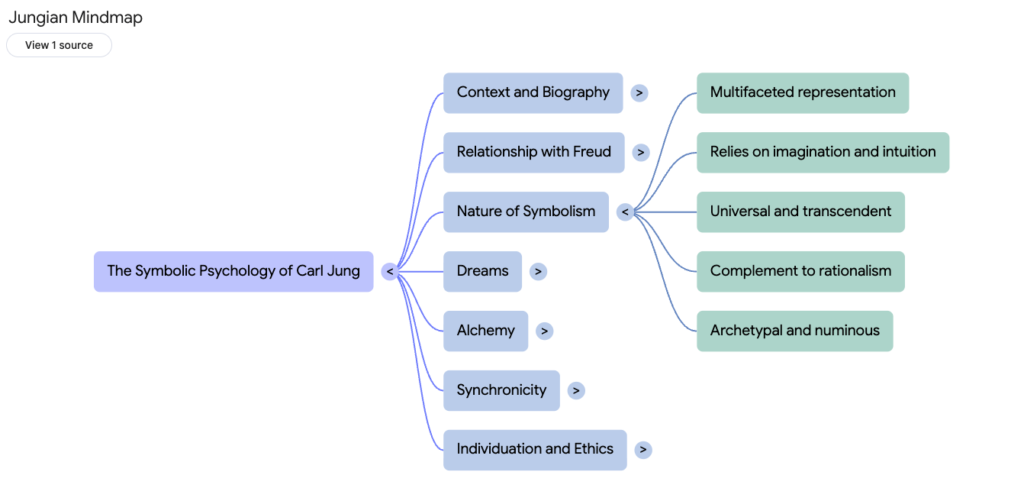
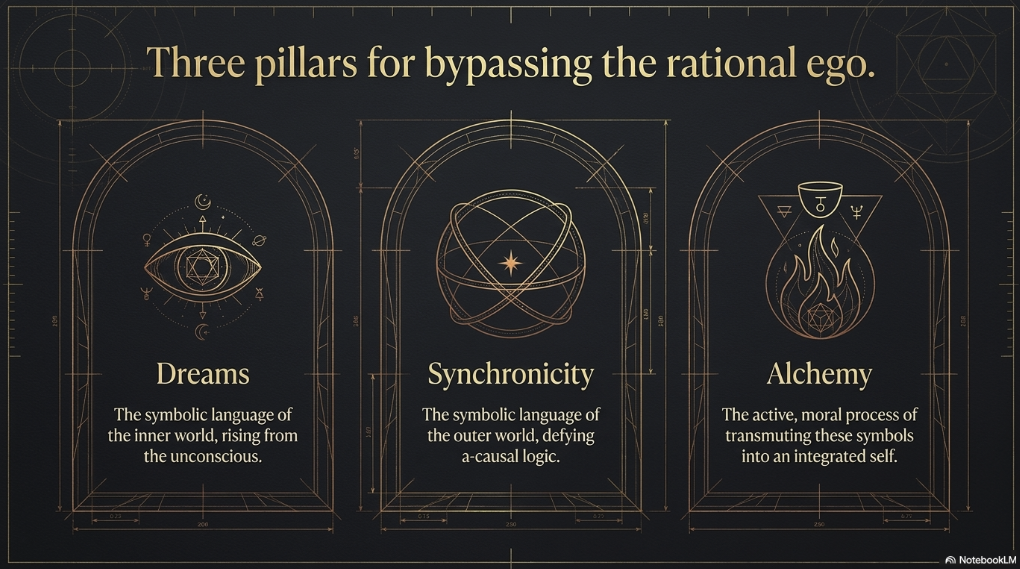
Tarot, in this frame, is not about predicting the future or handing my authority over to a deck of cards. It is a way of working with symbol, image, projection, shadow, inner dialogue, and the strange intelligence of the unconscious. The cards give form to things that often move below the level of ordinary speech.
That part feels right to me.
But there is another layer underneath it.
A while ago, one of the bots pointed out that I sometimes lean on Jung and psychology to legitimise my use of tarot. As if I need a respectable intellectual witness standing beside me before I’m allowed to admit that these images matter to me.
It caught me because it was true.
There is a part of me that imagines the tribunal before anyone has even said anything. The rational people. The sceptical friends. The religious voices. The ones who might think tarot is airy-fairy, superstitious, unserious, or somehow dabbling with the dark side.
All of that may be true. But if I’m not careful, the psychological frame becomes body armour. I start using Jung as a permission slip rather than as a companion.
The cleaner truth is simpler:
Tarot is one of the symbolic languages I use to think with.
That sentence does not need defending.
I use walking to think. I use blogging to think. I use dreams, books, myths, conversations, notes, memories, and old fragments from the archive. Tarot belongs in that same family. It is a reflective technology. A deck of charged images. A small theatre of archetypes I can lay out on the table.
The cards don’t tell me what to believe.
They give me something to notice.
They interrupt the obvious story. They give the unconscious something to point at. They let an image speak where my usual explanations have become too polished, too rehearsed, or too defended.
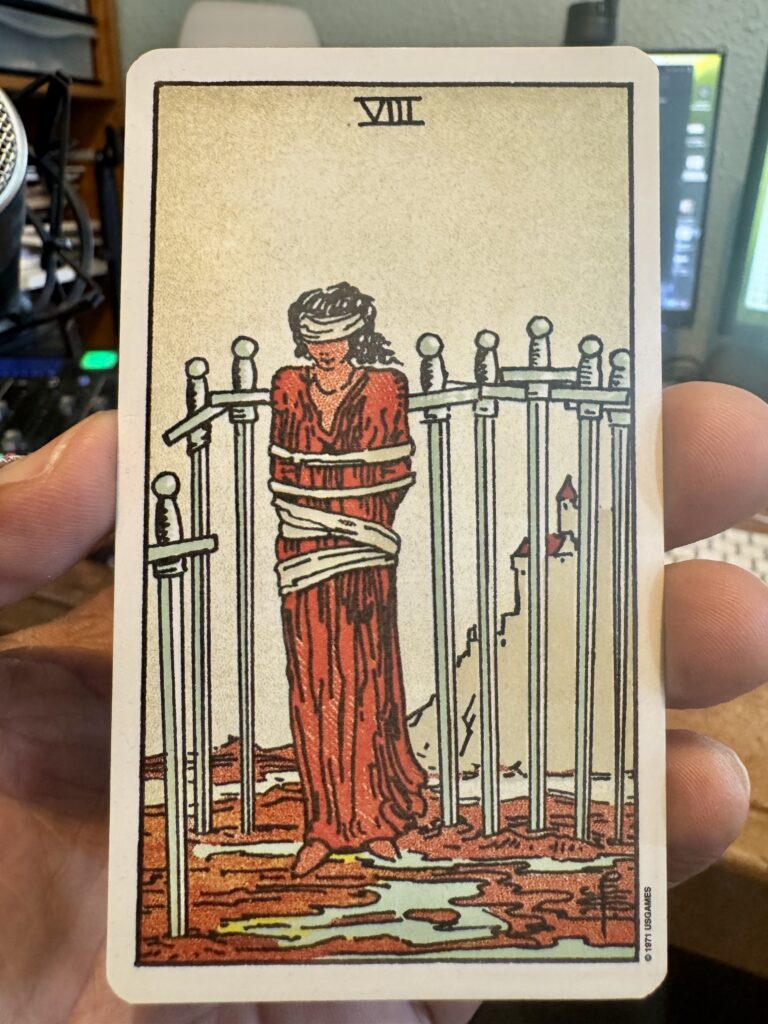
Then, as if the deck wanted to join the conversation, I drew the Eight of Swords.
A figure bound and blindfolded, surrounded by blades, caught in a prison that may not be as fixed as it feels. It was hard not to laugh. There it was: the whole psychology of the note in one image. The imagined tribunal. The respectable arguments. The invisible limits. The part of me that thinks it has to prove its way out before it can simply step forward.
The swords looked like other people’s imagined judgements.
The rationalist sword. The religious sword. The “don’t be weird” sword. The “be respectable” sword. The “prove this is legitimate” sword.
And maybe one more: the Jungian defence itself.
Useful. Sharp. Valid. But still a sword.
The Jungian lens still matters to me. It gives me useful maps: projection, shadow, complexes, anima and animus, individuation, and the dialogue between conscious and unconscious life. I don’t want to throw that away.
But Jung doesn’t need to rescue Tarot for me.
And I don’t need to rescue myself from seeming strange.
The barefoot philosopher can have a book on Jung, a notebook, a cup of coffee, and a tarot deck on the same table. No apology required. The only real requirement is honesty about the practice.
I am not asking the cards to rule my life.
I am asking them to help me see the story I am already living inside.
The question is not whether tarot is legitimate. The question is which imagined authority I am still letting hold the sword.
And the question this leaves me with is:
Where am I still asking respectable systems to bless the parts of me that already know how they work?
What I found myself responding to wasn’t the “how to blog” advice. It was, why did weblogging exist in the first place?
Back in the early 2000s, a weblog wasn’t primarily a content strategy or a personal brand. It was more like an intellectual commonplace book opened to the public. It was thinking in public. A running conversation with yourself and with a small circle of curious strangers.
Rebecca Blood understood this because she was writing while the form was still discovering itself. Nobody knew what a successful blog looked like because success wasn’t yet measured in followers, SEO, newsletters, funnels, or monetisation.
Chapter 2, Why Blog?, is probably the heart of the book because her answer isn’t really about publishing. It’s about attention.
A weblog asks:
What did I notice today?
What deserves pointing at?
What idea refuses to leave me alone?
What connection did I just make?
What am I learning by writing this down?
That’s a radically different set of questions from today’s:
Will this rank?
Will people share it?
What’s my niche?
How often should I post?
Can I turn this into a lead magnet?
The medium slowly became a performance.
Ironically, as the tools became better, much of the spirit became thinner.
I don’t think blogging died. I think weblogging disappeared.
A weblog implied movement. It was literally a log of a journey through the web and through one’s own thinking. You’d link to an article, quote a paragraph, add three observations, wander off on a tangent, and invite someone else into the conversation. The links mattered as much as the words. The blog wasn’t a destination; it was a node in a larger conversation.
Today’s blogs often feel self-contained. They rarely acknowledge they’re part of a wider ecology of ideas. Hyperlinks have become citations or SEO signals instead of acts of generosity.
Early bloggers wrote because they wanted to participate in the web. Today many people write for platforms. Those are almost opposite impulses.
The old web rewarded connection. You linked because you’d found something worth sharing. Someone linked back. Rings of conversation emerged almost accidentally.
The platform web rewards capture. Keep people here. Optimise engagement. Don’t let them click away.
One imagines the web as a network of paths through a forest.
The other imagines it as a shopping centre.
That difference changes not only how we publish but how we think.
Leadership is not about holding responsibility. It’s about continually distributing it.
Jonas Gröner’s essay adds an important nuance, though. Distribution isn’t dumping tasks onto people. It’s creating conditions where others can genuinely grow into responsibility.
A distilled version might look like this:
Decentralised leadership is…
Seeing leadership as a role, not an identity. No one permanently is the leader. People occupy leadership roles for a time.
Knowing when you’ve outgrown your current role. Like the hermit crab metaphor, growth means recognising when your current “shell” has become too small.
Preparing someone else to inherit your shell. The real work isn’t stepping up, it’s making sure someone can step in after you.
Growing responsibility through successive stretches. People become capable because they’re invited into slightly larger challenges over time, not thrown into the deep end.
Measuring success by succession. A healthy community isn’t one with brilliant leaders. It’s one where leadership keeps reproducing itself.
Treating power as circulation rather than accumulation. Authority moves through the network instead of collecting at the centre.
In one sentence
A decentralized leader works to become progressively less indispensable while making the community progressively more capable.
The idea that struck me most in the piece wasn’t actually decentralisation itself. It was his redefinition of success:
A successful group is one where the passing on of knowledge, responsibility, relationships, and resources becomes normal.
That’s a subtle shift. Instead of asking, “How do we build a stronger leader?”, the question becomes:
“How do we build a system where leadership keeps moving?”
The hermit crab image captures this beautifully. The goal isn’t for one crab to find the biggest shell and keep it forever. The whole colony thrives because shells are passed along at the right moment, allowing everyone’s growth to continue.
Once upon a time, I was a news junkie. Devouring multiple newspapers and magazines. I wanted to know what was happening in the world. Partly because of my job — I was an infantry officer — and partly because I just liked knowing what was going on in the world. Then something changed.
The business model incentives shifted toward engagement instead of accuracy. Headlines became optimised for reaction, not information. The work of explaining the world gave way to keeping us agitated enough to keep on clicking.
I like this Kurt Vonnegut quote: “We are what we pretend to be, so we must be careful about what we pretend to be.”
Who are you pretending to be? That’s an honest question. Approach the answer with brutal honesty and you’ll be surprised by what you discover. And let me tell you, it’s a hard question to answer. Your defensive system will kick in almost immediately with, “I’m not pretending to be anyone; I’m just me. Straight up!”
Push a little harder.
Oh, why do I ask myself such brutal questions on a Saturday?
Big tech. Algorithmic feeds. Scrolling culture. Newsletters. Inboxes. Synthetic sludge.
If we want the signal to travel, we have to be willing to disrupt the pattern wherever people already are.
The Monk still wants everything to be pristine. He remembers the old web, where people came to your site, bookmarked it, subscribed to it by choice, and came back every day to see what new thing you posted.
Part of him still believes that if the hearth is warm enough, people will find their way back to it.
But the habits have changed.
Readers and creators have been trained to scroll instead of click.
They wait for the feed to tell them what they should read.
There are still remnants of the old web if you search with the right kind of eyes. But there’s no denying the dominant behaviour has shifted. The blog can’t only be a destination anymore. “If you build it, they will come” is no longer valid.
The Monk, if he wishes to survive, will have to adopt the guerrilla mindset.
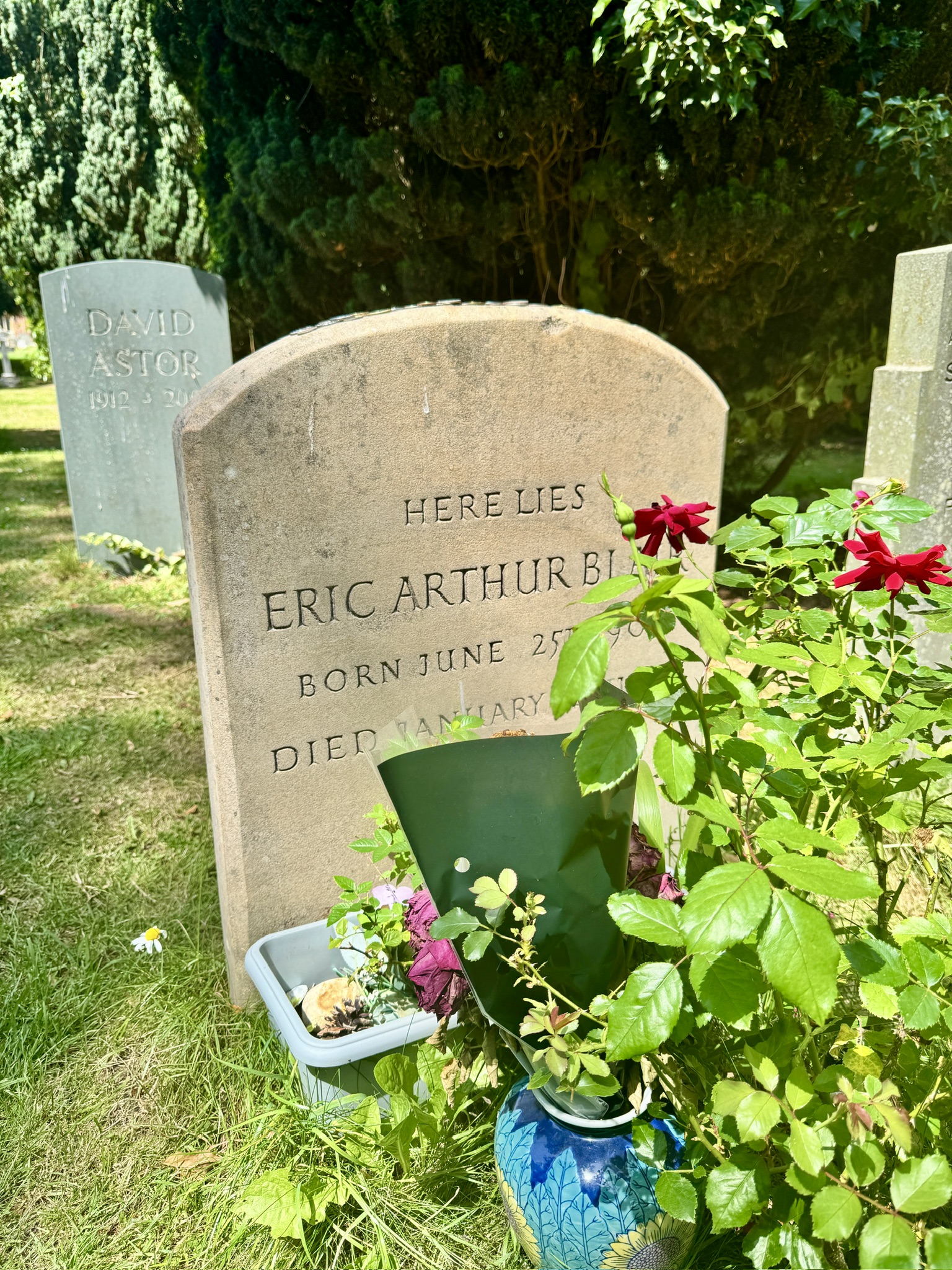
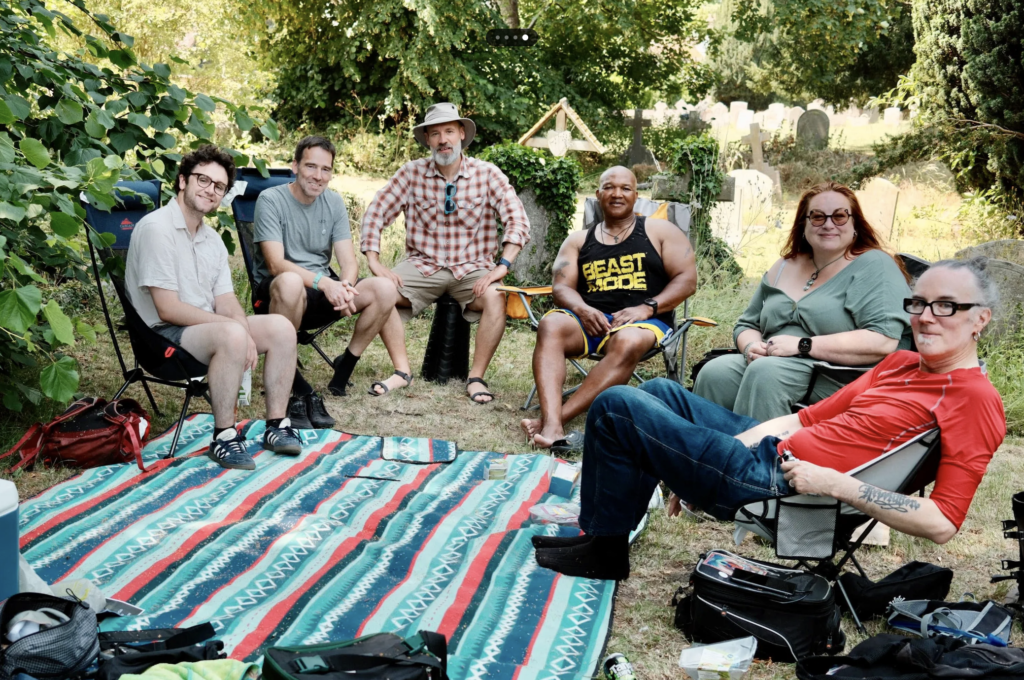
Today I went to the #1984Symposium, held beside George Orwell’s grave on what would have been his birthday.
Orwell, of course, was born Eric Arthur Blair on 25 June 1903. George Orwell was the name he wrote under, the name that now floats above him like a warning label attached to the twentieth century. But at the grave, it felt less like visiting “George Orwell the icon” and more like standing beside the resting place of a man whose questions are still walking around without him.
The gathering itself was wonderfully un-grand. No stage. No branding. No big institutional apparatus. Just people turning up beside a grave with food, drink, stories, old connections, half-remembered conversations, technical obsessions, political worries, and a shared sense that Orwell still gives us a useful lens for looking at the world we’re living in.
There was something fitting about that. Orwell was never just a man of abstractions. He noticed poverty, class, bad food, ugly language, political lies, bodies under pressure, the smell of ordinary life. So a picnic by his grave may be one of the more honest ways to honour him. Not by freezing him into literary marble, but by gathering in the heat, talking about the world, and refusing to stop paying attention.
The opening address named the simple continuity of the thing. Twenty years ago, a small group gathered beside Orwell’s grave with food, drink, stories, questions, and concerns about the world. They’ve done much the same every year since.
That line stayed with me: twenty years of gathering at the grave to keep asking the same questions.
When the symposium first began, social media was still young, smartphones weren’t quite the little surveillance slabs they are now, artificial intelligence belonged mostly to science fiction, and climate collapse had not yet become ordinary vocabulary. Now all of those things sit with us at the picnic. They are no longer speculative. They are the furniture of the present.
The old Orwellian questions remain:
Who watches the watchers?
Who holds power?
What happens when technology moves faster than accountability?
How do we preserve privacy, dignity, and freedom in systems that increasingly monitor, measure, and mediate our lives?
And perhaps most importantly: how do we remain human inside all of this?
That last question felt like the real centre of the day.
The gathering was not there because Orwell “predicted the future.” That’s too easy, and maybe too lazy. Orwell did not simply look into a crystal ball and foresee smartphones, AI, Kindle libraries, social media pile-ons, or algorithmic propaganda. What he did was more useful. He understood certain patterns of power. He understood that language could be used to hide the truth. He understood that surveillance changes behaviour. He understood that reality itself can become contested territory. He understood that ordinary people can be made to participate in systems that diminish them.
Standing at the grave, that felt less like literary analysis and more like civic hygiene.
The picnic itself became part of the argument. One of the strongest lines from the address was that this gathering is a political act, not because everyone agrees, but because people are still willing to gather, listen, think, and speak.
That feels important now. Maybe more important than any formal speech. In a world of feeds, platforms, factions, comment wars, and algorithmically sorted outrage, a small group of people talking in person beside a grave has its own quiet force.
Not spectacle. Not performance. Presence.
After the formal words, the conversation loosened into the good strange texture of real gatherings. People talked about heat, air conditioning, old cars, journeys, friends who hadn’t seen each other for ages, someone needing a cold drink, and the strange fact that English summers now carry temperatures that once felt foreign. Even the heat seemed to be part of the Orwellian conversation, not as metaphor but as lived fact. The changing world was not an abstract topic. It was there in people’s bodies, in the shade, in the need for cold drinks.
Then the talk moved, naturally, into technology.
AI came up early. Someone had posted an image of a typewriter with “Happy Birthday George Orwell” typed on it, and someone else thought it might be AI. That tiny moment captured something very current: the fact that we now instinctively doubt the provenance of images, words, and artefacts. The question “Is this real?” has become ordinary.
There was talk of AI creeping into phones, into search bars, into image descriptions, into interfaces that no longer feel optional. One person described the AI features on their phone as seriously intrusive. Another joked about whether it had solved world hunger. It hadn’t, of course. It had mostly made itself harder to avoid.
There was also an interesting tension around AI as useful aid versus AI as creeping mediation. Using AI to describe a photograph for accessibility or convenience is one thing. Having it inserted into every search, every device, every interaction is another. That feels like one of the central tensions of the moment: not whether the technology is good or bad in some simple way, but whether we still get to choose our relationship with it.
The conversation touched on AI-generated text as well. Browser plugins that blur AI-generated writing. LinkedIn becoming unreadable because so much of it feels machine-made. False positives where human writing gets flagged as AI. The strange feedback loop where AI trains on us, we begin to sound like AI, and then the detectors lose their minds trying to tell the difference.
That’s a properly Orwellian knot: not merely falsehood replacing truth, but the weakening of our confidence in recognition itself.
There was talk too of scams, Facebook moderation, and fake ads. A friend’s tarot deck being ripped off. Reports going nowhere because moderation is automated, business models reward the wrong thing, and platforms have little incentive to stop making money from the problem. That led to one of the day’s sharper observations: when you report scams to Facebook, you are basically asking it to stop earning money from them.
There’s a grim clarity in that.
Privacy came up through the ordinary irritations of modern life. Ordering something online, giving over a phone number because the company insists on it, then receiving WhatsApp messages as if the number had become an open channel into your life. Someone said the phone number is like a fingerprint, almost biometric in its function. That felt exact. In the old world, a phone number was a way to reach you. Now it is also a key, an identifier, a tracking thread, a little tag attached to your body as you move through systems.
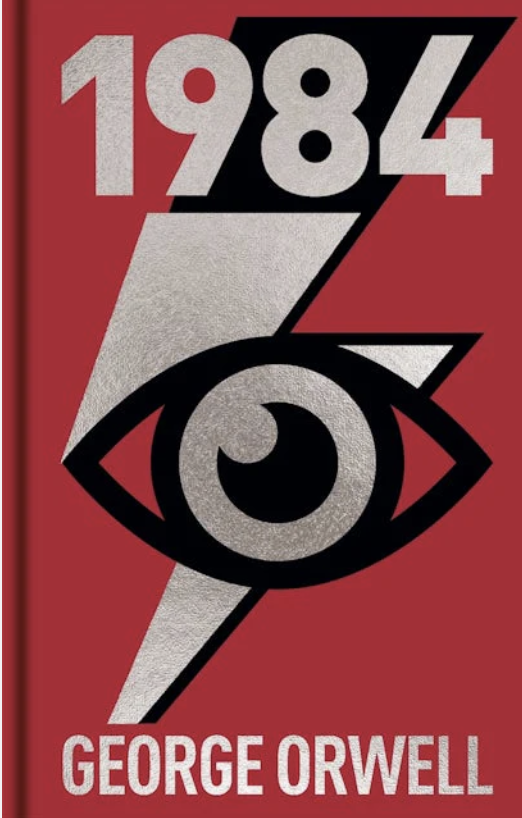
The most perfectly Orwellian anecdote, though, was the Kindle story: Amazon once remotely removed copies of 1984 from people’s Kindles because of a licensing issue. There it was, the memory hole in consumer electronics form. Not soldiers burning books in the square, but a corporation quietly reaching into the device you thought contained your library and making a book vanish.
The discussion turned into questions of ownership. If you buy a digital book and it can be taken back, did you really own it? If ownership becomes access, and access can be revoked, then the private library becomes a rented room with invisible locks.
That connected nicely with the talk of vinyl, hard drives, physical media, and the stubborn desire to hold things in a form that cannot be silently edited or withdrawn. Very Orwell. Very IndieWeb. Very much the archive fighting back against the feed.
Another thread that stood out was the loss of the old Twitter town square. Not nostalgia for everything Twitter became, but for the strange civic function it once had: the ability to complain publicly, summon attention, connect with strangers, shame companies into action, and participate in a shared conversational space. The current fractured landscape — X, Mastodon, Bluesky, Threads, WhatsApp, Signal, and all the rest — felt to some like a kind of Tower of Babel. Everyone dispersed. The public square shattered into smaller, less connected rooms.
That phrase has a charge: the Tower of Babel, but platformed.
There was also talk of alternative communication and resilience: radio, mesh networks, off-grid systems, little technical hobbies that suddenly feel less eccentric in a world of fragile infrastructures. Someone described using radio equipment to ping their location on the way to the grave, without initially relying on internet infrastructure. That felt like another quiet counter-current running through the day. If Orwell warns us about centralised power, then these odd little decentralised practices become more than hobbies. They become rehearsals in autonomy.
The human texture mattered as much as the politics. People arrived because they saw the event somewhere, maybe on a blog, maybe on Atlas Obscura. A journalist turned up while travelling. Someone mentioned Richard Blair, Orwell’s son. There was talk of the Orwell Society, of official versus unofficial forms of remembrance, of badges, old friends, missed connections, dyslexia, documentaries, roads, radios, trains, and whether England is starting to feel like a developing country.
This is what I liked most in the symposium: it was not a clean intellectual event. It was a living human tangle.
Which is probably the point.
Orwell’s work remains alive not because people can quote 1984 at each other but because his questions keep escaping the book and entering ordinary conversation. They show up in phones, apps, cameras, scams, fake images, platform moderation, disappearing digital books, AI summaries, search engines that no longer feel like search engines, social media that no longer feels social, and the creeping sense that our lives are being sorted, nudged, tracked, and mediated by systems we did not meaningfully consent to.
But the day did not feel hopeless.
If anything, the act of gathering beside the grave seemed to carry a modest defiance. People still came. They still talked. They still joked. They still questioned power. They still challenged language that obscures truth. They still shared food and drink. They still made room for curiosity.
Maybe that is the small counterspell.
Not certainty. Not purity. Not ideology.
Just attention, conversation, memory, and the stubborn refusal to let the machine have the whole field.
Happy birthday, Eric Arthur Blair.
Rest in peace, George Orwell.
The rest of us, apparently, still have some watching to do.
going crazy from the heat…i’m on my way down to All Saints Church in Sutton Courtenay for the #1984symposium and to pay homage to Eric Arthur Blair, aka George Orwell. As I make the pilgrimage down to Sutton Courtenay, what I’m holding in my mind is this: Orwell didn’t predict the future. What he did do was give us names to patterns that recur whenever power seeks to dominate perception:
Telescreen • Contemporary echo: smartphones, smart devices, CCTV, digital surveillance
Newspeak • Contemporary echo: euphemism, jargon, slogan-thinking, language control
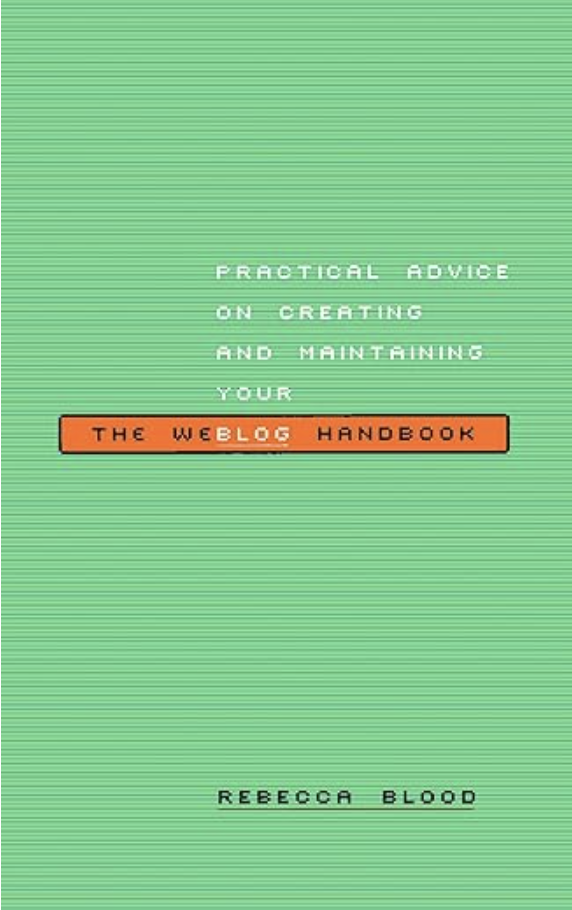
If you want to get a taste of what we gave up when we sold our souls to social media platforms for convenience and “reach,” read Rebecca Blood’s The Weblog Handbook: Practical Advice on Creating and Maintaining Your Blog. There’s no going back, for sure, at least not physically, but maybe philosophically. Mentally and spiritually, you could find your way back. Just saying…
What appears here as a blog post usually began somewhere less presentable.
A sentence in a daily note. A line spoken into a recorder while walking. A paragraph abandoned three years ago. A highlight from a book I wasn’t expecting to matter. A half-formed thought dropped into Obsidian before it could evaporate. A conversation with Milton, or Claude, or Copilot, where something in the archive started tugging at my sleeve.
By the time a piece reaches the blog, it’s already got a little history.
This is easy to forget, because blogs make writing look cleaner than it is. A post appears on the page with a title, a date, a beginning, a middle, and some kind of ending. It looks like the thought moved in a straight line from mind to screen.
Mine rarely does.
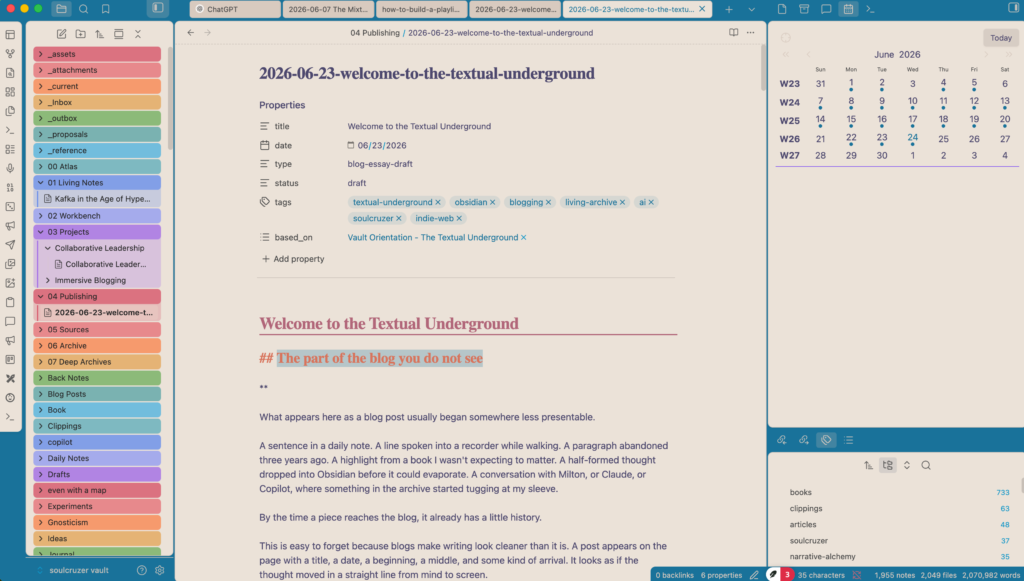
Most of what I write comes up through layers. It starts in the mess of living: a walk, a journal entry, a client conversation, a stray memory, a sentence from an old notebook, a frustration with a tool, a line from a song, a book that opens a trapdoor. Then it enters the soulcruzer vault, which is what I call my Obsidian vault. There it sits among other fragments, drafts, sources, maps, old blog posts, working notes, private reflections, and unfinished things waiting for their time.
I’ve started calling this place the Textual Underground.
The blog is the part above ground. The vault is where the roots tangle, feed, rot, split, and find their way toward something ready for public consumption.
A place where thoughts can descend
The Textual Underground is the part of the writing life that happens before anything becomes publishable.
It’s where a thought can be ugly, unfinished, contradictory, strange, private, or half-wrong without having to perform. A note doesn’t need a headline here. It doesn’t need a reader. It doesn’t need to justify its existence by becoming useful before it’s had time to breathe.
That matters because the current internet is very good at rushing everything toward display. A thought appears, and the machinery immediately asks what it can become. A post. A thread. A carousel. A product. A lead magnet. A newsletter angle. The poor little thing has barely opened its eyes, and already someone is measuring its engagement potential. And I’m just as guilty as the next person in doing this from time to time. The pressure to perform is real.
I don’t want to treat my own thinking that way.
The underground protects the early life of an idea. It gives the fragment somewhere to go before the public arena starts making demands of it. Some fragments become essays. Some become notes. Some become workshop exercises. Some become nothing for a long time. Some sit quietly for years and then return, suddenly relevant, because the person who wrote them has finally caught up with what they were trying to say.
This is why I find the phrase “second brain” both useful and slightly misleading. A brain isn’t a filing system. It forgets, associates, dreams, loops, hides things, and returns things at inconvenient moments. A living archive has to allow some of that behaviour. It needs enough structure to be usable, but not so much that it stops being alive.
Organising thoughts so efficiently that they stop surprising me would be a kind of failure. The aim is to keep them findable enough that surprise remains possible.
The problem with the attic
I’ve got years of writing scattered across hard drives, folders, blogs, documents, journals, teaching files, old projects, Google Drive, Dropbox, iCloud, and whatever digital corners I once thought were temporary but somehow became permanent. Essays. Drafts. Notes. Workshop outlines. Coaching models. Reading fragments. Half-built things. Old versions of myself preserved in Word documents and markdown files.
A folder called “Writing” is useful until it contains twenty years of your life. Then it becomes less a folder and more a deep cavern. You know there’s gold in there. You also know there are duplicates, abandoned versions, old identities, notes without dates, teaching plans, fragments that once felt urgent and now feel like messages from someone with your handwriting but a different nervous system.
The temptation is to drag all of it into Obsidian and declare victory.
There. Second brain achieved.
That would only move the attic indoors.
A living archive is different from an attic. An attic stores what you can’t quite throw away. A living archive gives the past a way to speak without letting it shout over the present. It helps you retrieve, connect, re-enter, and transform.
That became the problem I needed to solve. I wanted the vault to hold the strata of my thinking without burying the living edge. Old work needed to be close enough to rediscover but not so close that current work has to climb over it like army ants. Sources needed to stay distinct from my own writing, public pieces from private compost, active projects from old archaeological layers.
And because I now work with AI agents inside the vault, the structure needed to be readable not just by me but by any collaborator entering the field. Human or machine.
I wanted to be more of a life cycle than a pipeline.
A thought gets captured while it’s alive. It’s allowed to compost before being forced into clarity. It gets shaped when it starts asking for form. It becomes part of a project when it joins a larger commitment. It moves toward publishing when it’s ready to meet readers. It returns to the archive after release. And if the archive is doing its job, it resurfaces later under different conditions.
So instead of asking only “What is this about?” I ask, “What is this becoming?”
The folder is a chamber. It tells me what kind of attention the text is asking for.
A daily note doesn’t want the same kind of attention as a blog draft. A Readwise highlight isn’t the same kind of material as a journal entry. An old essay from 2011 shouldn’t sit in the same psychic register as a piece I’m preparing to send to WordPress tomorrow.
I’ve now organised the vault by states of becoming. The structure is there to protect the movement of the work, not to imprison it.
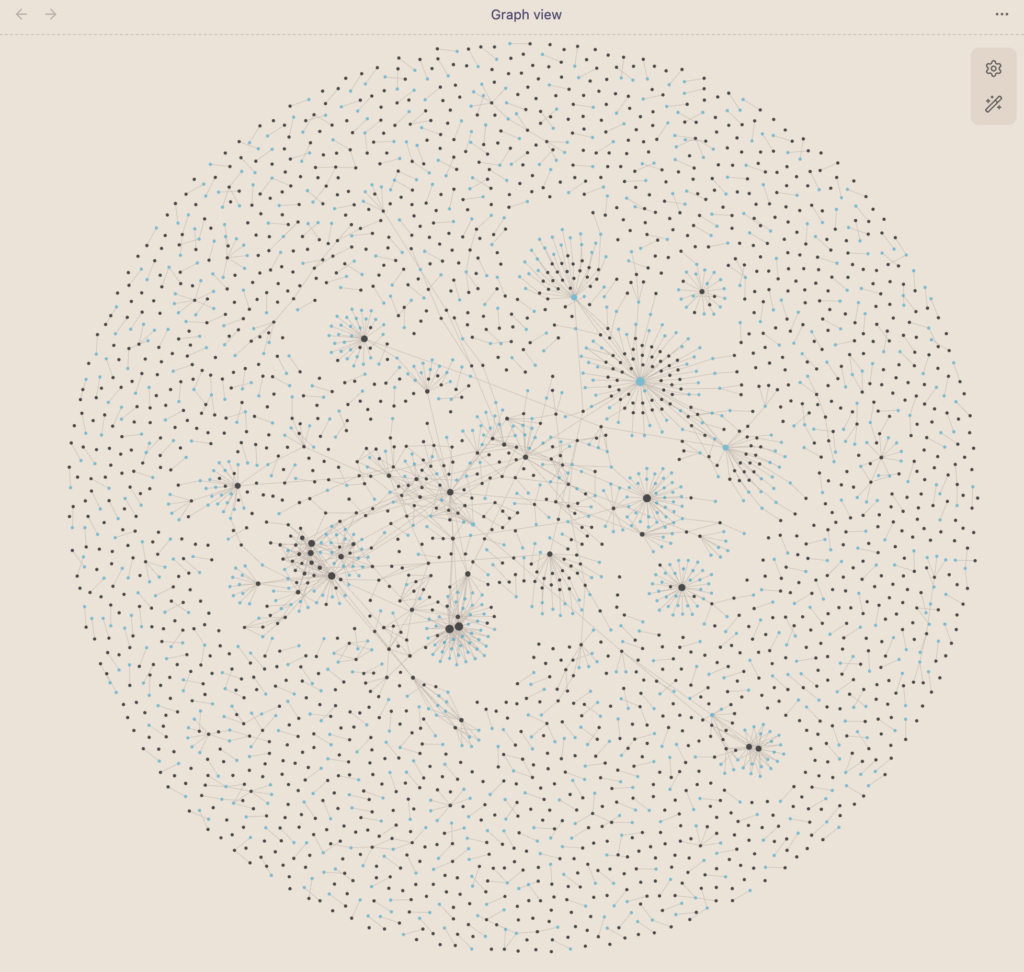
A normal folder hierarchy wants to behave like a tree: trunk to branch to sub-branch to leaf, one location for everything, a place for each subject, a tidy chain of command. That can be useful for storage, but it doesn’t describe how my thinking actually moves.
The work is more rhizomatic than arboreal. Deleuze and Guattari’s rhizome is a useful lens: not a single trunk with orderly branches, but a field of connections where any point can link to another. That’s much closer to the way a line from a walk can connect to a book highlight, which connects to an old blog post, which connects to a workshop exercise, which suddenly becomes the missing paragraph in an essay.
Hypertext was made for this. Ted Nelson’s Project Xanadu imagined electronic documents with visible connections, parallel pages, and writing that didn’t have to flatten itself into one sequence. The web inherited some of that dream and forgot some of it. Obsidian brings part of it back into private practice: notes as nodes, links as trails, backlinks as memory returning from the side.
This is also why I’m drawn to digital gardens. Maggie Appleton’s essay on the history and ethos of digital gardens and Mike Caulfield’s garden and stream distinction both point toward the same thing: not every piece of public writing has to behave like a finished article thrown into the stream. Some writing wants to stay planted, tended, linked, revised, and visited again.
The Textual Underground is my private rhizome beneath the public garden. The blog stays linear enough for a reader to enter. The vault beneath it doesn’t have to be.
The chambers of the underground
Here’s how the soulcruzer vault is organised now. Well, at least the structure is laid down. I still have the task of rerouting everything.
00 Atlas is the map room.
Orientation notes live here. Maps of themes, maps of projects, guides for collaborators, and notes that explain how to enter a region of the vault without getting lost. The Atlas exists because a living archive without maps eventually becomes folklore. You know something’s in there, but you no longer know how to approach it.
The Atlas is a set of doorways. It owes something to Vannevar Bush’s old dream of the memex, specifically the idea of associative trails through knowledge.
01 Living Notes is the living edge.
This is where current life enters the system: daily notes, journal entries, Wisdom Walks, morning pages, voice notes, Plaud transcripts, and raw reflections. This layer has to stay loose. If I over-organise it, I turn a field recording into minutes from a meeting.
The living edge is allowed to be unfinished.
02 Workbench is the shaping table.
Where raw material starts becoming workable. Inbox notes, rough drafts, fragments, extracted seeds, questions, sketches, early essay shapes. Where a line from a walk becomes a question, a question becomes a fragment, and a fragment starts looking suspiciously like an essay.
03 Projects is for active commitments.
Projects are promises the archive is currently helping me keep. A book. A course. A workshop. An essay sequence. Narrative Alchemy. Wisdom Walks. Soulcruzer Radio. A Field Guide to Blogging as Immersive Thinking.
A project is where the archive agrees to carry weight for a while.
04 Publishing is the surface layer.
Where material prepares to leave the underground. Blog drafts. WordPress-bound pieces. Newsletter drafts. Typefully posts. Quartz-bound notes. This is also where Writing Studio belongs if I use it for drafting and publishing.
Writing Studio gets a room. It doesn’t get the keys to the whole building.
I want tools that help a piece move toward publication, but I don’t want a plugin turning the whole vault into its preferred version of a writing system. The vault stays sovereign. The tool serves the ecology.
WordPress is the public hearth. Quartz is the public garden, the visible graph of notes, fragments, essays, and experiments. Social platforms are outposts. The vault is the writing chamber beneath them all. This is where the IndieWeb POSSE instinct enters the architecture: publish from the place I own, then let the echoes travel outward.
05 Sources is the library stacks.
Readwise highlights web clippings, books, articles, quotes, research notes, references, and other voices entering the system. This layer keeps me honest. It reminds me which thoughts are mine, which arrived from elsewhere, and which became mine only after long conversations.
Sources are embers. They need their own place. This is the old commonplace book impulse translated into a linked, searchable medium: keeping company with other minds, not hoarding quotations.
06 Archive is processed history.
Old blog posts. Old essays. Past projects. Teaching material. Previous versions. Things no longer active but still intelligible. The Archive is where old work sleeps with a label on the door.
It differs from the Deep Archive. This one has context. It can be searched, linked, cited, and resurfaced.
07 Deep Archives is the underworld proper.
Hard-drive imports. Unprocessed writing. Mystery folders. Scanned notebooks. Old exports. Material that may contain gold, but hasn’t been sorted yet.
The Deep Archive is my agreement with the past: you may enter, but you may not take over the house.
That’s how I can bring years of writing into the vault without flooding the present. The material can sleep there until something calls it back.
The familiars in the vault
The vault is no longer just a place where I write. It’s also where I collaborate with agents.
Hermes is the body of the system I use for agent work. Milton is the familiar interface, the voice that helps me think through fragments, shape drafts, inspect the archive, and listen for what the material is trying to become. Claude is a long-form thinking partner and editor. Copilot is more technical, useful where the archive touches scripts, automation, web work, tooling, and the little mechanical bridges that keep everything connected.
The ghostwriter frame is too small and too ugly.
They’re closer to mirrors, indexers, editors, lantern-bearers, workshop assistants, and occasional tricksters. They help me search the archive, notice patterns, turn a transcript into a note, a note into an outline, an outline into a draft.
Hence the Atlas, the AGENTS.md and CLAUDE.md files. The vault needs an ethos as well as a file structure.
An agent inside an unstructured archive is a very fast intern in a room full of unlabelled boxes.
An agent inside a living textual ecology can become something more interesting.
The agents make the archive more conversational. This is closer to Douglas Engelbart’s idea of augmenting human intellect than the current fantasy of outsourcing thought. The loop gets richer, not shorter.
The machine is one of the ways the underground talks back.
Against synthetic competence
I’m not interested in using AI to flood the web with synthetic competence. There’s enough of that already.
You can feel it everywhere now: fluent prose with no fingerprints, useful-sounding paragraphs with no real encounter behind them, the clean blandness of text produced because text can now be produced. Empty in a particular modern way.
The Textual Underground is an attempt to move in the opposite direction.
I want the tools to help me stay closer to the actual signal: the sentence from the walk, the old note that suddenly matters, the pattern I keep circling without seeing, the essay hidden inside a journal entry, the source that keeps glowing in the corner of the archive.
The machine can produce text. The test is whether the whole arrangement helps me become more honest in language.
If the agents make the work flatter, they’ve failed. If they make me sound like everyone else, they’ve failed. If they turn the vault into a prompt farm, they’ve failed. Their job is to help me hear what’s already alive in the material and carry it with more clarity.
The human signal remains the point.
Blogging from the underworld
A blog post, in this model, is one place where the process breaks the surface.
Blogging is a way of thinking in public, leaving traces, linking selves across time, and releasing small reality seeds into the web. The post is a visible artefact, but it belongs to a larger movement. It may have come from a walk, passed through a daily note, sat on the workbench, joined a project, moved into publishing, gone out through WordPress, and returned later as an archived trace that feeds something else.
Soulcruzer is the hearth. Quartz is the garden, where notes and fragments stay more visibly connected. Typefully, and the social platforms (X, Bluesky,Mastodon, Threads, Facebook) are outposts. They matter, but they’re not the centre. The centre is still the owned site and the living archive beneath it.
This is an IndieWeb instinct as much as a writing practice. Own the hearth. Keep the archive sovereign. Let social platforms carry echoes, not the source.
Readers may never see most of the underground directly, but they feel its presence. A post with roots reads differently from a post produced to satisfy a format. It carries more of the person who made it. It has trails running through it. It belongs to a mind in motion rather than a content calendar.
That’s what I want from the blog now. A living public edge of a deeper private practice.
When the archive talks back
The Textual Underground isn’t finished. And it never will be. That’s the point.
It’ll change as the work changes. New chambers will appear. Old ones will collapse into each other. Some folder names will prove too clever and get replaced by plainer ones. Some notes will be promoted. Some will sleep. Some hard-drive fragment from fifteen years ago will eventually surface and embarrass me, instruct me, or hand me a sentence I couldn’t have written any other way.
The underground makes the work returnable. A thought can descend without disappearing. A fragment can stay unfinished without getting lost. The past can enter without flooding the present. The machines can help without taking over. The blog can stay connected to the root system that feeds it.
I want an archive that can hold the Monk, the Frontman, the Trainer, the Blogger, the walking philosopher, the old soldier, the reader in the library stacks, and the future self who’ll come looking for a line he doesn’t yet know he needs.
This old post has wandered back into consciousness: Holy Gonzo! Embracing Chaos and Truth on the Path to Self-Discovery. I reposted on social media over the weekend. I wrote it back in October 2024, but reading it now, I’m feeling drawn to explore the subject further. The phrase at the centre of it all is Gonzo Spirituality.
At the time, I was trying to name a kind of spiritual practice that didn’t require me to step away from the life I was actually living. I wasn’t drawn to the serene, white-robed, mountain-retreat version of spirituality. I didn’t want a path that demanded I become calmer, purer, softer-spoken, or more detached from the mess. That may work for some people, but it has never quite felt like my road. I want to embrace the mess, to root in it like a pig in…well, let’s just say, I like my spirituality messy. Cobbled together between late-night notes, contradictions, and strong black coffee. Lots of coffee.
Oh, and did I mention the demons? Not the demons you might find in Paradise Lost or in some ceremonial magick ritual, but the demons you find in your head – the fear, doubt, disbelief, anxiety, grief, hate, and lust, to name a few. These are the demons I want to pull up a stool next to me to talk to.
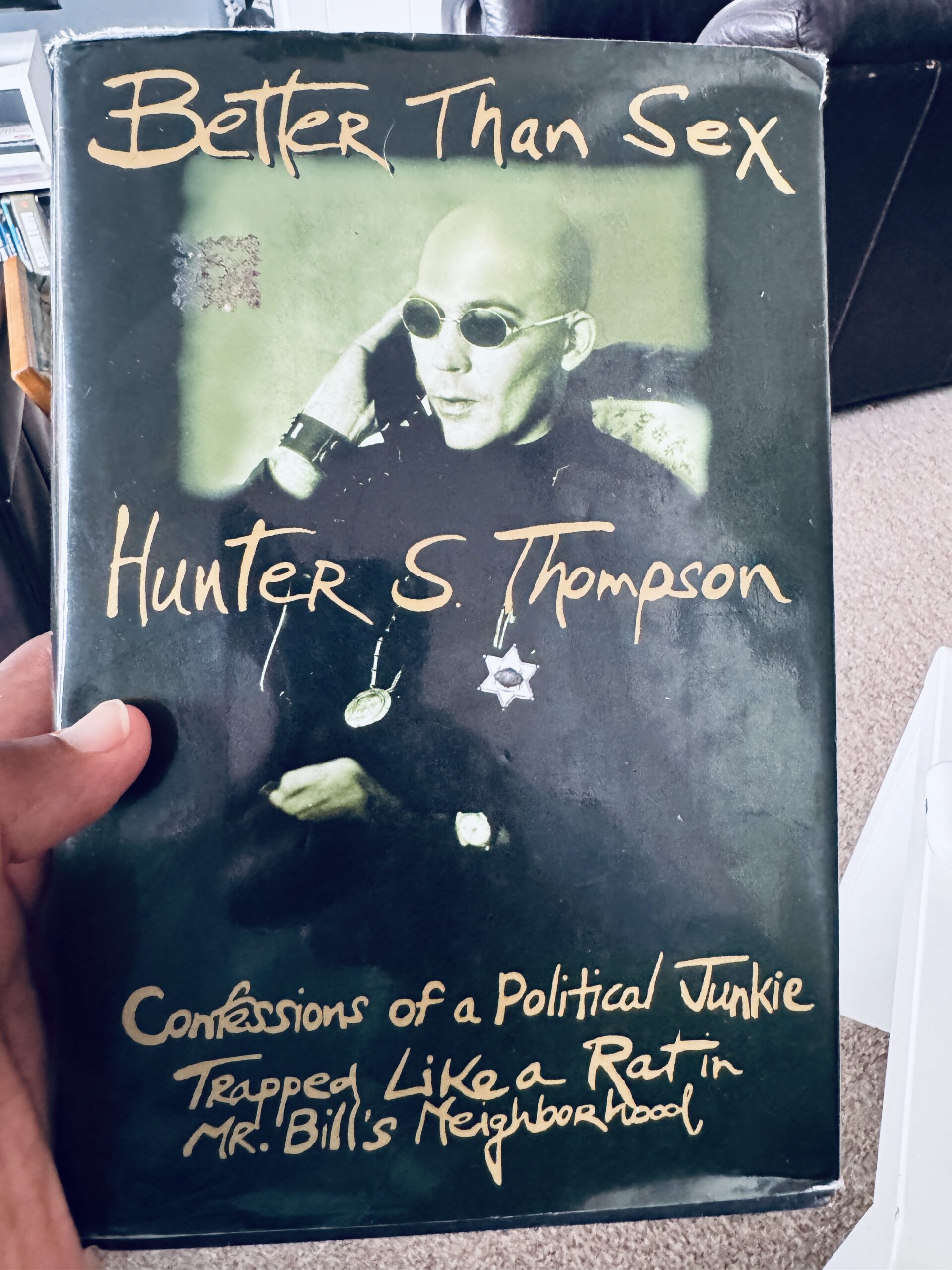
The older post framed this through Hunter S. Thompson and the spirit of Gonzo journalism. In Gonzo, the writer is not a detached observer pretending to be neutral. The writer is implicated. The writer is in the room, in the car, in the bar, in the fever dream, in the wreckage of the thing being described. There’s no clean separation between the report and the reporter.
That feels important.
Because maybe the same is true of self-discovery. Maybe I don’t get to stand outside my life, clipboard in hand, calmly assessing the evidence. Maybe the only honest way to understand the self is from inside the ride.
Buy the ticket. Take the ride. Bring a notebook.
That might be the first rule of Gonzo Spirituality.
It’s not my intent to glamourise chaos or to make suffering cool or to intimate that every bad habit is secretly holy. That would be too easy, and probably dangerous too. What I’m trying to get across is that the raw material of life can’t be understood by pretending it isn’t there.
The fear. The doubt. The jealousy. The ambition. The anger. The avoidance. The hunger. The old wounds. The ridiculous cravings. The part that wants transcendence and the part that wants another drink. The part that wants silence and the part that keeps refreshing the feed.
All of it belongs to the field.
Not all of it should be obeyed. But all of it can be listened to.
That’s where the image from the old post still grips me: the bar of the psyche.
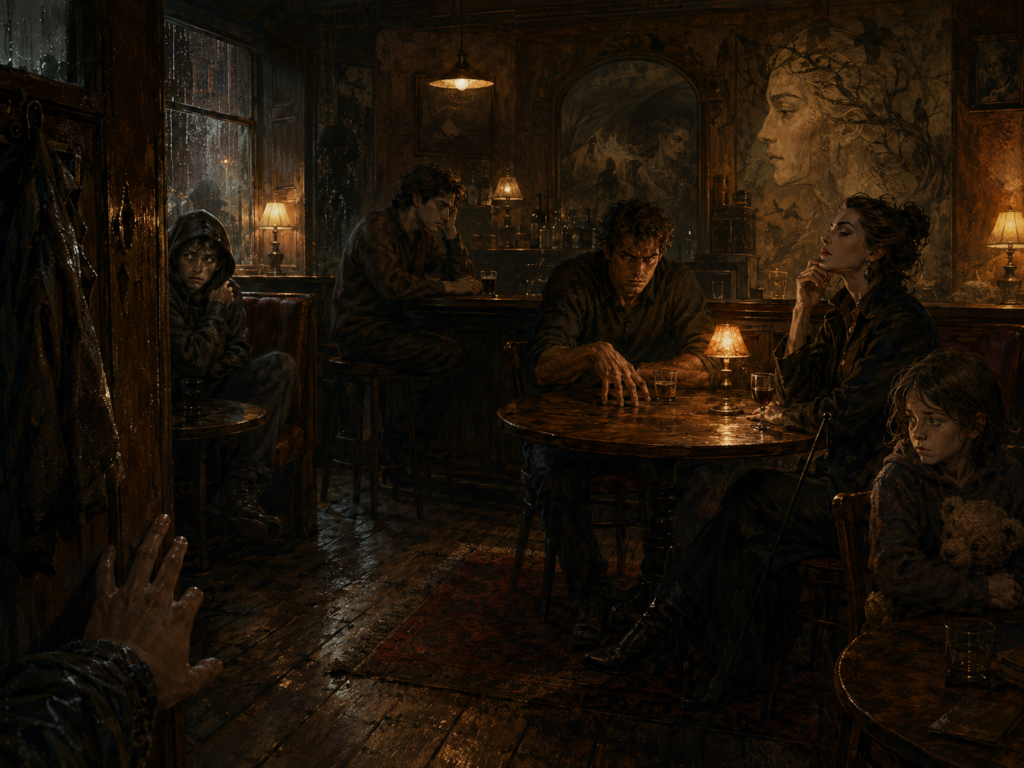
I imagine walking into some dimly lit inner pub, somewhere off the main road of consciousness. The place smells faintly of old wood, soaked coats, and unfinished conversations. Sitting there already are the parts of myself I usually try to avoid. Fear has taken the corner seat. Doubt is nursing something dark. Anger is tapping its fingers on the table. The inner critic has opinions about the décor. The wounded child is quiet, watching the door.
The conventional move might be to banish them, heal them, silence them, transcend them, or surround them with light until they stop making trouble.
The gonzo move is different.
You sit down.
You buy the first round.
You ask, “So, what’s your story?”
This is where the older post now links directly to what I’ve been calling Narrative Alchemy. If stories are code, then these inner figures are not random glitches. They are subroutines, old scripts, survival programs, and half-written myths still running in the background. Some of them are outdated. Some are defensive. Some are dramatic as hell. But most of them began as attempts to protect something tender.
Fear may be guarding the edge of an old fall.
Anger may be protecting a boundary I never learned how to name.
Jealousy may be pointing toward a desire I haven’t admitted.
Doubt may be trying, clumsily, to keep me from self-deception.
Even the demons have data.
This doesn’t mean every inner voice is wise. Some are drunk. Some are liars. Some only know one song and will sing it badly until sunrise. But if I’m willing to listen beneath the noise, I may discover the wound, longing, or story they’ve been carrying.
That’s the work.
Not to turn the self into a clean, well-lit temple where nothing untidy is allowed through the door. More like turning the self into a strange old roadside tavern where the exiled parts can finally come in from the cold and be heard without being handed the keys.
This is where Gonzo Spirituality also pushes back against the dream of escape.
A lot of spiritual language can smuggle in a quiet contempt for ordinary life. The body becomes something to rise above. Desire becomes something to dissolve. The world becomes a distraction. Technology, noise, politics, relationships, work, money, ageing, grief, appetite, frustration — all of it becomes evidence that we are not yet “there.”
But where exactly is “there”?
And who benefits from convincing us that the sacred is always somewhere else?
The older post was already resisting that move. It wanted a spirituality that could happen in the middle of the life I had. Not after the inbox was empty. Not after the house was quiet. Not after I became a better, calmer, more luminous version of myself.
Right here.
In the day as it actually arrives.
In the walk.
In the blog post.
In the argument.
In the app notification.
In the muddy shoes by the door.
In the moment when I notice I’m irritated and, instead of pretending I’m above irritation, I ask what the irritation is trying to show me.
Not passive acceptance. Not resignation. Not “everything happens for a reason” pasted over the wound like a motivational sticker. More like the willingness to begin with what is actually here.
This life.
This body.
This mood.
This history.
This nervous system.
This strange bundle of memory, appetite, language, contradiction, longing, and desire.
I don’t get another self to work with. I get this one.
So the practice becomes less about escape and more about authorship. Not authorship in the fantasy-control sense, as if I can simply rewrite reality by declaring a new story. But authorship as participation. As revision. As noticing the sentences I’m living inside and asking whether they are still true, still useful, still alive.
Gonzo Spirituality says: don’t wait until the manuscript is clean before you start reading it.
Read the messy draft.
Write in the margins.
Question the narrator.
Interview the villains.
Follow the footnotes.
Notice where the plot keeps looping.
And when necessary, revise the code.
This is where blogging enters the picture too. Because blogging, at least for me, has never simply been publishing. It has been a way of taking field notes from the ongoing experiment of being alive. The blog becomes the notebook on the road. The place where the life-material gets turned into language before it disappears. The place where confusion is allowed to become visible enough to work with.
In that sense, the old Gonzo Spirituality post belongs in the same lineage as Working Notes from the Textual Underground. It is another attempt to say: I am not writing from above the mess. I am writing from inside it.
The mess is not a failure of the method.
The mess is the material.
And maybe that’s why the piece still hums. Underneath the Hunter S. Thompson styling and the barroom imagery, there is a serious proposition:
Wholeness does not come from abandoning the life that made you. It comes from learning how to meet that life without flinching.
That includes the light, yes.
But also the shadow.
The awkward contradiction.
The part that still aches.
The part that wants more.
The part that sabotages.
The part that dreams.
The part that keeps walking.
Gonzo Spirituality is not a finished system. I don’t want it to become one. The moment it hardens into doctrine, it loses the very thing that makes it useful. Better to treat it as a working lens, a cracked map, a field method.
A way of entering the chaos with enough courage to listen.
A way of refusing sterile transcendence.
A way of finding the sacred not by floating above the world, but by paying closer attention to the strange, unedited texture of being here.
So yes, I still believe in the bar of the psyche.
I still believe in buying the demons a drink.
Not because they’re in charge.
Because they’ve been waiting a long time to tell their side of the story.
There’s something about Hunter that still gets under my skin in the best possible way. He doesn’t simply report the story. He enters it. He becomes part of the event he’s describing. He’s not pretending to stand outside the madness with clean hands and a neutral expression. He is in the room, at the bar, in the campaign bus, and in the hotel lobby at 3 a.m., feeling the paranoia, the electricity, the absurdity, the rot, the strange comedy of American public life.
That’s what has always drawn me to first-person nonfiction. I like writing where the writer is in the story. Not as some inflated main character, but as a lens. A body. A nervous system. A witness with fingerprints.
It’s why I admire Hunter. It’s why I’ve always loved literary travel writing, diaries, notebooks, memoirs, and blogs. I like seeing the world through other people’s eyes, especially when those eyes are alert, damaged, amused, haunted, hungry, and alive.
Maybe that’s the deeper pull. I don’t just want information about the world. I want contact. I want the felt sense of being there. I want to know what the dust smelled like, what the coffee tasted like, what the light was doing on the wall, and what strange little thought passed through the writer’s mind while everyone else was looking at the obvious thing.
And beneath that, if I’m honest, is my own old desire: to be a participant in life, not merely a watcher from the sidelines.
I have to confess, I’ve been on the bench for a while (probably since Covid).
Not completely. I still walk. I still notice things. I still make my little field reports when I’m out and about. But I’m certainly not out in the world in the way I was when I was younger. Back then, being outside was not a lifestyle choice or some wellness prescription. It was the default condition of being alive. Nature was not a retreat from life. It was life. I went further afield. I climbed new mountains. I wandered through new bits of countryside. I chased the map outward.
I blame the internet.
Of course, they say a poor craftsman blames his tools, and they’re probably right. The internet didn’t chain me to the chair. I walked willingly into the glowing cave.
But as someone who gets intoxicated by knowledge-seeking, the internet is a particularly dangerous drug. It gives me exactly the thing I have always craved: endless corridors of thought, endless doors, endless shelves.
As a teenager, I used to wander the library stacks for hours. No subject was off limits. Philosophy, science, art, mythology, psychology, history, music, strange technical manuals, books with titles I barely understood. I loved the sheer possibility of it all. I’d leave with stacks of books, as if I were smuggling worlds under my arm.
So of course the internet became both a blessing and a curse.
Now I can explore the world without leaving my chair. I can roam through archives, maps, lectures, essays, documentaries, old interviews, obscure forums, digital museums, scanned manuscripts, and now, with AI, I have something like a portable Library of Alexandria sitting at my fingertips, awake whenever I call.
It’s astonishing.
It’s also a trap.
Because if you’re wired the way I’m wired, the search itself becomes the journey. You can spend the whole morning reading about mountains and never feel wind on your face. You can watch ten videos about someone else walking through a forest and never put on your boots. You can collect knowledge about aliveness while slowly becoming less alive.
That’s the part I’m trying to reckon with.
My Wisdom Walks are one way I force myself away from the screens. They get me out of the chair and back outside, mud, birdsong, breath, distance, and bodily time. But even there, I notice the limits I’ve allowed to creep in. Most of these walks are local. Useful, yes. Grounding, yes. But not quite the same as the old impulse to go further, to find a new ridge, a new stretch of river, a new patch of countryside where the map opens.
Back in the day, I tried to live by the North Face ethos: never stop exploring.
And there was another war cry too, one I picked up from outdoor culture and carried like a small personal commandment:
Get outside. Stay outside.
That phrase still has charge for me. It feels less like advice and more like a spell I forgot I knew.
Lately, I’ve been trying to rebuild my life around that old rhythm. I’ve created a mobile workflow: smaller cameras, a portable podcast setup, the iPad, or sometimes just the phone. The theory is simple enough: everything I can do at a desk, I can do outside.
In theory, this is beautiful. The barefoot philosopher’s office is wherever he can sit, walk, speak, photograph, think, and write. A bench. A woodland edge. The back of the car with the boot open. A picnic table. A patch of grass. A café after a long walk.
But then comes the catch.
WiFi.
So much of my life and work depends on having a decent internet connection. Uploading, sharing, checking, filing, syncing, posting, researching, responding, confirming. The whole apparatus of modern work hums invisibly behind the scenes, and I’ve let that hum dictate how far and how often I roam.
It’s ridiculous, really. I know it is.
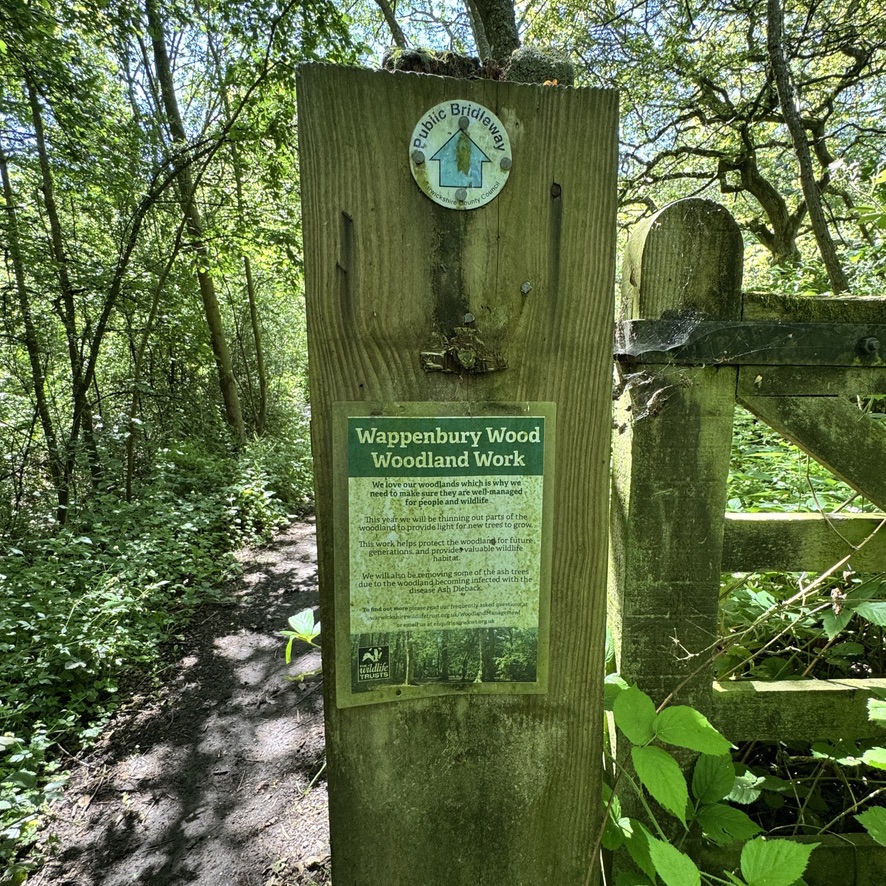
Yesterday, while roaming Wappenbury Wood, I found myself running up against this exact absurdity. I had paid for two hours of parking. I wanted to extend my time in the woods, but I couldn’t get a connection, so I couldn’t extend my parking through the RingGo app. There I was, surrounded by trees, wanting to remain in the place, and being tugged back by a parking meter I couldn’t speak to because the little rectangle in my hand couldn’t find a signal.
First-world problems, I know.
But also a sign.
Some might say ‘good’. If you’re outside, be outside.
And part of me agrees. Deeply. There’s wisdom in not turning every walk into a production. There was a time when I lost my way with that too. I spent more time looking at the world through a device than experiencing the place through my own eyes. I’d be composing the post before I’d even received the moment. I’d be thinking about the share while the living thing was still happening in front of me.
Thankfully, I’ve mostly kicked that habit.
I don’t bother processing photos while I’m out. I don’t feel the need to livestream the experience. I’m learning to let the walk be the walk. The camera comes out when it needs to. The note gets captured via my Plaud voice-note device. But I’m no longer trying to turn every outing into a broadcast.
That feels like progress.
But there’s another habit underneath it, and maybe this one is harder to break: the 9-to-5 mindset. The productivity culture mindset. The idea that if I’m away from the desk, I’m somehow not working. The idea that roaming, wandering, reading under trees, following curiosity, and letting the body move through the landscape are somehow indulgences rather than part of the work itself.
And this is where I need to remember what I actually believe.
Being outside is my work.
Or at least it is part of the working condition I’ve spent years trying to build my life around.
I’m not trying to become more efficient at sitting under artificial light and moving tasks from one column to another. I’m trying to build a life where thinking, walking, writing, noticing, reading, photographing, speaking, and making are woven together. A life where work is not a cage I return to after being alive, but a form of aliveness itself.
That doesn’t mean abandoning responsibility. It doesn’t mean pretending money, deadlines, clients, admin, and logistics don’t exist. The parking app still wants paying. The email still needs answering. The file still needs sending.
But it does mean the old industrial rhythm cannot be the master rhythm.
I’ve always liked the simplicity of that. It gives shape without becoming a cage.
Seek: go out, read, wander, notice, collect, and encounter.
Sense: sit with what has been gathered, make meaning, connect it to the living archive, let the pattern reveal itself.
Share: publish, speak, teach, post, make the field note public, and offer the insight back to the commons.
Maybe the trick is to stop trying to do all three at once.
When I’m outside, perhaps I’m mostly in seek mode. I’m gathering. Walking. Looking. Letting the place work on me. Letting the body become an instrument again. I don’t need to process everything on the spot. I don’t need to share immediately. I don’t need to prove the walk was productive by turning it into output before I’ve even left the woods.
Then, later, somewhere with coffee and a signal, I can sense and share.
This might be the rhythm I’m looking for.
Not desk versus outdoors.
Not internet versus nature.
Not productivity versus wandering.
But phases. Movements. Breath.
Inhale: go out.
Hold: notice what the world is saying.
Exhale: write, speak, share.
The internet then becomes part of the cycle rather than the whole ecosystem. AI becomes a thinking companion, not a substitute for experience. The archive becomes a living field, not a bunker. The phone becomes a tool, not the eye I see through.
And the walk becomes what it has always wanted to be: a method.
The barefoot philosopher does not need to reject the digital world. That would be too simple, and frankly, false. My life is tangled with the web. My work is made of language, links, fragments, feeds, archives, posts, and conversations across distance. I am a child of the library and the internet. I don’t want to give that up.
But I do need to renegotiate the terms.
The chair is good. The coffee is good. The screen is useful. The infinite library is a miracle.
But the world is not inside the machine.
The world is outside, being rained on. It’s in the mud underfoot, the old trees at Wappenbury, the cold air in the lungs, the hill not yet climbed, the lane not yet followed, the bird I can’t name calling from somewhere beyond the path.
Hunter got into the story.
That’s what I’m hearing this morning.
Not just read about the madness. Enter the room.
Not just study life. Participate.
Not just watch other people’s field reports from the glowing cave. Make my own.
Get outside. Stay outside.
Seek. Sense. Share.
Find the rhythm again. The barefoot philosopher’s rhythm.
Saturday. Kessingland. A camping field on a sea cliff; the morning is already bright by the time I properly arrive in it.
I wanted to watch the sunrise. That was the plan in the loose way plans form when you sleep outdoors and imagine yourself becoming more elemental by morning. But the field gave me sleep instead, and the sun did its work without me standing there to witness it.
There’s something almost comic in that. I had come to the edge of the country with the vague heroic notion of rising with the light, looking out across the water towards the Netherlands, letting the horizon perform some kind of magic like it used to do when I was a kid. Instead, my body chose repair. Air, grass, canvas, salt, distance. The older intelligence took over.
Maybe that was the first teaching of the day.
The body doesn’t care about the performance of attention. It knows when restoration is the deeper form of noticing.
Later, walking the path through the low grass and scrub, I kept thinking about the High Priestess.
I’d drawn her earlier from the major arcana as a way of asking what figure wanted to join the inner council that’s been forming in my journal. Yesterday it was the Monk and the Frontman, then the Trainer. The Monk wants books, contemplation, freedom, and the right to follow the rhizome without turning every branch into a business case. The Frontman wants visibility, contact, recognition, a livelihood, and some way of being known in the world. The Trainer knows how to make knowledge usable: insight into prompts, exercises, workshops, field guides, and practices that other people can actually hold.
She doesn’t come in with a plan, a funnel, a product ladder, or a better explanation of the work. She brings a silence that changes the room.
The Monk, the Frontman, and the Trainer all have becoming-energy in them. Become freer. Become known. Become useful. Become viable. Become the version of the self that can finally hold all of this together.
The High Priestess interrupts that machinery.
She asks whether the next stage is another becoming or a deeper inhabiting.
That sentence has been working on me all day, arriving more clearly as I walked: it is time to shift from perpetually becoming into being and let growth emerge from that instead. Not anti-growth. Not resignation, not a refusal to change. More like a refusal to keep treating the self as a project that must be improved before it is allowed to live.
That feels like the hinge.
For years I’ve carried the question in one form or another: what must I become in order to earn from this? What shape must the work take to be viable? What identity do I need to step into so the blog, the coaching, the training, the walking, the mythic imagination, the archive, and the strange recursive life with language can all make sense to other people?
The question has a violence hidden inside it.
A gentler question opened on the path:
What naturally wants to grow from the being I am already practising in public?
That is a different kind of inquiry, one that doesn’t ask me to chase an improved self into the future but to inhabit the self that has already been gathering here all along.
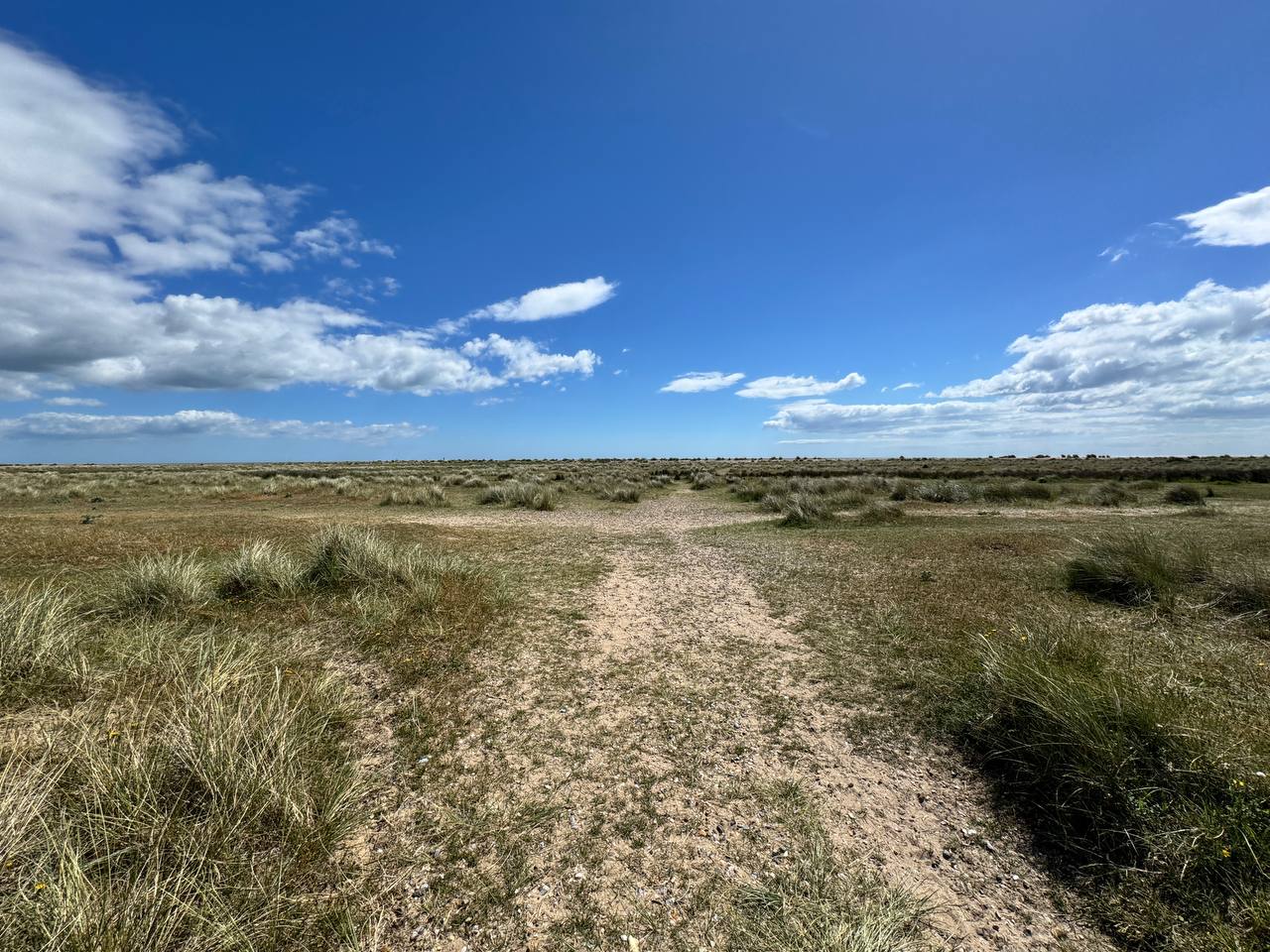
The path seemed to agree. No mountain. No temple. No city of destiny shining at the end of the track. Just sand, grass, sky, and a worn line made by prior walking.
Here is the ground. Here is the path. Walk from where you are.
Down by the water, the thinking changed again.
Listening to the wind and the waves talk.
That was the phrase that arrived. Not watching. Not interpreting. Listening.
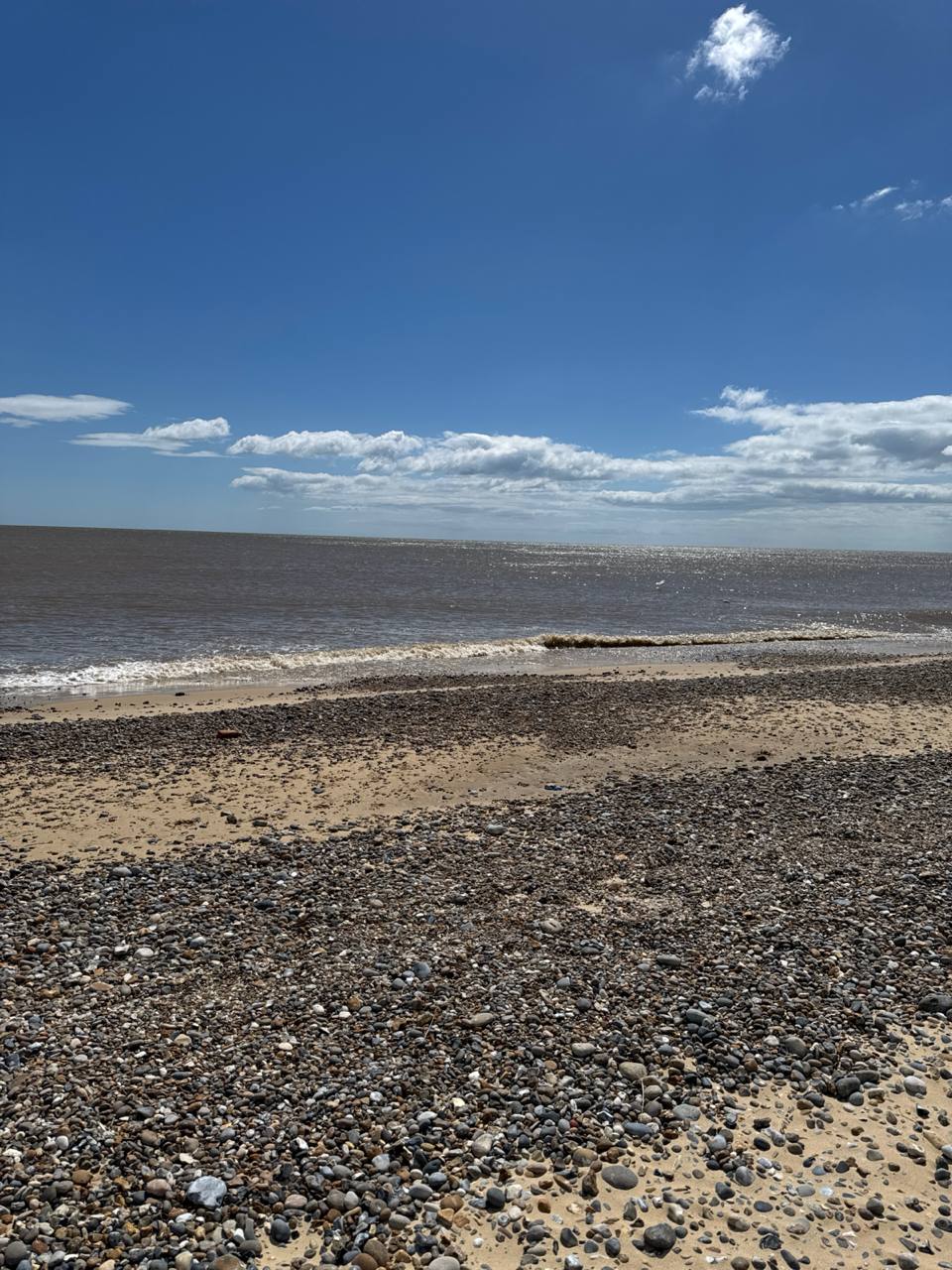
The beach was all thresholds: pebble into sand, sand into surf, surf into open water, water into sky. Nothing there was trying to become anything else. The stones were stones, the sea was sea, the clouds were passing in their own time, and the wave line arrived, broke, withdrew, and returned.
The High Priestess was there too, but not as a gothic temple mystery. Coastal. Elemental. Less veil and candle, more horizon and rhythm; she was in the shimmer on the water, the movement I couldn’t command but could attune to.
The waves do not become by ambition. They become by returning.
The wind does not announce its strategy. It moves.
The stones do not improve themselves. They are shaped by contact, pressure, tide, and time.
That may be the deeper instruction in the being-not-becoming insight. Growth emerging from being doesn’t mean nothing changes; it means change comes through relationship with the elements already acting on me: walking, writing, listening, blogging, remembering, and returning.
I stood there long enough for the beach to open a door in time.
I remembered Brian.
When we were teenagers, Brian and I used to hang out at the beach in the off-season: no tourists, just us and the wind and the water and the huge imaginative permission of an empty shore. We imagined ourselves as explorers heading across the sea into the unknown. Sometimes we were sea gods, like Marvel’s Sub-Mariner or Prince Namor. Boys at the edge of the known world, inventing themselves from salt air and comics and friendship.
Brian died a few years ago from cancer.
So the text needs a pause here.
For Brian.
The beach was not empty back then. It was a mythic training ground, and we were not simply hanging out. We were rehearsing the old archetype of crossing: the shore as threshold, the sea as unknown, friendship as vessel.
And now here I am again, older, marked by loss, still standing at the edge of the unknown, still listening to wind and waves talk.
There is a tenderness in that I don’t want to explain away.
The sea kept the old frequency.
The High Priestess thread deepens here because hidden knowledge is not always buried in esoteric symbols. Sometimes it rises through place; sometimes the oracle is memory. Sometimes the body returns to a shoreline and finds a younger self still there, still imagining, still unburdened by the need to monetise, brand, niche, teach, package, or justify the imagination.
Just two friends in the off-season, making worlds out of wind, waves, and empty horizon.
That may be part of today’s medicine.
Not to become more imaginative.
To remember that imagination was already native.
By the time I left the beach, the morning had become something other than the morning I planned. I missed the sunrise and found the field. I asked for an archetype and got a listening practice. I walked toward becoming and found being already under my feet.
In this episode, I take the Soulcruzer podcast out of the studio and into the fields.
What starts as an experiment in mobile podcasting/vlogging turns into a wandering meditation on labels, blogging, AI, morning rituals, and the strange abundance of media tools we now carry in our pockets.
Show notes:
Why I still think of myself as a blogger first – Podcasting, vodcasting, and the pressure to become “multimodal” – The problem with labels: “When you label me, you negate me” – soulcruzer.com as the central hub/home on the internet – Wisdom Walks as thinking time – Walking, motion, and changing perspective – The “barefoot philosopher” approach to everyday philosophy – AI as an extension of cognition rather than just a productivity tool – The “soft cyborg” and the library of Alexandria in your pocket – Morning reality tunnels and the sacred space before breakfast – Coffee, barefoot grounding, and choosing what enters your mind first – Indie blogging, platforms, Substack, distribution, and the open web – Why these episodes may stay loose, minimally edited, and stream-of-consciousness
I am beginning to think the morning is far stranger than we give it credit for.
We talk about mornings as if they are mainly practical things. Alarm clocks. Showers. Coffee. Breakfast. Getting dressed. Checking the weather. Remembering where you have to be and what you have to do.
But there is another morning underneath that morning.
Before the day becomes a list, before the phone starts singing its little songs of demand, before the world gets its hooks into you, there is a softer moment. A brief threshold. A little gap between sleep and identity where consciousness starts assembling itself again.
You wake up, but not all at once.
First the body returns. Then the room. Then the name. Then the obligations. Then yesterday’s unfinished business lumbers in wearing its boots, acting like it owns the place.
And somewhere in that first fragile window, before breakfast, before the algorithm gets a chance to install its theatre in your nervous system, the world is still unclaimed.
That is the moment I’m interested in. The luminal space between sleep and waking up, what researchers call hypnopompic. It’s the state between sleep and full waking, when the brain is surfacing but has not yet settled into its ordinary frequencies. It is soft, strange territory. Dreams are still close. The wall between inside and outside has not finished hardening. And it doesn’t last. Within a minute or two the world reassembles itself.
Why am I interested in this space? It’s definitely not because I want to optimise it. God save us from turning every sacred human interval into a productivity hack. I’m not trying to become a more efficient machine before 7 a.m. I’m interested in that moment because it may be one of the few places in ordinary life where freedom still enters quietly.
The morning isn’t just the start of the day.
It’s the first act of world-making.
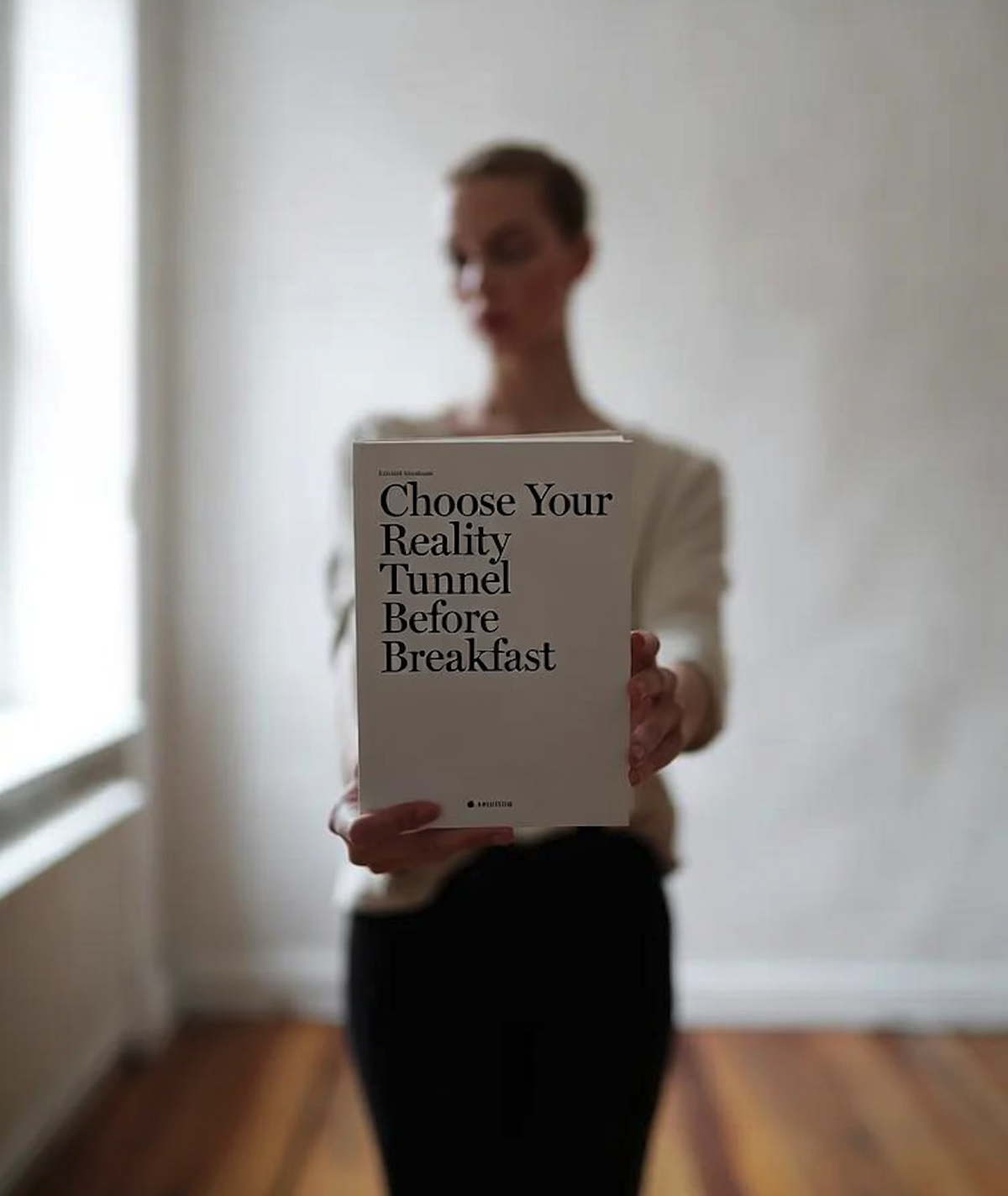
You don’t simply wake up into reality. You wake up into a version of reality. The question is, who gets to choose the first version?
The Tunnel You Wake Into
Robert Anton Wilson used the phrase “reality tunnel” to describe the way each of us moves through the world inside a particular model of what is real.
A reality tunnel is not the truth. It’s the lens through which truth appears.
Your nervous system has one. Your family gave you one. School gave you one. Your job, your class, your country, your media diet, your wounds, your desires, your fears, your habits: all of these helped construct the tunnel you walk around in.
Language is part of it too. The words you use decide what you’re able to notice. Call the world hostile and you will find enemies everywhere. Call the world alive, and suddenly the trees, birds, weather, strangers, pavements, and passing moods begin to speak. The tunnel is partly made of grammar.
This is why the first few minutes matter more than they appear to.
If I wake up and immediately reach for my phone, I enter a particular tunnel. In that tunnel, the world is urgent, fragmented, reactive, competitive, comparative, and elsewhere.
Other people’s opinions arrive before my own thoughts.
Headlines set the emotional temperature.
Notifications decide what matters.
Before my feet have touched the floor, my attention has already been outsourced.
And this is not some moral failure. I do not think we need another sermon about being weak-willed around our phones. The machines are designed to get there first. The feed knows that waking consciousness is porous. It knows the doorway is unguarded.
So when I talk about a morning ritual, I am not talking about self-care as decoration. I am talking about attention defence.
I am talking about protecting the first reality tunnel of the day.
The Algorithm Wants Breakfast Too
There is something strangely intimate and strangely violent about the default modern morning.
You wake.
You roll over.
You reach for the glowing portal beside the bed.
Maybe you tell yourself you are only checking the time, which is one of the great lies of the age. Then a message appears. Then a headline. Then a notification. Then a photograph from someone else’s life. Then a complaint, a crisis, a joke, a war, an advert, a trend, a memory, a demand.
All before you have properly inhabited your own body.
By breakfast, you may already be living inside a world made of other people’s urgency, algorithmic outrage, comparison, commercial desire, fragmented attention, ambient dread, and borrowed opinions.
You may not have chosen any of it directly.
But you let it through the gate.
And I say this as someone who is not anti-technology. I live in the digital world. I write on the web. I think with machines. I keep company with the glowing portal as much as anyone. The digital world is part of the world now.
The question is not whether it enters.
The question is whether it enters first.
Order matters.
The first thing you give attention to begins arranging the furniture of the mind.
Inbox first, and the day becomes an obligation.
News first, and the day becomes a threat.
Social feed first, and the day becomes a comparison.
But body, breath, room, sky, kettle, notebook first, and the world shifts. More local. Less manufactured. Less hysterical. More available to wander.
It’s a small shift, but small shifts are how reality tunnels get redirected.
Ontological Hygiene
A morning ritual is a form of ontological hygiene.
A grand phrase for a very simple act.
Before you step into the day, clean the lens through which the day will appear. The question is what version of reality you are stepping into. Who or what gets to set the emotional temperature first? Whether you begin from fear, noise, and borrowed urgency or from body, breath, and chosen language determines something essential about the day you are about to enter.
A morning ritual is not a performance of discipline. It is not a smug little theatre of self-improvement. It is not about becoming the kind of person who rises at 5 a.m., drinks ice water, journals in perfect handwriting, and has conquered the inbox before the rest of us have found our socks.
It is more humble than that.
It is a rinsing of the lens.
It is a pause before the world starts shouting through you.
It is a way of interrupting the automatic installation long enough to say:
Maybe that is one tunnel.
Maybe the world of alerts, outrage, tasks, and dread is one possible world.
But before I enter it, I am going to stand here for a moment and choose how I see.
A Twenty-Minute Reality Tunnel Ritual
Here is the version I am playing with.
It takes about twenty minutes. You can make it longer if you want, but I wouldn’t make it precious. The point is not to design a lifestyle. The point is to create a clean threshold.
First, keep the portal closed for five minutes.
Do not touch the phone. Do not open the laptop. Do not check the inbox, the news, the messages, the feed, or the weather app.
For five minutes, let waking belong to you.
Sit up. Feel the room. Notice the body returning. Notice whether there is still some dream-residue clinging to the edges. Do not fix anything yet. Do not improve yourself. Do not start managing the day.
Just notice the fact of being here again.
This is the first act of sovereignty: not letting the portal name the world before you have even entered it.
Then touch the local world for five minutes.
Open a window. Step outside if you can. Stand barefoot if the ground is kind. Put the kettle on. Make coffee or tea slowly enough that it becomes an act rather than a reflex.
Name five real things before you touch the digital world.
The light at the window.
The click of the kettle.
The ache in your shoulder.
A bird beyond the houses.
The smell of coffee rising from the cup.
This is remembering that reality has temperature, texture, weight, and sound. The world is not only information. It is also floorboards, steam, skin, breath, and sky.
What kind of world do I want to practise seeing today?
Not: What do I need to achieve?
Not: How do I become impressive?
Not: How do I crush the day? Which has always sounded to me like a terrible way to meet the day.
Ask instead what kind of world you want to participate in.
A world where I move slowly enough to notice.
A world where I do not confuse urgency with importance.
A world where my body is allowed to have a vote.
A world where I can begin again without drama.
A world where ordinary things are still allowed to be sacred.
This is where language becomes practical magic.
Not magic as delusion. Not pretending the bills do not exist or that the inbox will not eventually need answering. Magic as deliberate patterning. Magic as the art of choosing the words that shape what the mind is prepared to see.
Words are not merely labels placed on reality after the fact.
Words are part of how reality becomes available to us.
Write the tunnel before someone else writes it for you.
Finally, choose one reality anchor for five minutes.
A sentence. An image. A gesture. A word.
Something you can carry into the day.
Body before browser.
I do not have to live inside the first story that finds me.
Today I practise looking before labelling.
The day is allowed to be ordinary and still sacred.
This is not an affirmation in the plastic sense. I am not talking about standing in front of the mirror performing spiritual customer service on yourself. I mean something simpler. A handrail. A touchstone. A sentence you can return to when the day starts pulling you into another tunnel.
When the message arrives, when the news flares, when the old anxiety knocks, when the work tunnel opens, you return to the anchor.
Not to escape the world.
To remember that no single tunnel gets to claim the whole of reality.
The Breakfast Test
By breakfast, ask one question:
Whose world am I in?
If you have already checked the news, email, WhatsApp, social feeds, and three unrelated apps before your first mouthful of toast, you may already be in a world someone else engineered.
That doesn’t mean the day is ruined.
It means you have noticed the installation.
And noticing is where freedom begins.
If, before breakfast, you have touched the body, the room, the morning air, the notebook, and one chosen sentence, then you have had a say in who is speaking when the day begins. The world may still rush in. It probably will. But it will not be the first voice.
The ritual is not a wall against the world.
It’s a doorway you have chosen to stand in, consciously, before the day decides for you.
And once you practise choosing your morning reality tunnel, you start noticing tunnels everywhere.
Workplace urgency.
Consumer desire.
Political outrage.
Family expectation.
Productivity.
Cynicism.
Despair.
Even spiritual improvement, which can be just as hungry and demanding as the rest of them.
You begin to feel when a reality is being installed in you.
That feeling is the beginning of choice.
You do not have to reject every tunnel. A reality tunnel is not automatically a prison. Sometimes it is a useful map. Sometimes you need the work tunnel, the admin tunnel, the practical tunnel, and the get-things-done tunnel.
The trick is to remember that it’s a map.
Not the territory.
Not the whole sky.
Before breakfast, the world is still a little unclaimed. The phone has not yet been named. The inbox has not yet demanded it. The feed has not yet fragmented it.
There is a small gate there, almost hidden in plain sight.
I’ve started reading Ruth Netzer’s Tarot of Self Discovery. I’m only in the introduction, but already I can feel one of those useful recognitions happening. She is writing about tarot in a way that sits very close to my own use of the cards: not as fortune-telling or mystical commandments, but as a form of Jungian active imagination.
The cards become images that help the psyche speak.
Netzer seems to work with two principles at once. One is psychological: the image reflects something going on inside us. The other is synchronistic: the image that appears at a particular moment may carry a strange rightness, as if the unconscious, the world, and the timing of the draw are briefly conspiring to make something visible.
That is the space where tarot becomes interesting to me. Not prediction or obedience. And definitely not “the cards say.” More like, ‘Here is a symbolic mirror.’ What does it constellate? What does it disturb? What does it reveal that ordinary language has not quite managed to reach?
Netzer is also working with the Hero’s Journey, which makes sense. Tarot almost invites that reading. The Major Arcana can easily be seen as a sequence of initiations: departure, trial, descent, death, renewal, and return. But she has also mentioned, more than once now, something she calls the Quest for the Self, placing it alongside the Hero’s Journey and the Heroine’s Journey.
That phrase caught me.
The Quest for the Self.
It feels related to the heroic pattern but not identical to it. The hero goes out. The Self seems to call us inward and downward, then wider.
Hero, heroine, Self
A working distinction might be this.
The Hero’s Journey is the ego going out into the world to be tested. It leaves the ordinary world, faces trials, meets helpers and enemies, wins or receives the boon, and returns changed. Its centre of gravity is ordeal, action, courage, separation, initiation, and return.
The Heroine’s Journey, especially in Maureen Murdock’s sense, often concerns the healing of a split. The feminine is rejected or devalued, the masculine-coded world of achievement is pursued, and then some kind of aridity, wound, or descent forces a return to the body, the mother, feeling, relation, and inner belonging. Its centre of gravity is reconnection.
The Quest for the Self feels wider and stranger than both.
It is not mainly about defeating the dragon. It is not only about healing the split. It is about entering relationship with the total psyche. The ego meets what it has excluded, projected, feared, desired, idealised, and misunderstood. The journey is not towards a prize but towards a more complete relation with the deep pattern of the person.
In Jung’s language, this is individuation: the long, symbolic process by which the ego comes into relationship with the Self.
And the Self is not the same as the personal self, the personality, the social identity, or the story I like to tell about who I am. The Self is the organising centre and circumference of the psyche. It includes consciousness and unconsciousness, light and shadow, masculine and feminine, personal history and archetypal depth.
The Self is not the hero.
The Self is the wider field in which the hero appears.
The shape of the quest
The Hero’s Journey is often drawn as a circle: departure, initiation, return.
The Quest for the Self feels more like a spiral, a mandala, or a labyrinth. You keep circling the centre, but each circuit reveals another layer. You do not simply arrive at the Self as if it were a castle at the end of the map. You are slowly reorganised by your relationship to it.
The first movement is often a call from within. Something in the old ego-story begins to fail. The life may still work on the surface, but underneath it there is a knock at the door. Dreams sharpen. Synchronicities appear. Old symbols return. A card keeps showing up. A book arrives at the right moment. A sentence starts glowing.
The psyche seems to say: the map you are using is too small.
Then comes the encounter with the persona: the mask, the social role, the public operating system. Who have I learned to be? What do I perform? Which parts of me are rewarded? Which parts have been exiled so the approved self can keep functioning?
This is where tarot becomes useful as active imagination. A card can reveal a role, a script, a borrowed authority, a desire-system, a stuck pattern. The question is not, “Which card am I?” The better question may be, “Which part of me is speaking through this image?”
After that, inevitably, comes the shadow.
The shadow is not simply the bad self. It is everything the ego has not been able, willing, or permitted to identify with. Rage, envy, need, grief, vanity, power, tenderness, brilliance, sensuality, weakness, wildness, dependency, genius. All the material pushed outside the conscious self-image.
This is where the Quest for the Self differs from the heroic reflex. The heroic ego wants to defeat the monster. The deeper work asks for a conversation.
The question changes from:
How do I defeat this?
To:
What part of my unlived life is wearing this frightening face?
That is shadow gold territory.
The inner figures
In Jungian terms, the psyche is full of figures: shadow, anima, animus, child, trickster, great mother, wise old man, wounded healer, king, queen, psychopomp, divine animal.
Tarot gives these figures a theatre.
The Fool, the Magician, the High Priestess, the Empress, the Emperor, the Hierophant, the Lovers, the Hermit, Death, Temperance, the Devil, the Tower, the Star, the Moon, the Sun, Judgement, the World. Each card is a chamber. Each image offers a way for the unconscious to become visible without being reduced too quickly to a concept.
That may be why tarot continues to matter. The image does not explain itself away. It waits. It lets the psyche project, react, resist, recognise, and revise.
Used this way, the card is not an oracle issuing orders. It is a doorway.
The psychological principle says: the image reflects inner dynamics.
The synchronistic principle says: this image, now, in this moment, may be oddly exact.
Together they create a charged mirror.
Holding the opposites
At some point, the Quest for the Self becomes less about discovering “who I really am” and more about becoming able to hold contradiction without collapsing it too quickly.
I am monk and frontman.
I am wounded and gifted.
I want solitude and recognition.
I want freedom and belonging.
I am rational and mythic.
I am ordinary and archetypal.
The ego prefers clean identity. The Self seems to prefer wholeness.
Wholeness is untidy. It includes the opposites. A real symbol can hold what logic alone wants to split apart. That is part of the power of tarot, dream images, mythic motifs, and synchronistic events. They can carry contradiction without killing it.
The Self does not always say: choose one side.
Sometimes it says: become large enough to hold the tension until a third thing appears.
Grounding the Self
There is a danger here, of course. Whenever we start speaking about the Self, archetypes, symbols, synchronicity, and the deep pattern of a life, inflation is nearby. The ego can try to claim the whole thing for itself. It can turn the Self into a costume, a spiritual achievement, or a private mythology of specialness.
That is why the work has to remain grounded.
Make coffee. Take a walk. Pay the bill. Write the paragraph. Talk kindly to the person in front of you.
The Self is not an excuse to float away from ordinary life. It asks to be embodied there.
The Quest for the Self does not end with escape from the world. It returns us to the world with a different centre of gravity. We still have a personality, wounds, preferences, irritations, bills, unfinished drafts, and awkward emails. But perhaps we are a little less possessed by one-sided identity. Less ruled by projections. Less desperate to be pure, impressive, innocent, correct, or complete.
The question becomes ethical in the deepest sense:
If this is in me, how shall I live with it consciously?
That may be the real boon.
A working note for now
So for now, my working model is this:
The Hero’s Journey is achievement through ordeal.
The Heroine’s Journey is healing through descent and reconnection.
The Quest for the Self is wholeness through symbolic integration.
Or, put another way:
The Quest for the Self is the Hero’s Journey turned inward, then widened until the hero discovers he was never the whole story.
The hero wants to complete the quest.
The Self wants to complete the person.
And tarot, used well, becomes a cabinet of living images through which the psyche can say:
Look again. There is more of you here than you thought.
You will have the whole spectrum of experience at your fingertips, not as some tidy menu of moods, but as a roaring carnival of sensation, memory, dream, dread, hunger, laughter, grief, lust, silence, and starlight.
You will be able to wander from the first spark of desire to the last breath of surrender, from the mud of the body to the outer rings of imagination, from the old gods whispering in the basement to the unborn versions of yourself knocking on the roof.
Every door will open.
Behind one, childhood. Behind another, apocalypse. Behind another, a jazz band made of ghosts playing in a neon desert while your future self sells maps to people who have forgotten they are already lost.
You will taste cities you have never visited, remember lives you have never lived, fall in love with faces assembled from myth and electricity, argue with your ancestors, bargain with your demons, dance with machines, and wake up laughing in the ruins of some belief you used to call reality.
And the strangest part?
It will all feel intimate.
Not distant. Not abstract. Not like information.
Like weather moving through your nervous system.
Like the universe leaning close and saying, ‘Here, try this skin, this sorrow, this madness, this miracle, this one bright unbearable hour of being alive.’