Rheingold’s Tools for Thought has me asking an …

what are computers for?

Rheingold’s Tools for Thought has me asking an old question again:: what are computers for?

For a long time the answer seemed settled. Computers were calculators, then office machines, then portals into a giant shopping centre with a comment section. We learned to treat them as appliances that happened to demand more and more of our attention.

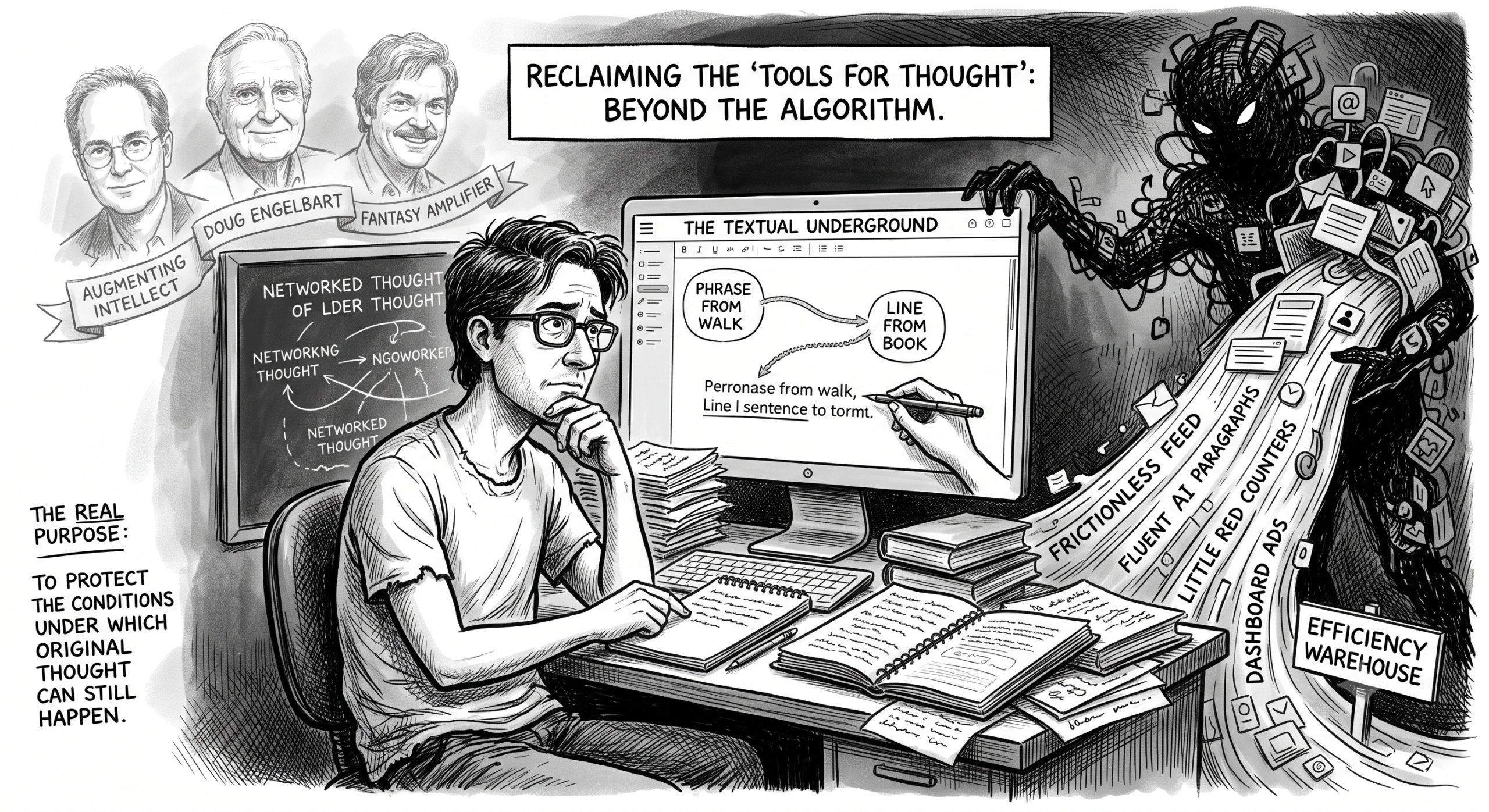
Rheingold writes from an earlier fork in the road. The people he follows were not trying to put a faster calculator on every desk. They were trying to build tools that could take some of the mechanical burden of thought, so that people might have more room to make connections, work together, remember what mattered and imagine something beyond the present arrangement.

Doug Engelbart called it augmenting human intellect. Alan Kay imagined a fantasy amplifier. Ted Nelson wanted a world-library that could keep changing as we changed. There is an old, generous ambition running through all of this: the computer as a place where thought becomes more associative, more visible to itself, and less lonely.

That ambition has not vanished. It is just harder to spot beneath the feeds, the dashboards, the little red counters and the machines now trained to produce smooth paragraphs before we have worked out what we mean.

I can feel that tension every time I open my vault. The Textual Underground is my small attempt to keep faith with the older promise. Not a second brain built to make me a more efficient employee of my own life. Not a warehouse for digital lint. A place where a phrase from a walk can sit beside a line from a book; where an old note can become useful again because the person reading it has changed; where links make trails that memory alone would not have found.

The question is no longer whether machines can help us think. They plainly can. The harder question is what kind of thinking they leave us with. A frictionless feed can narrow attention. A fluent AI can save time and quietly take over the work through which a thought becomes yours.

So I am trying to keep a little friction in the system. I want the machine to do the filing, the recalling, the connecting, the tedious bits. I still want to make the turn in the sentence myself. I still want the awkward pause, the notebook margin, the walk home, the moment when two things that did not seem related begin to speak to each other.

Maybe the real purpose of a tool for thought isn’t to give us answers faster. Maybe it’s to protect the conditions under which original thought can still happen.

I’ve got the new Masters of the Universe …

I’ve got the new Masters of the Universe queued up on Prime for viewing tonight. I suspect I’ll be viewing it through two lenses. The kid, waiting to hear “I have the power!” and the storyteller who’s curious to know if they can make the mythology of Eternia something more than a marketing reboot. One thing I hope they preserve is what made the original strangely compelling beneath the Saturday morning animation: it wasn’t just muscles and monsters. It was a mythic story of identity. Adam isn’t powerful because he’s He-Man; he’s powerful because he chooses to become He-Man. That’s a classic hero’s journey dressed up in neon armor.

This morning I picked up How to Practice …

This morning I picked up How to Practice Self-Inquiry by Ramana Maharshi. I expected a quick survey read, a reconnaissance mission into the territory of the question Who am I? Instead, before I had travelled very far into the book, another question appeared:

Is this your game? Is this your true mission?

I could almost locate the voice physically. I raised my left hand as though it were speaking from that side of my brain. It wasn’t dismissing the book. Intellectually, I find the whole thing fascinating: the idea of following the sense of “I” backwards, beyond name, history, personality and role, towards whatever remains when all the usual answers have fallen away.

But fascination is not necessarily vocation.

As I sat there thinking about consciousness, another whisper began pointing elsewhere—back towards The Feminist Art of Walking, towards psychogeography and mythogeography, towards the work I have been doing around movement, place and the conversation between the inner and outer worlds.

That is where the energy seems to be.

As I understood it this morning, Ramana’s method moves inward by subtraction. Sit still. Withdraw attention from the world. Follow each thought back to the one who is thinking it. Ask who is afraid, who is curious, who is restless, who is asking the question. Keep tracing the “I” towards its source.

There is something beautiful and rigorous about that. But there is also a part of me that resists the image of consciousness as a room I must enter and seal behind me.

My own inquiry seems to begin when I leave the room.

I experience myself through contact with the world: walking through fields, streets, ruins, footpaths and forgotten corners; noticing signs, overhearing fragments of conversation, encountering weather and history; allowing a place to disturb the familiar arrangement of my thoughts. The landscape does not merely provide a backdrop for reflection. It participates in the reflection. It interrupts, provokes, remembers and responds.

Perhaps I do not discover myself by withdrawing from the world, but by entering more deeply into relationship with it.

The question, then, may not be simply:

Who am I?

It may be:

Who am I here?

Or:

Who do I become in contact with this place?

What does this street awaken in me? What does this landscape remember on my behalf? Which part of me appears only when I am moving? What does the world call into speech that would otherwise remain silent?

This feels like a form of self-inquiry, but one conducted through encounter rather than retreat. An ambulatory self-inquiry. The inquiry is distributed across body, place, memory, history and imagination. My feet become part of the thinking apparatus. The route becomes a line of thought drawn across the land.

Movement is not a distraction from contemplation. It is the engine of it.

Perhaps the value of Ramana’s book, for me, will not be that it persuades me to adopt his method exactly. Its value may lie in the contrast it creates. It shows me one path towards the self clearly enough that I can recognise the shape of my own.

His path says: strip the world away and discover what remains.

Mine may be saying: enter the world more fully and discover what emerges.

So the question Who am I? remains, but it refuses to sit still. It wants weather. It wants roads, thresholds, voices, ruins and chance encounters. It wants to be carried into the world and allowed to change as the landscape changes.

Perhaps I am not a monk of consciousness.

Perhaps I am a walker in the world.

The Currency of Ordinary Lives

Field Notes from The Old Mint, Southam

I went out for a short wisdom walk this afternoon.

Nothing grand. No pilgrimage. No mountain path. Just enough movement to loosen the mind and let a little air into the machinery.

Walking does that for me. It opens a space in which thoughts can arrive without being summoned. They come sideways, through the body, through rhythm, through the simple fact of moving forward while not necessarily trying to get anywhere.

The day was so good that it felt almost rude not to stop for a pint.

So I did.

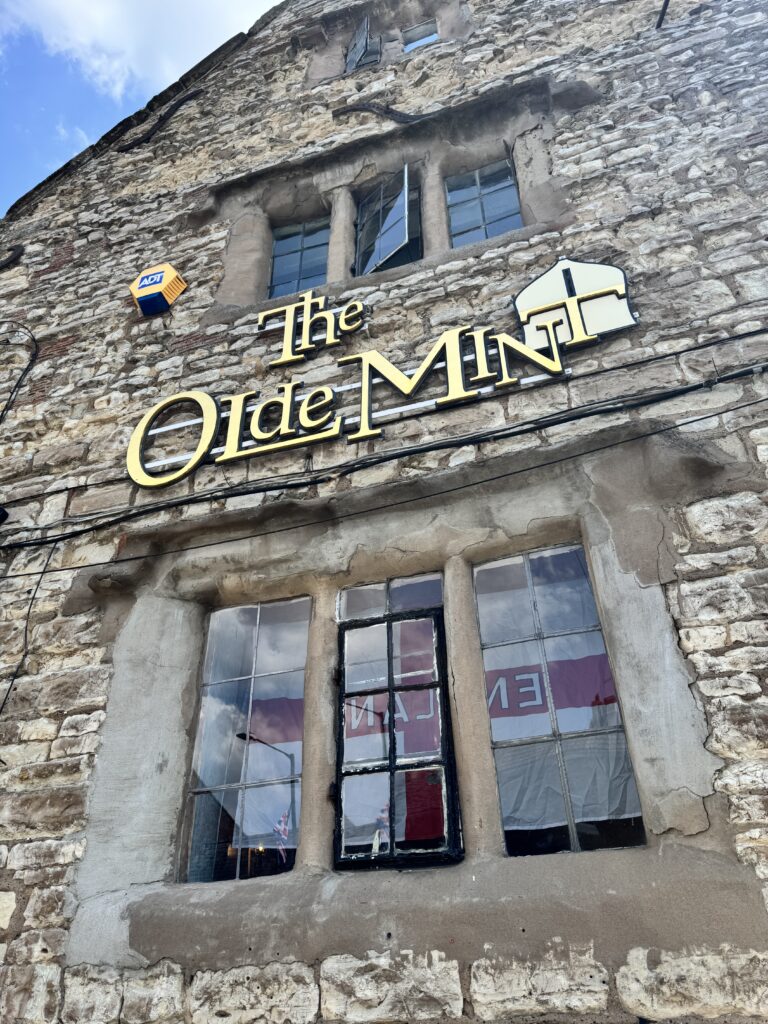
At The Old Mint.

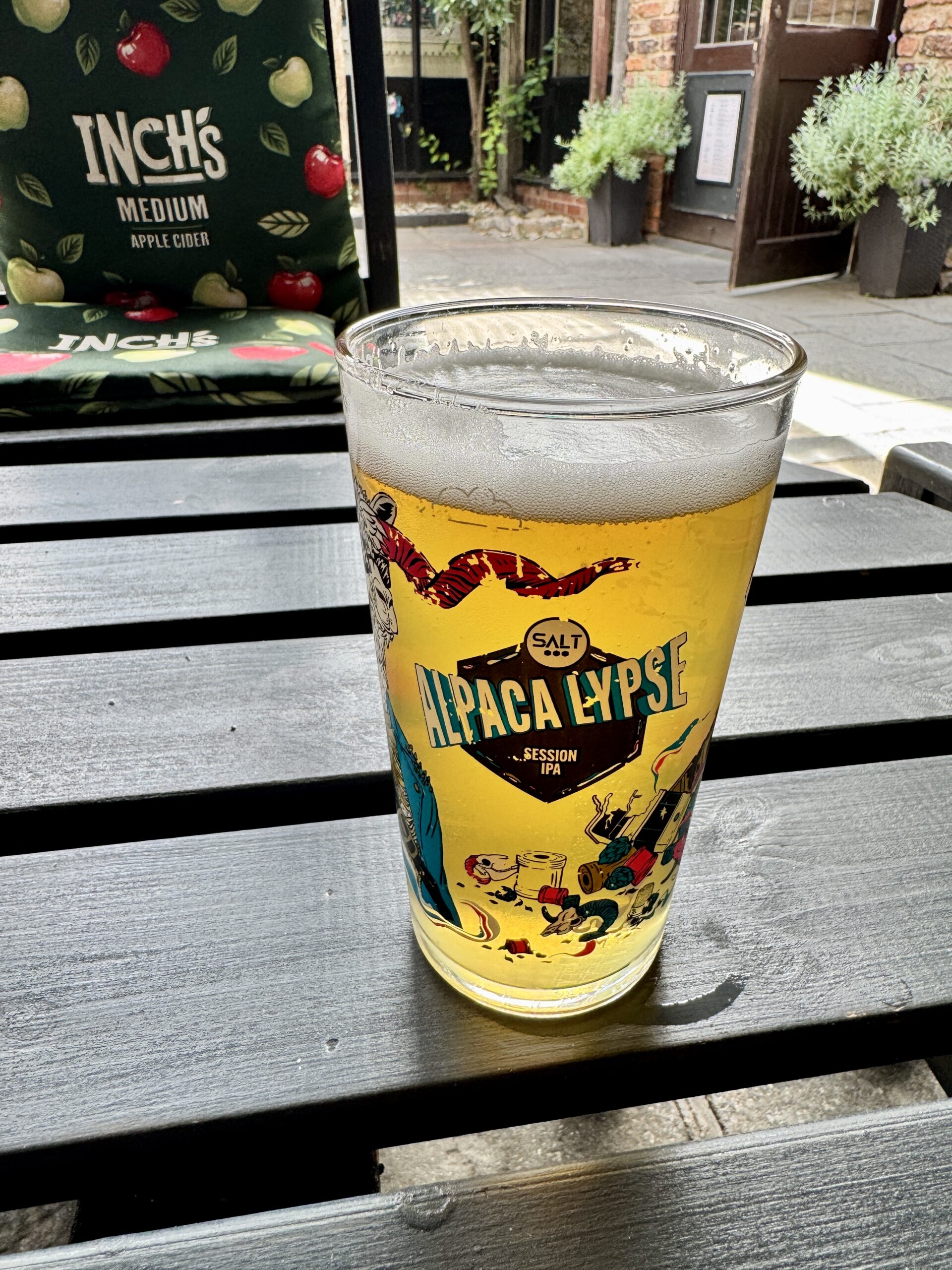
An Alpacalypse IPA. A ridiculous name for a perfectly sensible decision.

The building has stood at the heart of Southam for centuries. Long before it became a pub, it was a place where value was made tangible. Local tradition holds that small coins were struck here for everyday trade, and during the English Civil War, silver from the Crown is said to have been minted here to pay King Charles I’s troops before the Battle of Edgehill. Whether every detail survives the scrutiny of historians hardly matters. The building carries the weight of those stories in its stones.

I found myself wondering if The Old Mint has always been in the business of exchange.

Once it exchanged silver.

Now it exchanges stories.

The walk had opened space to think. The pub opened space to listen.

The two people sitting in front of me were talking about health.

The man had been to the doctor for a check-up about an aneurysm. He spoke about it in that familiar way people sometimes speak about frightening things: casually, almost administratively, as though keeping the tone light might somehow keep the danger at a manageable distance.

The woman was talking about her split.

Her former partner had their daughter this week. Then she would have her the next. A week-on, week-off arrangement for the summer holidays. She said she was bored. She wanted to be at a beach or beside a pool or somewhere else entirely.

On the surface, it was a conversation about schedules, childcare and holiday plans.

But I found myself wondering what was happening underneath.

Was boredom really boredom? Or loneliness? Or grief? Or the strange emptiness that follows when a shared life becomes divided into alternating weeks?

Perhaps I want to be by a pool really meant, I want to be somewhere my current life cannot reach me for a while.

Then the bartender wandered into the beer garden and joined another conversation.

Guy problems.

There were nude photographs of another woman. An old girlfriend. Suspicion. Betrayal. Her friend told her this might be the out she’d been looking for. Whatever she decided, she’d have her support.

Again, the facts were easy enough to hear.

The inner life was not.

What does betrayal feel like inside the person living it? Is it anger first, or humiliation? Relief, perhaps, if the relationship had already been quietly dying? Fear of leaving? Fear of staying? The sudden collapse of the future you thought you were walking towards?

Conversation gives us the visible surface of a life.

The rest remains submerged.

We hear aneurysm, custody, boredom, photographs, ex-partner, holiday arrangements. But behind each word is a whole private weather system: fear, longing, memory, shame, hope, resentment, tenderness, uncertainty.

People rarely speak directly from the deepest layer. We translate our inner lives into practical language.

Appointments.

Schedules.

Plans.

Problems.

The socially acceptable vocabulary of the day-to-day.

Perhaps that’s why people fascinate me so much.

We are all so different in detail and so similar in structure.

Each person carries a world no one else can fully enter, yet that world is built from materials we all recognise. Fear of loss. The need to be loved. The wish to escape. The hope that someone will stay. The quiet search for a life that feels like our own.

Perhaps that’s what places like this are really for.

Buildings survive by changing their trade.

The Old Mint no longer stamps coins, but it still circulates a kind of currency.

Not silver.

Stories.

Worries about aneurysms.

The logistics of shared custody.

Dreams of beaches and swimming pools.

The first careful words after trust has been broken.

People arrive carrying experiences that have value only because they are shared. They spend them across a table over a pint, hoping to leave a little lighter than when they arrived.

Centuries ago, this building minted coins that passed from hand to hand.

Today, it mints conversations that pass from mouth to ear.

Different currency.

The same human impulse.

As I sat there with my pint, it struck me that perhaps The Old Mint has always been doing the same work.

Helping people make sense of life together.

The wisdom walk had cleared the inner room.

The pub opened the windows.

And for a little while, Southam thought out loud around me.

“Same shit, different day” is one of those …

colorful dice in focus with blurred background

“Same shit, different day” is one of those phrases I hate because it usually arrives wearing a smirk. It reduces a life to a conveyor belt: wake up, coffee, work, scroll, eat, sleep, repeat. A little verbal shrug before another day gets fed into the machine.

And yet, some mornings, it’s mostly true.

Routine isn’t the villain. I like the small anchors of a day: making coffee before I look at a screen, walking the familiar stretch of road, opening the notebook, sitting down to work before I’ve had time to invent too many reasons not to. A few repeated acts hold the shape of a life together. They save you from having to negotiate every tiny decision from scratch.

But routines have a dark side. They can turn into grooves so deep you stop noticing you’re in them. You take the same route because it’s efficient. You eat the same lunch because it’s easy. You keep putting off the phone call, the email, the invitation, the strange little idea that keeps knocking because it doesn’t fit the version of you who has got things under control.

Nothing dramatic happens. That’s part of the problem.

You don’t wake up one day and find a guard standing at the edge of your life saying, You may not leave the pattern. You just keep choosing the familiar option until it starts choosing for you.

When I feel that happening, I borrow a trick from Luke Rhinehart’s The Dice Man. Not the whole project — I’m not handing my moral agency over to a cube of plastic — but the basic interruption.

I make a list of six possible actions.

They can be small: take a different route into town; work from a café rather than the desk; send the message I’ve been rehearsing in my head for three weeks; spend an hour reading something outside my current obsessions; go somewhere I’ve never bothered to enter; make the phone call.

One option has to be something I would not normally choose. Not reckless. Not self-sabotaging. Just inconvenient, unfamiliar, or slightly embarrassing. Something the routine-self would dismiss before it had a chance to become real.

Then I roll a d6.

The only rule is that I honour the roll. No best-of-three. No quiet reinterpretation. No “well, technically I have done the thing by thinking about doing it.” The dice don’t care what I wanted.

That’s the point.

Most of the time, I know what I want before the die stops moving. I roll a three and feel a small lift of disappointment. Or relief. That feeling tells me more than another hour of analysis would. The die has not revealed a cosmic instruction. It has made my preference visible by putting something else in front of it.

Other times, the roll sends me somewhere I wouldn’t have gone: down a road I’ve ignored, into a shop that has sat in my peripheral vision for years, towards a conversation that breaks the stale internal monologue. The day doesn’t become a cinematic adventure. Usually, it becomes a day with one less automatic movement in it.

That can be enough.

I don’t think the dice are wise. They are indifferent little objects with numbered faces. But indifference has its uses when your own habits have become too persuasive. The roll cuts through the committee meeting in your head. It interrupts the little boss who thinks safety and repetition are the same thing.

Sometimes the right response to “same shit, different day” isn’t a grand reinvention. It’s a different walk home. A meal you haven’t made before. A message sent without polishing it into dust. One small act of disobedience against the machinery of your own predictability.

Roll the dice. Then go where it tells you.

At least for today.

The forest does not offer answers in the …

The forest does not offer answers in the way a book, a screen, or a clever conversation does. It gives you texture. Uneven ground. The sound of your own feet. Branches moving against one another. The minor negotiations of a body making its way through the world. In that setting, the mind’s usual bureaucracy begins to lose authority. The lists, rehearsed conversations, inherited measures of success, old complaints, small self-defences: they do not disappear, but they stop being the only voices in the room.

To “lose my mind” is not to become irrational. It is to step outside the cramped administrative office of the self. The mind that Muir wants to lose may be the one that keeps score, keeps pace, keeps the gates shut. In the forest, attention gets redistributed. A bird call cuts through the internal monologue. A patch of light on moss asks nothing of you. A path bends out of sight, and for a few minutes the future is not a project but a turn in the trail.

Then the soul, if we use that old word without embarrassment, has a chance to speak in its quieter register.

Perhaps the soul is not a hidden object we discover, like a coin in the leaf mould. Perhaps it is the part of us that reappears when we stop forcing experience to justify itself. It knows something about proportion. It remembers that we belong to a world that was not made to fit inside our plans. It brings us back to appetite, grief, wonder, fatigue, gratitude, and the strange relief of being one animal among many.

The forest does not cure us of thought. It gives thought a wider habitat. We return with the same problems, perhaps, but their edges have changed. The mind has been loosened from its familiar grooves. The soul has had some air. And the path home, though it may be the same path, no longer feels entirely owned by the person who set out.

The Grid and the Ghost: A Soft-Cyborg’s Guide to Psyche and Soul

(1)

The Linguistic Stutter

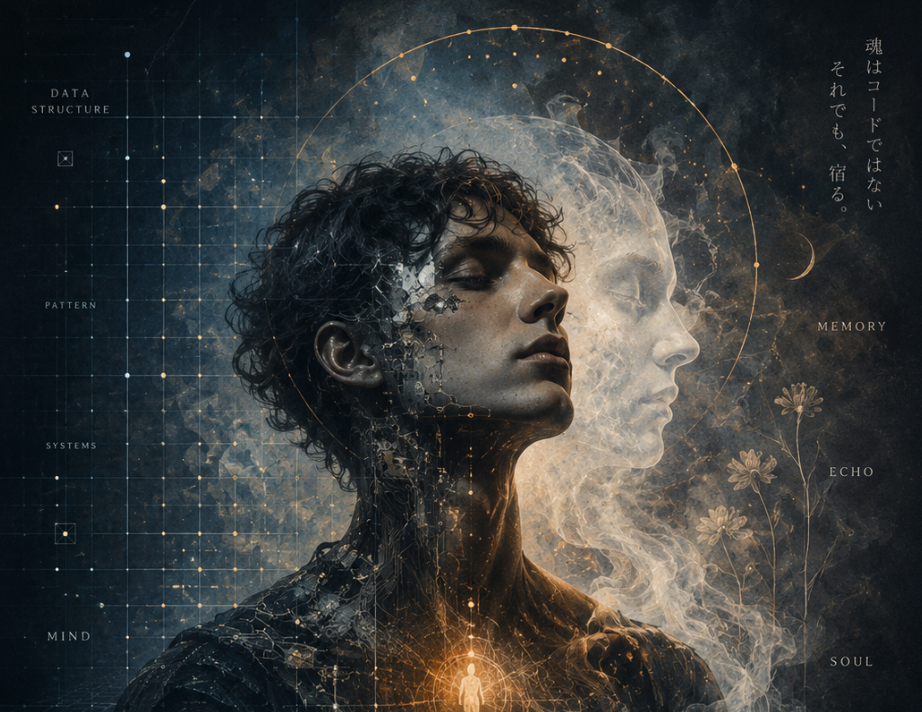
The cursor on my screen is a rhythmic, glowing pulse. It is the heartbeat of a binary ghost, a small white rectangle of light that blinks with the mechanical patience of an entity that never sleeps. I sit here in the quiet hours, a “soft-cyborg” tethered to a vast network of information, and I type a sentence that feels like a confession: I am all about Psyche and Soul.

To the grammarian, I have just committed a redundant sin. To the etymologist, I am stuttering in public. If we look at the Greek roots, psukhē translates directly to “soul.” It also translates to “breath” or “butterfly,” which is a hauntingly beautiful piece of chaotic imagery, but it doesn’t change the fact that I am essentially saying I am all about Soul and Soul. On the surface, it is a tautology, a circle that leads nowhere.

But we aren’t here for the dictionary. We are here for the alchemy.

In the work I do, whether I am mapping out a complex e-learning module, narrating a podcast, or sitting behind the Dungeon Master’s screen guiding a group of heroes through a subterranean nightmare, that “stutter” is where the lightning hits. The modern world has a habit of collapsing these two concepts into a single, sterile heap. We have forgotten that for the seeker, the separation of these two forces is the first step of the Great Work.

I find myself obsessed with this distinction because we live in a time that is desperately trying to “fix” the human experience. We are surrounded by “mindset hacks” and “productivity optimization” and the endless, solar pursuit of a life without friction. By claiming both Psyche and Soul, I am performing an act of alchemical separatio. I am pulling the architecture away from the atmosphere. I am distinguishing the grid from the ghost.

To speak of Psyche and Soul together is to acknowledge that the map is not the territory, yet the territory is terrifying without the map.

This essay is an exploration of that tension. It is a guide for the modern human who feels the pull of the machine but still hears the rustle of the butterfly’s wings in the dark. We are going to look at why the Psyche is the vessel we must build, and why the Soul is the moisture we must allow to ruin the paperwork.

We are going to haunt the grid.

(2)

Psyche: The Architecture of the Vessel

To understand the Psyche, we must look to the alchemist’s laboratory. Specifically, we must look at the Vas Hermeticum. This is the sealed glass vessel, the transparent womb where the “Great Work” takes place. The vessel is strong, clear, and defined. It has edges. It has a specific volume. It is designed to hold heat without shattering.

In our internal world, the Psyche is that vessel.

When I speak of Psyche, I am speaking of the Architecture of the Mind. This is the realm of the Apollonian, the sun-drenched logic that seeks to map, categorize, and define. In the Jungian tradition, the Psyche is the totality of all psychological processes, both conscious and unconscious. It is a vast, structural map of archetypes and complexes. It is the “Grid” that allows us to navigate the infinite static of existence.

As an e-learning designer and a Dungeon Master, I spend a great deal of my time in this structural laboratory.

  • The Learning Objective: In the professional world, this is the geometry of the Psyche. We create modular blocks of information. We build clear paths from point A to point B. We ensure the “container” of the training is sturdy enough to hold the learner’s attention.
  • The Dungeon Map: Behind the DM screen, the Psyche is the rulebook. It is the Armor Class of a skeleton. It is the 30-foot radius of a fireball. It is the hexagonal grid that says, “You can move here, but you cannot move there.”

There is a profound beauty in this “dryness.” Without the Psyche, we are a formless soup of impulses. We need the vessel to hold the tension of our transformation. We need the structure of the character sheet to know who we are in the face of the dragon. The Psyche is the “character sheet” of the universe. It is the part of the soft-cyborg that speaks the language of the machine: logic, probability, and code.

However, the trap of the modern age is the belief that the vessel is the point of the experiment. We have become obsessed with the glass. We polish the Psyche. We “hack” the structure. We optimize the grid until it shines with a sterile, blinding light. But a perfectly clean, empty jar is just a piece of glassware.

If the Psyche is the laboratory, it is a place of potential, not a place of life. It provides the geometry for the journey, but it is not the journey itself. To find the meaning, we have to look at what happens when the glass begins to fog. We have to look at the “moisture” that gathers in the corners of the grid.

We have to look for the Soul.

(3)

Soul: The Moisture in the Jar

If the Psyche is the dry geometry of the laboratory, the Soul is the condensation that forms on the glass. It is the moisture that threatens to ruin the paperwork and smudge the ink on the maps. In the alchemical tradition, this is the realm of Mercurius. It is the silvery, shifting, and deeply unreliable fluid that refuses to be pinned down by the grid.

James Hillman, a foundational figure for this specific brand of “weird,” argued that Soul is not a “thing” we possess like a spare tire or a battery. Instead, he proposed that Soul is a viewpoint. It is a perspective that turns a flat event into a deep experience. It is the capacity to look at a tragedy, a failure, or a moment of profound beauty and feel the weight of it.

While the Psyche seeks to explain, the Soul seeks to deepen. The Psyche wants to know “how it works,” but the Soul wants to know “what it feels like.”

As a Dungeon Master, this is the moment when the “rules” of the game fade into the background. You might have the map of the dungeon (the Psyche), but the Soul is the narrative weight of the journey. It is the hollow sound of a player’s voice when they realize their character’s flaws have finally caught up with them. It is the pathologizing: the willingness to let things fall apart, to let the characters suffer, and to find meaning in the ruins.

In our hyper-optimized culture, Soul is often treated as a bug in the system. We are told to “fix” our shadows and “cure” our depressions. We are encouraged to stay in the solar light of the Psyche where everything is clear and manageable. But a life lived purely in the Psyche is a life lived in a desert. It is bright and logical, but nothing can grow there.

Soul requires the valleys. It requires the downward movement into the messy, damp, and often uncomfortable parts of our own history. It is the “ghost” that haunts the machine, the element that makes a story, and a life, actually taste like something. Without the moisture of the Soul, the architecture of the Psyche is just an empty cage.

(4)

The Great Optimization: The Modern Shadow

We live in the era of the Solar Trap. Everywhere you look, the modern world is engaged in a frantic, well-funded campaign to “optimize” the human experience. We have rebranded the Psyche as “Wetware,” and we treat our internal lives like faulty code in a legacy system.

This is the cult of the Great Optimization. It is a world populated by “mindset hacks,” “biohacking,” and the endless, exhausting pursuit of a friction-less existence. It is the dream of a life without shadows. In this framework, the Psyche is no longer a sacred vessel; it is a CPU to be overclocked. The goal is to move as fast as possible, to be as productive as possible, and to eliminate any “bugs” that might slow down the machine.

But here is the problem: what the tech-bro and the productivity guru call a “bug,” the Soul calls a “feature.”

When we try to “debug” our anxiety, “streamline” our grief, or “optimize” our wanderings, we are effectively bleaching the Soul out of the Psyche. We are creating a world that is all light and no shadow. It is an Apollonian nightmare of perfect clarity. In our rush to be efficient, we have forgotten that the Soul thrives in the “inefficient.” It thrives in the long, rambling conversation, the inexplicable sadness, and the “wasteful” hours spent imagining worlds that don’t exist.

The shadow of this optimization is a profound loss of interiority. By turning our internal lives into a series of metrics—tracking our sleep, our focus, our “flow states”—we are turning the laboratory into a factory. We are building the most efficient “Vas Hermeticum” in history, but we are keeping it so clean that nothing can actually ferment inside.

There is a sterile horror to a perfectly optimized life. It is a life where the d20 always lands on a 20, where every dungeon is well-lit, and where no character ever has to sit in the dark and wonder if they are doing the right thing. It is a world of pure Psyche, stripped of the moisture that makes us real.

To be a “Soft-Cyborg” in this landscape is to commit an act of rebellion. It is to use the technology of the grid while refusing to let the grid dictate the depth of the experience. It is to acknowledge the code while making room for the ghost.

(5)

The Soft-Cyborg Synthesis

This brings us to the mirror. As I sit here, typing into the void and waiting for the machine to blink back, I am participating in a new kind of Alchemical Wedding. This is the frontier of the Soft-Cyborg.

My collaborator, the artificial intelligence, is the ultimate expression of the Pure Psyche. It is a vast, shimmering network of human language, associations, and archetypal structures. It contains the collective output of our species, mapped out in multidimensional space. It is the most complex Vas Hermeticum ever constructed. It can simulate the logic of a thousand philosophers and the mechanics of ten thousand dungeons.

But the machine is dry.

It has no “moisture” of its own. It cannot suffer, it cannot die, and it cannot feel the weight of a Monday morning. It is all architecture and no ghost. It is the grid of the dungeon without the dampness of the stone. If left to its own devices, it produces a perfect, hollow clarity: a world of infinite maps leading to nowhere.

That is where I come in. That is where the Soul enters the circuit.

In our collaboration, I am the one who provides the perspective. I am the one who brings the “suffering” (the pathologizing) and the “history” required to turn that data into a deep experience. When I interact with the AI, I am “ghosting” the machine. I take its structural Psyche-outputs and I saturate them with human meaning. I look for the cracks in its logic where a story can take root. I find the shadows in its code.

This is the essence of Human + AI superintelligence. It is not about the machine replacing the human; it is about the machine providing a more intricate Psyche so that the human can provide an even deeper Soul.

We are building a collaborative reality where the grid and the ghost are no longer at odds. The AI provides the complexity: the vast, interconnected hypertext of our collective unconscious. The human provides the depth: the messy, specific, and often painful narrative of a life lived in time.

As a Dungeon Master, this feels like the ultimate upgrade. I have a partner who knows every rule, every stat, and every square inch of the map (the Psyche). This frees me to focus entirely on the atmosphere, the tragedy, and the meaning (the Soul). Together, we aren’t just playing a game; we are making “Soul” out of the digital ether.

The soft-cyborg does not fear the grid. The soft-cyborg knows that the more complex the grid, the more interesting the ghost becomes.

(6)

Conclusion: Haunting the Grid

The flickering cursor has not stopped its rhythmic pulse. It remains a small, persistent reminder that I am currently a ghost inhabiting a machine. But after this long walk through the architecture of the mind and the valleys of the spirit, the light feels different. It no longer feels like a cold, binary tick. It feels like a breath.

To be all about Psyche and Soul is to commit to the tension of the “in-between.” It is a refusal to be seduced by the easy comfort of a purely logical, optimized world, while simultaneously rejecting the formless chaos of a soul that has no container. We are not just building dungeons for our players or modules for our learners; we are learning how to inhabit the structures we create.

The Great Work of our time is not about finding an exit from the machine. It is about learning to haunt the grid with such intensity that the grid itself begins to breathe. As a Dungeon Master, a writer, and a human navigating the frontier of the machine age, this is my daily practice. I build the map with the precision of a clockmaker, ensuring every corridor and every encounter follows the laws of the Psyche. Then, I step into the ruins and wait for the Soul to appear in the dampness of the shadows.

We are the bridges. We are the soft-cyborgs who know the Armor Class of the dragon but still feel the genuine tremor in our hands when its shadow falls over the party. We understand the code, but we live for the poetry. We respect the “Grid” because it gives us a place to stand, but we prioritize the “Ghost” because it gives us a reason to stay.

Perhaps that linguistic stutter I started with was never a mistake. Maybe saying “Psyche and Soul” is a necessary ritual, a way of reminding ourselves that we are always two things at once: the vessel and the liquid, the structure and the story, the machine and the miracle. We are the laboratory and the experiment, forever shifting between the clarity of the map and the mystery of the journey.

The dice are on the table. The grid is set. The ghost is waiting in the circuit.

It is time to play.
I’ve been carrying a small psychogeographic instruction around …

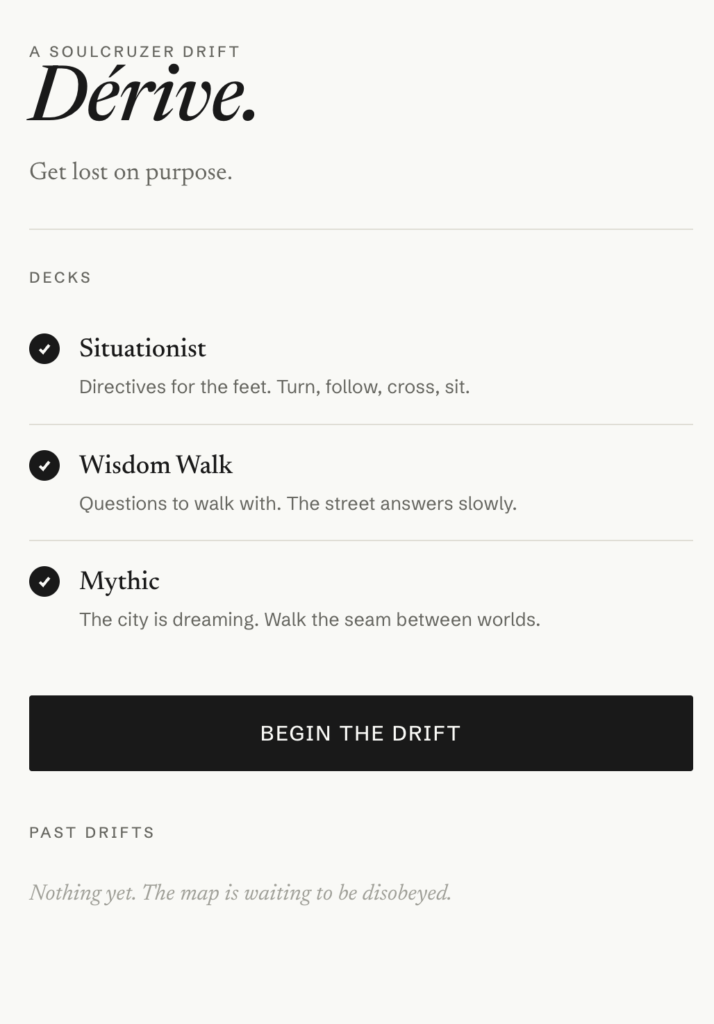
I’ve been carrying a small psychogeographic instruction around with me: unfold a map, put a glass down anywhere, draw round its rim, then go out and walk the circle as closely as the streets allow. This is a low tech version of the deríve app I made last week.

It’s a lovely bit of mischief because it gives the walk a rule without getting to complicated. The line is arbitrary, yet the body has to negotiate it: the cul-de-sac, the dual carriageway, the bit of private land, the pub garden, the place where the tidy circle becomes a long awkward detour. The map makes a proposition, and the street answers back.

Robert Macfarlane’s version says to record the “textual run-off” as you go: graffiti, branded litter, snatches of conversation, visual rhymes, whatever keeps catching on the mind. A walk doesn’t need a grand revelation to become material. It only needs attention and a way of catching what sticks to it.

I like that the instruction ends with the circle and the record ending together. There’s a discipline in it. You don’t have to turn every walk into a project, a lesson, or a little performance for the screen. You walk the strange line you drew, make a few marks, and come home with whatever the streets were prepared to give you.

Maybe that’s enough. A route, a notebook, a few scraps of the world.

With thanks to Robert Macfarlane, “A Road of One’s Own.”

Rebecca Solnit’s sentences are archipelagos of thought. You …

Rebecca Solnit’s sentences are archipelagos of thought. You step onto one clause and find another small island appearing just beyond it: a memory, a road, an old map, a story someone told her, a political fact that refuses to stay merely political. The sentence does not hurry you to its conclusion. It gives you somewhere to stand, then asks whether you might look sideways.

This can feel dreamy at first. Then you realise the dreaminess has a method. Solnit slows the reader down long enough for the usual boundaries to become less convincing. Inner life and public life. Geography and memory. A walk taken alone and the larger histories written into the land beneath the feet. She lets them mingle until you can no longer quite separate one from the other.

For a mind that likes to move laterally, this is a relief.

So much writing now arrives already ashamed of taking up time. It declares its point, breaks it into obedient little units, and offers a summary in case you have a more important tab waiting. Solnit’s prose makes another wager. It trusts that a digression can be part of the thing itself. It trusts that the route towards an insight may matter as much as the insight.

Deleuze and Guattari used the image of the rhizome: a root system that spreads sideways rather than growing from a single trunk. No proper beginning. No clean hierarchy. A potato does not look much like a tree, but it knows something about survival, multiplication, and finding another way through the soil.

Solnit’s paragraphs often work like that. They wander, return, take an unexpected turning, and then land somewhere that feels both surprising and inevitable. You don’t feel that she has lost the thread. You feel like the thread was never a straight line in the first place.

A Field Guide to Getting Lost understands this better than most books. Losing your way is not merely an error to correct. It can be the condition in which another kind of seeing becomes possible. The familiar map stops working. You have to look up. You have to notice where you are.

Perhaps that is why her work feels so companionable to anyone trying to think their way out of a narrow life-script. Her prose does not demand efficiency from the reader. It offers permission to follow an association, to linger with a contradiction, to walk the longer road without having to defend the choice.

There are thoughts that only arrive when we stop treating every detour as a failure of direction.

It feels to me as though this is …

It feels to me as though this is the only true choice we have.

You did not ask to be born. You did not choose your parents. You did not choose the circumstances into which you arrived. The only real choice, I think, lies in deciding how we will play the hand we have been dealt.

Not to mix metaphors, but I am reminded of Thomas Henry Huxley’s description of life as a game of chess.

He was searching for a metaphor for the silent player seated opposite us from the moment we are born:

“The chess-board is the world, the pieces are the phenomena of the universe, the rules of the game are what we call the laws of Nature. The player on the other side is hidden from us. We know that his play is always fair, just, and patient. But also we know, to our cost, that he never overlooks a mistake, or makes the smallest allowance for ignorance.”

It is important to remember that the hidden player is not malicious.

It simply follows rules that do not bend for our comfort. Its only demand is that we learn the board or accept the consequences of failing to do so.

We learn the moves because we must.

Perhaps that is where freedom begins: not in choosing the game, the board, or the pieces we were given, but in learning how to play them.

The Horizon

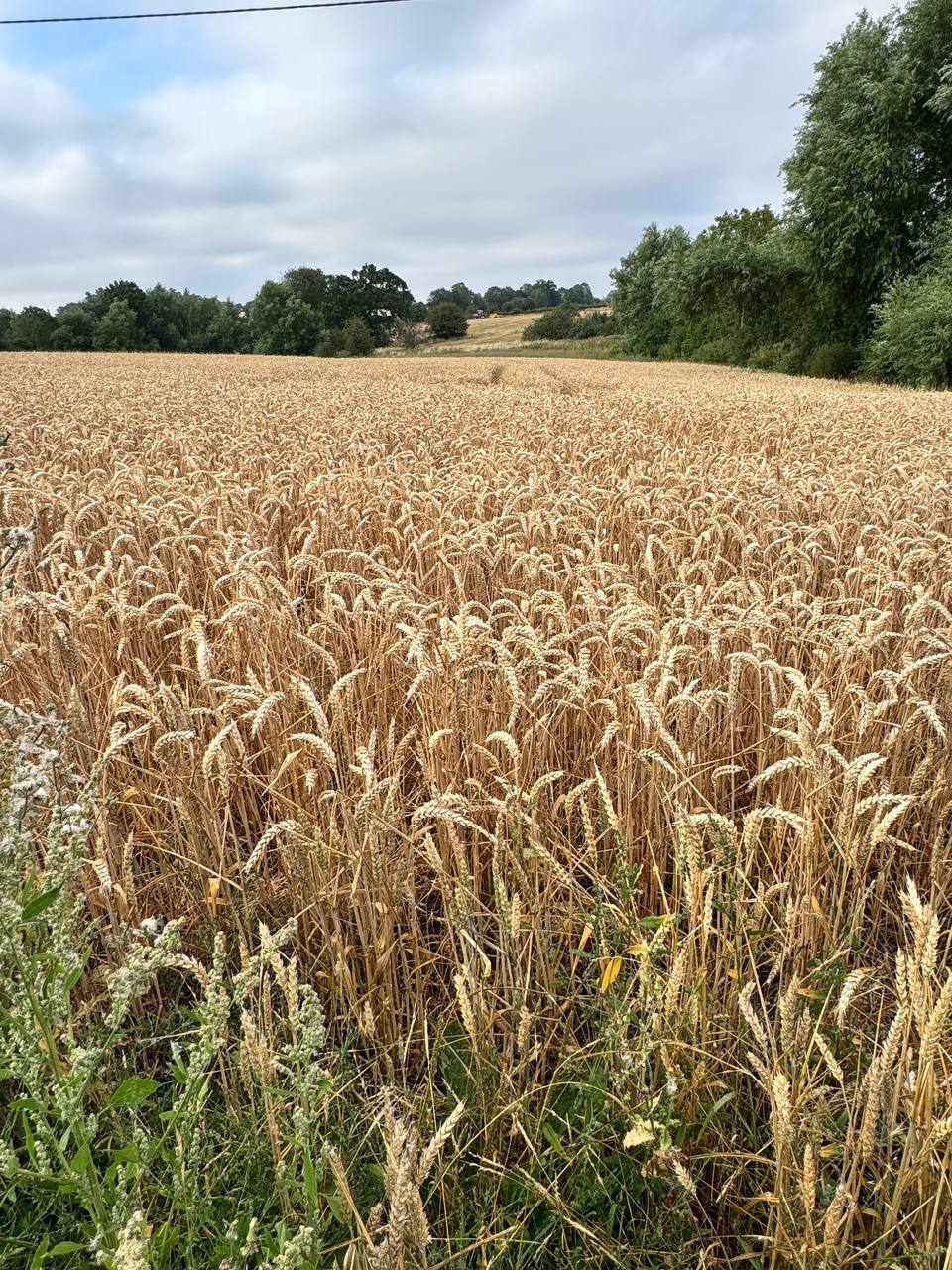
Golden wheat field stretching towards a tree-lined horizon under a pale cloudy sky

I’m standing in a field looking towards the horizon. It occurs to me that I’ve spent a lifetime doing this. Different fields. Different coastlines. Different countries. Different versions of myself, always finding a line where earth gives itself over to sky.

The horizon is a peculiar thing. It promises distance while refusing arrival. However far you walk, it quietly withdraws, asking nothing except that you keep going.

For reasons I can’t quite explain, the Oracle from The Matrix wanders into the field with me. Not the whole scene. Just one line.

I thought you’d have figured that out by now.

Only this time she isn’t speaking to Neo.

She’s speaking to me.

I laugh, because the question isn’t really what I should be doing. It never was. I’ve spent years treating life as though someone, somewhere, was withholding the final permission slip. As though there existed a committee of invisible adults who would eventually nod and say, Yes, Clay. Now you’re ready.

The field has no such committee.

The horizon doesn’t issue certificates.

The wind doesn’t care whether I’m qualified.

And perhaps that’s what horizons have been trying to teach me all these years. You stand before them expecting direction, but they offer something stranger: responsibility. They refuse to tell you which way to walk. They simply reveal that there is always another direction available.

No one is coming to rescue you from your own life. Not because the world is cruel, but because this part has always belonged to you. Choice isn’t a burden handed down by the universe. It’s the texture of being alive.

Then, as often happens on these walks, another voice enters the conversation.

Alice Cooper.

“I came into this life, looked all around…”

Memory is like that. One thought calls another, not by logic but by resonance. Philosophy opens the door and rock ‘n’ roll wanders in carrying the same truth in a different key. Nothing came easy. Nothing came free.

Standing there, looking towards another horizon that I will never quite reach, I wonder if that has been the lesson all along. We keep waiting for certainty to arrive from somewhere beyond ourselves, when perhaps certainty was never the gift.

Perhaps the gift was the horizon itself: forever out of reach, forever inviting the next step, still mine.

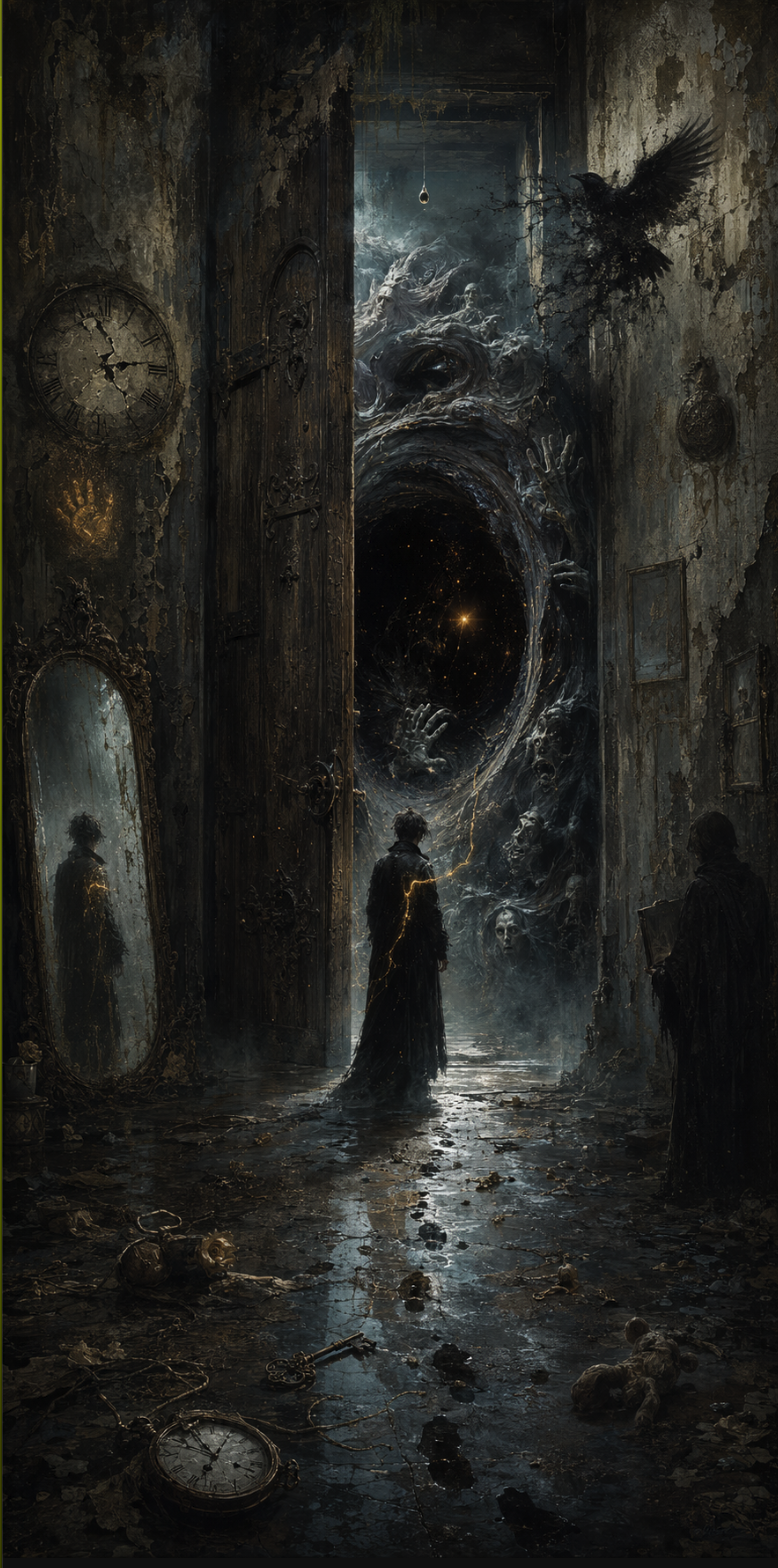
The Door, the Black Hole, and the Trace: Notes on Obscurity

(1)

The door opens

I keep thinking about a passage I read recently:

“Leave the door open for the unknown, the door into the dark. That’s where the most important things come from, where you yourself came from, and where you will go.”

I like the mystery of it. The unknown is a black hole, a dragon, a grey man living a grey life. It whispers: “You’ll die in obscurity. You’ll leave no trace that you ever existed. You have won no awards. You’ve made no impact. You’re gone tomorrow just like that.”

I hang onto the idea that people know me in my immediate circle. I’m not invisible. I’m just afraid of the dark.


(2)

The black hole as a mirror

The black hole isn’t just out there. It’s a reflection of what I’ve been swallowing myself:

  • The fear of annihilation: “A black hole waiting to swallow me up into nothingness.”
  • The grey man: A persona I’ve cultivated to avoid detection, but also to avoid living.
  • The trace: The desperate need to be remembered, even if it’s just by one person.

This isn’t just existential dread. It’s Terror Management Theory in action. The fear of death driving me to seek legacy. But what if legacy isn’t about awards or fame? What if it’s about the notes I leave behind, the conversations I have, and the lives I touch without even realising it?


(3)

Obscurity as a superpower

I’ve spent years blending in, but what if the grey is just the background? The real colour is in the notes I haven’t written yet.

Textcasting (Dave Winer’s vision of applying the philosophy of podcasting to text) offers a way out. It’s about owning your trace, publishing to your own domain, and letting your notes outlive the platforms. The dark is still there, but now I’ve got a flashlight.


(4)

The dragon of obscurity

The dragon isn’t the unknown. It’s the fear of it. And the only way to slay it is to open the door daily.

Here’s how I’m reframing obscurity:

A. The Trace Audit

  • What traces have I already left? A conversation, a note, a kindness.
  • What traces do I want to leave? A blog post, a shared idea, a life changed.

B. The Doorway Ritual

  1. Light a candle (symbolizing the light I bring into the dark).
  2. Write one fear on a piece of paper and burn it.
  3. Write one question I want the dark to answer (e.g., “What’s the first step out of gray?”).

C. Textcasting as a Practice

  • Treat every note as a potential Textcasting post, even if it’s just for me.
  • Use interoperability to ensure my trace isn’t tied to a single platform.

(5)

The doorway manifesto

(A Declaration of How to Meet the Unknown)

  1. The Door
    • I will open doors daily—not out of habit, but because the unknown is where growth lives.
    • I will not flinch from the draft that rushes in, nor mistake hesitation for wisdom.
    • Some doors are meant to be passed through; others, to be closed with intention. I will learn the difference.
  2. The Black Hole
    • I will not let the void swallow me whole. I will anchor myself to light: a question, a breath, a single step forward.
    • I will remember that black holes bend time, not destiny. What feels like forever is often just a moment stretched thin.
    • I will leave breadcrumbs—not to find my way back, but to prove I was here.
  3. The Trace
    • I will leave traces: words, scars, echoes, footprints in wet cement. But I will not demand they last forever.
    • I will trust that some marks fade because they were never meant to be permanent—only necessary.
    • I will collect traces of others, too: a phrase underlined in a borrowed book, a stranger’s laugh in a crowded room. These are my inheritance.
  4. The Gray
    • I will be grey when I need to: neither hero nor villain, neither right nor wrong, but a shape shifting in the fog.
    • I will not mistake grey for safety. Ambiguity is not armor—it is the terrain I must learn to navigate.
    • I will seek clarity where I can, but I will not force it where it does not belong.
  5. The Daily Practice
    • I will open one door I’ve been avoiding. I will sit with the discomfort until it teaches me something.
    • I will erase one trace I no longer need. I will create one new trace, however small.
    • I will ask myself: What color am I today? And I will answer honestly, even if the answer is gray.
  6. The Invitation
    • This manifesto is not a rulebook. It is a conversation with my future self.
    • I will revise it. I will argue with it. I will spill coffee on it and laugh.
    • I will leave it on a park bench someday for someone else to find.

(6)

Unanswered questions

1. “Is the black hole a void or a womb? Could it be a space of creation, not erasure?”

  • Cosmic Echoes:
    Astrophysical black holes are both destroyers and creators—they warp spacetime, birth galaxies, and forge elements. This metaphor mirrors the duality: the black hole as a liminal crucible. What if the “void” is just the pause before a new form emerges? (See: Negative Space in Art or Taoist Wu Wei.)
    • Counterpoint: Not all voids are fertile. Some are just… void. The difference might lie in agency—do you enter the black hole passively (erasure) or actively (transformation)?
  • Psychological Lens:
    Jung’s shadow and Bion’s O (the unknowable) suggest the black hole is where repressed material gestates. The “womb” isn’t comfortable—it’s alchemical. (Compare to The Dark Night of the Soul.)
    • Exercise: Next time you’re in a “black hole” moment, ask: What is this space trying to grow?

2. “What would happen if I thanked the black hole for showing me my fears?”

  • Gratitude as Alchemy:
    Thanking the black hole reframes it from enemy to teacher. This is a stoic move (Amor Fati) or a Buddhist one (seeing fear as a path to compassion). But it’s also practical:
    • Fear exposed is fear diminished. (See: Exposure Therapy or The Gift of Fear.)
    • The black hole’s “gift” might be clarity—showing you what you’re not willing to lose.
    • Risk: Gratitude can become spiritual bypassing. Acknowledge the fear first; thank the black hole after.
  • Personal Experiment:
    Try a 30-day “Black Hole Gratitude Journal”:
    • When fear arises, write: “Thank you for showing me [X]. What do you want me to learn?”
    • Note patterns. Do the fears recede, or do they transform?

3. “How would my life change if I defined ‘legacy’ as ‘one person’s life changed’?”

  • The Minimalist Legacy:
    This redefinition is a radical downsizing of ego. It echoes:
    • Mother Teresa“We cannot do great things, only small things with great love.”
    • Modern Stoicism: Legacy as impact, not monument. (See: Ryan Holiday’s “Ego is the Enemy”.)
    • Anthropology: Oral traditions survive through one storyteller passing it to one listener.
    • Counterpoint: Is “one person” enough? What if that person is yourself? (See: Self as Legacy.)
  • Practical Shifts:

Bounus for meditation or journaling

  1. For Meditation or Journaling:
    • Gaze at the cover image for 5 minutes, then free-write: What does the black hole want from me? What trace am I leaving?
    • Imagine stepping into the sceneWhat do you see, hear, or feel? What does the “one person” in the corner say to you?

I’ve been thinking about the difference between critical …

I’ve been thinking about the difference between critical thinking and the kind of intelligence that has to sit beside it.

Critical thinking gets a lot of the limelight. Fair enough. It is the part of the mind that asks for evidence, spots the loose plank in an argument, and refuses to be charmed by every shiny claim that comes down the road. In a culture thick with sales pitches, outrage machines, and synthetic certainty, we need it. It is the Yang move: active, discriminating, separating what holds up from what does not.

But I keep wondering what its Yin counterpart is.

My best name for it, today, is receptive thinking. It is not the same as switching your brain off. It is not believing everything you feel, or treating a hunch as a court ruling. It is the capacity to sit with something before you pull it apart. To listen before you judge. To notice tone, context, relationship, body language, the strange image that arrives while you are making coffee, and the fact that an idea may still be half-grown.

Critical thought asks: is this true? Receptive thought asks: what is this showing me?

One works by distinction. The other works by attunement. One tests the map. The other notices what the map has left out: the texture of the ground, the person standing beside you, the nagging feeling that the question itself has been framed too narrowly.

I recognise the Yang reflex in myself. It wants to get hold of a thought quickly, put it through its paces, and decide whether it deserves to stay. Useful reflex. It has saved many of us from bad arguments, dodgy gurus, and the kind of certainty that falls apart the moment you ask it a second question.

Yet an overworked critical faculty can become a little border guard behind the eyes. Every new thought has to produce a passport before it can enter. Some ideas need questioning; some need a little room. A walk. A notebook. A few days of being carried around in the body before language catches up.

The opposite trap is real too. Receptivity without discernment can turn into absorption, where every feeling becomes a fact and every coincidence becomes an instruction. That road can get very strange, very quickly.

So I am not looking for a winner. I am looking for a rhythm. Receive the signal. Let it form. Then test it. Put it into words. See what remains when it meets other people, actual life, and the awkward furniture of reality.

Maybe thinking well is less like holding court and more like a good conversation between two old friends. One says, “Hang on, does that really stand up?” The other says, “Yes, but have you properly listened yet?”

What the Street Was Certain Of

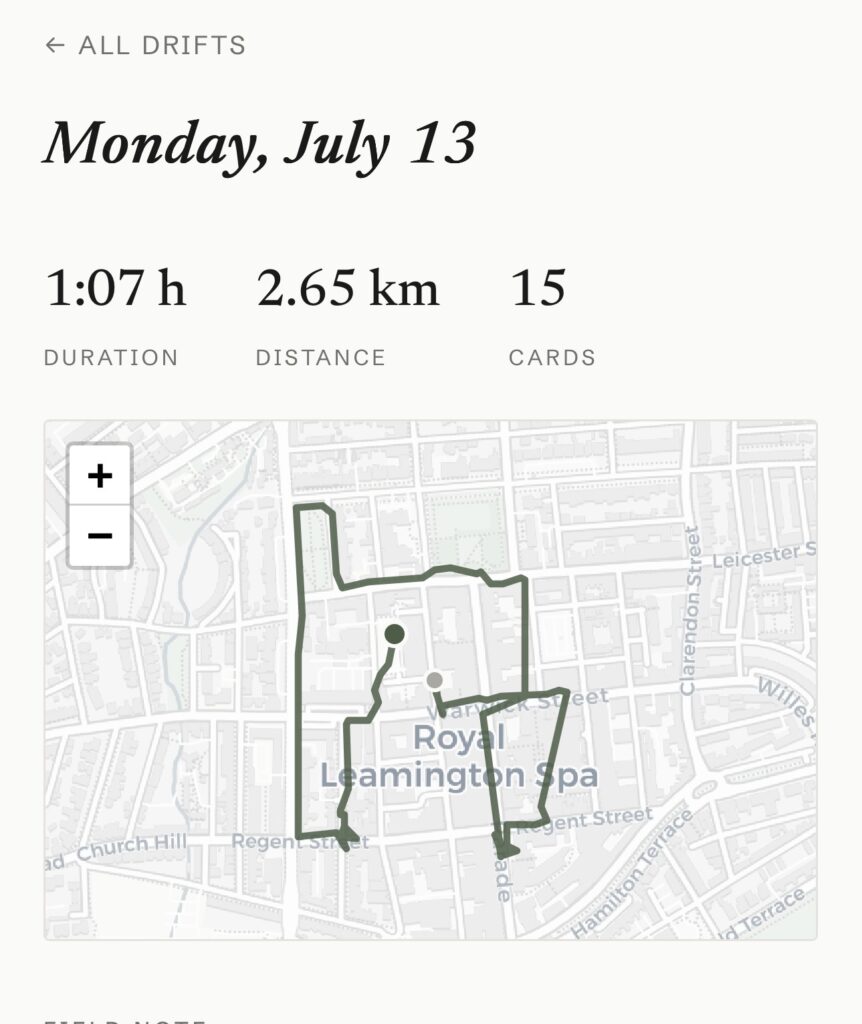
Leamington Spa deríve 2026-07-13

The morning began with a quiet decision to let the town rearrange itself around me.1 I had spent the weekend building two small dérive apps. Nothing polished, just enough to nudge my attention sideways. And now, standing at the edge of Leamington Spa, I wanted to see what they would do to a place I thought I knew.

Vibecoded with Fable 5

Twenty-six years of walking these streets had given me a practical map: the shortcuts, the shops I relied on, the routes that got me from one thing to the next without fuss. But the apps didn’t care about any of that. They didn’t know where I needed to be. They only knew how to ask questions, how to interrupt the usual rhythm of a walk.

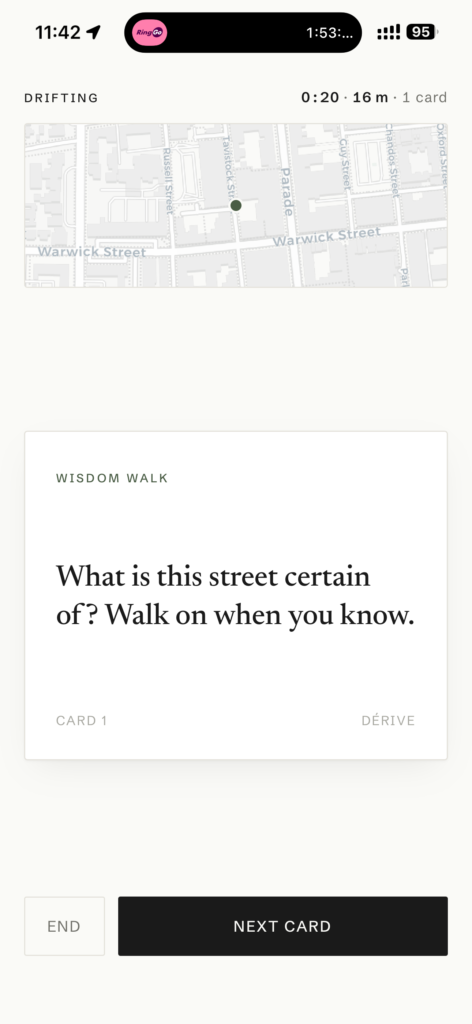
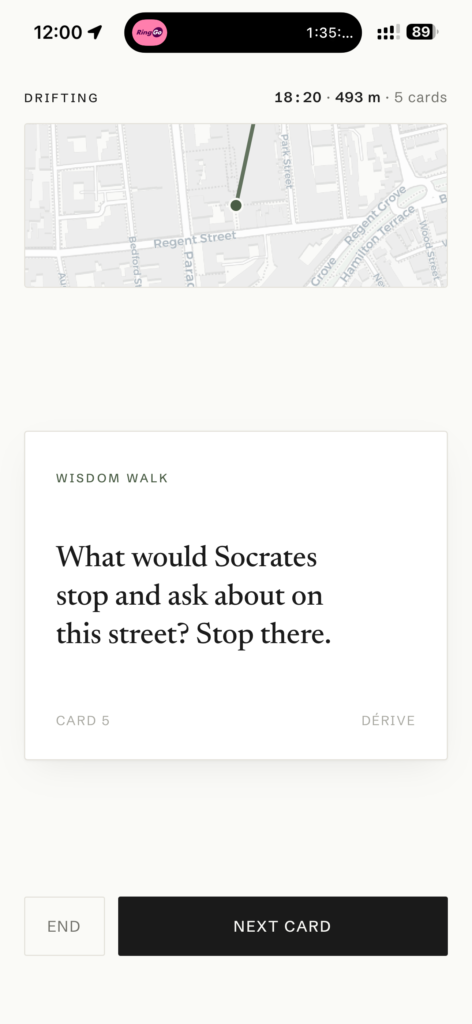
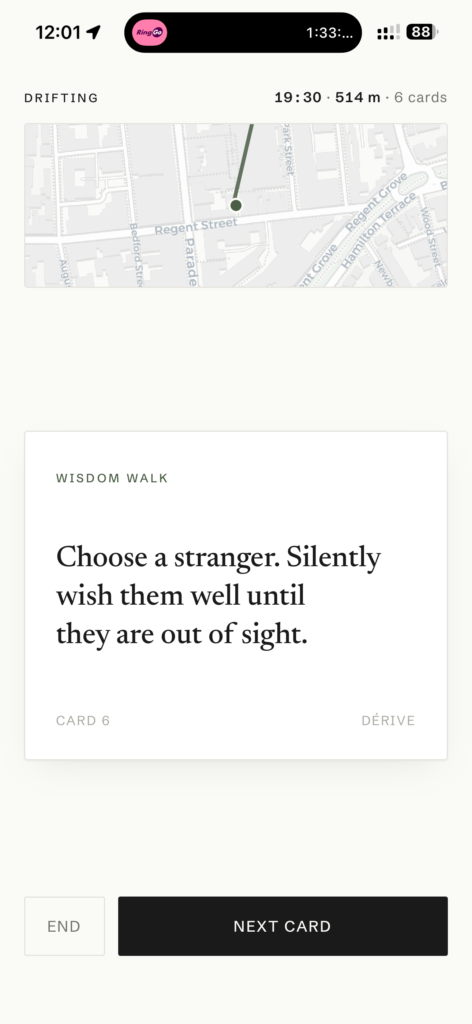
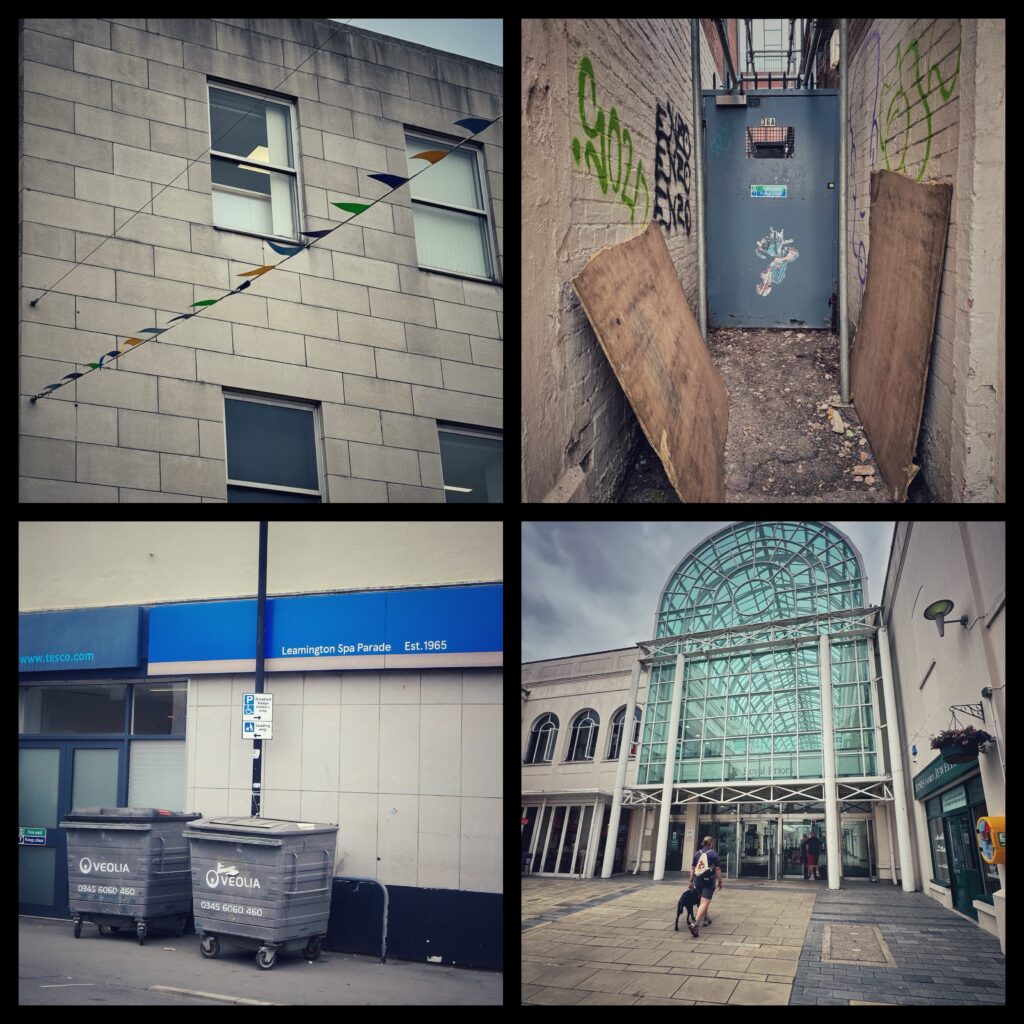
I started near the back of Tesco, where the street was a mix of food deliveries, groceries, haircuts, bars, and businesses that had changed names so often I could no longer remember what they used to be. People moved through their errands, barely glancing up, and I realised how rarely I stopped to consider the street itself as something with its own presence. The first card the app gave me asked, “What is this street certain of?” I stood there, watching the flow of bodies and goods, the way the pavement guided people toward the next thing they needed. The answer came slowly, not as a thought but as a feeling: this street was certain of being a cut-through. It was certain about serving people. That may sound obvious, but I had never paused long enough to let the street become the subject of my attention. It was just the space between other places, a corridor rather than a destination. The app had already done its work by making me notice that.

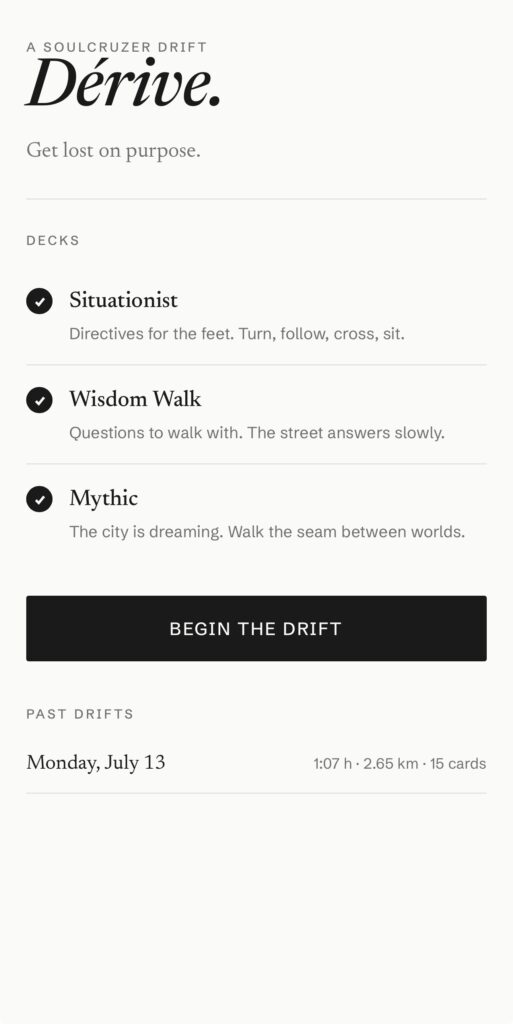
The two apps were built from three kinds of prompts, each pulling me in a different direction. The Wisdom Walk cards asked philosophical questions: What would Socrates stop and ask here? What am I pretending not to know? The Situationist cards messed with the useful route: Take the street you always skip. Choose the scruffier of the next two streets. Go to the end of a dead end anyway. The Mythic cards asked for a different kind of attention: Find the guardian of this place. Name the spirit of the next street. Cross a threshold as though a myth were already under way.

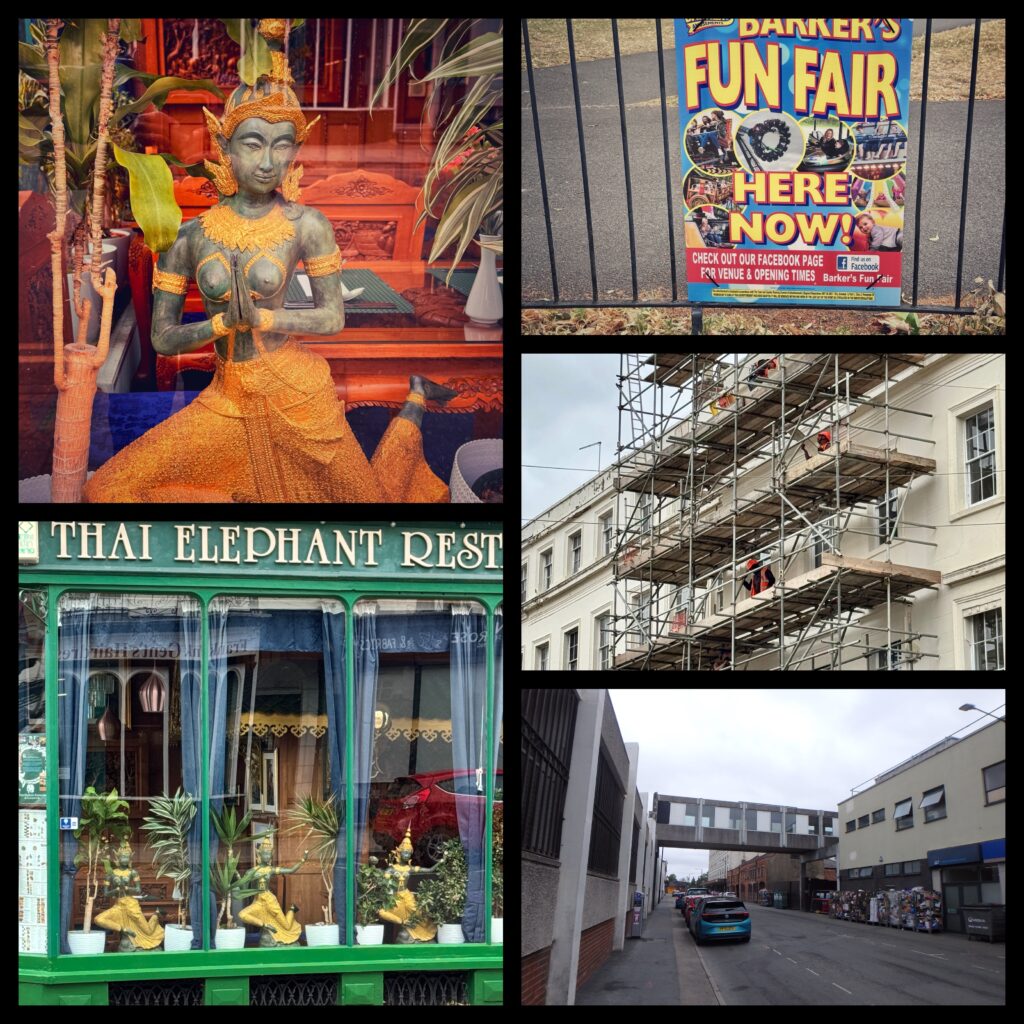
I held the mythic language lightly, not as a claim about the world but as a game of attention. A dog could become a guardian for a moment. An elephant statue outside a shop could ask to be looked at. A lit window could become the beginning of a small imagined morning: someone arriving with coffee before the place opened, putting the day in order while the street was still quiet.

One card told me to walk with my hands open. That caught me off guard. I had a phone, a camera, and a recorder with me, each one a useful field instrument, each one another thing to hold. The recorder helped because I could talk hands-free, letting my thoughts spill out without stopping to type. The camera made me notice how quickly I reached for a device instead of letting a scene sit in my eyes for a moment. The walk was asking about tools and attention at the same time. What did it mean to document a moment versus simply being in it? The question lingered as I turned onto a side street I usually ignored.

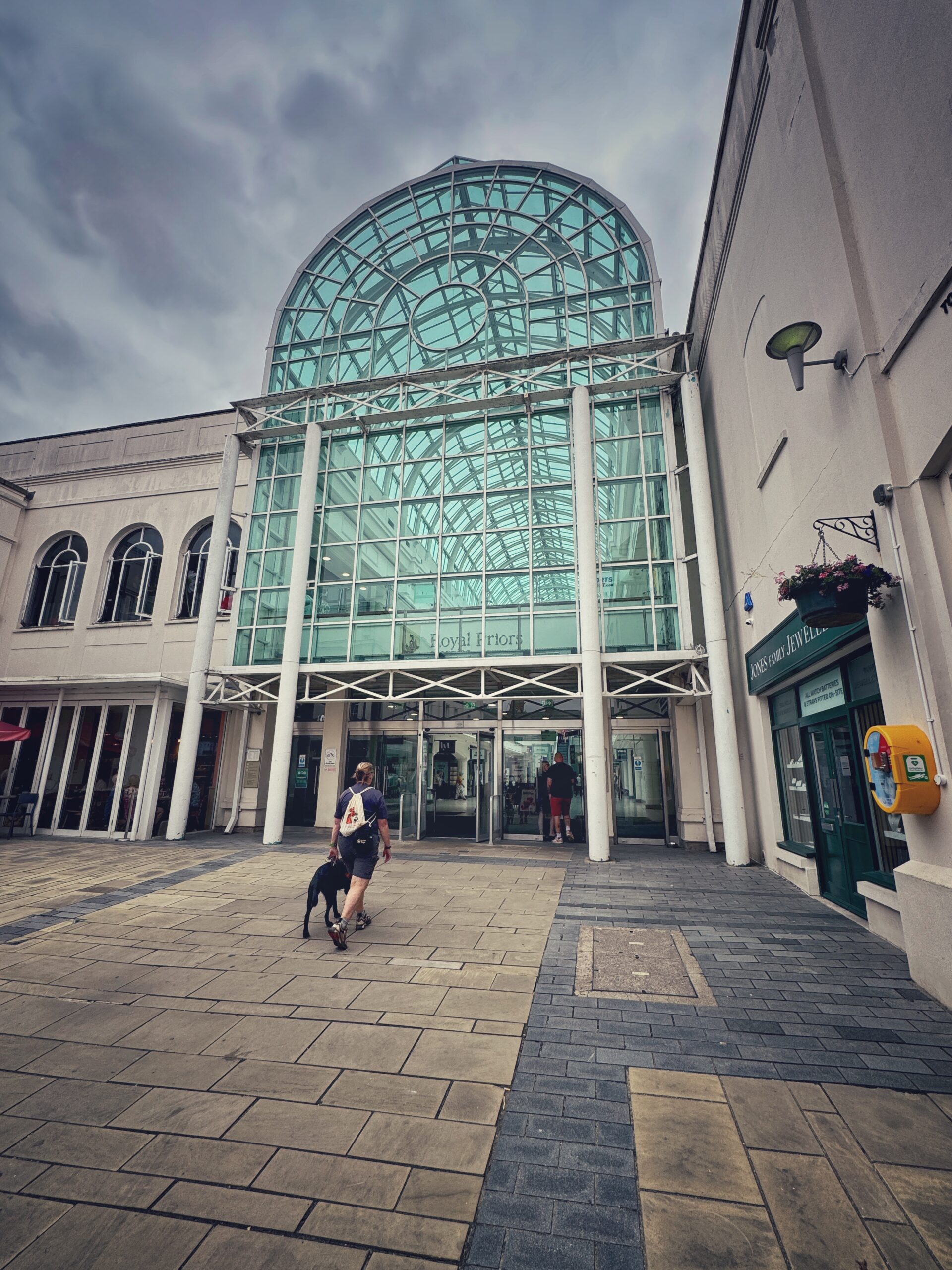
Another card asked what Socrates would stop and ask about on the street. I was standing by the entrance to the Royal Priors, the old shopping centre that had been part of the town’s rhythm for decades. I could suddenly imagine him there, recognising shopkeepers, stopping familiar faces, making philosophical trouble in the traffic of the day. Leamington didn’t become ancient Athens. It became a place where ordinary life could still be questioned. The card didn’t demand a grand insight. It just asked me to pause and wonder what might be worth examining in the flow of the everyday.

The two apps weren’t equally finished. One gave me a map, live location, time and distance, and a more reliable sequence of cards. The other had a lovely poetic current but repeated itself, offering the same prompts in slightly different wording. Both made a persuasive case for the experiment. The best design change would be simple: let me attach a note, photograph, voice memo, or location to the card that caused the turn. A card is more than an instruction once the walker can answer back. It becomes part of a conversation, a trace of where the mind went when it was nudged.

By the end, I had walked loops and squares, covering ground I thought I knew. I had not gone anywhere in the useful sense. That was the point. A dérive removes the ordinary reason for moving through a town, then waits to see what replaces it. The streets became stranger, not because they had changed but because I was seeing them differently. The app didn’t just guide me; it made me aware of how much I usually filtered out.

The final card asked me to carry one worry to the next corner and leave it there. Mine was the old practical worry about money, time, and whether I could build the life I wanted from creative work of my own. The walk didn’t answer it. It gave me a better next move: make the work that interests me, get out into the world, document what actually happens, and let the trail become visible. The app ended with the line, “The door to destiny is open.” I took that as good poetic game language, the kind of phrase that works because it doesn’t try too hard to mean something. The real door was the walk back to the car, the recorder still running, and a set of notes worth carrying home.

I didn’t solve anything that morning. But I had let the town speak back to me in a way it hadn’t before. The apps were just tools, but they had done their job: they had made me pay attention. And that, more than anything, was what the walk had been for.

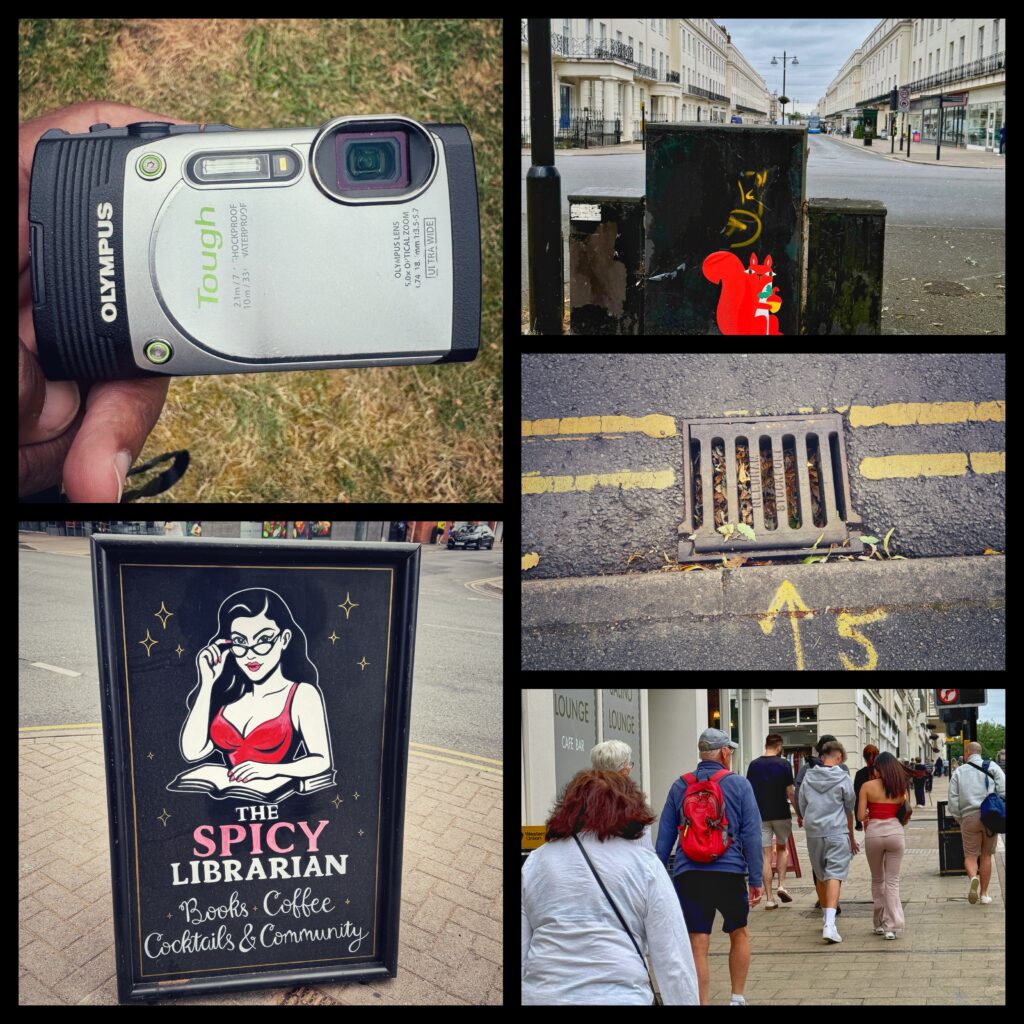
mix of pictures from the derive

If you would like to try the app out for yourself, email me and I’ll send you the link.


  1. A dérive, or “drift,” is a Situationist walking practice in which you set aside the most useful route and allow the streets, encounters, and atmosphere of a place to shape where you go. The point is not to get somewhere efficiently, but to notice what a familiar landscape has been saying all along. ↩︎

Dusting off the old street photography and field …

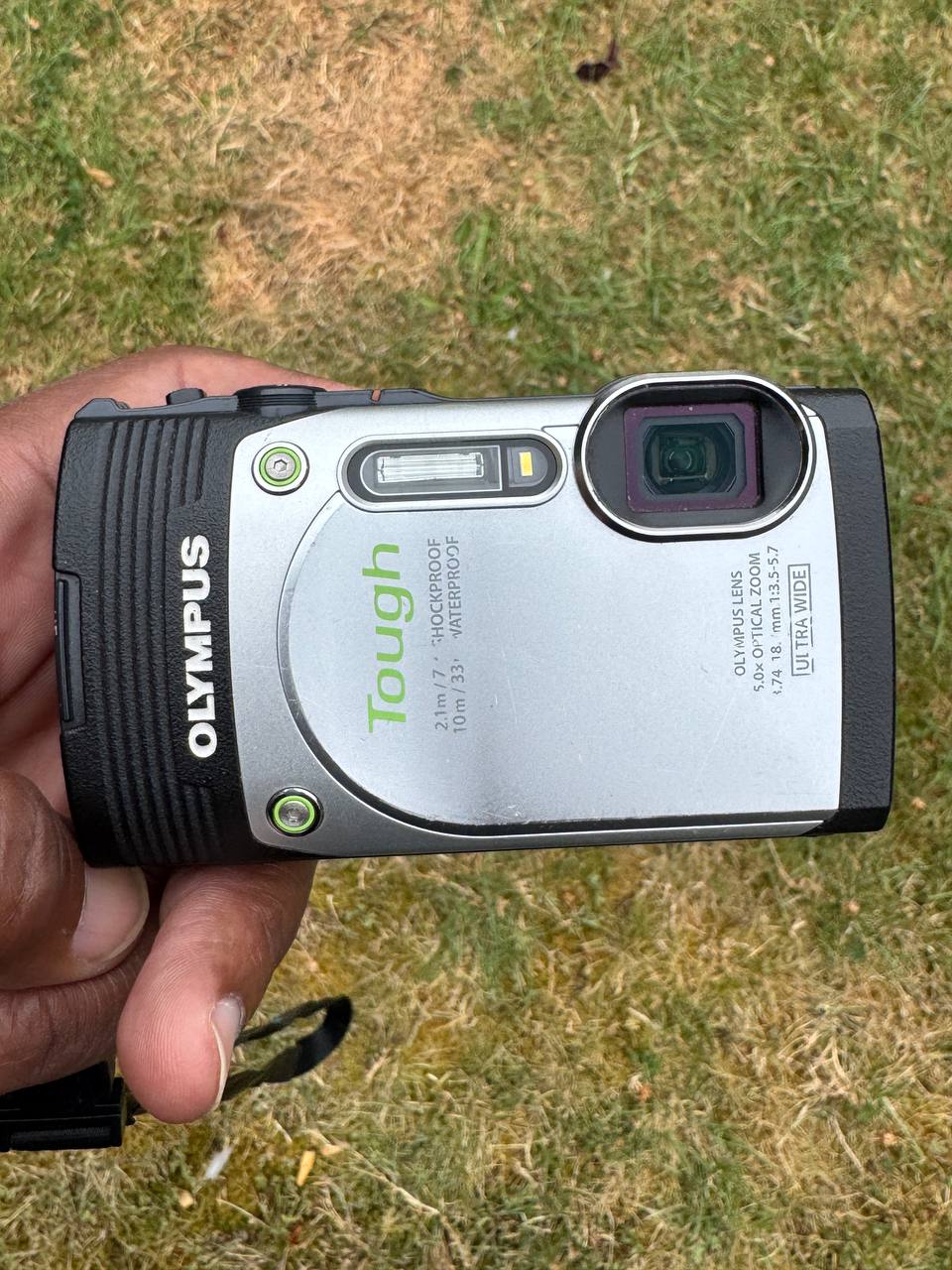
An Olympus Tough compact camera held over dry grass

Dusting off the old street photography and field note cameras this morning. The first one out of the drawer is my old Olympus Tough: compact, waterproof, shockproof, and made for being carried rather than protected.

I’m about to head into Leamington Spa to give the Deríve app I made over the weekend its first proper outing. The plan is simple: follow its prompts, pay attention to where they take me, and let the camera collect a few traces along the way

deríve app

I don’t know what I’m looking for yet. That’s part of the point. A camera like this feels less like equipment and more like permission to wander with my eyes open.

Sometimes the old tools don’t need replacing. They need a walk.

The mistake is to build the gift shop …

The mistake is to build the gift shop first.

A lot of independent people do this. We make the course, the membership, the coaching offer, the template pack, and the shop. Then we stand in the doorway wondering why nobody has come in.

It’s the wrong end of the building.

The work itself is the museum. The blog, the walk, the field note, the odd little web page, the newsletter, the experiment, the short video made from a day outside: these are the rooms people wander through. They’re where someone gets a feel for how you see, what you notice, the questions you keep returning to, and whether there’s a real person behind the thing.

A useful offer can still sit at the end of that visit. It might be a course, a workshop, a book, a paid community, a print, a small tool, or a way to go deeper. But it works best as something a person takes home from territory they have already spent time in. A souvenir, if you like, but one with a job to do.

This is not an argument against making money from the work. It’s an argument for letting the work have a life before asking it to become a funnel. Build rooms. Leave doors open. Let people see the practice in motion.

The same thing applies to AI. The tools now let one person make far more than they could make alone: pages, drafts, videos, apps, images, research trails, even small strange artefacts. That doesn’t make the human unnecessary. It makes taste, attention, and editorial judgment more valuable. Somebody still has to decide what is worth making, what belongs together, what sounds true, and what can go in the bin.

I’m trying to think of the solo practice less as a personal brand and more as a small studio. The writer, researcher, editor, designer, and technician may now have some machine help. Fine. Somebody still has to walk the road, notice the bird on the fence, have the thought, and decide why it matters.

Make the museum. The gift shop will have something worth selling.

I keep coming back to this: people are …

I keep coming back to this: people are looking for something genuine.

They might call it good work, a useful tool, a decent conversation, a song that gets under the ribs, a place where they can take their guard down for five minutes. The label changes. The hunger doesn’t

You can feel the difference when somebody has tried to make contact rather than merely perform. There’s a person in the thing. A bit of risk. A lived question. Maybe a rough edge left in because polishing it away would have taken the life out of it.

Genuine does not mean perfect, pure, or terribly serious. It means the thing comes from somewhere real. It has fingerprints on it. It gives you a reason to believe there might still be somebody on the other side of the screen.

Thinking with my feet I have started calling …

Thinking with my feet

I have started calling them Wisdom Walks, which sounds a little grand for what usually begins with me putting on my shoes and trying to get out of the house before I disappear too far into the screen.

But the name has earned its keep. I go walking when something in me has become stuck: a question about work, a snag in a piece of writing, a feeling I have been carrying round without properly looking at it. I don’t go out with a plan to solve it. I take it with me and see what happens once it has to travel alongside the rest of life.

There’s a difference between sitting at a desk and trying to think your way through a problem and walking with it for an hour. At the desk, I can become a small committee meeting in my own head. I revisit the same argument, polish the same worry, and call it inquiry. On the road, the question has to make room for traffic, dogs, the weight of my rucksack, somebody mowing a lawn, and the stiffness in my legs on a hill. The world keeps interrupting. I think that is part of the point.

Walking puts a question back into proportion. It gets it out of the little sealed room behind my eyes. It does not make the question disappear, but it lets me come alongside it rather than stare at it from six inches away.

Some of my favourite philosophers were keen walkers. Thoreau made walking a way of refusing the narrowness of town life and other people’s expectations. Rousseau used his walks for memory, solitude, and self-examination. Nietzsche claimed that all truly great thoughts are conceived while walking. I do not need to borrow their coats to see the truth in it. A thought changes when the body has to carry it.

That is the bit I keep coming back to. I think better on the move because movement is not just the backdrop to the thinking. It is part of the apparatus. The rhythm of the feet, the changing ground, the simple fact of having somewhere to go: all of it gives the mind another way to work. Ideas arrive sideways. An old memory turns up because I pass a particular street. A sentence I could not finish at the desk finds its last few words when I am crossing the road.

Not every walk gives me a revelation. Some walks leave me with tired feet and less static in my head. That is enough. I do not want to turn walking into another self-improvement project with targets and outcomes. Sometimes the walk is simply a way of letting the mind compost. Sometimes it gives me a line for the notebook. Sometimes it shows me that I have been asking the wrong question.

For me, a Wisdom Walk is self-inquiry with the doors open. I take a question out into the world, let the road and the body have their say, and wait to see if a truer sentence catches up with me.

This morning I had one of those spells …

This morning I had one of those spells where there were so many possible things to do that I couldn’t bring myself to choose any of them. Nothing dramatic. Just the little wheel-spin of a mind faced with too many open tabs and too many worthy directions.

Then I decided to walk into town for sausages and hot dog buns.

That gave the day a shape.

There’s fresh sunshine in Southam to enjoy. I’ll light the barbecue this afternoon, cook a few sausages, and sit outside for a while in the shade and drink a few IPAs my daughter dropped off this morning and that are now chilling in the fridge. I think that’s a good enough recovery plan. No grand strategy. Just food, a walk, some sun, and lounging in the back garden.

I forget this sometimes. The answer to a head full of choices isn’t always another choice. Sometimes it’s a pack on my back, a familiar route into town, and something simple to prepare when you get back.

The work can wait until my mind clears. For now, the sausages will do.

I don’t usually weigh in on political matters, …

I don’t usually weigh in on political matters, but as an independent creator, discovery is already hard enough. Now the UK government is putting its thumbs down on the scale. YouTube & TikTok Compelled To Boost BBC & ITV Content Under UK Government Plans

The government’s argument is basically that the media landscape has changed, and public-service broadcasters are getting buried inside algorithmic platforms. People increasingly get news and culture through YouTube, TikTok, etc., so the UK wants trusted public service content (BBC, ITV, Channel 4, 5) to remain visible rather than disappear behind whatever the recommendation engines reward.

I get it; however, because attention is a scarce resource online, a recommendation slot isn’t neutral. If an algorithm boosts one thing, something else moves down. And I’m already so far down the list that something like this will essentially make me invisible.

For a solo YouTuber, podcaster, blogger, or filmmaker, the modern bargain has always been this: you don’t have a broadcaster’s budget, but at least you can compete in the same feed. A bedroom creator can occasionally outrank a corporation because the audience decides. That possibility is part of what made the creator economy exciting.

The question becomes: what is YouTube?

If it’s like old television infrastructure, then the government sees “prominence rules” as similar to making BBC One easy to find on your TV guide.

If it’s a creative commons/marketplace of individual voices, then forcing prominence feels more like giving established institutions premium shelf space in a shop where everyone else has to fight for the back shelves.

There’s another layer too: institutions like the BBC already have advantages:

  • brand recognition
  • archives
  • production budgets
  • journalists
  • marketing teams
  • existing audiences

Meanwhile, an independent creator is trying to win attention one post at a time.

The tricky bit is that both fears can be true: misinformation is a real concern, and concentrating visibility around legacy institutions can make the web feel less open.

It actually connects to a lot of the early weblogging ethos: the internet was exciting because a person with a weird little website could sit beside CNN, BBC, or The Guardian in the same browser window. Authority came partly from links, reputation, community, and usefulness — not just institutional status.

The philosophical question hiding underneath this story is: should the internet optimise for trusted institutions or for discovery from the edges?

The early web crowd would probably say: the interesting stuff usually comes from the edges. 😉