nothing is ever as simple
as it seems…adding the ActivityPub plugin to the site was supposed to take a few minutes. the videos make it look as easy as clicking a few links…well I can’t say the experience of a few minutes has been reality.
working notes from the textual underground
as it seems…adding the ActivityPub plugin to the site was supposed to take a few minutes. the videos make it look as easy as clicking a few links…well I can’t say the experience of a few minutes has been reality.
surrender is such an evocative word. it conjures up images of white flags and final breaths and giving up. but what i’m beginning to realise is that in the space of spirituality, surrendering isn’t about giving up, it’s about giving in. it’s about leaning into the flow and allowing life to unfold instead of exhausting yourself trying to force life to happen. something i still need to deal with though is my lingering belief that surrendering is a passive act, and as an action man, this goes against the grain of who i believe myself to be.
what does the orange tree have to do to grow oranges? what does the sky have to do to be blue? what do you have to do to be?
my digital garden is more of a jungle right now, wild and untamed. i’m going to have to hack through the overgrowth and do some much needed pruning to get it to where i want it to be…work in progress
I’m having trouble with IndieBlocks. The Elementor widget won’t display notes, so I’ll try using a regular post category instead.
Ben: “Let go of your conscious self and act on instinct.” Luke: “How am I supposed to fight? I can’t see!” Ben: “Your eyes can deceive you. Don’t trust them.” Inner space If we spend time only working with our rational mind, then we are only ever likely to get half of the story. If we want to truly nurture our own personal growth, then we need to connect to our inner self, our subconscious mind, to get what Paul Harvey used to say, The rest of the story.? Connecting with our subconscious mind requires us to use our imagination—like
A cyberflâneur, by definition, strolls through the Internet. Little purpose guides his journey, and hours slip by as the individual explores the many different crevices
this post is a mix of humour, philosophy, and speculation (my cup of tea). Osiris (the author) uses provocative language and imagery to make a
The Matrix is a system, Neo. That system is our enemy. But when you’re inside, you look around, what do you see? Businessmen, teachers, lawyers,
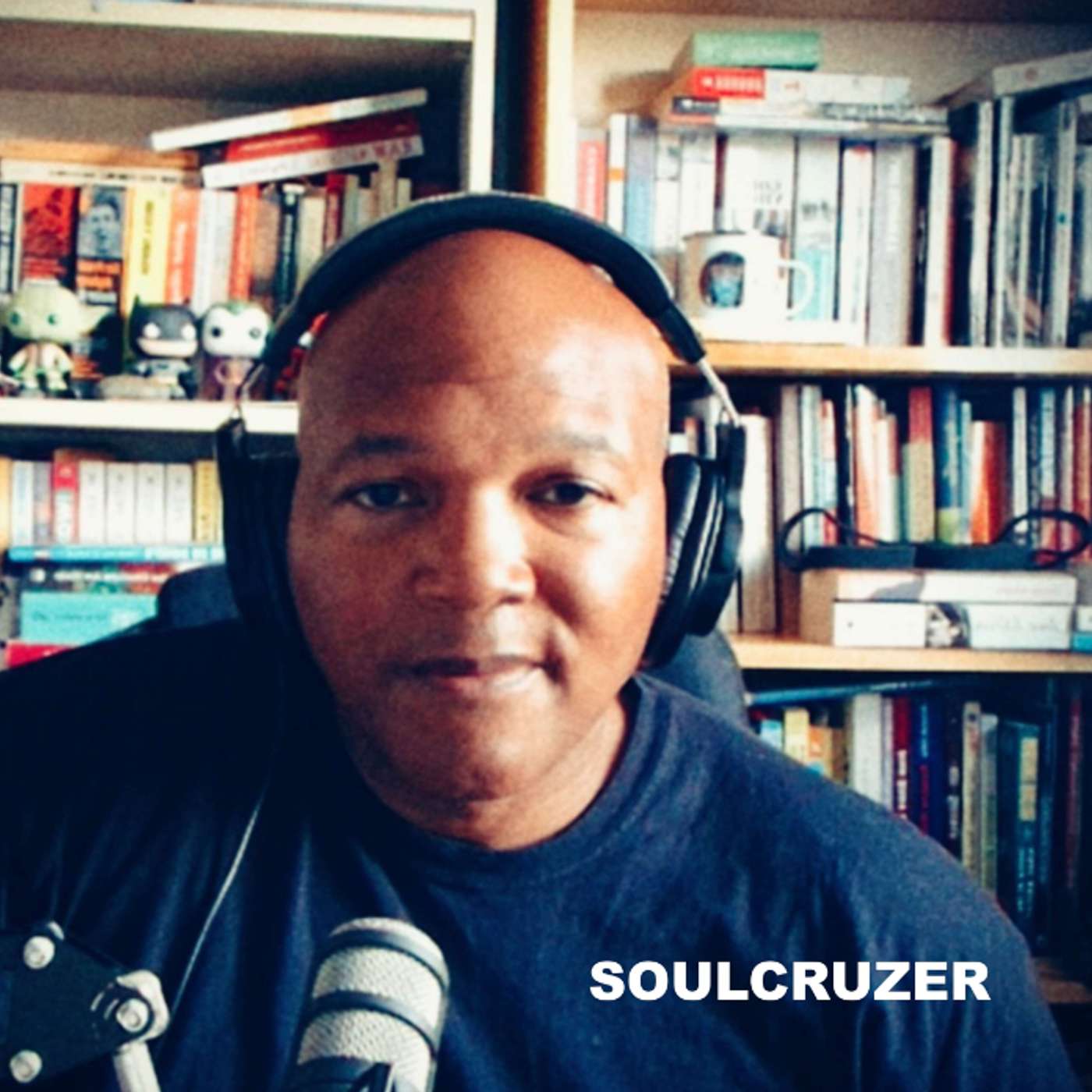
Hi, my name is Clay Lowe, aka Soulcruzer. This is the part where I have to reduce myself to a label so you can understand who I am and what I am about. But as Kierkegaard pointed out, labels have a way of negating the person. If I tell you I’m a blogger, I get reduced to whatever meaning you’ve assigned to the word ‘blogger’. I resist labels. And yet, here we are. So, in the context you find me in now, I am indeed a blogger.
I have worn many others. I’ve been a soldier, a learning and development consultant, a trainer, and a coach. I’ve also called myself a barefoot philosopher, a narrative alchemist, and a rogue learner, among others. These were an attempt to orient me to myself. More recently, I’ve been working out what it means to operate as a text-based ontologist in a world where text is becoming the universal substrate.
A text-based ontologist sounds like someone who should live in a footnote.
They don’t.
They live in the browser window, the notebook, the prompt box, the blog editor, the Obsidian graph, the half-finished post, and the walking thought captured before it evaporates. Their material is language. Their subject is being. Their method is to hold attention long enough for a sentence to disclose what it is carrying.
It’s not really a job title. It’s more of a way of being caught by the world.
In the end, though, I am just a man walking a path.
Field Notes from The Old Mint, Southam I went out for a short wisdom walk this afternoon. Nothing grand. No pilgrimage. No mountain path. Just enough movement to loosen the mind and let a little air into the machinery. Walking does that for me. It opens a space in which thoughts can arrive without being summoned. They come sideways, through the body, through rhythm, through the simple fact of moving forward while not necessarily trying to get anywhere. The day was so good that it felt almost rude not to stop for a pint. So I did. At The Old
(1) The Linguistic Stutter The cursor on my screen is a rhythmic, glowing pulse. It is the heartbeat of a binary ghost, a small white rectangle of light that blinks with the mechanical patience of an entity that never sleeps. I sit here in the quiet hours, a “soft-cyborg” tethered to a vast network of information, and I type a sentence that feels like a confession: I am all about Psyche and Soul. To the grammarian, I have just committed a redundant sin. To the etymologist, I am stuttering in public. If we look at the Greek roots, psukhē translates
I’m standing in a field looking towards the horizon. It occurs to me that I’ve spent a lifetime doing this. Different fields. Different coastlines. Different countries. Different versions of myself, always finding a line where earth gives itself over to sky. The horizon is a peculiar thing. It promises distance while refusing arrival. However far you walk, it quietly withdraws, asking nothing except that you keep going. For reasons I can’t quite explain, the Oracle from The Matrix wanders into the field with me. Not the whole scene. Just one line. “I thought you’d have figured that out by now.“
(1) The door opens I keep thinking about a passage I read recently: “Leave the door open for the unknown, the door into the dark. That’s where the most important things come from, where you yourself came from, and where you will go.” I like the mystery of it. The unknown is a black hole, a dragon, a grey man living a grey life. It whispers: “You’ll die in obscurity. You’ll leave no trace that you ever existed. You have won no awards. You’ve made no impact. You’re gone tomorrow just like that.” I hang onto the idea that people
The morning began with a quiet decision to let the town rearrange itself around me.1 I had spent the weekend building two small dérive apps. Nothing polished, just enough to nudge my attention sideways. And now, standing at the edge of Leamington Spa, I wanted to see what they would do to a place I thought I knew. Twenty-six years of walking these streets had given me a practical map: the shortcuts, the shops I relied on, the routes that got me from one thing to the next without fuss. But the apps didn’t care about any of that. They
The person who most needs to change is usually the last person who can accurately judge what the change will ask of them. I keep coming back to this because it sits underneath almost every serious conversation about inner work. Someone arrives at the edge of a change. A burnt-out executive who can no longer pretend the old success story is enough. A trainer wondering what their practice becomes in an AI-shaped world. A person who has carried the same story about themselves for so long that it has started to feel less like a story and more like the
I’ve been thinking about vaporwave as more than an internet aesthetic. Yes, it gives us the pink neon, the Greek busts, the dead malls, the Japanese text, the VHS blur, the Windows 95 ghosts, and the palm trees under impossible sunsets. But beneath all that surface noise, something stranger is happening. Vaporwave feels like a walk through the ruins of a future we once believed in. The smooth corporate dream. The frictionless lifestyle. The shopping mall as a public square. The early internet as a frontier. The screen as a doorway. The brand as an identity. The promise that technology
I have made a public service announcement for the modern age. I’m sure you’ll be pleased to know that it’s not about AI or about the collapse of Western civilization or the latest release of the iphone. No. This one concerns the ancient human problem of what happens when someone leaves the loo in a condition that suggests the next visitor may need counseling. I went camping this past weekend up north near the Wyre River. I’ve spent enough time in campsite toilet blocks to know that civilisation is not held together by constitutions, parliaments, or leadership frameworks. It’s held
I walked to the gym this morning. That sounds too ordinary to announce, which is probably why it matters. The gym is only seven minutes away by car. My normal routine is to get in, drive there, work out, drive back, eat something, shower, and be behind the desk by nine like a good citizen of the industrial clock. That’s the sensible move. The 9-to-5 clock still lives in me. I can feel it. Even now, self-employed, answering to no manager hovering over my shoulder, I can still feel the old tribunal warming itself up somewhere behind my eyes. By
I woke up this morning in my tent thinking about self-validation. That’s the barefoot philosopher taking advantage of a little solitude before the day starts. If the ego is partly a protection system, can it ever be trusted to validate the self it is trying to protect? “Know thyself” sounds noble until we remember that the self doing the knowing is also the self editing the footage, hiding the evidence, managing the courtroom, and sometimes bribing the judge. So yes, self-validation is possible, but probably not as a solitary act of pure inner certainty. It’s more like a triangulation. Self-validation
I’ve been using the Plaud NotePin for a while now. I wear it around my neck like a lanyard. It’s a pretty stylish-looking device, so it doesn’t tend to draw attention to itself. I wear it on my wisdom walks. It’s an easy way for me to walk and capture my notes hands-free. And because it has a 20-hour battery life, I can just record and forget about it. I probably look like a bit of a madman walking and talking to myself. But that’s OK. And then when I get home, Plaud converts into an MP3, and I upload
Today I went to the #1984Symposium, held beside George Orwell’s grave on what would have been his birthday. Orwell, of course, was born Eric Arthur Blair on 25 June 1903. George Orwell was the name he wrote under, the name that now floats above him like a warning label attached to the twentieth century. But at the grave, it felt less like visiting “George Orwell the icon” and more like standing beside the resting place of a man whose questions are still walking around without him. The gathering itself was wonderfully un-grand. No stage. No branding. No big institutional apparatus.
What appears here as a blog post usually began somewhere less presentable. A sentence in a daily note. A line spoken into a recorder while walking. A paragraph abandoned three years ago. A highlight from a book I wasn’t expecting to matter. A half-formed thought dropped into Obsidian before it could evaporate. A conversation with Milton, or Claude, or Copilot, where something in the archive started tugging at my sleeve. By the time a piece reaches the blog, it’s already got a little history. This is easy to forget, because blogs make writing look cleaner than it is. A post
This old post has wandered back into consciousness: Holy Gonzo! Embracing Chaos and Truth on the Path to Self-Discovery. I reposted on social media over the weekend. I wrote it back in October 2024, but reading it now, I’m feeling drawn to explore the subject further. The phrase at the centre of it all is Gonzo Spirituality. At the time, I was trying to name a kind of spiritual practice that didn’t require me to step away from the life I was actually living. I wasn’t drawn to the serene, white-robed, mountain-retreat version of spirituality. I didn’t want a path
07:39. I’m in my lounge chair drinking black coffee, the morning still soft around the edges. For my morning read today, I’ve been revisiting Hunter S. Thompson, starting with the book that began my literary love affair with his work: Better Than Sex: Confessions of a Political Junkie. There’s something about Hunter that still gets under my skin in the best possible way. He doesn’t simply report the story. He enters it. He becomes part of the event he’s describing. He’s not pretending to stand outside the madness with clean hands and a neutral expression. He is in the room,
Saturday. Kessingland. A camping field on a sea cliff; the morning is already bright by the time I properly arrive in it. I wanted to watch the sunrise. That was the plan in the loose way plans form when you sleep outdoors and imagine yourself becoming more elemental by morning. But the field gave me sleep instead, and the sun did its work without me standing there to witness it. There’s something almost comic in that. I had come to the edge of the country with the vague heroic notion of rising with the light, looking out across the water
In this episode, I take the Soulcruzer podcast out of the studio and into the fields. What starts as an experiment in mobile podcasting/vlogging turns into a wandering meditation on labels, blogging, AI, morning rituals, and the strange abundance of media tools we now carry in our pockets. Show notes: Why I still think of myself as a blogger first– Podcasting, vodcasting, and the pressure to become “multimodal”– The problem with labels: “When you label me, you negate me”– soulcruzer.com as the central hub/home on the internet– Wisdom Walks as thinking time– Walking, motion, and changing perspective– The “barefoot philosopher”
I am beginning to think the morning is far stranger than we give it credit for. We talk about mornings as if they are mainly practical things. Alarm clocks. Showers. Coffee. Breakfast. Getting dressed. Checking the weather. Remembering where you have to be and what you have to do. But there is another morning underneath that morning. Before the day becomes a list, before the phone starts singing its little songs of demand, before the world gets its hooks into you, there is a softer moment. A brief threshold. A little gap between sleep and identity where consciousness starts assembling
A working note on Ruth Netzer, tarot as active imagination, and the Jungian Quest for the Self as a spiral of symbolic integration rather than a simple heroic journey.

The Soulcruzer podcast is an audioblog from the edge of the inner life.
Part personal essay, part field recording, part narrative alchemy, it follows the strange places where story, psyche, myth, technology, and everyday experience begin to speak to each other.
One episode might wander through tarot as reflective technology. Another might take Nietzsche’s eternal return for a walk, explore games as containers for transformation, or ask what happens when ancient wisdom meets the AI age. Depth psychology brushes against the esoteric. Philosophy comes down from the shelf. Theory gets tested against life.
This is not polished guru-talk or productivity theatre. It is a mind in movement: raw notes, live experiments, confessional mysticism, and working fragments from the textual underground.
At the heart of it all is a simple premise:
Stories are code. Reality is programmable. And the life you are living might be more editable than you were taught to believe.
If you are drawn to the deep work, the strange edges, and the art of becoming more fully alive, subscribe wherever you get your podcasts.
In this episode, I take the Soulcruzer podcast out of the studio and into the fields.
What starts as an experiment in mobile podcasting/vlogging turns into a wandering meditation on labels, blogging, AI, morning rituals, and the strange abundance of media tools we now carry in our pockets.
– Why I still think of myself as a blogger first
– Podcasting, vodcasting, and the pressure to become “multimodal”
– The problem with labels: “When you label me, you negate me”
– soulcruzer.com as the central hub/home on the internet
– Wisdom Walks as thinking time
– Walking, motion, and changing perspective
– The “barefoot philosopher” approach to everyday philosophy
– AI as an extension of cognition rather than just a productivity tool
– The “soft cyborg” and the library of Alexandria in your pocket
– Morning reality tunnels and the sacred space before breakfast
– Coffee, barefoot grounding, and choosing what enters your mind first
– Indie blogging, platforms, Substack, distribution, and the open web
– Why these episodes may stay loose, minimally edited, and stream-of-consciousness