latest from the stream

essays, working notes, fragments, mixtapes, podcasts, and experiments

Soulcruzer

Know thyself sounds a little too noble

I woke up this morning in my tent thinking about self-validation. That’s the barefoot philosopher taking advantage of a little solitude before the day starts. If the ego is partly a protection system, can it ever be trusted to validate the self it is trying to protect? “Know thyself” sounds noble until we remember that the self doing the knowing is also the self editing the footage, hiding the evidence, managing the courtroom, and sometimes bribing the judge. So yes, self-validation is possible, but probably not as a solitary act of pure inner certainty. It’s more like a triangulation. Self-validation

Read More »
Soulcruzer

In the street, I leave footprints. On the web, I leave links.

I’ve been using the Plaud NotePin for a while now. I wear it around my neck like a lanyard. It’s a pretty stylish-looking device, so it doesn’t tend to draw attention to itself. I wear it on my wisdom walks. It’s an easy way for me to walk and capture my notes hands-free. And because it has a 20-hour battery life, I can just record and forget about it. I probably look like a bit of a madman walking and talking to myself. But that’s OK. And then when I get home, Plaud converts into an MP3, and I upload

Read More »
Clay Lowe

At Orwell’s Grave, Still Asking Who Watches

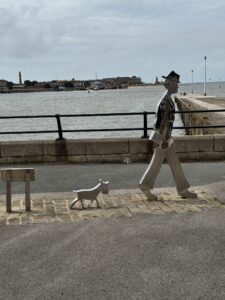
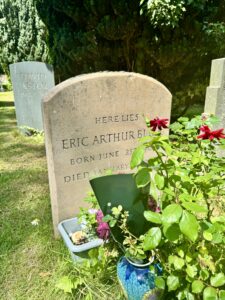
Today I went to the , held beside George Orwell’s grave on what would have been his birthday. Orwell, of course, was born Eric Arthur Blair on 25 June 1903. George Orwell was the name he wrote under, the name that now floats above him like a warning label attached to the twentieth century. But at the grave, it felt less like visiting “George Orwell the icon” and more like standing beside the resting place of a man whose questions are still walking around without him. The gathering itself was wonderfully un-grand. No stage. No branding. No big institutional apparatus.

Read More »

working notes

Fragments, field notes, and half-lit thoughts from the textual underground 

I’ve got the new Masters of the Universe queued up on Prime for viewing tonight. I suspect I’ll be viewing it through two lenses. The kid, waiting to hear “I have the power!” and the storyteller who’s curious to know if they can make the mythology of Eternia something more than a marketing reboot. One thing I hope they preserve is what made the original strangely compelling beneath the Saturday morning animation: it wasn’t just muscles and monsters. It was a mythic story of identity. Adam isn’t powerful because he’s He-Man; he’s powerful because he chooses to become He-Man. That’s a classic hero’s journey dressed up in neon armor.

This morning I picked up How to Practice Self-Inquiry by Ramana Maharshi. I expected a quick survey read, a reconnaissance mission into the territory of the question Who am I? Instead, before I had travelled very far into the book, another question appeared:

Is this your game? Is this your true mission?

I could almost locate the voice physically. I raised my left hand as though it were speaking from that side of my brain. It wasn’t dismissing the book. Intellectually, I find the whole thing fascinating: the idea of following the sense of “I” backwards, beyond name, history, personality and role, towards whatever remains when all the usual answers have fallen away.

But fascination is not necessarily vocation.

As I sat there thinking about consciousness, another whisper began pointing elsewhere—back towards The Feminist Art of Walking, towards psychogeography and mythogeography, towards the work I have been doing around movement, place and the conversation between the inner and outer worlds.

That is where the energy seems to be.

As I understood it this morning, Ramana’s method moves inward by subtraction. Sit still. Withdraw attention from the world. Follow each thought back to the one who is thinking it. Ask who is afraid, who is curious, who is restless, who is asking the question. Keep tracing the “I” towards its source.

There is something beautiful and rigorous about that. But there is also a part of me that resists the image of consciousness as a room I must enter and seal behind me.

My own inquiry seems to begin when I leave the room.

I experience myself through contact with the world: walking through fields, streets, ruins, footpaths and forgotten corners; noticing signs, overhearing fragments of conversation, encountering weather and history; allowing a place to disturb the familiar arrangement of my thoughts. The landscape does not merely provide a backdrop for reflection. It participates in the reflection. It interrupts, provokes, remembers and responds.

Perhaps I do not discover myself by withdrawing from the world, but by entering more deeply into relationship with it.

The question, then, may not be simply:

Who am I?

It may be:

Who am I here?

Or:

Who do I become in contact with this place?

What does this street awaken in me? What does this landscape remember on my behalf? Which part of me appears only when I am moving? What does the world call into speech that would otherwise remain silent?

This feels like a form of self-inquiry, but one conducted through encounter rather than retreat. An ambulatory self-inquiry. The inquiry is distributed across body, place, memory, history and imagination. My feet become part of the thinking apparatus. The route becomes a line of thought drawn across the land.

Movement is not a distraction from contemplation. It is the engine of it.

Perhaps the value of Ramana’s book, for me, will not be that it persuades me to adopt his method exactly. Its value may lie in the contrast it creates. It shows me one path towards the self clearly enough that I can recognise the shape of my own.

His path says: strip the world away and discover what remains.

Mine may be saying: enter the world more fully and discover what emerges.

So the question Who am I? remains, but it refuses to sit still. It wants weather. It wants roads, thresholds, voices, ruins and chance encounters. It wants to be carried into the world and allowed to change as the landscape changes.

Perhaps I am not a monk of consciousness.

Perhaps I am a walker in the world.
“Same shit, different day” is one of those phrases I hate because it usually arrives wearing a smirk. It reduces a life to a conveyor belt: wake up, coffee, work, scroll, eat, sleep, repeat. A little verbal shrug before another day gets fed into the machine.

And yet, some mornings, it’s mostly true.

Routine isn’t the villain. I like the small anchors of a day: making coffee before I look at a screen, walking the familiar stretch of road, opening the notebook, sitting down to work before I’ve had time to invent too many reasons not to. A few repeated acts hold the shape of a life together. They save you from having to negotiate every tiny decision from scratch.

But routines have a dark side. They can turn into grooves so deep you stop noticing you’re in them. You take the same route because it’s efficient. You eat the same lunch because it’s easy. You keep putting off the phone call, the email, the invitation, the strange little idea that keeps knocking because it doesn’t fit the version of you who has got things under control.

Nothing dramatic happens. That’s part of the problem.

You don’t wake up one day and find a guard standing at the edge of your life saying, You may not leave the pattern. You just keep choosing the familiar option until it starts choosing for you.

When I feel that happening, I borrow a trick from Luke Rhinehart’s The Dice Man. Not the whole project — I’m not handing my moral agency over to a cube of plastic — but the basic interruption.

I make a list of six possible actions.

They can be small: take a different route into town; work from a café rather than the desk; send the message I’ve been rehearsing in my head for three weeks; spend an hour reading something outside my current obsessions; go somewhere I’ve never bothered to enter; make the phone call.

One option has to be something I would not normally choose. Not reckless. Not self-sabotaging. Just inconvenient, unfamiliar, or slightly embarrassing. Something the routine-self would dismiss before it had a chance to become real.

Then I roll a d6.

The only rule is that I honour the roll. No best-of-three. No quiet reinterpretation. No “well, technically I have done the thing by thinking about doing it.” The dice don’t care what I wanted.

That’s the point.

Most of the time, I know what I want before the die stops moving. I roll a three and feel a small lift of disappointment. Or relief. That feeling tells me more than another hour of analysis would. The die has not revealed a cosmic instruction. It has made my preference visible by putting something else in front of it.

Other times, the roll sends me somewhere I wouldn’t have gone: down a road I’ve ignored, into a shop that has sat in my peripheral vision for years, towards a conversation that breaks the stale internal monologue. The day doesn’t become a cinematic adventure. Usually, it becomes a day with one less automatic movement in it.

That can be enough.

I don’t think the dice are wise. They are indifferent little objects with numbered faces. But indifference has its uses when your own habits have become too persuasive. The roll cuts through the committee meeting in your head. It interrupts the little boss who thinks safety and repetition are the same thing.

Sometimes the right response to “same shit, different day” isn’t a grand reinvention. It’s a different walk home. A meal you haven’t made before. A message sent without polishing it into dust. One small act of disobedience against the machinery of your own predictability.

Roll the dice. Then go where it tells you.

At least for today.

The forest does not offer answers in the way a book, a screen, or a clever conversation does. It gives you texture. Uneven ground. The sound of your own feet. Branches moving against one another. The minor negotiations of a body making its way through the world. In that setting, the mind’s usual bureaucracy begins to lose authority. The lists, rehearsed conversations, inherited measures of success, old complaints, small self-defences: they do not disappear, but they stop being the only voices in the room.

To “lose my mind” is not to become irrational. It is to step outside the cramped administrative office of the self. The mind that Muir wants to lose may be the one that keeps score, keeps pace, keeps the gates shut. In the forest, attention gets redistributed. A bird call cuts through the internal monologue. A patch of light on moss asks nothing of you. A path bends out of sight, and for a few minutes the future is not a project but a turn in the trail.

Then the soul, if we use that old word without embarrassment, has a chance to speak in its quieter register.

Perhaps the soul is not a hidden object we discover, like a coin in the leaf mould. Perhaps it is the part of us that reappears when we stop forcing experience to justify itself. It knows something about proportion. It remembers that we belong to a world that was not made to fit inside our plans. It brings us back to appetite, grief, wonder, fatigue, gratitude, and the strange relief of being one animal among many.

The forest does not cure us of thought. It gives thought a wider habitat. We return with the same problems, perhaps, but their edges have changed. The mind has been loosened from its familiar grooves. The soul has had some air. And the path home, though it may be the same path, no longer feels entirely owned by the person who set out.

I’ve been carrying a small psychogeographic instruction around with me: unfold a map, put a glass down anywhere, draw round its rim, then go out and walk the circle as closely as the streets allow. This is a low tech version of the deríve app I made last week.

It’s a lovely bit of mischief because it gives the walk a rule without getting to complicated. The line is arbitrary, yet the body has to negotiate it: the cul-de-sac, the dual carriageway, the bit of private land, the pub garden, the place where the tidy circle becomes a long awkward detour. The map makes a proposition, and the street answers back.

Robert Macfarlane’s version says to record the “textual run-off” as you go: graffiti, branded litter, snatches of conversation, visual rhymes, whatever keeps catching on the mind. A walk doesn’t need a grand revelation to become material. It only needs attention and a way of catching what sticks to it.

I like that the instruction ends with the circle and the record ending together. There’s a discipline in it. You don’t have to turn every walk into a project, a lesson, or a little performance for the screen. You walk the strange line you drew, make a few marks, and come home with whatever the streets were prepared to give you.

Maybe that’s enough. A route, a notebook, a few scraps of the world.

With thanks to Robert Macfarlane, “A Road of One’s Own.”

Rebecca Solnit’s sentences are archipelagos of thought. You step onto one clause and find another small island appearing just beyond it: a memory, a road, an old map, a story someone told her, a political fact that refuses to stay merely political. The sentence does not hurry you to its conclusion. It gives you somewhere to stand, then asks whether you might look sideways.

This can feel dreamy at first. Then you realise the dreaminess has a method. Solnit slows the reader down long enough for the usual boundaries to become less convincing. Inner life and public life. Geography and memory. A walk taken alone and the larger histories written into the land beneath the feet. She lets them mingle until you can no longer quite separate one from the other.

For a mind that likes to move laterally, this is a relief.

So much writing now arrives already ashamed of taking up time. It declares its point, breaks it into obedient little units, and offers a summary in case you have a more important tab waiting. Solnit’s prose makes another wager. It trusts that a digression can be part of the thing itself. It trusts that the route towards an insight may matter as much as the insight.

Deleuze and Guattari used the image of the rhizome: a root system that spreads sideways rather than growing from a single trunk. No proper beginning. No clean hierarchy. A potato does not look much like a tree, but it knows something about survival, multiplication, and finding another way through the soil.

Solnit’s paragraphs often work like that. They wander, return, take an unexpected turning, and then land somewhere that feels both surprising and inevitable. You don’t feel that she has lost the thread. You feel like the thread was never a straight line in the first place.

A Field Guide to Getting Lost understands this better than most books. Losing your way is not merely an error to correct. It can be the condition in which another kind of seeing becomes possible. The familiar map stops working. You have to look up. You have to notice where you are.

Perhaps that is why her work feels so companionable to anyone trying to think their way out of a narrow life-script. Her prose does not demand efficiency from the reader. It offers permission to follow an association, to linger with a contradiction, to walk the longer road without having to defend the choice.

There are thoughts that only arrive when we stop treating every detour as a failure of direction.

I write from the crossroads of philosophy, myth, music, AI, learning, and ordinary life. This is my living archive: part field notebook, part essay chamber, part signal fire from the textual underground, part hypertext adventure.

Working Notes from the Textual Underground

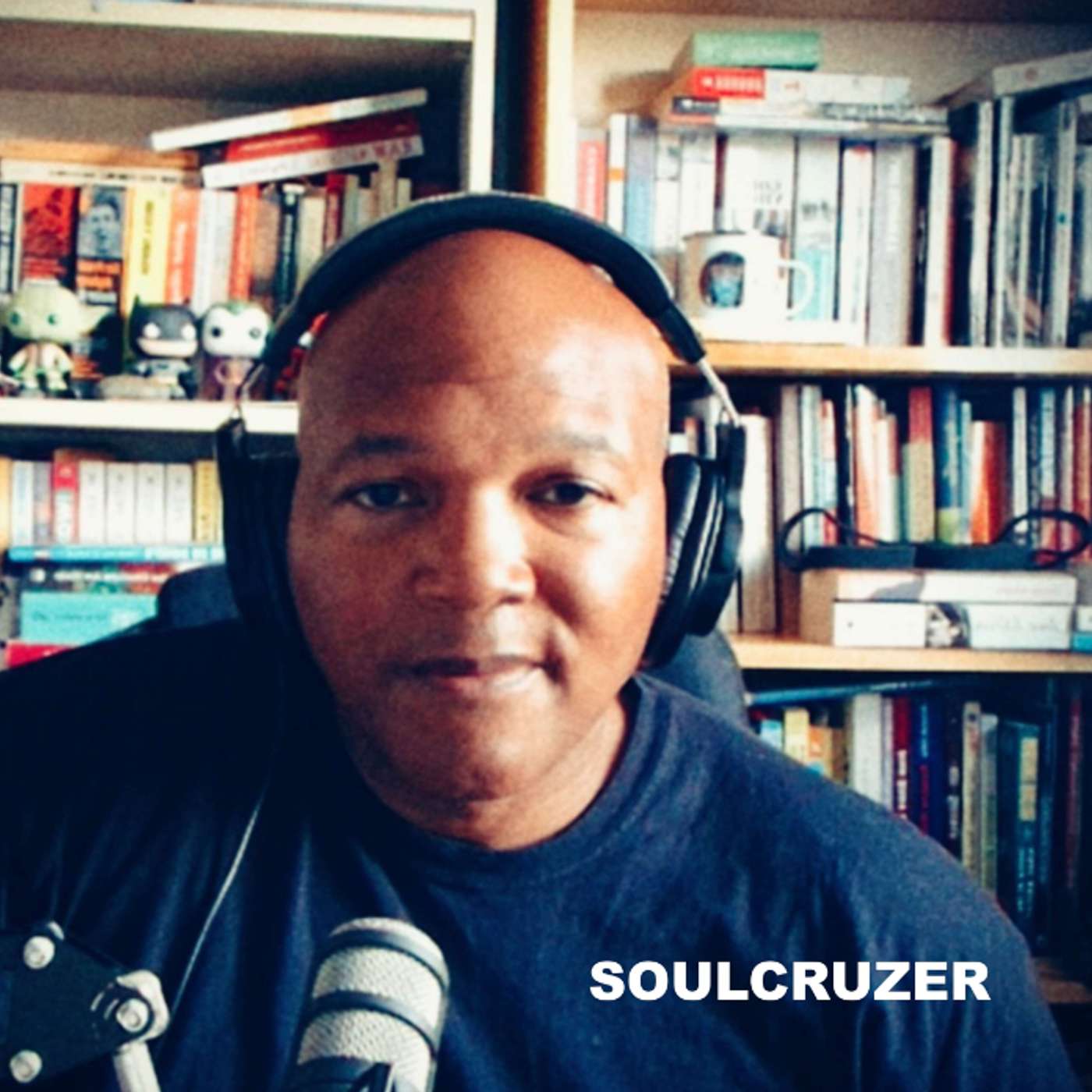
Hi, my name is Clay Lowe, aka Soulcruzer. This is the part where I have to reduce myself to a label so you can understand who I am and what I am about. But as Kierkegaard pointed out, labels have a way of negating the person. If I tell you I’m a blogger, I get reduced to whatever meaning you’ve assigned to the word ‘blogger’. It has been my habit to resist labels. And yet, here we are. So, in the context you find me in now, I am indeed a blogger, and I am much more than that!

I have worn many other labels. I’ve been an infantry officer, a learning and development consultant, a trainer, and a coach. I’ve also called myself a barefoot philosopher, a narrative alchemist, and a rogue learner, among others things. These were an attempt to orient me to myself and myself to you. More recently, I’ve been working out what it means to operate as a text-based ontologist in a world where text is becoming the universal substrate.

A text-based ontologist sounds like someone who should live in a footnote.

They don’t.

They live in the browser window, the notebook, the prompt box, the blog editor, the Obsidian graph, the half-finished post, and the walking thought captured before it evaporates. Their material is language. Their subject is being. Their method is to hold attention long enough for a sentence to disclose what it is carrying.

It’s not really a job title. It’s more of a way of relating to this blog and the wider web.

In the end, though, I’m just a dude doing his thing and sharing it on the internet. 

The best place to follow my work is here. Better yet, get the newsletter version and never miss a post, or alternatively, subscribe via my RSS feed.

latest from the podcast

status update

BlueSky Latest Posts

last check-in

Worcester, Worcestershire, United Kingdom, UTC+1

I do like to chat. Say hi!

0
Would love your thoughts, please comment.x
()
x