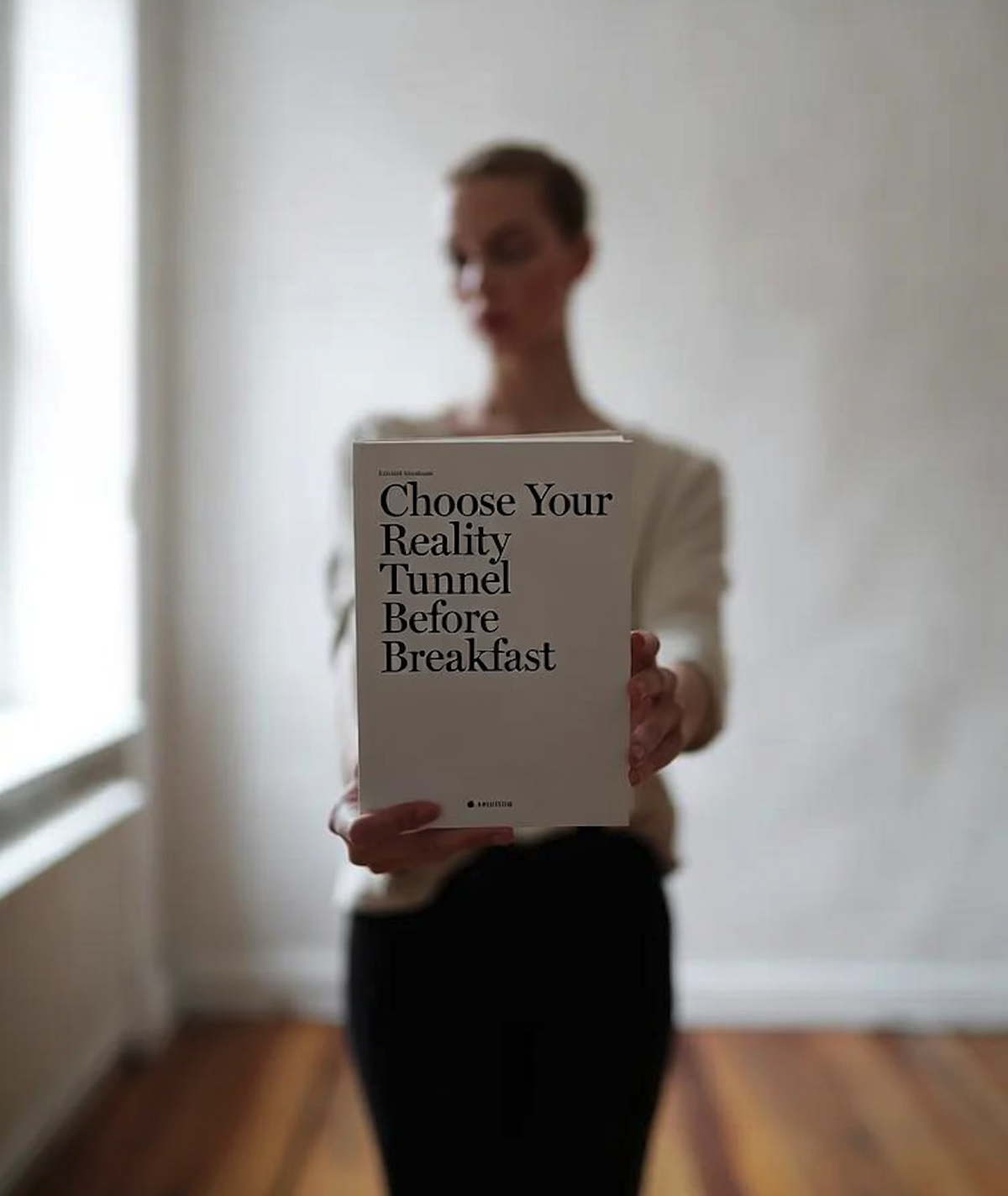
I am beginning to think the morning is far stranger than we give it credit for.
We talk about mornings as if they are mainly practical things. Alarm clocks. Showers. Coffee. Breakfast. Getting dressed. Checking the weather. Remembering where you have to be and what you have to do.
But there is another morning underneath that morning.
Before the day becomes a list, before the phone starts singing its little songs of demand, before the world gets its hooks into you, there is a softer moment. A brief threshold. A little gap between sleep and identity where consciousness starts assembling itself again.
You wake up, but not all at once.
First the body returns. Then the room. Then the name. Then the obligations. Then yesterday’s unfinished business lumbers in wearing its boots, acting like it owns the place.
And somewhere in that first fragile window, before breakfast, before the algorithm gets a chance to install its theatre in your nervous system, the world is still unclaimed.
That is the moment I’m interested in. The luminal space between sleep and waking up, what researchers call hypnopompic. It’s the state between sleep and full waking, when the brain is surfacing but has not yet settled into its ordinary frequencies. It is soft, strange territory. Dreams are still close. The wall between inside and outside has not finished hardening. And it doesn’t last. Within a minute or two the world reassembles itself.
Why am I interested in this space? It’s definitely not because I want to optimise it. God save us from turning every sacred human interval into a productivity hack. I’m not trying to become a more efficient machine before 7 a.m. I’m interested in that moment because it may be one of the few places in ordinary life where freedom still enters quietly.
The morning isn’t just the start of the day.
It’s the first act of world-making.
You don’t simply wake up into reality. You wake up into a version of reality. The question is, who gets to choose the first version?
The Tunnel You Wake Into
Robert Anton Wilson used the phrase “reality tunnel” to describe the way each of us moves through the world inside a particular model of what is real.
A reality tunnel is not the truth. It’s the lens through which truth appears.
Your nervous system has one. Your family gave you one. School gave you one. Your job, your class, your country, your media diet, your wounds, your desires, your fears, your habits: all of these helped construct the tunnel you walk around in.
Language is part of it too. The words you use decide what you’re able to notice. Call the world hostile and you will find enemies everywhere. Call the world alive, and suddenly the trees, birds, weather, strangers, pavements, and passing moods begin to speak. The tunnel is partly made of grammar.
This is why the first few minutes matter more than they appear to.
If I wake up and immediately reach for my phone, I enter a particular tunnel. In that tunnel, the world is urgent, fragmented, reactive, competitive, comparative, and elsewhere.
Other people’s opinions arrive before my own thoughts.
Headlines set the emotional temperature.
Notifications decide what matters.
Before my feet have touched the floor, my attention has already been outsourced.
And this is not some moral failure. I do not think we need another sermon about being weak-willed around our phones. The machines are designed to get there first. The feed knows that waking consciousness is porous. It knows the doorway is unguarded.
So when I talk about a morning ritual, I am not talking about self-care as decoration. I am talking about attention defence.
I am talking about protecting the first reality tunnel of the day.
The Algorithm Wants Breakfast Too
There is something strangely intimate and strangely violent about the default modern morning.
You wake.
You roll over.
You reach for the glowing portal beside the bed.
Maybe you tell yourself you are only checking the time, which is one of the great lies of the age. Then a message appears. Then a headline. Then a notification. Then a photograph from someone else’s life. Then a complaint, a crisis, a joke, a war, an advert, a trend, a memory, a demand.
All before you have properly inhabited your own body.
By breakfast, you may already be living inside a world made of other people’s urgency, algorithmic outrage, comparison, commercial desire, fragmented attention, ambient dread, and borrowed opinions.
You may not have chosen any of it directly.
But you let it through the gate.
And I say this as someone who is not anti-technology. I live in the digital world. I write on the web. I think with machines. I keep company with the glowing portal as much as anyone. The digital world is part of the world now.
The question is not whether it enters.
The question is whether it enters first.
Order matters.
The first thing you give attention to begins arranging the furniture of the mind.
Inbox first, and the day becomes an obligation.
News first, and the day becomes a threat.
Social feed first, and the day becomes a comparison.
But body, breath, room, sky, kettle, notebook first, and the world shifts. More local. Less manufactured. Less hysterical. More available to wander.
It’s a small shift, but small shifts are how reality tunnels get redirected.
Ontological Hygiene
A morning ritual is a form of ontological hygiene.
A grand phrase for a very simple act.
Before you step into the day, clean the lens through which the day will appear. The question is what version of reality you are stepping into. Who or what gets to set the emotional temperature first? Whether you begin from fear, noise, and borrowed urgency or from body, breath, and chosen language determines something essential about the day you are about to enter.
A morning ritual is not a performance of discipline. It is not a smug little theatre of self-improvement. It is not about becoming the kind of person who rises at 5 a.m., drinks ice water, journals in perfect handwriting, and has conquered the inbox before the rest of us have found our socks.
It is more humble than that.
It is a rinsing of the lens.
It is a pause before the world starts shouting through you.
It is a way of interrupting the automatic installation long enough to say:
Maybe that is one tunnel.
Maybe the world of alerts, outrage, tasks, and dread is one possible world.
But before I enter it, I am going to stand here for a moment and choose how I see.
A Twenty-Minute Reality Tunnel Ritual
Here is the version I am playing with.
It takes about twenty minutes. You can make it longer if you want, but I wouldn’t make it precious. The point is not to design a lifestyle. The point is to create a clean threshold.
First, keep the portal closed for five minutes.
Do not touch the phone. Do not open the laptop. Do not check the inbox, the news, the messages, the feed, or the weather app.
For five minutes, let waking belong to you.
Sit up. Feel the room. Notice the body returning. Notice whether there is still some dream-residue clinging to the edges. Do not fix anything yet. Do not improve yourself. Do not start managing the day.
Just notice the fact of being here again.
This is the first act of sovereignty: not letting the portal name the world before you have even entered it.
Then touch the local world for five minutes.
Open a window. Step outside if you can. Stand barefoot if the ground is kind. Put the kettle on. Make coffee or tea slowly enough that it becomes an act rather than a reflex.
Name five real things before you touch the digital world.
The light at the window.
The click of the kettle.
The ache in your shoulder.
A bird beyond the houses.
The smell of coffee rising from the cup.
This is remembering that reality has temperature, texture, weight, and sound. The world is not only information. It is also floorboards, steam, skin, breath, and sky.
Then write the tunnel for five minutes.
Open a notebook and answer one question:
What kind of world do I want to practise seeing today?
Not: What do I need to achieve?
Not: How do I become impressive?
Not: How do I crush the day? Which has always sounded to me like a terrible way to meet the day.
Ask instead what kind of world you want to participate in.
A world where I move slowly enough to notice.
A world where I do not confuse urgency with importance.
A world where my body is allowed to have a vote.
A world where I can begin again without drama.
A world where ordinary things are still allowed to be sacred.
This is where language becomes practical magic.
Not magic as delusion. Not pretending the bills do not exist or that the inbox will not eventually need answering. Magic as deliberate patterning. Magic as the art of choosing the words that shape what the mind is prepared to see.
Words are not merely labels placed on reality after the fact.
Words are part of how reality becomes available to us.
Write the tunnel before someone else writes it for you.
Finally, choose one reality anchor for five minutes.
A sentence. An image. A gesture. A word.
Something you can carry into the day.
Body before browser.
I do not have to live inside the first story that finds me.
Today I practise looking before labelling.
The day is allowed to be ordinary and still sacred.
This is not an affirmation in the plastic sense. I am not talking about standing in front of the mirror performing spiritual customer service on yourself. I mean something simpler. A handrail. A touchstone. A sentence you can return to when the day starts pulling you into another tunnel.
When the message arrives, when the news flares, when the old anxiety knocks, when the work tunnel opens, you return to the anchor.
Not to escape the world.
To remember that no single tunnel gets to claim the whole of reality.
The Breakfast Test
By breakfast, ask one question:
Whose world am I in?
If you have already checked the news, email, WhatsApp, social feeds, and three unrelated apps before your first mouthful of toast, you may already be in a world someone else engineered.
That doesn’t mean the day is ruined.
It means you have noticed the installation.
And noticing is where freedom begins.
If, before breakfast, you have touched the body, the room, the morning air, the notebook, and one chosen sentence, then you have had a say in who is speaking when the day begins. The world may still rush in. It probably will. But it will not be the first voice.
The ritual is not a wall against the world.
It’s a doorway you have chosen to stand in, consciously, before the day decides for you.
And once you practise choosing your morning reality tunnel, you start noticing tunnels everywhere.
Workplace urgency.
Consumer desire.
Political outrage.
Family expectation.
Productivity.
Cynicism.
Despair.
Even spiritual improvement, which can be just as hungry and demanding as the rest of them.
You begin to feel when a reality is being installed in you.
That feeling is the beginning of choice.
You do not have to reject every tunnel. A reality tunnel is not automatically a prison. Sometimes it is a useful map. Sometimes you need the work tunnel, the admin tunnel, the practical tunnel, and the get-things-done tunnel.
The trick is to remember that it’s a map.
Not the territory.
Not the whole sky.
Before breakfast, the world is still a little unclaimed. The phone has not yet been named. The inbox has not yet demanded it. The feed has not yet fragmented it.
There is a small gate there, almost hidden in plain sight.
Stand at it.
Choose the tunnel.
Then make your coffee.