This essay reminded me of the famous quote often attributed to Churchill: “Those that fail to learn from history are doomed to repeat it.” But Baldwin’s point is even more unsettling. We don’t merely repeat history because we’ve forgotten it. We repeat history because history is still here, living within our institutions, assumptions, and ways of seeing the world.
Likes
Likes When did our world become so transactional? …
Likes When did our world become so transactional? by .
This resonates with something I catch myself doing as a blogger.
Whenever I notice myself slipping out of blogging to express and into blogging to impress, I stop and recalibrate. For me, that’s usually a sign that I’ve shifted from genuine curiosity and exploration into performance mode.
For me, expression begins with wanting to understand, share, or make sense of something. Performance begins with wanting to manage how others perceive me.
In a culture obsessed with metrics, visibility, and personal branding, that can be a difficult line to hold. Yet I’ve found that the most meaningful blogging almost always comes from the former. The moment I start trying to impress, the blogging loses some of its aliveness.
Likes An Almanac of Birds: 100 Divinations for …
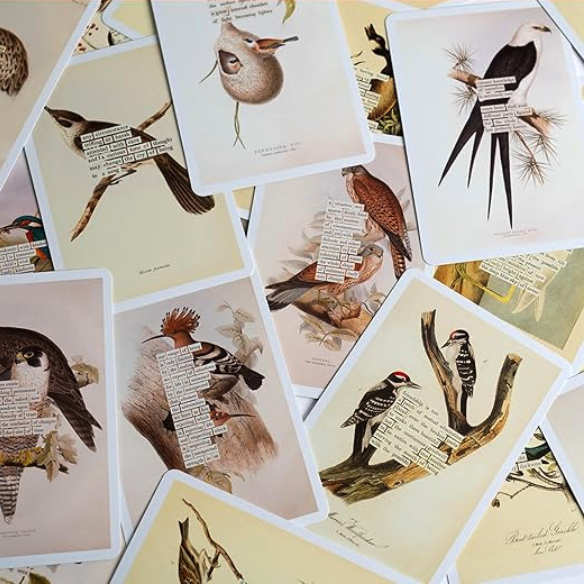
I love Maria Popova’s journey from contempt to curiosity around divination. Once you stop clinging to logical analytic mind, you’ll find that the cards become a language for listening to your unconscious mind and a way of hearing the part of yourself that already knows what you need to hear.
Likes Hesitantly Surfing the Looming AI Tsunami (Part …

A jagged, unfiltered interview that treats AI less like a tool and more like a cultural rupture that is reshaping how we think, feel, and relate to each other. What lands hardest isn’t the tech itself, but the suggestion that something quieter is eroding beneath it: empathy, attention, and the fragile human texture of meaning.
Likes Piercing the Illusion: What the Easter Story …
The Sicily setting is the right place to encounter this story. There’s something about participating in ritual rather than simply reading about it that changes how the ideas land. You’re inside the narrative, moving with the grief and the joy. That shifts it from intellectual encounter to something more like direct experience.
What strikes me most is the projection dynamic you describe. In NLP there’s a foundational principle: the map is not the territory. We never experience the world directly, only our representation of it. The crowds didn’t see Jesus. They saw their map of who the Messiah should be, overlaid onto him. When the territory refused to match the map, they didn’t update the map. They tried to eliminate the territory instead. And I think that’s the more uncomfortable truth your post is pointing toward. It isn’t that we occasionally project. Projection is the default. Seeing someone as they actually are, rather than as we need them to be, is the work, not the starting condition.
The conditional love piece is the one that stays with me. Most people would deny they operate transactionally, and they’d be sincere in the denial. The transactionality usually runs well below conscious awareness, which is precisely why the story does its deepest work when you let it. The question it raises isn’t “how could they do that?” but “where am I doing this right now without knowing it?”
Your phrase “the quiet voice of our conscience” lands exactly right. It’s rarely loud. The awareness is almost always there before we act badly. The problem isn’t that we don’t know. It’s that we haven’t yet learned to slow down enough to listen.
Likes What Is Your Definition of Success? by …
Likes What Is Your Definition of Success? by .
What struck me most reading this is how success keeps shedding its skin as we grow.
Early on, it often looks like accumulation…status, security, recognition. Then, at some point (if we’re paying attention), it starts to feel like subtraction. Less noise. Less performance. Less chasing.
What’s left is something harder to measure but easier to feel.
Time. Freedom. Presence. The ability to be with life rather than constantly trying to shape it into something impressive.
I think the real pivot happens when success stops being about becoming someone and starts being about no longer needing to.
That’s not a downgrade. It’s a kind of quiet upgrade that doesn’t photograph well but feels like coming home.
Likes The HATMAN 🇨🇮🏴 (@wisdom_walking_with_the_hatman) • Instagram reel. …
There’s something quietly warm and fuzzy about sea otters holding hands while they sleep. Not for romance. Not for display. For physics. The ocean drifts. Bodies drift. Without that small, deliberate contact, they would wake alone, scattered by tides they never agreed to. So they link themselves together in the dark, a living chain saying: when the world moves, we choose not to vanish from one another.
It’s touching because it’s unheroic. No speeches. No vows. Just an instinctive understanding that connection is not a feeling but a practice. Hold on, even when you’re tired. Especially when you’re tired. Especially when the current is doing what currents do.
There’s a lesson hiding in plain sight here. Most drifting in human lives doesn’t happen during storms. It happens during sleep. During routine. During the long stretches where nothing dramatic seems to be happening. That’s when relationships loosen. That’s when meaning slides a few inches at a time. The otter doesn’t wait for crisis. It reaches out before separation becomes a story.
Taken seriously, this becomes a small experiment you can actually run. Notice who you hold metaphorical hands with. Notice where you’ve assumed gravity will take care of connection for you. Then choose one simple tether. A message. A walk. A weekly check-in. Not to be profound, but to stay in the same patch of water.
The ocean isn’t hostile. It’s just indifferent. Holding hands is how creatures who understand that stay together anyway.
Likes Computers can’t surprise by Richard Beard. There …
Likes Computers can’t surprise by .
There is a quietly subversive move hiding in plain sight here.
The essay looks like it’s arguing against AI, but the more interesting thing is that it is actually redefining what writing is. Richard Beard is not saying “humans are better writers.” He is saying that memoir is not a genre at all. It is a cognitive act. Writing memoir is thinking in public, remembering in real time, selecting meaning from lived experience rather than assembling language toward an outcome.
That’s the pivot.
Most debates about AI and writing stay trapped at the level of output. Can it sound human? Can it sell books? Can it pass the test? Beard sidesteps that entirely. He reframes writing as a mode of consciousness, not a product. In that framing, AI does not “fail” at memoir the way a bad novelist fails. It fails the way a calculator fails at nostalgia. The category mistake is the point.
Once you see this, the Universal Turing Machine project makes sense. It is not a clever literary experiment. It is a defensive architecture. A way of designing reading and writing environments that privilege memory, idiosyncrasy, and non-linear association over coherence, persuasion, or market logic. It treats art as the gap, not the artifact.
There’s a second layer, even quieter. Beard is also indicting human writing culture. Creative writing programs, genre fiction, algorithm-friendly publishing, and even productivity-driven self-expression already trained writers to behave like language models long before AI arrived. The machines are not alien intruders. They are mirrors polished by our own habits.
So the essay is less a warning about machines and more a diagnosis of what happens when writing forgets that it is supposed to be a way of thinking, not a way of producing content.
The unsettling implication is this: the real threat is not that AI will replace writers. It’s that humans will stop writing in ways that require remembering who they are.
Likes 1368 | Why Have Goals in And …
Like Carl Richards I’ve never been a big fan of setting goals either for many of the reasons that he lists in the beginning of his podcast episode. But I like the way he turned it around and said that goals are good in the sense that they provide a gravitational pull. They help you name a direction…so am I going to go North, South, East, or West. Goals, he says, set you in the right direction and they quietly, magically, reorganize your attention which then creates opportunities and it also then affects your behavior in a positive space because you’re moving towards the direction that you want to go
on craft, care, and the art of restoration

There’s something almost monastic about this mechanic’s workshop. The tools arranged like sacred relics, the quiet rituals of tuning an engine, the slow work of bringing something worn and rusted back to life. To an outsider, it might look like simple labour—just a man fixing bikes. But to those who understand, it’s something deeper. A kind of worship. A way of being in the world. It’s Zen and the Art of Motorcycle Maintenance made flesh, a meditation on craft, devotion, and the sacred nature of working with one’s hands. The shop is not just a place of repair; it is a sanctuary. The work is not just about fixing machines; it’s about giving them new life.
“Replacing brakes, changing oil, tuning engines—doing these things give them an extra lease on life.”
Robert Pirsig would have recognised this philosophy immediately. In Zen and the Art of Motorcycle Maintenance, he argued that quality isn’t just something in the object; it’s in the relationship between the person and the work they do. It’s in the attention, the patience, and the care. The video echoes that sentiment beautifully—restoration is not just about mechanics; it’s about meaning.
There’s an old-school defiance to this, too. A resistance against the disposable culture that treats old things as junk.
“Time is both awareness and enemy.”
Everything decays, but not everything has to be discarded. Paschoal Revitte, the mechanic in the short film, doesn’t just fix bikes—he saves them. He honours their stories and sees their worth even when others would write them off as rusted-out relics. And in doing so, he reminds us that restoration is an act of defiance. A belief that things can be made whole again.
That same ethos applies far beyond the workshop. Think about writing. Art. Music. Even digital spaces. There’s an obsession with the new—the next big thing, the next viral post, the next trend. But there’s something deeply radical about choosing to restore rather than replace. About tending to old ideas, old crafts, old ways of being.
This video leaves me with a question: What in my life is worth restoring? What practices, what knowledge, what forgotten things deserve another lease on life?
And maybe, in the act of restoration, I can find wholeness again.
Shouout to Dave who sent me the link to the video.
the art of the ARG

blurring the lines between game and reality
Imagine waking up one morning to an email that shouldn’t exist. A cryptic message from a character you’ve never met, hinting at a secret society, a hidden mystery, or an unfolding conspiracy. Or maybe a symbol appears in a public park—a riddle carved into a tree, a flash drive under a bench. You follow the trail, uncertain whether you’re playing a game or stepping into something real. This is the world of Alternate Reality Games (ARGs)—a world I’ve recently become fascinated by and am eager to explore firsthand.
I stumbled upon an episode of the Big Brains podcast from the University of Chicago which got me fired up. Hosted by Paul Rand, the episode features Patrick Jagoda and Kristen Schilt, two scholars who don’t just study games—they design them. Their work at Fourcast Lab focuses on building ARGs that go beyond entertainment, using the medium to reshape how players interact with major societal issues like climate change, social inequality, and education.
Their discussion opened my eyes to the true potential of ARGs—not just as immersive narratives but as tools for social change. Unlike traditional video games, ARGs don’t confine players to a screen. Instead, they unfold across multiple platforms: websites, emails, live events, real-world locations, and even cryptic messages hidden in everyday life. There’s no “start screen.” There’s just discovery—a moment when you stumble upon a “rabbit hole” and fall into the game’s unfolding mystery.
what makes ARGs so powerful?
What captivated me most about the episode was how ARGs challenge the fundamental nature of storytelling. Instead of being passive consumers, players become active participants. They solve puzzles, decode messages, collaborate with other players, and—perhaps most importantly—question reality itself.
Patrick Jagoda describes ARGs as “the most exemplary art form of the early 21st century.” Why? Because they don’t just simulate a world; they embed players in a narrative that feels real. And when a story feels real, it can change the way we see the world around us.
Jagoda and Schilt also draw connections between ARGs and larger cultural phenomena. They point out that conspiracy theories like QAnon function similarly to ARGs, feeding on people’s desire to uncover hidden truths. But where misinformation-driven movements exploit this curiosity, well-designed ARGs can direct it toward critical thinking, education, and social awareness.
ARGs as a tool for learning and social change
The episode highlights some groundbreaking ARGs designed at the University of Chicago:
- The Parasite (2017) – A game integrated into the university’s first-year orientation, helping new students form social connections and navigate their new environment.
- Terrarium (2019) – An ARG focused on climate change, immersing players in a fictional future where their actions determined the fate of the planet.
- ECHO (2020) – An ARG designed during the pandemic, keeping students connected and engaged through a series of 88 collaborative quests.
These games aren’t just entertainment—they function as interactive thought experiments, allowing players to explore alternative futures, challenge existing systems, and develop problem-solving skills.
i want to build an ARG
After listening to this episode, I’m not just interested in studying ARGs—I want to create one. The idea of designing a game that spills into reality, where players must uncover secrets, solve riddles, and interact with a living narrative, sounds pretty cool.
I want to experiment with the mechanics discussed in the podcast: the rabbit hole (the player’s first step into the game), the illusion of reality (where the game world blends with everyday life), and the collaborative storytelling that makes ARGs a shared experience rather than a pre-scripted story.
I plan to start small—perhaps a game for friends and family, something that begins with an email, a hidden website, or an unexpected clue in a familiar place. Over time, I’d love to scale it up, exploring how ARGs can be used for learning, community-building, and creative experimentation.
final thoughts
As Jagoda and Schilt point out, ARGs are more than games—they are a way of thinking. They force us to question our assumptions, collaborate with others, and see the world through a different lens. In a time when reality itself feels increasingly fragmented, ARGs offer a unique way to engage with complexity—whether through fiction, education, or activism.
So here’s my question: What if life itself is an ARG waiting to be played? Maybe we’re already living in a world filled with puzzles, hidden truths, and mysterious systems—just waiting to be decoded.
If you’re intrigued by the idea of designing or playing an ARG, let’s talk. I’d love to connect with others who are interested in exploring the boundaries of reality and storytelling. Who knows? Maybe the game has already begun.
Have you ever played an ARG? Would you want to? Drop a comment or reach out—I’d love to swap ideas and theories about this fascinating world.
the Beatles Rubber Soul album as a Motown jam

Here’s what the Beatles Rubber Soul album would have sounded like if it were recorded as a Motown album:
ReSeeding

Wow! These photos from photographer Susan Kaufer Carey are stunning! Check out her full photo essay in the Edge of Humanity Magazine
you are way, way better than you think
I came across a simple yet powerful idea from Lenny’s latest podcast where he interviews Shopify’s CEO, Tobi Lũtke:
You are way, way better than you think.
It’s the kind of phrase that lands differently depending on where you are in your life. Read it on the right day, and it’s a spark—igniting something you’ve been hesitant to acknowledge about yourself. On another day, it might feel like a distant echo, something you wish you could believe but struggle to internalise.
But sit with it for a moment.
Most of us underestimate ourselves. We get lost in self-doubt, stuck in loops of comparison, or convinced that the person we are today is the limit of who we can be. We measure ourselves against impossible standards, forgetting that even the most accomplished creators, thinkers, and visionaries had days when they questioned everything.
The truth is, our perception of ourselves is often skewed. We fixate on the things we haven’t done, the ways we fall short, the skills we haven’t mastered yet. But if we could see ourselves from the outside—if we could view our own journey the way we admire others’—we’d realise how much we’ve already grown and how much potential is waiting to be tapped.
What if you started operating from the assumption that you’re already far more capable, resilient, and creative than you believe? What if you made choices not from a place of fear but from the quiet confidence that you’re already good enough to take the next step?
This isn’t about delusion or false positivity. It’s about recognising the invisible weight you carry—the self-imposed limits, the old narratives that no longer serve you—and choosing to set them down.
am I an artist or a business owner? or a secret third thing?

I’ve wrestled with this question for years. I want to make art for art’s sake, but I also want to be compensated for the value my art brings. That tension—between creating from a deep, personal place and needing to make a living—is the weight many of us carry. The holy grail, the dream, is to make a living from what we love, not just around it.
Amelia Hruby’s latest episode lays out the tension beautifully: business moves outside-in, identifying needs and creating to fill them; art moves inside-out, starting from personal expression and sending it into the world. And those circles, those opposing flows, create friction when we try to do both. The system makes it even harder, treating us as resources to be bought and sold, demanding time, energy, and soul in exchange for survival.

But here’s where the real insight lands: maybe this whole dichotomy is a lie. Maybe instead of asking which one am I?, we ask how do I integrate both? Maybe instead of framing this as a battle between business and art, we look at the deeper rhythm beneath both—service. As Hruby puts it, the question isn’t “Am I an artist or a business owner?” but rather, “How can I be in service through my work?”
That hit me. Hard. Because service isn’t about self-sacrifice—it’s about reciprocity. It’s about being in the flow, exchanging energy, making something that matters. And maybe when we see art and business as part of the same current, the weight of trying to be both lifts. We stop resenting the system, stop fearing the compromise, and instead start shaping our own practice—one that sustains both our art and our life.
I don’t have a five-step answer. But I do have this: I am not just an artist or a business owner. I am a Secret Third Thing.
The Secret Third Thing is fluid. It’s a shape-shifter, an integration, a practice rather than a fixed identity. It refuses to be pinned down by the false binary of artist vs. business owner because it recognises that both are just strategies, not identities. The Secret Third Thing is about alignment—a way of moving through the world where art and commerce aren’t opposing forces but elements of the same ecosystem.
For some, the Secret Third Thing looks like a business that feels like art—a creative practice that’s deeply intentional, structured not around extraction but around meaning and connection. It’s a writer who builds a newsletter where readers don’t just consume but engage, co-creating the space. It’s a musician who refuses the traditional industry model but thrives through direct support from their audience. It’s the podcaster who treats each episode as a ritual, a gift, and a transaction of energy all at once.
For others, the Secret Third Thing looks like an art practice that knows its worth—not in the starving artist sense, not in the hustle sense, but in the way that acknowledges art as labor, as something that deserves compensation without compromising its soul. It’s the poet who sells limited edition broadsides. The painter who swaps their work for what they need. The creator who understands that making a living from art doesn’t mean selling out—it means honouring the exchange of value.
The Secret Third Thing is a refusal to play by rules that were never meant for us. It’s a recognition that business can be sacred, that art can be sustainable, and that service is at the heart of both. It’s about redefining success, not in numbers but in impact. It’s about creating systems that nourish rather than drain.
For me, the Secret Third Thing is still revealing itself. But I know it’s something that makes space for both my wildest creative impulses and my desire for sustainability. It’s something that feels right. It’s a path, not a label. A practice, not a trap.
And you? What does your Secret Third Thing look like?
the fear of being seen and the art of unhiding


“The fear of being seen comes from the tension of being different. And that shadow gaze, it doesn’t know how to resolve this tension, except with the binary options of conforming or hiding. To unhide yourself is to bring yourself into the light, where it feels safe to be whole, to be seen as yourself by the other.” – Kening Zhu
I stumbled up Kening Zhu‘s podcast, Botanical Studies of Internet Magic. The episode I listened to was no. 15, no fear of being seen, which speaks to a wound and a possibility, that is, our fear of being seen and the act of unhiding. It resonates deeply with me because it echoes something I’ve wrestled with in my own creative practice.
The imaginary shadow gaze. The tension of difference. The sense that to be seen is to be exposed, and exposure means danger. I know that feeling. It’s the whisper that says, “Better to stay in the margins, to observe rather than be observed.” And yet, the creative act is a form of seeing—and being seen. The act of making art in public is a way of reclaiming that gaze for ourselves.
Kening frames this tension beautifully, not as a binary of “hide or conform,” but as a third path: unhiding with intention. Expanding our safe circles, not erasing them. Deciding where and how we show up, rather than being dictated to by the nebulous “public.”
For me, blogging has always been a kind of middle ground—a space both public and private, intimate and exposed. It’s a room with open doors rather than a broadcast tower. A place where the audience isn’t “everyone,” but the kindred spirits who find their way here.
Maybe that’s the secret: when we fear being seen, it’s often because we assume the wrong see-er. We imagine judgement, indifference, and dismissal. But what if the act of creating in public is actually about becoming the gaze? What if the practice isn’t about being seen by others but about finally seeing ourselves clearly?
Kening’s episode is an invitation to sit with these questions. To feel into the edges of our own creative safety and maybe—just maybe—push them outward, a little at a time.
Let’s keep making art in the void. Let’s keep showing up in the ways that feel true. And let’s remember: we are the ones who decide what it means to be seen.
Likes 15. no fear of being seen.
reclaiming the signal from the noise

The internet has become a relentless cacophony of voices, ads, distractions, and demands for our attention. It’s a noisy, chaotic bazaar, and if we’re not careful, it can swallow us whole. In his brilliant post, “How to Survive Being Online”, Mike Monteiro reminds us that it’s possible—and necessary—to survive and even thrive in this mess. His advice is refreshingly simple: be intentional about your digital life.
Monteiro’s piece got me thinking about two ways we can reclaim the signal amidst the noise:
1. Listening to the Radio Again
When was the last time you truly listened to the radio? Not a Spotify playlist or a podcast, but a real radio station—something that flows out into the world without algorithms deciding what comes next. There’s something about the radio that feels almost subversive in our hyper-personalised age. You tune in and surrender to the moment, trusting the DJ or the host to guide you through a curated journey.

Radio thrives on serendipity. You might hear a song you haven’t thought about in years, a voice sharing a story you didn’t know you needed, or a discussion that sparks an idea. There’s no skip button, no “discover weekly,” no “you might also like.” It’s just you, the broadcast, and a kind of trust that’s becoming rare in our digital lives.
This return to radio feels like an antidote to the overstimulated, over-curated web experience. It’s a chance to reconnect with the joy of not knowing—of letting go of control and just listening. It reminds me of what I once loved about running an internet radio station. And after reading Mike’s post and listening to the radio station he recommended, KEXP, I feel half-tempted to restart the Musical Journey Show as a live broadcast.
2. Curating Your Web Experience
Monteiro’s advice about being intentional online is a call to arms: now more than ever, we need to curate our digital lives. The web doesn’t have to be a flood of doomscrolling and hot takes. We can shape it into a space that nourishes our curiosity, feeds our creativity, and inspires us to be better humans.
Start by cranking up the goodness—the stuff you want to engage with—and dialling down the noise. Follow blogs that make you think, newsletters that spark your imagination, and creators who challenge you to see the world differently. Unfollow the accounts that drain you, block the trolls, and close the tabs that scream for your attention without offering value.
Curating your web experience is about reclaiming your agency. You become the programmer of your digital world, broadcasting your values and priorities. RSS feeds, personal blogs, and newsletters are tools to step outside the algorithmic traps and rediscover the joy of seeking instead of passively consuming. It’s a way to return to the web as it was meant to be: a vast, living library of ideas, connections, and serendipity (sorry to beat that drum again!).
Monteiro’s post is more than just a survival guide; it’s a manifesto for a better way to be online. By listening to the radio again, we can reconnect with the beauty of the unexpected. By curating our web experience, we can turn the internet from a landfill into a library.
What would happen if we all started tuning out the noise and turning up the signal? The world might not feel so chaotic, and the web might once again become a space where meaning is made—not just sold.
So, here’s my question for you: What’s your signal? What’s worth turning the dial for? Let’s start cranking the goodness together.
Likes How to survive being online.
Wallace Stevens: Of the Surface of Things

I love Bernie Gourley’s reading of this Wallace Stevens‘ poem: Of the Surface of Things
Go listen to Bernie read and then come back for a closer look at the poem.
Wallace Stevens’ poem is a meditation on perception, the limits of understanding, and the interplay between imagination and reality. Each stanza reflects a distinct mode of engagement with the world, moving from the confining interior of the mind to the expansive yet fragmented experience of nature and art.
I. The Limits of Understanding
In my room, the world is beyond my
understanding;
But when I walk I see that it consists of three or
four
hills and a cloud.
This stanza juxtaposes the abstract, overwhelming nature of intellectual thought (“beyond my understanding”) with the tangible simplicity of the external world. The room symbolises the confines of the mind, where the complexities of existence seem insurmountable. Walking, however, grounds the speaker in a sensory reality: the world is reduced to “three or four hills and a cloud,” manageable and immediate. It suggests that experience, not introspection, provides clarity—though that clarity is minimalist and shaped by perception.
II. Writing and Imagination
From my balcony, I survey the yellow air,
Reading where I have written,
“The spring is like a belle undressing.”
Here, the speaker observes the world from a higher, more detached vantage point. The “yellow air” may evoke the golden, hazy quality of spring or the polluted, modern atmosphere. Writing introduces the transformative power of imagination: “The spring is like a belle undressing” refigures a natural process into something intimate and sensual, imbued with human meaning. The balcony suggests both physical and intellectual distance, emphasising how the act of writing bridges perception and interpretation.
III. Art, Mystery, and Transcendence
The gold tree is blue,
The singer has pulled his cloak over his head.
The moon is in the folds of the cloak.
This final stanza takes a turn into surreal imagery, where colours and objects defy conventional expectations (“The gold tree is blue”). The singer pulling his cloak over his head suggests a withdrawal from visibility, perhaps representing the ineffable nature of art or the artist’s retreat into mystery. The moon, symbolising imagination, dreams, or a higher truth, is hidden “in the folds of the cloak,” accessible only indirectly. This stanza reflects Stevens’ fascination with art’s power to reveal and conceal, creating a world that is simultaneously luminous and veiled.
Themes
- Perception and Reality: The poem explores how our understanding of the world is shaped by our vantage point and imagination. What seems vast and incomprehensible in isolation becomes simple when grounded in physical experience.
- Imagination as a Lens: The act of writing and artistic creation transforms raw experience into something imbued with personal or universal meaning, as seen in the sensual metaphor of spring.
- The Mystery of Art: Art and beauty, like the moon hidden in the cloak, are never fully revealed. They invite us to look, to imagine, and to wonder, but never to wholly grasp.
Stevens’ poem is not about offering definitive answers but about celebrating the tension between the external world and the subjective, imaginative mind. It invites readers to reflect on how we see, interpret, and create meaning from the fragments of experience.
is notebookLM—google’s research assistant—the ultimate tool for thought?
This episode gets into it with Steven Johnson, best-selling author and AI innovator! He’s not just the brains behind “How We Got to Now,” he’s also leading the charge with Google’s Notebook LM. Hear him reveal the future of writing with AI, explore his personal quest to turn ideas into books, and uncover the shocking story behind the Apollo 1 fire that’s ripe for a documentary. Plus, get an exclusive look at his latest book, The Infernal Machine!
Likes The cattle prod of the algorithm by …
Likes The cattle prod of the algorithm by .
The algorithms have been good for a long time were good at herding us into different pens, and for the purposes of getting me to spend money, I’m fine with this. However, these days it’s a radical pen where we see through the fence and cattle prod pushes content to make me hate the sheep on the opposite pen. Many content creators appear to thrive on this for their own gain. – Dave Anderson
The only true resistance against Big Tech’s all-consuming algorithms isn’t a fight waged with their tools but a quiet, deliberate act of reclamation: taking up our keyboards and writing for our own blogs.
Let’s reject the algorithmic manipulation of what we see, think, and share online. And instead, let’s create spaces where our voices remain unfiltered, unoptimised, and unchained. To do this, though, we have to embrace the spirit of the indie web.
This isn’t just about personal expression; it’s about solidarity. A new kind of resistance begins when we unite with other indie bloggers to revive what once made the web cool, fun, vibrant, and alive with a healthy community of thinkers, storytellers, and seekers.
Remember webrings? Let’s bring back the webring! Oh, and blogrolls! This is how we can create an alternative internet where serendipity reigns. We can link to one another not just because it’s strategic but because it’s meaningful. We comment on each other’s posts not to boost engagement but to spark conversation. Each hyperlink is a handshake, each comment is a dialogue, and each shared post is a new thread in a collective fabric. In this way, we reclaim not just the web but the very act of sharing knowledge and forging connections.
To blog is to declare: I exist beyond the algorithm.
The resistance starts here. It starts now. With a single post, a single link, a single spark of defiance. Take up your keyboard. Write for your blog. Join the chorus of indie bloggers who refuse to let Big Tech dictate the rhythm of our creativity. Together, let’s rebuild an internet worth wandering.
**Steps off soapbox.